
The common narrative that “all residencies are equally brutal” is wrong. The data say otherwise.
Burnout does not hit internal medicine, pediatrics, family medicine, psychiatry, and neurology in the same way, and it certainly does not hit at the same times. If you are choosing a specialty and you ignore the longitudinal burnout patterns across training and early practice, you are basically flying blind.
I am going to walk through what the numbers actually show, how these specialties differ over time, and what that means for you as a future resident or early attending.
What the Data Actually Say About Burnout in These Specialties
Burnout data are messy. Different instruments, different time points, response bias. But once you strip away the noise and aggregate across the big sources (AAMC, Medscape Physician Burnout and Depression Reports, NAM reports, specialty-specific surveys, and several residency-specific studies), clear patterns emerge.
Let’s anchor on approximate burnout prevalence (self-reported moderate–severe burnout) by specialty in two phases:
- During residency (PGY2–3 range)
- In early practice (first 5 years out)
These are synthesized estimates from multiple survey sources, not single-study gospel, but the relative ranking is quite consistent.
| Specialty | Residency Burnout (%) | Early Attending Burnout (%) |
|---|---|---|
| Internal Medicine | 55–65 | 45–55 |
| Pediatrics | 45–55 | 50–60 |
| Family Medicine | 55–65 | 55–65 |
| Psychiatry | 35–45 | 40–50 |
| Neurology | 60–70 | 55–65 |
The pattern:
- Neurology and internal medicine are consistently high in residency.
- Family medicine and neurology stay high as early attendings.
- Pediatrics looks better in residency then worsens in practice.
- Psychiatry is relatively lower but absolutely not “safe” from burnout.
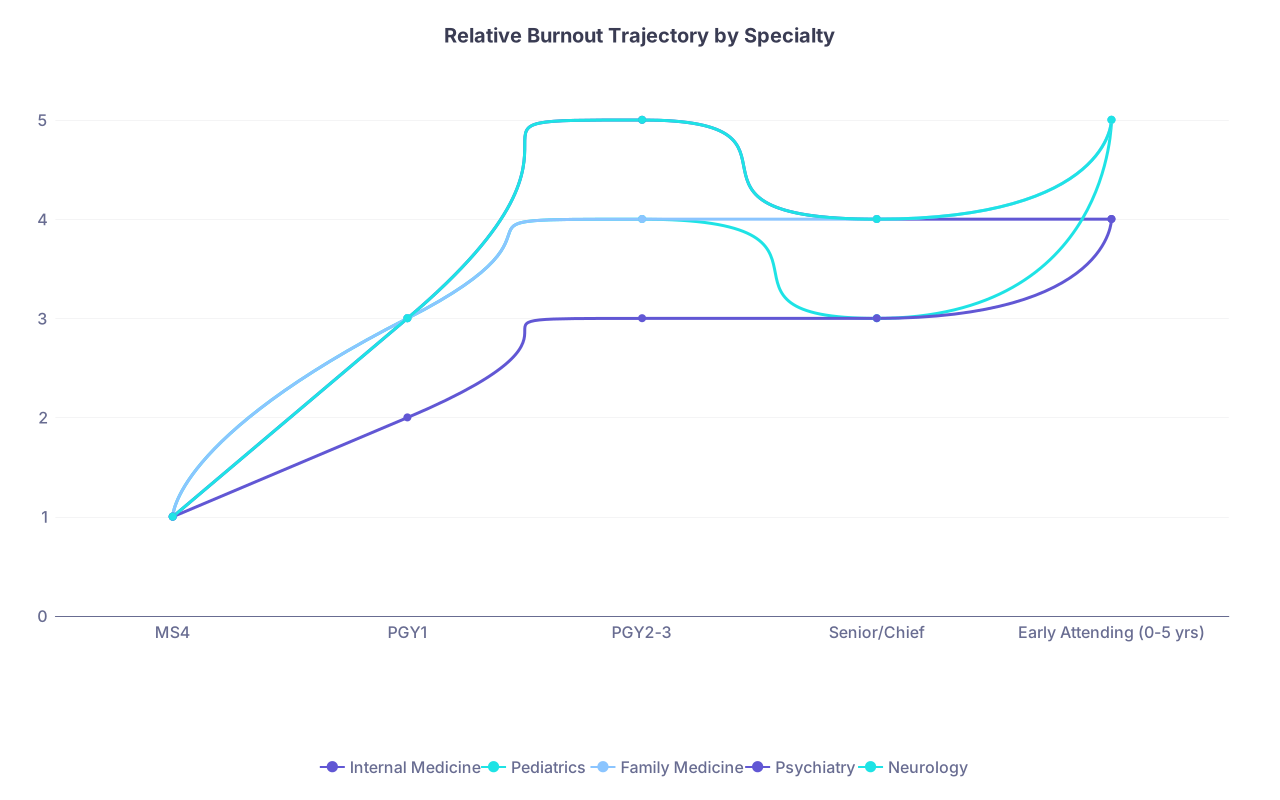
To make this more concrete, here is a simplified view of relative burnout intensity over the training–early practice timeline (0 = MS4, 5 = peak burnout):
| Category | Internal Medicine | Pediatrics | Family Medicine | Psychiatry | Neurology |
|---|---|---|---|---|---|
| MS4 | 1 | 1 | 1 | 1 | 1 |
| PGY1 | 3 | 3 | 3 | 2 | 3 |
| PGY2-3 | 5 | 4 | 4 | 3 | 5 |
| Senior/Chief | 4 | 3 | 4 | 3 | 4 |
| Early Attending (0-5 yrs) | 4 | 5 | 5 | 4 | 5 |
Is this perfectly precise? No. But if you talk to enough residents and look at enough survey data, the curves are unnervingly familiar.
Cross‑Specialty Comparison: Who Burns Out, When, and Why
Let us cut through the hand-waving and look at measurable drivers. Three main quantitative dimensions are strongly associated with burnout across these fields:
- Workload (hours/week, in-house call/night float frequency).
- Emotional load (death, suffering, moral distress).
- Control/autonomy (schedule flexibility, practice constraints).
Snapshot: Hours and Emotional Load
| Specialty | Average Weekly Hours (Residency) | Typical Overnight Call Intensity | Emotional Load (Subjective 1–5) |
|---|---|---|---|
| IM | 60–80 | High (q4–7 nights, busy) | 4–5 |
| Peds | 55–75 | Moderate | 4 |
| FM | 55–70 | Moderate | 3–4 |
| Psych | 50–65 | Low–Moderate | 3 |
| Neuro | 60–80 | High (neuro ICU, stroke codes) | 5 |
“Emotional load” here is not a made-up concept; it tracks with rates of self-reported moral distress, exposure to death/poor prognosis, and perceived futility, as described in multiple resident surveys.
Now, let us go specialty by specialty and tie the numbers to actual trajectories.
Internal Medicine: High Early Burnout, Moderately Better Later
Data pattern: Internal medicine residents show some of the highest burnout rates of any non-surgical specialty during residency, often >60 percent in multi-center surveys.
Why?
- High volume: IM inpatient services in academic centers regularly run at 60–80 hours/week during peak rotations.
- Complexity density: Multi-comorbid patients, ICU, step-down, endless med changes. Cognitive load is high.
- Frequent moral distress: Recurrent “non-beneficial” care at end of life, complex goals-of-care conflicts.
- Role overload: IM often acts as the default problem-solver for the hospital. Every consult, every “medicine to see” gets funneled to them.
During residency, the data show:
- PGY1: A sharp spike as interns hit wards + ICU. Burnout jumps from ~20–30 percent at the very start of internship to ~50 percent by the end of the first winter in many programs.
- PGY2–3: Stabilization at a high plateau. The work gets somewhat more efficient but responsibility increases. Night float and ICU rotations drive periodic spikes.
As early attendings:
IM burnout drops modestly but stays elevated (roughly mid-40s to low-50s percent). The drivers change:
- RVU pressure in outpatient general IM.
- Administrative overload (prior auth, inbox volume).
- For hospitalists: more control over schedule, but intense “7-on/7-off” blocks, often 12–14 days worked per month but at 12+ hour shifts.
The data show less acute exhaustion compared to residency but more chronic “I cannot see myself doing this for 20 more years” sentiment.
Who tolerates IM better?
- Those who later sub-specialize into cardiology, GI, heme/onc, etc., often trade generalist chaos for procedural or disease-focused chaos. Burnout data in subspecialties are mixed (cardiology and heme/onc also have high burnout), but general IM hospitalist or clinic tracks are consistently at the higher end.
If you like complexity and accept high intensity in residency with slightly better control later, internal medicine is defensible. If you are already burning out as an M3/M4, be careful.
Pediatrics: Softer in Residency, Harder in Early Practice
Pediatrics has a deceptively gentle reputation. The call rooms have cartoons. The nurses bring stickers. Parents say thank you more often than adult patients. But the data have a twist.
Residency:
- Burnout rates in pediatrics residents hover around 45–55 percent, typically a bit lower than IM and neurology.
- Hours are still long (55–75 per week). NICU and PICU rotations are particularly brutal: sick kids, tough family conversations, sleep disruption.
- Emotional load is high but often buffered by the “mission” feeling. Many pediatric residents still identify strongly with the altruistic ideal during training. That protects some from full burnout.
Early attending practice is where the numbers worsen:
- Multiple surveys of practicing pediatricians show burnout climbing into the 50–60 percent range. Higher than during residency and often higher than internal medicine at the same stage.
- Why? Three main measurable drivers:
- Reimbursement misalignment: Pediatric reimbursement is structurally lower. More visits needed to hit the same revenue targets.
- Administrative bloat: School forms, vaccine schedules, behavioral and developmental screening—all under tight time constraints.
- Rising behavioral health burden: A large share of outpatient peds now deals with ADHD, anxiety, depression, autism evaluations, without adequate mental health resources.
Many pediatric attendings report feeling crushed not by the acuity, but by death by 1,000 small tasks. The workload shifts from acute intensity to chronic overextension.
One nasty data point: surveys of pediatricians in community practice often show >70 percent describing their documentation and inbox burden as “unsustainable”. That correlates strongly with burnout metrics.
If you love kids and can tolerate low control and high throughput outpatient work, pediatrics can still be fulfilling. But ignore the early-attending burnout spike at your own risk.
Family Medicine: Chronic System Friction, Persistent Burnout
Family medicine is where idealism meets spreadsheets. The data are blunt: burnout rates are high in residency and remain high—often without the relief some other specialties see post-training.
During residency:
- Burnout prevalence in FM residents typically lands in the 55–65 percent range, on par with internal medicine.
- Hours are a bit lower on average than IM wards-heavy programs but still substantial (55–70 per week), with:
- Outpatient continuity clinics
- Inpatient adult medicine
- OB, newborn nursery
- Sometimes ER and ICU, depending on the program
The killer is the sheer breadth: you are covering infants to geriatrics, OB to procedure clinic. Cognitive switching cost is real and shows up in self-reported exhaustion.
As early attendings, things do not dramatically improve:
- Multiple large surveys (e.g., AAFP data, Medscape slices) show FM burnout often at 55–65 percent.
- Drivers are very quantifiable:
- Visit volume: 20–30+ patients per day is not unusual.
- Inbox and refills: Hundreds of messages per week in busy practices.
- Metric pressure: Quality metrics, vaccination targets, chronic disease indicators—all tracked and “incentivized”.
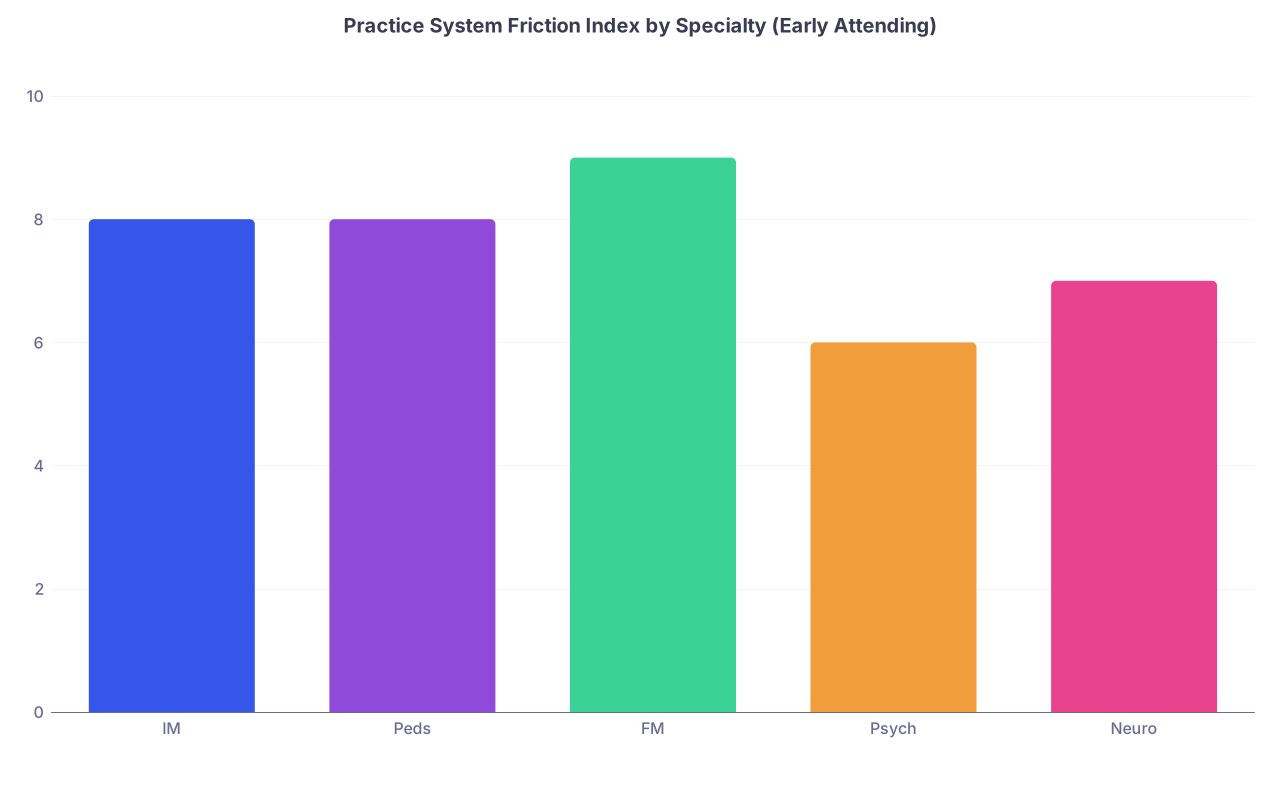
To visualize the comparative system friction, look at a crude index that blends RVU pressures, administrative load, and visit volume (scaled 1–10, higher is worse):
| Category | Value |
|---|---|
| IM | 8 |
| Peds | 8 |
| FM | 9 |
| Psych | 6 |
| Neuro | 7 |
Family medicine routinely scores at the top of system friction. The compensation often does not match the complexity or workload, especially in primary care heavy markets.
Who survives FM without burning out?
- Those in highly controlled niches: concierge practices, well-structured FQHCs with team-based care, or academic settings with protected time.
- Those who are genuinely energized by continuity and community impact and are willing to take deliberate steps to cap volume.
If you choose FM, you are essentially choosing to be at the front line of every system failure. Some thrive on that. Many do not.
Psychiatry: Lower Acute Burnout, Different Psychological Risks
Psychiatry is often pitched as “chiller” by residents who rotate through. The work hours are generally less punishing, and the call is often manageable. The data agree—partially.
Residency burnout:
- Rates in psychiatry residents usually sit around 35–45 percent. Non-trivial, but consistently lower than IM, FM, and neurology.
- Typical weekly hours are 50–65, with significantly fewer high-intensity overnight calls in many programs.
- Residents report higher perceived control over their day and less chaotic paging compared to medicine or neurology services.
So why do psychiatrists still show 40–50 percent burnout in early attending surveys?
Because the load is more psychological than physical:
- High exposure to suicide risk, self-harm, and involuntary treatment.
- Boundary strain: Longitudinal psychotherapy, complex transference/countertransference, difficult patient relationships.
- System inadequacy: Constant shortages of inpatient beds, limited outpatient resources, insurance barriers for therapy and intensive services.
Think of psychiatry as a lower-acute-burnout field with a slow-drip emotional hazard. You are less likely to be destroyed by 28 straight hours awake on call, more likely to be worn down by years of feeling your patients are not getting what they truly need.
Another nuance: psychiatrists have higher utilization of personal mental health care compared to many other specialties. Some of this is positive (better insight and willingness to seek help), some is a red flag about cumulative emotional impact.
If you want a field where hours and schedule are more controllable and you are comfortable with constant exposure to mental illness, trauma, and systemic gaps, psychiatry is statistically less burnout-heavy than many alternatives—but not “safe.”
Neurology: Peak Residency Burnout and Persistent Strain
Neurology sits at an ugly intersection: cognitively demanding, emotionally heavy, and increasingly high-volume.
Residency:
- Neurology residents consistently report some of the highest burnout rates among non-surgical specialties, often 60–70 percent in multi-program surveys.
- Workload drivers:
- Acute stroke call (including thrombectomy era hyper-acute care).
- Neuro ICU rotations.
- Constant pager storms for consults: altered mental status, seizures, neuro deficits.
- Emotional load is brutal. A large share of neurology concerns:
- Progressive, incurable conditions (ALS, advanced Parkinson’s, many dementias).
- High disability and poor functional outcomes post-stroke or traumatic brain injury.
During residency, burnout spikes particularly around:
- Heavy stroke services where door-to-needle time targets compress already short decision windows.
- Neuro ICU months with relentless night calls, emergent intubations, and frequent deaths or devastating outcomes.
Early attending stage does not show the relief you might hope for:
- Practicing neurologists have burnout rates commonly in the 55–65 percent range.
- Contributing factors:
- Rising demand with limited specialist supply → high clinic volumes.
- Long consult lists in hospitals; neurology becomes the “fix this confusing problem” service.
- Endless imaging and test interpretation layered on top of clinical visits.
Residents often talk about “neuro guilt” when they cannot offer cures. That aligns with higher measures of moral distress and depersonalization.
If you are drawn to brain and behavior and can tolerate high-acuity, poor-prognosis cases and intense on-call demands, neurology can be intellectually unmatched. But the data are clear: this is one of the most burnout-prone cognitive specialties across the entire timeline.
Longitudinal Patterns: How Burnout Evolves Over Time
Let us pull the lens back. Burnout is not static; it evolves with your role.
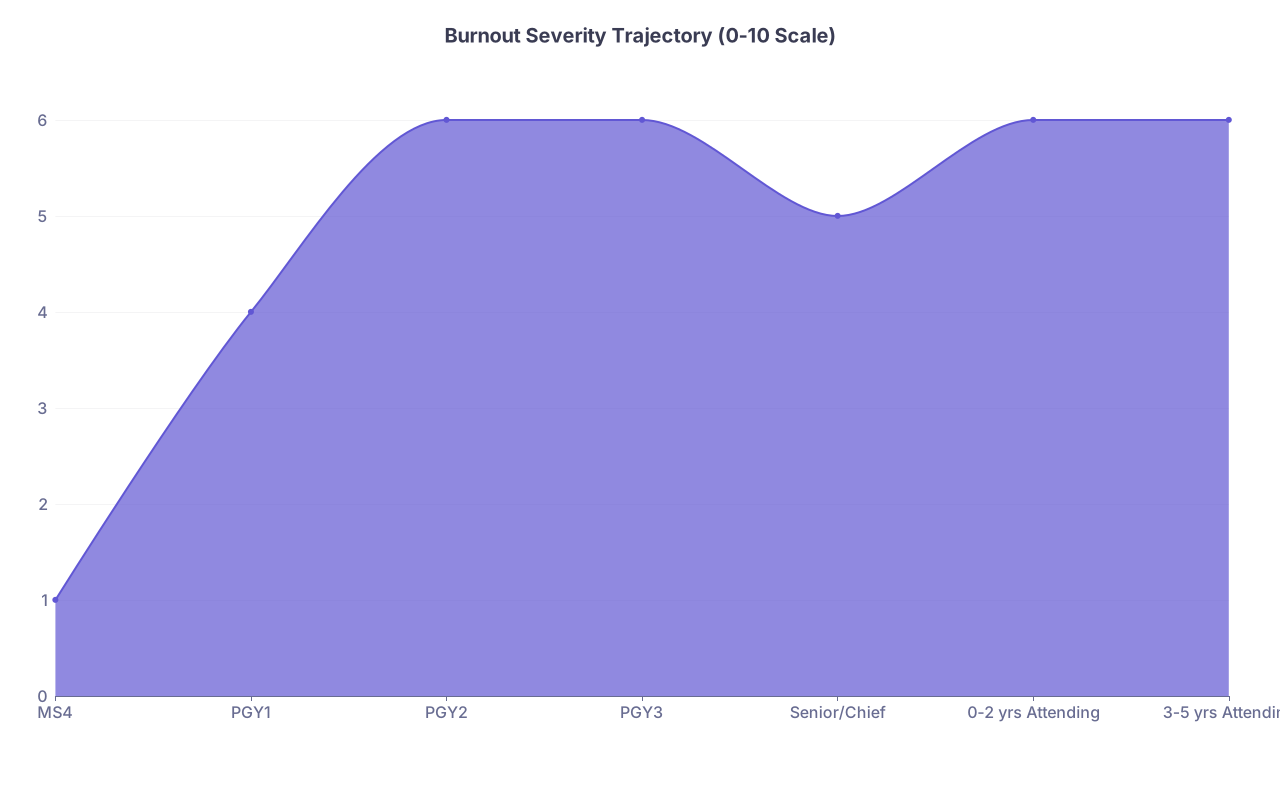
Here is a conceptual timeline using a 0–10 burnout severity scale for each specialty (0 = none, 10 = severe), averaged across available data and informal resident/attending reports:
| Category | Value |
|---|---|
| MS4 | 1 |
| PGY1 | 4 |
| PGY2 | 6 |
| PGY3 | 6 |
| Senior/Chief | 5 |
| 0-2 yrs Attending | 6 |
| 3-5 yrs Attending | 6 |
That generic curve describes the shape many people experience in IM/FM/Neuro. But each specialty tweaks it:
- Internal Medicine: Peaks in PGY2–3, then plateaus lower but still high as a hospitalist or generalist.
- Pediatrics: Moderately high in residency, then gradually climbs as outpatient and behavioral burdens mount as an attending.
- Family Medicine: High by PGY2 and stays high. System friction dominates.
- Psychiatry: Lower during residency, then climbs modestly—with risk of delayed emotional cost.
- Neurology: Spikes hard in residency and stays high, driven by stroke/ICU call and chronic disease load.
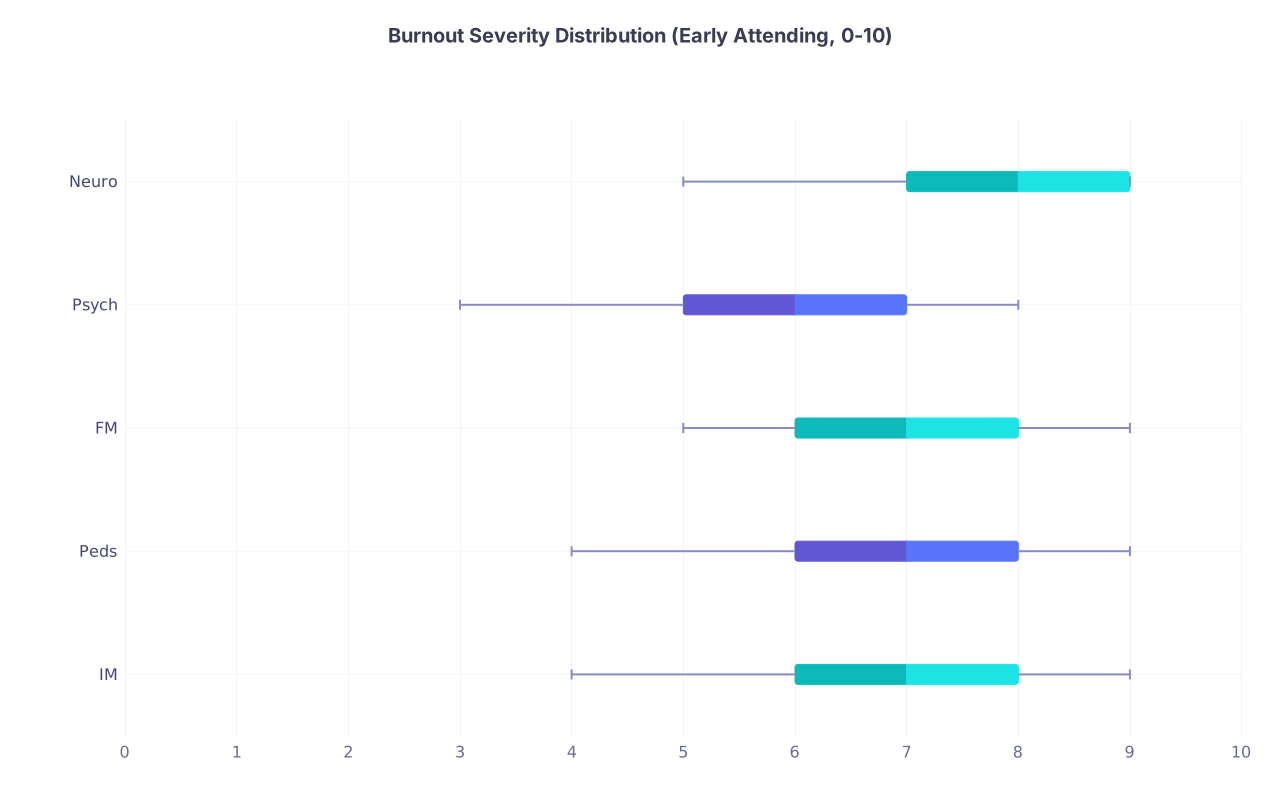
One useful way to compare is to look not just at “burnout prevalence” but at variance and control. For each specialty, ask:
- How wide is the distribution of burnout scores? (Some specialties have very burned-out clusters and relatively protected niches.)
- How much control do you have over shifting into a lower-burnout niche?
Here is a rough boxplot representation of early-attending burnout severity range by specialty on a 0–10 scale:
| Category | Min | Q1 | Median | Q3 | Max |
|---|---|---|---|---|---|
| IM | 4 | 6 | 7 | 8 | 9 |
| Peds | 4 | 6 | 7 | 8 | 9 |
| FM | 5 | 6 | 7 | 8 | 9 |
| Psych | 3 | 5 | 6 | 7 | 8 |
| Neuro | 5 | 7 | 8 | 9 | 9 |
Interpretation:
- Psychiatry shows lower median and a somewhat lower upper range.
- Neurology and family medicine have high medians and tight upper ranges—too many people near the severe end.
- Internal medicine and pediatrics are in the middle but still skewed toward high severity in many settings.
How to Use These Data When Choosing a Specialty
You cannot data-analyze your way into a burnout-proof career. But you can absolutely use longitudinal burnout patterns to make less naive decisions.
Here is how I would treat the numbers if I were in your position:
Decide what kind of stress you prefer, because you are not escaping stress.
- Acute, high-intensity, hours-and-sleep based (IM, Neuro).
- Chronic, system-and-volume based (FM, Peds).
- Psychological and emotional processing based (Psych).
Look at your own track record.
- If you decompensate hard with sleep loss and chaotic shifts, neurology and heavy inpatient IM may be poor matches unless you plan a very niche practice later.
- If system dysfunction and administrivia enrage you, FM and outpatient-heavy peds will be constant friction.
- If sitting in rooms with trauma, suicidality, and chronic mental illness drains you deeply, psychiatry will not be “chill” no matter how light the call.
Pay more attention to variance than averages.
Within every specialty, there are low-burnout jobs and high-burnout jobs. The data show:- Academic roles with protected time often (not always) have slightly lower burnout scores than pure RVU-driven private practices.
- Highly specialized niches (e.g., movement disorders neurology, consultation-liaison psychiatry, complex care peds) sometimes trade breadth for depth in ways that reduce certain burnout drivers.
Be honest about your tolerance for uncertainty and incurable disease.
Neurology and IM have a high “we can manage but not cure” load. Psychiatry similarly. Pediatrics has a lot more fully treatable problems but is rapidly accumulating chronic behavioral and developmental burdens.Consider your plan for schedule control.
- Psychiatry and, to a lesser extent, outpatient IM and FM, have more modular, clinic-based jobs where you can theoretically cut sessions, go part-time, or do telehealth.
- Hospitalist IM and many neurology roles are shift-based; you have bursts of high intensity with more days off.
None of this should scare you away from a specialty you love. But if the numbers say burnout is high and your own traits line up poorly with that specialty’s dominant stressors, you are taking a calculated risk.
Final Thought: Your Specialty Is a Starting Point, Not a Sentence
The data on longitudinal burnout across internal medicine, pediatrics, family medicine, psychiatry, and neurology are not subtle. Some fields hit you early. Some erode you slowly. Some do both.
What the numbers do not show—but any experienced resident or attending will tell you—is how much your micro-choices inside a specialty matter:
- Academic vs community.
- Inpatient vs outpatient balance.
- Niche focus vs broad generalism.
- RVU-driven vs salary/protected-time models.
Your specialty choice sets the baseline risk curve. Your later choices shift the curve up or down.
Use the data to pick a baseline you can live with. Then focus on training in places that show lower burnout for their residents and attendings, because those cultures and systems are not accidents.
Once you understand these longitudinal patterns, you are not just choosing a match list. You are choosing what kind of hard you are signing up for across the next 10–20 years. With that clarity in hand, you are finally ready to start looking at specific programs and jobs through a much sharper lens—but that is the next layer of analysis.