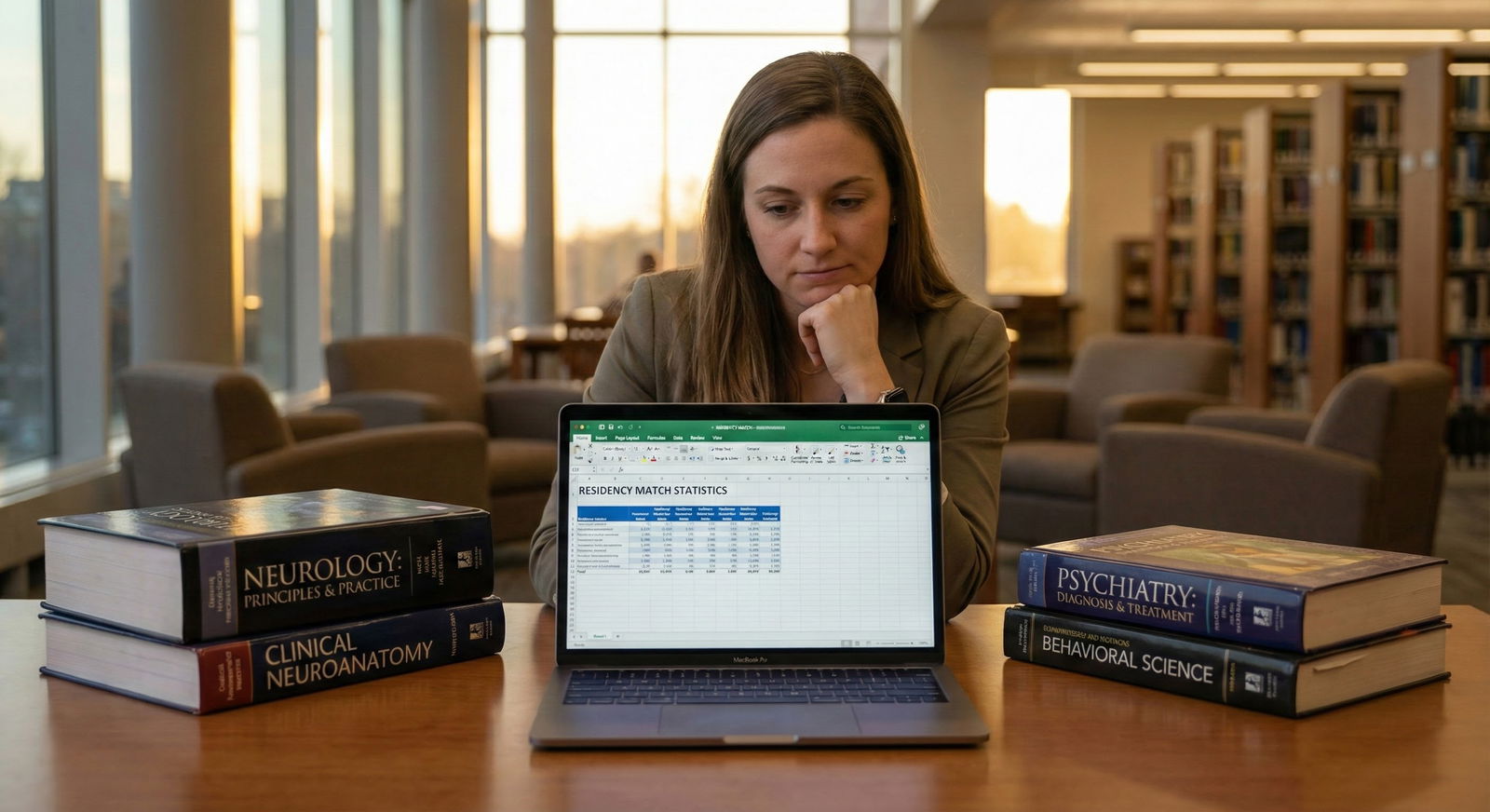
Last week a third-year told me, “Every time I’m on neuro, my heart rate hits 130. I’m terrified I’ll miss something catastrophic. But also… it’s the only rotation where I forget to check the clock.”
You could see it in her face: that awful mix of this might be the thing I love and what if this specialty destroys me?
If that’s you with neurology or neurosurgery or any brain-adjacent field, you’re not alone. A lot of people are quietly scared of neuro while also weirdly drawn to it. Because the stakes feel high, the path looks long, and everyone whispers about “neuro people” like they’re a different species.
Let me say this straight: you can test whether neuro is right for you without signing your soul (and your mental health) away. You just have to be intentional about how you try it on.
Why Neuro Freaks You Out (And Why That Fear Makes Sense)
You’re not being dramatic. Neuro is scary in specific, concrete ways.
Here’s what usually runs through people’s heads:
- “If I miss a neuro finding, someone could die or be disabled forever.”
- “I’ll never understand localization and pathways; everyone else seems to get it.”
- “Neuro attendings feel… intense. What if I’m not sharp enough?”
- “Neurosurgery sounds cool, but do I really want that lifestyle? Or am I just seduced by the cool MRIs and procedures?”
And on top of that:
- Pimping on neuro rounds can be brutal.
- Patients are complex, often with bad prognoses.
- The exams are… a lot. Cranial nerves, motor, sensory, reflexes, gait, mental status. You feel like a fraud every time you hold a reflex hammer.
Here’s the part no one says loudly enough: being scared of a specialty doesn’t mean you’re wrong for it. It usually just means:
- You haven’t had enough reps.
- You haven’t had good teaching.
- You’ve only seen the worst/most intense version of it.
The real question isn’t “Does neuro scare me?” It’s:
- “Does neuro scare me and drain me?”
- Or: “Does neuro scare me but also make me weirdly more alive?”
That’s the difference between “nope, not my field” and “this might be my thing if I grow into it.”
Step 1: Strip Neurology Down to Its Core – What Are You Actually Drawn To?
Before you start signing up for extra electives and niche research, you need to figure out what part of “neuro” is pulling you in.
Because “I like the brain” is way too vague.
Ask yourself:
- Is it the diagnostic puzzle? (localizing lesions, weird exam findings, pattern recognition)
- The technology? (MRIs, EEGs, EPs, intra-op monitoring)
- The procedures? (LPs, EMG, thrombectomies, DBS, craniotomies)
- The patient stories? (MS, epilepsy, movement disorders, stroke rehab)
- The basic science? (synapses, circuits, neuropharmacology, neuroanatomy)
Different neuro fields emphasize different things.
| Field | Main Vibe | Lifestyle (Relative) | Procedural Intensity |
|---|---|---|---|
| Neurology | Cognitive, puzzle | Moderate | Low–Moderate |
| Neurosurgery | High stakes | Demanding | Very High |
| PM&R (Neuro focus) | Rehab, function | Moderate | Moderate |
| Psychiatry | Mind/behavior | Moderate | Low |
| Neurointerventional (via Neuro/Neurosurg/Rads) | Acute, technical | Demanding | Very High |
If you’re scared of 100-hour weeks but love neuroanatomy, neurosurgery might be the aesthetic you like, not the actual job.
Be brutally honest with yourself:
When you think of “neuro,” are you in love with:
- The idea of being the brain expert?
- Or the day-to-day of sitting with patients, doing long exams, managing chronic neuro disease?
If it’s all idea and no day-to-day, that’s a red flag. But it’s fixable. You just need more real exposure.
Step 2: Build “Safe” Neuro Exposure – Low Commitment, High Information
You don’t have to declare yourself a future neurologist or neurosurgeon to get serious intel. You can quietly test the waters.
Think of this as neuro “test driving” instead of signing a mortgage.
A. Short, Specific Experiences You Can Try
These are low-risk ways to see if the reality matches the fantasy:
- Shadow a stroke service for 1–2 days
- Sit in with an outpatient movement disorders or MS clinic
- Follow a neurosurgery resident for one weekend call shift (yes, it’s intense; that’s the point)
- Ask to observe in a neuro ICU for a day
- Spend an afternoon in EMU (epilepsy monitoring unit) or EEG reading room
You’re not committing. You’re collecting data on yourself.
Watch:
- When do you feel “this is over my head but exciting” vs “this is suffocating and I want to disappear”?
- Do you leave tired-but-satisfied, or hollowed out and resentful?
These internal signals matter way more than whether you could answer questions correctly that day.

| Step | Description |
|---|---|
| Step 1 | Curious about neuro |
| Step 2 | Shadow 1-2 neuro days |
| Step 3 | Do neuro elective |
| Step 4 | Use neuro as side interest |
| Step 5 | Add subI or research |
| Step 6 | Decide on neuro vs adjacent fields |
| Step 7 | Still fascinated? |
B. Use Your Core Neuro Rotation Intentionally (Not Just to Survive)
Most students treat neuro as “white-knuckle it, memorize pathways, move on.” That’s one way to guarantee you’ll stay afraid of it.
Instead, on your core neuro rotation, deliberately track:
Which patient types you like and which you dread.
Example patterns:- You like young stroke / acute cases, but chronic dementia drains you.
- Or you like slowly building relationships with MS patients but hate codes and emergencies.
Which environments feel less horrible.
- Inpatient consults vs primary neurology service
- ICU vs general floor
- Clinic vs wards vs ED
How you respond to uncertainty.
Neuro has a lot of “we don’t fully know” and “this is a probable diagnosis.”
Does that intolerable gray zone make you spiral? Or does it bother you but still feel workable?
Write this stuff down. You’ll forget it otherwise and just remember “I was tired” or “that attending was mean.”
Step 3: Learn the Difference Between “I’m Bad at This” and “I’m New at This”
A huge chunk of neuro fear is performance anxiety disguised as “this specialty is wrong for me.”
You think:
- “I’m too slow at localizing lesions”
- “I can’t remember vascular territories”
- “Everyone else seems so comfortable”
Reality check: almost nobody walks into neuro feeling good. It’s a systems-level leap up from “here’s a BMP, here’s a CBC.”
One test I use with students:
If you had:
- 2 dedicated weeks to review neuroanatomy
- A kind attending willing to teach
- And lower stakes where you weren’t graded…
Would you want to understand this stuff? Or would you still feel, “Even if I mastered it, I’d hate this work”?
If you’d actually enjoy it once you weren’t terrified, then you’re not “bad at neuro.” You’re early.
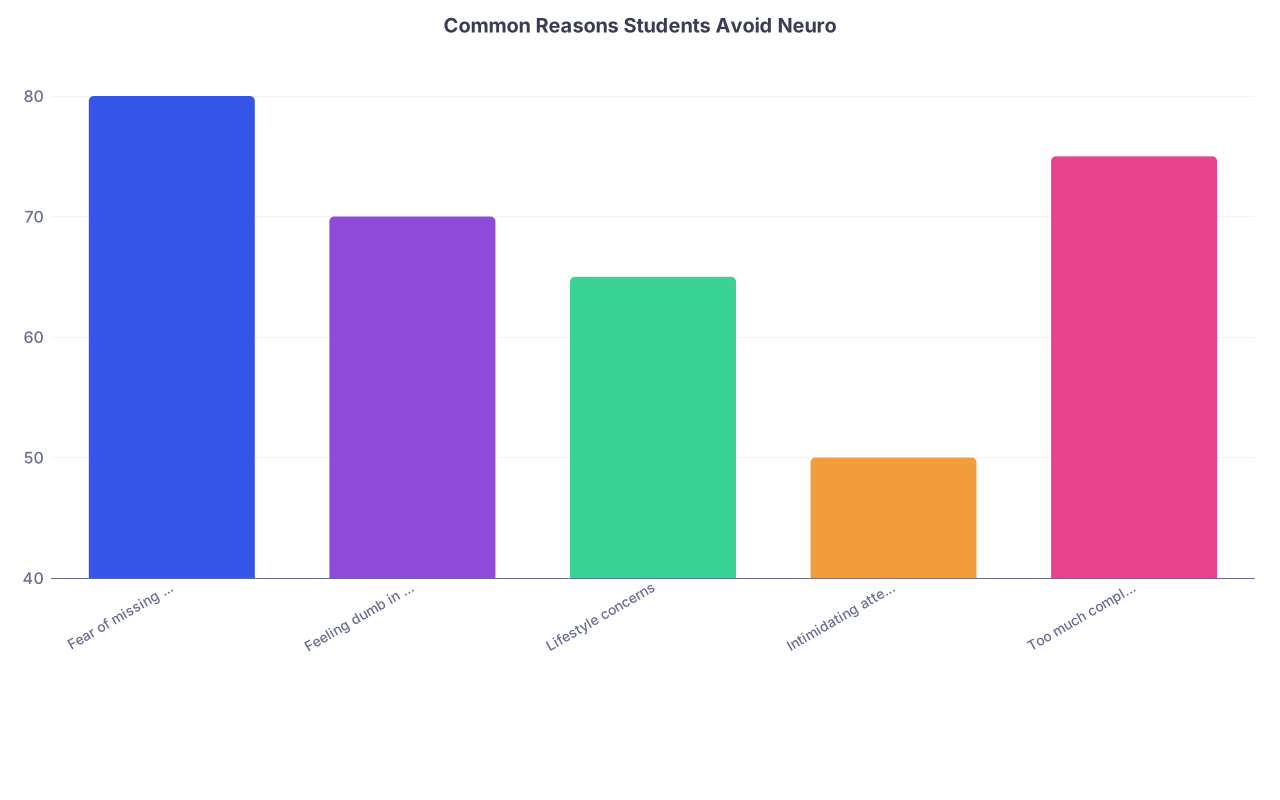
| Category | Value |
|---|---|
| Fear of missing catastrophe | 80 |
| Feeling dumb in neuro | 70 |
| Lifestyle concerns | 65 |
| Intimidating attendings | 50 |
| Too much complexity | 75 |
A Practical Way to Lower the Fear: Pick One Neuro Skill and Own It
Instead of trying to master all of neurology, choose one narrow thing:
- Stroke workup and basic localization
- Approach to headaches
- Localizing spinal cord lesions vs peripheral neuropathy
- Reading a basic neuro exam like a script
Tell yourself: “My only job this month is to become actually decent at [x]. The rest can be fuzzy.”
Why this helps:
- You get a win.
- You see yourself improving.
- You prove to your anxious brain that “I can get better at this” is actually true, not a motivational poster.
If, after that, you still hate showing up? That’s useful information too.
Step 4: Compare Neuro to “Adjacent” Fields Instead of To a Fantasy
A sneaky trap: you’re not actually comparing neuro to other real specialties. You’re comparing it to a vague, low-stress, high-meaning, lots-of-free-time imaginary specialty that doesn’t exist.
Be more honest. Compare neuro to concrete alternatives.
| Aspect | Neurology | Neurosurgery | Psychiatry | IM with Neuro Focus |
|---|---|---|---|---|
| Acute emergencies | Frequent (stroke) | Constant | Rare | Moderate |
| Procedures | Some (LP, EMG, etc.) | Heavy OR | Very few | Variable |
| Lifestyle | Moderate | Demanding | Moderate | Moderate |
| Follow-up | Many chronic patients | Mixed acute/chronic | Lots of longitudinal | Mixed |
Now ask:
- If I don’t do neuro, what am I really saying yes to instead?
- Do I actually like that day-to-day better, or does it just feel safer because it scares me less?
I’ve watched plenty of people run from neurology into IM or psych purely out of fear. And three years later they quietly admit they still daydream about neuro. That “what if” feeling never quite left.
I’m not saying you must choose neuro. I’m saying: don’t choose against it solely because you were anxious at 23 on one rotation with a malignant attending.
Step 5: Test Lifestyle Fit Without Blowing Up Your Life
You’re probably worried about:
- Call nights
- Emotional burden (bad news, disability, progressive disease)
- “Never off” feeling – brain stuff always urgent, always scary
You can sample this without signing up for 7 years of neurosurgery.
A. Try a Few Overnight or Evening Experiences
Ask a resident or attending:
- “Could I follow you for part of an evening call?”
- “Can I see what your call night looks like between 5 pm and midnight?”
Pay attention to:
- Do you hate the adrenaline, or does some part of you like being the one they call?
- Afterward, are you wired and miserable, or tired but proud?
You’re not looking for “this is easy.” You’re looking for “this is hard, but I can see myself growing into it.”
B. Watch How Attendings Live, Not Just Residents
Residents are in the worst phase of any specialty. Neurology looks harsher from the resident trenches than as an attending with a chosen niche, more control, and honed efficiency.
So ask attendings (privately, when they’re not sprinting between codes):
- “What does your week actually look like?”
- “If you were choosing again, would you still pick neuro?”
- “What would surprise me about this specialty 5 years out?”
Watch their faces when they answer. People who regret their field leak it in their eyes.

Step 6: Use Neuro as a “Side Quest” If You Don’t Want It as Your Main Job
Here’s something that might calm your brain:
Liking neuro does not force you to be a neurologist or neurosurgeon.
You can:
- Be an internist who loves neuro and runs a stroke clinic or does hospitalist work with a neuro focus.
- Go into PM&R and build a niche in TBI/spinal cord injury.
- Do EM and be the go-to neuro person for stroke codes and neurocritical stuff.
- Choose psych and lean hard into neuropsychiatry, dementia, catatonia.
If your fear is: “If I commit to neuro and it’s wrong, I’m trapped forever”… remember the real world is messier. People pivot, subspecialize, and carve out hybrid roles.
Sometimes the safest experiment is: go broad (IM, EM, PM&R, psych), then subspecialize toward neuro if the fascination sticks.
Step 7: Protect Your Mental Health While You Experiment
The irony of testing a high-stress field while already anxious: you’ll automatically interpret any discomfort as “proof” you can’t handle it.
Some guardrails:
Set clear time limits for your experiment.
“I’m going to give neuro a fair shot for the next 2–3 months (shadowing, reading, elective), then reassess. I am not allowed to panic-switch based on one bad day.”Separate “am I overwhelmed” from “am I interested.”
You can be maxed out and still deeply engaged. Overwhelmed interest is different from bored misery.Don’t make career decisions during:
- Post-call exhaustion
- After being humiliated on rounds
- After one patient death or bad outcome
Decide your career on a quiet weekend, not at 2 am while charting.
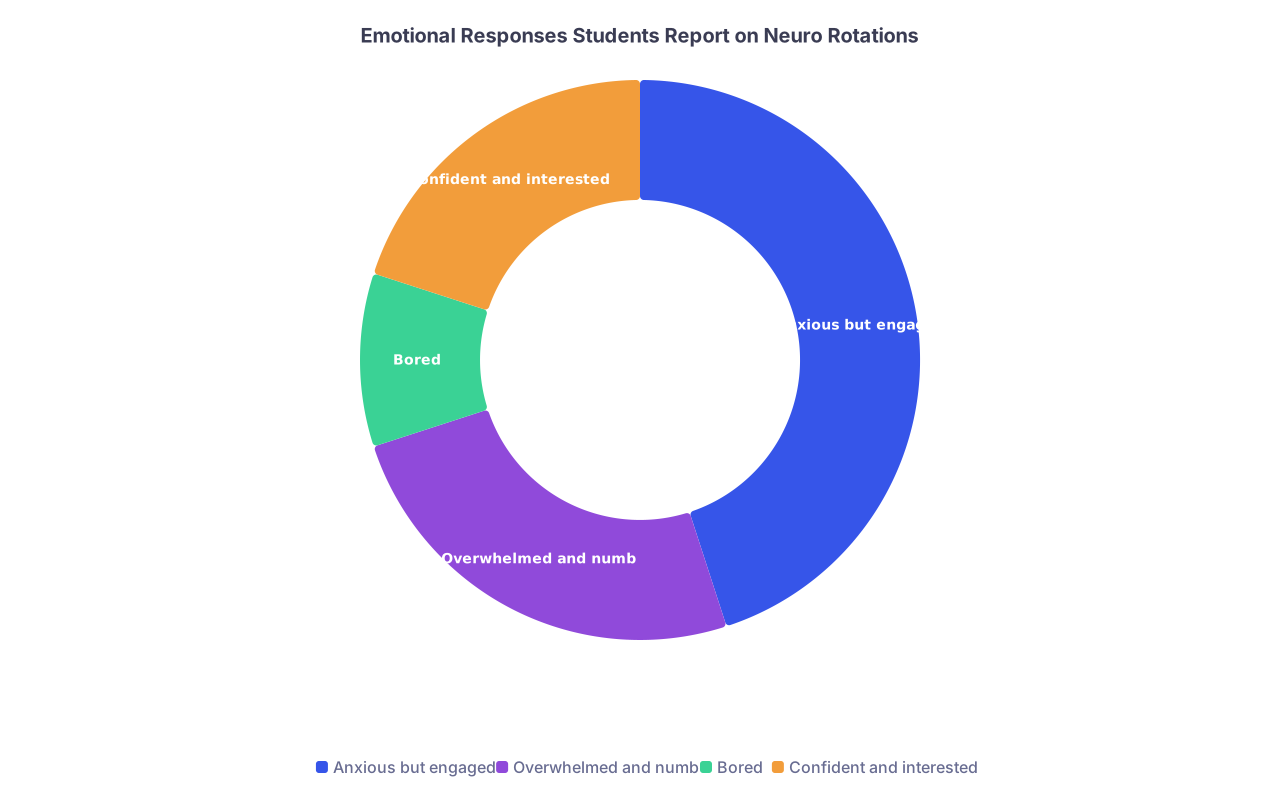
| Category | Value |
|---|---|
| Anxious but engaged | 45 |
| Overwhelmed and numb | 25 |
| Bored | 10 |
| Confident and interested | 20 |
What “Fit” With Neuro Actually Feels Like (Not the Fantasy Version)
Neuro fit is not “I’m totally calm and always know what to do.”
Realistic “this might be my field” signs:
- You complain about it… but still want to talk about your cases after hours.
- You catch yourself reading about neuro topics you don’t need for the shelf.
- The exam still feels clunky, but you’re weirdly proud when a finding matches your localization.
- You feel scared of the responsibility, but also strangely protective of your neuro patients.
- On other rotations, neuro stuff is what you perk up for.
On the flip side, maybe this is you:
- Your stomach drops every time someone says “neuro exam.”
- The patients’ trajectories haunt you days later, in a way that doesn’t ease with time.
- Even when you understand what’s happening, you don’t like the work.
That’s usually not “I just need more practice.” That’s usually “this is not my thing, and that’s okay.”

How to Give Yourself Permission Either Way
Your anxious brain is trying to do two impossible things at once:
- Avoid regret forever.
- Avoid discomfort now.
You can’t have both. So pick which one matters more.
If the thought of never getting to explore neuro properly gnaws at you? You owe yourself a real, structured test run.
If the thought of actually practicing neuro every day fills you with dread? You owe yourself the honesty to walk away and let it be a passionate side interest, not your job.
Neither path makes you weak. Or stupid. Or incapable.
It just means you’re a smart person trying to build a life you can stand to live inside.
Years from now, you won’t remember today’s panic about lesion localization or whether you sounded dumb on rounds. You’ll remember whether you were brave enough to look your own fear in the face and still ask, “What do I actually want?”
FAQ (Exactly 4 Questions)
1. What if I love the brain but my grades and board scores in neuro were bad? Does that mean I’m not cut out for it?
No. Your neuro grade mostly reflects how fast you learned unfamiliar material under pressure and how your specific attendings evaluated you. I’ve seen residents who got “pass” on neuro become excellent neurologists. Programs care more about your overall performance, trajectory, and letters than about one rotation grade. If you truly like the field, do a neuro elective with a supportive team, show improvement, and get a strong letter. One bad grade is not a prophecy.
2. Is it reckless to consider neurosurgery if I’m already anxious and worried about burnout?
It’s not reckless to consider it. It would be reckless to sign up for it without real exposure. Neurosurgery is intense, yes. But some anxious people actually do well with high-structure, high-purpose environments. You need to see the real lifestyle: do multiple days in the OR, see call, talk frankly with residents about their mental health. If your anxiety skyrockets and never settles into “hard but meaningful,” that’s useful data to choose differently. Curiosity isn’t dangerous; denial is.
3. What if my family and friends keep telling me neuro is “too hard” for me?
People project their own fears all the time. Unless they’ve actually trained in neurology or neurosurgery, their opinions are mostly vibes, not data. Listen politely, then go get your own evidence: electives, shadowing, talking to residents. If people are worried about your mental health, that’s valid—but the answer isn’t “never do hard things.” The answer is to test the field stepwise while actively caring for your mental health, then decide based on how you feel, not on their anxiety.
4. How do I know when I’ve tested neuro “enough” to make a decision?
You’ve tested enough when: you’ve done at least one focused neuro elective or substantial exposure, you’ve seen both inpatient and outpatient (even briefly), you’ve talked honestly with a few residents and attendings, and your emotional reaction has stabilized. Meaning: your opinion isn’t swinging wildly day to day based on small events. At that point, if your gut consistently says “I’m scared but I want this,” that’s meaningful. If it consistently says “I’m relieved every time I’m not on neuro,” that’s meaningful too. The goal isn’t zero fear—the goal is a decision you can live with, made on real experience rather than pure what-ifs.