
It’s 11:47 p.m. You’ve got five tabs open: FREIDA, Doximity, some random Reddit thread from three years ago, a hospital’s “Find a Doctor” page, and Zillow.
You type your dream city + your dream specialty into Google one more time. Same thing as last night: pages of attendings already there, groups that “aren’t hiring,” and horror stories about people who “still can’t find a job three years out of fellowship.”
Your brain jumps straight to catastrophe:
“I’m going to spend a decade training… and then be unemployed. Or stuck in some town I’ve never heard of. Or working 1.0 FTE nights forever just to have a job.”
Let’s talk about that. Not in the fake-optimistic way. In the real, slightly uncomfortable way.
First: Are You Actually in a ‘Saturated’ Market, or Just Spooked?
Step one is figuring out if this is a real structural issue or just the internet doing what it does best: scaring the hell out of you.
Here’s what people usually mean by “saturated”:
- Tons of existing attendings in that specialty in your target city
- Groups not hiring or only hiring “with experience”
- Fierce competition for every single job opening
- Lower salaries and worse contracts than nearby areas
And it’s not evenly distributed. Some combos are notorious:
- Dermatology in big coastal cities
- Orthopedics in affluent suburbs with 5 competitors on every corner
- Plastics in LA/NYC/Miami
- Cards/GI in certain “academic-adjacent” metros that everyone wants
- EM in some regions post-EM job market reality check
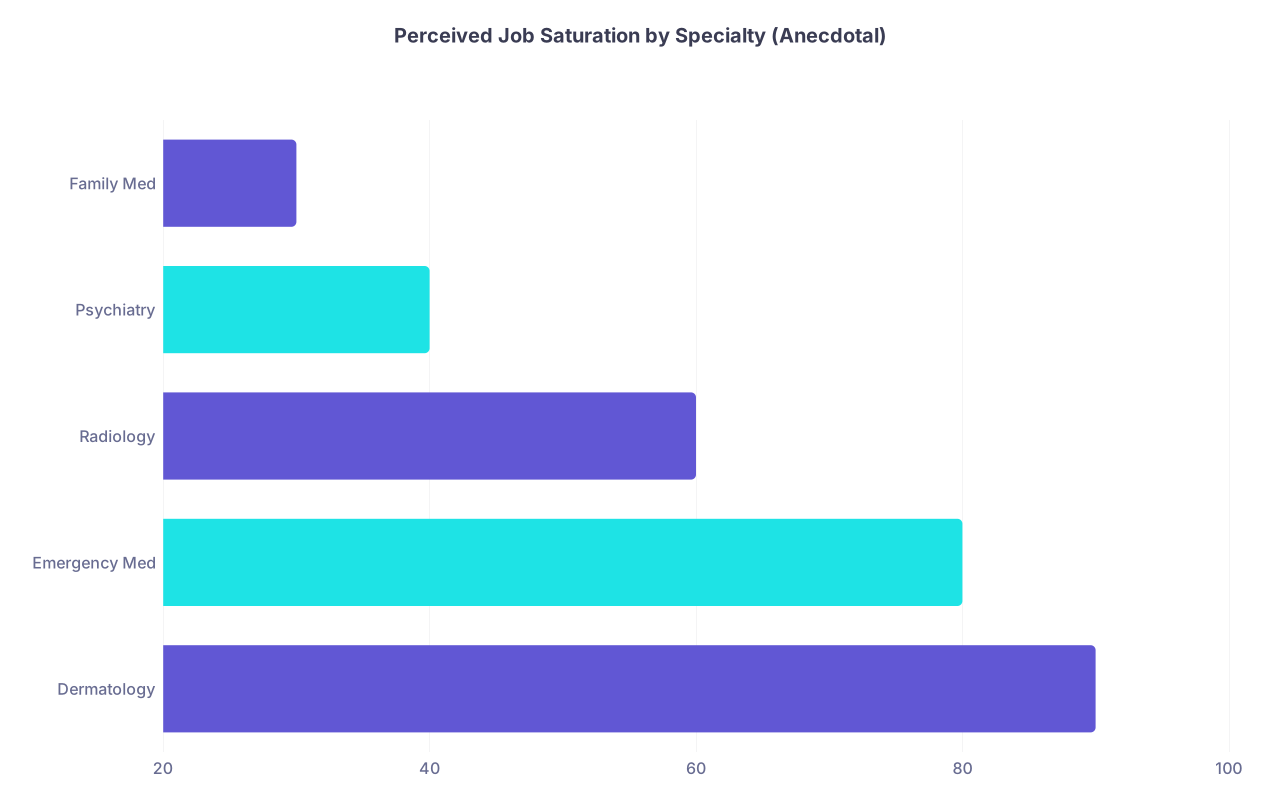
| Category | Value |
|---|---|
| Dermatology | 90 |
| Emergency Med | 80 |
| Radiology | 60 |
| Psychiatry | 40 |
| Family Med | 30 |
These numbers aren’t from a registry; they’re from the vibes you keep reading online. But the pattern is real: certain specialties + certain cities = ugly job competition.
Here’s the brutal part: if you insist on one tight geographic area (like “this one metro and nowhere else”) and your specialty is lifestyle-heavy, procedural, or “sexy,” you are absolutely adding risk. No way around that.
But. There’s a difference between “harder” and “literally impossible.” Most people don’t bother to separate those in their head at 11:47 p.m.
The Big Fork in the Road: Priority Ranking (Location vs. Specialty vs. Lifestyle)
You can’t solve this without being honest about what’s truly non-negotiable for you. You only get to pick one thing as “sacred.”
Here are the three big ones:
- I must live in/near X city/region
- I must practice X specialty
- I must have X lifestyle (schedule, income, call intensity, etc.)
You can usually nail one, maybe two. You almost never get all three in a saturated market.
If your brain is saying: “I refuse to give up location and I refuse to give up my dream specialty and I want a 4-day workweek, no call, and top 10% income,” then yeah, the math breaks. People do occasionally win that lottery, but it is a lottery.
Be really honest with yourself:
- If your partner’s job, your kids, or your aging parents tie you to one city? Location might be non-negotiable.
- If you would be genuinely miserable in another field? Specialty might be the hill you’re willing to die on.
- If you’re already burned out and the idea of 1:3 call forever makes you feel physically sick? Lifestyle has to be higher than you want to admit.
You’re anxious because you’re trying to hold all three as “musts” in your head. That’s why everything feels like doom.
Reality Check: What Actually Happens to People in Saturated Markets
I’ve watched people go through this in real life. Here’s what tends to happen post-residency/fellowship when someone wants a saturated field in a crowded city:
Some accept “less than ideal” first jobs:
- Lower pay than the national average
- Less desirable shifts (more nights/weekends)
- Heavier call
- Ugly partnership tracks (5–7 years)
Some compromise on practice setting:
- Taking a hospital-employed job instead of private practice
- Joining a big corporate group (think Optum, HCA, etc.) instead of the small boutique practice they imagined
- Working for a safety-net system or county hospital instead of the glossy private hospital with valet parking
Some expand the radius:
- Living in the city, but working 30–60 minutes outside in a “secondary” suburb
- Commuting out of the saturated metro into a smaller town where they’re desperately needed
And yeah, some people do end up doing something they didn’t plan:
- Extra fellowship to be “more hireable”
- Locums for a year or two while waiting for the right job to open
- Academic positions they never thought they’d take because private jobs were grim
Here’s the part that doesn’t show up on Reddit: most of these people are not ruined. They’re annoyed. They’re frustrated for a few years. They’re not living the fantasy version of their career they imagined as an MS2. But they’re employed, paying loans, building experience, and often move into something better as the years go on.
The disaster scenario in your head (“unemployed, broke, working as a barista with an MD”) is extremely rare.
Concrete Ways to Reduce Your Risk Without Nuking Your Dreams
You don’t have to pick between blind optimism and complete surrender. You do have actual levers you can pull.
1. Get Real Data, Not Just Vibes
Stop guessing about saturation. Start measuring, even roughly.
- Look at job boards for your specialty: how many jobs in your region vs. others?
- Check how many residency/fellowship spots in that city are pumping out grads every year
- Look at “Find a Doctor” pages at competing hospitals: how many people in your field?
| Question | Healthy Sign | Red Flag |
|---|---|---|
| Jobs on boards in last 6 months | Several postings | Almost none |
| Private groups | Hiring or “open to resumes” | “No openings” across the board |
| Hospital systems | Growing service lines | Closing/merging programs |
| Local training programs | Few or moderate | Massive pipeline of new grads |
Is this high-level? Yes. But it’s better than just spiraling because someone anonymous said “the market is trash.”
2. Start Networking Yesterday
In a saturated market, getting a job is less “apply online” and more “someone vouches for you.”
During residency/fellowship in your desired city:
- Rotate at multiple hospitals if you can
- Show up hard on away rotations or electives in that area
- Actually talk to attendings about long-term plans, not just “how’s your day going”
I’ve seen people in “impossible” markets get hired because:
- They were the reliable, non-toxic resident everyone liked
- They did a research project with the right person
- They moonlighted at a site that later created a job just to keep them
Insane? A little. True? Very.

| Step | Description |
|---|---|
| Step 1 | Rotate in Target City |
| Step 2 | Impress Attendings |
| Step 3 | Get Asked About Future Plans |
| Step 4 | Express Interest in Staying |
| Step 5 | Keep in Touch During Training |
| Step 6 | Hear About Unposted Opportunity |
| Step 7 | Interview with Warm Introduction |
| Step 8 | Job Offer |
If you show up as “top 10% of residents + not insufferable,” your odds in a saturated market improve a lot.
3. Think “Path In” vs. “Perfect Forever Job”
Your first job does not have to be the dream. It has to be a bridge.
You can:
- Take a less-ideal job in the general region
- Build connections, prove you’re good, wait for openings
- Move laterally in 2–5 years when someone retires or a group expands
I know a dermatologist who:
- Couldn’t get into her dream fancy private group in a saturated metro right out of residency
- Took a hospital-employed job 40 minutes away, did good work, was nice to everyone
- Three years later, a partner in the city group retired → she got the call
Not overnight. But not impossible.
When You Really Might Need to Rethink Specialty (the Part You Don’t Want to Hear)
There are situations where clinging to a saturated specialty + rigid location is basically volunteering for a stress disorder.
Red flags that should make you at least question your plan:
- You are absolutely locked to one metro (partner’s job, immigration, custody, etc.)
- Your field is well-known to be in oversupply nationally and especially in that city
- You hate, like truly hate, all the ways people in your field “make it work” (extra fellowship, commuting, nights, academics)
- You’re already on edge about debt and income and cannot tolerate several years of mediocre pay
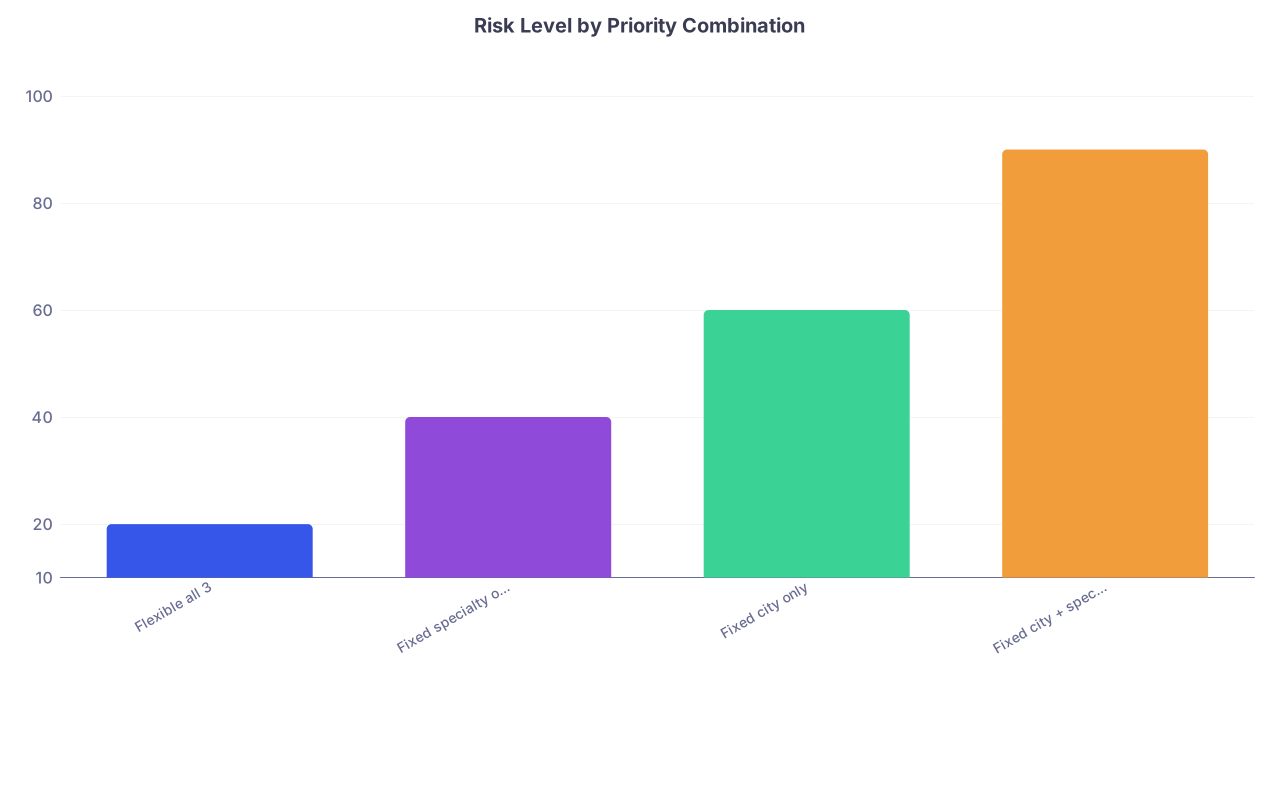
| Category | Value |
|---|---|
| Flexible all 3 | 20 |
| Fixed specialty only | 40 |
| Fixed city only | 60 |
| Fixed city + specialty | 90 |
That last bar? That’s you saying, “I will only do derm and I will only live in this major coastal city” and then being shocked the job search feels like The Hunger Games.
I’m not saying “don’t do it.” I’m saying: if that’s your choice, walk into it with open eyes and a Plan B you can actually live with.
Strategic Tweaks That Keep Your Dream Specialty Alive
If your heart is set on the specialty, there are ways to tilt the odds without giving it up.
1. Subspecialize with Purpose (Not Panic)
Don’t just collect fellowships like Pokémon. Be intentional.
Ask: “What gaps exist in this city’s market that a fellowship could fill?”
Examples:
- Cards in a saturated metro: EP or HF might be more marketable than general cards in some systems
- Ortho in crowded suburbs: sports is overdone; maybe hand, foot/ankle, or joints has more openings
- GI: advanced endoscopy sometimes opens more doors than general, depending on hospital needs
This isn’t universal. Sometimes subspecialists are more saturated. This is where you talk to actual attendings in that city and get real intel, not vibes.
2. Dual-Site or Hybrid Models
A lot of people in saturated markets do stuff like:
- Clinic two days a week in the city, two days in an outlying town that’s desperate
- Mix hospital-employed inpatient work with some outpatient work elsewhere
- Combine clinical time with admin, quality, or teaching roles that justify your salary where pure clinical FTE wouldn’t
Is that the dreamy “walk to clinic from your condo” ideal? No. But it often beats “no job at all.”
3. Be Early, Be Useful, Be Visible
During training in that city, act like someone who wants to stay.
- Present at local conferences, grand rounds
- Join local specialty societies, even as a resident
- Volunteer for boring projects that matter to leadership (protocols, quality initiatives, etc.)
The people who hire are asking themselves: “If I put my neck on the line to get a line-item approved for this new grad, do I trust them not to make me regret it?”
Make the answer to that “yes” years before they’re actually hiring.
The Role of Money and Lifestyle: Don’t Gaslight Yourself
Here’s where a lot of anxious applicants lie to themselves:
They say, “I don’t care about money, I just want to live there and do this specialty.”
Then PGY-4 hits. The loans stare back. You see friends in other fields making double what you’d make in your over-saturated dream city, working better hours in a less glamorous ZIP code. Suddenly you do care.
Location is part of lifestyle. Commute matters. Call burden matters. Being in a field where jobs are scarce means you have less leverage to say “no” to bad schedules.
Ask yourself now, not later:
- Am I willing to make less than peers in other regions for this location?
- Am I okay having fewer options and less negotiating power?
- If it comes down to staying in the city but taking worse hours… is that actually what I want?
There’s no right answer here. But there’s definitely a wrong move: pretending these tradeoffs don’t exist and then feeling blindsided later.
If You’re Early in Training and Panicking About This
If you’re MS1–MS3 or early PGY and already spiraling, breathe for a second. You actually have time to adjust.
Right now, the most useful things you can do are:
- Get clinical exposure to your dream specialty and to plausible backups
- Talk to attendings who trained 5–10 years ago and 1–3 years ago in that field: ask them about job search reality
- Pay attention to how you actually feel on rotations, not just how cool the procedures sound on paper
Your anxiety is trying to demand a permanent, carved-in-stone answer right now. You don’t have enough information yet. What you can do is collect more honest data and keep a loose grip on your identity as “future [insert specialty].”
If You’re Late in Training and It Feels ‘Too Late’ to Pivot
If you’re PGY-3 in a specialty already and you’re now realizing your dream city is hyper-saturated… yeah, that’s a different kind of panic.
You’re not stuck. Your options are just narrower and more uncomfortable:
- Shift your time horizon: maybe you live elsewhere for 3–5 years, then target your city later
- Go for a geographic compromise (within driving distance, not in the core market)
- Create a brutally honest financial plan so you’re not trapped accepting terrible offers just to pay loans
- Double down on networking and performance where you are; give yourself every possible edge
You can also consider radical moves (another residency, different field), but those come with serious costs. Most people don’t need to burn it all down. They need to expand time + geography more than their anxiety wants to allow.
One More Hard Truth (and a Little Reassurance)
Medicine is moving toward more consolidation, more hospital employment, more corporate groups. That tends to make saturated markets even more “who you know” and less “apply on Indeed and wait.”
If you’re planning a career where your dream specialty is saturated in your dream city, you’ll have to:
- Be more strategic
- Be more proactive
- Tolerate more uncertainty for a while
But here’s the quiet reality: most people do end up working, somewhere, in or near what they trained for. It may not be the exact pin on the map or the exact clinic they imagined, but it’s not the total wipeout your 2 a.m. brain is threatening you with.
Will you have to compromise? Probably. Will you be completely doomed? No.
What You Can Do Today
Don’t just keep refreshing forums.
Do this instead:
Pick the city you’re worried about and your dream specialty. Then:
- Go to the websites of 3 major hospital systems in that city.
- Search their job boards for your specialty.
- Click their “Find a Doctor” and count how many attendings in your field are there.
Write those numbers down. That’s your starting snapshot of reality.
Then, send one email to a resident or attending in that specialty in that city (even if it’s a cold email) and ask them a single clear question:
“How hard is it for new grads in [specialty] to find jobs in [city] right now, and what do you wish you’d known about this as a trainee?”
That’s it. One little recon mission today instead of fifteen more “What if I ruin my life?” loops in your head.