

You are not ruining your career by changing specialties, even if it feels like betrayal right now.
Let me just say the quiet part out loud: the fear isn’t “What if I don’t like this specialty?”
It’s: “What if I disappoint the people who believed in me, advocated for me, and spent time on me? What if they think I’m flaky, ungrateful, or weak?”
You’re not scared of switching. You’re scared of losing people.
Welcome to the club. Most of us go through some version of this. Nobody talks about it because everyone wants to look decisive and “passionate” and “committed” when half of us are quietly spiraling in the call room bathroom.
Let’s walk through this like we’re debriefing after a bad shift.
The Emotional Mess You’re Actually Worried About
You’re not just changing specialties. You’re rewriting a story that other people think they know about you.
You’re worried that:
- The attending who wrote “future surgeon” on your eval will feel lied to
- Your research PI will think they “wasted” funding and time on you
- That letter writer you were counting on will pull back their support
- Residents who hyped you up will roll their eyes and say, “Called it.”
And under all of that is this really gross, sticky thought:
“If I were stronger/better/smarter, I’d just push through and stick with it.”
I hate that thought. Because it pretends that misery = commitment. That’s not commitment. That’s self-sabotage dressed up as virtue.
Let me be blunt: your mentors’ disappointment, if it even happens, will flare for about 5 minutes.
You living the wrong career can last decades.
You don’t owe anyone 30 years of the wrong specialty as a “thank you” for a few years of mentorship.
Reality Check: How Common Is Changing Your Mind?
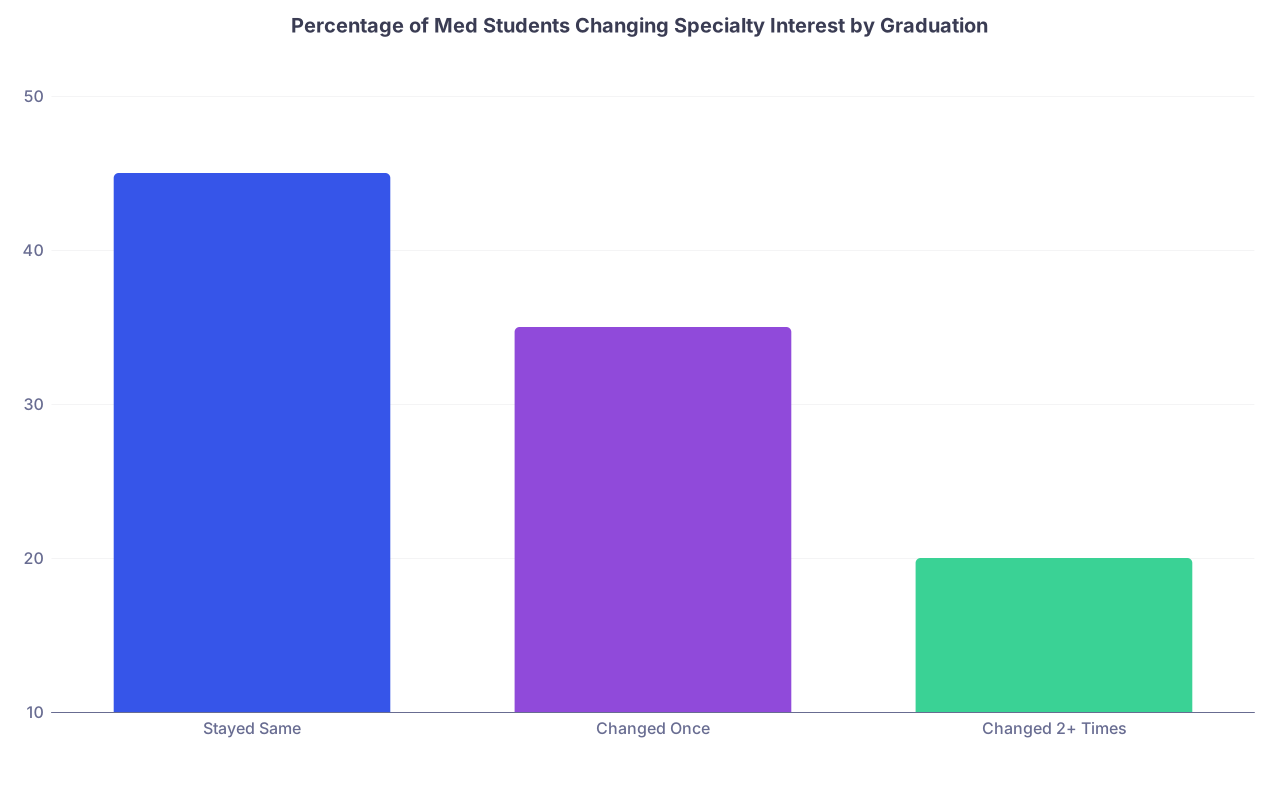
You feel like the one chaotic person who “can’t decide.” You’re not.
| Category | Value |
|---|---|
| Stayed Same | 45 |
| Changed Once | 35 |
| Changed 2+ Times | 20 |
Is that exact data from your specific school? No. But it’s very close to what you see anecdotally on most campuses and in the NRMP data: people change their minds a lot.
Things that routinely change specialty interest:
- A single rotation that sucked the life out of you
- A surprise mentor in another field who actually sees you
- Lifestyle reality checks: call schedules, culture, pay, geography
- Board scores not supporting your “dream field”
- Burnout, health issues, family needs
The only difference between you and your classmates? You’re being honest about it, and your change affects real people who know your name.
The Mentors You’re Afraid to Disappoint: What They Actually Care About
Here’s something uncomfortable: mentors are human and have egos. Some really do like the idea of “producing” future versions of themselves.
But the good ones — the ones worth keeping — care more about:
- Your long-term success and sanity
- Their reputation for supporting trainees well
- Not forcing someone into a field they’ll hate
You think they’re going to see your change as a personal attack.
Most will see it like this:
- “Okay, they’re recalibrating.”
- “How can I still help them?”
- “Can we redirect what we’ve done together to help them in the new plan?”
The outliers who do make it about them? They’re telling you something important about who they are. That’s data, not a life sentence.
Before You Talk to Anyone: Get Your Own Story Straight
Don’t walk into your mentor’s office (or inbox) with mushy, half-formed panic. That’s how you end up rambling, oversharing, and walking out feeling like you just torched that relationship.
You need a clear, simple narrative before you open your mouth.
Ask yourself:
- What specialty am I actually leaning toward now?
- Why do I think this is a better fit long-term?
- What concrete things have I experienced that pushed me toward this?
- What’s my timeline (Step exams, application cycle, upcoming rotations)?
Write it out. Like, literally, on a doc. Then tighten it until it sounds like a coherent, non-chaotic person.
Something like:
“I’ve realized I’m more drawn to long-term patient relationships than procedural work. My rotation in outpatient IM made that really clear — I enjoyed clinic and continuity far more than the OR. I’m now seriously considering internal medicine instead of surgery and would really value your perspective on how to make this transition thoughtfully.”
That sounds intentional. Grown-up. Not flaky.
How to Actually Have the Conversation (Scripts Included)
This is the part your brain is catastrophizing. Let’s defang it.
Step 1: Decide Who to Tell First
Don’t blast-text all your mentors. Start with one:
- Ideally, someone who’s been emotionally safe in the past
- Someone a bit removed from the highest-stakes stuff (like the PD who promised you a spot that doesn’t actually exist)
Then work outward.

| Step | Description |
|---|---|
| Step 1 | You Decide to Change |
| Step 2 | Trusted, Low-Stakes Mentor |
| Step 3 | Major Research/PI Mentor |
| Step 4 | Letter Writers in Old Field |
| Step 5 | Program Director/Big-Name Mentor |
Step 2: Email Template to Set It Up
Use something like this. Short, respectful, calm.
Subject: Quick check-in about career plans
Dear Dr. [Name],
I hope you’re doing well. I’ve been reflecting a lot on my career direction after recent rotations, and I’d really appreciate your perspective as I sort through some possible changes in specialty interest.
Would you be available for a brief meeting sometime in the next couple of weeks? I deeply value your mentorship and want to be thoughtful about my next steps.
Best,
[Your Name]
You don’t need to confess everything in the email. The goal is to get the conversation scheduled.
Step 3: What to Say in the Meeting
Rough script you can adapt:
Start with gratitude — briefly
“I really appreciate all the time you’ve invested in me and the opportunities you’ve given me in [specialty]. It’s meant a lot.”State the change clearly
“Over the past X months, I’ve realized I’m more drawn to [new specialty] than [old specialty]. I wanted to share that with you directly rather than you hearing it secondhand.”Give 2–3 grounded reasons
“On my [rotation/elective/experience], I noticed I felt more energized by [type of work/patient population] and less so by [other aspect]. I also care a lot about [specific value: continuity, lifestyle, procedures, acuity], and [new specialty] seems to match that better.”Reassure them their mentorship wasn’t wasted
“I’m grateful for everything I’ve learned in [old specialty]. It’s shaped how I think about patients and medicine, and that’ll stay with me no matter what field I go into.”Ask for guidance, not permission
“Given your experience, I’d really value your advice on how to move forward from here. Are there steps you’d recommend as I shift my focus to [new specialty]?”
That last line is crucial. You’re not a kid asking “Am I allowed to do this?” You’re a future colleague asking for advice.
Handling Their Reactions (Including the Worst Ones)
Your brain has already rehearsed the worst possible responses. Let’s drag those into the light.

Likely Reaction #1: Neutral–Supportive
Something like:
- “That makes sense.”
- “I’m not surprised actually.”
- “I’m glad you figured this out now instead of during residency.”
These folks might even help you network in the new specialty. Yes, that happens.
Likely Reaction #2: Mildly Disappointed but Accepting
You’ll hear:
- “That’s disappointing, but I understand.”
- “We were really excited about you in [old field], but you have to do what’s right for you.”
They may pull back a bit emotionally, which sucks, but they’re not out to sabotage you.
Possible Reaction #3: Guilt-Tripping or Defensive
This is the one you’re scared of:
- “After everything we’ve invested in you?”
- “You’re making a mistake.”
- “This will hurt your chances; programs want commitment.”
If someone goes there, you hold your ground without escalating:
“I really appreciate everything you’ve invested in me. I didn’t make this decision lightly. I’ve reflected a lot, talked with several mentors, and I’m confident this is the right fit for me long-term.”
And then—this is key—you stop explaining. Don’t get dragged into defending your mental health, family life, or preferences like they’re on trial.
If they stay hostile? You silently update their status in your mind from “core mentor” to “limited contact, low trust.” And you move on.
What About Research, Projects, and Letters?
This is where your anxiety probably spikes:
“What about the 2 years of research? The abstract with their name on it? The letter they already drafted?”
Let’s untangle it.
| Thing | What Usually Happens |
|---|---|
| Ongoing research project | You finish it, hand it off, or narrow your role |
| Published papers | Stay on your CV; still valuable everywhere |
| Strong letter writer | May still write a character/work ethic letter |
| Shadowing/clinic time | Becomes “exploration of field” experience |
| Niche skills (procedures) | Still make you look competent, adaptable |
Projects aren’t “wasted” just because they’re not in your final field. You show you can commit, do real work, and finish something. Programs care about that.
When talking to research mentors:
“I’m still committed to finishing [X project] and making sure it reflects well on our team. My specialty interest has shifted, but I respect the work we’ve done and want to see it through as much as my schedule allows.”
Most reasonable people are fine with that. They may redistribute some responsibilities. That’s okay.
Letters: Yes, ideally, most of your letters should now be from your new specialty. But a letter from a different specialty that says, “This student works hard, takes feedback, and elevates the team” is still gold.
Protecting Your Future While You Pivot
You’re scared this change = “red flag.”
It doesn’t. What is a red flag is:
- Looking scattered with no clear narrative
- Badmouthing your old specialty
- Acting resentful or defensive when asked about the change
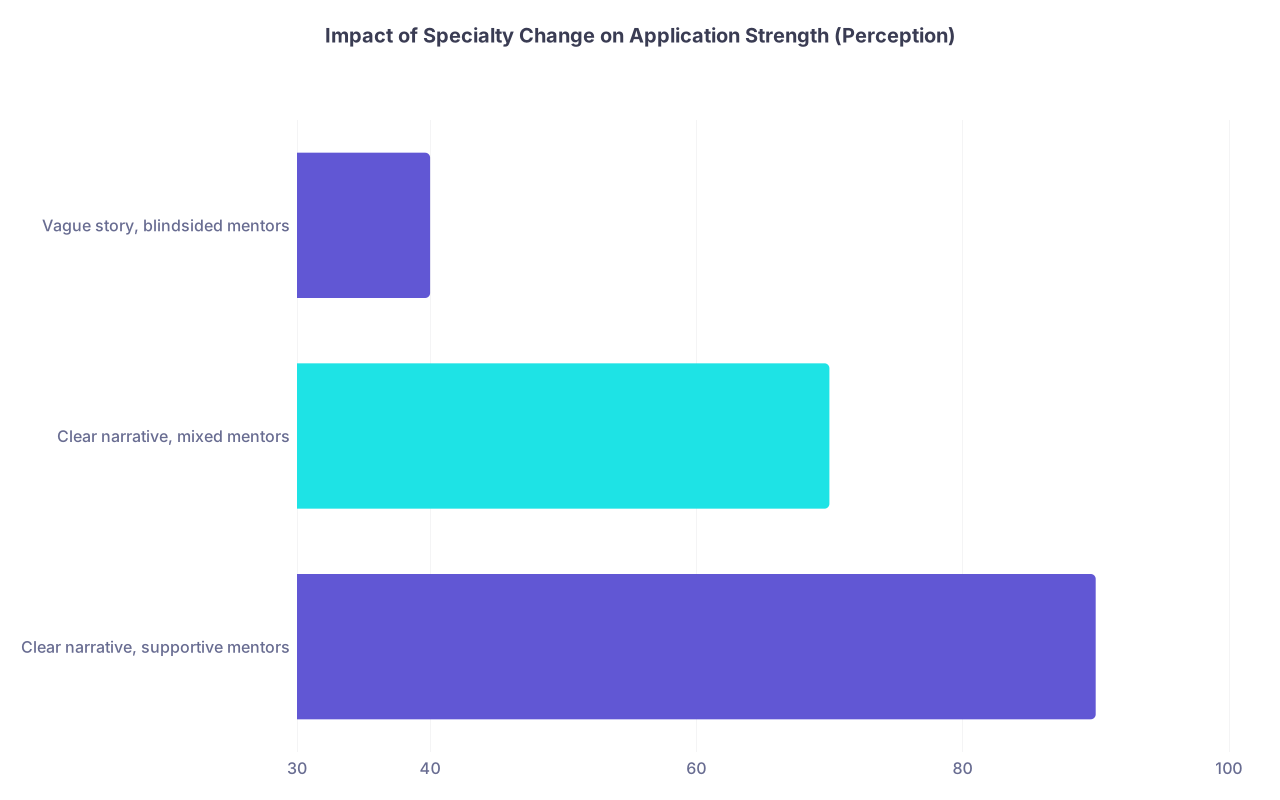
- Leaving a wake of burned or ghosted mentors who feel blindsided
You avoid that by:
- Telling key people early enough (not two weeks before ERAS opens)
- Framing the change as movement toward something, not running away
- Showing you can close loops: finishing projects, handing things off cleanly
- Being consistent in how you explain your change in your personal statement, interviews, and mentor conversations
| Category | Value |
|---|---|
| Clear narrative, supportive mentors | 90 |
| Clear narrative, mixed mentors | 70 |
| Vague story, blindsided mentors | 40 |
You don’t need every single mentor to clap for you. You need enough support and a coherent story.
The Quiet Grief No One Talks About
There’s also real grief here.
You’re not just changing specialties. You’re letting go of:
- The identity you thought you’d have (“future neurosurgeon,” “the OB/GYN person”)
- A group of residents you felt close to
- A vision of yourself that probably carried you through some awful nights studying
You’re allowed to be sad about that. Even if you’re 100% sure you’re making the right call.
Don’t confuse grief with doubt. Feeling sad doesn’t mean you chose wrong. It just means something mattered to you.
Talking to a therapist, school counselor, or trusted friend who isn’t in that specialty can help you separate “I feel guilty” from “I’m actually making a terrible mistake.”
What You Can Do Today So This Stops Eating You Alive
Here’s how you get unstuck in the next 24–48 hours:
- Open a doc and write your “specialty switch story” in 1–2 paragraphs. No filter, just get it out. Then tighten it.
- Identify 1 “safer” mentor to tell first. Not the scariest, most high-powered one. The one who’s treated you like a human.
- Send that short email asking for a meeting. Don’t overthink the wording; use the template and hit send.
- Make a list of old projects and beside each one, write: finish / hand off / pause. Start with one email or action to move one of them forward.
You’re not going to feel 100% calm and zen about this. That’s not the goal. The goal is to feel slightly less like you’re hiding a crime and slightly more like you’re steering your own life.
FAQ (Exactly 4 Questions)
1. Will programs think I’m unreliable if I changed specialties?
Not if your story makes sense. People switch from surgery to IM, from OB to psych, from peds to anesthesia all the time. If you can articulate specific experiences that led to your change, and your current app (letters, rotations, personal statement) now aligns with the new field, it looks like growth, not flakiness. What scares programs is someone who still seems unsure or bitter.
2. What if my main mentor reacts badly and cuts me off?
Then you learn a painful but important lesson about that mentor. It’ll hurt, but it’s survivable. You focus on building support in your new field, look for other attendings who’ve seen your work, and lean on more neutral letters (like medicine sub-I, core rotations). One mentor, no matter how powerful, doesn’t control your entire career.
3. Should I delay applying a year to “prove” my commitment to the new specialty?
Usually not necessary. If you can: get at least one rotation in the new field, a couple of strong letters, and a coherent personal statement before application season, that’s often enough. A research year might help in hyper-competitive fields, but you don’t take a year off just to make your story look cleaner unless multiple advisors who know you well are recommending it.
4. How honest should I be on interviews about why I switched?
Honest, but filtered. You don’t trash your old specialty or specific people. You focus on: what you learned from your prior interest, what experiences shifted your thinking, and what specifically you now value in the new field. Two or three clear points, said calmly, is enough. If you sound like you’re still defending yourself, you’re oversharing.
Open a blank email right now and draft that “quick check-in about career plans” message to one mentor. Don’t send it yet—just write it. Read it once, adjust one sentence, and then hit send. That’s your first step out of this mental prison.


