
Your US clinical experience bullets are either selling you or silently sinking you. Most IMGs waste that space with fluff, job descriptions, and clichés. Programs skim those bullets in seconds and decide whether you are serious material or just another observer.
Let me break down exactly how to write bullets that residency PDs actually respect.
Why USCE Bullets Matter So Much for IMGs
For IMGs, US clinical experience is not “extra.” It is your proof of concept.
A US MD with a weak activity description might get away with it because programs already trust the training pipeline. You do not have that luxury. Your bullets are doing several jobs at once:
- Showing you understand how US hospitals function
- Proving you did real, hands-on work (within legal limits)
- Signaling how you think, communicate, and prioritize
- Indicating your readiness for intern-level tasks
On ERAS, most PDs will look at, in some order:
- Exams (Step 1/2, attempts, trends)
- Medical school / graduation year
- US clinical experience (type, length, setting, description)
- LOR writers (US vs foreign, specialty, reputation)
If your USCE section reads like:
“Observed patient care in outpatient clinic. Attended rounds. Participated in discussions.”
That tells me one thing: you were there, but I have no clue how you operated, thought, or added value.
Now compare that to:
“Pre‑rounded on 8–12 internal medicine inpatients daily, independently reviewed overnight events, labs and imaging, and presented succinct assessments to the supervising attending.”
That sounds like someone who is closer to acting intern level. Same experience. Different articulation. Totally different signal.
The Non‑Negotiable Structure: How Each Bullet Should Look
Stop thinking in vague phrases. Every strong ERAS USCE bullet for IMGs needs four elements:
- Action – what you did
- Context – where/with whom you did it
- Complexity/Responsibility – how advanced or independent it was
- Impact/Outcome – why it mattered
Think of a formula:
Action verb + scale/scope + specific task + impact / purpose
For IMGs in USCE, that often looks like:
“Conducted focused HPI and physical exams on 4–6 new consults per clinic session under attending supervision, synthesized findings into problem‑based assessments, and presented plans during team huddles.”
Let me dissect that:
- “Conducted” → clear action
- “4–6 new consults per clinic session” → scale and workload
- “under attending supervision” → honest about level
- “synthesized findings into problem‑based assessments” → shows thinking, not just note-taking
- “presented plans during team huddles” → communication in US team structure
You do not need all four components in every bullet, but if most of your bullets are missing impact, scale, or context, they will read flat.
Good vs Bad Bullets – Side‑by‑Side
| Type | Weak Bullet | Strong Bullet |
|---|---|---|
| Inpatient | Observed morning rounds on internal medicine service | Pre‑rounded on 6–10 internal medicine inpatients daily, reviewed overnight events/labs, and delivered concise SOAP‑style presentations during morning rounds under attending supervision |
| Outpatient | Helped in clinic and discussed cases with doctor | Performed focused histories and basic exams on 5–8 follow‑up patients per half‑day in continuity clinic, documented draft notes in EMR, and proposed medication adjustments for attending review |
| Research‑heavy elective | Assisted with data collection for a quality project | Extracted data from 120+ heart failure admissions to identify readmission risk factors, entered data in REDCap, and co‑authored an abstract submitted to a regional cardiology meeting |
You see the pattern: numbers, supervision level, specific tasks, and clear contribution.
First, Clarify the Type of US Experience You Are Describing
Before writing any bullet, you need the right label and frame. Programs care whether this was:
- Hands‑on elective / sub‑internship (rare but gold for IMGs)
- Structured observership (formal program, hospital‑based)
- Shadowing (minimal involvement – usually weak)
- Research with clinical exposure
- Volunteer clinical role (free clinic, screening program, etc.)
Label it truthfully in ERAS. Then make the bullets match what is legally/ethically plausible.
If you are an IMG on a B‑1/B‑2 visa shadowing in a US hospital, you are not:
- “Admitting patients”
- “Placing central lines”
- “Writing independent orders”
And PDs know this. Lying or exaggerating here is how you get instantly discredited.
But you also do not have to undersell it with passive language like “exposed to,” “observed,” “allowed to see.” Your job is to show:
- What you actually did within your allowed scope
- How you engaged cognitively (clinical reasoning, communication, follow‑up)
- That you behaved like a serious learner, not a tourist
The Core Template I Give IMGs for USCE Bullets
Use this as your base, then adjust based on your specific role.
Bullet Template:
[Strong action verb] + [estimated frequency/volume] + [specific clinical task] + [supervision level / setting] + [impact on team, patient care, or your learning]
Examples:
“Performed focused histories and problem‑oriented physical exams on 3–5 new post‑MI inpatients daily under cardiology attending supervision, and formulated preliminary assessment and plan for discussion on rounds.”
“Drafted progress notes and discharge summaries on 4–7 general medicine patients per day in the EMR, integrating overnight events, labs, imaging, and consultant recommendations for attending review.”
“Coordinated follow‑up for abnormal lab and imaging results by communicating with patients and scheduling outpatient appointments, reducing missed follow‑up for clinic’s high‑risk diabetic cohort.”
Notice what you do not see: “responsible for,” “duties included,” “job description” type language. You are not pasting in a posting. You are proving function.
Choose the Right Verbs for Your Actual Level
Weak verbs ruin otherwise good bullets. There are three tiers to think about as an IMG.
Tier 1 – Purely Observational (shadowing)
If your experience was truly only observational, you are limited but not doomed.
Use verbs like:
- Observed
- Witnessed
- Attended
- Listened to
- Followed
But pair them with more active cognitive follow‑up:
- “Observed multidisciplinary tumor board discussions for 15+ complex oncology cases per week and tracked changes in management plans in the EMR to understand evidence‑based decision making.”
That is much better than: “Observed tumor board meetings.”
Tier 2 – Semi‑active (typical IMG observership / elective with some patient contact)
This is the most common. Use verbs like:
- Collected (histories, data)
- Performed (focused histories, non‑invasive elements of exam)
- Presented (patients, plans, journal clubs)
- Documented (draft notes)
- Reviewed (labs, imaging, charts)
- Counseled (with supervision)
Examples:
“Collected interval histories from 6–8 hospitalized heart failure patients daily, reviewed weight trends and medication adherence, and presented updates to the cardiology fellow and attending.”
“Documented draft progress notes in the EMR under supervision, synthesizing interval events, vital signs, and lab trends for 6–10 general medicine patients per day.”
Tier 3 – Advanced / Sub‑intern‑level (rare, usually formal electives)
Use only if you genuinely had this level of responsibility:
- Managed
- Initiated (within protocol)
- Adjusted (meds under supervision)
- Led (sign‑out, teaching sessions)
- Coordinated (discharge planning, follow‑up)
Example:
- “Managed daily care for a panel of 4–6 internal medicine inpatients as sub‑intern, including writing orders for labs/medications for attending co‑signature and coordinating with consultants, nursing, and social work.”
If you are not sure whether a verb is too strong, assume PDs have seen thousands of similar applications and will know when something sounds fake.
Quantify Your Experience Without Manufacturing Numbers
PDs like numbers because numbers imply scale, repetition, and reliability.
For USCE bullets, you can quantify:
- Patients per day or per clinic session
- Number of weeks or months in the rotation
- Number of cases you followed longitudinally
- Number of presentations, QI projects, or audits
You do not need perfect statistics. Reasonable estimates are fine.
Examples:
- “Pre‑rounded on 5–8 general medicine patients daily for 4 weeks, tracking trends in vitals, labs, and complex medication regimens.”
- “Followed 10+ new breast cancer patients longitudinally through diagnosis, surgery, and adjuvant therapy, documenting key decision points and guideline‑based management.”
- “Delivered 3 case presentations and 1 journal club to the internal medicine team, focusing on heart failure, COPD exacerbations, and anticoagulation in atrial fibrillation.”
Just avoid absurd or obviously fabricated numbers (“Saw 100 patients per day for 4 weeks” in an observership makes no sense).
Programs do not need perfection. They need plausible, consistent, honest representation.
Align Your Bullets With US Clinical Culture
US residency programs read between the lines. They are asking:
- Does this IMG understand hierarchy (student → resident → attending)?
- Do they know how inpatient vs outpatient actually works?
- Can they communicate in the concise, structured style US training expects?
- Are they team‑oriented or purely academic?
Your bullets should quietly answer yes.
Some ways to reflect that:
Show you know the structure
- “Presented to the resident and attending during daily rounds.”
- “Coordinated with nurses, social workers, and physical therapists for discharge planning.”
Use US terminology correctly
- “Inpatient,” “outpatient clinic,” “ED,” “progress note,” “discharge summary,” “sign‑out,” “rounds,” “attending,” “resident,” “fellow,” “EMR,” “QI,” “handoff.”
Show you can think in problems, not organ systems only
- “Developed problem‑based assessments for complex multimorbid patients (heart failure, CKD, diabetes) under attending supervision.”
Avoid non‑US phrasing that instantly outs you as unfamiliar
Phrases that read oddly to US PDs:- “Clerkshipshiped with”
- “Consulted to” (when you mean “consulted on”)
- “Case sheets” (vs “charts” or “records”)
It is fine to be an IMG. You do not have to pretend to be US‑trained. But sounding aligned with US clinical language helps your case.
Handling Different Settings: Inpatient, Outpatient, and Mixed
Let’s be specific about how to tailor bullets to your actual environment.
Inpatient USCE (Internal Medicine, Surgery, etc.)
Inpatient bullets should highlight:
- Rounds
- Pre‑rounding (if you did it)
- Following labs, imaging, and overnight events
- Writing or drafting notes
- Care coordination/discharge planning
- Exposure to acute changes, codes, rapid responses (if observed)
Example set for an inpatient IM observership:
- “Pre‑rounded on 5–7 internal medicine inpatients each morning by reviewing overnight events, lab/imaging results, and vital sign trends prior to team rounds.”
- “Presented brief patient updates and proposed assessment/plan to the senior resident and attending during daily rounds, receiving feedback on diagnostic reasoning and management priorities.”
- “Shadowed admissions from the ED to the general medicine service, observing history taking, physical exams, and admission order sets, and later reviewed cases in the EMR to follow hospital course.”
- “Observed rapid response and code situations, then debriefed with the team to understand ACLS‑based decision making and roles of each team member.”
Outpatient USCE (Clinic‑based)
Outpatient bullets should highlight:
- Volume per session
- Follow‑up and continuity
- Chronic disease management
- Preventive care
- Patient communication and counseling (with supervision)
Examples:
- “Collected interim histories on 6–10 established primary care patients per half‑day clinic, focusing on symptom changes, medication adherence, and new concerns for attending review.”
- “Educated patients with newly diagnosed type 2 diabetes on lifestyle modifications and medication adherence under attending supervision, using interpreter services when needed.”
- “Followed a cohort of 15+ patients with hypertension over 4 weeks, tracking blood pressure trends in the EMR and discussing medication titration strategies with the preceptor.”
Mixed or Specialty Clinics (Cardiology, Oncology, etc.)
Here you lean on:
- Specific conditions/procedures: heart failure, cath lab, chemo, pre‑op, post‑op
- Imaging or diagnostic test interpretation under supervision
- Longitudinal follow‑up of complex patients
Example for cardiology clinic + ward:
- “Attended cardiology clinic 3 days per week, where I performed focused histories on patients with heart failure and ischemic heart disease and presented to the fellow and attending.”
- “Reviewed echocardiogram and catheterization reports for my assigned patients, correlating imaging findings with clinical status and guideline‑directed therapy discussions on rounds.”
Where IMGs Commonly Go Wrong in USCE Bullets
I see the same mistakes over and over in ERAS drafts from IMGs.
1. Writing Job Descriptions Instead of Contributions
Weak:
“Responsibilities included assisting doctor, following patients, and maintaining records.”
Stronger:
“Tracked lab results and imaging for 10–12 hospitalized patients daily, flagged critical values to the resident, and updated patient lists to support safe daily rounds and discharge planning.”
Job descriptions are generic and interchangeable. Contributions sound like a real person.
2. Over‑claiming Clinical Responsibility
If your visa/status did not allow direct patient care, do not claim:
- “Performed complete physical exams on all new admissions”
- “Prescribed medications”
- “Managed ventilator settings”
That is either illegal, or so implausible that PDs will discount all your bullets.
Instead, keep the action honest but thoughtful:
- “Observed and then discussed physical exam findings with the resident, comparing bedside impressions with imaging and lab data.”
- “Formulated draft medication plans for hypertension and heart failure based on guidelines, then compared them to the attending’s final orders.”
3. Overloading with Buzzwords
If every bullet has “evidence‑based,” “multidisciplinary,” “patient‑centered,” “holistic,” you sound like a brochure, not a doctor.
Pick real tasks and real actions. The style will take care of itself.
4. Zero Outcome or Learning
If all your bullets are: “Did X, did Y, did Z,” you sound like a checklist.
Add learning or impact occasionally:
- “Compared US sepsis management bundles with practices in my home country, identifying key differences in early recognition and fluid resuscitation protocols.”
- “Improved my proficiency with US EMR documentation by drafting daily notes and receiving structured feedback from residents and attendings.”
Not every bullet needs a reflective component. One or two do help.
Example: Rewriting an IMG’s USCE Section
Let me show you a typical before/after for an internal medicine observership.
Raw version (what I often see):
- Observed internal medicine ward rounds and outpatient clinics.
- Discussed cases with attending.
- Helped with documentation.
- Learned about US healthcare system and EMR.
Rewritten version:
- Pre‑rounded daily by reviewing charts, overnight events, and lab/imaging results for 5–8 general medicine inpatients prior to rounds with the resident and attending.
- Presented concise interval histories and problem‑focused assessments during morning rounds, receiving feedback on diagnostic reasoning and prioritization of management issues.
- Drafted components of daily progress notes and discharge summaries in the EMR under direct supervision, integrating consultant recommendations and medication changes.
- Attended 2–3 internal medicine clinics per week, where I collected interim histories from follow‑up patients with chronic diseases (diabetes, heart failure, COPD) and discussed proposed management adjustments with the preceptor.
- Compared sepsis, heart failure, and COPD management protocols between the US and my home institution, identifying practice differences in early intervention and discharge planning.
Same experience. Different level of credibility.
How Many Bullets and How to Order Them
For each USCE entry on ERAS:
- Aim for 3–6 strong bullets
- Put the most “advanced” / resident‑like tasks at the top
- Group related tasks (inpatient functions together, outpatient functions together)
- Avoid repeating the same phrase structure in every bullet
If you did multiple rotations at the same site (e.g., 3 separate 4‑week IM observerships), decide whether to:
- List them as separate experiences (if they were truly distinct, e.g., cards, ICU, wards)
- Or consolidate under one experience and make that experience clearly longitudinal
Longitudinal exposure with increasing responsibility sells better than random, disconnected observerships.
Visual: How PDs Informally “Score” USCE Bullets in Their Heads
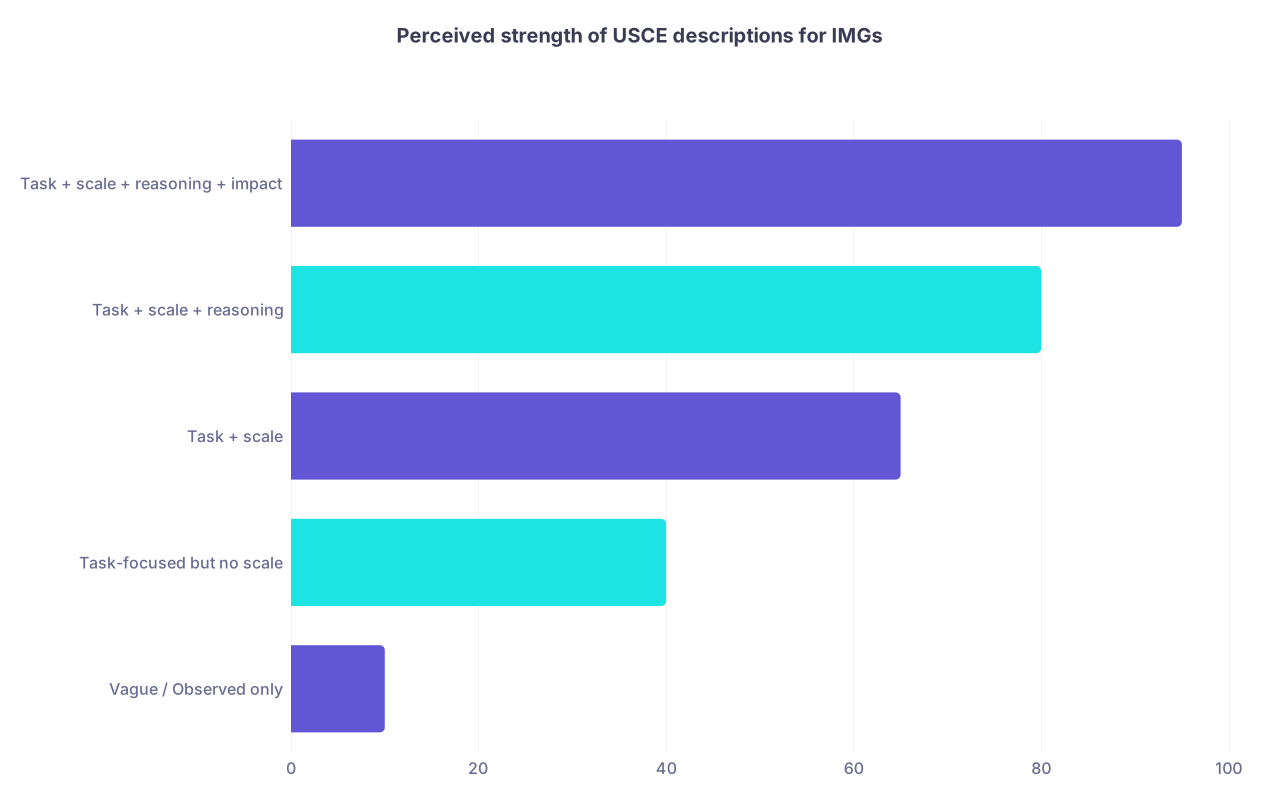
| Category | Value |
|---|---|
| Vague / Observed only | 10 |
| Task-focused but no scale | 40 |
| Task + scale | 65 |
| Task + scale + reasoning | 80 |
| Task + scale + reasoning + impact | 95 |
The closer you are to the right side of that chart, the more you look like someone who can function on day one of internship.
Quick Process to Clean Up Your Existing ERAS Bullets
If you already wrote your experiences, do this systematically:
Circle all weak verbs
Words like “helped,” “assisted,” “responsible for,” “involved in,” “exposed to.”
Replace with clearer, more concrete verbs.Add scale to at least half the bullets
Patients per day, weeks of rotation, number of clinics, presentations, or cases.Check legal plausibility
Does each bullet match your role/visa situation? If not, dial back the claim and make learning/thinking the focus.Align with specialty if possible
For internal medicine, highlight chronic disease, complex multimorbidity, discharge planning, and EMR‑based continuity.
For surgery, emphasize pre‑op and post‑op management, wound care, OR exposure, peri‑operative optimization.Read them out loud
If you feel like you are performing, overselling, or using words you never say in real life, dial it back. Authentic but precise wins.
Final Thoughts
Three points I want you to remember:
- Your USCE bullets are not a diary of what you saw. They are evidence that you can think and function like a junior member of a US team, within the real limits of your role.
- Strong bullets follow a pattern: clear action, realistic scope, specific clinical task, and at least occasional impact or learning. If you are missing any two of those, your section is weak.
- Honesty and precision beat exaggeration. Program directors know exactly what IMGs are usually allowed to do. Describe your actual work intelligently, and you will stand out more than the ones trying to fake a sub‑internship they never had.