
The default fourth‑year schedule is built for a healthy, 25‑year‑old with unlimited stamina. You are not that template student—and your timeline cannot be either.
If you have a chronic illness, disability, mental health condition, or significant health needs, you cannot afford a chaotic, last‑minute approach to away rotations. The system will not automatically adapt to you. You have to build the structure yourself—month by month, then week by week.
I am going to walk you through exactly when to:
- Talk to your doctors
- Contact disability offices
- Choose rotation sites with realistic call systems
- Time your medications, infusions, therapy, and flares
- And still end up with a schedule that makes sense for the match
All mapped against a typical U.S. MD/DO fourth‑year timeline.
18–12 Months Before Fourth Year: Foundation And Reality Check
At this point you should stop pretending you can “just push through” anything.
This phase is often late MS2 to early MS3.
Medical and functional reality check
By 18–12 months before M4 starts, you should:
- Meet with your main specialist(s) and PCP
- Ask directly: “What parts of a typical away rotation might be unsafe or unrealistic for me?”
Clarify:
- How many consecutive nights you can safely work
- Whether you have activity limits (lifting, standing, walking distances)
- Risks with extreme fatigue, sleep deprivation, heat, cold, infectious exposure
- Any predictable flare patterns (hormonal, seasonal, stress‑triggered)
You want written documentation now, not in a panic later. Ask your clinician for a detailed letter describing:
- Diagnosis and stability
- Functional limitations (not just the label)
- Specific recommended accommodations
Initial specialty and location thinking
You do not need a final specialty yet, but you should be brutally honest about direction.
At this point you should:
- Make a “green/yellow/red” list of specialties based on your health
- Green: Fits your limits (e.g., outpatient psych with mobility issues)
- Yellow: Possible with precise accommodations (e.g., IM with fatigue issues)
- Red: Probably incompatible (e.g., trauma surgery with fixed infusion schedule)
Also:
- Roughly list regions you can safely rotate in
- Near your own specialists?
- Near family support?
- Avoid high altitude, extreme heat, or long daily commutes if those are health triggers
12–9 Months Before Fourth Year: Information Recon And Quiet Conversations
Now you are in mid‑MS3 territory. Core rotations are busy, but this is when smart students start planning.
Map your health needs onto actual time
At this point you should build a rough 12‑month personal “health operations” map:
- Infusion or injection schedules
- Follow‑up visits that cannot move easily
- Known procedures or evaluations you expect
- Insurance renewal dates or disability paperwork cycles
Then overlay that onto a generic M4 template:
- 2–3 away rotations
- 2–3 home audition rotations
- Electives
- Interviews
- Step 2/Level 2 window
You are not locking in specifics yet. You are identifying bad months.
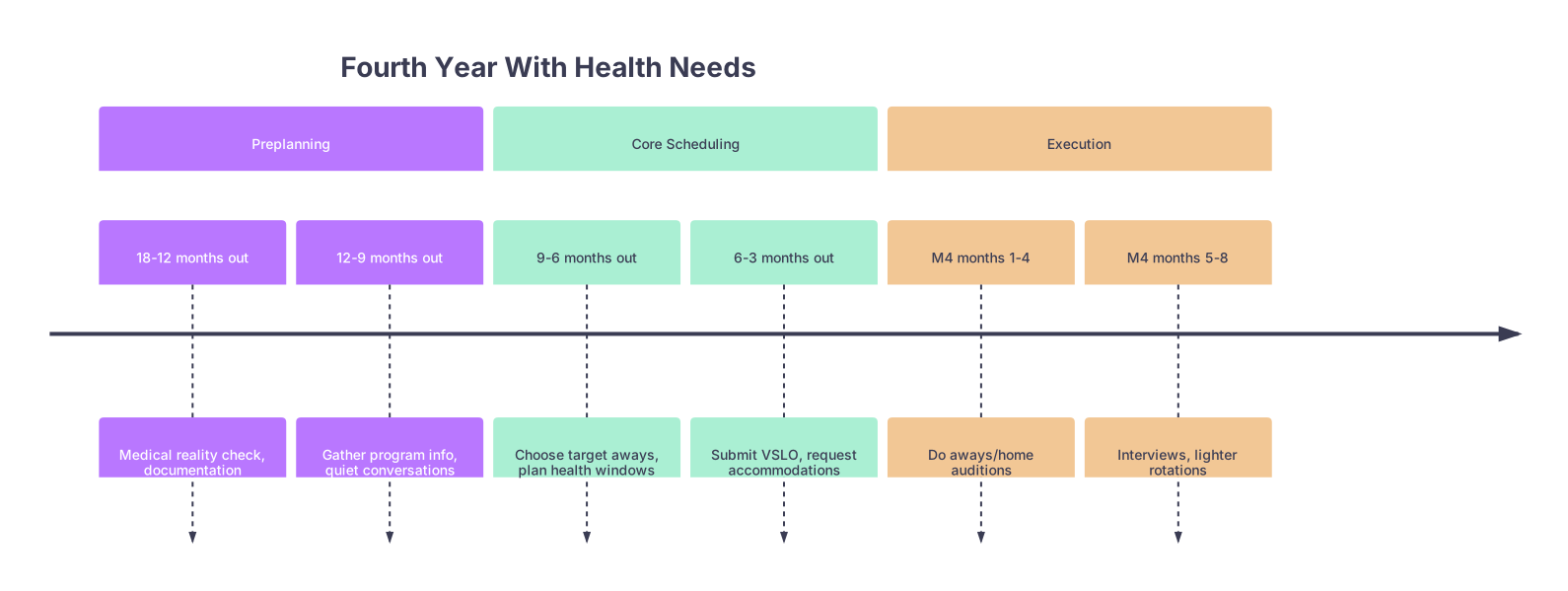
| Period | Event |
|---|---|
| Preplanning - 18-12 months out | Medical reality check, documentation |
| Preplanning - 12-9 months out | Gather program info, quiet conversations |
| Core Scheduling - 9-6 months out | Choose target aways, plan health windows |
| Core Scheduling - 6-3 months out | Submit VSLO, request accommodations |
| Execution - M4 months 1-4 | Do aways/home auditions |
| Execution - M4 months 5-8 | Interviews, lighter rotations |
Quiet, off-the-record inquiries
This is where experienced students with health needs pull ahead.
At this point you should:
- Discreetly talk with senior students or residents in your target specialties
- Ask: “Which programs are humane about schedule changes?”
- “Where have you seen people with significant health or family needs do well?”
You are not asking for sympathy. You are collecting data.
Programs vary wildly. Some are rigid: every away is 28 days, 1:3 call, no exceptions. Some quietly adjust schedules if you ask early and involve the right people.
Study the policies
Before you fall in love with a shiny program website:
- Look up each institution’s:
- Student disability office
- GME disability and leave policies (even though you are not a resident yet, the culture usually aligns)
- Parking and transportation setups
- On‑call meal and rest arrangements
If their public disability information is vague and hard to find, assume the process will be slow and painful.
9–6 Months Before Fourth Year: Concrete Targeting And Health‑Aligned Strategy
This is when most schools finalize M4 structures and when VSLO (or equivalent) details appear.
At this point you should stop hand‑waving and make decisions.
Decide: How many aways do you actually need?
For many fields (FM, psych, peds, pathology), 0–1 away rotation is enough. Doing 3 aways with a brittle chronic condition just to “keep up” is a recipe for disaster.
| Specialty Type | Typical Away Count | Comment |
|---|---|---|
| Noncompetitive (FM, Psych) | 0–1 | Often optional |
| Moderately competitive (IM subspecialty, Anesthesia) | 1–2 | Targeted aways helpful |
| Competitive (Derm, Ortho, ENT) | 2–3 | Aways heavily weighted |
| Procedure-heavy with call (Surgery, EM) | 1–3 | Be very realistic with health limits |
If your health needs are significant, leaning to the lower end of these ranges is not lazy. It is self‑preservation.
Align aways with your good health windows
At this point you should:
- Identify your 2–3 best consecutive months physically and mentally.
- Reserve those for:
- Away rotations
- Or absolutely critical home audition rotations
Protect these windows like a hawk.
- Do not take Step 2 during your best health month if you can avoid it.
- Do not double‑stack high‑intensity aways back‑to‑back unless your condition is extremely stable.
For example:
- You have autoimmune disease that flares in winter. Then your aways belong in late spring / early fall, not November.
- You have monthly IVIG that knocks you out for 48 hours. Then do not schedule an away where you would need to start mid‑rotation infusions at a completely new institution.
Shortlist programs with realistic structures
Now you need to go granular. For each target hospital, find or directly ask about:
- Call schedule (frequency, in‑house vs home call)
- Shift length norms (are 14–16 hour days standard on the service?)
- Required night float or ED shifts
- Housing and parking distance from clinical areas
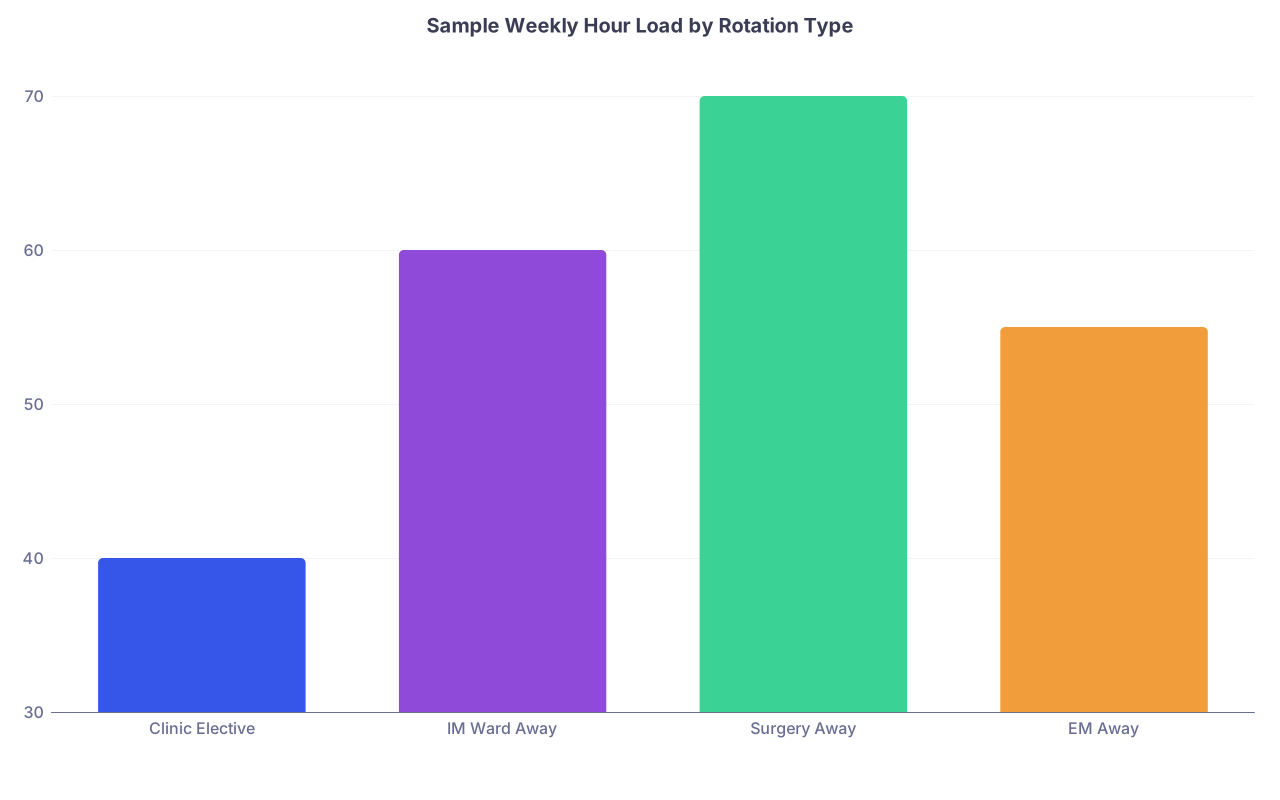
| Category | Value |
|---|---|
| Clinic Elective | 40 |
| IM Ward Away | 60 |
| Surgery Away | 70 |
| EM Away | 55 |
If you need to manage pain, blood sugar, or fatigue, chasing the 70‑hour/week away to impress a single program is usually a bad trade.
6–4 Months Before Fourth Year: Applications And Formal Accommodation Requests
Now you are entering the real commitment phase. VSLO is open, your school wants your M4 draft, and this is where most students with health needs either set themselves up for a manageable year—or for a meltdown.
Sequence your applications intentionally
At this point you should:
- Submit applications to your health‑compatible programs first, not just the “brand name” ones
- Time your away blocks:
- First away: not your very first M4 month, unless your health is rock‑solid
- Preferably Month 2 or 3 of M4, when you have warmed up but are not yet burned out
Many students with chronic conditions do best with:
- 1 away rotation early (Month 2–3)
- 1 home audition after (Month 4–5)
- Then a lighter or outpatient month pre‑interview season
Start formal accommodation processes early
This is where people underestimate bureaucracy.
At this point you should:
Contact your home school disability office
- Update them with your newest documentation
- Clarify: what documentation can be shared or referenced for away sites?
Ask each away program (through their listed contacts, not the PD directly at first):
- “What is the process for a visiting student to request disability accommodations for rotations?”
You want written processes and timelines. Some places need 6–8 weeks to set up basic arrangements (like accessible parking or adaptive devices).
Typical accommodation categories you might request (examples, not an exhaustive list):
- Closer parking or shuttle access
- Limits on consecutive night shifts
- Permission to sit during long cases or exams
- Protected time window during the day for medication or glucose checks
- Avoiding specific tasks that are physically unsafe (heavy lifting, certain exposures)
Do not wait until orientation day to bring this up. That is how reasonable requests turn into “disruptions.”
4–2 Months Before Fourth Year: Locking Dates, Health Logistics, And Backup Plans
Your away offers are coming back. Your M4 schedule is taking shape. Now timing with your body becomes very precise.
Confirm rotation specifics before committing
At this point you should, for each potential away:
- Ask to see or at least discuss:
- Typical weekly schedule
- Call schedule and expectations
- Required overnight or off‑site experiences
If a program replies with “it varies, just be flexible” and will not give you any structural detail, that is a red flag for someone with serious health needs.
Sync your health operations to each rotation
Now build a rotation‑by‑rotation health plan. For each month, outline:
- Medication refill timing (so you are not trying to refill specialty meds in a new state mid‑month)
- Infusions or injections
- If they fall during an away, contact the site early to see if you can:
- Do them just before leaving, or
- Arrange them at the away institution with your specialist’s orders
- If they fall during an away, contact the site early to see if you can:
- Counseling/therapy
- Decide: maintain telehealth across state lines (if legal) or schedule more intensively before/after away

The week before each away should not include:
- Major medical procedures
- Aggressive diagnostic workups
- Big medication changes, unless unavoidable
You want stability going in.
Build your “if things go sideways” protocol
At this point you should write down, literally:
- What constitutes a dangerous situation for you on rotation (e.g., chest pain with lupus, certain neuro symptoms, severe hypoglycemia)
- Who you contact first if that happens:
- Your attending
- The clerkship director
- Your home dean’s office
And you should have:
- A brief health summary you can show a new urgent care/ED or occupational health
- A list of your meds and allergies on your phone and in your bag
You are not planning to crash. You are reducing the damage if you do.
During Each Away Rotation: Week‑By‑Week Survival And Performance
Now you are on site. The “timeline game” shifts from monthly planning to weekly adjustments.
Week 0 (Arrival / Orientation Week)
At this point you should:
- Confirm your accommodations in person
- Check that your parking pass, access badges, and schedule match what was agreed
- Quietly identify:
- Nearest accessible bathroom
- Spots where you can sit for 5 minutes when pain/fatigue spikes
- A fridge or secure spot for meds if needed
If something that was promised is missing—say it in Week 0, not Week 3.
Week 1: Baseline and pacing
Your goal is not to impress by pretending to be superhuman. Your goal is to:
- Show up reliably
- Be prepared
- Pace yourself enough that you do not implode by Week 3
At this point you should:
- Track your energy and symptom pattern day‑to‑day
- Note what specific tasks trigger problems (e.g., standing 4+ hours, late‑night notes)
If you realize the schedule is harsher than described, talk early:
- Start with the chief resident or clerkship coordinator
- Frame it as: “I want to perform well and stay safe; here is what would help.”
Most programs are more flexible in Week 1 than in Week 4.
Week 2–3: Performance push with controlled risk
These weeks are where letters are usually written. You want to be at your best here, not in Week 1.
At this point you should:
- Front‑load your reading and case prep on days when your health is better
- Batch tasks that do not require physical presence (reading, notes) into times when you are already sitting or resting
If your condition is flaring:
- Communicate early and specifically
- “My [condition] is flaring; I can still come in but may need to leave by X time”
- Or “I need to see occupational health today, and here is a note from my treating physician.”
Do not disappear. Vanishing without explanation is how you get a “concerning reliability” comment in your eval.
Week 4: Landing the rotation without crashing
This is where overachievers with chronic illness sabotage themselves—by emptying the tank completely.
At this point you should:
- Protect your sleep aggressively in the final 5–7 days
- Schedule any non‑urgent medical follow‑up after the final evaluation date
- Ask for feedback explicitly:
- “What should I work on between now and residency?”
- If appropriate and the relationship is strong, “Would you feel comfortable writing a letter for me?”
And then, after the last day, you rest deliberately. No 36‑hour turnarounds to the next intense rotation if you can avoid it.
Aligning Fourth‑Year As A Whole: Interviews, Electives, And Health
Away rotations are not the whole story. The rest of M4 can either support your health or grind you down.
Position lower‑intensity blocks around interviews
At this point you should:
- Cluster interviews into months where you schedule:
- Lighter electives
- Research or reading months
- Outpatient rotations with more predictable hours
Avoid:
- Doing a brutal ICU right before peak interview travel
- Stacking night float right before a multi‑city interview week
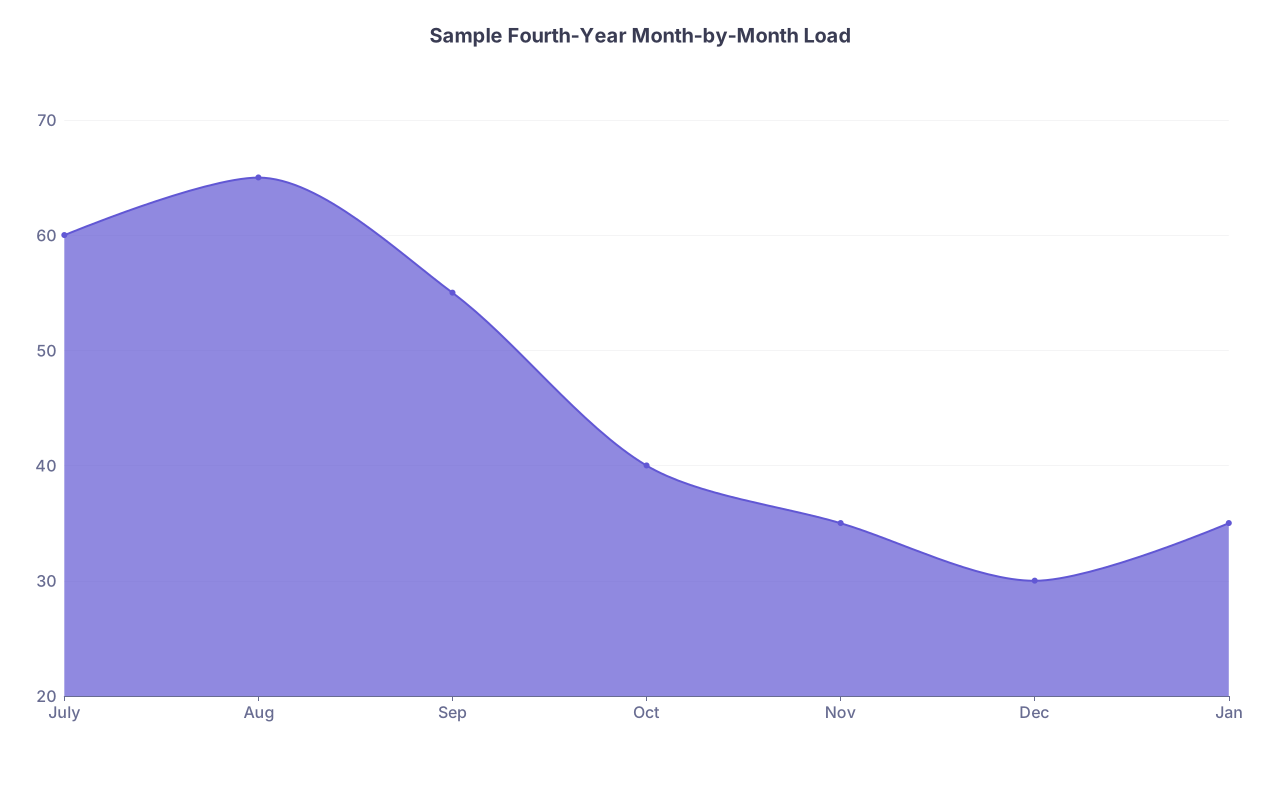
| Category | Value |
|---|---|
| July | 60 |
| Aug | 65 |
| Sep | 55 |
| Oct | 40 |
| Nov | 35 |
| Dec | 30 |
| Jan | 35 |
You want your workload trending down as interview season ramps up, not the other way around.
Keep your care team in the loop
At this point you should:
- Send your specialists a concise M4 schedule summary
- Flag:
- Travel‑heavy months
- Away blocks out of state
- Planned surgeries/procedures
Ask explicitly:
- “If I get sick on an away, how do you want me to contact you?”
- “What documentation can you provide quickly if my rotation director or disability office needs clarification?”
This makes crisis care smoother.
Common Pitfalls And How To Avoid Them
Three patterns I see over and over:
Overstuffed early M4.
- Students pack May–August with back‑to‑back aways and tough home rotations. By October, they are barely standing for interviews.
Late accommodation requests.
- People hope it will be fine, do not file anything, then hit a crisis week 3. Remediating the rotation is far worse than being slightly “high maintenance” up front.
Ignoring mental health load.
- Travel, new teams every month, constant performance evaluation—this is brutal even if your disability is “only” physical. Therapy and support are not optional luxuries.
Your goal is not to prove that you can suffer more than everyone else. Your goal is to complete M4, match, and still have enough health left to function as an intern.
FAQ (Exactly 3 Questions)
1. Will disclosing my disability or health needs during an away rotation hurt my chances of matching there?
Sometimes, badly handled disclosure can hurt you. That is why timing and framing matter. The safer pattern is: disclose through the official disability or student affairs channels early, focus on functional limitations rather than labels, and let them communicate structural needs to the team. If your health need is visible or affects scheduling (like no overnight call), hiding it usually backfires and reads as unreliability instead of honesty. Programs that penalize you for basic, reasonable accommodations are usually bad places for you long term.
2. How many aways should I cut if my condition is unpredictable or flares often?
If your disease is volatile, I would cap aways at one—two at most, and only if your first goes smoothly. One strong away plus one strong home audition is enough for many specialties, especially if you do well clinically and have solid letters. Use the “saved” time for electives with humane hours, Step 2 prep, and stabilizing your health. A clean, consistent clinical record beats three erratic aways with mid‑rotation absences.
3. What if an away program refuses or “cannot” provide my needed accommodations?
Then you do not go. Period. If your accommodation is reasonable (e.g., closer parking, adjusted call, time for meds) and their disability office or student affairs says no, that is excellent information: it is not a safe environment for you as a student or as a resident. Talk with your home dean and disability office about alternatives—another site, a home rotation with similar content, or a different schedule. Protecting your license and long‑term health is more important than a single program’s letter.
Open your calendar and your medication list right now. Take 10 minutes to mark your three “best” health months in the coming year—and reserve them for your most demanding rotations before anyone else fills that space for you.