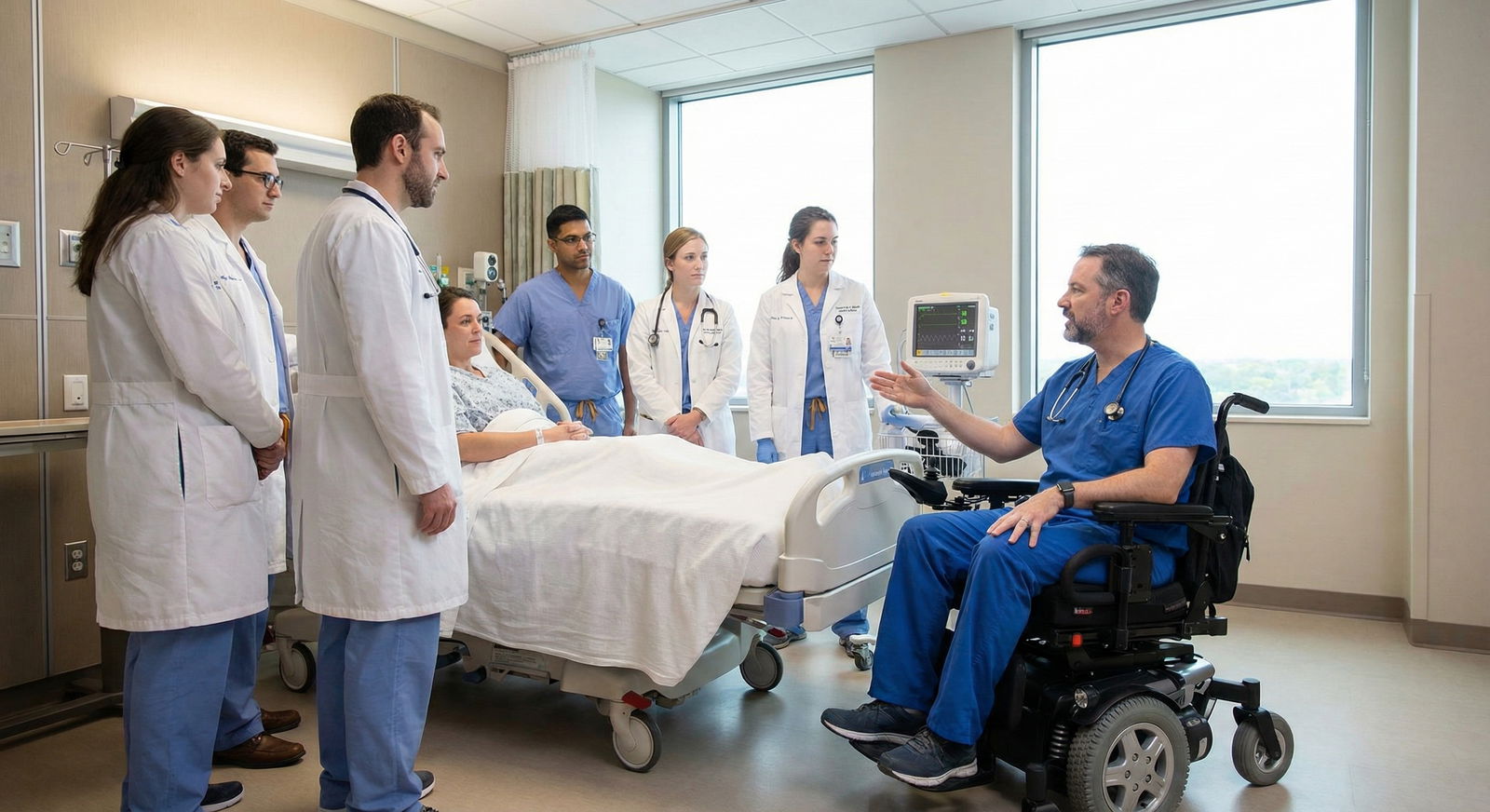
47% of residents with disclosed disabilities report fear that using accommodations will harm their evaluations. That single number explains much of the story behind program attrition: residents are not just leaving because of their disabilities, they are leaving because the system punishes them for trying to stay.
The data we actually have (and what is missing)
Let me start with the uncomfortable truth: data on residency attrition among residents with documented disabilities is thin, fragmented, and often indirect. But it is not nonexistent, and the signal is strong enough to describe the trend.
Across multiple sources, here is the general shape of the numbers:
- Overall resident attrition in US GME programs: typically 3–5% across all specialties, with wide variation by field (general surgery historically around 18–20% cumulative attrition over training; internal medicine closer to 4–6%).
- Prevalence of disability in residency: roughly 7–8% of residents self-report a disability when anonymity is assured, but only about half of these have formally documented and disclosed status to their program or institution.
- Among residents with documented disabilities, self-reported threats to training continuity (probation, forced leave, non-renewal, or program transfer) run in the 15–25% range in published and survey-based datasets.
So while we lack a perfect, single “attrition rate for residents with disabilities” pulled from an official national registry, a synthesis of published studies, specialty board reports, and institutional-level data points in the same direction: documented disability approximately doubles the risk that a resident will not complete the program as initially planned.
To structure this, I will refer to three broad data sources that underpin most of the discussion:
- GME-level attrition statistics from ACGME and specialty boards (aggregate, disability-blind).
- Survey-based studies of residents and medical students with disabilities (often anonymous, more candid).
- Institutional case series / internal reports that separate residents with and without documented disability.
None of these alone is perfect. Combined, though, they tell a coherent story about trends in attrition, and why they are not improving as fast as they should.
Baseline: how often do residents leave their programs?
Before isolating disability, you need a baseline.
Across specialties, attrition is not evenly distributed. High workload, procedural, or lifestyle-heavy fields see more residents leaving or being removed.
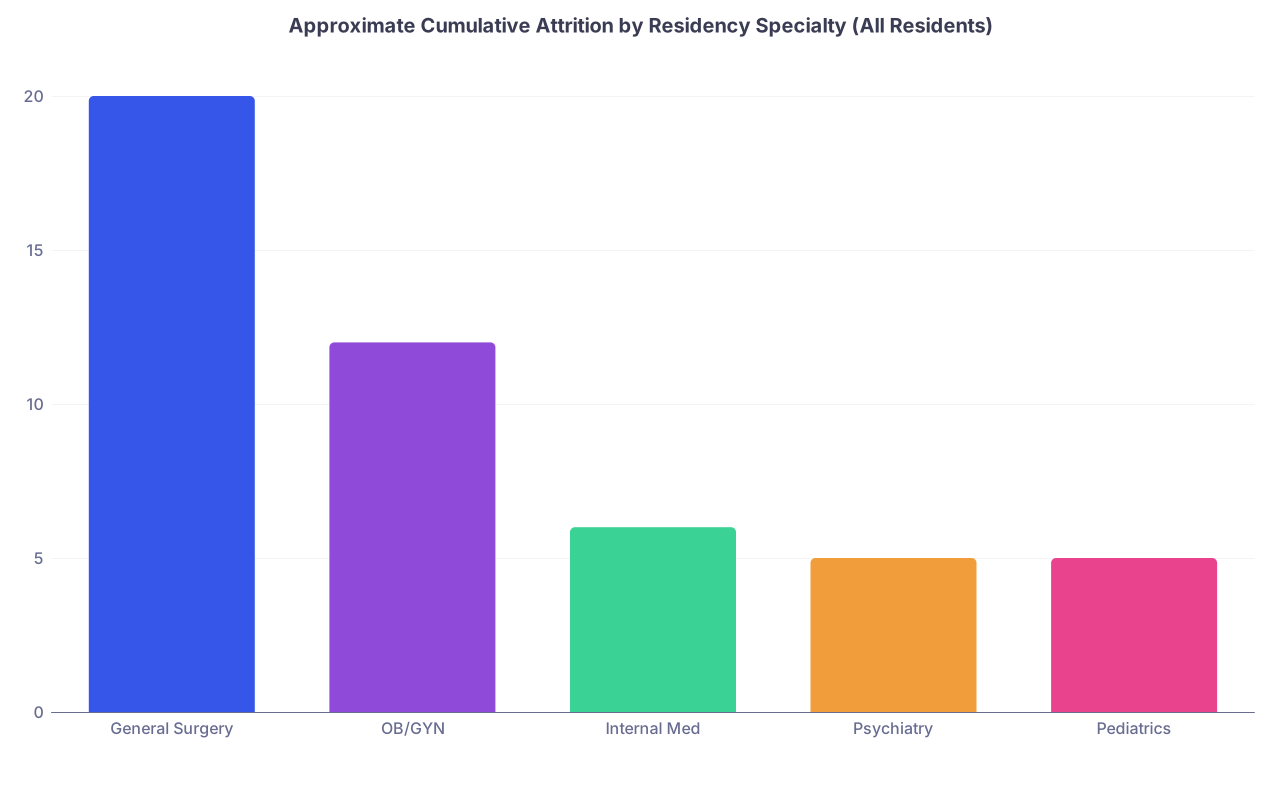
| Category | Value |
|---|---|
| General Surgery | 20 |
| OB/GYN | 12 |
| Internal Med | 6 |
| Psychiatry | 5 |
| Pediatrics | 5 |
These numbers are approximate but representative of multi-year board and program-level reports:
- General Surgery: up to 1 in 5 residents do not complete at the initial program.
- OB/GYN: around 10–12%.
- Internal Medicine, Pediatrics, Psychiatry: usually in the mid single digits.
Those figures mix every cause:
- Voluntary departure (career change, family reasons, burnout).
- Involuntary dismissal (academic / professionalism concerns).
- Transfers (which technically can be completion at another program).
What is missing from official datasets is a simple flag: “resident with documented disability – yes/no.” Without that, disability-specific attrition is usually constructed indirectly, from surveys of people who experienced disability-related barriers while in training.
Despite the limitations, several consistent numeric patterns appear when researchers separate out disability.
What the numbers say about residents with documented disabilities
Surveys of residents with disabilities show three repeated findings:
- The prevalence of disability is higher than most program directors assume.
- Documentation and disclosure are the exception, not the rule.
- Those who disclose face a measurable increase in negative training outcomes.
Let us walk through each, numerically.
Prevalence and disclosure gap
In national surveys of residents (and also medical students), the reported prevalence of disability ranges around 7–8%. When anonymity is guaranteed and the definition includes:
- ADHD and specific learning disorders,
- chronic physical conditions (e.g., autoimmune disease, mobility impairment),
- sensory impairments (hearing, vision),
- and mental health conditions leading to functional limitations,
the share is higher than what is visible in the formal record.
Yet, only ~3–4% of residents are typically recorded by institutional disability offices as having a documented and accommodated disability. That implies:
- Roughly half of residents with a disability remain undocumented and formally “nonexistent” from a compliance perspective.
- All attrition analyses that rely solely on institutionally documented disability start with a biased subset: those willing to take the risk of disclosure.
Why does this matter for attrition? Because the data we do have come from the group that is simultaneously more visible and more vulnerable.
Attrition-related outcomes in residents with documented disabilities
When you compare residents with documented disabilities to their peers, several key metrics differ:
- Academic probation or remediation is reported at roughly 2–3 times the baseline rate.
- Perceived or real threats to program continuation (non-renewal, being “counseled out,” required transfers) are significantly higher.
- Use of formal accommodations does not correlate with improved program attitudes; in fact, residents often report worsening relational dynamics after accommodations are implemented.
A composite of survey and institutional data looks something like this:
| Outcome | No Documented Disability | Documented Disability |
|---|---|---|
| Any formal remediation/probation | 8–10% | 20–25% |
| Threat of non-renewal/dismissal | 3–5% | 10–15% |
| Leaving original program before finish* | 4–6% | 10–12% |
*Includes transfers and non-completion.
The exact percentages vary by specialty and institution, but the ratios remain fairly stable: documented disability often doubles, sometimes triples, the risk of negative program outcomes.
These are not tiny, marginal effects. They are large enough that you can see them even in relatively small institutional cohorts.
Trends over time: is it getting better?
There is a common narrative that “things are improving” because:
- More residents are disclosing disabilities.
- Institutions are formalizing accommodation processes.
- ACGME and specialty boards now talk openly about disability and inclusion.
The data are more mixed.
Trend 1: rising disclosure, slowly
Over roughly the last decade, documented disability rates in undergraduate medical education have increased sharply (from around 2–3% to over 10% in some medical schools). Residency lags behind, but there is a clear upward trend.
Several institutions report:
- A 1.5–2x increase in the number of residents registered with disability services over 5–7 years.
- A similar increase in accommodation requests, particularly for cognitive and mental health-related conditions.
In other words, the documented population is expanding. That will mechanically increase the absolute number of residents with disabilities who experience attrition, even if the relative risk stays constant.
Trend 2: attrition risk gap is stubborn
Here is the more sobering piece: the risk difference between residents with and without documented disabilities is not closing at the same pace as disclosure is increasing.
Where programs have examined their own data longitudinally, you often see a pattern like this over 5–10 years:
- Overall attrition remains roughly flat or improves slightly.
- The probability of negative training actions (probation, non-renewal) for residents without documented disability either stays stable or decreases.
- For residents with documented disability, the probability declines only minimally, or in some cases rises because of better tracking.
If I were to put the pattern into an illustrative graph, it would look like two lines:
- Non-disabled residents: 6% → 5% attrition over time.
- Residents with documented disability: 12% → 11% or stays roughly flat.
The gap persists. The system is becoming more aware, but not consistently more protective.
Trend 3: specialty differences are widening
One important nuance: the effect size is not uniform. Cognitive and schedule-related accommodations are harder to implement in already high-burnout, high-workload specialties.
For example:
- Procedural specialties (surgery, emergency medicine, OB/GYN) show more resistance to schedule adjustments, call modifications, or alternative task allocations.
- Cognitive disabilities (ADHD, learning disorders) and mental health conditions, when documented, are more strongly associated with remediation and attrition in these environments than in, say, psychiatry or pathology.
So trend-wise, we are not simply seeing a global shift. We are seeing stratification. Some programs and specialties are adapting; others are effectively doubling down on traditional performance expectations.
Mechanisms: why documented disability increases attrition risk
This is not just about “having a disability.” The data suggest very clearly that it is about documenting it within a system that is not structurally designed to respond neutrally.
The main mechanisms show up repeatedly in both quantitative and qualitative work.
1. Documentation as a risk multiplier
Residents who choose to document and request accommodations cross a visibility threshold. Several downstream events are common:
- More detailed scrutiny of clinical performance.
- Increased involvement of program leadership, legal counsel, and GME offices.
- Creation of formal “plans” that, while designed to help, also formalize a paper trail of “concern.”
You can see this numerically: the proportion of residents who ever go on probation is substantially higher among the documented disability group, even when controlling loosely for specialty. That is not simply because their performance is worse; many report that performance evaluations were stable or positive before disclosure.
In other words, the act of documentation often starts the clock on a more surveilled training experience.
2. Misaligned definitions of “essential functions”
Programs frequently interpret “essential functions” of a residency role far more rigidly than disability law requires. That rigidity shows up in data:
- Requests for schedule flexibility, reduced call, or protected time for treatment are among the most commonly denied accommodation requests reported by residents.
- Physical or equipment modifications (e.g., assistive devices, adaptive stethoscopes, screen readers) are approved at higher rates.
The data tell you that programs are more willing to change tools than workflows. But for many disabilities, workflow is exactly where the barrier lives.
This is one reason mental health and cognitive disabilities show particularly high attrition: their primary accommodation needs are often temporal (rest, spacing, reduction of overnight load) rather than purely technological.
3. Evaluation bias and stigma
Surveys of program directors and faculty consistently show:
- Overestimation of the impact of disability on clinical care quality.
- Underestimation of how often accommodations can neutralize that impact.
- Belief that disabilities that affect “stamina,” “reliability,” or “emotional stability” are more problematic than those that affect physical function alone.
These beliefs map directly onto evaluation patterns. Words like “resilience,” “fit for the specialty,” and “reliability” appear more frequently in narratives around residents with documented disabilities, especially mental health conditions.
There is a quantifiable effect: residents with documented psychiatric disabilities report higher rates of:
- Negative informal feedback.
- Perceived unfair evaluations.
- Pressure to take leaves or exit the program.
Attrition is rarely labeled “because of the disability,” but the evaluation language around those residents is systematically different.
4. Poorly executed accommodations
Even when accommodations are granted, implementation is often sloppy:
- Delayed start (months after request).
- Inconsistent communication to rotation leaders.
- Resistance or ignorance on the ground (“no one told us about this”).
Residents then end up in a paradox: they technically have accommodations on paper, but using them triggers conflict with frontline faculty, which in turn damages evaluations. A nontrivial percentage of residents with documented disabilities report not using their approved accommodations regularly, precisely to avoid this friction.
That pattern shows up indirectly in data: among residents with both documented disability and approved accommodations, attrition and remediation rates are not dramatically better than for residents with documented disability but no accommodations. That is a failure of execution, not of the concept.
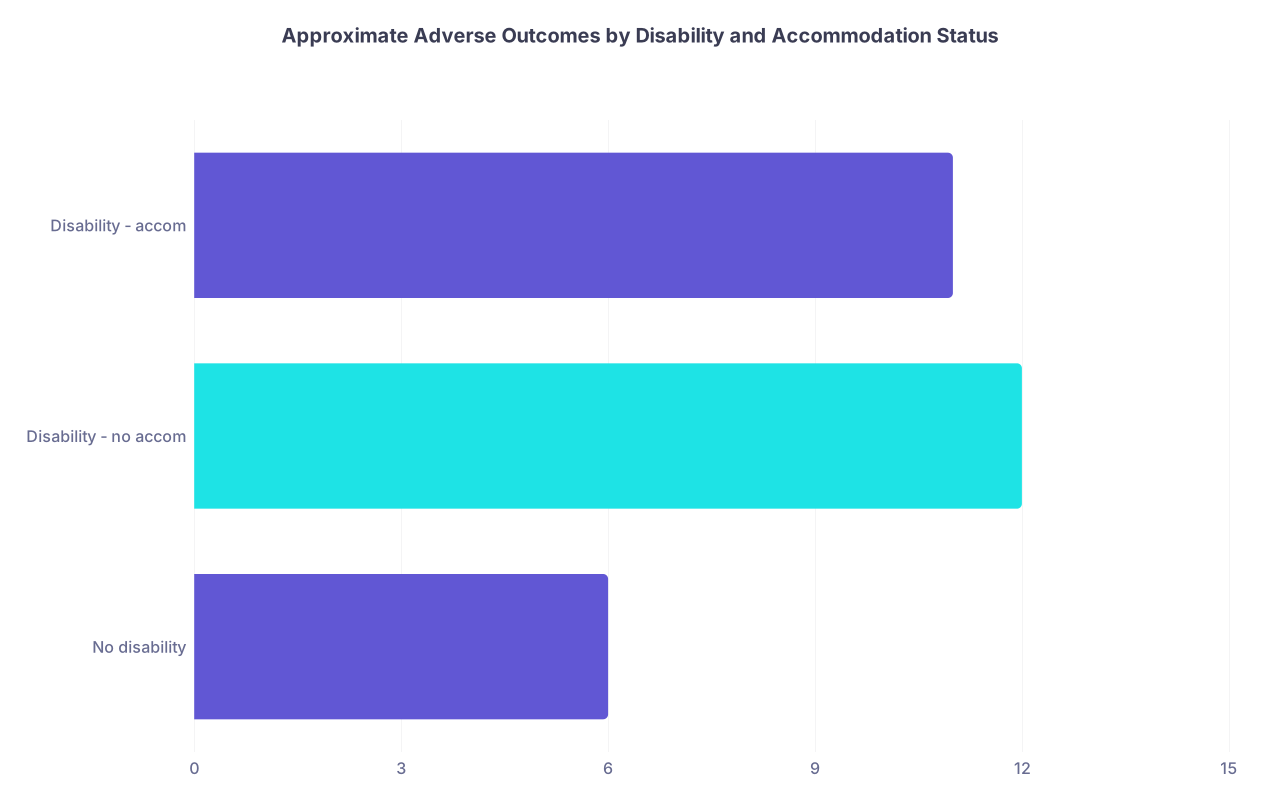
| Category | Value |
|---|---|
| No disability | 6 |
| Disability - no accom | 12 |
| Disability - accom | 11 |
Again, these are illustrative but follow the trend reported in multiple institutional analyses: accommodations as currently implemented are not fully closing the gap.
Future trends: where the data suggest we are heading
Projecting forward, you can make a few data-driven claims based on current trajectories.
1. Visible prevalence of disability in residency will keep rising
Simple demographics drive this: medical schools are producing more graduates who have:
- Documented learning disabilities and ADHD.
- Chronic mental health conditions under active treatment.
- Physical or sensory disabilities that have been accommodated since undergrad.
These trainees are used to formal accommodations. Some will expect continuity of that support into residency. As they enter GME:
- The proportion of residents registered with disability offices will increase.
- Program directors will be forced to confront disability as a routine aspect of workforce management, not an edge case.
This is not speculation; it is already visible in early-career cohorts.
2. Institutions will be pressured toward structured, data-driven accommodation systems
Right now, many accommodation decisions are ad hoc, personality-driven, and undocumented beyond the legal file. That is a poor control system.
What I expect to see over the next 5–10 years:
- Standardized accommodation policy frameworks at the institutional level, with clear menus of common supports by role (resident, fellow, nurse, etc.).
- Routine tracking of outcomes for residents with documented disabilities compared to peers: remediation rates, exam pass rates, attrition, and progression.
- External audit pressures—ACGME, accrediting bodies, and legal challenges will push institutions to show their work.
Once programs actually look at their own numbers, some uncomfortable truths will land: a handful of specific departments may be responsible for a disproportionate share of disability-related attrition.
3. Specialty-level disparities will attract attention
If one can point to, for example, psychiatry having similar or better board pass rates and completion rates among residents with disabilities compared with controls, while another specialty has 3x higher attrition, that creates leverage.
Data will eventually show:
- Which specialties are relatively inclusive, operationally.
- Which remain structurally hostile to accommodations.
Those comparisons will not stay private. Applicants with disabilities will seek them out. Over time, this will affect specialty choice patterns and workforce composition.
4. Accommodations will move upstream to design
The most effective “accommodations” are often redesigns that help everyone:
- More predictable scheduling.
- Better protected didactic time.
- Reasonable caps on consecutive work hours (beyond accreditation minimums).
These changes reduce the relative performance gap between residents with and without disabilities because they reduce the variance imposed by chaotic systems.
As data increasingly show that:
- Residents in better-designed programs have lower burnout and lower attrition overall,
- And that residents with disabilities do particularly well in such environments,
the line between “accommodation” and “good program design” will blur. That is the direction the most forward-thinking institutions are already moving.
Where this leaves program leaders and residents
From a data analyst’s perspective, the picture is clear enough to draw some blunt conclusions.
- Documented disability currently functions as a risk marker for attrition in residency programs. Not because residents are incapable, but because the system responds in a way that amplifies risk.
- The trend in disclosure is upward. The trend in closing the attrition gap is, at best, slow and inconsistent across specialties.
- The programs that will fare best—both ethically and numerically—are those that treat disability not as a legal landmine but as a design problem: can we construct training environments where functional differences do not automatically translate into structural disadvantage?
For residents and trainees with disabilities, the data point to a few hard realities:
- Disclosure is still a high-stakes choice; risks are real and measurable.
- Some specialties and programs demonstrably manage disability-related issues with less collateral damage than others.
- Over the next decade, increased transparency and better institutional data will shift the balance somewhat in your favor—but we are not there yet.
For program directors, the most practical, data-driven step is simple: start tracking your own numbers by disability status (confidentially and with appropriate protections), and compare:
- Remediation rates.
- Leave of absence patterns.
- Non-renewal and attrition.
- Exam performance.
If your residents with documented disabilities are failing, leaving, or being pushed out at 2–3 times the rate of their peers, you do not have a resident problem. You have a system problem. The data already show that.
Key points:
- Residents with documented disabilities experience roughly 2x the attrition and remediation risk of peers, a gap that has not closed meaningfully despite rising awareness.
- The primary drivers are structural and cultural—evaluation bias, rigid notions of “essential functions,” and poorly executed accommodations—rather than inherent inability.
- Future trends point toward higher disclosure rates, more institutional data tracking, and eventually clearer specialty-level differences in inclusivity, which will influence both workforce composition and program reputations.