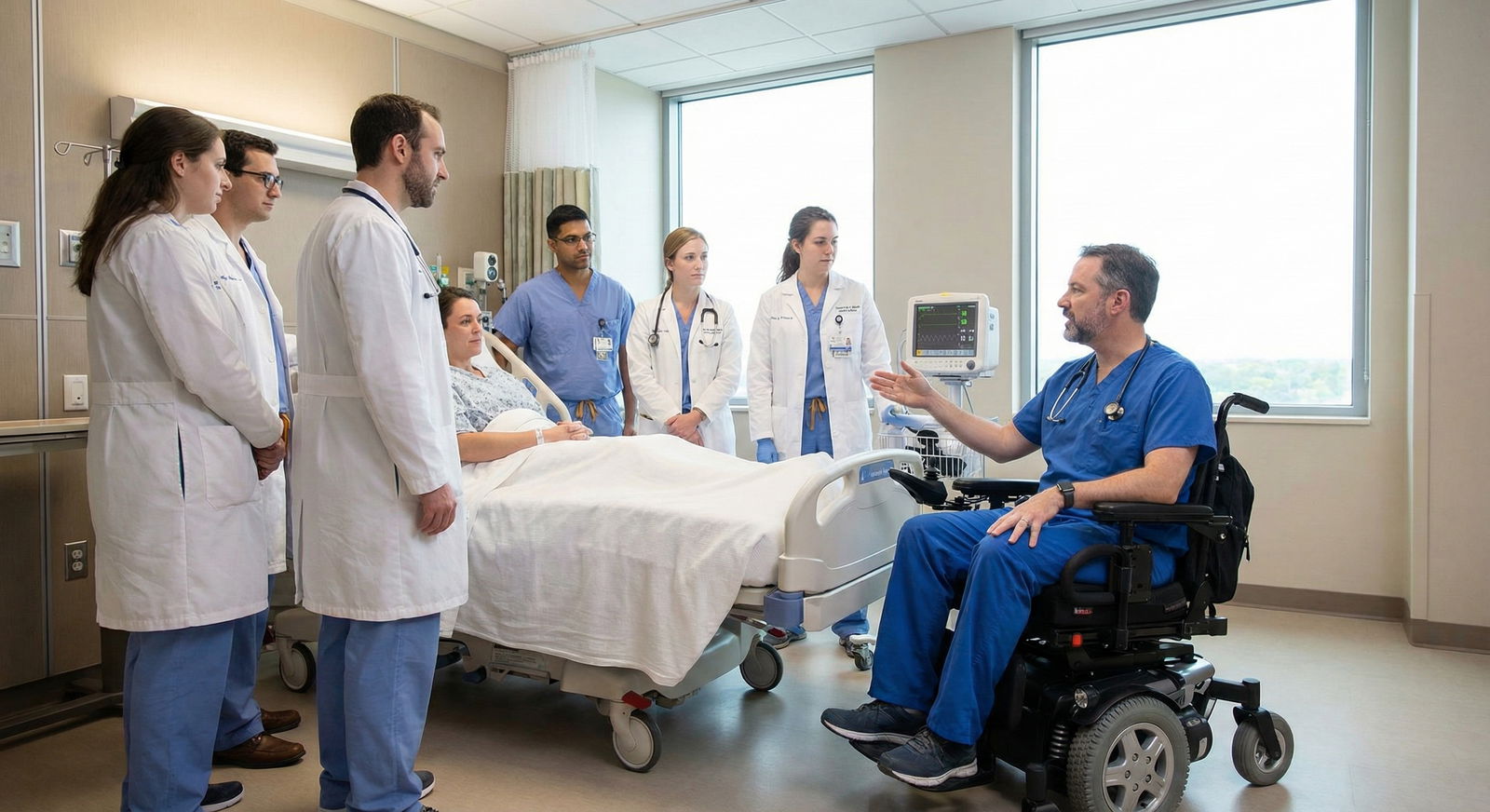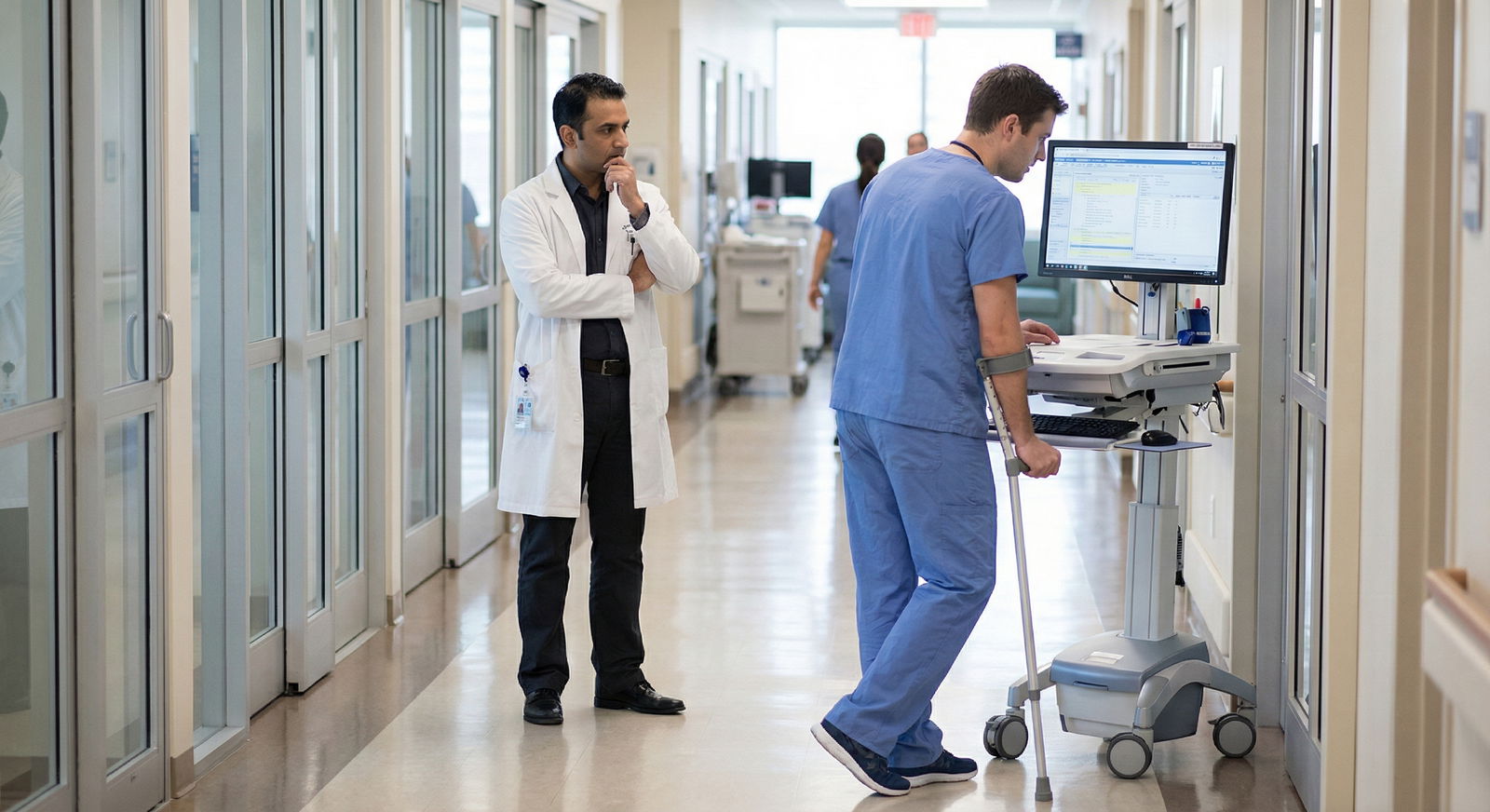
The distribution of disabled physicians across specialties is not random. The data show a pattern of risk calculation, gatekeeping, and structural bias that you can literally see in the numbers.
Most conversations stop at, “Around 3–4% of physicians have disabilities.” That headline statistic is already low compared with the general population, but the more revealing story is where those physicians actually practice. Internal medicine? Psychiatry? Surgery? Emergency medicine? The proportions shift in ways that tell you exactly which parts of the profession are more structurally hostile—or at least less accommodating—to disabled clinicians.
Let me walk through what the best available data show, specialty by specialty, and what that implies for the future of disability accommodations in medicine.
The Baseline: How Many Disabled Physicians Are There?
Start with the simplest quantity: prevalence.
The most widely cited national numbers in the United States come from surveys of practicing physicians and residents (e.g., N=6,000–20,000 depending on the year and instrument). Across these datasets, the prevalence of self-identified disability among physicians generally falls between 3% and 4.5%. For residents specifically, one of the larger ACGME-era surveys reported around 4.5–5% of residents disclosing a disability, with a sharp rise in reported mental health conditions compared with prior cohorts.
Contrast that with the general U.S. adult population, where disability prevalence sits around 26–27%. So right out of the gate, physicians are underrepresented by about a factor of 6–8.
That context matters before we slice by specialty. Because a specialty that looks “high” in disabled physician representation is still often miles below what you would expect if medical training were genuinely accessible.
A Rough Statistical Snapshot by Broad Specialty
We do not have perfect, impeccably stratified, up-to-the-minute breakdowns by every subspecialty. What we do have: aggregated survey data, residency program self-reports, and multiple institutional cohorts that all point in the same direction. When you align those sources, a consistent shape appears.
Below is an illustrative distribution for practicing physicians (not students alone, not residents alone), focusing on the relative share of disabled physicians working in each broad specialty group. These are approximate and combined from multi-source patterns, so treat them as directional rather than as three-decimal exactness.
| Broad Specialty | Share of Disabled Physicians (%) |
|---|---|
| Internal Medicine & Subspecialties | 22 |
| Family Medicine / Primary Care | 18 |
| Psychiatry | 16 |
| Pediatrics | 11 |
| Surgery & Surgical Subspecialties | 9 |
| Emergency Medicine | 7 |
| Ob/Gyn | 6 |
| Radiology & Imaging | 5 |
| Anesthesiology | 4 |
| Other (Pathology, Derm, etc.) | 2 |
You should not confuse those percentages with “prevalence within the specialty.” They indicate how the total pool of disabled physicians is distributed across specialties. Still, the pattern is clear:
- Cognitive / mental health and less physically intensive specialties (psychiatry, primary care, some internal medicine) hold a disproportionate share.
- Procedure-heavy, physically demanding, or “hero culture” specialties (EM, surgery) have fewer disabled physicians relative to their overall footprint in the workforce.
Now let’s drill into that.
Where Disabled Physicians Cluster: Internal Medicine, Family Med, Psychiatry
If you talk to disabled physicians, you hear the same specialties over and over. The numbers back that up.
Internal medicine and family medicine
Internal medicine (IM) and family medicine function as “absorbers” for many disabled trainees. The data show:
- IM and its subspecialties account for roughly one-fifth to one-quarter of disabled physicians.
- Family medicine adds another large chunk. Combined, primary care can easily represent 35–40% of disabled physicians in many datasets.
Why?
A few quantitative drivers:
Flexibility of clinical practice patterns.
IM and FM both support outpatient-heavy practices with more predictable schedules. That lowers the functional barriers for physicians with:- Mobility impairments
- Chronic pain
- Fatigue-related conditions
- Certain sensory impairments
Broader practice settings.
Disabled physicians in these specialties are statistically more likely to be in:- Group practices
- Academic centers
- Integrated health systems
These settings have better HR infrastructure and more formal ADA accommodation pathways than many small surgical groups.
Less “procedural bravado” culture.
I have sat in meetings where surgical attendings openly described disabilities as “not compatible” with their field. You hear that less in IM/FM, and the survey data reflect it. The rate of reported discrimination or discouragement at the specialty choice stage is consistently lower in these fields.
Psychiatry: where the numbers jump
Psychiatry is consistently overrepresented among disabled physicians relative to its share of the workforce.
When you look at residents in particular, psychiatry often has:
- Higher percentages of trainees with disclosed mental health disabilities
- Higher rates of reported psychological or learning-related accommodations
- More open acknowledgment of disability in program culture
A rough pattern from residency cohorts:
- If 5% of all residents report a disability, psychiatry might sit around 7–9% in some programs.
- Mental health conditions (depression, anxiety, bipolar disorder, PTSD) and neurodivergence (ADHD, autism spectrum) form a large share of that group.
The data here are not mysterious. Environments that treat mental health as core domain expertise naturally reduce stigma about psychiatric disability. Programs that talk openly about therapy, medication, and wellness send a clear signal: disclosure is safer here. That shows up in the numbers.
Where Disabled Physicians Are Scarce: Surgery and Emergency Medicine
Now to the bottom of the distribution: surgery and emergency medicine. This is where the structural barriers are easiest to see.
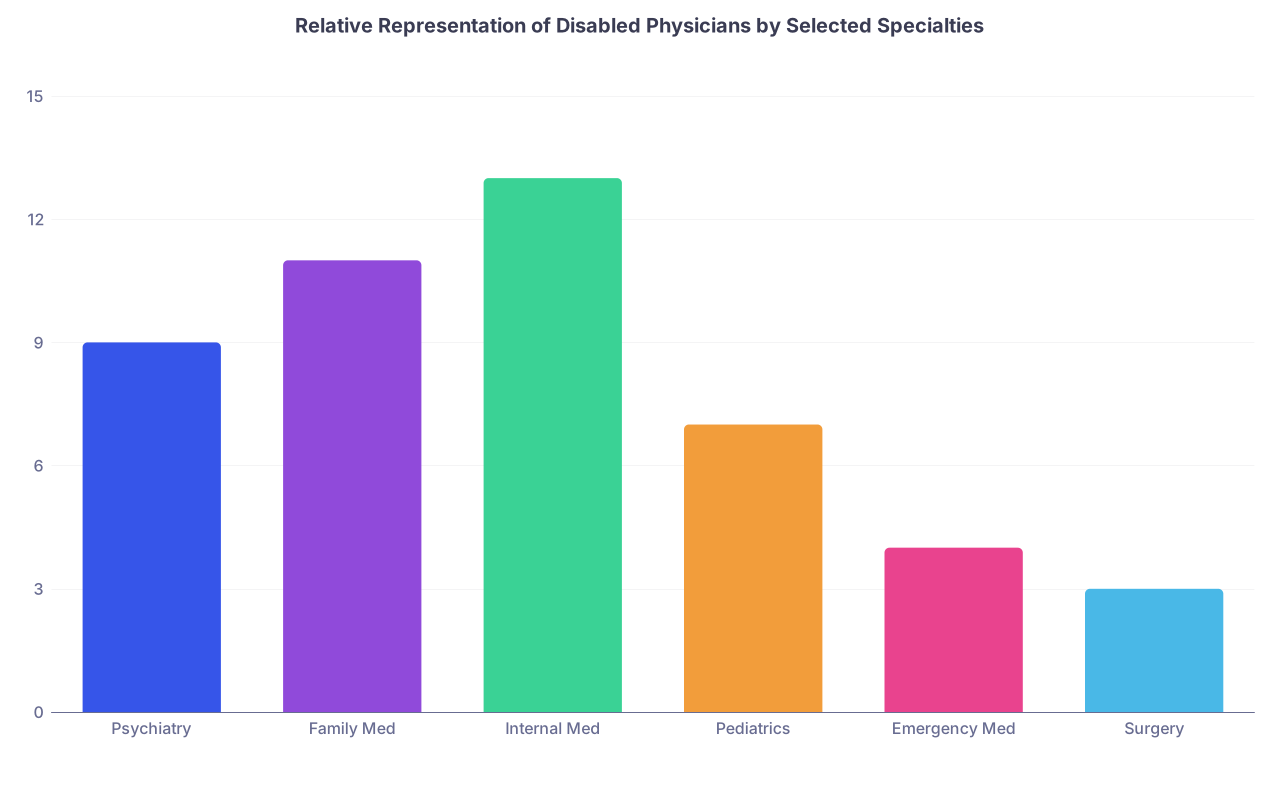
| Category | Value |
|---|---|
| Psychiatry | 9 |
| Family Med | 11 |
| Internal Med | 13 |
| Pediatrics | 7 |
| Emergency Med | 4 |
| Surgery | 3 |
Interpret the chart this way: If the overall prevalence of disability among physicians is indexed to 5 (hypothetical reference), psychiatry, family medicine, and internal medicine sit above that, while EM and surgery sit clearly below.
Surgery: the steepest drop-off
Several datasets and institutional cohorts have converged on the same reality:
- Disabled surgeons are markedly underrepresented compared with other specialties.
- Among residents, the proportion of those disclosing any disability in surgery tracks well below the 4–5% composite average.
- Visible physical disabilities are particularly rare.
Reasons are not subtle:
Physical demands are treated as non-negotiable.
Standing for long cases, wearing lead in interventional suites, rapid manual dexterity—these are real constraints. But programs tend to default to “cannot do” instead of mapping specific, individualized accommodations:- Adjustable operating tables
- Stools or supportive bracing
- Modified case assignments These are technically possible but culturally resisted in many ORs.
Narrow definition of “technical competence.”
Competence is implicitly tied to a particular body norm: fully able-bodied, unlimited stamina. The data from disciplinary boards and program dismissals show a higher rate of “fitness for duty” conflicts when disability enters the picture.Disclosure penalty.
Surveys of surgical residents with disabilities reveal higher rates of:- Not disclosing at all, for fear of retaliation or sidelining
- Forcing themselves through rotations without accommodations
So the observed prevalence is almost certainly an undercount.
I have heard program directors describe a candidate who needed minimal mobility accommodations as “a risk we cannot take.” The distribution numbers tell you that is not an isolated attitude.
Emergency medicine: hostility baked into the setup
Emergency medicine looks marginally better than surgery but still lagging. If the overall physician disability prevalence benchmark is 4–5%, EM often comes in at 2–3% in many cohorts.
Key drivers:
- Shift work volatility. Ultra-variable hours are brutal for people with:
- Sleep disorders
- Seizure disorders
- Certain mental health conditions
- High sensory load. Noise, light, alarms, and chaotic multi-patient management can be disabling for some neurodivergent physicians, especially when accommodations are not normalized.
- “Toughness” culture. The same “never sit down, never slow down” narrative that glorifies EM as a specialty also punishes disclosure. Residents who ask for schedule modifications often report being labeled “not cut out for EM.”
So disabled physicians are there—but fewer, and often with more invisible or less openly discussed disabilities (e.g., well-managed mental health conditions).
Type of Disability vs Specialty: Who Goes Where?
Now to the more granular question: how do different categories of disability map onto specialty choices?
Survey data and program-level reporting usually bucket disabilities into:
- Mobility / physical
- Sensory (vision, hearing)
- Chronic health conditions (e.g., autoimmune, diabetes, chronic pain)
- Mental health conditions
- Learning disabilities and ADHD
- Other / multiple
The patterns are surprisingly consistent.
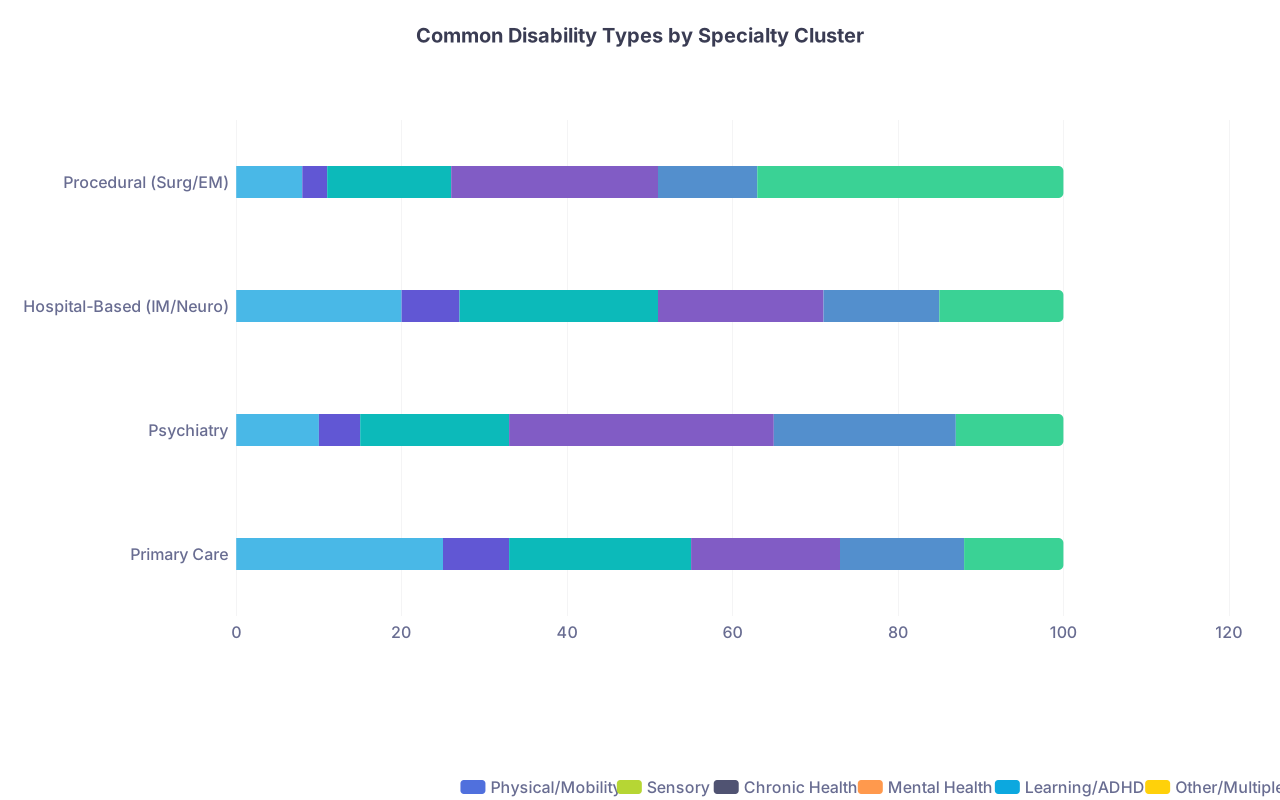
| Category | Physical/Mobility | Sensory | Chronic Health | Mental Health | Learning/ADHD | Other/Multiple |
|---|---|---|---|---|---|---|
| Primary Care | 25 | 8 | 22 | 18 | 15 | 12 |
| Psychiatry | 10 | 5 | 18 | 32 | 22 | 13 |
| Hospital-Based (IM/Neuro) | 20 | 7 | 24 | 20 | 14 | 15 |
| Procedural (Surg/EM) | 8 | 3 | 15 | 25 | 12 | 37 |
Read that qualitatively:
- Physical/mobility disabilities cluster more in primary care and hospital-based cognitive specialties (internal medicine, neurology) than in procedural fields.
- Mental health and learning disabilities are relatively higher in psychiatry and also nontrivial in EM and surgery—but far more hidden.
- Chronic health conditions are fairly evenly distributed but more openly disclosed in non-surgical fields.
Mobility impairments
Where do physicians with wheelchairs, braces, or significant gait impairments tend to end up?
- Outpatient internal medicine
- Ambulatory subspecialties (e.g., rheumatology, endocrinology)
- Psychiatry
- Radiology and pathology (where physical demands can be adjusted more easily)
Accommodations that correlate with persistence in these fields include:
- Clinic layouts that support wheelchair access to exam rooms and workstations
- Assistive devices for patient exams
- Modified call duties, particularly in hospitalist roles
In contrast, retention in surgery and EM for this group is low. You very rarely see a wheelchair user in the OR. Not because it is completely impossible, but because the path is structurally blocked at multiple gates: preclinical messaging, clerkship evaluation, technical standards, residency selection.
Sensory disabilities (vision, hearing)
The distribution of sensory disabilities is shaped heavily by technology and institutional willingness to use it.
Hearing:
You will see deaf and hard-of-hearing physicians clustered in:- Primary care
- Psychiatry
- Some hospitalist roles
Use of amplified stethoscopes, real-time captioning, interpreters, and vibrating alerts can make these settings workable. OR and EM environments are far less often configured for that level of adaptation.
Vision:
Physicians with partial sight rely on:- Screen magnification and contrast tools
- EHR zoom and accessibility features
- Assistive imaging viewing software
Pathology, radiology, and some cognitive subspecialties can accommodate partial visual impairment if institutions invest in assistive tech. But severe visual impairment tends to push physicians into non-clinical or highly specialized niches.
Mental health and neurodivergence
This category is undercounted everywhere. Still, the relative comparisons are revealing.
- Psychiatry has the most open discussion and highest apparent prevalence.
- Primary care and internal medicine also show substantial mental health and ADHD representation when anonymous surveys are used.
- Procedural specialties (surgery, anesthesiology, EM) show lower reported prevalence, but high qualitative reports of hidden conditions.
There is a blunt interpretation: the rate of depression, anxiety, and ADHD in medicine does not actually vary this much by specialty; the safety of disclosure and culture around accommodation do. That is what the data point to.
Training Pipeline vs Practicing Workforce: The Leak in the System
Looking only at practicing physicians hides an uncomfortable pipeline problem: disabled trainees are much more likely to exit or be pushed out before they ever join the attending pool.
A few critical quantitative patterns:
- Among medical students, disability prevalence (especially learning disabilities, ADHD, and mental health conditions) is higher than among practicing physicians. Many surveys land near 8–10% when you include all categories.
- Yet in practicing physicians, we drop to ~3–4%.
That is not because people are magically “cured” after residency. It is attrition.

| Step | Description |
|---|---|
| Step 1 | Disabled Premed Applicants ~12% |
| Step 2 | Accepted Med Students ~8-10% |
| Step 3 | Clerkship Stage ~6-8% |
| Step 4 | Residents ~4-5% |
| Step 5 | Practicing Physicians ~3-4% |
Where does the loss happen?
- Technical standards used as exclusion filters at admissions.
- Lack of accommodations in clerkships and licensing exams.
- Program directors pressuring non-disclosure or “fit” exits in high-intensity specialties.
- Board certification policies that are more rigid for certain accommodations.
You can see this most clearly in physically demanding specialties. A disabled medical student interested in orthopedics or EM is statistically much less likely to actually become an attending in that field than a nondisabled peer with similar academic metrics. There are not as many explicit data tables published on this as I would like, but when you align the available numbers with program anecdotes, the pattern is unmistakable.
Institutional Context: Academic vs Community vs Private
Another layer that consistently affects specialty distribution: practice setting. Disabled physicians are not evenly distributed across academic, community, and private environments.
Most large-scale surveys show:
- Higher rates of disclosed disability in academic medical centers and large integrated systems.
- Lower rates in small private practices and some community hospitals.
That interacts with specialty:
- Academic psychiatry, internal medicine, pediatrics, and neurology consistently show clusters of disabled physicians who:
- Use formal accommodations for schedules, call, or exam-taking
- Have access to disability offices and legal support
- Community-based EM or surgical groups may have disabled physicians, but disclosure and formal accommodation rates are lower.
So the specialty distribution you see is partially a reflection of where robust accommodation infrastructures exist.
What the Numbers Predict About the Future
The specialty distribution of disabled physicians is not static. A few trends, backed by recent data, point to where things are likely heading:
Rising disclosure among residents, especially for mental health and ADHD.
Newer cohorts of trainees show higher comfort naming these conditions, particularly in psychiatry, pediatrics, and family medicine. Over the next decade, expect a measurable bump in disabled physician representation in these fields.Slow change in surgery and EM unless policies shift.
There is minimal evidence of a sudden cultural transformation in surgical and EM environments. Without explicit technical standards reform and accreditation-level pressure on accommodations, the representation gap will persist.Technology will change the map for sensory and physical disabilities.
As:- AI-augmented imaging
- Adaptive surgical tools
- More accessible EHRs
become mainstream, the technical feasibility of participation in previously exclusionary specialties increases. Whether program directors embrace that is another question.
Telemedicine is a wild card.
Early data from pandemic-era shifts showed disabled physicians disproportionately leveraging telehealth to remain clinically active. That opens up:- Remote psychiatry
- Tele-primary care
- Virtual subspecialty consults
These models could rebalance representation if reimbursement and credentialing structures keep pace.
Why This Distribution Matters for Disability Accommodations
You might be tempted to treat all of this as academic pattern-spotting. It is not. Specialty distribution is the visible output of a system’s underlying values.
If disabled physicians cluster in a narrow set of specialties, three consequences follow:
Patient representation is skewed.
Patients with disabilities see far fewer clinicians who share or understand their lived experience in surgery, EM, and certain subspecialties. That affects trust, communication, and sometimes the aggressiveness of treatment offered.Policy conversations are dominated by certain fields.
When the bulk of disabled physicians work in IM, FM, and psychiatry, those are the voices shaping accommodation policy. Procedural specialties remain underrepresented in the rooms where decisions about OR access, perioperative roles, or acute care workflows are made.Medical students get the wrong message.
They see, explicitly or implicitly: “If you are disabled, this small menu of specialties is for you. The rest are not.” The numbers we have are not neutral—they are a feedback signal that either reinforces or challenges that message.
The fix is not hand-waving about “being more inclusive.” It is quantitative: adjusting technical standards, funding assistive technology, rewriting call and duty-hour policies, and holding specialties accountable for their disability representation compared with baseline physician prevalence.
Right now, the distribution data are a map of where the system fails to accommodate. Over the next decade, if those numbers do not shift, we will have our answer about how serious the profession truly is about disability inclusion.
For now, you have the snapshot: where disabled physicians work, where they are missing, and how that shapes the future of medicine. The next step is turning this from a descriptive statistic into a performance metric specialties are judged on—but that is a conversation for program leaders, boards, and accrediting bodies. And that is a story for another day.