
The most common mistake residents make with disability issues is going to their program director first. That instinct—though understandable—can quietly wreck your legal protections, your paper trail, and sometimes your career.
If you remember nothing else, remember this: your PD is not your disability office, not your lawyer, and not your friend in this context. They are management. They evaluate you. They write the letter that decides if you match into fellowship. That conflict of interest matters.
Let’s walk through the landmines so you don’t step on them.
The Dangerous Myth: “My PD Should Be My First Call”
Here’s the script I’ve heard too many times:
“I started having migraines so bad I couldn’t drive safely after nights. I went straight to my PD because I wanted to be transparent. I thought that’s what ‘professionalism’ meant.”
And then:
- Verbal promises of “support” that never make it into writing
- A “temporary” schedule change that later gets used as evidence you “struggle with call”
- Subtle comments in evaluations: “requires modified schedule,” “needs extra support,” “limited ability to handle workload”
- Radio silence when you actually need formal accommodations documented
Transparency is good. But unstructured, undocumented transparency with the wrong person at the wrong time is how residents get labeled, not helped.
Don’t confuse:
- Clinical supervision with legal responsibility
- Educational advocacy with compliance obligations
Your PD controls:
- Your clinical schedule
- Your semiannual milestones
- Your summative evaluation
- Your promotion and remediation decisions
- Your letters for jobs and fellowships
They do not control:
- Whether you qualify as disabled
- What accommodations you legally deserve
- How ADA/Section 504 are interpreted by your institution
That’s disability services / HR / GME office territory.
Who Actually Has Power in Disability Issues (Hint: Not Just Your PD)
Let’s be blunt: programs love to make it sound like “everything goes through the PD.” That’s convenient—for them. Not for you.
Here’s the rough division of roles in most US teaching hospitals:
| Issue Type | Best First Contact |
|---|---|
| New disability diagnosis | Disability office / HR |
| Question about legal rights | Disability office / legal |
| Schedule or rotation modifications | After approval: PD |
| Step exam accommodations | Disability/testing office |
| Documentation & confidentiality | Disability office |
And here’s the pattern that burns residents:
- They tell PD first, in a stressed hallway conversation or rushed Zoom
- They don’t document anything with the institution’s disability or HR office
- They accept “informal” schedule tweaks instead of formal accommodations
- Months later, those tweaks are reframed as “performance concerns” or “limited capacity”
Your strongest protection is formal documentation with the right office before you start talking details with your PD.
When You Should Not Go to Your PD First
Let me spell out specific scenarios where involving your PD first is a mistake.
1. When You Don’t Yet Have Formal Documentation
You just got a potential diagnosis: ADHD, multiple sclerosis, hearing loss, chronic pain, depression, long COVID. You’re waiting for full evaluation or letters.
Do not go into your PD’s office with:
- “I think I might have…”
- “My therapist said I probably…”
- “I’ve been struggling with focus and wondering if…”
Why this is dangerous:
- Anything you say can unconsciously color every evaluation afterward
- Without formal documentation, all “accommodations” are discretionary favors, not rights
- You’ve effectively disclosed a disability without activating any legal process to protect you
Instead:
- Get your evaluation completed
- Get formal documentation from your clinician
- Ask your GME or HR where the official disability office lives
- Start there, not with your PD
You want your first detailed disclosure to be to someone whose job is to protect your rights, not assess your performance.
2. When You Need Testing or Exam Accommodations
USMLE, COMLEX, in-training exams, board certification.
Here’s the mistake: telling your PD, “I think I need extra time because of my ADHD,” before you talk to disability services or the exam body.
Why this backfires:
- PDs often have zero idea how exam accommodations actually work
- They may discourage you: “You don’t want to appear weak,” “Just power through,” “Accommodations are rarely approved”
- They might then quietly watch you extra closely for “focus issues” or “knowledge gaps”
And worst of all:
- If you’re later put on a remediation plan for exam scores, your prior informal disclosure becomes part of the story: “We had concerns about their ability to handle the standard exam conditions…”
Instead:
- Go to your school/hospital disability office or student affairs
- Get your documentation in order
- Apply formally through official channels
- Once something is approved, then you can selectively loop in your PD if needed (e.g., for scheduling around exam dates)
Order matters. Get the legal side locked first.
3. When You’re Unsure What You Want or Need
Half-formed disclosure is dangerous disclosure.
Telling your PD:
- “I’m not sure if I need any changes, but…”
- “I don’t want to be difficult, but my joints have been killing me on long OR days…”
- “I might need something, but I haven’t figured it out yet…”
You’ve just:
- Signaled “potential problem” without suggested solutions
- Given your PD anxiety about your ability to complete rotations
- Raised a flag without a plan—so they will fill that vacuum with their own assumptions
Remember: PDs are wired to think in terms of competence, milestones, and staffing coverage. They will subconsciously start asking, “Can this resident do the job all the way to graduation?”
Instead, you want to come to any conversation with PD after you’ve:
- Talked with disability services about what’s reasonable
- Clarified what accommodations you actually want
- Understood what must be kept confidential vs. what can be shared
You don’t go to your PD to brainstorm your diagnosis and needs. You go after there’s a plan.
4. When You’re Vulnerable to Retaliation or Bias
If you’re:
- An intern on shaky ground already
- A resident of color in a program with a bad track record
- A pregnant or parenting trainee in a rigid culture
- A trainee with prior professionalism flags
You are at higher risk that disability disclosure will be weaponized or pathologized.
I’ve seen:
- “Depression” reframed as “poor resilience”
- “Brain fog from long COVID” reframed as “not detail-oriented”
- “Hearing impairment” reframed as “communication issues with team”
If your gut says, This PD doesn’t get people like me, you do not start there. You start with:
- Disability office
- GME office
- Possibly an outside advocate (physician union, legal aid, state disability rights group)
Then you can decide how much your PD needs to know, with backup.
5. When the Issue Involves Safety or Liability Concerns
Seizure disorder. Syncope. Vision issues. Sleep disorders. Active suicidal ideation. Anything that could be spun as:
- “Unsafe to practice”
- “Danger to patients”
- “Unable to fulfill essential job functions”
If your first disclosure is to your PD, understand their mental checklist:
- Patient safety
- Duty hour/coverage disruption
- Risk to the program’s accreditation
- Mandatory reporting requirements
I’m not telling you to hide safety concerns. You do have a duty to patients and yourself. But you should:
- Get urgent medical care first
- Contact disability services / occupational health / GME
- Clarify what must be removed from duty vs. what can be accommodated
Then bring your PD into a structured, supported conversation—ideally with someone from GME or disability services in the room, not alone in their office.
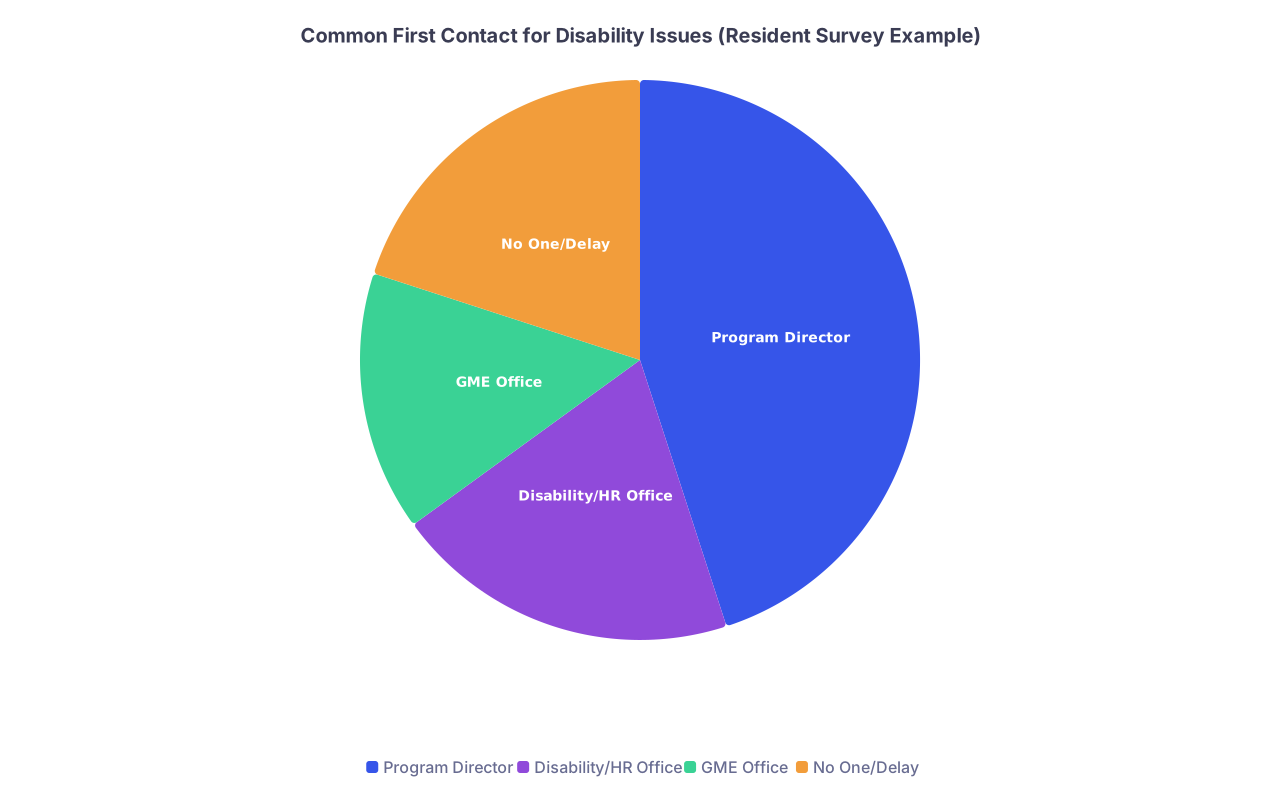
| Category | Value |
|---|---|
| Program Director | 45 |
| Disability/HR Office | 20 |
| GME Office | 15 |
| No One/Delay | 20 |
The “Friendly PD” Trap
Some PDs are genuinely supportive. Some are not. The trap is you cannot safely bet your legal protections on personality.
Even with a kind PD:
- They might “keep it off the books” to “protect you” — which means no formal record when things go sideways
- They might promise schedule flexibility but then rotate out of leadership and their successor knows only that “you needed special treatment”
- They might be clueless about the law and give you well-intentioned but harmful advice
Examples I’ve actually heard:
- “If you get formal accommodations, it will follow you for the rest of your career.”
- “Let’s not involve HR; that just complicates things.”
- “I’ll just quietly adjust your schedule—it’s better not to label you.”
Friendly, yes. Legally protective, no.
You need both:
- Supportive program leadership
- Formal institutional processes that create a paper trail and clear rights
Do not trade one for the other.
When You Should Involve Your PD (But Not First)
I’m not saying you never talk to your PD. I’m saying you almost never talk to them first.
Once you’ve:
- Gotten a diagnosis
- Talked to disability services or HR
- Understood your rights and options
- Started a formal accommodation process
Then your PD often needs to be brought in, because they own the logistics: rotations, call schedules, conference requirements.
That conversation should ideally be:
- Structured – Not a hallway ambush; a scheduled meeting
- Supported – With someone from disability services or GME present, or at least already in the loop
- Focused – On functional limitations and approved accommodations, not a deep dive into your medical history
Example framing:
“I’ve been working with the university disability office. Based on documentation from my treating physician, they’ve approved X and Y accommodations. I wanted to meet to talk about how we can implement those within the program.”
Notice what that does:
- You’re not asking your PD to decide if you “deserve” accommodations
- You’re bringing them a decision already made by the appropriate office
- You keep the focus on implementation, not justification
That’s how you protect yourself.
The Documentation Trap: What PDs Remember vs. What Exists
Here’s another mistake: telling your PD a long, emotional story—then not following up in writing.
Months later:
- You remember “They promised I wouldn’t have 28-hour calls,”
- They remember “We talked about her struggling with call; I suggested we try adjusting it.”
No email. No disability office memo. No official accommodation letter.
So when:
- You collapse from exhaustion
- Or you’re written up for “not being a team player” for declining an extra call
- Or your milestones mention “limited ability to meet workload expectations”
You have no record.
You should have, at minimum:
- Email from disability services confirming your approved accommodations
- A brief summary email you send after any important meeting:
- “Per our meeting today, my understanding is that we will [specific change] starting [date]. Please correct me if I’ve misunderstood.”
If your PD refuses to respond or document? Red flag. And more reason you were right not to start there.

| Step | Description |
|---|---|
| Step 1 | Recognize Access Issue |
| Step 2 | Seek Medical Evaluation |
| Step 3 | Obtain Documentation |
| Step 4 | Contact Disability or HR Office |
| Step 5 | Formal Accommodation Review |
| Step 6 | Written Accommodation Plan |
| Step 7 | Planned Meeting With PD |
| Step 8 | Implement Changes |
| Step 9 | Appeal or Seek Advice |
Red Flags That Your PD Should Not Be Your First Stop
If you’ve watched your PD and seen any of these behaviors with other residents, you especially shouldn’t start there:
- Calling people “weak” or “not cut out for this” when they get sick
- Mocking “burnout” or “resilience training”
- Bragging about never taking a sick day
- Reacting angrily to schedule changes or parental leave
- Saying, “Back in my day, we just pushed through”
- Treating other residents’ mental health struggles as character flaws
That person is not where you bring your first fragile disclosure about disability. You bring it to a system that has legal obligations, not personal opinions.
And if you’re thinking, “But our institution doesn’t really have a disability office for residents”…
They do have:
- A GME office
- HR
- Sometimes an Employee Assistance Program
- Sometimes a university-level disability office that covers housestaff
Call GME and ask, “Who handles ADA accommodations for residents?” If they sound confused, that’s their problem to fix—not yours to absorb alone.
A Quick Reality Check on Privacy
Another mistake: assuming your PD will keep your disclosure confidential.
They may try. But:
- They might feel obligated to tell associate PDs
- They might discuss you at the Clinical Competency Committee
- They might document something vague but harmful: “personal challenges impacting performance”
You have more control over who knows what if you start with disability services and ask very direct questions:
- “What exactly will my PD be told?”
- “Can my diagnosis be kept confidential while still implementing accommodations?”
- “What language will be used to describe my needs?”
You can often get accommodations framed in terms of functional limitations rather than diagnoses. For example:
- “Needs ability to sit intermittently during long cases” instead of “Ehlers-Danlos with joint instability”
- “Needs protected time for weekly therapy” instead of “Major depressive disorder with suicidality”
You’re much more likely to get that nuance from disability services than from a PD trying to remember what they overheard three months ago.
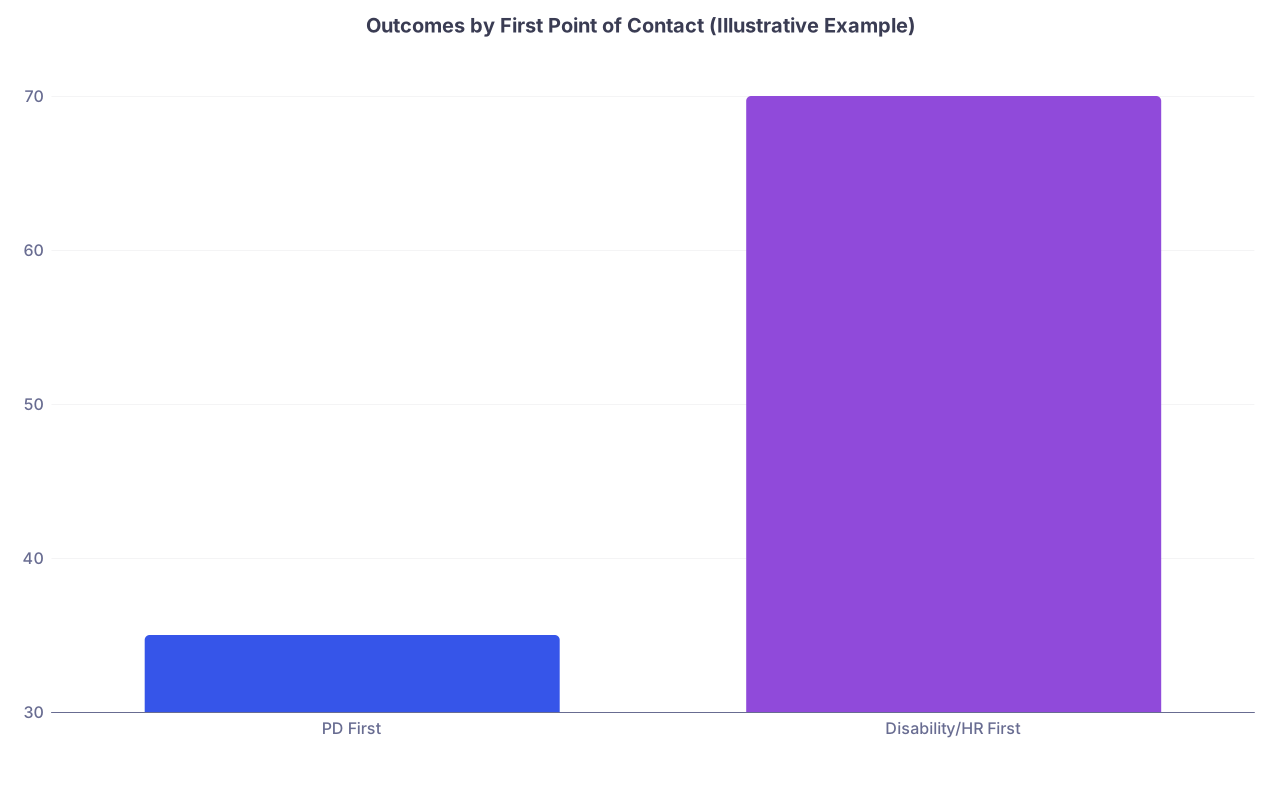
| Category | Value |
|---|---|
| PD First | 35 |
| Disability/HR First | 70 |
(Example: percent of residents who report receiving formal written accommodations without negative eval language.)
What To Do Instead: A Safer Sequence
Here’s the rough order that avoids the most mistakes:
Get your own medical house in order
- Evaluation
- Diagnosis
- Clear language from your clinician about functional limitations
Find your institution’s disability/ADA/HR contact for residents
- Email GME: “Who handles ADA accommodations for residents?”
- Or check your institution’s intranet
Have a confidential, detailed conversation there first
- What qualifies as a disability
- What kinds of accommodations are typically granted
- What documentation is needed
- Who will be told what
Get their guidance on if/when to involve your PD
- Some accommodations can be implemented without PD knowing the specifics
- Others require PD involvement, but with disability office backing you
Document everything
- Save emails
- After meetings, send summary notes (“To confirm, my understanding is…”)
Then schedule a PD meeting—if appropriate—framed around implementation, not begging
This path doesn’t guarantee perfection. Programs can still mishandle things. But you’ve dramatically reduced your exposure to the most common, avoidable mistakes.
One More Ugly Truth: Don’t Wait for Crisis
Too many residents wait until:
- They’re on a PIP
- They’ve failed a rotation
- They’re under review for non-renewal
Then they finally say, “Well actually I’ve had untreated bipolar disorder for years and I think I need accommodations.”
At that point, PDs—and institutional lawyers—start wondering if you’re bringing up disability as a shield against performance management. That doesn’t mean you lose your rights, but it absolutely complicates how everything is interpreted.
You avoid that mess by:
- Getting evaluated when you first realize there’s a sustained access problem
- Engaging disability services before things look like pure performance problems
- Creating a documented pattern: you sought help, you followed process, you weren’t just playing defense after the fact
Late disclosure is still better than never. But early, properly directed disclosure is a lot better than both.

The Bottom Line
Your program director is many things: evaluator, mentor, gatekeeper, scheduler, recommender. What they are not is your entry point into the disability system.
You avoid the biggest mistakes by:
- Not disclosing half-baked suspicions of disability to the person who writes your evaluations
- Not accepting “informal favors” instead of formal accommodations
- Not relying on PD kindness where you need institutional obligation
- Not having your first serious disability talk in the same room where your remediation plan would be written
Your PD might eventually be an ally in this. But they should almost never be your first call.
Today’s next step is simple:
Open your institution’s intranet and search for “ADA,” “disability accommodations,” or “GME policies.” Find the actual office that handles resident accommodations and write down their email. That’s who you contact first when— not if— you need help.