
It’s 10:45 p.m. You’re on an “easy” night float, which means six cross-cover pagers and two attendings who went home hours ago. You finally sit to eat something that vaguely resembles food, open your email, and there it is:
“Revised call schedule – please review.”
You scroll. You see your name. You see more nights than anyone else with your PGY level. You see every Friday you asked to protect. And you see, very clearly, that the “accommodation” you disclosed three months ago has evaporated somewhere between GME policy, chief resident group chat, and a backroom conversation you were not invited to.
Let me tell you what actually happens behind those call schedules when you’re a resident with limitations or a disability. Not the official line. The real calculus.
Because there is policy, and then there is politics. Call schedules live mostly in the second category.
How Call Schedules Really Get Made
Forget the clean GME PowerPoints for a moment. In most programs, three entities control your call life:
- Program leadership (PD, APDs, sometimes chair)
- Chief residents or scheduling coordinators
- GME / HR / institutional disability office (on paper)
The official story: call schedules are built “equitably,” “based on educational needs,” and “in compliance with ACGME and institutional policies, including accommodations.”
Reality: chiefs are trying to cover holes. PDs are trying to keep attendings from complaining. And everyone is trying not to trigger a formal complaint that brings GME and legal into the room.
Here’s the unvarnished process I’ve watched play out at multiple institutions.
The chief opens a spreadsheet. There’s a rough template from last year. They start dropping in names: ward call, ICU, nights, jeopardy, backup. Then they look at:
- Who is “strong” clinically (code word for: can be dumped on without imploding)
- Who is “weak” (code word for: if we overload them, they will fail or go on leave)
- Who has “issues” (your name goes here if you have disclosed limitations, ADA accommodations, childcare constraints, chronic illness, mental health issues, or are known to have pushed back before)
Then they start shaving off the edges. That “issues” column? That’s where a lot of informal politics happens. Sometimes in your favor. Sometimes very much not.
And here is the key thing almost no one tells you: the more ambiguous your limitation is to them, the more your call schedule will be decided based on interpersonal politics rather than policy.
If your arm is in a cast and you can’t do procedures for six weeks, that’s clean. If you have POTS, a seizure disorder, MS, long COVID, bipolar, severe migraines, or any condition that flares with sleep deprivation and stress—you are now in the grey zone where people’s biases and frustrations dictate what happens much more than the written rules.
Who Actually Has Power When You Ask for an Accommodation
You think you’re asking the PD. Or GME. Or the institutional disability office.
What you’re actually doing is triggering a set of conversations you’re not allowed in, between people with very different priorities.

Let me map the players for you.
- You: Need something sustainable enough that you do not end up in the ED as a patient or on performance probation.
- Program Director (PD): Wants to look supportive while not pissing off attendings, the other residents, or the chair. Deeply afraid of being the “program with special treatment” rumors.
- Chief Residents: Want the schedule to not implode. They fear the day no one answers jeopardy. They view every accommodation as a ripple they have to manage socially with everyone else. They remember every time someone flaked.
- GME / Disability Office: Wants documentation, clean paper trails, and avoidance of lawsuits. They care about policy language far more than who covers which night in October.
- Other Residents: Care about perceived fairness. They track every slight. They gossip about who has “real” limitations vs “just doesn’t like nights.”
The raw power? Legally, GME and the disability office. Operationally, the PD and chiefs. Culturally, your co-residents.
The schedule that shows up in your inbox is a compromise among these three forces:
- Legal exposure
- Service coverage
- Peer resentment
If you don’t understand that triangle, you will misread every conversation you have about your call schedule.
The Quiet Categories Residents With Limitations Fall Into
When leadership talks about you behind closed doors, you are almost never just “Dr. X.” You’re one of three symbolic categories:
- The good faith struggler – works hard, honest, clearly trying, breaks down only when they’re truly at the edge.
- The opportunist – seen as gaming the system, selectively disabled when it is convenient.
- The landmine – high risk for formal complaint, legal action, or public blow-up.
If they place you in category 1, they try—within reason—to make your life work. If they place you in 2, they will sabotage you gently. If they place you in 3, they will hyper-document everything and often quietly limit your responsibilities or future opportunities.
And those categories get built from a very small set of observable behaviors:
- Do you show up prepared and on time most days?
- Do you follow through on the things you say you’ll do?
- Did you disclose early or only after getting a poor eval or warning letter?
- When others help you, do you reciprocate in some way (notes, follow-up calls, teaching)?
- Do your co-residents see you as “one of us” or “always the exception”?
Is this fair? No. Is it how they talk? Absolutely.
So when you think about asking for a specific call adjustment—no 28-hour calls, protected clinic, capped number of nights—that request is not being evaluated in a vacuum. It’s going through that lens.
What “Reasonable Accommodation” Actually Looks Like on Call
The phrase “reasonable accommodation” is legal, but what it becomes on the schedule is highly variable. Let me translate some common patterns I’ve seen.
| Accommodation Type | What You See | Hidden Tradeoff Residents Often Get |
|---|---|---|
| No 28-hr calls | More night float or short calls | More weekends, more cross-cover |
| Reduced nights per month | Extra daytime wards/clinic blocks | Less elective / research time |
| No ICU nights | More ward call or ED shifts | Fewer ICU letters/opportunities |
| Fixed “no-call” day per week | Less flexibility in other swaps | Harder to get specific weekends |
| Seasonal limitation (flare) | Lighter months in bad season | Brutal months in “good” seasons |
Now, some programs do this well. A few academic powerhouses with strong GME offices will accommodate without obvious penalty. Others quietly extract a price: you get your lighter nights; you lose the electives, the research block, or the fellowship-facing experiences that matter.
Another very real pattern: the informal re-labeling of your limitations.
You request “no overnight ICU because of seizure risk.” Internally, some people reinterpret that as “can’t handle tough rotations,” which then conveniently justifies not supporting your application for a competitive fellowship.
I’ve sat in those conversations. It’s not theoretical.
How Chiefs Actually React When They See an Accommodation Email
Let’s talk about the chiefs. Because they’re the ones who physically drag names across cells in Excel and get text-bombed when things go wrong.
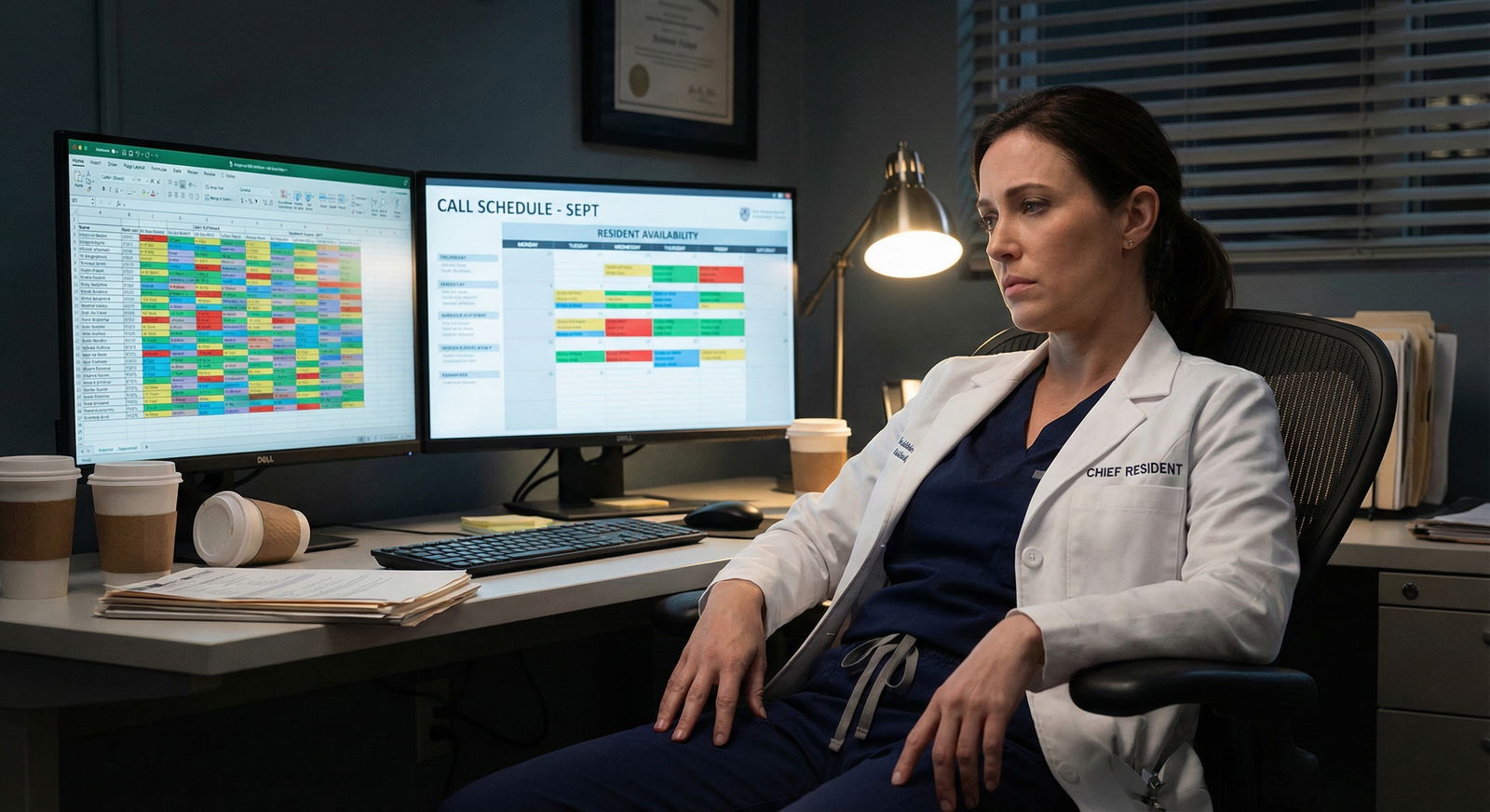
When an official email hits their inbox: “Resident X has been granted the following accommodations…”
The first reaction is rarely, “How do we best support this struggling physician?” It’s usually some version of:
- “Okay, where am I going to steal those calls from?”
- “Who is going to be furious about this and complain at 1 a.m. in the call room?”
- “Is this going to trigger a domino effect where five more people ask for the same thing?”
If your chiefs like and respect you, they will fight a little for you. They’ll take some of the heat, they’ll explain to your co-residents in careful language, they’ll give you the better end of ambiguous shifts.
If they view you as unreliable, difficult, or passive-aggressive, they will technically follow the letter of the accommodation while making your schedule ugly in ways that are hard to prove retaliatory. That might look like:
- Stacking your calls on undesirable holidays “because of coverage needs”
- Putting you on services with reputations for malignant attendings so “you still get enough pathology”
- Assigning you to teams that are chronically understaffed, so every shift still feels like a 28-hour call even if it’s only 16 hours
This is why your relationship with the chiefs matters more for your call schedule than any policy document.
The Disability Disclosure Trap With Call
There’s a nasty catch-22 residents with limitations find themselves in:
- If you disclose early and ask for call accommodations before anything bad happens, you’re seen (in some circles) as preemptively demanding special treatment.
- If you wait until you’ve had a syncopal episode on night 5 of 7 in the ICU, now leadership frames it as, “Why didn’t you tell us earlier? This is a professionalism and safety concern.”
So what do most residents do? They try to power through. They quietly swap. They beg co-residents for help. They burn their social capital to keep the official schedule untouched.
Until one of three things happens:
- They crash physically or mentally and end up on leave.
- They make a serious error and suddenly everyone’s talking about “fitness for duty.”
- They explode, file a formal complaint, or get a lawyer, and now the program is in damage-control mode.
I’ve seen residents with chronic illnesses nearly kill themselves trying to avoid being “that person” who needed accommodations. Then they get written up anyway—for a mistake they made because they were exhausted and symptomatic.
The hard truth: call politics punish both silence and transparency, but in different ways. You have to choose which risk you’re willing to live with, and you need a strategy, not wishful thinking.
Concrete Tactics That Actually Work (More Than Pretty Emails)
Let’s move from diagnosis to strategy. This isn’t about “be your own advocate” bumper-sticker advice. Here’s how residents who survive this game usually play it.
1. Secure the paper trail—but keep it lean
You want GME/disability office documentation that says, in plain language, what you need. Not a vague “consider flexibility,” but also not an 8-paragraph novella that gives your PD maximum wiggle room to reinterpret.
Get something like:
- “Resident should be excused from in-house overnight call exceeding X hours.”
- “Resident should not be scheduled for more than Y consecutive night shifts.”
- “Resident requires Z no-call day per week for ongoing medical treatment.”
Make sure this exists as an official letter or email from the disability office to GME/PD, not just a conversation. When schedules later mysteriously “forget” this, you have something concrete, not “but we talked about it.”
2. Control your narrative with the PD before the chiefs touch it
Do not let your first real conversation be an awkward five minutes in the hallway. Book a real meeting. Sit down with the PD, maybe one APD you trust, and do three things:
- Clearly state your medical limitation in professional language.
- Link it directly to patient safety and your ability to function long-term.
- Explicitly acknowledge you understand coverage needs and want a solution that doesn’t dump unfairly on your colleagues.
Something like: “I know this will complicate the call schedule. I’m not asking to work less, I’m asking to work differently so I can sustain this safely.”
That last line disarms 50% of the automatic defensiveness.
3. Build goodwill with chiefs before the schedule is drafted
If the first time your chiefs hear of your accommodation is when GME blasts them an email, you’ve already lost ground.
Best move: once you know accommodations are coming, you quietly ask for time with the chiefs. Not to plead. To collab.
“I know you have to cover all these nights somehow. Here’s what I can do more of: extra day shifts, cross-cover on X service, pre-round on Y, etc. Here’s what my line in the sand is, medically. I want to be part of the solution so the other residents don’t get slammed.”
Now you’re not just the problem. You’re also bringing them options. Chiefs remember who comes to them like that.
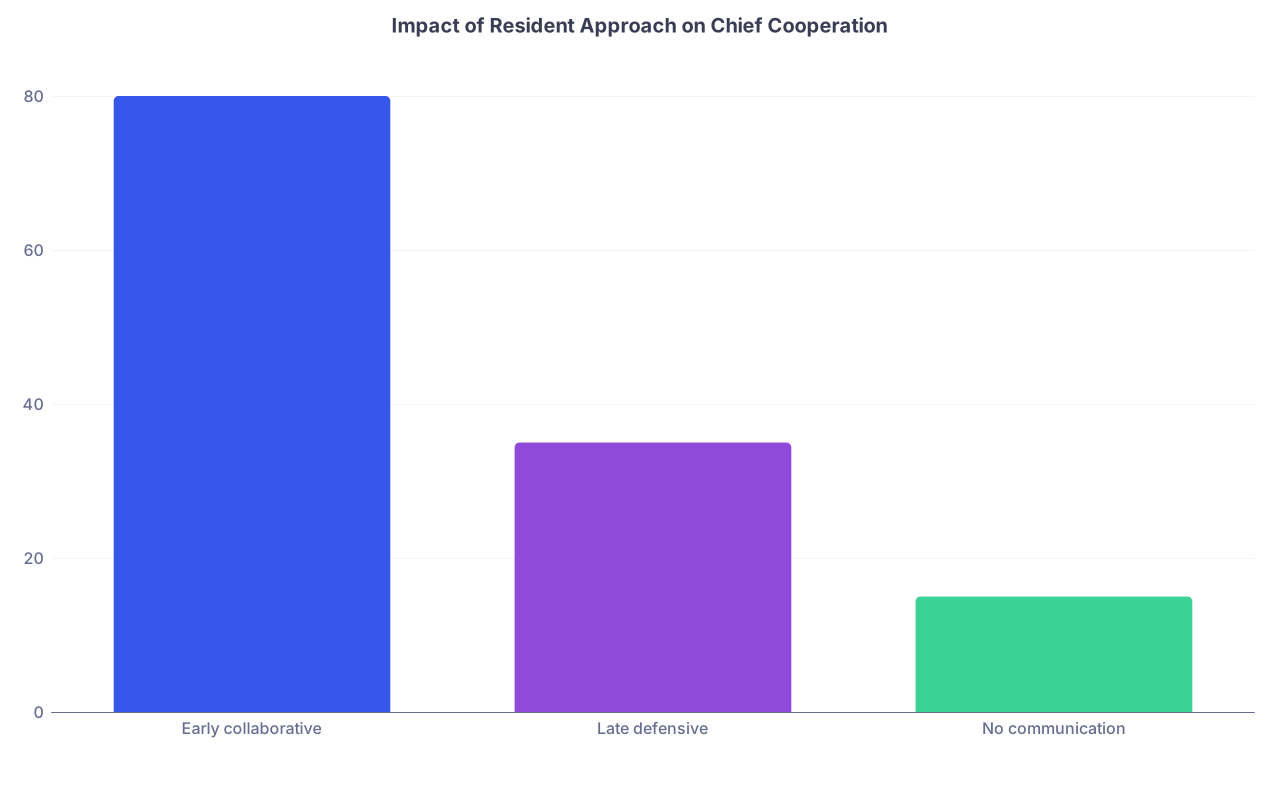
| Category | Value |
|---|---|
| Early collaborative | 80 |
| Late defensive | 35 |
| No communication | 15 |
(Those numbers are approximate from what I’ve seen across programs: if you show up early and collaborative, your odds of reasonable treatment go way up.)
4. Use your social capital intentionally
Yes, it’s unfair that your ability to safely survive residency depends partly on whether your co-residents like you. But it does.
There are three currencies on the wards:
- Actual competence
- Reliability
- Not being an energy drain
If you consistently help people out early in the year—pick up an admission, sign a few extra notes, help with signout, cover a short shift when you’re able—you earn credit. Then, when you need to say, “I can’t safely do a 28-hour trauma call, can I cover two extra short days instead?” you’re not pulling from zero.
Residents who never give and then suddenly ask for a ton of swaps because of “medical reasons” get quietly blacklisted. People stop responding to their texts. I have watched it happen within months.
5. Escalate strategically, not emotionally
If the schedule you receive clearly violates your documented accommodation, you have three levels of escalation:
- Informal: Email chiefs + PD: “I think there may have been an oversight relative to my accommodation which states X. See dates A, B, C. Happy to help adjust elsewhere to make this work for the team.”
- Semi-formal: Loop in GME or the disability office: “I’m concerned the current schedule conflicts with the agreed accommodation.”
- Formal: Written complaint, ombudsperson, or legal counsel.
Here’s the ugly secret: once you cross into level 3, your future in that program is technically protected and practically poisoned. They will follow the rules, but they will never see you the same way. You may be fine with that. But don’t pretend it doesn’t happen.
So you aim to fix as much as you can at levels 1 and 2, and you reserve level 3 for when the choice is between that and actual harm to your health or license.
The Dark Side: Retaliation and “Performance Concerns”
Let’s not sugarcoat this. Some programs retaliate. They’re not supposed to, but they do. They just rarely do it in a way you can screenshot.
Retaliation often looks like:
- Sudden influx of nitpicky professionalism “concerns”
- Being assigned to evaluators known to be harsh
- Being pulled from opportunities “for your own wellbeing”
- Over-documentation of every minor slip
I’ve seen PDs say out loud, “If they want to work less, they can’t expect to be competitive for Cardiology,” within earshot of faculty, then act baffled when the resident’s fellowship letters are lukewarm.
If you get even a whiff of this, you need witnesses and contemporaneous documentation. After every concerning meeting, you send a short email:
“Thank you for meeting with me today to discuss my performance. My understanding from our conversation is: X, Y, Z. I will do A, B. Please let me know if I misunderstood anything.”
You’re not doing this for fun. You’re building a time-stamped record that can be shown to GME, an ombudsperson, or, if it gets ugly, an attorney. Programs behave very differently when they realize there’s a paper trail.
The Future: Why This Might Actually Get Better
Let me zoom out for a moment, because the bleakness can be suffocating.
Residency was designed in an era where the “ideal resident” was a young, able-bodied, single man with no caregiving responsibilities and no chronic illnesses who lived in the hospital and died at 55. That archetype is dead. Reality has finally started to catch up.
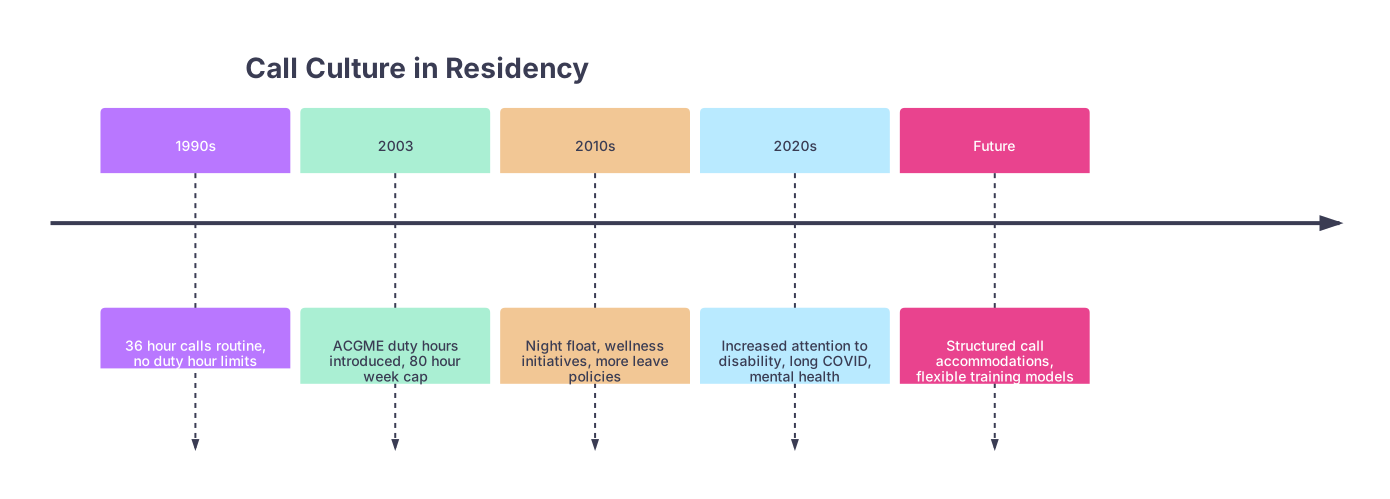
| Period | Event |
|---|---|
| 1990s | 36 hour calls routine, no duty hour limits |
| 2003 | ACGME duty hours introduced, 80 hour week cap |
| 2010s | Night float, wellness initiatives, more leave policies |
| 2020s | Increased attention to disability, long COVID, mental health |
| Future | Structured call accommodations, flexible training models |
The next decade is going to see:
- Residents with long COVID needing structured accommodations.
- More trainees starting residency older, with established medical issues.
- Legal pressure as first-wave cases of poorly-handled accommodations go to court.
- Generational shift: incoming residents are far less willing to accept “this is just how it is.”
Programs that adapt—build standardized call accommodation templates, hire non-resident staff for some night roles, use telemedicine for parts of coverage—will quietly become magnets for talented trainees who also happen to have limitations.
Programs that dig their heels in will lose good people, hemorrhage reputation, and eventually get dragged into the sunlight by lawsuits and social media.
We’re already seeing early signals. Some big-name institutions now have formal “residents with disabilities” working groups feeding directly into GME policy. A few have pre-built models for how to do, say, a medicine residency with only reduced nights but full educational exposure. It’s still patchy. But it’s coming.
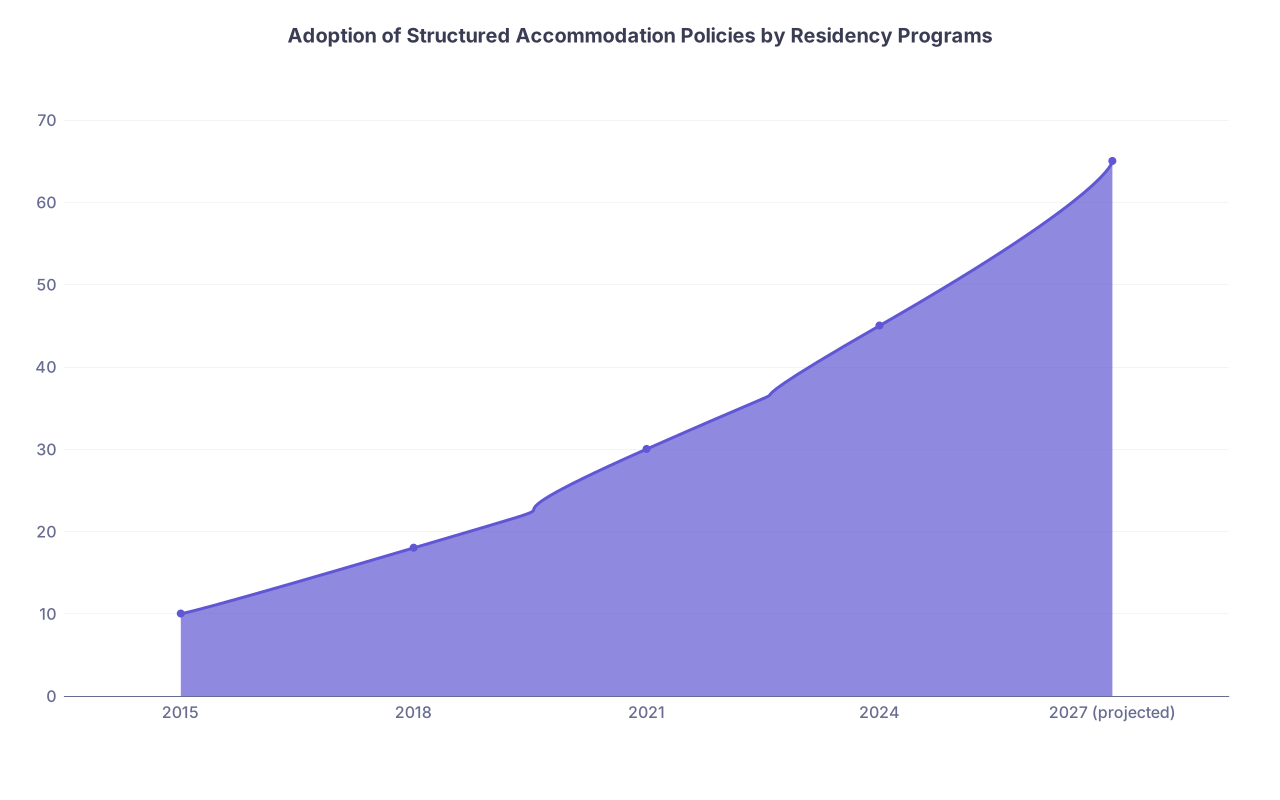
| Category | Value |
|---|---|
| 2015 | 10 |
| 2018 | 18 |
| 2021 | 30 |
| 2024 | 45 |
| 2027 (projected) | 65 |
Where This Leaves You Right Now
You’re not living in the future policy utopia. You’re living in a very imperfect present, in a real program, with real chiefs and a PD you can picture right now.
So here’s the distilled reality:
- Call schedules for residents with limitations are not purely policy-driven. They are political artifacts shaped by personalities, fears, and quiet negotiations.
- Your legal rights matter, but so does your relational capital. You need both.
- Early, precise documentation plus strategic, human conversations beat either silence or scorched-earth tactics.
- Retaliation is real, but so is subtle support. I’ve watched attendings quietly shield residents with limitations by taking extra calls, advocating behind closed doors, and calling out unfairness. They exist. Find them.
You’re going to have to decide how much of your fight goes into changing your schedule versus surviving your training versus preserving your long-term career.
No one can make that calculus for you.
But you can stop pretending the call schedule is neutral or inevitable. It’s built by people, under pressure, making choices. Once you see those dynamics clearly, you can start to influence them—in ways that protect your health without blowing up your future.
You’re in the thick of it now: rotations, evals, and that cursed call calendar. The next big frontier for you isn’t just getting through this month’s schedule; it’s figuring out where you’re headed after residency, and how your limitations fit into the kind of career you actually want.
Fellowship doors, job negotiations, long-term schedules—that’s a different layer of politics. With these realities about call on the table, you’re better equipped to survive training intact. How you leverage that into a sustainable attending life? That’s the next conversation.