

The way most non-traditional DOs talk about their prior careers to ACGME program directors is wrong.
They either bury it in one vague sentence (“I worked in business before medicine”) or they write a five-paragraph love letter to their old job and forget the PD is trying to fill a call schedule, not hire a VP of operations.
You’re not applying for a second job in your old field. You’re applying to be cheap, reliable labor with potential. An ACGME PD wants to know one thing: “If I rank this person, will they show up, do the work, not blow up the team, and grow into a solid attending?”
Your prior career is an asset only if you translate it into those terms. Let’s do that.
Step 1: Know Exactly What ACGME PDs Care About
If you do not understand their priorities, you will pitch the wrong story.
Here’s what most ACGME PDs actually scan for when they see “non-traditional DO” and a prior career on ERAS:
- Are you committed to medicine, or is this a midlife crisis?
- Are you physically and mentally able to handle 60–80 hour weeks?
- Will you fit into a team culture where your “boss” might be 10 years younger than you?
- Are your clinical skills and knowledge at the level of your peers?
- Will you be a professionalism headache? (entitled, rigid, “in my old career we did it better” guy)
- Bonus: Do you bring any immediately useful skills? (teaching, QI, leadership, data, language, procedural comfort)
Your job: take your past life and explicitly answer those questions before they even form in the PD’s head.
Step 2: Reframe Your Career in Residency Language
Stop thinking “I was an engineer / teacher / paramedic / military officer.”
Start thinking: “I have demonstrable history in…”
- Reliability under pressure
- Learning complex systems quickly
- Communicating with difficult people
- Taking feedback from supervisors
- Leading without being toxic
- Showing up. On time. Every time.
Now translate:
- Project manager → “I managed multi-stakeholder timelines and was the person people called at 2 a.m. when things broke.”
- Teacher → “I developed and delivered structured teaching to learners at different levels, adjusted to feedback, and managed behavior in a crowded room.”
- Military → “I operated in high-stress, hierarchical environments and followed chain-of-command while leading junior team members.”
- Nurse/paramedic → “I made high-stakes decisions with limited information, triaged, and documented under time pressure.”
You’re not bragging about titles. You’re extracting functions that mimic residency reality: long hours, hierarchy, constant learning, and service.
Step 3: Fix Your ERAS Experiences So They Don’t Read Like a LinkedIn Profile
Your ERAS “Work Experience” section is where non-trads blow it. They copy-paste a corporate job description and call it a day.
Do this instead.
Pick 2–4 prior roles that matter. For each:
- Strip out every word that sounds like a resume cliché: “synergize,” “stakeholder,” “leverage,” “strategic,” “KPIs,” “market-facing,” etc.
- Replace them with concrete, residency-relevant behaviors.
Example – Bad ERAS entry for a prior engineer:
Lead Engineer, XYZ Corp
- Led cross-functional stakeholder teams to deliver high-value digital solutions
- Owned roadmap and KPI reporting for enterprise product
- Presented to executive leadership and managed budget
That’s noise to a PD.
Good rewrite:
Lead Engineer, XYZ Corp
- Coordinated a 10-person team across three time zones to deliver complex projects on tight deadlines; responsible for late-night problem solving when systems failed
- Tracked and reported performance data to supervisors; adjusted team workflow based on feedback and changing priorities
- Trained new team members and created standardized guides, improving onboarding efficiency
Now, under stress, data, feedback, teaching, ownership. A PD can map that to “this person will handle cross-cover without melting down.”
If you’re coming from clinical backgrounds (RN, RT, EMT, PA), do not over-assume PDs understand the depth of your work. Spell it out in resident terms:
Emergency Department Nurse
- Managed 4–6 high-acuity patients simultaneously, prioritizing tasks and escalating changes to physicians promptly
- Performed procedures (IV placement, wound care, foley insertion) and documented under time pressure
- Oriented and informally taught new nurses and residents about ED workflows and practical bedside tips
Notice: still humble, but obviously useful.
Step 4: Use Your Personal Statement to Answer the PD’s Fears
Your personal statement is not a memoir. It’s a targeted answer to:
“Why did you leave your prior career, and why should I believe you’re staying in medicine?”
Here’s the structure I’ve seen work for non-traditional DOs in ACGME programs:
- One tight paragraph: The moment or pattern that made staying in the prior career impossible.
- One paragraph: How that career actually prepared you for residency (not just “inspired me”).
- One to two paragraphs: Concrete medical school experiences that proved to you (and others) that you belong in this specialty.
- One short closing: What kind of resident you will be and how your past will show up on day one.
Do not:
- Spend 70% of the statement on your old career. Old news.
- Sound like you hated your old job and medicine is “the only meaningful career.” It sounds naïve.
- Over-romanticize. “I always knew I was meant to heal” makes PDs roll their eyes.
Instead, try something like this (simplified but you get the idea):
For ten years, I was a high school chemistry teacher. I loved my students, but the part that kept growing was the after-school time I spent with one particular group: kids dealing with chronic illness. I found myself rearranging lessons so I could sit with a student completing chemo, explaining acid-base physiology not for the exam, but so he could understand his lab results. I realized I was spending more energy tracking their medical stories than my own lesson plans.
That’s enough context. Then shift:
Teaching taught me to break down complex ideas quickly, to read body language when someone is lost, and to keep my voice calm when a room is anything but. During my internal medicine rotation, those same skills appeared again on rounds with a confused family in the ICU, and later as I walked a new diabetic through their first insulin injection. The environment changed; the work—helping people understand and act—felt familiar.
Then anchor it in concrete med school performance:
As a non-traditional DO student, I knew I had to prove I belonged clinically, not just philosophically. I sought out extra call shifts, presented at morning report, and took the lead on discharge counseling. Attendings consistently cited my reliability and communication in evaluations. I’m older than many of my classmates, but I’m used to doing preparation work quietly at night and showing up ready.
This subtly tells the PD: I’ve tested this, I’ve had external validation, and I’m not flaking.
Step 5: Prepare to Talk About Your Age and Prior Career in Interviews Without Awkwardness
You will get asked:
- “So you had a prior career. Why medicine now?”
- “How does your previous experience help you as a resident?”
- “Do you think it will be hard to take orders from someone younger?”
- “Do you think you’ll handle the hours?”
If you’re not ready, you ramble and sound defensive. Here’s a framework for each.
“Why medicine now?”
Bad answer: Meandering life story, divorce, hating your boss, “following my passion.”
Good answer format:
- One clear trigger or pattern.
- One concrete step that showed you weren’t impulsive (post-bacc, shadowing, scribing, years as an EMT, etc.).
- A line showing you understood the cost and accepted it.
Example:
I’d been in software development for a decade and realized the best part of my week was volunteering at a free clinic, not launching new features. Over two years, I increased my clinical exposure, took night classes to finish prerequisites, and shadowed DO physicians in primary care. The more I saw the day-to-day, including the paperwork and the burnout, the more I accepted that I still wanted the responsibility of direct patient care. It was a deliberate, slow decision, not a reaction.
“How does your prior experience help you as a resident?”
You need a 2–3 sentence, specialty-specific answer.
- Internal medicine: systems, communication, long-term follow-through.
- EM: crisis management, triage, rapid decision-making.
- Surgery: procedural comfort, precision, team coordination.
- Psych: interviewing, de-escalation, longitudinal relationship skills.
Example for IM from corporate operations:
In operations, I was the person responsible for keeping things running when multiple systems failed at once. That translates in residency to prioritizing tasks on a busy ward day, communicating clearly with nurses and consults, and not panicking when three problems hit at 4 p.m. I’m used to thinking in terms of process and follow-up, which fits well with chronic disease management.
“Taking orders from someone younger?”
PDs are testing for humility.
In my last career I supervised people older and younger than me, so I’ve seen how age doesn’t equal competence. In medicine, training level matters. If my senior is ten years younger, they’re still the one with more clinical experience, and I treat that with respect. I’ve already done this as a student with residents younger than I am, and it hasn’t been an issue.
Short. Direct. No ego.
“Can you handle the hours?”
This question is code for: “Are you physically and mentally still up for it?”
Tie to something real:
Before medical school, I worked 24-hour shifts as a paramedic, so I know what it’s like to function when tired and still be safe. During third year I stacked my ICU and surgery rotations together intentionally to test my limits. I won’t pretend it was easy, but I recovered, stayed engaged, and my evaluations reflected reliability on long stretches. I’m realistic about the demands and I’m prepared for them.
Step 6: Make Your Letters of Recommendation Work Harder for You
Your prior career only matters if current physicians vouch that you’ve successfully crossed over.
You want at least one letter that explicitly references your non-traditional background and translates it, so PDs do not have to guess.
Tell your letter writers, plainly:
“I’m a non-traditional DO with a prior career in X. Programs will wonder if I can adapt to residency culture, handle hours, and work with younger supervisors. If you’ve seen evidence either way, I’d appreciate if you could comment directly.”
You’re not scripting them. You’re flagging the issues they should address.
Ideal language from a letter might look like:
As a former teacher, she brings maturity to the team without any sense of entitlement. She consistently took feedback from interns and residents younger than her without defensiveness and implemented changes quickly.
Or:
He often volunteered for additional admissions late in the call day and remained calm when the unit became busy. His prior work as an ICU nurse clearly gave him comfort in high-stress environments, and he functioned at the level of a strong intern during parts of the rotation.
That’s the translation PDs trust most.
Step 7: Address DO + Non-Traditional + ACGME Head-On if Needed
You’re not just non-traditional. You’re also a DO aiming for ACGME programs. Some PDs are perfectly comfortable with DOs. Some aren’t. Age and prior career are layered on top.
Your defense is data and performance, not speeches about the value of osteopathy.
You need:
- Solid COMLEX scores; if you took USMLE, use them.
- Strong clinical grades, especially in core rotations related to your specialty.
- Evidence of integration in MD-heavy environments if you rotated there (Sub-I, audition rotations).
If someone pokes at DO/ACGME fit in an interview, keep it simple:
Most of my third-year rotations were at hospitals with both MD and DO students, and I’ve worked directly with allopathic residents and attendings. The expectations were the same, and my evaluations reflected that I met or exceeded them. I’m confident my training has prepared me for ACGME residency.
No defensiveness. Just receipts.
Step 8: Use Your Age and Prior Career to Strengthen, Not Complicate, Your Story
One more thing PDs worry about with non-trads: life complications.
Spouse. Kids. Mortgage. Aging parents. They fear you’ll constantly need exceptions and schedule favors.
You do not have to conceal your life, but be intentional in how you present it.
Bad: Long narratives about child care struggles or “work-life balance is very important to me.”
Better:
I have a spouse and two school-aged children. Through medical school we’ve already worked out stable childcare and support systems that can adapt to rotating schedules. I respect duty hours and wellness, but I’m fully committed to the demands of residency.
Your goal is to neutralize the “risk” perception. You’re not asking for special treatment; you’re showing you’ve already solved the logistics.
Step 9: Practical Edits You Can Make This Week
Let’s get specific. Here’s a simple checklist you can actually do.
Open your ERAS work/activities section. For every prior job entry:
- Delete any jargon your co-resident wouldn’t understand.
- Add one bullet that clearly shows reliability under pressure.
- Add one bullet that shows you took or gave feedback constructively.
Pull up your personal statement draft.
- Highlight every sentence about your old career.
- If that’s more than half the statement, cut it down and replace with clinical examples from 3rd/4th year.
Email your letter writers.
- Politely remind them you’re non-traditional.
- Ask if they can comment on your ability to work with younger supervisors, your reliability, and your fit for residency culture.
Record yourself answering:
- “Why medicine now?”
- “How does your prior experience help you as a resident?”
- “Any concerns about working with younger attendings/residents?”
- “Can you handle the hours?”
- Listen back. If you hear rambling, edit down to 30–60 second clear responses.
Step 10: Know When Your Prior Career Should Be Background, Not Center Stage
Harsh truth: sometimes your old career doesn’t need to be a big selling point.
If your prior job was:
- Short (1–2 years)
- Unrelated and not particularly responsibility-heavy
- Not part of why you chose your specialty
Then it’s fine for it to be background color, not the headline.
You’re allowed to just be “a solid DO applicant who used to work retail / admin / restaurant” without turning it into a sweeping narrative. The more you overplay a weak card, the more it looks like you’re trying to cover for something missing in your medical training.
Use your career story as seasoning, not the whole dish.
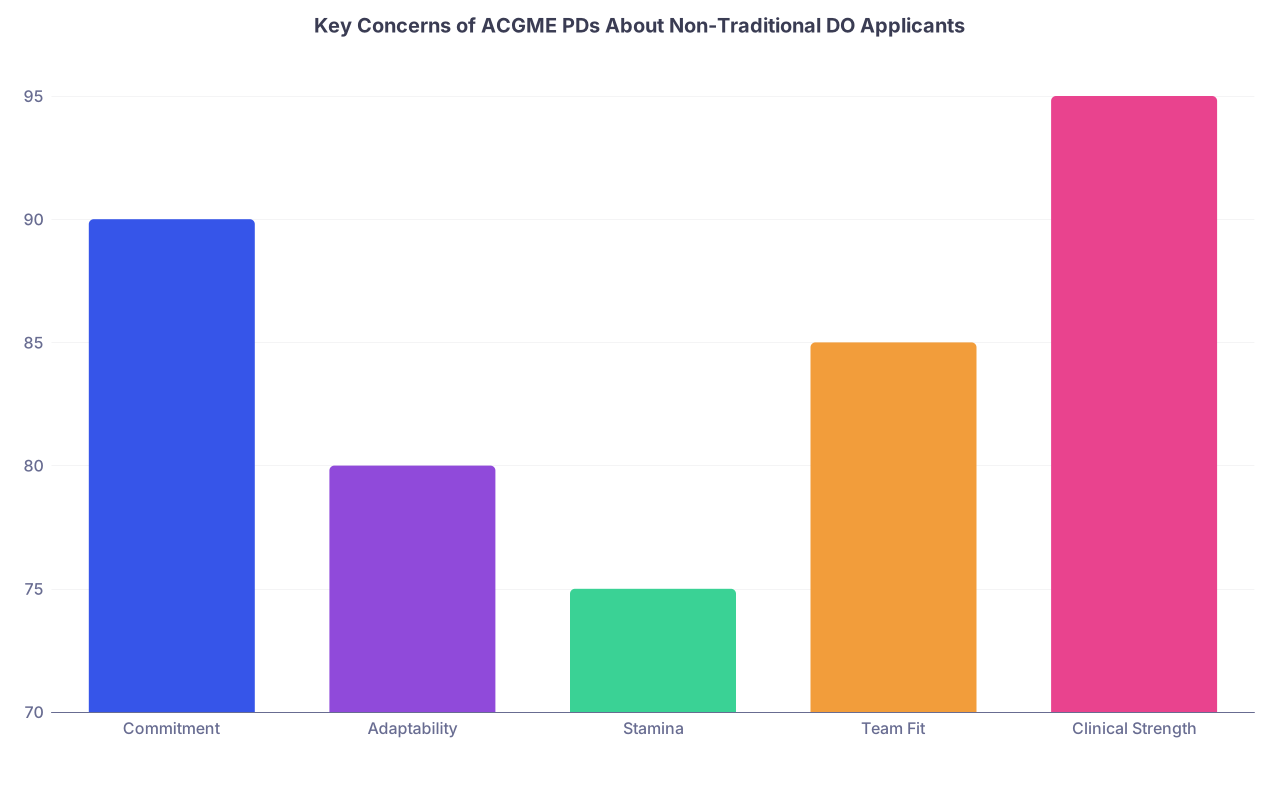
| Category | Value |
|---|---|
| Commitment | 90 |
| Adaptability | 80 |
| Stamina | 75 |
| Team Fit | 85 |
| Clinical Strength | 95 |

| Step | Description |
|---|---|
| Step 1 | Prior Career |
| Step 2 | Translate Duties to Residency Skills |
| Step 3 | Rewrite ERAS Work Entries |
| Step 4 | Refocus Personal Statement |
| Step 5 | Brief Letter Writers |
| Step 6 | Prepare Interview Answers |
| Step 7 | Target ACGME Programs Strategically |

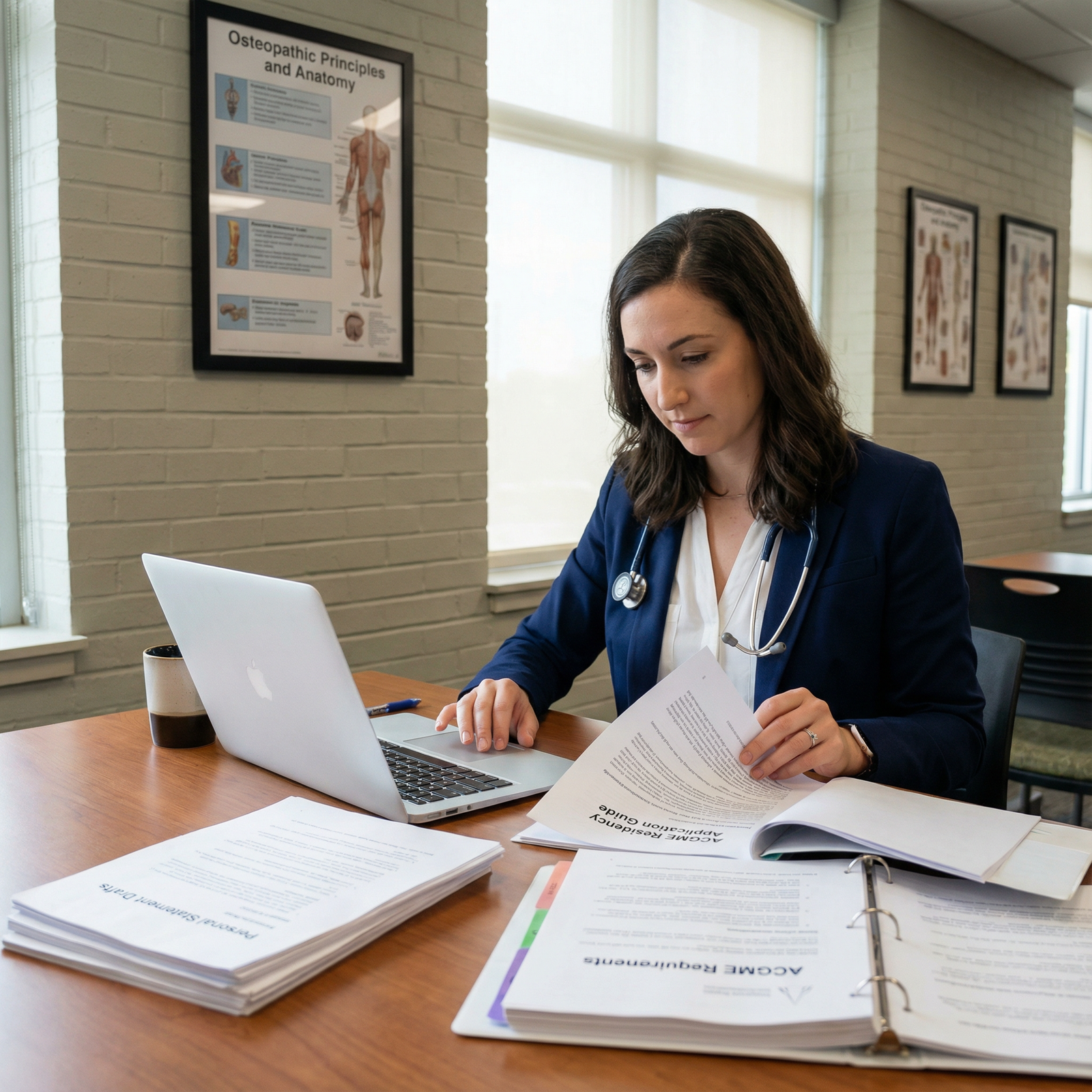
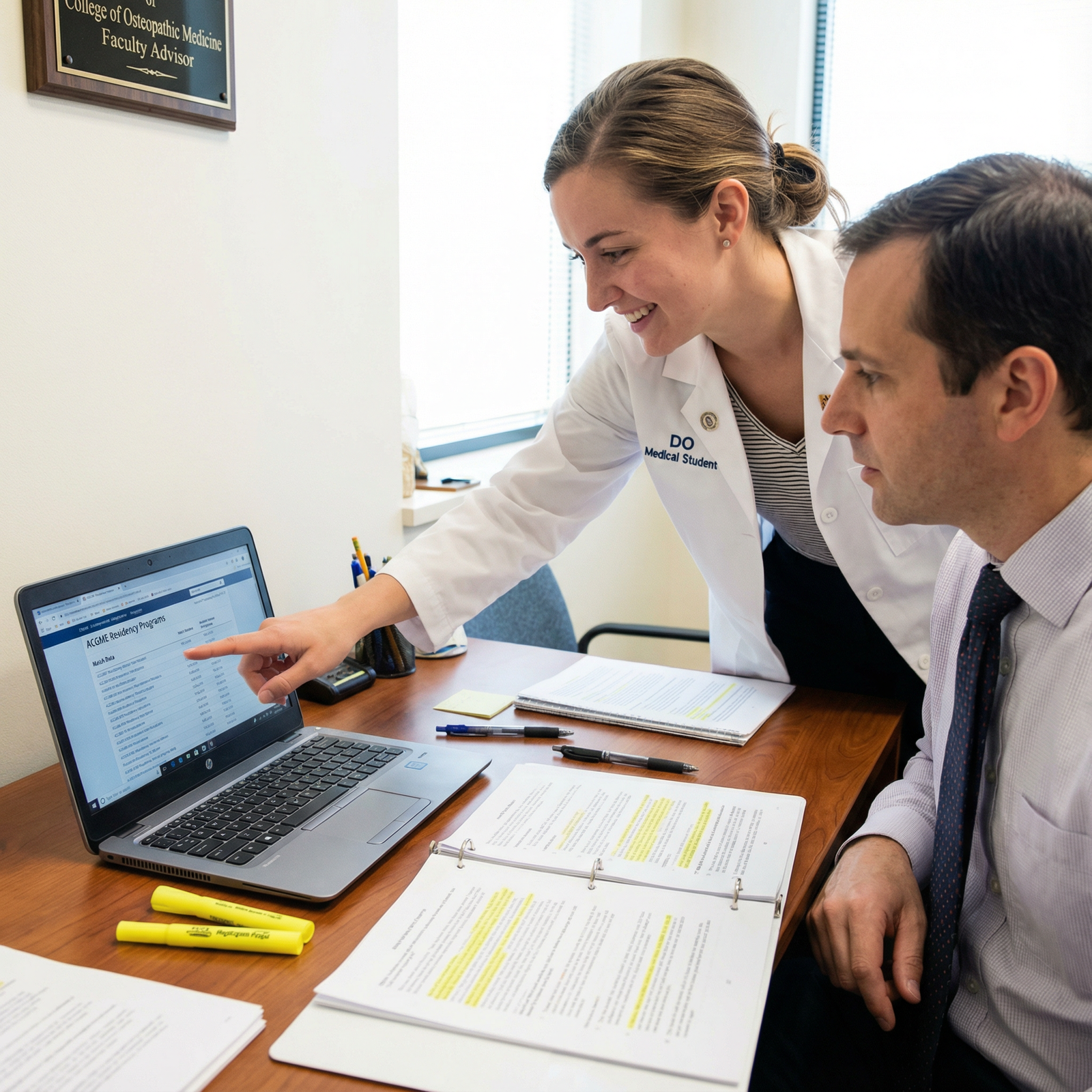
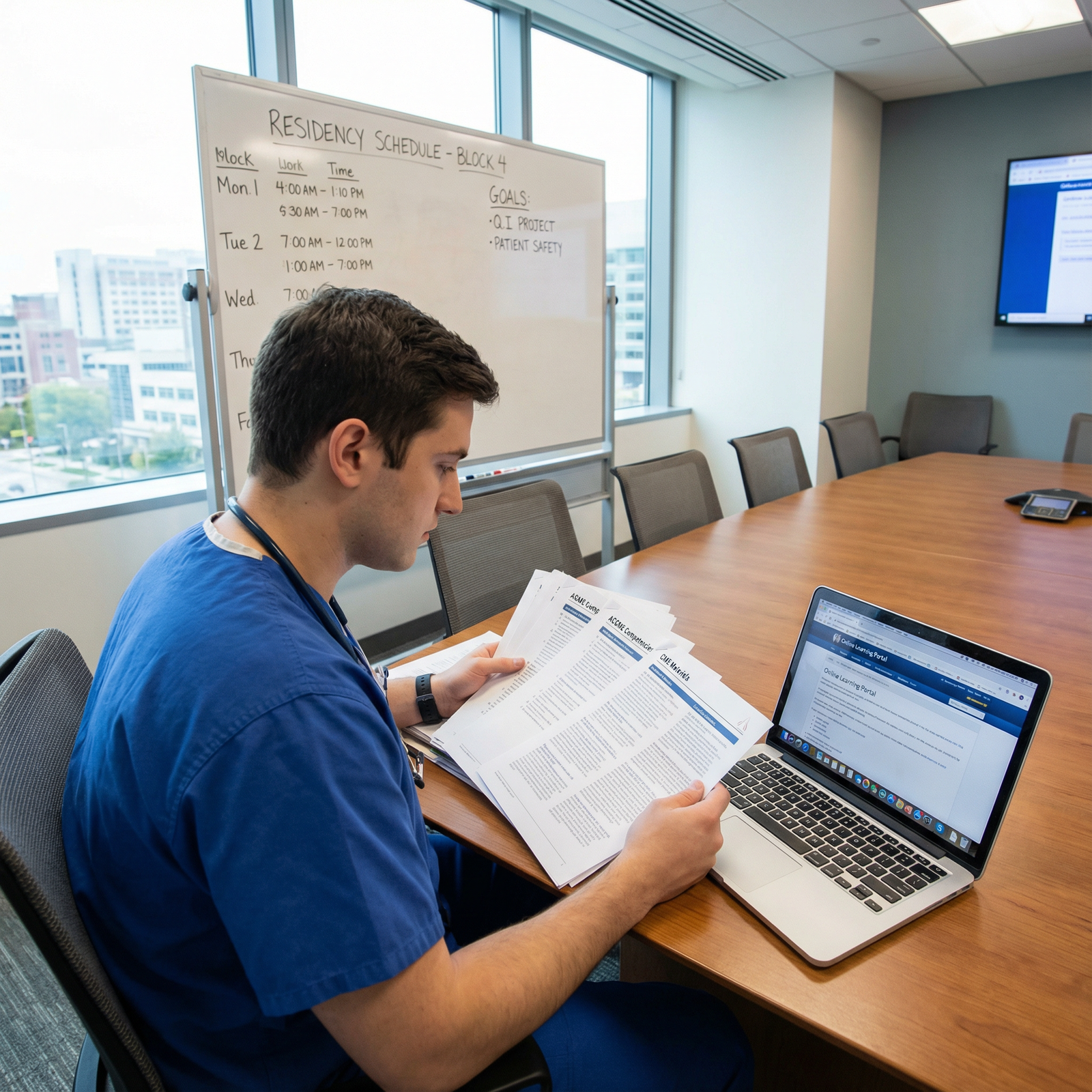
Open your ERAS experiences section right now and take one prior job entry. Rewrite it so a tired PD at 11:30 p.m. can immediately see how that role proves you’ll be a reliable, teachable, low-drama resident. If they can’t see it in 10 seconds, keep editing.


