

The last 30 days before you certify your ACGME rank list will make or break your ADO-heavy strategy. Most applicants waste this window. You will not.
You are in the ADO (Allopathic/Doctor of Osteopathy) lane. You are targeting largely ACGME programs, probably with a mix of DO-friendly and historically MD-heavy residencies. That changes what you must do in these final 30 days. You do not have time for vague “trust your gut” advice. You need a checklist, in order, with hard priorities.
Use this like a countdown clock.
Day 30–25: Lock Your Data, Know Your Timeline, Fix Any ADO Gaps
At this point you should stop pretending you have more time than you do.
Day 30: Confirm Deadlines and Rules
Today you:
- Log into NRMP (or applicable match service for your specialty)
- Read the official Rank Order List Deadline and Certification time down to the minute and time zone
- Confirm:
- Any supplemental matches (e.g., San Francisco Match, Urology, Ophthalmology) are already handled
- Military match outcomes (if applicable) and how that intersects with NRMP
- Check email and spam for:
- “Thank you” notes from PDs
- Follow-up interest e‑mails
- Any “we would like to know your level of interest” messages
Put the NRMP deadline as three separate calendar events:
- 7 days before
- 48 hours before
- 12 hours before
No excuses later.
Day 29: Reality Check – Your ADO Profile vs. Target Programs
Today you line up your application data against the kind of ACGME programs you ranked in your head.
| Profile / Program Type | DO-Heavy Community | DO-Friendly University | Historically MD-Dominant |
|---|---|---|---|
| COMLEX Only | Strong | Moderate | Weak |
| COMLEX + Modest USMLE | Strong | Strong | Moderate |
| COMLEX + Strong USMLE | Strong | Strong | Strong |
| Research-Light, Strong LOR | Strong | Moderate | Weak |
If you:
- Did not take USMLE and your top 5 programs are MD-dominant, you are overreaching.
- Have borderline COMLEX/USMLE scores and few interviews, your list must be safety-heavy at the top.
At this point you should:
- Color-code your interviewed programs by ADO-friendliness (Green: historically DO-welcoming; Yellow: mixed; Red: DO-rare).
- Mark how many Green/Yellow you actually have. Aim for:
- Competitive specialties: 10–15 ranked if possible
- Less competitive: 8–10+ ranked
If your count is low, you are not “being selective.” You are being reckless. Adjust expectation now.
Day 28: Get Your Interview Notes in Order
Today you consolidate scattered impressions into a usable system.
You:
- Open your interview tracking document (or start one)
- For each program, list:
- Location
- Program type (community vs university, AOA heritage vs pure ACGME)
- Interview vibes (1–5)
- Training quality (1–5)
- DO culture (1–5 – did they mention DOs on faculty? DO chiefs? COMLEX familiarity?)
- Lifestyle/call schedule (1–5)
- Red flags (bulleted)
- Green flags (bulleted)
Create one overall rank score per program, even if crude.
If you cannot remember who you spoke with or what they said, dig through:
- Calendar invites
- Zoom links
- Thank-you emails you sent
Reconstruct enough to compare programs rationally.
Day 27–21: Build the First Draft Rank List (Then Stress-Test It)
At this point you should have raw data. Now you turn it into a draft.
Day 27–26: First Draft – What You Actually Want
On these days, you build a gut-first, logic-second draft list.
Process:
- Without looking at scores, prestige, or anything else, write down your programs in pure preference order.
- Only after that, annotate each with:
- ADO receptiveness (Green/Yellow/Red)
- Program quality / fit
- Geographic and personal constraints
- Interview gut feeling
Remember: The match algorithm favors your preferences. Ranking a reach program higher does not hurt you at lower places as long as you have enough safer programs further down.
Bad reason to move a program up: “I think they ranked me highly.”
Good reason: “I would genuinely be happiest training there.”
Day 25: Create a Risk-Stratified Rank List
Now you turn your emotional list into a structured risk ladder.
Group your programs:
- Tier 1 – Dream / High Reach
- Historically few DOs, strong academic focus, or your scores are below their usual range.
- Tier 2 – Realistic / Target
- DO-friendly, your scores and application are in range, interview went well.
- Tier 3 – Safer / Backups
- Strong DO presence, possibly smaller community or less “name brand,” but solid training.
You want the majority of your list in Tiers 2 and 3.
Now sanity-check:
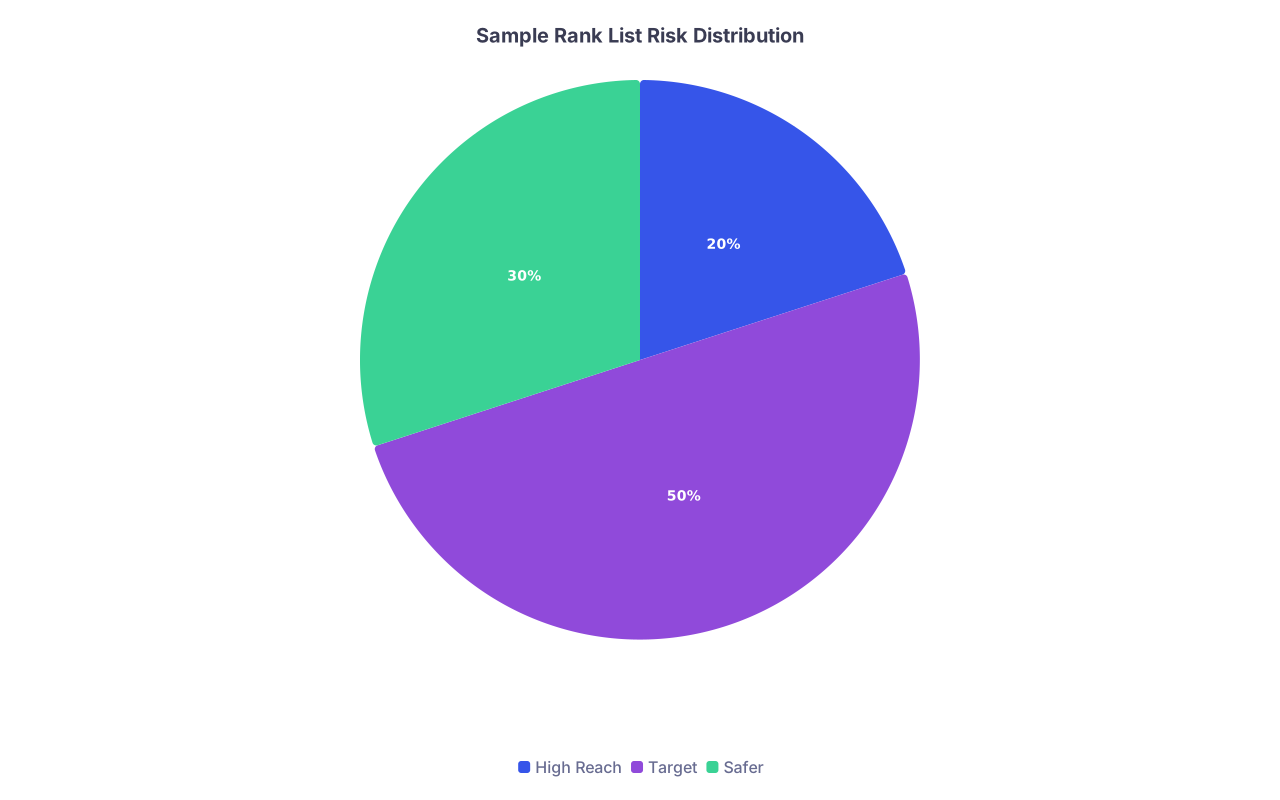
| Category | Value |
|---|---|
| High Reach | 20 |
| Target | 50 |
| Safer | 30 |
If your pie looks more like 50% reach, 20% target, 30% safe, fix it. You will not be rewarded for optimism.
Day 24–23: ADO-Specific Red Flag Audit
You are a DO going into ACGME land. There are program-specific risks most MDs never think about.
In these two days, go program by program and answer:
- Has this program consistently taken DOs in the last 3–5 years?
- Check resident rosters on websites
- Look for DO chiefs or faculty
- Did the PD or faculty comment on COMLEX/USMLE in a way that suggested discomfort or bias?
- Was there any:
- “We only recently started taking DOs”
- “You guys seem to do really well here actually!” (translation: you are still unusual)
- Did they require USMLE despite being “DO-friendly”? That may matter if your USMLE is weaker.
Any program with obvious DO discomfort:
- Moves down unless it is one of very few options you have.
- If you have only 1–2 DO-friendly programs, you have to keep some of these, but they go below the clearly supportive ones.
Day 22–21: Geographic and Life Constraints
At this point you should stop pretending location does not matter.
You:
- Map your top 10–15 programs by geography
- Consider:
- Partner / family location
- Cost of living
- Childcare / support systems
- Visa issues if you are an IMG/DO or on specific status (yes, it intersects)
If you are miserable in a city, you will not suddenly become resilient because “it is only three years.” That is fantasy.
Move programs slightly up or down based on realistic life constraints. Do not let this override training quality completely, but do not ignore it either.
Day 20–14: Communication Window and Second-Guessing Management
This is where people over-email, overthink, and wreck otherwise solid lists. You will not.
Day 20–18: Decide on Final “Love Letters” (If Any)
Not every specialty or PD likes preference signals. Many explicitly say: do not send us a “you are my #1” email. Believe them.
If your specialty tolerates it (e.g., some IM/FM/PM&R programs) and you want to send one:
- You may send ONE clear “you are my top choice” email.
- Possibly 1–2 more “very high on my list” messages if culture allows.
Content:
- 3–4 sentences
- Specific reasons (training, curriculum, patient population, DO culture)
- No begging, no drama, no “I will rank you to match unless X happens.”
If a program has already said “please do not send us ranking intentions,” respect that. They remember.
Day 17–16: Program Follow-up Checks (But No Fishing)
At this point you should:
- Re-check your email and any applicant portals for:
- Rank list reminders
- Any updates (new PD, major structural change)
- Glance at program social media:
- Are they celebrating DO residents?
- Did anything concerning appear? (e.g., major hospital closure, merger)
What you do not do:
- Email asking, “Where am I on your rank list?”
- Ask for “feedback” on your interview rank position.
Those messages help nobody and make you memorable in the wrong way.
Day 15–14: Final Program Research and Tie-Breakers
You likely have 2–5 programs where you just cannot decide on order.
Use concrete tie-breakers:
- Call schedule / night float vs q4 24s
- Fellowship placement (for IM, EM, surgery, etc.)
- Procedural volume (OB deliveries per resident, ICU time, etc.)
- DO culture and mentorship:
- Is there a DO APD / PD?
- Are DOs represented in leadership?
If still tied:
- Go back to interview day. Who felt like “my people”?
- Remember hallway conversations, off-camera comments, resident body language.
Those details matter more than “US News ranking.”
Day 13–7: Technical, Emotional, and Professional Cleanup
Now you start acting like you might hit “Certify” early. Because you should.
Day 13: Technical NRMP / Match System Check
Today you:
- Log back into NRMP
- Start entering your current draft rank order list
- Confirm:
- Every program code is correct
- You are ranking only programs where you actually interviewed
- No duplicates, no wrong locations with similar names
Double-check that you are registered for the correct specialty match and that you do not have leftover lists from last year (reapplicants).
Day 12–11: Run Scenarios (Without Melting Down)
You do not need a Monte Carlo simulation. You just need sanity.
Ask yourself:
- “If I matched at #1, would I be happy?”
- “If I do not match at #1–3 but match at #4–7, can I live with any of those for several years?”
- “Where does the list become ‘I really do not want to be there’?”
If you hit a program that feels like a true no:
- You should remove it rather than rank it lower.
- Ranking a place where you would be unsafe or utterly miserable is a mistake. SOAP is better than that kind of match.
Day 10: Faculty / Mentor Check-In (Optional but Smart)
At this point you should have a near-final list. One or two trusted people can reality-check it.
You:
- Send your mentor / advisor a condensed list:
- “Here is my planned order for my top 10–15 programs, with notes on DO-friendliness and my impressions.”
- Ask very specific questions:
- “Am I underestimating X program?”
- “Does Y program have a reputation with DOs I do not know about?”
Do not crowdsource this to 10 faculty and 5 classmates. Too many opinions will paralyze you.
Day 9–8: Emotional Decompression and Lifestyle Decisions
These two days are for you, not the software.
You:
- Decide how you are going to handle:
- The final week before certification
- Match Week
- Set boundaries:
- Who you will tell your exact rank list to (answer should be: almost nobody)
- Who will be with you on Match Day
This is also when you let yourself acknowledge reality: you might not match at your dream. You will still be a physician.
Day 7–3: Finalize, Certify, and Stop Editing
This is the high-risk window. People ruin good rank lists here.
Day 7: Hard Final Review
At this point you should assume this is your last chance to make meaningful changes.
You:
- Read the entire list top to bottom, out loud
- Ask: “If the algorithm stops at each program, in order, am I okay with that?”
- Check ADO issues one last time:
- Any pure MD-dominant programs above highly DO-supportive programs without a good reason?
- Any program that told you “we rarely match DOs” still sitting unrealistically high?
If something feels off, fix it today.
Day 6–5: Certify Early on Purpose
Yes, you heard that right. You do not wait for the last hour.
Plan to:
- Hit “Certify” no later than 3–5 days before the official deadline.
- Take screenshots or print confirmation showing:
- Date / time of certification
- The words “Rank order list certified”
You can still uncertify, adjust, and re-certify before the deadline if something huge changes. But at least you are not the person locked out by a server outage at 7:58 p.m.
Day 4–3: No New Input
These days exist for one purpose: staying put.
You do not:
- Ask on Reddit if someone else thinks Program A > Program B
- Text every co-applicant, “What are you doing?”
- Rebuild your list from scratch at 1 a.m.
If a program sends an actual, genuine, specific update (new PD, loss of major site, catastrophic news), sure, reassess.
Otherwise: hands off.
Day 2–0: Deadline, Confirmation, and Mental Shift
Now you close the door behind you.
Day 2: Last Log-In, Last Check
At this point you should:
- Log in one final time
- Verify:
- Your list is still certified
- The order matches what you wrote down offline
- There are no extra or missing programs
- Confirm the time of the deadline again. You are not misreading AM vs PM.
Then log out.
Day 1: No More Rank Talk
You:
- Stop discussing your rank list order with classmates.
- Do something that has nothing to do with the match:
- Long run
- Meal with non-med friends
- Binge-watch a series
If anxiety spikes, remind yourself:
- The algorithm is applicant-favoring.
- You made decisions with structure, not panic.
- More tweaking would not improve anything now.
Deadline Day: Quiet Competence
On the actual deadline day you:
- Avoid last-minute logins unless you truly need to confirm something.
- Do not uncertify and start rearranging. That is how good lists die.
When the deadline passes, that is it. Your job now is to shift from “control” mode to “preparing for any outcome” mode.
ADO-Specific Mini-Checklist: Quick Hit Items
Here is your condensed ADO-centric checklist for the final 30 days:
| Timeframe | Key Task |
|---|---|
| Day 30–25 | Confirm deadlines, assess ADO profile |
| Day 24–21 | Build and risk-stratify draft list |
| Day 20–14 | Limited, targeted program communication |
| Day 13–7 | Technical verification and mentor input |
| Day 7–3 | Final review and early certification |
| Day 2–0 | Confirm, then stop editing |
And if you like visual structure:
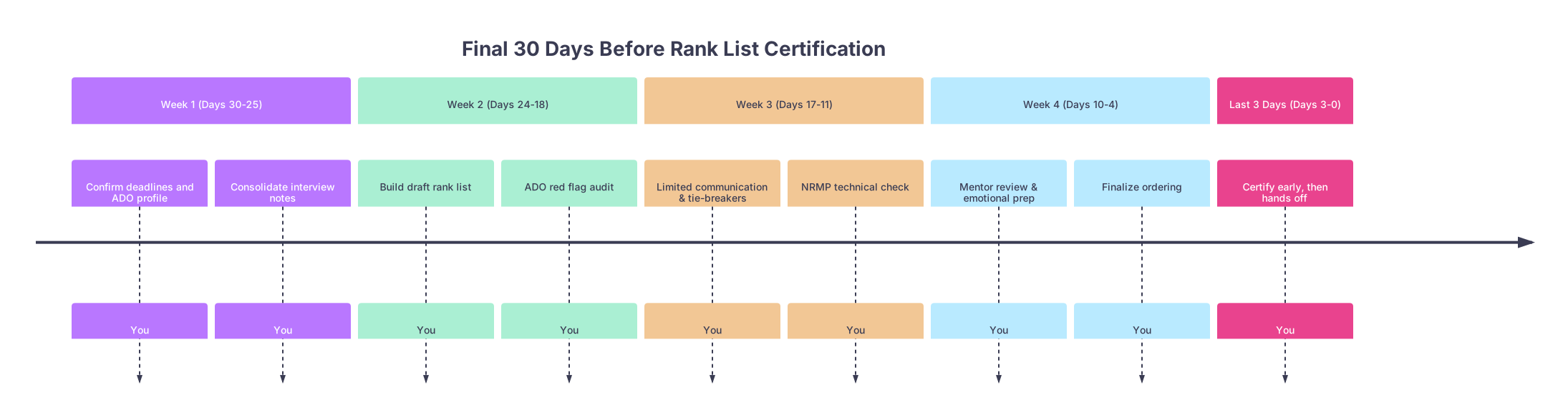
| Period | Event |
|---|---|
| Week 1 (Days 30-25) - Confirm deadlines and ADO profile | You |
| Week 1 (Days 30-25) - Consolidate interview notes | You |
| Week 2 (Days 24-18) - Build draft rank list | You |
| Week 2 (Days 24-18) - ADO red flag audit | You |
| Week 3 (Days 17-11) - Limited communication & tie-breakers | You |
| Week 3 (Days 17-11) - NRMP technical check | You |
| Week 4 (Days 10-4) - Mentor review & emotional prep | You |
| Week 4 (Days 10-4) - Finalize ordering | You |
| Last 3 Days (Days 3-0) - Certify early, then hands off | You |
Common ADO Mistakes – And When to Fix Them
You want to avoid the traps I see DO applicants fall into every year.
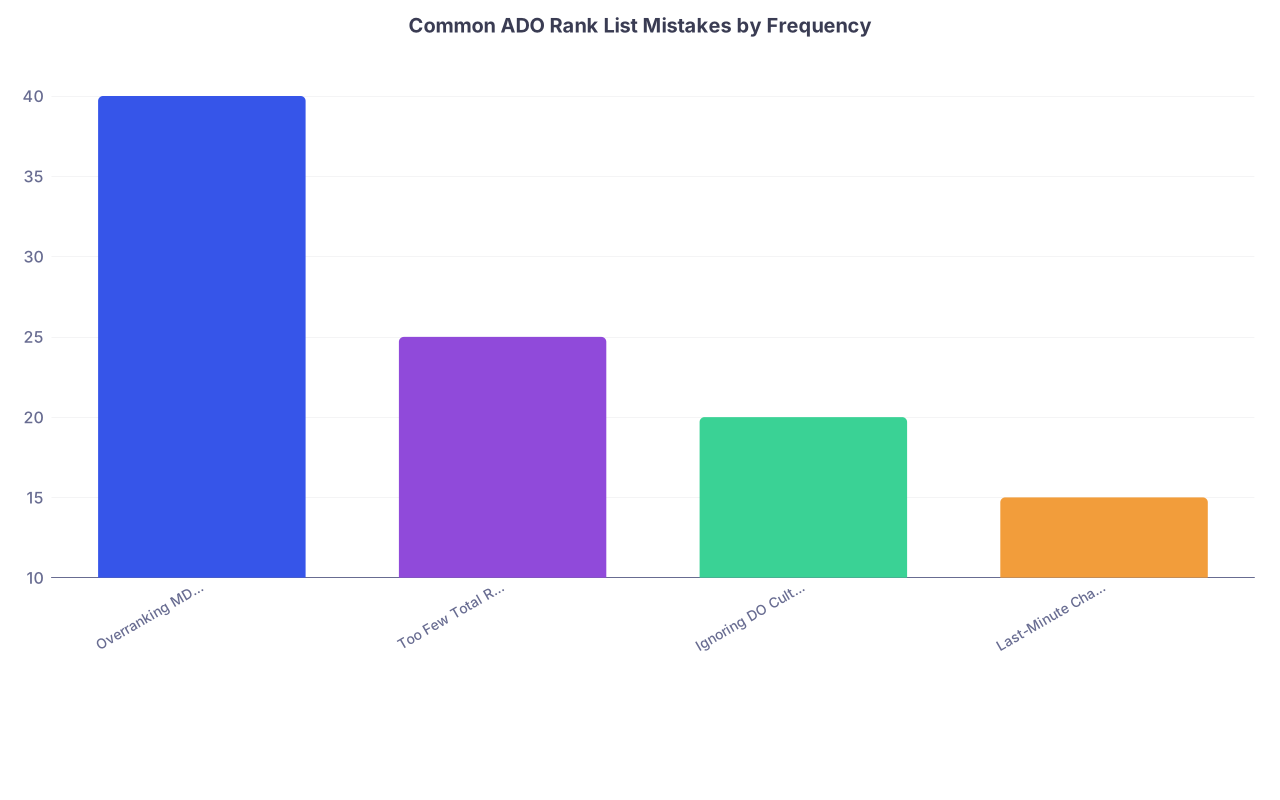
| Category | Value |
|---|---|
| Overranking MD-Heavy Programs | 40 |
| Too Few Total Ranks | 25 |
| Ignoring DO Culture | 20 |
| Last-Minute Changes | 15 |
At the point you catch these:
Overranking MD-heavy programs:
- Fix during Days 24–21 (ADO red flag audit). Move strong DO-friendly programs above long-shot MD-heavy ones unless you have a compelling reason.
Too few total ranks:
- If you have <8–10 ranks in a less competitive field or <12–15 in a competitive one, you are at risk. Address during Days 27–23 by being realistic and ranking all acceptable programs.
Ignoring DO culture:
- If a program has zero DO residents and no DO faculty, do not put it above a place that has demonstrated DO support without serious thought.
Last-minute changes:
- If you feel an urge to rearrange the list in the last 48 hours, walk away. Your earlier, structured self made better decisions than your sleep-deprived, anxious self will.
Mental Prep for Match Week (Start Now, Not Later)
One last thing. The 30-day window is not just logistics. It is about how you will handle Match Week.
At this point you should:
Decide in advance how you will react to each scenario:
- Matching at #1–3
- Matching mid-list
- Matching at your last few spots
- Not matching at all (and then moving into SOAP with a clear, calm plan)
Pre-commit to:
- Reaching out to mentors immediately if you do not match
- Not spiraling into shame; many excellent physicians had nonlinear paths

Final 3 Takeaways
- The algorithm is on your side, but only if your rank list reflects your true preferences, not your anxiety.
- As a DO in ACGME spaces, DO culture and historical DO representation at each program should materially influence where you place them.
- Certify early, avoid last-minute chaos, and remember: a solid, DO-supportive “backup” often beats a prestige name that barely understands your training.


