Most DO students lose the ACGME match long before ERAS ever opens.
They do not lose it on interview day. They lose it M2–early M3 when scores, rotations, and “signals” are quietly mismanaged. You are not going to do that.
I am going to walk you from early M2 to rank list submission with a brutal, time-specific map: what to do, by when, as a DO targeting ACGME programs.
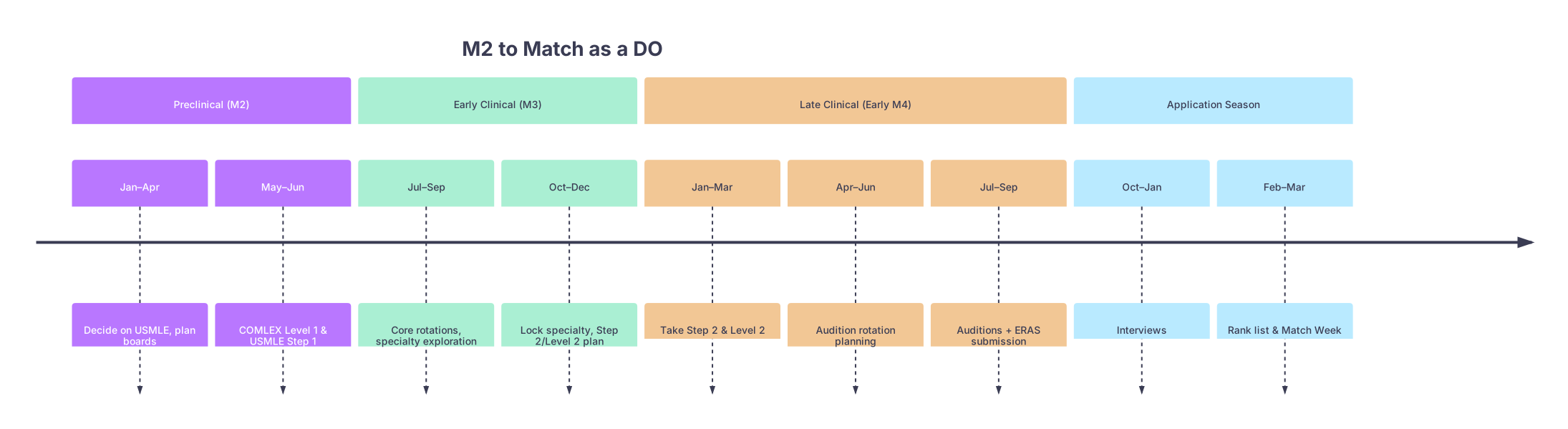
Big Picture Timeline: M2 to Match Week
At this point, you need the 30,000‑foot view. Then we zoom into months and weeks.
| Period | Event |
|---|---|
| Preclinical (M2) - Jan–Apr | Decide on USMLE, plan boards |
| Preclinical (M2) - May–Jun | COMLEX Level 1 & USMLE Step 1 |
| Early Clinical (M3) - Jul–Sep | Core rotations, specialty exploration |
| Early Clinical (M3) - Oct–Dec | Lock specialty, Step 2/Level 2 plan |
| Late Clinical (Early M4) - Jan–Mar | Take Step 2 & Level 2 |
| Late Clinical (Early M4) - Apr–Jun | Audition rotation planning |
| Late Clinical (Early M4) - Jul–Sep | Auditions + ERAS submission |
| Application Season - Oct–Jan | Interviews |
| Application Season - Feb–Mar | Rank list & Match Week |
M2: Setting Up a Competitive DO Profile for ACGME
M2: January–March – Decide Your Exam Strategy
By now:
- You are in systems or organ blocks.
- Boards discussion is everywhere. Half your class is panicking.
At this point you should:
- Decide on USMLE vs COMLEX‑only (for ACGME match).
I will be blunt:
- For most competitive or even mid‑tier ACGME programs, USMLE Step 2 CK is practically mandatory for DOs.
- Step 1 is now pass/fail, but Step 2 is still scored. That is your leverage.
Use this rule of thumb:
- If you are even considering:
- EM, Anesthesia, Radiology, PM&R, Gen Surg, Ortho, Derm, ENT
→ Plan to take USMLE Step 2. Step 1 is helpful but less critical now.
- EM, Anesthesia, Radiology, PM&R, Gen Surg, Ortho, Derm, ENT
- For FM, IM (community), Psych, Peds:
- Many programs accept COMLEX alone, but a solid Step 2 score widens options.
At this point:
- Decide:
- “I will take COMLEX Level 1 and USMLE Step 1”
or - “I will take COMLEX Level 1 only, but absolutely USMLE Step 2.”
- “I will take COMLEX Level 1 and USMLE Step 1”
- Map out your dedicated board period.
- Identify your Level 1 and Step 1 test windows.
- Aim:
- Level 1: Late May–early June of M2.
- Step 1 (if taking): Within ~7–10 days of Level 1.
Build a backward plan:
- 10–12 weeks of serious board prep.
- Clarify:
- Question banks (UWorld, COMBANK/COMQUEST, Amboss).
- Dedicated start date.
- Start building your “future specialty short‑list.”
You do not need to commit, but you should:
- List 3–4 specialties that fit your:
- Personality (clinic vs procedure vs acute).
- Board strength (Step 2 target > 245? or more modest?).
- Lifestyle/non‑negotiables.
Write this list down. You will refine it M3, but this shapes when you need Step 2 and what rotations to chase.
M2: April–June – Boards and Baseline Competitiveness
April:
- Classes finishing, dedicated is beginning.
At this point you should:
- Be in daily Qbank mode (60–120 questions per day).
- Have a scheduled COMSAE and NBME Self‑Assessments.
Targets (rough, DO reality‑based):
- If you want mid‑tier or better ACGME IM/EM/Anesthesia:
- Aim for practice Step 1 ~220+ (yes, it is pass/fail, but prep quality matters for Step 2).
- For COMLEX Level 1:
- Try to have COMSAEs above 550–600 equivalent.
May–June:
- Take COMLEX Level 1.
- If doing it, take USMLE Step 1 close by so content stays fresh.
When exams are done:
- Do not disappear for a month. Take a short break, then:
- Review what worked for you.
- Note weak systems for future Step 2 prep.
M3: Rotate Like Your Match Depends On It (Because It Does)
Your M3 year is where DO applicants either become obvious ACGME interview material or get quietly filtered out.
M3: July–September – Early Core Rotations and Specialty Reality Check
You are just starting or in the middle of:
- IM
- Surgery
- FM
- Psych, OB/GYN, Peds (depending on schedule)
At this point you should:
- Treat every IM and Surgery month like a future letter source.
You want:
- At least one strong IM letter.
- At least one strong letter in your target specialty (or related).
On every rotation:
- Ask the attending directly at the end:
- “Would you feel comfortable writing me a strong letter of recommendation?”
- You are listening for enthusiasm. Lukewarm “sure” = no.
- Start tracking programs and specialties.
Open a spreadsheet with columns like:
- Specialty
- Program name
- Location
- DO‑friendly? (yes/no/unknown)
- Requires USMLE? (yes/preferred/no)
- Typical Step 2/COMLEX Level 2 expectations
You will thank yourself next year.
- Reality‑test your specialty interest.
By September:
- Ask:
- Do I still think I want EM vs IM vs Anesthesia vs FM, etc.?
- Do I realistically have the academic horsepower for that field?
If you are aiming for competitive ACGME specialties as a DO:
- You must be planning a strong Step 2 and at least 1–2 well‑chosen audition rotations in M4.
- And you must start moving now, not “later.”
M3: October–December – Lock the Specialty and Plan Step 2/Level 2
Fall of M3 is critical. This is where a lot of DO students drift. You will not.
At this point you should:
- Nail down your specialty by December.
You can still pivot later, but for planning you need a default.
- If you are torn between, say, IM vs EM:
- Talk to a faculty mentor in both (preferably MD and DO perspectives).
- Ask blunt questions about DOs in their programs.
- Plan your Step 2 CK and COMLEX Level 2 timing.
Strong advice for DOs aiming for ACGME:
Step 2 CK: Take between January–June of M4, but:
- If your Level 1/Step 1 were weaker, consider earlier so a strong Step 2 can rescue you.
- If you are strong and want time to crush audition rotations, a spring test date is fine.
COMLEX Level 2: Typically similar window, staggered ~1–3 weeks from Step 2.
The key DO reality:
- ACGME programs often cannot interpret COMLEX well.
- Step 2 CK is the number many will quietly sort on.
- Identify which programs are actually DO‑friendly.
Do not guess. Look at:
- Current residents: any DOs?
- Program websites: mention COMLEX? separate cutoffs?
- NRMP/ERAS data / Reddit / SDN (filtered with skepticism, but still data).
Create a small comparison table to guide your strategy.
| Program Type | DOs on Roster | USMLE Required | COMLEX Accepted | DO Applicant Outlook |
|---|---|---|---|---|
| University IM (Top 20) | Rare | Yes | Sometimes | Difficult |
| Mid-tier Univ IM | Some | Preferred | Yes | Reasonable |
| Community IM | Many | Optional | Yes | Strong |
| University EM | Few | Yes | Rare | Tough without Step 2 |
| Community EM | Several | Preferred | Yes | Fair |
If your dream program has zero DOs on the roster, treat it as a reach no matter how “holistic” their website sounds.
- Start light Step 2 prep groundwork.
- Do UWorld blocks in random/timed mode when you can.
- Flag weak topics that wrecked you on Level 1.
M3: January–April – Letters, Research, and Audition Strategy
Spring of M3 is where you quietly line up everything M4 will need.
At this point you should:
- Secure at least 2–3 letter writers by April.
You want:
- 1 letter from Internal Medicine (almost every specialty values this).
- 1 letter from your target specialty or closest neighbor.
- 1 letter from someone who knows you well (could be research, a sub‑specialty, or a DO mentor).
Ask early, even if ERAS is months away:
- “Would you be willing to write me a strong letter for residency when the system opens? I can send you my CV and personal statement draft later.”
- If possible, get involved in at least one scholarly project.
No, you do not need a Nature paper.
You do want:
- A poster, QI project, or small retrospective study connected to your specialty.
- Something you can talk about intelligently in interviews.
If your school is light on research:
- Join a simple QI project in FM/IM/EM.
- Ask attendings:
- “Is there any ongoing QI or case series I could help with?”
- Plan your M4 “audition” / away rotations.
Here is where DO timing often goes wrong.
For ACGME‑competitive fields (EM, Anesthesia, PM&R, etc.):
- You want 1–3 audition rotations between July–September of M4.
- You must apply through VSLO/VSAS or program‑specific portals by March–May of M3 at the latest.
At this point:
- Make a list of 5–10 potential audition sites:
- At least 2–3 DO‑friendly.
- At least 1 reach.
- Check each program’s:
- VSLO opening date.
- Requirements (immunizations, Step/COMLEX scores, evaluations).
M3: May–June – Pre‑M4 Cleanup
You are approaching M4. Time to clean up loose ends.
At this point you should:
- Have at least a working specialty choice.
- Have audition applications submitted or nearly ready.
- Be progressing in Step 2 prep (UWorld pass 1 ideally >50–60% in random blocks).
If your clinical evals are mediocre:
- Ask explicitly for feedback.
- Fix professionalism, notes, punctuality now. Those habits will follow you onto audition rotations where they can make or break you.
M4: Execute on Exams, Auditions, and ERAS
M4: July–September – The High‑Risk, High‑Yield Window
This stretch will define your application.
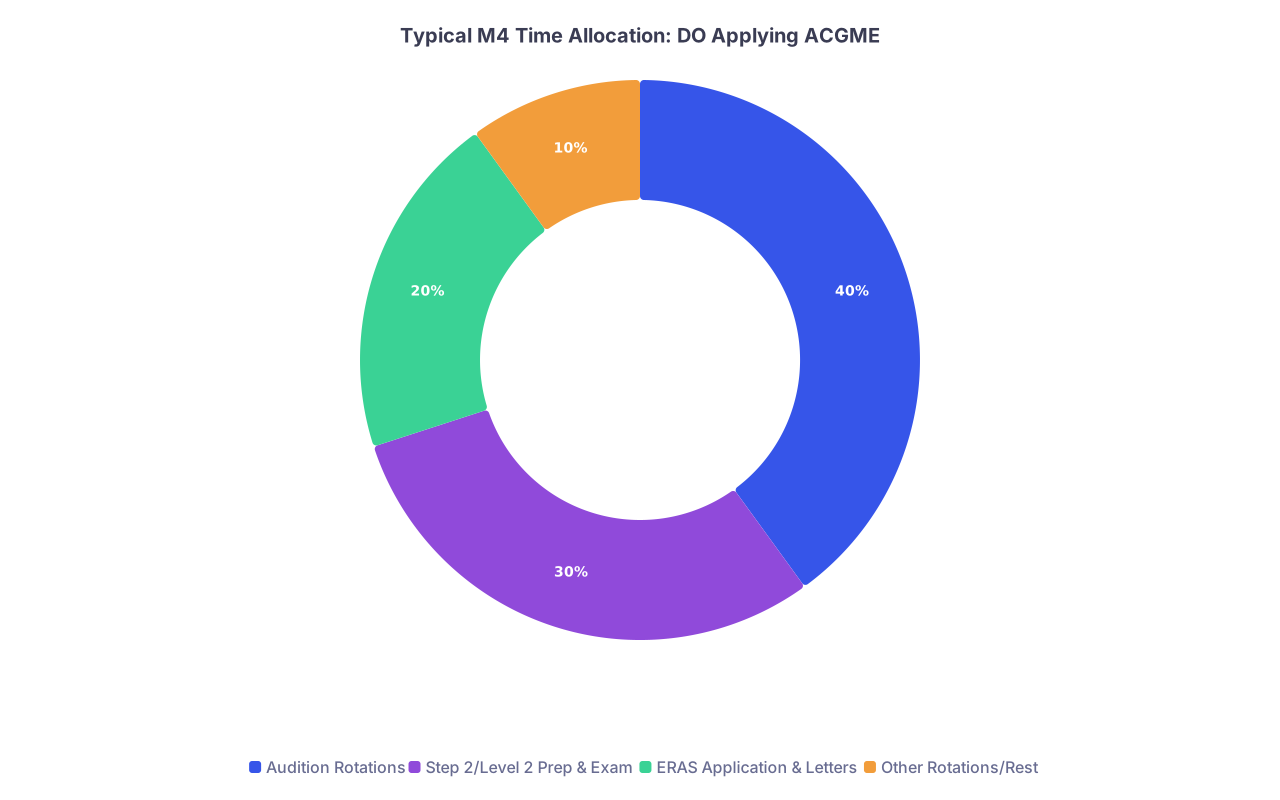
You will be balancing:
- Audition rotations
- Step 2 CK / COMLEX Level 2
- ERAS application and personal statement
- Letters and program lists
| Category | Value |
|---|---|
| Audition Rotations | 40 |
| Step 2/Level 2 Prep & Exam | 30 |
| ERAS Application & Letters | 20 |
| Other Rotations/Rest | 10 |
July–August: Auditions + ERAS Drafting
At this point you should:
- Be on your first audition rotation.
On audition:
- Show up early, leave when the work is done.
- Volunteer for scut work but stay clinically engaged.
- Do not argue. Do not complain about other students or services.
- Ask for feedback mid‑rotation, not at the end.
You are trying to secure:
- A strong away letter.
- A spot on their informal “we like this DO” list before interview season.
- Draft your ERAS personal statement and experience entries.
By mid‑August:
- Personal statement at solid draft stage.
- ERAS experiences written with:
- Clear impact
- No fluff, no generic “learned the importance of teamwork” lines.
- Confirm all letters in progress.
Ping writers politely:
- “Just checking in as ERAS opens soon. Do you still feel comfortable writing a strong letter for me? I can send updated CV and statement.”
Late August–Early September: Submit ERAS
You want your application ready to go Day 1 or within the first week of submissions.
At this point you should:
Have Step 2 CK taken or scheduled within weeks, not months.
Have COMLEX Level 2 scheduled.
Have a realistic program list sized appropriately:
- Competitive specialty as DO: 45–70+ programs, heavily community/DO‑friendly weighted.
- Less competitive: 20–40 programs may be enough if your app is strong.
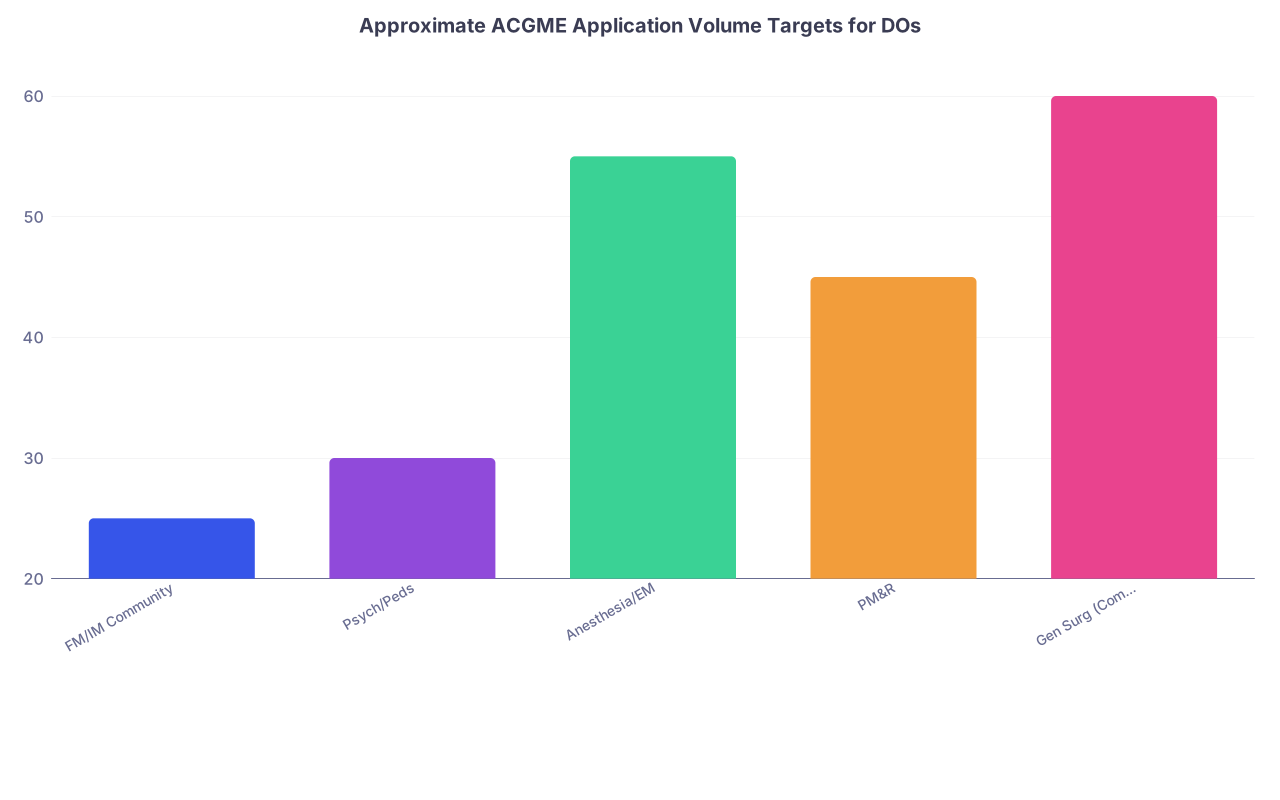
| Category | Value |
|---|---|
| FM/IM Community | 25 |
| Psych/Peds | 30 |
| Anesthesia/EM | 55 |
| PM&R | 45 |
| Gen Surg (Community) | 60 |
Do not undershoot. DO students regularly sabotage themselves by applying like MD classmates to “20 programs only.” Different starting line.
M4: October–December – Interview Season and Strategic Signals
By October:
- ERAS is out.
- Interview invitations start landing.
At this point you should:
- Have Step 2 CK and Level 2 scores back or pending soon.
- Strong Step 2 for DOs targeting ACGME:
- >240 opens many doors.
- 230–240 is OK but you will lean more on DO‑friendly and community programs.
- <225 → expect to broaden to more community and osteopathic programs if needed.
- Track and respond to interview invites immediately.
Same day if possible. Slots vanish fast, especially at desirable programs.
Keep a simple schedule grid:
- Columns: Date, AM/PM, Program, Virtual/In‑person, Travel details.
- Prepare your DO‑specific talking points.
You will be asked, directly or indirectly:
- Why DO?
- How do OMM/osteopathic training inform your approach?
- Why ACGME vs AOA? (even now this comes up)
Have a crisp, non‑defensive answer:
- Emphasize breadth of training.
- Clinical reasoning.
- Hands‑on skills where relevant.
- Handle preference signals carefully.
If programs allow signaling (or you choose to send love letters):
- Be selective. You are not sending “You’re my #1” to 15 places.
- Better to send 3–5 sincere “you are truly top‑tier for me” messages than 20 generic ones.
M4: January–March – Final Interviews, Rank List, and Match Week
January: Last Interviews and Debrief
At this point you should:
- Have 8–15 interviews for most fields to feel semi‑comfortable as a DO applicant, more for very competitive specialties.
After each interview:
- Write down:
- Gut feeling.
- Vibe from residents.
- How they treated DOs.
- Location, call schedule, fellowship prospects.
February: Build the Rank List
Here is where people overcomplicate things.
Your rank list should prioritize:
- Where you would actually be happy training.
- Where you will be trained well enough for your goals.
- Reasonable DO match probability.
Do not “game” the algorithm by ranking low programs highly just to match. Rank honestly in your true order of preference.
But also:
- If you have 3 absolute reach university programs that have never taken a DO, and 10 DO‑friendly community programs that liked you, do not put all the reaches at the very top unless you are comfortable going unmatched.
This is a risk tolerance call. Know yourself.
Match Week: Have a Contingency Plan
Hopefully:
- Monday: You see “You have matched.”
- Friday: You find out where.
If you do not match:
- Be mentally prepared by February for:
- SOAP strategy: pre‑identify prelim/TY/less competitive categorical spots you would accept.
- Possibly reapplying with a research or prelim year under your belt.
FAQ (Exactly 4 Questions)
1. As a DO, is it really necessary to take USMLE Step 2 CK for ACGME programs?
For most students who want broad ACGME options, yes. Many PDs are candid: they understand Step 2 CK; they do not always trust or know how to interpret COMLEX. If you want university‑affiliated IM, EM, Anesthesia, PM&R, or anything more competitive than community FM, plan on Step 2 CK. The only group that can safely skip it are those fully committed to DO‑heavy community programs that explicitly state COMLEX‑only is fine.
2. How many ACGME programs should a DO apply to?
It depends on specialty and your metrics. For community FM or IM with decent scores and no red flags, 20–30 carefully chosen programs can be sufficient. For Psych or Peds, 25–35 is common. For EM, Anesthesia, PM&R, and community General Surgery as a DO, 45–70 is often more realistic, slanting toward DO‑friendly and community programs. When in doubt, slightly overshoot, not undershoot.
3. When should I do audition rotations as a DO applicant?
Target July–September of M4 for your main auditions, with at most 2–3 total. That window is when programs are actively forming impressions for interview decisions. Doing them later (October–December) may still help but is less powerful for initial invites. Apply for auditions by March–May of M3, especially for competitive specialties, or you will miss slots.
4. What Step 2 / Level 2 scores should a DO aim for to be “safe”?
There is no truly “safe” score, but there are practical targets. For a DO aiming at mid‑tier university or strong community IM, a Step 2 ≥ 240 and Level 2 ≥ 630 behaves very well. For EM, Anesthesia, and PM&R, similar or slightly higher Step 2 expectations are common. Community FM and Peds can be comfortable with Step 2 in the 220s and Level 2 ≥ 580–600, especially with strong clinical performance and letters. Always confirm with program‑specific data when possible.
Key points to walk away with:
- Your ACGME match as a DO is mostly decided M2–early M4 by how you time Step 2/Level 2, pick auditions, and secure strong letters.
- Step 2 CK is your currency in most ACGME programs; COMLEX alone severely limits the map.
- Early, realistic specialty decisions and a DO‑aware program list are what separate matched DOs from “I wish someone had told me this two years ago.”