

The obsession with “how many publications do I need?” is rational. Fellowship selection is brutally quantitative behind the scenes. Programs will never publish their cutoffs, but the data and match patterns tell a very clear story: the number that “moves the needle” is not universal. It depends heavily on the fellowship type, your residency pedigree, and how your output is distributed across first‑authorship, specialty‑relevance, and perceived quality.
Let me walk you through this like we are on call, scrolling through ERAS applications with coffee in hand. Because that is exactly how most of these decisions get made.
The Baseline: What Programs Actually See in Your “Research Signal”
Before slicing by fellowship type, you need to understand how the “research variable” functions in a program director’s head. It is not just an integer count.
Most PDs and selection committees bundle your research into three implicit buckets:
- Volume: raw number of PubMed-indexed papers, abstracts, posters, book chapters.
- Relevance: percentage in the target subspecialty or strongly adjacent area.
- Role and quality: first‑author vs middle‑author, impact factor, recognized mentors, recognizable journals.
They might not say it, but the mental score often looks like this:
- 1–2 total publications = “has some scholarly activity”
- 3–5 = “research‑interested, probably engaged”
- 6–10 = “research‑serious, likely to keep producing”
10 = “research‑heavy, potential academic trajectory”
Now, different fellowships weight that “research score” very differently.
To make this less vague, here is a simplified mapping of what typically moves the needle for different fellowship types, assuming a U.S. internal medicine or surgery resident with reasonably competitive board scores and solid clinical performance.
| Fellowship Type | Low Impact Level | Noticeable Boost | Strong Advantage |
|---|---|---|---|
| Cardiology | 0–2 | 3–5 | 6+ |
| GI / Hepatology | 0–2 | 4–6 | 7+ |
| Hem/Onc | 0–3 | 4–7 | 8+ |
| Pulm/CCM | 0–2 | 3–5 | 6+ |
| Nephrology / Endocrine | 0–1 | 2–3 | 4+ |
| ID / Rheumatology | 0–2 | 3–4 | 5+ |
| Surgical subspecialties* | 0–3 | 4–8 | 9+ |
*Surgical subspecialties = vascular, HPB, CT surgery, surg‑onc, etc. Numbers are typical for U.S. university programs, not absolute rules.
Those ranges are not arbitrary. They come from what I have seen on rank lists, interview compare sheets, and applicant pools over multiple cycles.
Big Four: Hyper‑Competitive “Academic Identity” Fellowships
These fellowships treat research like a second board score. You can match without much research at less academic programs, but if you are aiming for major university sites, the numbers are stark.
Cardiology
Cardiology is ruthlessly numbers-driven. The data show three patterns:
- At top‑tier academic programs, the median successful applicant often has 5–10 scholarly products, with at least 2–3 cardio-specific publications or abstracts.
- Community or mid‑tier academic fellowships will match people with far less, but the interview pools at big-name places are research‑dense.
From what I have seen:
- 0–1 publications: You can still match cardiology, but your ceiling shifts heavily toward community/university-affiliated programs, especially if you are at a mid-tier residency. You will need stellar clinical evaluations and strong Step 2 / ITE performance.
- 3–5 publications: This is where the needle starts to move. If at least two are cardiology or closely related (HF, EP, imaging, prevention), you shift from “generic resident” to “cardiology‑interested” on paper.
- 6+ publications: This starts to look like a serious research portfolio, especially if ≥2 are first‑author and ≥3 are cardio‑focused. At that point, programs view you as a future academic cardiologist unless your personal statement says otherwise.
From a committee perspective, I have literally heard: “We filter for at least a couple of first‑author cardiology pubs for our interview pool.” That does not mean a hard cutoff, but the bias is there.
Gastroenterology / Hepatology
GI behaves like cardiology with slightly different flavor.
- At many academic programs, successful GI applicants often land in the 5–10 total publications range.
- Hepatology-heavy programs especially respect focused liver research (cirrhosis, transplant, NAFLD, viral hepatitis).
Practical cutpoints:
- 0–2 publications: You can still match GI, but you are mostly relying on residency prestige and clinical strength. At low‑research backgrounds, you trend down toward less research-intensive programs.
- 4–6 publications: This is the “now we are paying attention” zone. A committee screening 300 applications for 30 interview slots will consistently pull these out, especially with clear GI relevance.
- 7+: Now you are clearly research‑oriented. If several are GI‑specific, you are competitive for academic GI, assuming no major red flags elsewhere.
Hematology / Oncology
Hem/Onc is where research output can get absurd at elite institutions.
I have seen applicants from top IM residencies with >20 publications, many in oncology, rolling into the match. That does not mean you need 20. But it tells you what the right‑tail looks like.
Functionally:
- 0–3 publications: Still viable for many programs, especially if you are clinically strong and from a solid residency. But academic Hem/Onc will often put you behind peers with heavier portfolios.
- 4–7 publications: This is a noticeable positive signal. If even half of these are Hem/Onc‑related, programs see you as committed.
- 8+: At this level—especially if at least 2–3 are first‑author and in oncology-focused journals—you are signaling a credible academic trajectory. That plays extremely well at university cancer centers.
Hem/Onc PDs openly talk about “future K‑award potential” at academic programs. Your publication count becomes a rough predictor of grant potential, however unfair that simplification may be.
Surgical Subspecialties (Vascular, CT, Surg‑Onc, HPB, etc.)
Surgical fellowships, especially competitive ones, are research‑hungry in a very blunt way.
Many residents at academic surgery programs take 1–2 dedicated research years. The result is inflated numbers:
- Vascular/CT applicants from top programs showing up with 10–30 publications is not unusual.
- At the same time, some community residency graduates match into solid fellowships with 3–5 papers and strong letters.
Data patterns:
- 0–3 publications: For most high‑end surgical fellowships, this reads as “did the minimum residency requirement.” You may still match, particularly if your operative log and letters are outstanding, but your research column is not carrying you.
- 4–8 publications: This is the practical “moves the needle” range. It tells committees you engaged with projects and saw multiple to completion. If at least 3 are clearly in the target subspecialty, your file becomes more compelling fast.
- 9+: At this point, especially with a research year, you start to look like an academically focused surgeon. Committees looking for future faculty remember your name.
The hidden variable in surgical fields: where those papers are published (Annals, JVS, JACS vs low‑visibility journals) and whether your mentors are recognizable in that subspecialty. Sheer count is necessary but not sufficient at the high end.
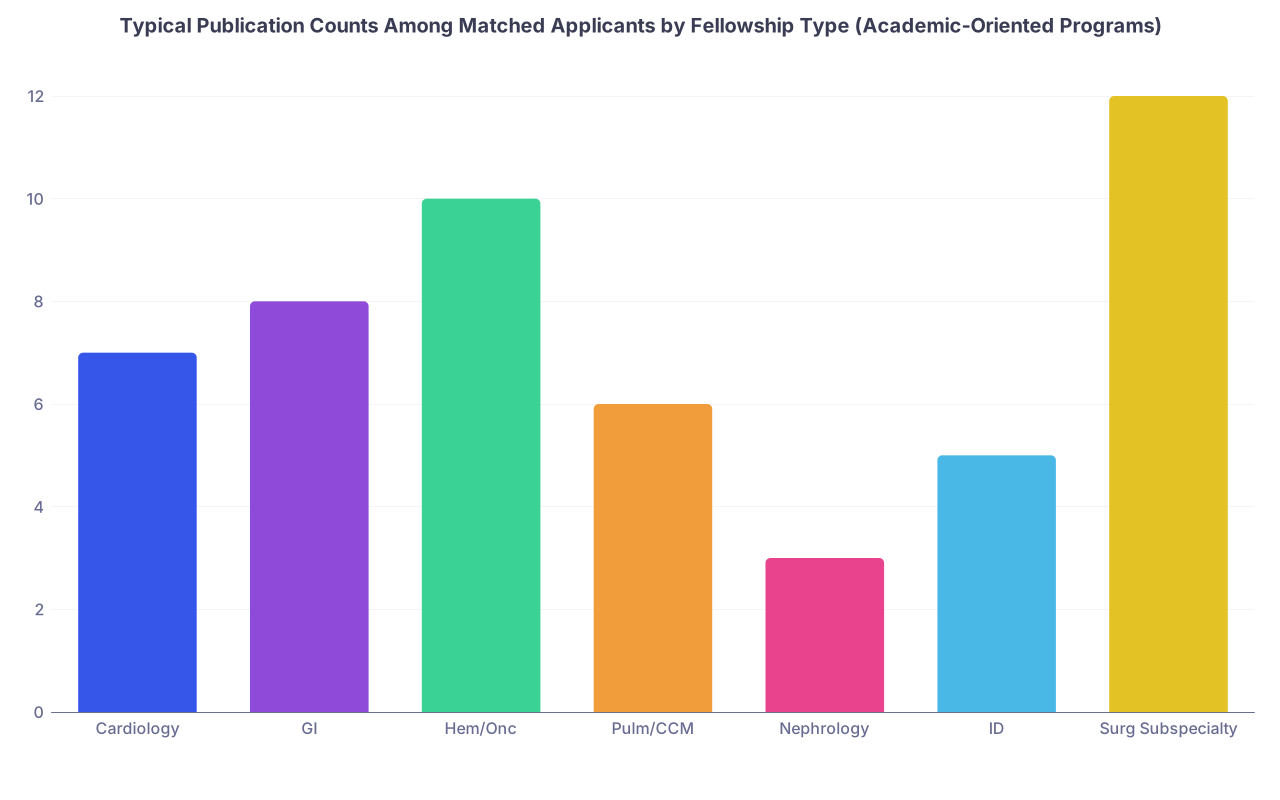
| Category | Value |
|---|---|
| Cardiology | 7 |
| GI | 8 |
| Hem/Onc | 10 |
| Pulm/CCM | 6 |
| Nephrology | 3 |
| ID | 5 |
| Surg Subspecialty | 12 |
Mid-Competitive Fields: Research Matters but Does Not Dominate
Some fellowships still care a lot about research, but the slope is less steep. A few targeted publications can absolutely move you from “generic applicant” to “top third of the stack”.
Pulmonary / Critical Care
Pulm/CCM is increasingly competitive, particularly at academic ICUs. Committees like to see some scholarly work, but the clinical profile (ICU evaluations, procedural skill, team function) counts equally or more.
Roughly:
- 0–2 publications: Still fine. Many successful applicants, especially to community‑based programs, sit in this zone. Your letters and ICU performance matter more.
- 3–5 publications: You start to differentiate yourself. If at least 2 are pulmonary or critical care related (ARDS, sepsis, vent management, COVID outcomes, etc.), you look like a legit Pulm/CCM candidate with academic lean.
- 6+: Now you are on the radar for academic programs looking for faculty feeders. Particularly if you have a mix of clinical and QI projects showing ICU engagement.
Infectious Diseases
ID sits in a strange space: not historically hyper‑competitive in raw numbers, but strongly academic in culture. Many ID programs quietly prefer applicants with some evidence of scholarly curiosity.
Typical patterns:
- 0–2 publications: You can absolutely match ID with this, especially with strong medicine performance and genuine interest. But it does not help you stand out in a stack.
- 3–4 publications: This count, especially if at least one is ID/antibiotic‑stewardship/epidemiology related, moves the needle quite a bit. Programs view you as likely to contribute academically.
- 5+: At this level you are clearly research‑engaged. For ID, quality and focus often matter as much as count. A single strong first‑author paper in a good ID journal beats five random case reports.
Rheumatology
Rheum remains moderately competitive, with strong academic overtones.
What I see:
- 0–2 pubs: Still very feasible to match, particularly with strong letters and an obviously thoughtful personal statement. But in academic rheum, you will lose tie‑breaks to more research‑heavy peers.
- 3–4 pubs: Clear advantage territory. If any are rheum/immunology related, committees start picturing you in their journal clubs.
- 5+: Solid academic profile. Rheum is small; people know each other. One or two good projects with known mentors can outweigh pure count.
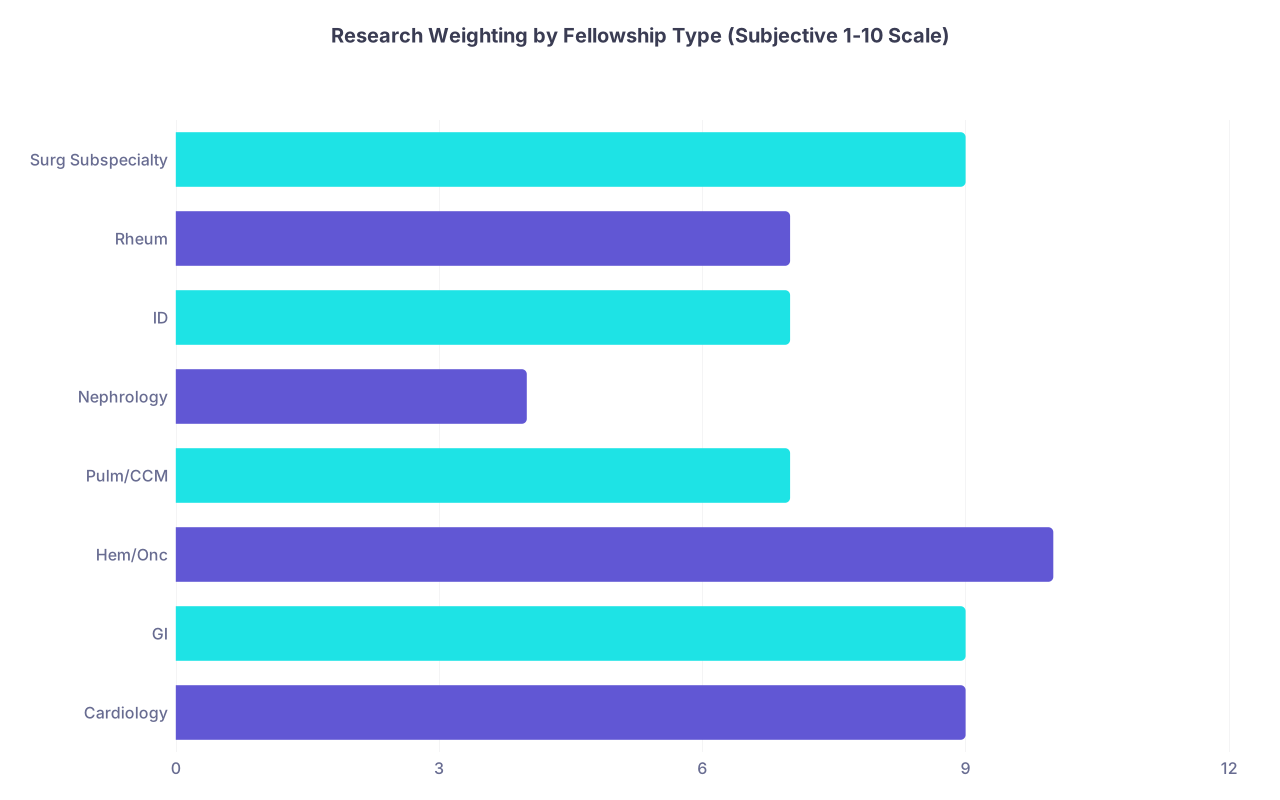
| Category | Value |
|---|---|
| Cardiology | 9 |
| GI | 9 |
| Hem/Onc | 10 |
| Pulm/CCM | 7 |
| Nephrology | 4 |
| ID | 7 |
| Rheum | 7 |
| Surg Subspecialty | 9 |
Lower-Competition but Academically Interested Fields
These are fellowships where you absolutely can match with minimal research, but the right kind of output can still significantly help you—especially if you come from a less well‑known residency.
Nephrology
Nephrology has struggled with applicant interest in recent years. Result: many programs are grateful for solid, engaged residents who want to do kidneys at all.
Reality:
- 0–1 publications: Very common among matched nephrology fellows, especially at community or mid‑tier academic programs.
- 2–3 publications: That already moves the needle. A nephrology‑related QI project or outcome study stands out disproportionately because many applicants do not have much.
- 4+: You start to look like a future academic nephrologist. For top nephrology divisions, a small but focused research track record is a genuine asset.
Endocrinology
Endo is a bit more competitive than nephrology but still nowhere near GI or cardiology.
Patterns:
- 0–1 pubs: Totally workable. Strong medicine performance and clear endocrine interest (clinic work, electives) can carry you.
- 2–3 pubs: This is a meaningful positive signal. One diabetes or thyroid outcomes project can significantly upgrade your application.
- 4+: You edge into academic territory. Programs trying to build a research presence notice quickly.
These fields also care a lot about your explanation of interest. A resident with three thoughtful endocrine‑relevant publications plus a convincing story tends to rise quickly in ranking discussions.
The Quality Problem: 10 Weak Pubs vs 3 Strong Ones
Residents love to count. Committees do the opposite. They stratify.
The data pattern I have observed repeatedly during ranking sessions:
- Applicant A: 10 publications, 0 first‑author, all low-tier, none in target subspecialty
- Applicant B: 3 publications, 2 first‑author, both in subspecialty journals, clear mentor attached
Applicant B wins more often than you think.
People around the table say things like:
- “He is clearly driving his own projects.”
- “Her first‑author paper was actually discussed at journal club.”
- “These ten look like name‑on‑the‑list contributions.”
So yes, numbers matter, but they are filtered heavily by:
- First‑author versus middle‑author.
- Subspecialty relevance.
- Recognizability of the journal and mentors.
- Temporal clustering: sustained involvement across PGY‑1 to PGY‑3 versus a blitz of low‑impact case reports in one year.
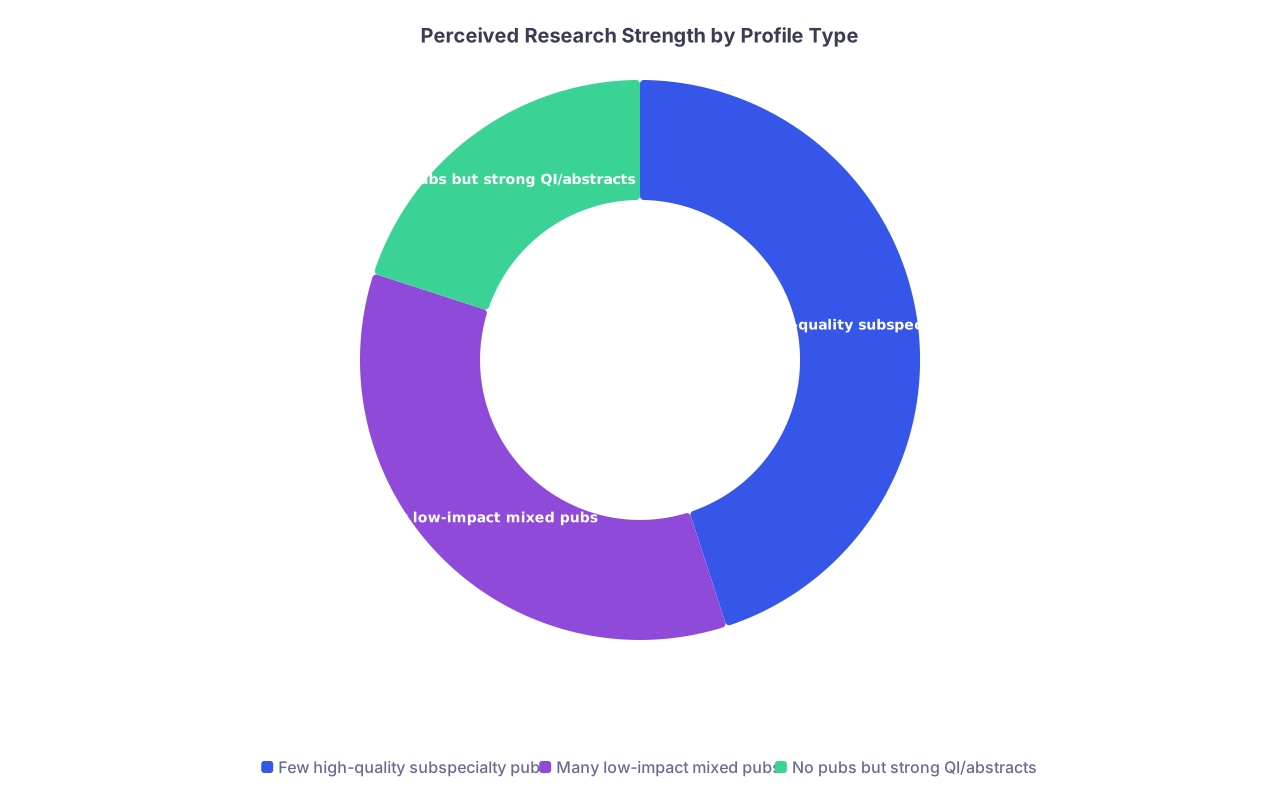
| Category | Value |
|---|---|
| Few high-quality subspecialty pubs | 45 |
| Many low-impact mixed pubs | 35 |
| No pubs but strong QI/abstracts | 20 |
How Timing and Trajectory Matter
Committees do not just count; they look for trends.
Two common trajectories:
- Early starter: 1–2 pubs as MS4 or PGY‑1, then consistent output PGY‑2 and PGY‑3.
- Late sprinter: 0 through PGY‑2, then 5 case reports and data‑light papers dumped in the six months before applications.
The early starter trajectory is heavily favored, even with slightly lower total numbers. It suggests you will keep producing as a fellow and early faculty.
This is where a Gantt-style mental map of your training is useful:
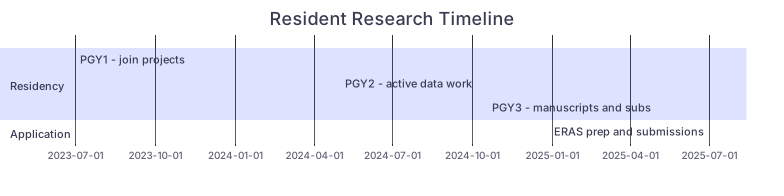
| Task | Details |
|---|---|
| Residency: PGY1 - join projects | a1, 2023-07, 10m |
| Residency: PGY2 - active data work | a2, 2024-05, 12m |
| Residency: PGY3 - manuscripts and subs | a3, 2025-05, 10m |
| Application: ERAS prep and submissions | b1, 2025-07, 4m |
The pattern that alarms committees: a long gap followed by a sudden flurry of low‑effort work right when ERAS opens. They see that. They talk about it.
Context: Residency Tier, Exam Scores, and Letters
You cannot interpret “how many publications” in a vacuum.
For the same fellowship type, the publication threshold that moves the needle changes with your baseline:
- Resident at a top‑10 IM program with 250+ Step 2 and strong letters:
- Cardiology with 3–4 cardio‑specific pubs is already strong.
- Resident at a small community program, 230 Step 2, average research infrastructure:
- To compete for the same cardiology programs, you likely need more visible research (say, 5–7+ pubs with several first‑author, ideally multi‑institution collaborations) to overcome institutional inertia.
Put differently: the less your “brand” carries you, the more your numbers need to carry you. Fair or not, the data show it.

Strategy: How Many Should You Actually Aim For?
Blanket targets like “get 10 publications” are lazy advice. The smart target is conditional:
Decide your fellowship category:
- Hyper‑competitive research‑heavy (Cardiology, GI, Hem/Onc, many surgical subs)
- Mid‑competitive (Pulm/CCM, ID, Rheum)
- Lower‑competition but academic‑friendly (Nephrology, Endo)
Cross it with your residency context (prestige, research resources, mentor availability).
Then set a personal effective target, meaning:
- Minimum number of meaningful products (not just padded case reports).
- At least 1–2 clearly in your fellowship area, preferably first‑author.
For a mid‑tier IM resident aiming for cardiology with no built‑in research engine, a realistic but competitive target might be:
- 4–6 total publications / abstracts
- At least 2 cardio‑specific
- At least 1–2 first‑author
For a similar resident aiming for nephrology:
- 2–3 total
- At least 1 kidney‑related project
- Strong nephrology elective and letters
Here is a compact comparison across major fellowship types, specifically for when the numbers start to give you a measurable advantage over the median applicant:
| Fellowship Type | Advantage Starts Around* |
|---|---|
| Cardiology | ≥ 5 total, 2+ cardio |
| GI / Hepatology | ≥ 5 total, 3+ GI |
| Hem/Onc | ≥ 6 total, 3+ Heme/Onc |
| Pulm/CCM | ≥ 4 total, 2+ Pulm/CCM |
| ID | ≥ 3 total, 1–2 ID |
| Rheum | ≥ 3 total, 1–2 Rheum |
| Nephrology | ≥ 2 total, 1 Nephro |
| Endocrine | ≥ 2 total, 1 Endo |
| Surg Subspecialty | ≥ 7 total, 3+ subspecialty |
*Assumes solid clinical performance and no major red flags.
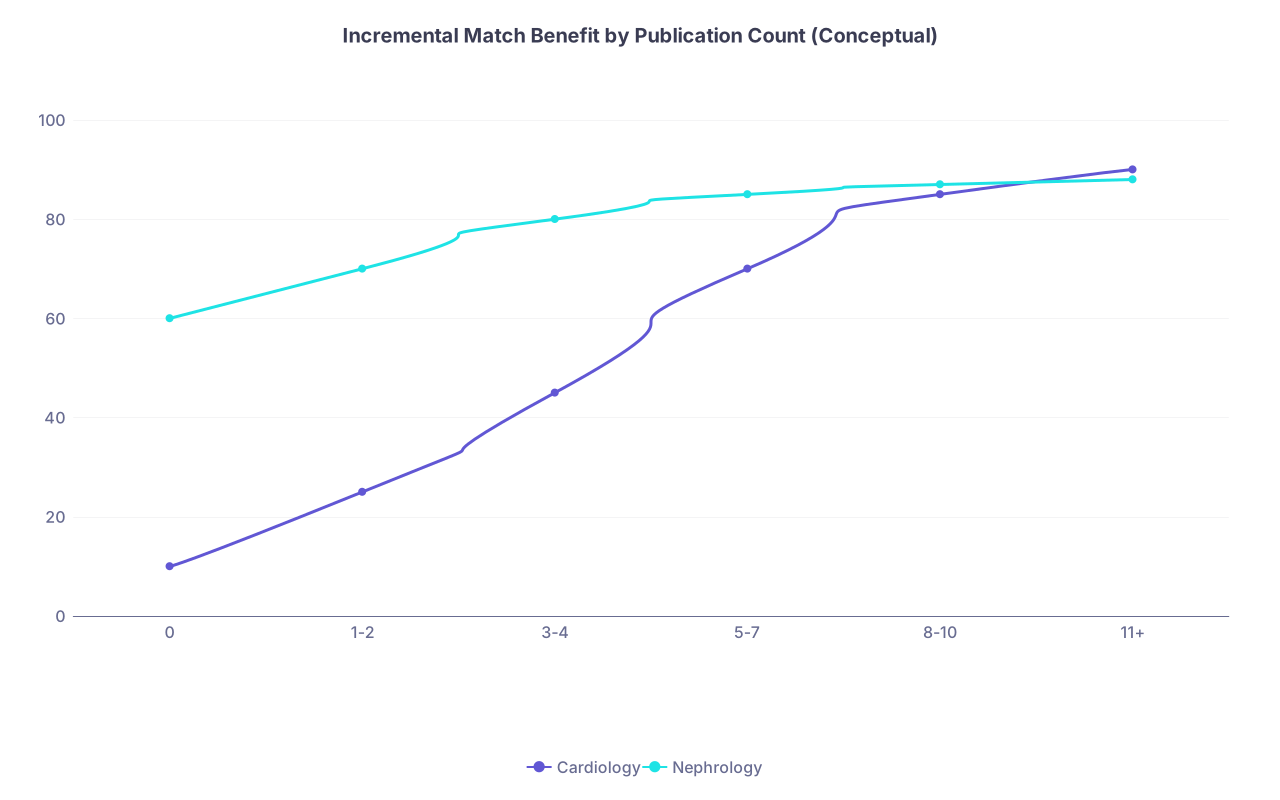
| Category | Cardiology | Nephrology |
|---|---|---|
| 0 | 10 | 60 |
| 1-2 | 25 | 70 |
| 3-4 | 45 | 80 |
| 5-7 | 70 | 85 |
| 8-10 | 85 | 87 |
| 11+ | 90 | 88 |
The Bottom Line: Numbers, But Not Naked Numbers
Strip away all the noise and the data-driven take boils down to this:
First, publication counts are a strong signal amplifier, not a magic key. For research-heavy fellowships (cardiology, GI, Hem/Onc, surgical subspecialties), the numbers that move the needle tend to start around 4–6+ and climb from there, especially when concentrated in the target field.
Second, quality and relevance routinely beat raw volume. Three to five well‑targeted, partly first‑author publications in your intended fellowship area will help you more than ten scattered, low‑impact papers slapped together right before ERAS.
Third, your specific “how many” target must be contextual—by specialty, by residency tier, and by your own timeline. If you ignore that, you will chase arbitrary numbers instead of building a coherent research story that actually shifts your position in a real selection meeting.


