

The fantasy that your PD will be your biggest fellowship cheerleader is… often wrong.
And when they’re not fully on board? It feels terrifying. Because it suddenly hits you: this one person controls your letters, your schedule, and honestly, a lot of how other people in the field see you. And you’re over here thinking: “If they don’t love my plan, am I just… done?”
You’re not done. But you do need to be smart and a little strategic.
Let’s walk through this like two people sitting in the call room at 2 a.m., doom-spiraling together but also actually making a plan.
First: How Bad Is “Not Fully Supportive,” Really?
There’s a huge difference between “not a cheerleader” and “actively sabotaging.”
Here’s the spectrum I’ve seen:
| Level | What It Looks Like |
|---|---|
| Strongly Supportive | Advocates, helps with connections, proactive suggestions |
| Neutral/Detached | Fulfills basic requirements, little extra effort |
| Mildly Skeptical | Questions your choice, slow but not blocking |
| Actively Obstructive | Withholds letters, blocks schedule, negative comments |
Most residents panic at “they didn’t seem excited,” but that’s usually just “neutral” or “mildly skeptical,” not “I will ruin your career.”
Some common scenarios:
- PD seems lukewarm: “Sure, go ahead and apply, we’ll see how things go.”
- PD tries to redirect you: “Have you thought about hospitalist work instead?”
- PD delays: “We’ll talk about letters closer to application season,” but it’s already late.
- PD is blunt: “I don’t think you’re competitive for that specialty.”
All of those feel awful. But only one or two of them actually threaten your chances.
The real danger zone:
- They refuse to write a letter.
- They hint they’ll write a “neutral” or “not strong” letter.
- They won’t give you the rotations or time off you need to apply/interview.
If you’re there, we need a more aggressive plan. But most people are stuck earlier on the spectrum, panicking as if they’re already at the worst end.
Why PDs Aren’t Always Your Biggest Fans (And Why It’s Not Always About You)
This part hurts, but it helps to understand.
Program directors have their own agendas, pressures, and anxieties. Some of the reasons they’re not cheerleading your fellowship dreams:
- They need bodies to cover service. If five people want to do GI or cards, they’re thinking, “Who’s going to staff nights here next year?”
- They’re burned by fellowship programs that treat their residents like second-class applicants.
- They’ve seen residents overestimate their competitiveness and crash.
- They think your clinical performance doesn’t match the hype of your fellowship choice.
- They’re old-school: “Just be a good general internist” energy.
- They don’t know the field well and feel out of their depth (but won’t admit it).
None of that makes it feel better, I know. But it does mean “PD isn’t enthusiastic” doesn’t automatically equal “they think you’re trash.”
Some genuinely like you but are cautious. Some are conflict-avoidant and bad at direct encouragement. Some simply prioritize the residency program over your individual trajectory.
You feel like you’re thinking: “My whole future is on the line.”
They’re thinking: “I have to graduate a class, meet ACGME requirements, and keep this place running.”
Misaligned priorities. Not personal failure.
What If Their Letter Isn’t Glowing? How Much Can That Hurt?
Here’s the part everybody whispers about but never says out loud: yes, a weak PD letter can hurt.
But there’s nuance.
For most internal medicine-type fellowships (cards, GI, pulm/crit, heme/onc), programs expect:
- A PD or chair letter
- A couple of strong clinical letters
- Maybe a research letter if applicable
One lukewarm PD letter in the context of 3–4 other enthusiastic letters is not an automatic rejection. It’s a yellow flag, not a death sentence.
Where it becomes dangerous:
- The letter is actively negative (concerns about professionalism, reliability, safety).
- The PD is known in the field and their word carries a lot of weight.
- The letter conflicts with the narrative in the rest of your application (“top performer,” “outstanding” vs “meets expectations”).
Fellowship programs are pattern-recognition machines. If everything else says “great fit” and the PD letter is bland, they often shrug and think, “Maybe just a personality mismatch.” They don’t automatically assume you’re toxic.
But yeah, if you’re applying to hyper-competitive programs, you’d love every letter to be glowing. Reality just doesn’t always work that way.
Concrete Moves If Your PD Isn’t Fully Supportive
Let’s get tactical, because your brain is probably running in circles.
1. Clarify Where You Actually Stand
You need data, not vibes.
Ask for a short, focused meeting and say something like:
“I really value your perspective and want to be realistic. Based on what you’ve seen so far, how competitive do you think I am for [fellowship X], and are you comfortable supporting me with a strong letter?”
You’re trying to get them to answer two questions (even if not directly):
- Do they think you can match in this field at all?
- Will they write a supportive letter?
If they say some version of:
- “I’m happy to support your application”
- “I’ll write a strong letter”
- “I’m comfortable supporting you”
…you’re probably okay, even if they’re not gushing.
If they dodge, hesitate, or say “I can write you a letter” with zero adjectives—you push gently:
“Just so I can plan responsibly, would you describe it as a strong letter, or more neutral?”
Yes, it’s awkward. But better you find out now than after your application is submitted.
2. Maximize Your Other Letters
You can’t always fix your PD. You can absolutely bolster everything around them.
You want at least 2–3 letters that say, without hedging, that you’re great. Not “fine.” Not “solid.” Great.
Think:
- Your inpatient attending who has said to you, “I’d be happy to write you a strong letter.”
- A subspecialty mentor who has seen you on rotation and maybe in clinic.
- A research mentor who can say you follow through, handle complex work, and are reliable.
Don’t be vague when you ask. Use language like:
“I’m applying in [fellowship] and would be honored if you could write me a strong, detailed letter of recommendation based on our work together on [rotation/project]. Do you feel you’d be able to do that?”
If they hesitate, don’t push them. You want enthusiastic writers, not obligated ones.
3. Control the Story in Your Personal Statement and CV
If your PD isn’t fully behind you, you need your own narrative to be tighter than average.
Your personal statement should make fellowship directors think:
- This person understands the field.
- They’ve actually tested this interest (rotations, research, QI).
- They reflect well and learn from experience.
- They’re grounded, not delusional.
And your CV should scream: “I’ve been consistently moving toward this field,” even if imperfectly—rotations, electives, maybe a poster, QI project, some teaching.
This doesn’t “cancel out” a mediocre PD letter, but it makes it way easier for programs to believe the better parts of your file.
4. Strategically Use Mentors Outside the PD
This is where a lot of residents undershoot their options.
You’re allowed to have mentors who outrank your PD in the fellowship world. In fact, you should.
Think:
- Fellowship program directors at your home institution who have worked with you.
- Division chiefs who know your work.
- Well-known faculty in your subspecialty.
They can’t replace the PD letter (most programs still want one), but they absolutely can outweigh it.
If Dr. Famous Pulmonologist writes, “This resident is in the top 5% I’ve worked with,” fellowship PDs listen.
5. Be Smart About Your Program List
If your PD support is lukewarm, you can’t apply like the person whose PD is calling every fellowship PD personally.
You need:
- A wider range of program competitiveness.
- A mix of community-based and academic programs (unless your field is almost entirely academic).
- A realistic reach/target/safety distribution.
You already know roughly where you stand: in-service exams, feedback, how you compare to co-residents. Use that, plus the PD’s (even annoying) skepticism, to build your list.
Overapplying a bit to protect yourself is not irrational here. It’s defensive.
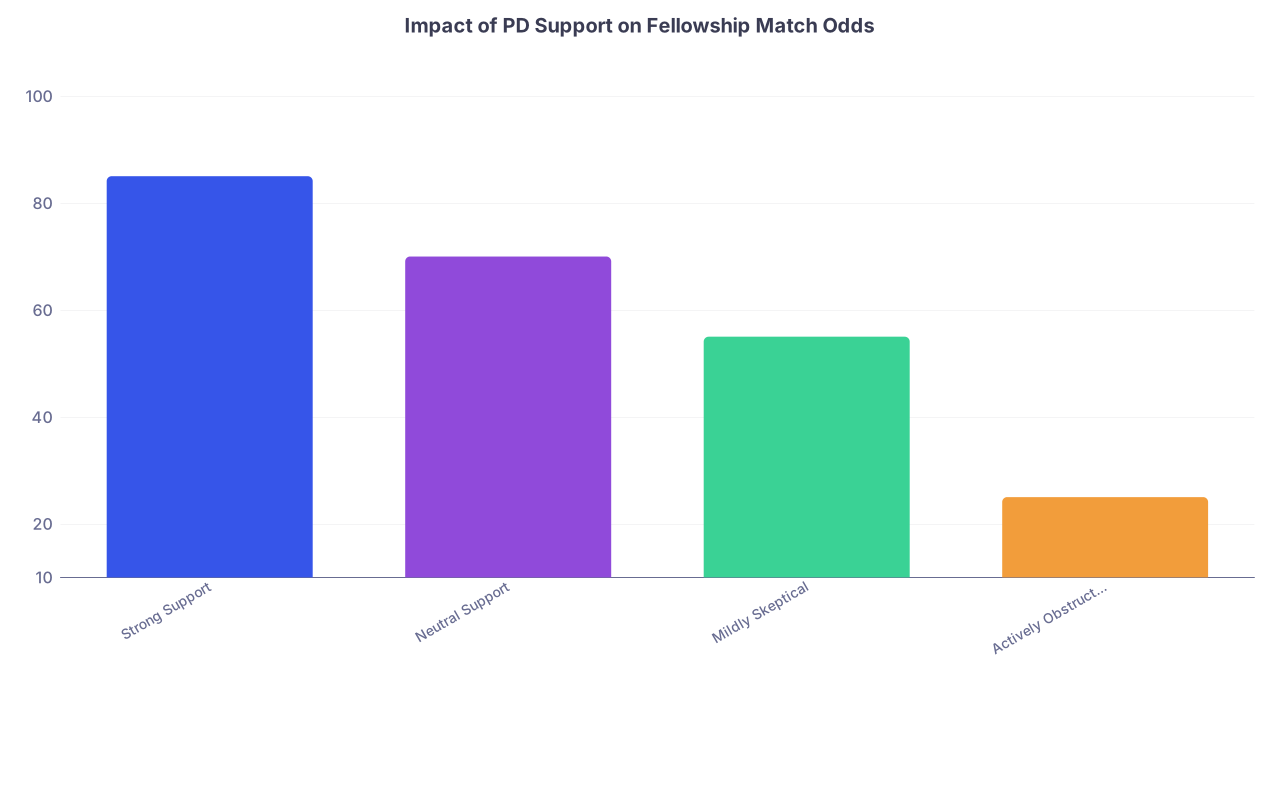
| Category | Value |
|---|---|
| Strong Support | 85 |
| Neutral Support | 70 |
| Mildly Skeptical | 55 |
| Actively Obstructive | 25 |
Hypothetical numbers, but emotionally this is exactly how it feels, right?
Worst-Case Scenario Planning (Because Your Brain Is Already There)
Let’s lean into it for a second: what if everything really is as bad as you fear?
Scenario A: PD Letter Is Neutral, Not Glowing
You still have:
- Strong subspecialty letters
- A coherent application
- A decent program list
You may not match at your “dream” programs, but matching somewhere is still very realistic. I’ve seen people with bland PD letters match into cards, GI, heme/onc. It happens every year.
Scenario B: PD Won’t Call Programs for You
Annoying, but not fatal.
Personal calls help, but they’re not the baseline expectation for everyone. This mostly hurts if you’re reaching way above your objective stats. It stings less if you’re applying to a broad, reasonable range.
Your strategy: apply smart, lean on other mentors, maybe do a visiting elective if possible, and accept that you might not skip straight to the top-tier program you dreamed of. That’s painful, not permanent career death.
Scenario C: PD Straight-Up Doesn’t Support Your Plan
Rare, but it happens.
You have a few paths:
- Adjust your target: maybe a less competitive subspecialty is more realistic.
- Consider doing a year as a hospitalist, build a stronger record, and re-apply.
- Double down on mentorship outside your program to get better backing.
Is it fair that people with perfect PDs get a smoother ride? No. Is your career instantly over? Also no.
People get to fellowship via messy, nonlinear paths all the time. They just don’t advertise it on Twitter.

| Step | Description |
|---|---|
| Step 1 | Realize PD Is Not Supportive |
| Step 2 | Assess Strength of Letter |
| Step 3 | Increase External Mentorship |
| Step 4 | Apply Broadly With Strong Other Letters |
| Step 5 | Bolster CV and Mentors |
| Step 6 | Use Subspecialty and Research Letters |
| Step 7 | Consider Gap Year or Different Targets |
| Step 8 | Will PD Write Letter? |
| Step 9 | Letter Strong Enough? |
How to Survive the Emotional Side Without Imploding
The career stuff is one thing. The emotional hit of feeling “not chosen” by your PD is another.
It messes with your head:
- “If they don’t believe in me, maybe I’m delusional.”
- “Other residents’ PDs are making calls for them; mine barely remembers my name.”
- “What if fellowship directors see ‘damaged goods’ when they see my app?”
Some coping strategies I’ve seen help residents not disintegrate:
- Separate “support level” from “worthiness.” PDs aren’t omniscient talent detectors. They’re busy humans with biases.
- Get one or two mentors who do believe in you and talk to them regularly. You need counter-programming.
- Compare less to co-residents. Their PD relationship, their circumstances, their field—totally different variables.
- Give yourself permission to have a Plan B that doesn’t equal failure (hospitalist year, research year, different type of fellowship).
None of this makes the knot in your stomach totally go away. But it keeps you from making panicked, self-sabotaging decisions like:
“I’ll just not apply at all this year because my PD didn’t beam at me.”

A Quick Reality Check: What Fellowship Programs Actually Care About
Let’s strip it down. Fellowship PDs mainly look at:
- Your clinical performance and reputation
- Your fit for the specialty (rotations, narrative, interest)
- Your letters (plural, not just PD)
- Your exam performance and academic trajectory
- Any glaring red flags
A single less-than-thrilled PD isn’t the whole story.
If you’re solid clinically, have people who will go to bat for you, and build a sane program list, your chances are nowhere near as catastrophic as your 3 a.m. brain is insisting.
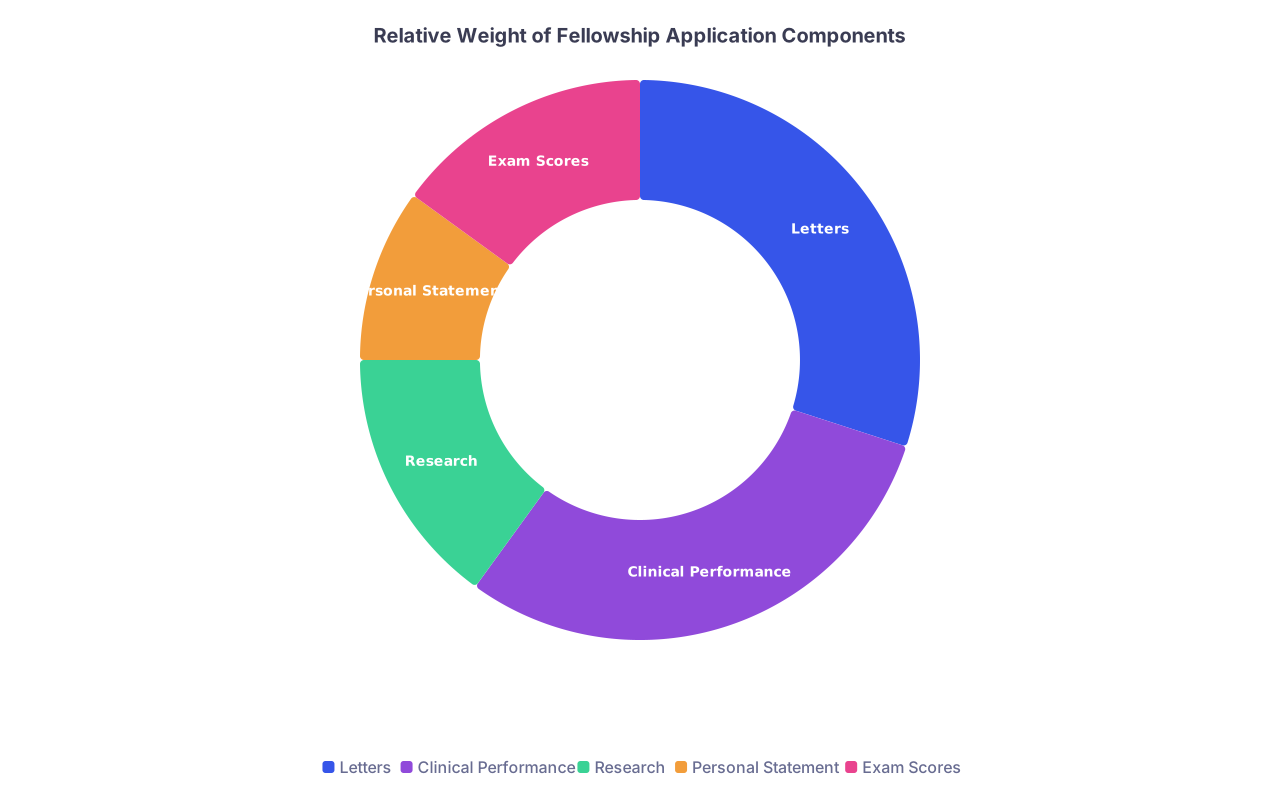
| Category | Value |
|---|---|
| Letters | 30 |
| Clinical Performance | 30 |
| Research | 15 |
| Personal Statement | 10 |
| Exam Scores | 15 |

What You Can Do This Week
Not in theory. Actually, in the next 7 days.
- Book a focused, 15–20 minute conversation with your PD to clarify their stance.
- Identify 2–3 attendings who can likely write truly strong letters and email them to set this up.
- Write a brutally honest draft of your personal statement focusing on why this specialty, not just “I like the physiology.”
- Make a rough program list with at least:
- Some “reach”
- A heavy chunk of “target”
- A real set of “safety-ish” options
And, crucially: tell one trusted person the actual story. “My PD isn’t fully supportive and I’m terrified.” Hiding that just keeps it festering.

FAQ: PD Not Fully Supportive of Fellowship Plans
1. Do fellowship programs secretly call my PD even beyond the letter?
Sometimes. More commonly for highly competitive specialties or if they’re very interested in you. But it’s not universal. And often they talk to subspecialty faculty too, not just the PD. If your subspecialty mentors love you, that can balance things.
2. What if my PD says they’ll write a letter but refuses to say whether it’s strong?
Treat that as “probably neutral.” You still use it if programs require a PD letter, but you double down on getting powerful letters from others. You can also ask your coordinator or an associate PD (if you trust them more) for informal insight about how PD letters are usually written.
3. Can I apply without a PD letter at all?
For most fellowships: no, not safely. Many ERAS programs specifically request a PD or chair letter. But if you’ve truly got a toxic situation, talk to GME or another senior mentor—occasionally, a department chair letter can substitute, especially if they explicitly address your training and performance.
4. Will a gap year (hospitalist, chief, research) fix the problem of a lukewarm PD?
It can help, but it doesn’t erase old letters. What it does do is let you collect new, stronger letters and show maturity and growth. For some people, that combination outweighs whatever weirdness existed with the PD in residency.
5. How do I know if my PD actually dislikes me or just isn’t expressive?
Look at behavior, not vibes. Do they trust you with responsibilities? Have they ever given you concrete positive feedback? Are your evaluations generally in line with your peers? If everything else is fine and they’re just awkward about praise, it’s more a style problem than a “they’re out to get me” problem.
6. I’m scared to be honest with my PD about my true dream specialty. Should I lie or downplay it?
Lying tends to blow up later when letters don’t match your application. But you can be tactful: “I’m most interested in [X], and I also know the field is competitive, so I’m open to options like [Y]. I’d really value your honest assessment so I can plan responsibly.” That signals realism without fully abandoning your actual goals.
Open your email right now and draft a short, direct message to your PD asking for a meeting about fellowship plans. You don’t have to send it yet—just write it. Then read it and ask yourself: “Am I giving myself a chance to get real information, or just sitting in fear?”


