
The myth that a single clumsy thank-you email can blow up an otherwise strong residency application is wildly overstated.
Programs are not sitting around parsing your comma usage in Outlook. They are filling service needs, managing call schedules, and trying not to match someone who will be a problem at 2 a.m. on a busy call night. A slightly awkward thank-you email barely registers on that radar.
But let’s separate fear from reality instead of giving you another list of “perfect thank-you templates.”
What Programs Actually Care About (And Where Emails Fit)
Here’s the unromantic hierarchy: thank-you emails live near the bottom of the decision stack.
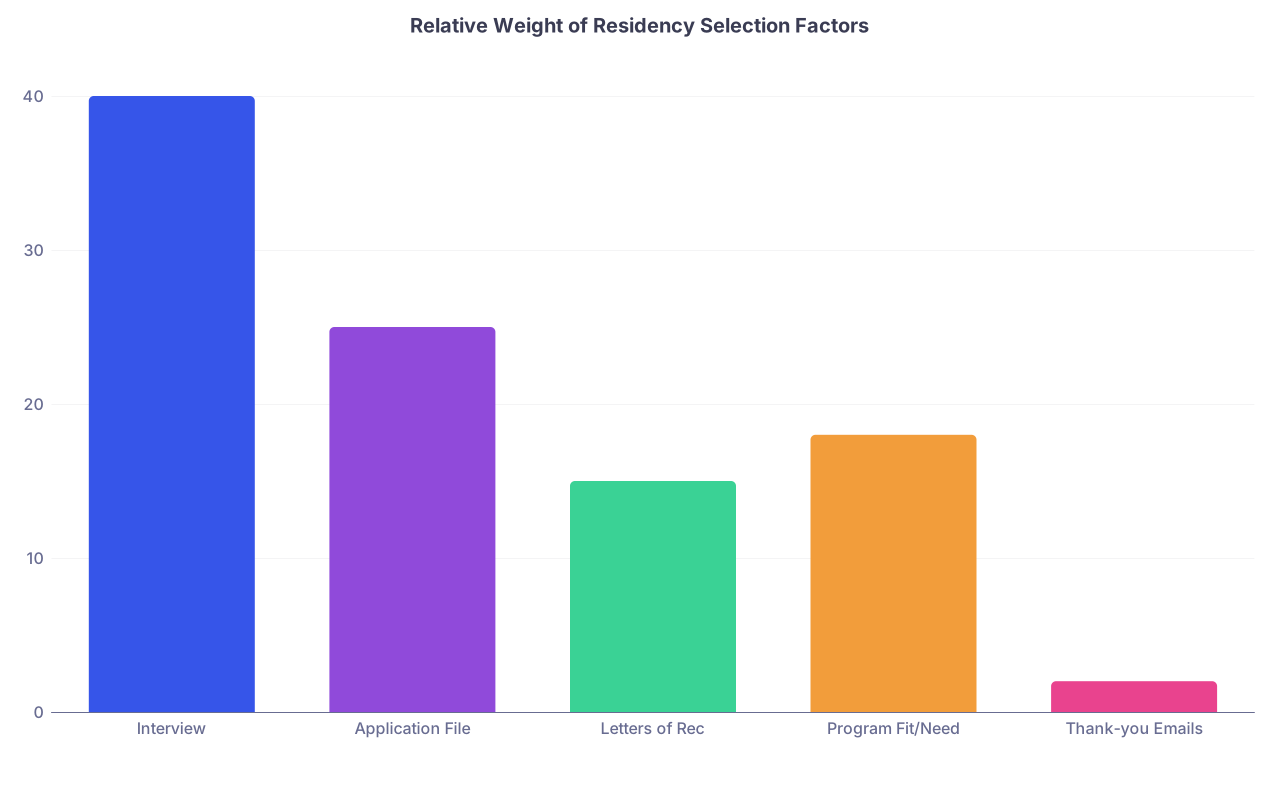
| Category | Value |
|---|---|
| Interview | 40 |
| Application File | 25 |
| Letters of Rec | 15 |
| Program Fit/Need | 18 |
| Thank-you Emails | 2 |
These numbers are illustrative, but they line up with what PDs (program directors) and APDs say at conferences and in surveys:
- The interview day (your vibe, professionalism, how your stories land).
- Your application core: scores, MSPE, clerkship comments, red flags.
- Letters of recommendation and reputation of your home institution.
- How much the program needs someone like you (special interests, geographic ties, perceived reliability).
Thank-you emails? Nice, optional, occasionally helpful. Almost never decisive.
Where do they come into play?
I’ve seen them matter in three narrow situations:
- A borderline applicant who seems disengaged on interview day sends a warm, thoughtful note that clarifies genuine interest. That can nudge them a few spots up a rank list.
- An applicant makes a truly egregious mistake (we’ll talk about what actually counts as egregious) that confirms concerns about judgment or professionalism. That can nudge them down.
- A genuinely excellent, specific note to a faculty member who was on the fence can change that person’s subjective impression of you. Not your whole fate. Just a tie-breaker effect.
But the fantasy that PDs have a secret folder labeled “thank-you emails” that dictates their rank lists? Fiction.
The Myth: “One Bad Thank-You Will Tank You”
Programs don’t operate like a fragile dating app interaction where one weird text ends things.
The fear usually sounds like this:
- “If I send one generic or imperfect email, they’ll think I’m not interested.”
- “If I make a small typo, they’ll see I’m careless.”
- “If I don’t send them at all, they’ll assume I hate the program.”
- “If I say the wrong thing, I’ll violate NRMP rules and get blacklisted.”
Let me be blunt. Most of this is residency-application superstition, not reality.
Here’s the more accurate rule: A normal, human thank-you email cannot rescue a disastrous interview, and a slightly awkward one won’t ruin a great interview. You have far more leverage in how you behaved on interview day than in what you type afterward.
To make this concrete, let’s break down what kinds of emails programs actually see and how they’re perceived.
What a “Bad” Thank-You Email Usually Looks Like (And Why It’s Fine)
I’ve seen residents and med students panic over things like:
- Calling someone “Dr. Smith” when they signed as “Mike.”
- Saying “your program” to an APD who’s actually at an affiliate site.
- Typing “it was great to learn more about you program” instead of “your program.”
- Forgetting to mention one small detail you’d brought up in interview.
These are not fatal sins. They’re normal, low-stakes human errors.
The reality inside programs:
- Many faculty skim your email once and never look at it again.
- Plenty of interviewers don’t even get emailed because programs don’t share addresses.
- Some PDs never read them at all; they let a coordinator sort or ignore them.
- A chunk land in spam filters. No one notices. No one cares.
Where you can get into trouble is if your thank-you email confirms real concerns: unprofessionalism, dishonesty, or arrogance. That’s the line.
What Actually Counts as a Serious Email Problem
There are a few scenarios where a single email can hurt you. Not trivial typos. Actual judgment issues.
1. Dishonesty About Ranking or Commitments
NRMP rules are clear: you cannot make or request a binding commitment before the Match. Programs can’t say, “Rank us first and we’ll rank you high,” and you can’t say, “I guarantee I’ll rank you #1” as a contractual promise.
Will a careless “I’m ranking you #1” email get you automatically reported to NRMP? Almost certainly not. But here’s where it does burn you:
- Programs talk. Faculty who feel misled or manipulated by applicants absolutely remember it.
- If you tell three different programs “you are my #1,” you’re playing a dumb and risky game. People compare notes at national meetings more than you think.
The professional way: express strong interest without promising the moon.
Bad:
“I will definitely rank your program #1 and would turn down any other offer.”
Better:
“Your program is at the very top of my list, and I’d be thrilled to train there.”
The second one shows sincere interest without locking either party into something stupid.
2. Obvious Mass-Mailing or Wrong-Program Errors
Here’s where you purely look careless:
- “I loved learning more about [Other Institution Name]” sent to the wrong program.
- Leaving a different PD’s name in the greeting.
- Copy-pasting the same bland, generic paragraph to every single interviewer, especially at the same program.
Does that alone tank you? Usually no. But if a program was on the fence, you’ve just handed them more evidence that you’re not detail-oriented or genuinely interested.
If you’re going to mass-template, at least get the core fields (name, institution, one specific detail) right. This is low-effort risk management.
3. Rude, Entitled, or Tone-Deaf Content
This is the one category that can genuinely hurt you from a single email.
Examples I’ve heard PDs quote word-for-word years later:
- “I hope your program realizes what a top-tier candidate I am compared to others you interviewed.”
- “Given my scores and research, I expect to match at a strong program like yours or better.”
- “I think you underestimated my capabilities during the interview.”
That’s not confidence. That’s ego and poor judgment. And yes, that can absolutely get you bumped down or off a rank list, because it signals exactly the kind of behavior no one wants on rounds.
Also in this danger zone:
- Complaining about another program.
- Criticizing an interviewer.
- Over-sharing personal issues that place a burden on the faculty member (“I’m devastated and anxious and can’t sleep thinking about this match; I hope you’ll help me get in”).
You are not trauma-dumping on someone who met you once on Zoom. Keep it professional.
Thank-You Emails: Signal vs Noise
Most of your anxiety stems from confusing signal with noise.
Let’s quantify the reality a bit.
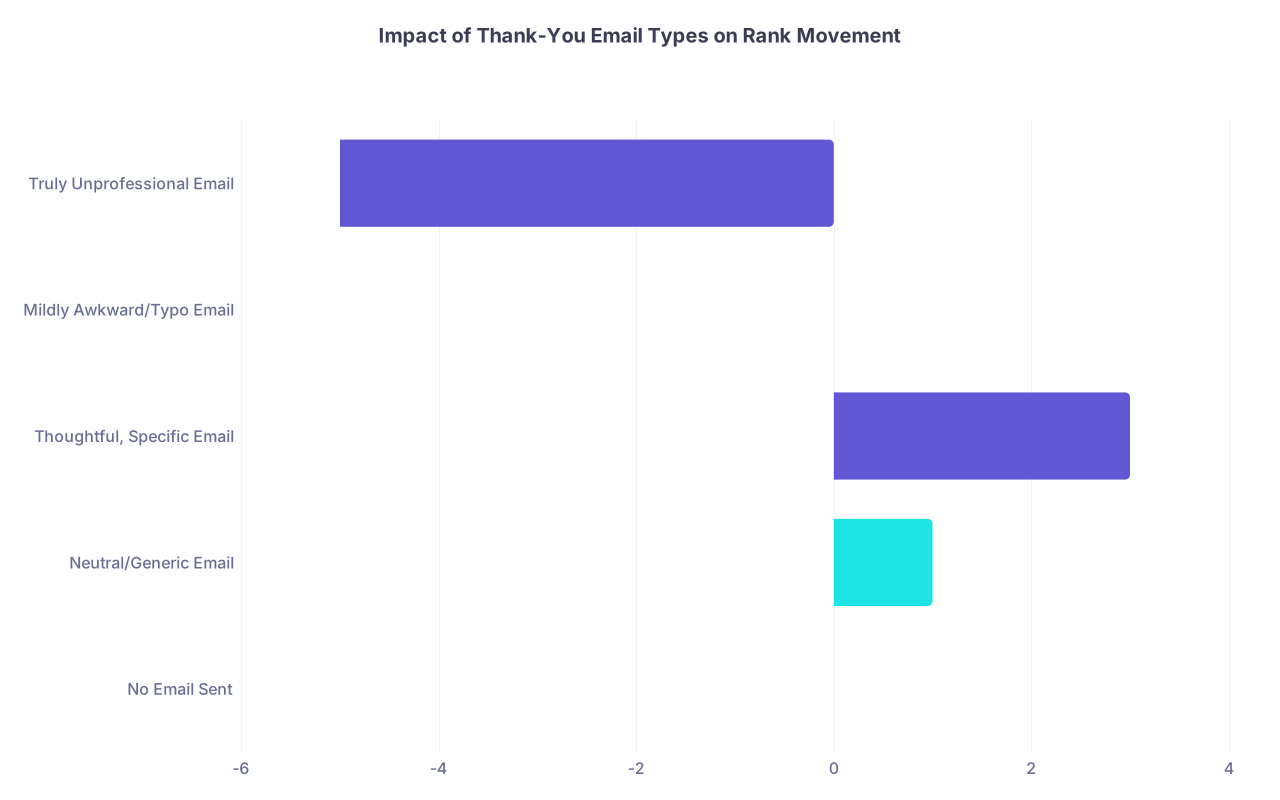
| Category | Value |
|---|---|
| No Email Sent | 0 |
| Neutral/Generic Email | 1 |
| Thoughtful, Specific Email | 3 |
| Mildly Awkward/Typo Email | 0 |
| Truly Unprofessional Email | -5 |
Think of it like this, roughly:
- No email → basically neutral. Programs might assume you’re busy or not into thank-yous. Very few will punish you for it.
- Generic but polite email → tiny positive. You checked the “professional courtesy” box.
- Thoughtful, specific email → small positive. Might slightly nudge a tie in your favor.
- Mildly awkward or typo-ridden email → essentially neutral. Readers forget in a day.
- Rude/unprofessional email → can significantly hurt; confirms bad fit.
Notice the scale. The upside is incremental, the extreme downside is rare and requires truly bad behavior.
How Programs Actually Use These Emails (When They Do)
Sometimes, thank-you emails get used as confirmation, not as primary data.
I’ve seen:
- A PD scroll through emails the night before rank meeting just to gauge who seems enthusiastic or has strong geographic ties.
- An interviewer mention, “By the way, she sent a really thoughtful note about our underserved clinic; she’s serious about this kind of work.”
- A chief resident quietly say, “He didn’t send anything, but honestly, his interview was strong enough that I don’t care.”
I’ve also seen this: coordinators bulk-archive entire email threads and never show them to faculty. Some programs tell you explicitly: “No thank-you notes are expected.” They mean it.
So the real question is not, “Can I mess this up?” but “What’s the lowest-effort, low-risk way to not look clueless?”
A Simple, Safe Strategy for Thank-You Emails
You don’t need a novel. You need a clean, short, respectful note that you can replicate with minor tweaks.
Here’s a bare-bones template that won’t hurt you and might help a little:
- Subject line: “Thank you – [Your Name], [Specialty] Interview”
- Greeting with correct title and name.
- One sentence thanking them for their time.
- One specific reference to something from your conversation or from the program.
- One sentence reinforcing interest.
- Professional sign-off with full name and contact.
Example:
“Dear Dr. Patel,
Thank you for taking the time to speak with me during my interview at City Medical Center’s Internal Medicine program. I appreciated hearing about your approach to mentoring residents in quality improvement projects, especially on the inpatient cardiology service. Our conversation reinforced my strong interest in your program’s emphasis on resident-driven initiatives and thoughtful clinical teaching.
Best regards,
Alex Nguyen
Fourth-year medical student, State University SOM”
Nothing dramatic. No promises. No theatrics. Just a basic demonstration that you’re not socially oblivious.
Timeline and Volume: How Many, When, and To Whom?
Here’s where people also overcomplicate things and generate more stress than benefit.
- Send within 24–72 hours. Beyond a week, it’s still fine, but the impact is lower and you start forgetting details.
- PD and coordinator get priority. If you’re tired and can only send two emails, start there.
- Interviewers next, especially those you had meaningful conversations with or who are clearly influential (APD, chief, chair).
- You do not need to email every single resident you met for five minutes on a virtual social unless you really want to.
You’re aiming for sustainable, not heroic. Writing 200 individualized emails across a heavy interview season is a fantastic way to burn time on something with marginal benefit.

| Step | Description |
|---|---|
| Step 1 | Finished Interview Day |
| Step 2 | Do nothing. No penalty at most programs. |
| Step 3 | Email PD and coordinator first |
| Step 4 | Stop. Good enough. |
| Step 5 | Email key faculty interviewers |
| Step 6 | Optional: email residents or others |
| Step 7 | Want to send thank-you emails? |
| Step 8 | Time/energy left? |
| Step 9 | Still have margin? |
This is not a loyalty test. It’s a courtesy.
The Real Landmines Are Not Thank-You Emails
If you’re worried a single bad thank-you email will ruin you, you’re looking in the wrong place.
Things that actually blow up strong applications:
- Disrespectful behavior on interview day (to coordinators, residents, or staff).
- Obvious disinterest, trash-talking other programs, or clearly “ranking your city, not the job.”
- Late or poor communication about required documents, Step 2 scores, or follow-up questions.
- Documented professionalism issues from your school or on social media that someone flags.
Compared to those, a slightly clunky email is background noise.
FAQs
1. If I don’t send thank-you emails at all, will programs think I’m not interested?
Some might interpret no follow-up as slightly less interest compared to an enthusiastic note, but most won’t punish you for it. Your interview behavior, questions, and end-of-day comments carry much more weight than the presence or absence of thank-you notes.
2. Can I reuse the same template for every program?
Yes, within reason. Reusing a core structure is fine as long as you change names, institutions, and at least one specific detail about that program or conversation. Pure copy-paste with the wrong names or generic fluff makes you look careless, not doomed.
3. Is it okay to say a program is “at the top of my list”?
Yes. That’s a common, NRMP-safe way to express strong interest without making a binding commitment or lying to multiple programs. Avoid absolute language like “I guarantee you are #1” if that’s not strictly true.
4. What if I notice a mistake in my thank-you email after I send it?
Do not send a second email to “correct” a minor typo or small wording issue. That doubles the attention on the mistake. Accept that you’re human, move on, and focus on the next interview or task. No one is ranking you down for “you program.”
5. Should I send a follow-up email closer to rank list time?
Only if you have something new and substantive: a genuine “this is my top choice” signal, an update (new publication, leadership role), or a concise restatement of interest. Do not bombard programs with multiple “just checking in” messages. One well-timed, focused note is more than enough.
Key points, without the superstition:
Most thank-you emails are background noise; they rarely decide your fate. Mild errors or generic notes will not ruin a strong application; only truly unprofessional content might hurt you. Aim for short, specific, and respectful—and then stop obsessing and put your energy where it actually moves the needle.