The anxiety around residency follow-up etiquette is wildly out of proportion to its actual impact on your Match outcome.
The Big Myth: “If I Don’t Send a Thank-You, I Won’t Match”
Let me be blunt: there is zero credible evidence that a missing thank-you email has ever been the deciding factor between Match and no Match.
Programs match applicants because of:
- Application strength (scores, grades, letters, research)
- Interview performance
- Fit with the program
- Rank list strategy and supply/demand
Not because you sent a perfectly worded “Thank you for your time” within 24 hours.
Where does the fear come from? Three sources I see over and over:
Anecdotes from older residents
Someone’s PGY-3 says, “Our PD loves thank-you notes.” That quietly morphs into, “You must send them or you’re dead.” Those are not the same statement.Forums and social media nonsense
Anonymous posts like “My PD said they rank higher if you send notes!” with no context, no data, and usually no understanding of how the NRMP rules actually constrain behavior.Applicant desperation for control
By late interview season, you’ve done everything you can. The only lever left that feels actionable? Emails. Which leads to ritualistic over-sending.
Here’s what the data and actual program behavior show.
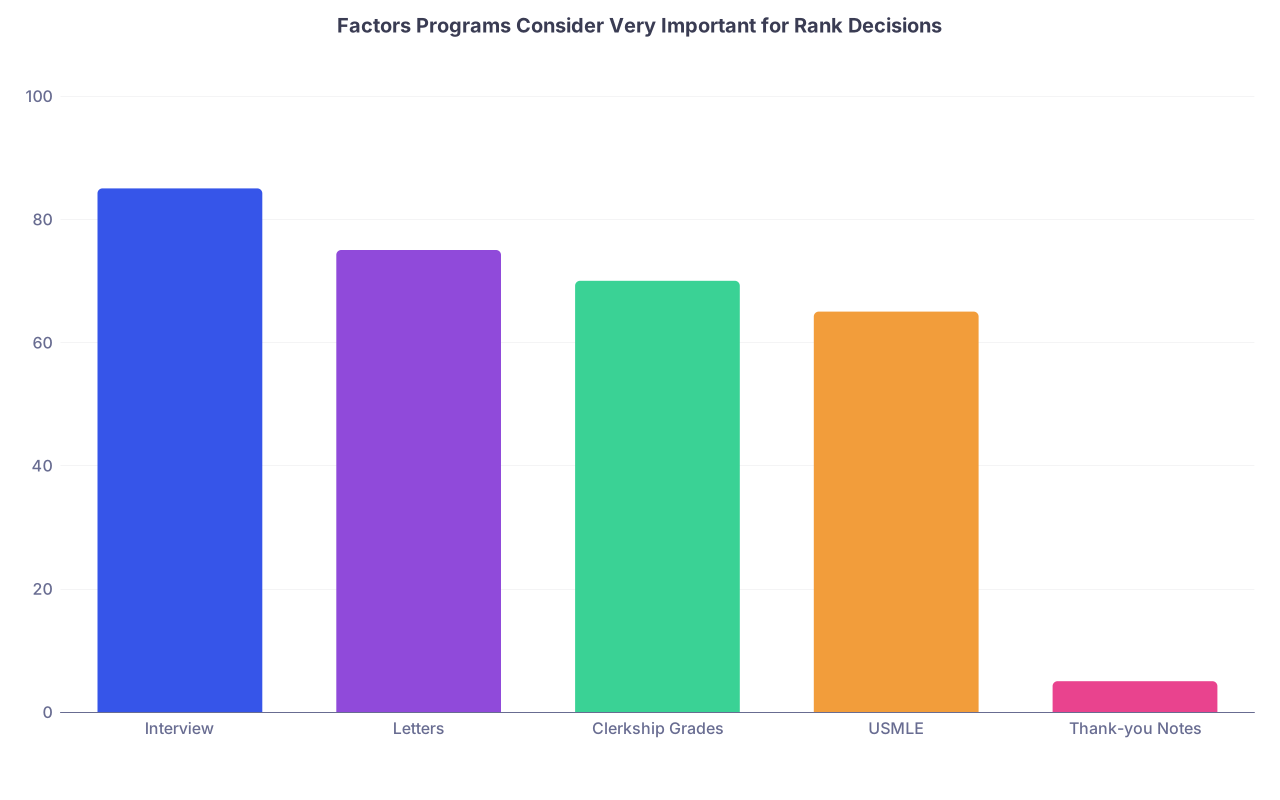
| Category | Value |
|---|---|
| Interview | 85 |
| Letters | 75 |
| Clerkship Grades | 70 |
| USMLE | 65 |
| Thank-you Notes | 5 |
That 5% for “thank-you notes” is generous. Most Program Directors I’ve talked to don’t even track them systematically. At best, they’re a minor positive nudge. At worst, they clutter inboxes.
You should send follow-ups for professional courtesy, to reinforce interest, and to maintain relationships. But not because you think “no thank-you = automatic rejection.” That’s fiction.
What Programs Actually Do With Your Emails
Here’s the unglamorous reality of PD/associate PD inboxes during interview season:
- 100–200+ applicants
- Many sending individual thank-you notes to every single interviewer
- Some sending update emails
- Some sending “you’re my #1” signals (which, by the way, programs know are often not exclusive or honest)
I’ve watched faculty during interview season open their inbox, see 20 versions of:
“Dear Dr. X,
Thank you so much for taking the time to interview me at [Program]. I enjoyed learning more about [generic thing]. Sincerely, [Applicant].”
They skim for 2 seconds. Maybe smile. Maybe not. Then archive.
Do they ever say at rank meeting:
“Applicant 87 didn’t send me a thank-you, so let’s drop them 15 spots”?
No. What they say is:
- “She was great, very engaged, strong letters.”
- “I worry he’s not that interested in us based on his questions.”
- “Fantastic fit, I hope we get him.”
The emails are background noise.
That doesn’t mean they’re useless. It means they’re optional polish, not core criteria.
The Evidence: What We Actually Know
The NRMP Program Director Survey is the closest thing we have to data on this. Programs list which factors influence interview offers and rank decisions.
Thank-you notes and post-interview communication, when mentioned at all, are near the bottom of the list. Far below:
- USMLE/COMLEX scores
- MSPE/Dean’s letter
- Specialty letters of recommendation
- Interview performance
- Perceived interest in program (based on the whole interaction, not just one email)
The survey doesn’t say, “This applicant didn’t send a thank-you, so we removed them.” It reflects reality: follow-up is a tiny, minor factor. If present, it can be a small plus. If absent, it’s usually a non-event.

The contrast between this data and applicant fear is massive. Applicants behave as if the thank-you is 40% of the rank decision. It’s more like 0–2%.
So… Should You Send Thank-You Notes At All?
Yes—but for the right reasons and in the right way. Not out of superstition.
You send follow-ups because:
- It’s basic professionalism.
- It can gently reinforce fit and enthusiasm.
- It’s an easy way to stand out a little if you’re genuinely memorable.
You do not send them because:
- You heard on Reddit that “this program dings people who don’t send them.”
- You think they compensate for a weak interview.
- You believe they will move you from “probably no Match” to “safely matched.”
Here’s the more honest hierarchy of impact:
| Factor | Impact Level |
|---|---|
| Interview performance | Very High |
| Letters of recommendation | High |
| Clerkship performance | High |
| USMLE/COMLEX scores | Moderate |
| Genuine program interest | Moderate |
| Thank-you/follow-up emails | Low–Very Low |
Think of follow-ups as seasoning, not the main dish. Salt helps. It does not turn raw chicken into dinner.
How to Follow Up Without Looking Desperate or Dishonest
You don’t need elaborate strategy. You need something clean, sincere, and compliant with NRMP rules.
Basic thank-you structure
One email to the Program Director and/or coordinator is usually enough. Some programs literally tell you not to send individual notes to every interviewer. If they tell you that, believe them.
A simple template:
Subject: Thank you – [Your Name], [Specialty] Interview on [Date]
Dear Dr. [PD Last Name],
Thank you for the opportunity to interview with [Program Name] on [date]. I appreciated learning more about [specific, concrete detail: curriculum, resident autonomy, research, wellness initiative, etc.].
I was particularly impressed by [1–2 genuine specifics]. My conversation with [Resident/Faculty Name, if relevant] reinforced my sense that [Program Name] would be an excellent fit for my interests in [X] and [Y].
Thank you again for your time and consideration.
Sincerely,
[Your Name], [Med School]
That’s it. Send within 24–72 hours. Move on.
If you want, you can send short notes to interviewers you had good conversations with. Same principles:
- Concrete detail
- Specific memory or shared interest
- No over-the-top flattery
What not to do
Common applicant mistakes that actually can hurt you a bit:
- Mass copy-paste with wrong program names – I’ve seen “Thank you for the great day at [Other Hospital]” land in a PD inbox. Instant eye-roll.
- Excessive frequency – Thank-you + mid-season update + pre-rank reassurance + post-rank reassurance = too much. You’re not their only applicant.
- NRMP violations – Pushing for information on where you’re ranked, or promising them you’ll rank them #1 and then telling five other programs the same. Word spreads.

| Step | Description |
|---|---|
| Step 1 | Interview Day Complete |
| Step 2 | Optional 1 Short Note to PD/Coordinator |
| Step 3 | Send 1 Note to PD/Coordinator |
| Step 4 | Optional Individual Notes to Key Interviewers |
| Step 5 | Stop, Do Not Over-Email |
| Step 6 | Program Gives Guidance? |
The follow-up game is about not being weird or dishonest. That’s it.
“Love Letters,” Updates, and Signaling: What Actually Helps?
Here’s where things get murkier—and where the myths get louder.
The rank list “love letter”
The “you are my #1” email. Infamous. Programs have mixed feelings about these:
- Some don’t care at all.
- Some appreciate an honest, clear expression of interest.
- Some assume you’re saying it to multiple places.
If you’re going to send one:
- Only send it to one program.
- Only if it’s actually, literally going to be ranked #1.
- Use calm, straightforward language. No drama.
Example:
Dear Dr. [PD],
I wanted to thank you again for the opportunity to interview at [Program]. After completing my interviews this season, I have decided that [Program] is my top choice, and I will be ranking it first.
I was particularly drawn to [specific reasons]. I would be thrilled to train at [Program] and contribute to your team.
Thank you again for your consideration.
Sincerely,
[Your Name]
Does this guarantee you a spot? Of course not. Could it move you up a few spots if you’re already in a competitive range? Possibly. But the idea that not sending this = “no chance” is fantasy.
Updates on publications, awards, etc.
For competitive specialties (derm, ortho, ENT, plastics, etc.), sending a brief, once-only update with a significant new achievement can make sense:
- Accepted publication (not just “submitted”)
- Major award
- New degree or distinction
But again—once. Not every little thing.
Programs are busy. They’re not refreshing your CV like a fantasy sports team.

Does Not Sending a Thank-You Ever Actually Hurt You?
In rare, specific contexts, follow-up can be a tiebreaker. Not a gatekeeper.
Examples I’ve seen:
- Two similar applicants. One sends a thoughtful note referencing a niche interest that aligns with the program’s new initiative. That reminds the PD who they were. Small bump.
- Applicant had a slightly awkward interview, then sends a grounded, self-aware note that clarifies a misunderstood answer. That can mitigate mild damage.
But the reverse—“great interview, good fit, no thank-you, drop them to the bottom”—doesn’t match how rank meetings actually work.
Programs are terrified of one thing: leaving good candidates off the rank list. They’re not eager to self-sabotage over etiquette.
If you were impressive in person, your lack of a perfunctory email is not going to erase that.
A Sane, Low-Stress Follow-Up Plan
If you’re burnt out from the whole game, here’s the simple, evidence-aligned strategy that keeps you professional without losing your mind.
| Step | Action |
|---|---|
| After each interview | 1 thank-you to PD/coordinator |
| Optional | 1–3 short notes to key interviewers |
| If major new achievement | 1 update email to selected programs |
| If true #1 choice emerges | 1 honest “you’re my #1” email |
| What you do not need | Daily/weekly “check-ins” |
Layer that on top of what actually matters—your rank list strategy—and you’re done.
To zoom out: the Match algorithm favors your preferences if you rank programs honestly in the order you like them. Not in the order of “who replied to my email” or “where I think I have the best shot because I sent more follow-ups.”
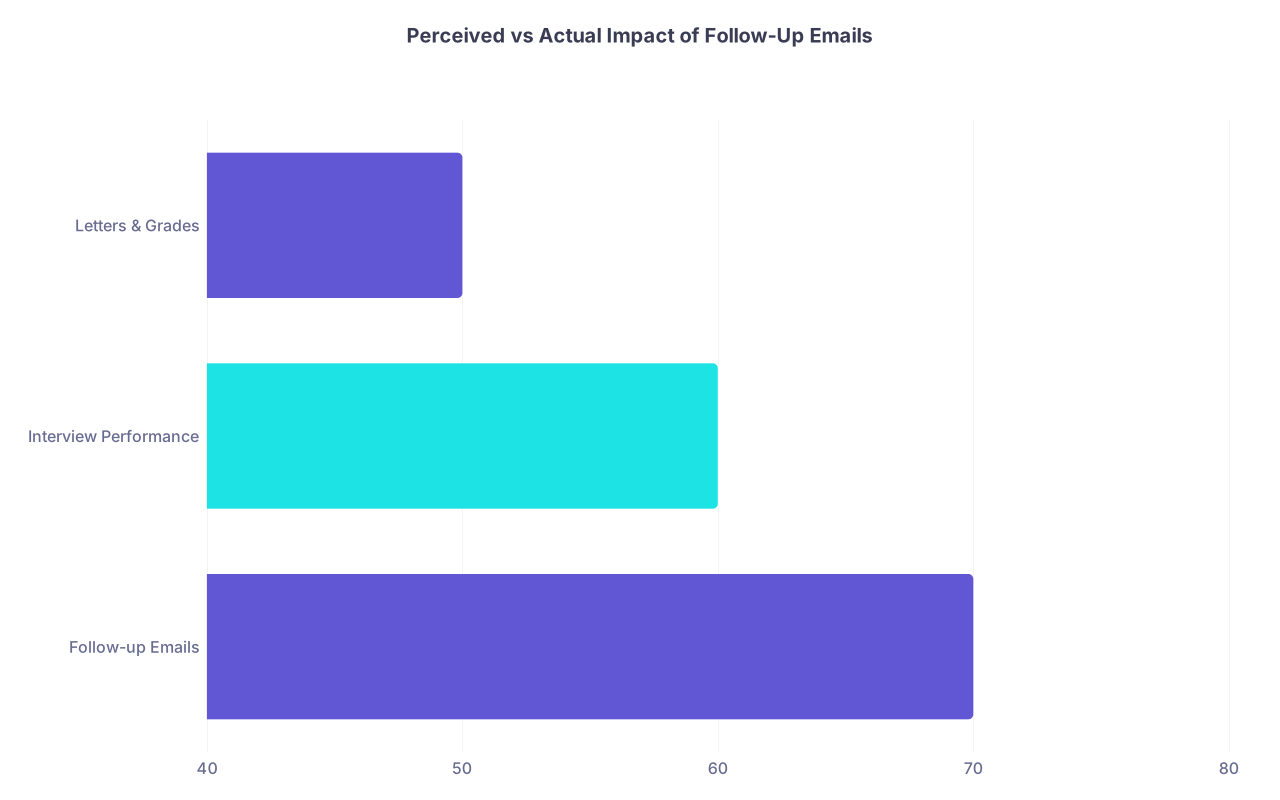
| Category | Value |
|---|---|
| Follow-up Emails | 70 |
| Interview Performance | 60 |
| Letters & Grades | 50 |
Interpretation:
- The bar heights here represent perceived importance by anxious applicants, not reality. In reality, that first bar should be tiny compared to the others.
The Bottom Line: What Actually Matters vs. What’s Noise
Strip away the folklore and this is what you’re left with:
- No thank-you, no Match is a myth. Follow-up emails are nice, polite, and occasionally mildly helpful. They are not a core selection criterion.
- Professional, concise follow-up is all you need. One thank-you to the PD/coordinator, maybe a couple to key interviewers, and a single honest #1 email if you choose—then stop.
- Your interview, application, and rank list drive your Match. Not how many times you popped up in an inbox.
Send the notes. Keep them short. Then close your email tab and go live your life. The Match won’t be decided in Outlook.