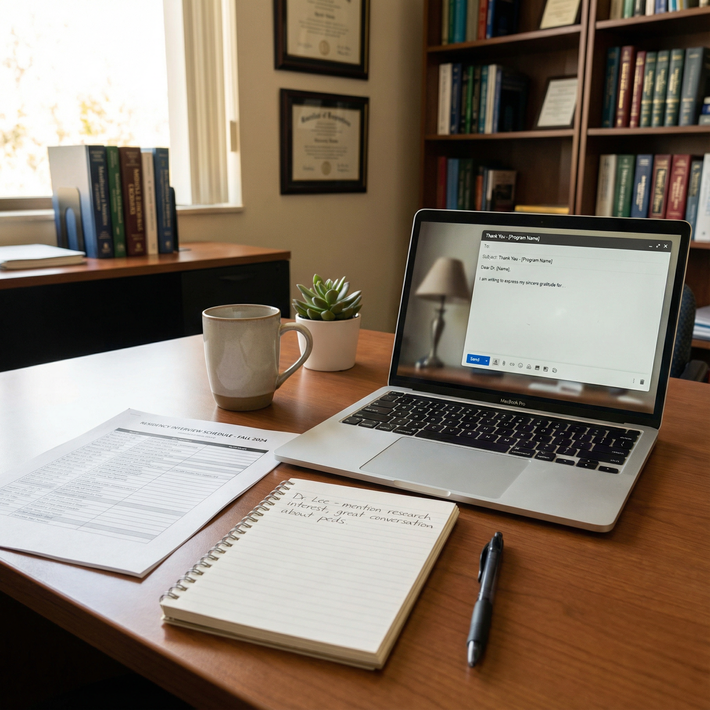
It is 7:42 p.m. You just kicked off your shoes, tossed your suit jacket over a chair, and dropped your name badge on the kitchen counter. Your residency interview wrapped up a few hours ago. Your brain is fried, your cheeks still feel slightly sore from forced smiling, and you have a vague memory of saying something about “systems-based practice” that may or may not have made sense.
Now you are staring at your laptop because you know what comes next.
Thank-you emails.
This is the window where people either do this well and move on… or they procrastinate, forget details, and send something generic and late. You do not want to be in that second group.
Here is what to do, chronologically, from the night after the interview through the next 72 hours.
0–2 Hours After You Get Home: Capture Everything Before It Fades

| Step | Description |
|---|---|
| Step 1 | Arrive Home |
| Step 2 | Brain Dump Notes |
| Step 3 | Identify Who To Thank |
| Step 4 | Draft Email Outlines |
| Step 5 | Take 30-60 Min Break |
| Step 6 | Polish and Send Priority Emails |
At this point you should not open your email yet. You should protect your memory.
Step 1: Do a fast brain dump (15–30 minutes)
Open a fresh document or notebook and write, in messy bullet form:
- Everyone you met, with roles:
- PD, APD(s)
- Residents (names + PGY level)
- Coordinator
- Any faculty you had 1:1 or small group time with
- Distinctive details:
- “Morning huddle in work room, EMR: Epic, interns carry Voalte phones”
- “Dr. Chen – heme/onc – talked about QI project with transfusion thresholds”
- “Second-year resident Alex: emphasized good culture around jeopardy coverage”
- Very specific moments:
- Any joke, shared interest, or unique question you asked
- Any advice a resident/faculty gave you
- Any case or patient story discussed
Do not worry about phrasing. This document is not for anyone else’s eyes. It is your raw material for personalized thank-yous.
Step 2: Identify your thank-you list (10–15 minutes)
Next, at this point you should list who gets an email. For a standard categorical residency interview, that usually means:
- Program Director (always)
- Interviewers (faculty and residents who formally interviewed you)
- Program Coordinator (often overlooked; they notice)
- Possibly:
- Chief residents you spent significant time with
- Faculty who ran a small-group or informal session where you had real interaction
Quick rule of thumb:
- If you had a scheduled interview or meaningful 1:1 interaction: send an individual email.
- If you only saw them in a big group where you never spoke: probably skip, unless instructed otherwise.
Now sort them into priority order:
- Program Director
- Interviewers
- Coordinator
- Everyone else
You will use this ordering when you get tired later.
Same Night: Drafting Your Thank-You Emails (1–3 Hours Post-Interview)
Now you start drafting. Not sending yet. Drafting.
Step 3: Build a reusable skeleton you will not sound like a robot with
You need a template structure, not a copy-paste sentence. Here is a simple and safe 4-part frame:
- Greeting + thanks for time
- One or two specific references to your interaction
- One sentence tying that interaction to your interest in the program
- Respectful closing
Example skeleton for a faculty interviewer:
Dear Dr. [Last Name],
Thank you for taking the time to speak with me during my interview at [Program Name] today.
I appreciated our conversation about [specific topic / project / patient case]. Hearing about [detail] gave me a clearer picture of how residents at [Program Name] are involved in [research/education/clinical work].
Our discussion reinforced my impression that [Program Name] would be an excellent fit for my interests in [briefly restate area or career goal].
Sincerely,
[Your Full Name]
[Current Institution]
You will adjust this for PDs, residents, and coordinators, but the skeleton stays roughly the same.
Step 4: Draft content while details are fresh (60–90 minutes)
At this point you should open your brain-dump notes and write rough drafts for each person. Do not polish yet. Get content down.
For the Program Director
This one matters; programs sometimes print these or read them at ranking meetings.
Aim for:
- 2–3 short paragraphs
- Clear reference to:
- Their overview talk
- One or two aspects of the program that resonate with you
- A brief “fit” statement
Example elements you might include:
- “Your description of the graduated autonomy in the ICU months…”
- “The emphasis on resident-led QI initiatives, particularly the sepsis bundle project…”
- “Hearing how your graduates match into both hospitalist and fellowship paths…”
Do not oversell, do not imply ranking promises, and do not sound like you wrote the exact same thing to twenty other PDs.
For faculty interviewers
Use at least one detailed callback:
- “I have already started looking up the NEJM article you mentioned about…”
- “Our discussion about caring for a largely refugee population in the clinic…”
- “Your description of the longitudinal clinic experience from intern year…”
If you cannot recall specific details, you missed something in your notes. Then you still send a simple, honest thank-you that references the program generally, without pretending intimacy you do not have.
For residents
Tone can be slightly more relaxed but still professional.
Focus on:
- Culture examples they described
- Call schedule / workload realities they were honest about
- Things like:
- “You were candid about how the night float system works”
- “I appreciated hearing how interns are supported when cross-covering new services”
Avoid flattery that sounds like you are trying to be their best friend.
For the coordinator
Short, but valuable.
- Thank them for:
- Organizing the day
- Providing clear communication
- Handling any logistics (flights, Zoom links, schedule changes)
They are often the ones who see every email you send the program. Do not ignore them.
Timing Strategy: When Should You Actually Hit Send?
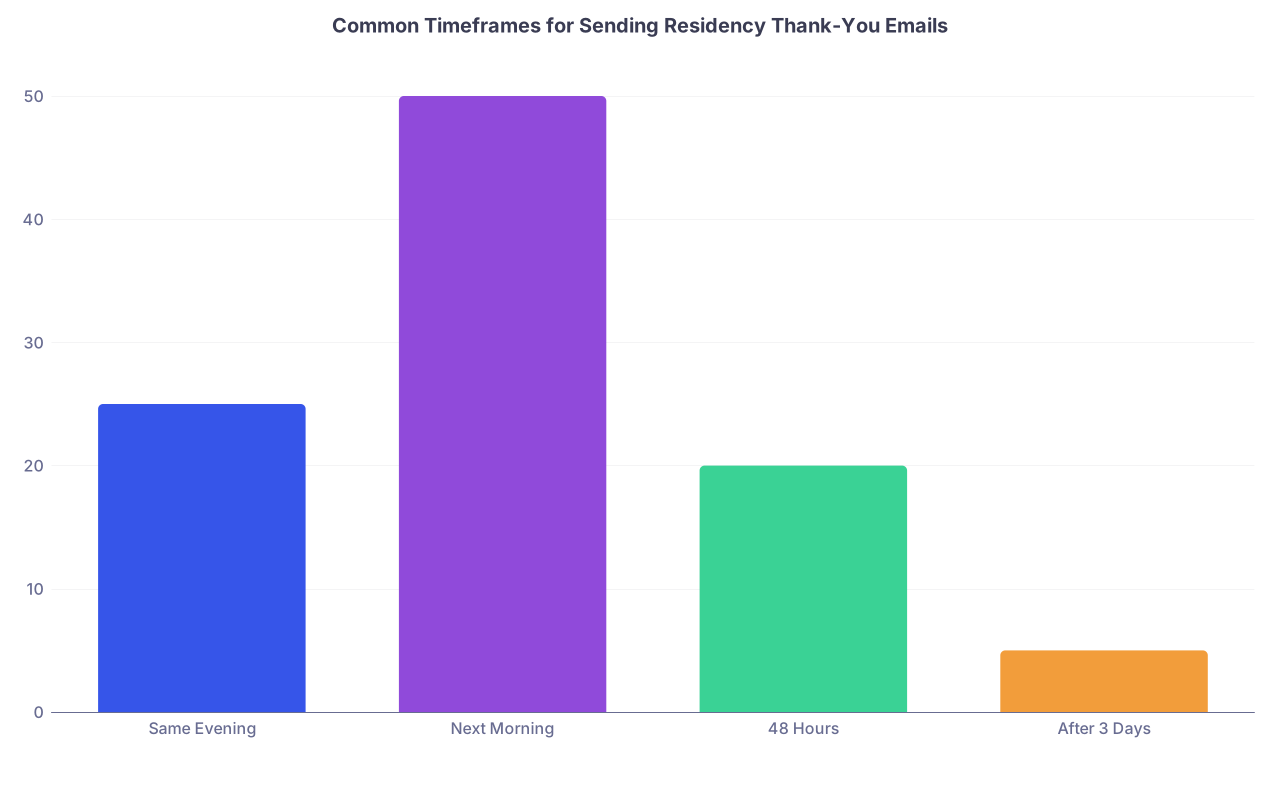
| Category | Value |
|---|---|
| Same Evening | 25 |
| Next Morning | 50 |
| 48 Hours | 20 |
| After 3 Days | 5 |
Here is the reality: people obsess over this more than PDs do.
You want to land in the “professional and timely” window:
- Best: Within 24 hours
- Acceptable: Within 48 hours
- Sloppy: After 3+ days (unless you had post-interview travel chaos or night shifts)
Night-of vs next-morning decision
At this point you should decide based on your brain function:
- If you are exhausted and your writing is getting clumsy:
- Draft tonight, send tomorrow morning
- If it is early, you are clear-headed, and you interview again tomorrow:
- Send the highest-priority ones now (PD + main interviewers)
- Finish others next morning
Sending at 11:37 p.m. with typos is worse than sending at 8:00 a.m. sharp the next day.
Next Morning (Within 18–24 Hours): Review and Polish
Now you have drafts. Do not trust them yet.
Step 5: Quick structure check for each email (5–10 minutes total)
For every email, run through this mini-checklist:
- Subject line is clear:
- “Thank you – [Your Name], [Specialty] Interview [Date]”
- Greeting is correct:
- Title (Dr., Ms., Mr.) spelled right; no first-name familiarity unless they clearly invited it
- At least one very specific reference from your conversation (for real personalization)
- No unnecessary length (3–7 sentences is fine for most)
Step 6: Proofread like someone will read this out loud in a committee (15–20 minutes)
You would be surprised how many times I have seen “I enjoyed learnign about your porgram” screenshots.
Do the following for each email:
- Read it out loud once, slowly
- Check:
- Names: spelled and capitalized correctly
- Program name: correct, and not accidentally swapped with another program
- City and institution: consistent
- Tense and tone: professional, not gushy
If you interviewed at “University of Colorado” and your email says “I am very interested in your program at Denver University,” you are done. In a bad way.
Within 24 Hours: Sending Your Emails
At this point you should send. Stop tweaking.
Step 7: Order of sending (10–20 minutes)
Use the priority list you made.
- Program Director
- Main faculty interviewers
- Residents who interviewed you
- Coordinator
- Any additional contacts (chiefs, etc.)
Space them out slightly if your email client might auto-fill the wrong program name. You are writing multiple programs across days; copy-paste errors kill.
Day 2: Fixing Gaps, Following Up on Missing Contacts
Sometimes you do not have everyone’s email the same day. Or the interview day was chaotic.
Step 8: If you are missing an interviewer’s email
By the next day, at this point you should:
- Email the coordinator:
Dear [Coordinator Name],
Thank you again for organizing yesterday’s interview day. I really appreciated how smoothly everything ran.
I wanted to send brief thank-you notes to my interviewers and realized I do not have contact information for [Dr. X / the PGY-3 resident who interviewed me at 10:30 a.m.]. If it is possible to forward a message to them, I would be grateful.
Best regards,
[Your Name]
Coordinators are used to this. Many prefer you send one email they can forward, instead of hunting down seven addresses.
Step 9: Group vs individual emails when information is limited
If you truly cannot get individual details:
- Group email to residents is acceptable:
- “Dear Residents of [Program Name], thank you for taking the time to talk with me during the noon conference Q&A…”
- For faculty, better that the coordinator forwards your note than nothing at all.
What NOT to Put in a Thank-You Email (Day 1–2 Guardrails)
You are still in the first 48 hours. Emotions are high. You may be tempted to treat this like an early love letter. Do not.
At this point you should avoid:
- Ranking language:
- Do not say “I will rank you highly” or “You are my top choice” in a thank-you. That belongs, if at all, in later communication, and you get one honest shot.
- Questions about:
- “How do you think I performed?”
- “Do you have a sense of how competitive I am for your program?”
This makes people uncomfortable and adds zero value.
- Attachments:
- Do not attach updated CVs, manuscripts, etc., unless they explicitly asked you to send something.
- Negotiation-style content:
- No hints about other interview offers or leverage. That is for high-level post-interview communication weeks later, if at all.
Keep the thank-you what it is: a brief, professional acknowledgment, not a lobbying package.
48–72 Hours Later: Quick Audit and Move On
At this point—two to three days out—you should not still be writing or rewriting. You should be making sure nothing fell through the cracks, then shifting focus to your next interview.
Step 10: Build or update a simple tracking table
A basic tracking table keeps you from sending duplicate emails or forgetting a PD entirely.
| Program | Interview Date | PD Thank-You Sent | Interviewers Thank-You Sent | Coordinator Thank-You Sent |
|---|---|---|---|---|
| Big City IM | 2026-01-05 | 2026-01-06 | 2026-01-06 | 2026-01-06 |
| County EM | 2026-01-08 | 2026-01-09 | 2026-01-09 | 2026-01-09 |
| Community FM | 2026-01-12 | 2026-01-13 | 2026-01-13 | 2026-01-13 |
Glance at it:
- Any blanks in the PD column after 48 hours? Fix those today.
- Any interviewers you still intend to thank? Give yourself a hard deadline.
Step 11: Mentally file the program correctly
This is subtle but critical.
While your memory is fresh—and after you have written the thank-yous—take 5 minutes per program to rate and note:
- Overall gut impression (1–5)
- Key pros
- Key cons
- Any deal-breakers or big question marks
Use an actual document or spreadsheet. This will be gold later when you are building your rank list and all the interview days start blurring into the same box lunch and PowerPoint slides.
Special Situations and How to Handle Them

Virtual interview days
Same rules. Only difference:
- You may want to thank the tech support person if they rescued your audio/video disaster. Short line in your coordinator email is enough.
- Any comment about the day should acknowledge the virtual format:
- “Even virtually, the sense of camaraderie among the residents was clear…”
Multiple encounters with the same person (e.g., PD gave talk + 1:1 interview)
You do not need separate emails. One email can reference both contexts:
- “I appreciated both your overview of the program this morning and our later conversation about…”
You already sent a pre-interview “thank you for the invite”
You still send a post-interview thank-you. That first one was about the invitation. This one is about the actual day and conversation.
A Simple Timeline Summary
To make this brutally clear, here is your week in snapshot form.
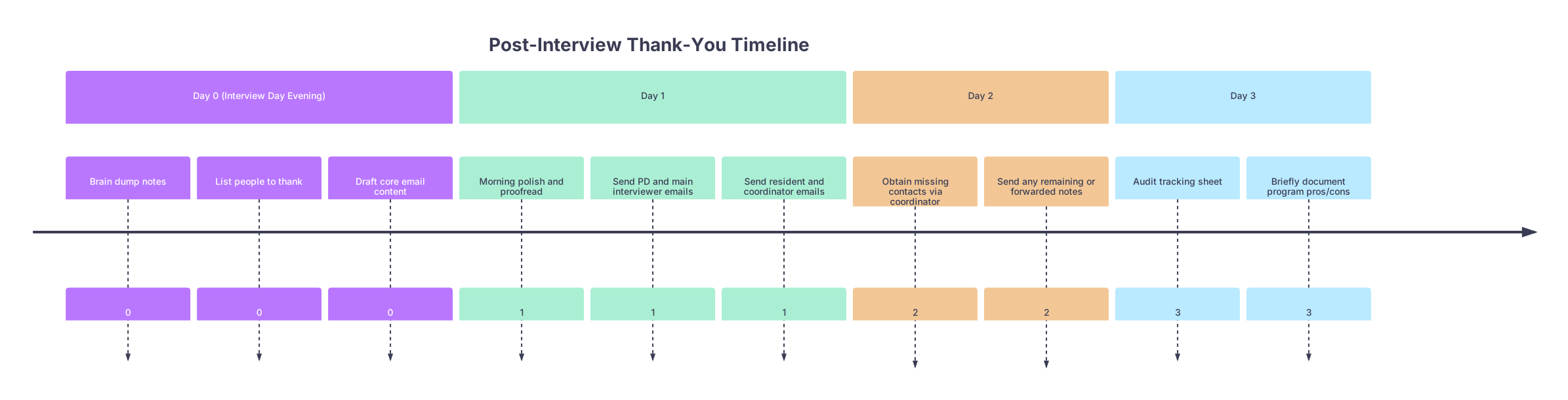
| Period | Event |
|---|---|
| Day 0 (Interview Day Evening) - Brain dump notes | 0 |
| Day 0 (Interview Day Evening) - List people to thank | 0 |
| Day 0 (Interview Day Evening) - Draft core email content | 0 |
| Day 1 - Morning polish and proofread | 1 |
| Day 1 - Send PD and main interviewer emails | 1 |
| Day 1 - Send resident and coordinator emails | 1 |
| Day 2 - Obtain missing contacts via coordinator | 2 |
| Day 2 - Send any remaining or forwarded notes | 2 |
| Day 3 - Audit tracking sheet | 3 |
| Day 3 - Briefly document program pros/cons | 3 |
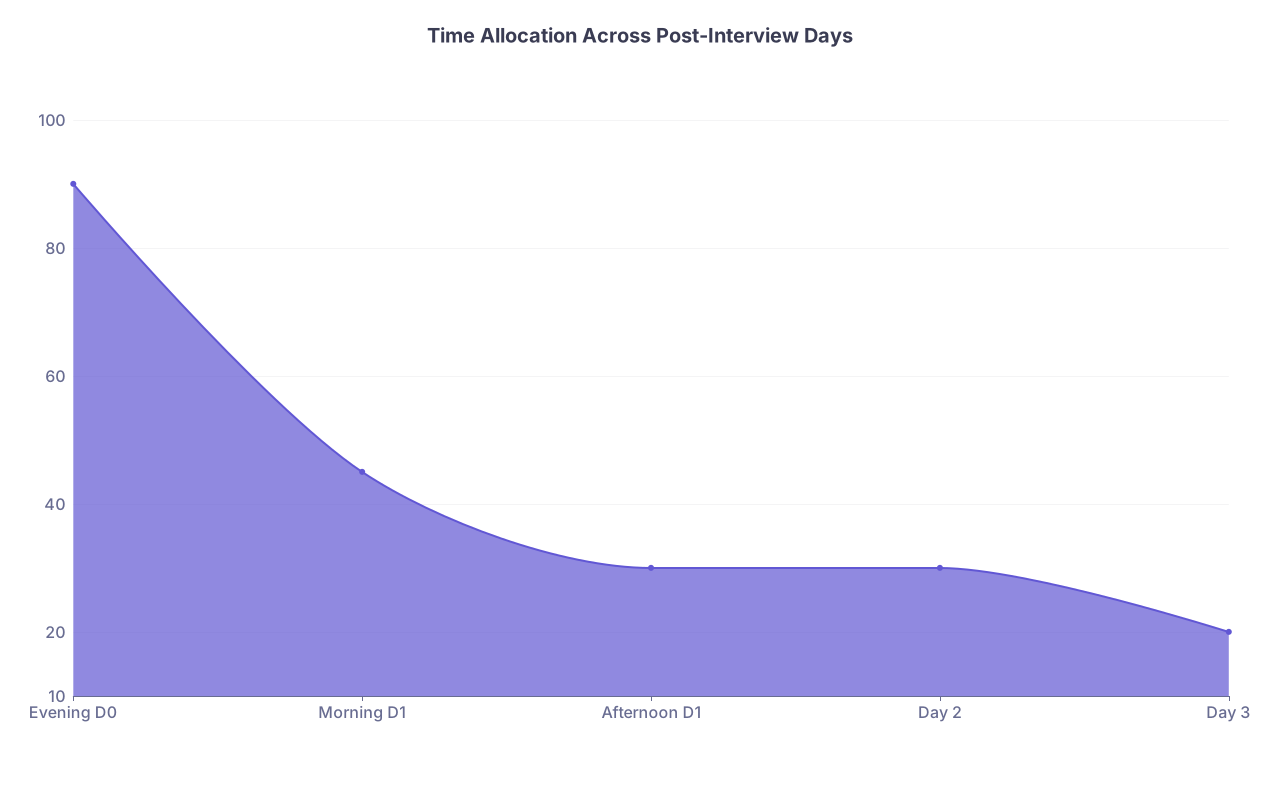
| Category | Value |
|---|---|
| Evening D0 | 90 |
| Morning D1 | 45 |
| Afternoon D1 | 30 |
| Day 2 | 30 |
| Day 3 | 20 |
Final Key Points
- The night of your interview, you should focus on capturing details and drafting rough, personalized thank-you notes while the day is still vivid.
- Within 24 hours, you should polish, proofread, and send concise, specific emails to the PD, your interviewers, and the coordinator—no ranking promises, no overkill.
- By 72 hours, you should have all thank-yous sent, gaps filled via the coordinator if needed, and a brief written record of your impressions to help your future rank list.
Then stop obsessing about the thank-you emails. Prepare for the next interview.