
The polite-sounding sentence that makes a Program Director roll their eyes is more dangerous than the blatantly rude one.
You’re not going to email a PD, “Why haven’t you ranked me yet?” You’re smarter than that. But you might write, “I remain very interested in your program and would appreciate any update on my status.” That sounds polite. It also sounds entitled, needy, and clueless to many PDs.
Let me walk you through the landmines so you don’t blow up your application after you’ve already done the hard part: getting the interview.
The Core Mistake: Confusing “Polite” With “Appropriate”
The biggest error applicants make in post‑interview communication is assuming that as long as they’re:
- using “please” and “thank you”
- adding “I understand you are very busy”
- writing in formal, professional language
…then the content of the message is automatically acceptable.
Wrong.
Program Directors care less about your wording and more about what your sentence implies about you:
- Do you understand boundaries?
- Do you respect the Match rules?
- Are you high‑maintenance?
- Are you entitled?
A sentence can be perfectly grammatical, full of “Dr. Smith, thank you so much,” and still scream:
- “I think I deserve special treatment.”
- “I expect you to respond to me personally.”
- “Your process should bend around my anxiety.”
Those are the vibes that quietly move you down a rank list.
The Polite-Sounding Lines That Sound Entitled
Let’s go straight to the stuff that gets screenshotted in PD group chats.
1. “I would greatly appreciate an update on my ranking status.”
On the surface: respectful. Underneath: a problem.
Why PDs hate it:
- It asks for prohibited information. They’re not supposed to tell you how they’re ranking you.
- It suggests you think they owe you transparency in a process that is explicitly confidential.
- It creates extra work for a question they can’t actually answer.
What it signals about you: You don’t understand the Match rules, or worse, you understand them and are trying to push the boundary anyway. Neither looks good.
Better version: Don’t ask about rank status at all. That’s it. There is no safe version of this question.
If you really must follow up post‑interview, keep it to:
“I appreciated the opportunity to interview at [Program]. I enjoyed meeting the residents and learning more about your curriculum, especially [specific detail]. Thank you again for your time and consideration.”
No question. No ask. No implied expectation of a reply.
2. “I know you’re very busy, but I wanted to check if you had any feedback or an update.”
That opening clause — “I know you’re very busy” — is like a red flag with a bow on it.
Why it backfires:
- It acknowledges you’re interrupting them, then you interrupt them anyway.
- They can’t give you meaningful feedback in the middle of interview season.
- You’re basically saying, “I understand the situation and I’m going to ignore it.”
What PDs hear: “This person will be texting me about their schedule, their vacation days, and every perceived slight all year long.”
Better approach: If you truly want feedback (most of you really don’t, you want reassurance), ask after Match, not during. And still keep it minimal.
3. “I remain very interested in your program and would love to know where I stand.”
This one’s all over the place. It sounds like every template online. That’s the problem.
Why it’s a problem:
- “Where I stand” = “Tell me my rank.” Again, not allowed.
- It tries to pressure them into disclosure by wrapping it in enthusiasm.
- It comes off as “I gave you my interest, now give me information.”
Better version: “I remain very interested in your program and wish you all the best during the remainder of interview season.”
Then stop typing. You don’t need to tack on a request.
4. “Please let me know if there is any additional information you need in order to assess my application.”
This seems innocent. It’s not terrible, but it often lands wrong in context.
Why:
- By the time you’ve interviewed, they already have what they need.
- It subtly implies, “If you’re not ranking me highly, it’s because you don’t have all the facts.”
- It puts the burden on them to imagine things they might be “missing.”
When is this actually appropriate? If something in your status has changed in a meaningful way:
- A significant new Step 2 score
- A major award
- A published paper, not “submitted to journal #4”
Then you can say: “I wanted to share an update since our interview: [concrete update]. I’ve attached/updated ERAS accordingly in case it’s useful.”
You are providing information, not fishing for a response.
5. “I want to express that your program is among my top choices.”
This looks safe. It often isn’t.
Why it rubs PDs wrong:
- It’s vague. “Among my top choices” can mean anything from #2 to #15.
- Many PDs assume this is copy-pasted to 10+ programs.
- It fails the honesty test even if you think you’re being truthful.
Worse variation:
“You are one of my top choices and I am very interested in matching at your program.”
This is Match‑rule‑adjacent. It dances on the line of commitment language without saying “#1.”
If you truly have a single #1 and your specialty’s culture accepts love letters, you say so once:
“[Program] is my first choice, and I plan to rank it #1.”
And then you don’t send that to anyone else. If you can’t do that honestly? Don’t say anything rank-related.
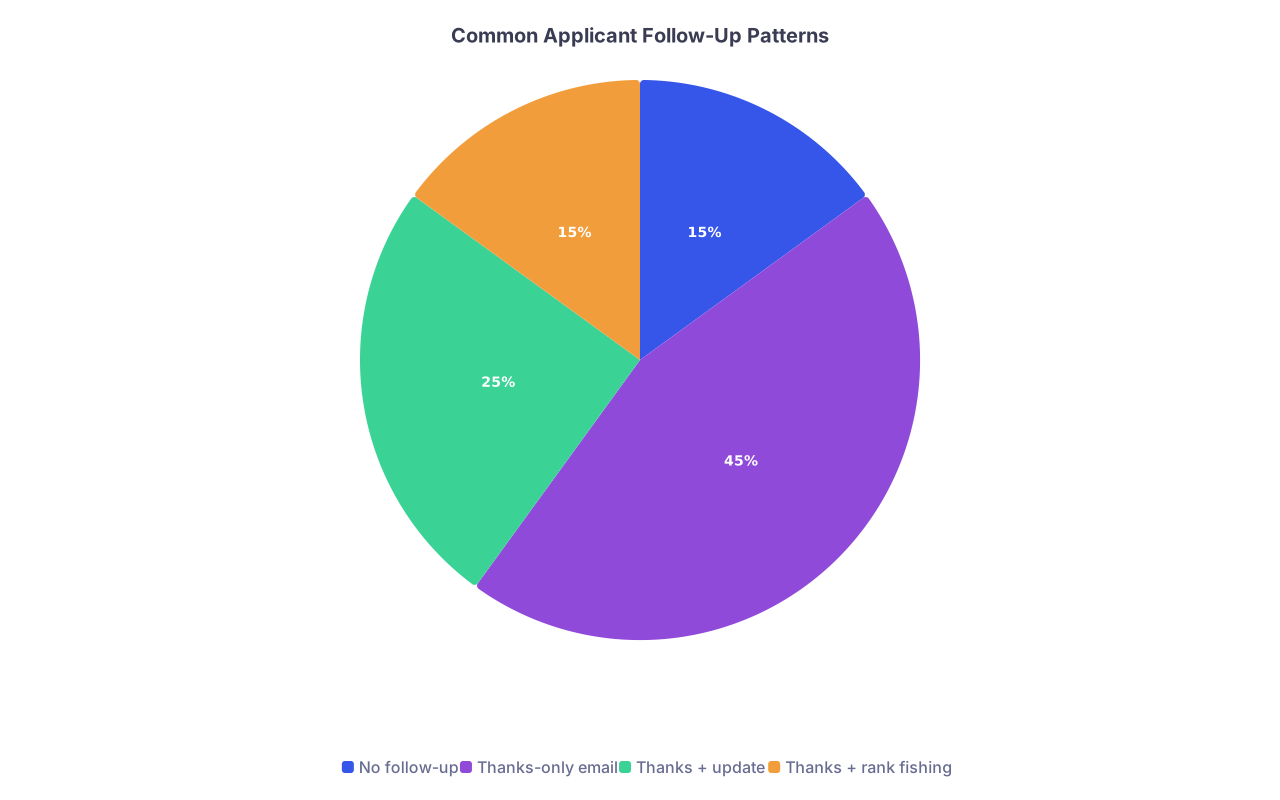
| Category | Value |
|---|---|
| No follow-up | 15 |
| Thanks-only email | 45 |
| Thanks + update | 25 |
| Thanks + rank fishing | 15 |
6. “I look forward to hearing from you soon.”
This is standard business‑email language. In residency world, after an interview, it’s often tone‑deaf.
Why:
- It suggests that a reply is expected or required.
- Most PDs will not and cannot individually reply to every thank‑you.
- It can read as pushy when their inbox already has 300+ similar messages.
Better line:
“There is no need to respond; I just wanted to thank you again for your time.”
That line calms them down instantly. Shows you get it.
7. “Please keep me in mind as you make your rank list decisions.”
This one feels polite and deferential. On their side of the screen, it doesn’t.
Why:
- Obviously they’re going to keep all interviewed applicants in mind. That’s literally the job.
- You’re asking them to treat you as somehow separate or special.
- It sounds like you think a single sentence could tip a carefully built rank list.
If you want to show interest, show it specifically: “I especially connected with [curriculum detail, resident culture, city-specific reason]. I could see myself thriving in that environment.”
You’re not telling them how to do their job. You’re telling them why their program fits you.
The Unspoken Rules of Post‑Interview Contact
You’re not just judged by what you say, but that you’re saying anything at all.
Rule #1: You are not owed a response
The biggest entitlement trap is assuming:
- “I took the time to write; they should respond.”
- “It’s just good manners to reply.”
- “They could at least say thank you.”
They’re reading your email between patient care, recruitment meetings, EPIC clicks, and 12 other fires. You’re not being ghosted. They are professionally overwhelmed.
If you silently hold a grudge that they didn’t reply to your thank‑you, that grudge sometimes leaks into a second email. That second email is almost always a mistake.
Rule #2: One email per phase, max
Here’s the rough ceiling:
- Thank‑you email: optional, once per program
- Post‑interview update (if you truly have one): once
- Genuine #1 love letter (if your specialty culture supports it): once
That’s it. Not:
- Thank you
- Then “just checking in”
- Then “wanted to reiterate interest”
- Then “hoping you received my last message”
You know who does that? The intern everyone hides from.

Rule #3: Don’t make them break rules for you
Some specialties, some programs, some PDs are more chatty. They may drop hints like:
- “We liked you a lot.”
- “You’d fit in well here.”
- “I hope we get to work together.”
That’s their choice.
You making the first move with “Will I be ranked to match?” or “Am I competitive for your program?” is you asking them to violate the spirit (if not the letter) of Match rules. That’s not savvy; it’s reckless.
Safe vs Risky: Concrete Examples
Let’s get specific. Here’s how a PD reads two different emails.
| Scenario | Safer Version | Risky Version |
|---|---|---|
| Thank-you | Brief thanks, no ask | Thanks + “Where do I stand?” |
| Update | One clear, substantial update | Vague “just checking in” |
| Interest | Specific program fit | “Top choice” to 10 programs |
| Timing | Within a week of interview | Multiple emails over months |
| Tone | No response expected | “Look forward to your reply” |
Now let’s walk through a few.
Safer thank-you email
Subject: Thank you – [Your Name], [Specialty] applicant
Body:
“Dr. Smith,
Thank you for the opportunity to interview at [Program] on [date]. I especially appreciated hearing about your [specific rotation/clinic/research focus] and talking with the residents about [concrete detail]. I can see why they speak so highly of the training environment.
There’s no need to respond; I just wanted to thank you again for your time and consideration.
Sincerely,
[Name], AAMC ID [#]”
What this says:
- You paid attention.
- You understand they’re busy.
- You aren’t expecting a dialogue.
Risky “polite” email
Subject: Thank you and request for update
Body:
“Dear Dr. Smith,
Thank you again for the opportunity to interview at your esteemed program. I remain very interested in [Program] and I’m writing to see if you might be able to share any update on where I stand on your rank list or my prospects for matching there. I know you are very busy, but I would greatly appreciate any information or feedback you could provide.
Warm regards,
[Name]”
On your side: deferential, humble.
On their side:
- Wants rank info (red flag).
- Expects personalized feedback (time sink).
- Doesn’t understand the process (or ignores it).
The Subtle Entitlement Signals You Don’t Notice
Sometimes the problem isn’t a single sentence—it’s the overall posture of your email. A few patterns I see a lot:
1. Acting like they owe you closure
Lines like:
- “Please let me know if I should expect to hear anything further.”
- “If I’m no longer under consideration, I’d appreciate knowing.”
This is how job‑hunt LinkedIn culture bleeds into residency. The Match doesn’t work like that. You get closure on Match Day, not in January via email. Expecting otherwise reads as “I want you to rearrange the entire system around my discomfort.”
2. Offering “help”
Some applicants try:
- “Let me know if there’s anything else I can do to improve my chances.”
- “I’d be happy to provide additional letters or materials.”
You’re basically saying, “If I didn’t wow you enough, tell me what hoops to jump through so I can fix this.” That’s not how rank lists work. At that point, your file is your file.
3. Over-sharing your rank strategy
Things like:
- “I’m deciding between your program and [Competitor Program].”
- “Your program is in my top 3 along with [other names].”
This is not savvy; it’s messy. You’re making them aware they’re being compared and maybe not winning. And for what? They can’t alter your list. They’re not going to bargain with you.
A simple, “I’m very interested in your program and appreciate the chance to interview” does everything you need.
How To Follow Up Without Sounding Entitled
Strip it down. You don’t need creativity here; you need restraint.
After the interview (thank‑you)
- Short.
- Specific detail or two.
- No question.
- No expectation of response.
If you have a meaningful update
- One email.
- One or two clear updates.
- No “just checking in.”
- No request for “thoughts” or “feedback.”
Example: “Since our interview, I received my Step 2 CK score (###) and was excited to see improvement from Step 1. I also presented my [topic] poster at [conference]. I wanted to share these updates in case they are helpful as you review applications. Thank you again for the opportunity to interview.”
If your program is truly #1
Only if your specialty/region has a culture where this is normal:
“I wanted to let you know that [Program] is my first choice, and I plan to rank it #1. My interview day confirmed that I would be very excited to train with your team, especially given [specific reasons]. Thank you again for your consideration.”
And then you stop. And you certainly don’t send, “You’re my top choice” to three places and hope no one notices. They talk.

| Step | Description |
|---|---|
| Step 1 | Finished Interview |
| Step 2 | One brief email |
| Step 3 | No penalty |
| Step 4 | One update email |
| Step 5 | One clear #1 email |
| Step 6 | Stop. No more emails |
| Step 7 | Send thank-you? |
| Step 8 | New significant update later? |
| Step 9 | Program is true #1 and culture allows love letters? |
FAQs
1. Do I have to send a thank-you email after every residency interview?
No. You won’t be punished for not sending one. Some PDs barely skim them. Some never see them at all because a coordinator filters the inbox. If writing them stresses you out, prioritize quality over quantity. A few genuine, specific notes are better than 20 robotic ones.
2. Can a bad follow-up email actually hurt my rank?
Yes, in close calls. A single email won’t tank an all‑star application, but I’ve seen borderline applicants drop when a PD says, “This email is a little much,” especially if it hints at neediness, entitlement, or difficulty with boundaries. When 10 people are tied, “seems low‑maintenance and normal” matters.
3. Is it okay to ask if I’m still under consideration before rank lists are due?
Generally, no. The assumption is: if you interviewed, you’re at least on the radar. They’re not required to tell you if they’ve effectively moved on. Asking “Am I still being considered?” during rank season mostly makes you look anxious and uninformed about how the process works.
4. What if a PD emails me and says, “We’re very interested in you”?
You don’t need to decode it or escalate it. Reply briefly, thank them, reiterate that you enjoyed learning about the program, and move on. Don’t answer with, “Where will I be on your rank list?” or “If I rank you #1, will I match?” That’s how you ruin a perfectly good positive interaction.
5. How do I know if a specialty allows #1 love letters?
Ask residents you trust, not random Reddit threads. In some fields (e.g., certain IM or pediatrics programs), they’re common. In others (like some surgical fields), they’re weird or frowned upon. If your advisors and current residents at your school say, “We don’t really do that here,” believe them and skip it.
Open the last follow‑up email you drafted or sent. Read every sentence that asks for something—an update, feedback, where you stand. Now delete every ask, and see if the email still says what you actually need: “Thank you. I’m interested. I respect your time.” If it doesn’t, fix it before you hit send again.