
What do you actually write back when a PD ends their email with “Please don’t hesitate to reach out with any further questions”?
You just sent a thoughtful thank-you email to a program director after your residency interview. They reply quickly, say they enjoyed meeting you, maybe drop a line about you being a “great fit,” and close with some version of:
“Please feel free to reach out with any further questions.”
Now you’re staring at that sentence wondering:
- Is this just politeness or an opening?
- Am I supposed to ask something?
- Can I mention ranking? Or is that match-violation territory?
- Do I say nothing and risk looking disinterested?
Here is how to handle this exact situation like a grown professional, not an anxious MS4 firing emails into the void.
First: Decode What That Line Usually Means
Let me be blunt: 80–90% of the time, “happy to answer any questions” is a courtesy line.
It’s similar to the “let’s keep in touch” you hear after networking events. Real sometimes, rote often.
Common cases:
Purely polite closing.
They send this to everyone. Does not mean they are especially invested in you. Also does not mean they are not.Mild signal of interest.
They personalize the email a bit: mention something specific from your application, tell you that you’d “do well here,” then add that line. That’s more than nothing.Genuine open door.
Smaller programs or very engaged PDs truly like being available. They answer questions at midnight and remember applicants’ dogs. You’ll know.
You don’t need to decode the motive perfectly. You just need to respond in a way that:
- Keeps the door open
- Does not annoy them
- Does not sound desperate or transactional
Let’s get concrete.
Option 1: When You Actually Have a Real Question
If you genuinely have a question that matters to your rank list, this is the easiest scenario. Use the opening.
What counts as a real question?
- Things that impact your life if you match there
- Call schedule specifics for certain rotations
- Fellowship match trends in your area of interest
- Where residents actually live, commute-wise
- Support for partners/kids, parental leave, visa issues
- Clarifications about program structure
- New rotations, changes in curriculum
- Split sites and what that means practically
What does not count?
- Questions clearly answered on the website
- “What qualities do you look for in residents?” (you already interviewed)
- “How competitive am I?” (they will not answer and you look naive)
Here is a good template for when you have a legitimate question:
Template A: Real Question Follow-Up
Subject line can stay in the same thread:
Subject: Re: Thank you
Body:
Dr. [Last Name],
Thank you again for your thoughtful reply and for the opportunity to interview at [Program Name]. I appreciated learning more about [1–2 specific things you truly liked: “the strong mentorship in cardiology and the supportive culture the residents described”].
I did have one follow-up question as I continue to think about [Program Name]:
– [Clear, focused question in 1–2 sentences, max]
I’m very grateful for your time and for your openness in answering questions during this process.
Best regards,
[Your Name], MS4
[Your Medical School]
Keep the question tight. One main question, maybe a very short second if they’re related. This is not your chance to send a 10-item FAQ.
Example question done well:
I’m very interested in pursuing cardiology fellowship. Could you share how recent graduates interested in cards have generally done in the match, and whether they’re typically supported to do research or electives in that area during residency?
You’re showing interest, thinking like a future resident, not a point-collector.

| Step | Description |
|---|---|
| Step 1 | PD replies & invites questions |
| Step 2 | Send brief follow-up with 1 focused question |
| Step 3 | Send short, question-free reaffirmation email |
| Step 4 | Politely end thread with a thank you only |
| Step 5 | Do you have a real, non-Googleable question? |
| Step 6 | Is this a top 3-5 program? |
Option 2: When You Don’t Have Any Questions (But the Program Matters to You)
This is where most people freeze.
You liked the program. You don’t have real questions. You also don’t want to ignore their “reach out any time” invitation and wonder if you missed a chance.
Here’s the right move: send a short reply that:
- Acknowledges their openness
- Reiterates appreciation and interest
- Does not invent a fake question
Do not force a question just to use the opening. That reads as needy and transparent.
Use something like this:
Template B: No Questions, But You Want to Stay on Their Radar
Dr. [Last Name],
Thank you so much for your reply and for the warm welcome from everyone at [Program Name]. I really appreciated [specific thing or two: “how candid the residents were about their experiences and the clear emphasis on education during morning report”].
I don’t have any additional questions right now, but I’m very grateful for your offer and for the time you and the team invested in interview day. I left with an even stronger interest in [Program Name].
Best regards,
[Your Name]
This does a few subtle things:
- Signals you’re thoughtful and not wasting their time
- Reinforces genuine interest
- Keeps the tone professional and warm
You’re done. No more follow-up needed unless:
- They email you again with something substantive
- You have a major update (publication accepted, Step 2 score released, new award) AND it’s one of your top programs
Option 3: When You Don’t Care About the Program Much
Be honest with yourself. Some programs are backup options. You’re polite, but they’re not making your top tier.
In that case, you don’t need to squeeze some artificial interaction out of every email line.
If the PD responds with “happy to answer questions,” you can simply:
- Reply once with a brief thank you
- Not initiate more discussion
Here’s a “light touch” version:
Dr. [Last Name],
Thank you very much for your response and for the chance to interview at [Program Name]. I appreciate your willingness to answer further questions and the time everyone took to speak with me.
Sincerely,
[Your Name]
That’s it. Polite, closed loop, no ongoing thread.
You are not obligated to turn every courtesy line into a relationship.
Big Landmines To Avoid In These Replies
This is where applicants get themselves in trouble, especially with programs they’re excited about.
1. Fishing for Rank Information
Bad lines sound like:
- “Will I still be considered if…?”
- “Am I a competitive applicant for your program?”
- “Will I be ranked to match?”
Do not ask. You put them in an awkward spot. They either ignore it, give a non-answer, or get annoyed.
2. Premature or Over-the-Top Commitment
There’s a time and a place to express strong interest or even “I plan to rank you highly.” But doing this in the first thank-you thread, sometimes days after the interview, can sound either naive or manipulative.
Especially don’t write:
- “You’re my #1” in December when you’re still interviewing
- “I will rank your program to match” in a scattershot way to multiple programs (word gets around more than you think)
If you are going to send a “you are my top choice” email later, do it once, to one program, closer to rank list certification, and not as your first follow-up to a generic invitation for questions.
3. Turning the PD into Your Personal Advisor
I’ve seen emails like:
- Three or four big career questions (fellowship strategy, visa policy, moonlighting, research all in one)
- Asking them to review your entire situation: partner’s job, family, debt, etc.
Remember: PDs are busy. Your emails should respect that.
Keep each contact:
- Focused (one theme)
- Short
- Easy to answer in under a minute

How PDs Actually Read These Emails (Reality Check)
You need to understand their side to calibrate your expectations.
Most PDs in mid-size to large specialties:
- Get dozens of thank-you emails in a single week during peak season
- Skim them on their phone between cases, meetings, and interrupted lunches
- Are trying to keep a rough sense of: “Who seemed mature, thoughtful, and genuinely interested?”
No one is building an Excel sheet on who sent how many emails. But patterns matter.
Emails that help you:
- Specific, grounded appreciation (“I liked the noon conference on X,” “residents seemed genuinely close-knit”)
- One clear, relevant question that shows you’re thinking like a future resident
- Calm, confident tone — not “please love me”
Emails that hurt you (yes, they notice):
- Walls of text
- Emotional over-share (“I cried after the interview because it felt like home”)
- Entitled tone (“I feel I would be an asset to your program because…[paragraph]”)
You’re building an impression: credible, low-maintenance, engaged. That’s enough.
How This Plays With Match Rules and “Interest Signaling”
Everyone’s paranoid about violating NRMP rules. Good. You should be cautious.
Here’s the line:
- You are allowed to express interest.
- You are allowed to ask questions.
- You are allowed to say “I plan to rank your program highly” or even “I intend to rank your program first.”
- They are not allowed to pressure you, ask you to reveal rank order, or tell you how they’ll rank you.
Using the “happy to answer questions” line as an excuse to declare “You are my #1” right after the interview? Technically allowed. Strategically…iffy.
My rule of thumb:
- In early/intermediate season: use these exchanges for relationship building, not rank signaling. Show you’re serious, not desperate.
- Near rank list deadline: if you have a clear #1, consider a single, honest “top choice” email then — separate from generic thank-you replies.
What you should not do:
Spray “you are my top choice” messages to multiple programs, especially if they are within the same region or academic circle. Faculty talk. PDs talk more.
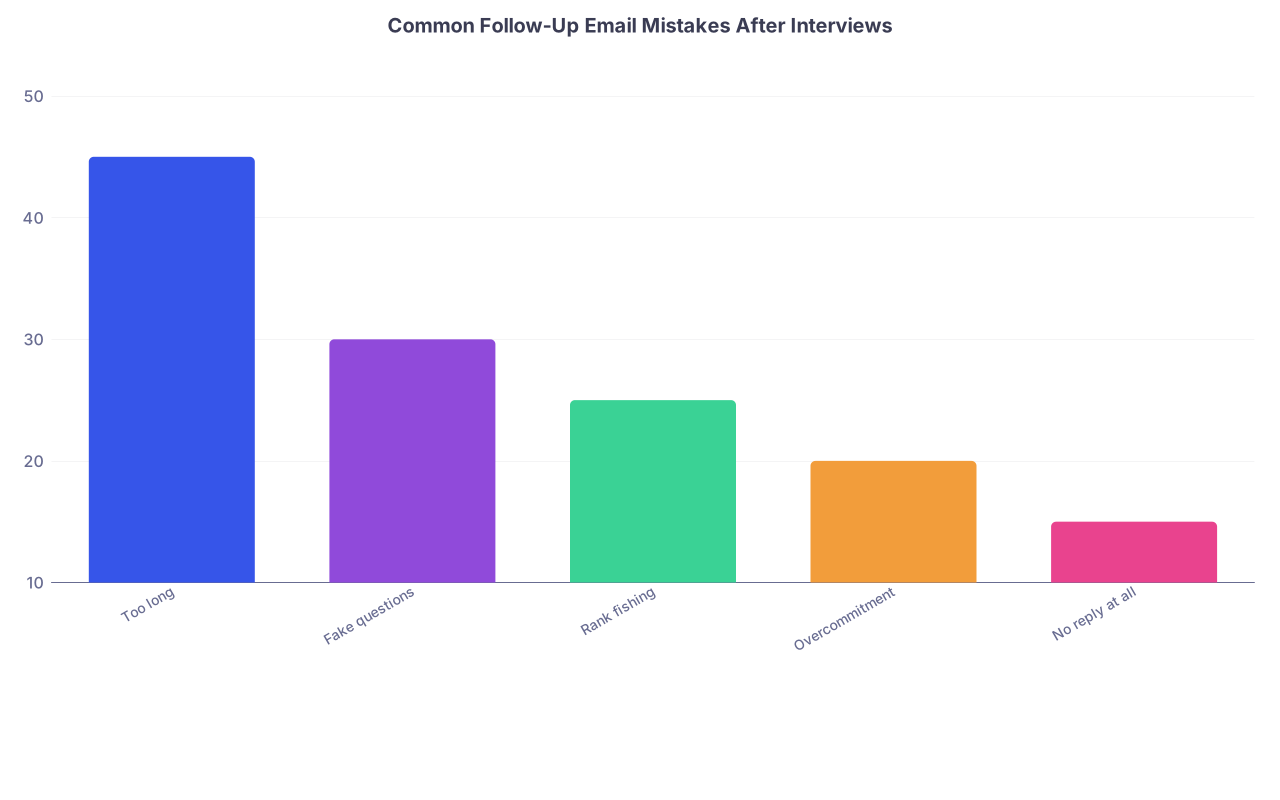
| Category | Value |
|---|---|
| Too long | 45 |
| Fake questions | 30 |
| Rank fishing | 25 |
| Overcommitment | 20 |
| No reply at all | 15 |
Using This Opportunity Strategically (Without Being Weird)
Use the PD’s line as a chance to:
Show you paid attention.
Reference something specific from interview day. “I really appreciated the way morning report focused on clinical reasoning rather than pimping” is miles better than “I liked the program.”Clarify something that actually shapes your rank list.
If you’re serious about them, it’s fine to ask a practical, thoughtful question that helps you compare programs.Show you’re an adult, not a panicking applicant.
Calm tone. No over-apologizing. No drama.
One extra angle most people miss:
If the PD mentions a faculty member or resource in their reply, you can gently ask if it would be appropriate to reach out to that person.
For example:
Thank you for mentioning Dr. Smith’s work with residents on quality improvement. If appropriate, would it be okay to reach out to her with a brief question about resident involvement in QI projects?
You’re showing initiative without presuming access.
| Situation | Best Option |
|---|---|
| You have 1–2 real questions & program is important | Template A (Real Question) |
| No questions, but program is top 3–5 | Template B (Reaffirm Interest) |
| Program is a backup / low on list | Brief thank you, no extra asks |
| PD reply is clearly mass/boilerplate | Very short acknowledgment or none |

Handling Edge-Case Scenarios
1. PD’s Reply Is Very Warm and Specific
If they say things like:
- “We’d be very excited to have you here.”
- “I think you’d be an excellent fit.”
- Mention details from your background unprompted
You still respond with the same structure — just add slightly more warmth:
Thank you for your kind words. Hearing that from you means a lot and reinforces how strongly I feel about [Program Name].
Notice: you’re not promising rank order, but you’re not cold either.
2. PD Invites a Call or Zoom
Sometimes they’ll end with:
“If you’d ever like to hop on a quick call to discuss X, I’d be happy to.”
Don’t overuse this. Use it if:
- You’re genuinely torn and they’re a serious contender
- You have 2–3 concrete points you want to discuss
When you do ask for a call:
- Propose a short window (15–20 minutes)
- Offer 2–3 time ranges
- Come prepared — you’re not chatting; you’re clarifying
3. You Forgot to Reply for a Week (Or Two)
It happens. You’re on a sub-I, life exploded.
You can still send:
Dr. [Last Name],
My apologies for the delayed reply during a busy rotation. Thank you again for your message and for the opportunity to interview at [Program Name]. I remain very interested in the program and appreciate your openness to questions during this process.
Best,
[Your Name]
Do not write a paragraph explaining your entire schedule. One line is enough.
FAQ (Exactly 4 Questions)
1. Do I have to respond if the PD replies to my thank-you email?
If they send a personalized reply (mentioning you or your interview specifically), yes — send a short response. If it’s obviously a mass/boilerplate message to all applicants, you’re not obligated, but a one- or two-line acknowledgment is still a nice touch if the program matters to you.
2. Is it okay to say a program is my “top choice” in this kind of follow-up?
You can, but I wouldn’t use this first “happy to answer questions” reply for that. Save a clear “top choice” message for later in the season, once your rank list is solid, and send it separately. Use this interaction to show interest and professionalism, not to lock yourself into something you might change.
3. How long should my email be when I follow up with a question?
Aim for 4–7 sentences total. One short intro, one or two sentences of appreciation, one clear question, one closing. If your email needs more than 30–40 seconds to read, it’s too long for this context.
4. Can I send multiple follow-up emails over the season if they keep inviting questions?
You can, but you should not make a habit of it. One thank-you thread (possibly with one good question) is enough for most programs. A second email later in the season is reasonable if you have a genuine update or a major rank-impacting question. Beyond that, you’re veering into “too much” territory for most PDs.
Key points:
- Treat “please reach out with questions” as a polite opening, not a command — use it when you have real questions or to briefly reaffirm interest.
- Keep replies short, specific, and professional; avoid rank fishing, fake questions, and emotional overkill.
- Think like a PD: you want to come across as mature, thoughtful, and low-maintenance — one or two well-crafted emails beat a flurry of anxious ones every time.