
The worst follow-up strategy in residency season is “I’ll just wing it.”
If you treat post‑interview communication like a vibe instead of a timeline, you will either:
- Look needy.
- Look disinterested.
- Or both.
You need a calendar. Specifically: when to send a simple thank-you and when to send a stronger interest update. The content matters, but the timing matters more.
Let’s walk the Match calendar from first interview to rank list deadline and plug in exactly what you should send, and when.
Big Picture: Your Follow-Up Strategy by Phase
At this point, you should understand the three main phases of post‑interview communication:
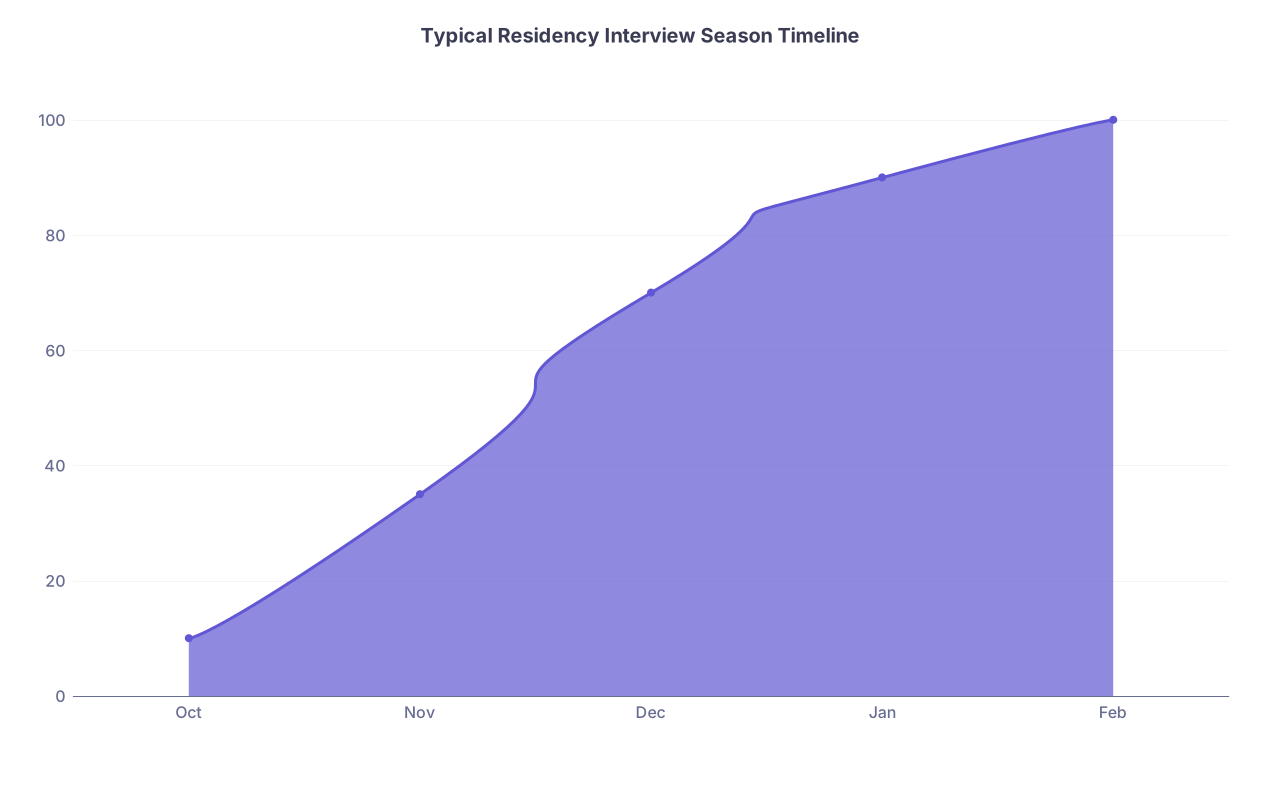
| Category | Value |
|---|---|
| Oct | 10 |
| Nov | 35 |
| Dec | 70 |
| Jan | 90 |
| Feb | 100 |
Immediate (0–48 hours after interview)
Primary tool: short, specific thank‑you emails
Goal: be polite, memorable, and low‑maintenance.Mid‑Season (while interviews are ongoing, usually Nov–Jan)
Primary tool: occasional interest updates to a few programs you’re genuinely serious about.
Goal: signal interest and fit, not desperation.Late Season (after your last interview, before rank list deadline)
Primary tool: final interest/intent update to 1–3 top programs.
Goal: clarify where they stand on your list and remind them who you are.
If you use thank‑yous and interest updates in the wrong phase, you either annoy programs or waste your best signal too early.
Immediately After Each Interview: 0–48 Hours
At this point, you should only be sending thank‑yous. Not “you’re my top choice,” not “I will rank you to match,” and absolutely not a four‑paragraph life story.
Day 0–2: Default Is Simple Thank‑Yous
For 90% of programs, within 24 hours (48 at the latest), you send:
- Brief thank‑you message to:
- PD
- Coordinator (often forgotten; they remember you)
- Anyone who interviewed you 1:1 or in a small group
- Format: email > ERAS messaging, unless the program explicitly said otherwise.
This is the polite baseline. Failing to do this doesn’t usually sink you, but it removes an easy, low‑risk positive.
What a thank-you at this stage should be:
- 3–6 sentences.
- One specific callback from your conversation.
- Zero ranking language.
What it should not be:
- A mini personal statement.
- A negotiation.
- A ranking promise.
If you walked out thinking, “I might rank them #1,” you still send a thank‑you, not an interest update. Why? Because everyone feels that way about their first 5–10 interviews. Your list will change.
Weeks 1–4 of Interview Season: Keep It Light
At this point, your interview calendar is still filling up. People are still adding and canceling interviews. Programs are nowhere near rank lists.
This is the low‑stakes follow‑up window.
What You Send in the First Month of Interviewing
You stick to:
- Simple thank‑yous within 24–48 hours of each interview.
- Maybe one very mild interest note if:
- You’re from that region.
- You have a strong geographic/personal reason.
- Or you already know they’ll likely be top 3.
But even then, the right tone is:
- “I really enjoyed meeting your team and could see myself thriving there.”
- Not: “You are my #1 choice and I would definitely rank you first” (way too early).
A Clean Early-Season Rule
If you’re still accepting new interview offers, you are too early for strong interest updates.
At this point, you should:
- Keep a spreadsheet: program, date, thank‑you sent (Y/N), follow‑up needs.
- Note programs you might send a future interest update to once your interview season settles.
You’re collecting data and impressions. Not sending “I love you” emails in November.
Mid-Season (Peak Interviews): When Interest Updates Start to Matter
This is usually December into early January, depending on specialty. You’ve done 6–15 interviews. You’re starting to see patterns. Some programs you liked at first are sliding down. A few are climbing fast.
At this point, you can start using interest updates strategically.
How to Know It’s Time for an Interest Update
You should consider an interest update when at least two of these are true:
- You’ve completed most of your scheduled interviews.
- You can clearly say, “This program is in my top 3–5.”
- You have specific reasons this program fits you (not generic “great teaching” fluff).
- You haven’t communicated anything beyond a basic thank‑you.
This is where a 1–2 paragraph interest update is appropriate.
What an Interest Update Looks Like Mid-Season
An interest update at this point should:
- Confirm continued enthusiasm after reflection, not just post‑interview adrenaline.
- Highlight 1–2 new points:
- An elective you recently finished.
- A new abstract accepted.
- A leadership role you just completed.
- Reaffirm your fit (geographic, academic, clinical focus, culture).
It should not:
- Explicitly say “I will rank you #1” (save that for very late, and only once).
- Trash or compare other programs.
- Ask how they will rank you. (You’d be surprised how many people do this.)
You’re basically saying: “I interviewed with you weeks ago. I’ve seen more places. I’ve thought about it. I still like you a lot — and here’s why.”
Late Interview Season: After Your Last Interview
Now you’re done interviewing. Tired. Burned out on Zoom. But this is where follow‑up actually starts to influence your file.
At this point, you should divide your programs into tiers and match your communication style to those tiers.
| Tier | Typical Count | Message Type |
|---|---|---|
| Top 1 | 1 | Strong letter of intent |
| Top 2–3 | 2–3 total | Clear interest update |
| Middle group | 5–10 | No extra email beyond thank-you |
| Lower group | The rest | No further contact |
1–2 Weeks After Your Final Interview: Sorting and Planning
At this point you should:
- Finalize which programs are:
- True #1 (only one program should get this).
- Serious contenders (top 3–5).
- The rest (no extra writing needed).
- Review what you’ve already sent:
- Who got just a thank‑you?
- Who got a mild interest note?
- Who have you unintentionally spammed? (It happens.)
Then you decide where to send:
- 1 strong letter of intent (if you choose to play that game).
- 1–2 second‑tier interest updates.
Everything else? Leave it alone. More email does not equal more love.
Final Month Before Rank List Certification
This is the most sensitive window. Programs are holding ranking meetings. You are tweaking your list at 2 a.m. This is NOT the time to send generic “just checking in!” emails.
At this point, you should be laser‑targeted.
Who Gets a Strong Interest Update vs. Simple Thank-You Only
By now, everyone already has your thank‑you. The only question is: do you escalate?
Use this rule:
Strong letter of intent
- Goes to: Your clear #1 only.
- Timing: 1–3 weeks before rank list deadline.
- Content: “I will rank your program #1.” One time. One place. Do not lie.
Interest update (non-binding but strong)
- Goes to: At most 2 additional programs where:
- You’d be genuinely happy to match.
- You have a realistic shot (based on interview vibes, not fantasy).
- Content: “Your program is among my top choices,” or “I will be ranking your program very highly,” without promising #1.
- Goes to: At most 2 additional programs where:
Everything else stays at the level of “thank‑you already sent.”
Timeline View: What to Send, Week by Week
Here’s how this usually plays out in a standard cycle with interviews Oct–Jan and rank lists due late Feb/early March.
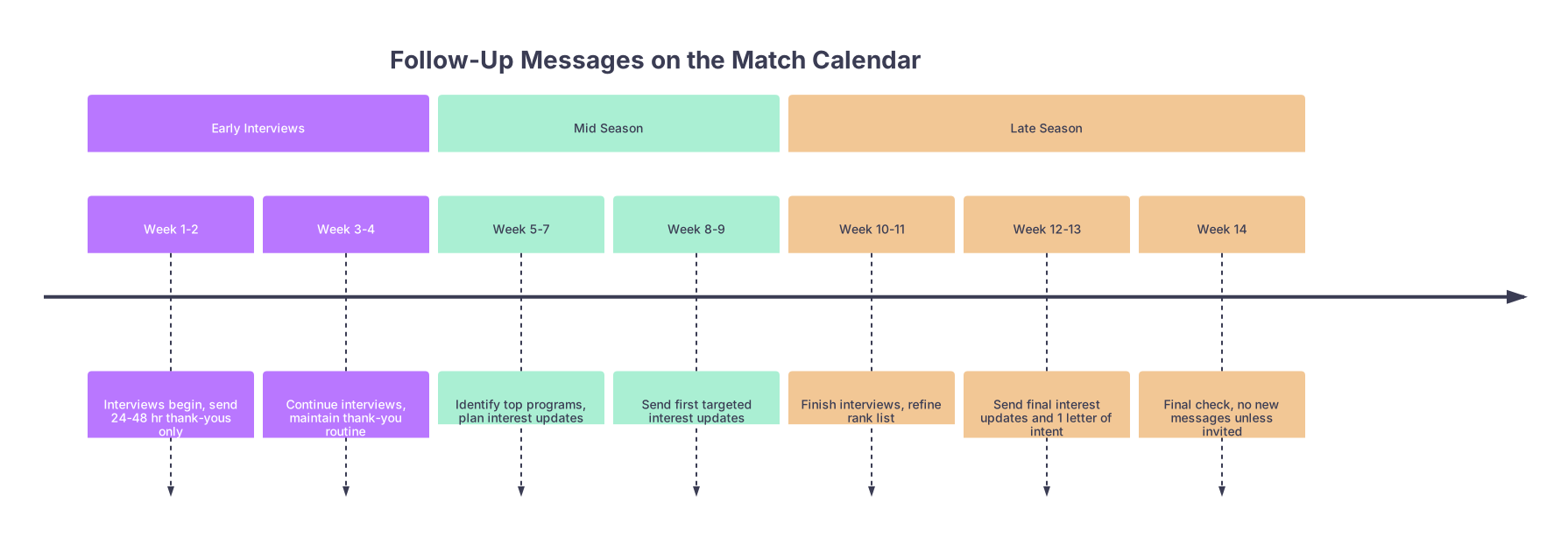
| Period | Event |
|---|---|
| Early Interviews - Week 1-2 | Interviews begin, send 24-48 hr thank-yous only |
| Early Interviews - Week 3-4 | Continue interviews, maintain thank-you routine |
| Mid Season - Week 5-7 | Identify top programs, plan interest updates |
| Mid Season - Week 8-9 | Send first targeted interest updates |
| Late Season - Week 10-11 | Finish interviews, refine rank list |
| Late Season - Week 12-13 | Send final interest updates and 1 letter of intent |
| Late Season - Week 14 | Final check, no new messages unless invited |
Use this as your mental script:
Week 1–4 of interviews
- Action: thank‑yous only, keep a tracking sheet.
- No: “You are my top choice” language.
Mid‑season (around your 6th–10th interview)
- Action: send 1–2 interest updates to early favorites you’re still very high on.
- Keep them modest and honest.
After last interview
- Action: sort programs into #1, top 3–5, all others.
- Decide where your single letter of intent goes.
- Decide which other 1–2 merit a stronger interest update.
Final 2–3 weeks before rank list deadline
- Action: send:
- 1 letter of intent (#1 program).
- 1–2 strong but non‑binding interest updates (other top programs).
- Then stop. Let your file breathe.
- Action: send:
Interest Updates vs. Thank-Yous: Quick Comparison
| Feature | Thank-You Email | Interest Update |
|---|---|---|
| Timing | 24–48 hours post-interview | Mid to late season |
| Length | 3–6 sentences | 1–3 short paragraphs |
| Purpose | Courtesy, brief connection reminder | Signal priority and continuing interest |
| Ranking Language | None | Mild to strong, depending on timing |
| Frequency | Every interview | Only for top programs (few total) |
If you can’t tell which one you’re writing, it’s probably too long and too needy for a thank‑you, and too vague for an interest update. Fix it.
Specialty and Program Culture Nuances
Not all fields behave the same. At this point, you should adjust expectations slightly based on specialty:
Highly competitive (Derm, Ortho, ENT, Plastics)
- Everyone sends interest emails; programs are numb to fluff.
- Your edge is being specific and honest, not louder.
- Do not send multiple “you’re my #1” notes. That stuff gets around.
Moderately competitive (IM at big academics, EM, Anesthesia, Gen Surg)
- Interest updates can help at the margins.
- Stronger emphasis on perceived fit: academic vs. community, research vs. clinical.
Less competitive or community-heavy specialties
- Sometimes the PD truly remembers and values personal communication.
- But the same rules apply: don’t email every week.
If the program or specialty leadership explicitly says, “Post‑interview communication does not affect ranking,” still follow basic courtesy:
- Thank‑yous: yes.
- Targeted interest note to #1 or top few: probably fine.
- Weekly check‑ins: absolutely not.
Coordinators, Residents, and Group Interviews
One more timing nuance.
At this point, you should not be sending multiple follow‑ups to every person who breathed near you on interview day.
Default approach:
Program coordinator
- Thank‑you within 24–48 hours.
- Maybe a second, brief logistical question later if needed (not a stealth interest update).
Residents
- If you had a meaningful connection with one or two, a short thank‑you is reasonable.
- Do not mass‑email every PGY‑1 from the social.
Group faculty interviews
- One consolidated thank‑you to the group (if you have shared contact).
- Or individual notes only to those who clearly invited continued contact.
And interest updates? Usually sent to the PD or APD, not to every resident you liked.
A Sanity-Saving Tracking System
By the middle of interview season, you will forget who you emailed. You’ll worry you never thanked that one PD. Or that you accidentally told two places they were #1.
At this point, you should have a simple table or spreadsheet:
| Program | Interview Date | Thank-You Sent | Interest Update Sent | Rank Tier |
|---|---|---|---|---|
| Big City IM | 11/10 | Yes (11/11) | Planned (Jan) | Top 3 |
| Lakeside FM | 12/02 | Yes (12/03) | No | Mid |
| Metro Gen Surg | 01/05 | Yes (01/06) | Yes (02/10) | #1 |
Update it the same day you send anything. Your future self will be grateful.
Visual Recap: Volume of Messages Over Time
You should see your message volume peak early (thank‑yous) and then narrow down to a few targeted interest updates.
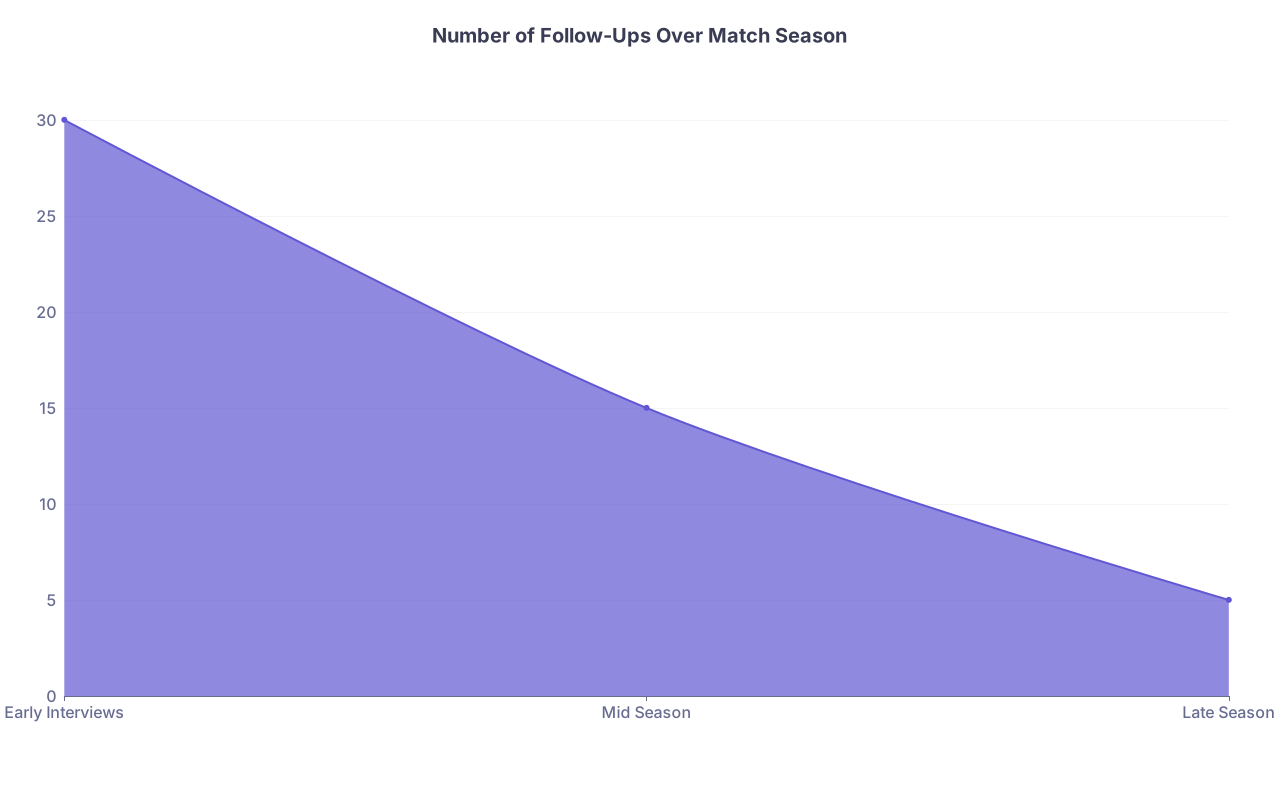
| Category | Value |
|---|---|
| Early Interviews | 30 |
| Mid Season | 15 |
| Late Season | 5 |
If your chart looks like 5 → 20 → 50 emails as the season goes on, you’re doing it backwards.
Final Checkpoints Before You Hit “Send”
At each stage of the calendar, pause and run through this mental checklist:
- Is this the right phase for this type of message?
- Am I adding something new, or just re-sending the same “I loved your program” line?
- Does this email match how I’m actually going to rank them?
- Have I limited:
- Thank‑yous: one per person per interview.
- Interest updates: only to true top programs.
- Letter of intent: one program, one time.
If yes, send it and move on with your life.
Key points:
- In the first 48 hours after an interview, you send thank‑yous only — no ranking promises.
- Interest updates belong mid‑ to late‑season and only to a small number of genuinely top programs.
- In the final weeks, reserve a single letter of intent for your true #1 and 1–2 strong interest updates for others you’d be thrilled to match at — then stop emailing and certify your list.