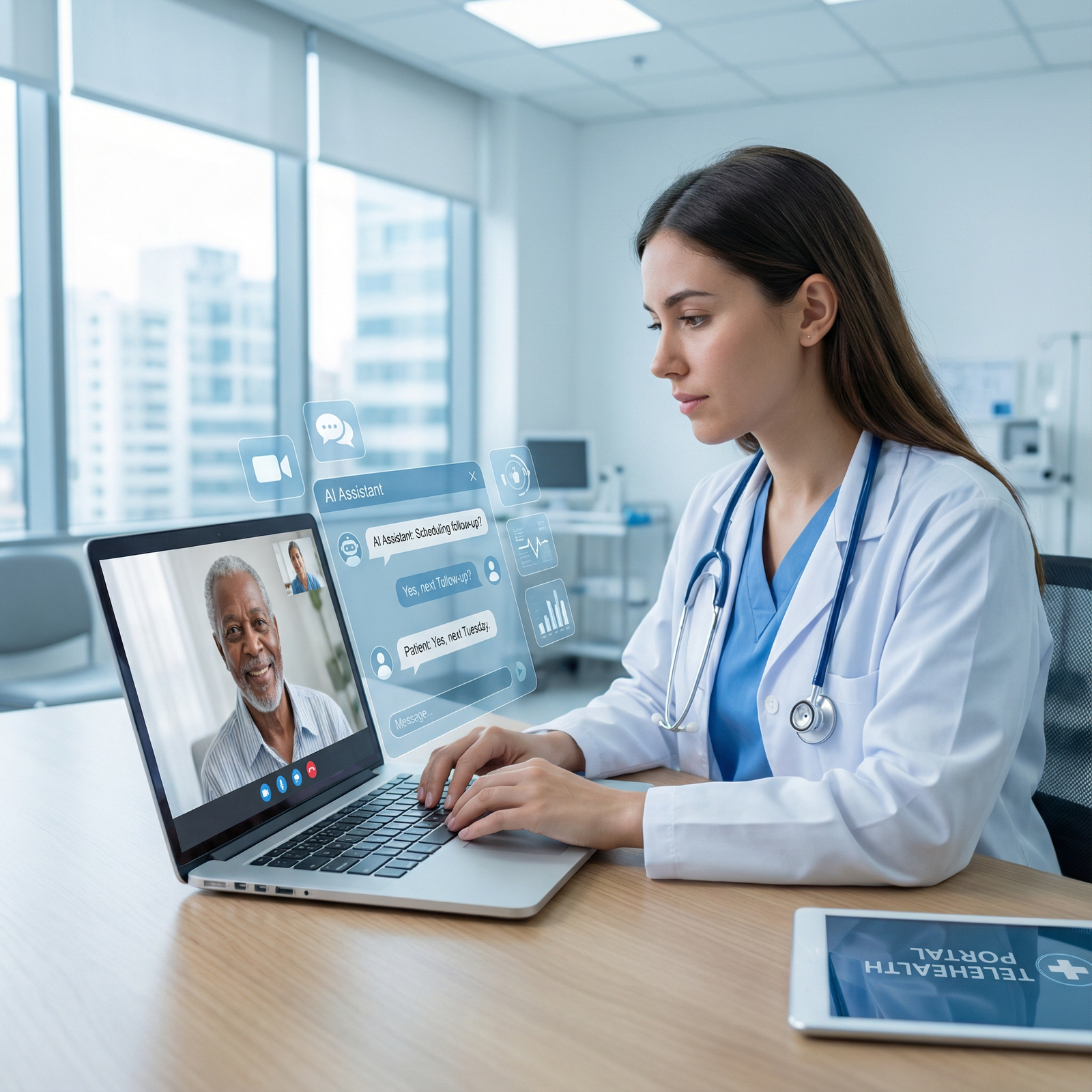
What if your next video visit with a doctor actually leads to more hands-on care, not less?
That’s the part almost no one talks about. The lazy narrative is simple and wrong: “Telemedicine is destroying the physical exam. We’re turning medicine into Zoom plus antibiotics.” You’ve heard some version of that in the hallway, in grand rounds, or from that one senior who still prints emails.
Let me be blunt: telemedicine is absolutely changing the physical exam. But killing it? The evidence does not support that claim. At all.
It’s not even the right fear.
The Myth: “No Screen Can Replace My Hands”
You hear this a lot from clinicians who trained pre-2010:
“If I can’t auscultate, palpate, and percuss, it’s not real medicine.”
Sounds noble. Also sounds like it hasn’t been checked against actual data in years.
Here’s what’s actually happening in practice and in the literature:
- Virtual visits tend to be used for conditions where a full hands-on exam changes management less often than people think.
- For high‑risk situations, good telemedicine workflows increase the rate of timely in‑person evaluation rather than decreasing it.
- Hybrid models – virtual first, targeted physical exam second – often reduce unnecessary in‑person visits while catching the serious stuff earlier.
Notice what’s missing from those points: any evidence that telemedicine is systematically eroding exam quality or patient safety in primary care.
Let’s unpack this before someone forwards you another doom‑and‑gloom op‑ed.
What the Data Actually Shows About Telemedicine and Clinical Outcomes
Start with the only question that really matters: are patients doing worse?
If telemedicine were “killing” the exam in a meaningful way, you’d expect to see clear signals: more missed diagnoses, more ED visits, more hospitalizations, worse control of chronic disease. Instead, we see… mixed but generally reassuring data.
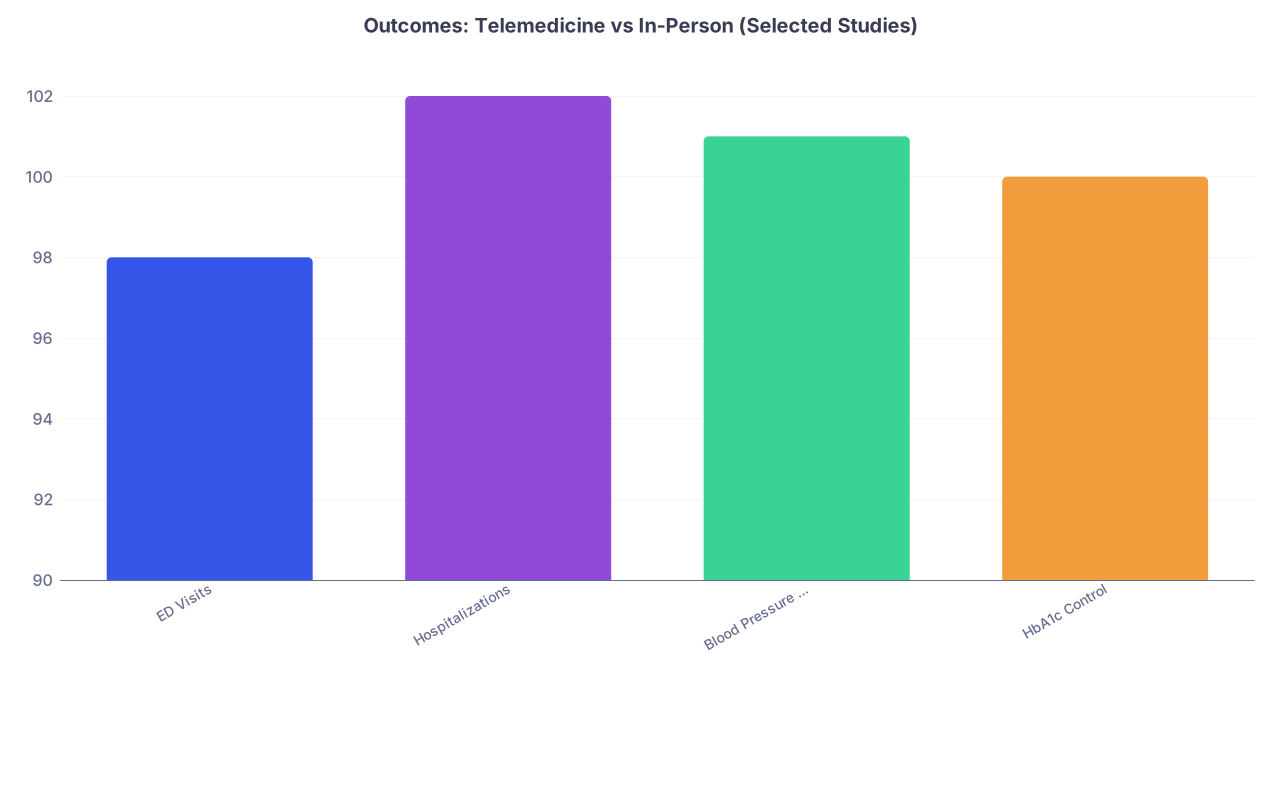
| Category | Value |
|---|---|
| ED Visits | 98 |
| Hospitalizations | 102 |
| Blood Pressure Control | 101 |
| HbA1c Control | 100 |
Interpretation, not precision here: in multiple large cohorts, telemedicine is roughly on par with in-person care for common primary care outcomes.
A few concrete examples:
Kaiser Permanente & large US systems during COVID era:
Multiple analyses across millions of visits found that shifting primary care to telemedicine did not cause a spike in emergency visits or hospitalizations for common conditions like hypertension, diabetes, or COPD. If telemedicine were catastrophically undermining the exam, those curves would spike. They didn’t.Chronic disease management:
Meta-analyses of telemedicine for diabetes and hypertension show similar or slightly better control for patients in remote monitoring + virtual care models versus usual in‑person care. Those models use targeted physical data (home BP cuffs, glucometers), not a “trust me, you look okay on camera” pseudo-exam.Triage-sensitive conditions:
Studies looking at upper respiratory infections and possible pneumonia show that telemedicine physicians can safely risk-stratify using history plus limited visual exam cues and then route higher-risk patients in person or to imaging. Are they missing some cases? Of course—they did when everything was in person, too. But misdiagnosis rates haven’t exploded.
The people yelling “no exam = bad medicine” are assuming what they haven’t bothered to measure. When we actually measure, we mostly see: similar outcomes, different workflows.
Is telemedicine flawless? No. But the data does not show a systemwide collapse of diagnostic accuracy due to fewer hands on abdomens through a screen.
The Physical Exam Was Already in Trouble (And It Wasn’t Telemedicine’s Fault)
Here’s the uncomfortable truth that traditionalists hate: the physical exam has been eroding for decades. Long before anyone uttered the words “Doximity Dialer.”
If you’ve rounded in a large US hospital recently, you’ve seen this:
- Residents documenting “no JVD” from five feet away.
- “Clear to auscultation bilaterally” written before the stethoscope is even out of the pocket.
- Neuro exams that mysteriously take 12 seconds and all say “non-focal.”
That’s not telemedicine. That’s culture. That’s time pressure, EMR worship, and over-reliance on imaging and labs.
Several studies pre‑COVID showed shockingly poor physical exam skills among trainees and practicing clinicians. Missed murmurs. Failure to detect basic signs of volume overload. Inconsistent abdominal exam findings between observers. The decay was well underway.
Telemedicine didn’t cause that problem. At worst, it exposed it.
Once you accept that, the narrative flips. The question isn’t “Is telemedicine killing the exam?” It’s “Can telemedicine force us to be more intentional about what parts of the exam actually matter, and when?”
What You Can Actually Examine Through a Screen (More Than You Think)
There’s another lazy assumption: that a telemedicine visit is “just history.” That’s not accurate.
The virtual exam is real. It’s just different, more focused, and heavily dependent on patient participation.
Here’s the quick version of what you can examine reasonably well in a video visit, if you know what you’re doing:
- General appearance: work of breathing, level of distress, ability to speak full sentences, mental status, hydration signs.
- Dermatology: rashes, lesions, distribution, progression over time (especially with patient-uploaded photos taken in good light).
- Musculoskeletal: range of motion, gait, functional tests (“Can you squat? Stand on one leg? Reach overhead?”).
- Neurologic (screen-level): facial symmetry, basic strength/functional surrogates, speech, coordination tasks.
- ENT for select issues: inspection of oropharynx, external ear, limited sinus tenderness via patient self-palpation.
Is this equal to a full in-person physical exam? No. That’s the wrong comparison. The relevant question is: for a given clinical question, is a focused virtual exam plus history enough to make a safe decision or to decide you need an in-person exam?
That’s how good clinicians already think in person. You don’t do a full head-to-toe on every sore throat in an urgent care. You do what’s needed to answer the clinical question in front of you.
Telemedicine, when used correctly, simply forces that discipline.
Hybrid Care: Where Telemedicine Actually Strengthens the Exam
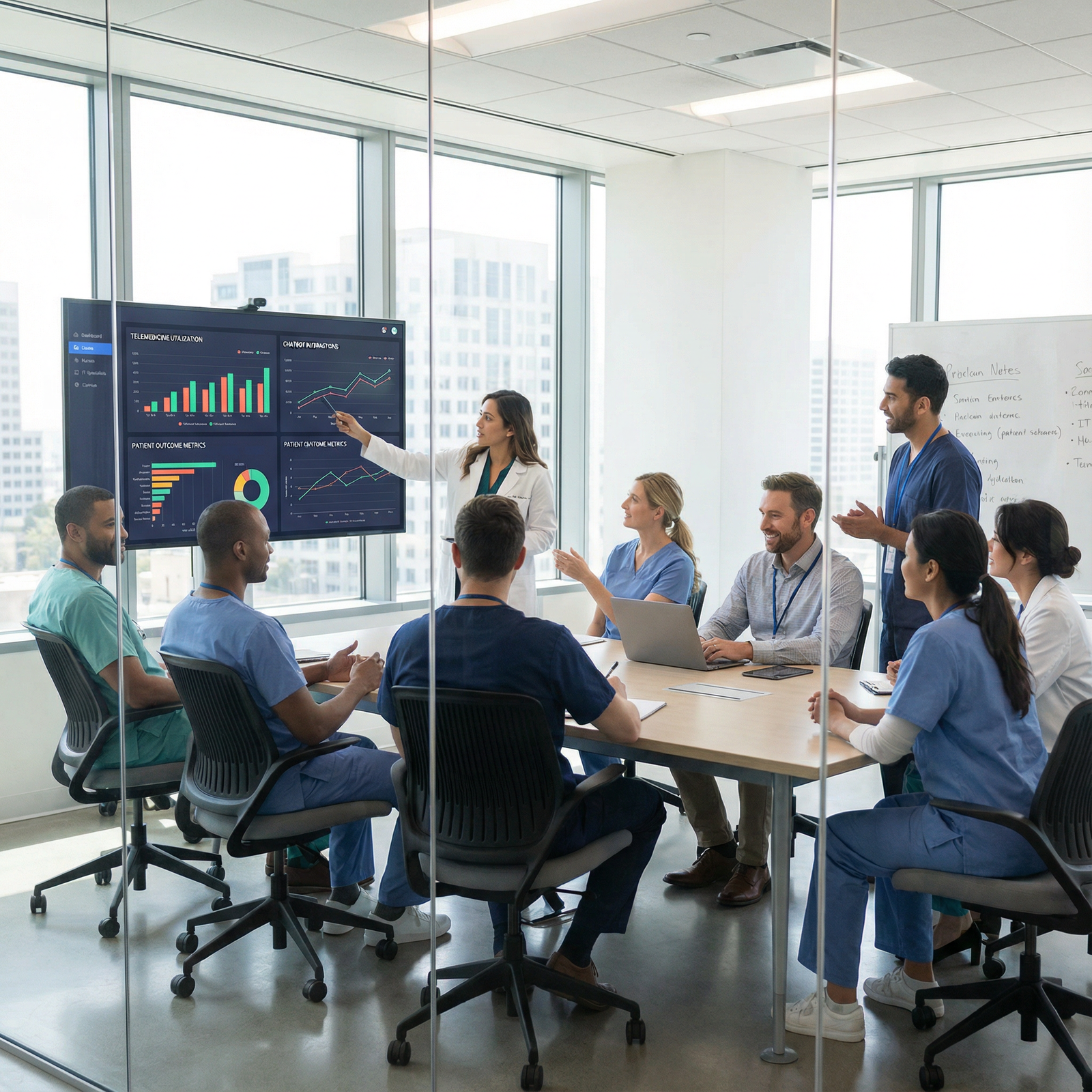
The best evidence that telemedicine isn’t killing the physical exam shows up in hybrid models—where virtual and in‑person care are used strategically, not as all‑or‑nothing opposites.
Think about this triage structure:

| Step | Description |
|---|---|
| Step 1 | Patient Request for Care |
| Step 2 | Telemedicine Visit |
| Step 3 | Same or Next Day In Person |
| Step 4 | Virtual Management + Home Monitoring |
| Step 5 | Targeted Physical Exam |
| Step 6 | Follow Up Virtual or In Person if Needed |
| Step 7 | High Risk or Unclear? |
This is what many large health systems quietly built during COVID. And the results? Often better targeted, more meaningful physical exams.
Because when you do not waste 20 minutes of clinic time on something that could be entirely handled virtually (med refill, stable rash, routine follow-up with home vitals), you actually have capacity to do a proper, thorough exam on the people who need it: chest pain, new neurologic deficits, abdominal pain, unexplained weight loss.
I’ve seen clinics where telemedicine freed up enough capacity that complex patients finally got 30‑minute or 40‑minute in‑person visits instead of being crammed into 15. That’s not exam-killing. That’s exam-rescuing.
Hybrid models also:
- Increase repeat touchpoints. A quick telemedicine follow-up a week after an in‑person exam catches deteriorations earlier than a “see you in six months” model.
- Enable data‑rich physical assessment at home: home BP, pulse ox, scales, glucometers—even consumer ECG devices in some settings—which you then interpret in context at a visit.
- Support remote specialty input. A PCP can show a rash on video to a dermatologist asynchronously and avoid an unnecessary in-person referral, or know exactly what to examine and document during the in-person slot that is actually needed.
The exam isn’t dying. It’s being redistributed.
Where Telemedicine Really Is Weak (And What To Do About It)
Now let’s not pretend there are no downsides. There are. And they matter.
Telemedicine is objectively bad for:
- Subtle cardiopulmonary findings that hinge on auscultation or fine exam nuance.
- Acute undifferentiated abdominal pain.
- Many neurologic complaints where a detailed, hands-on neuro exam changes risk stratification.
The danger is not that telemedicine exists. The danger is misuse—trying to manage the wrong type of complaint virtually because the system is incentivized to keep everything “efficient” and on video.
Here’s the fix: strict protocols and physician judgment that are actually backed by evidence, not admin preferences.
| Type of Visit | Best Modality |
|---|---|
| Chronic med refills | Tele or hybrid |
| Stable hypertension | Tele + home BP |
| New chest pain | In-person / ED |
| New focal neuro deficit | In-person / ED |
| Mild URI without red flags | Tele ok |
| Undifferentiated abdominal pain | In-person |
Well-run systems hard‑code rules like: “New chest pain? No video. Direct to urgent in-person or ED.” Same for red‑flag neuro. Same for concerning vitals from home devices.
And the evidence so far suggests that when you do that—when you respect those limits—telemedicine does not increase adverse outcomes.
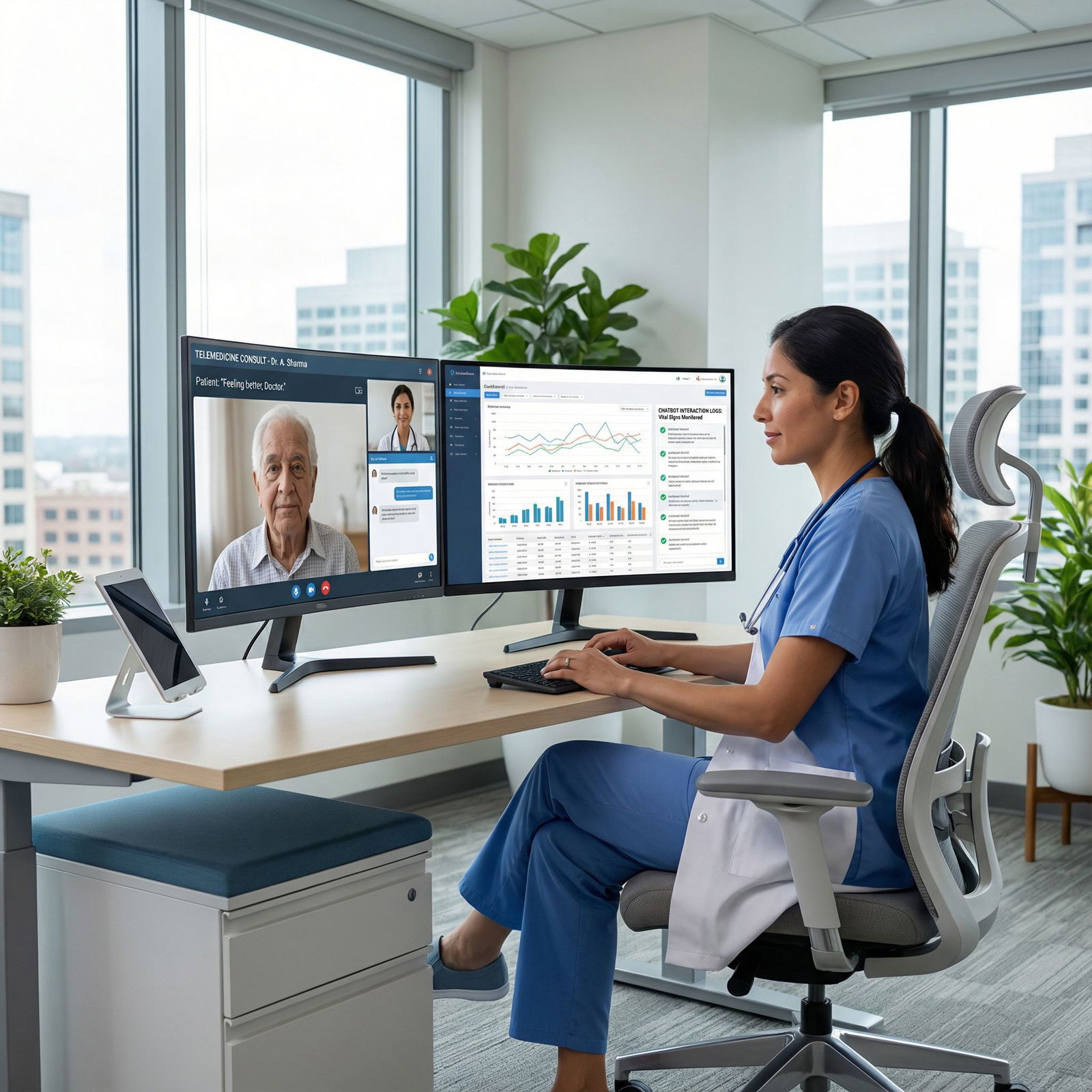
The New “Physical Exam”: Patient-Assisted and Device-Augmented
This is the part traditionalists really hate because it violates the priesthood model of medicine: patients can, in fact, do parts of the physical exam themselves. And often pretty well.
Think of these as extensions of the physical exam, not replacements:
- Home BP cuffs with regular uploads. Your “exam” now includes 30 readings over a month, not one rushed measurement in a noisy clinic.
- Pulse oximeters during respiratory illness. Not just “you look okay,” but “your O2 has been 95–97% at home watching TV and drops to 92% when you walk up stairs.”
- Home scales for CHF patients, monitored daily, catching volume overload before the patient even feels “swollen.”
- Photos of rashes at multiple time points under good lighting, instead of a single fleeting look in clinic.
These are not gimmicks. They materially change clinical decisions. And they’re only possible at scale because of telemedicine infrastructure.
There’s also emerging hardware: connected stethoscopes, digital otoscopes, remote exam kits. Some of that is overhyped and under‑used, sure. But in certain programs (home hospital, rural telehealth hubs), trained staff use these tools to perform high‑quality physical exams while the specialist is remote. The exam isn’t dead; it’s shared.
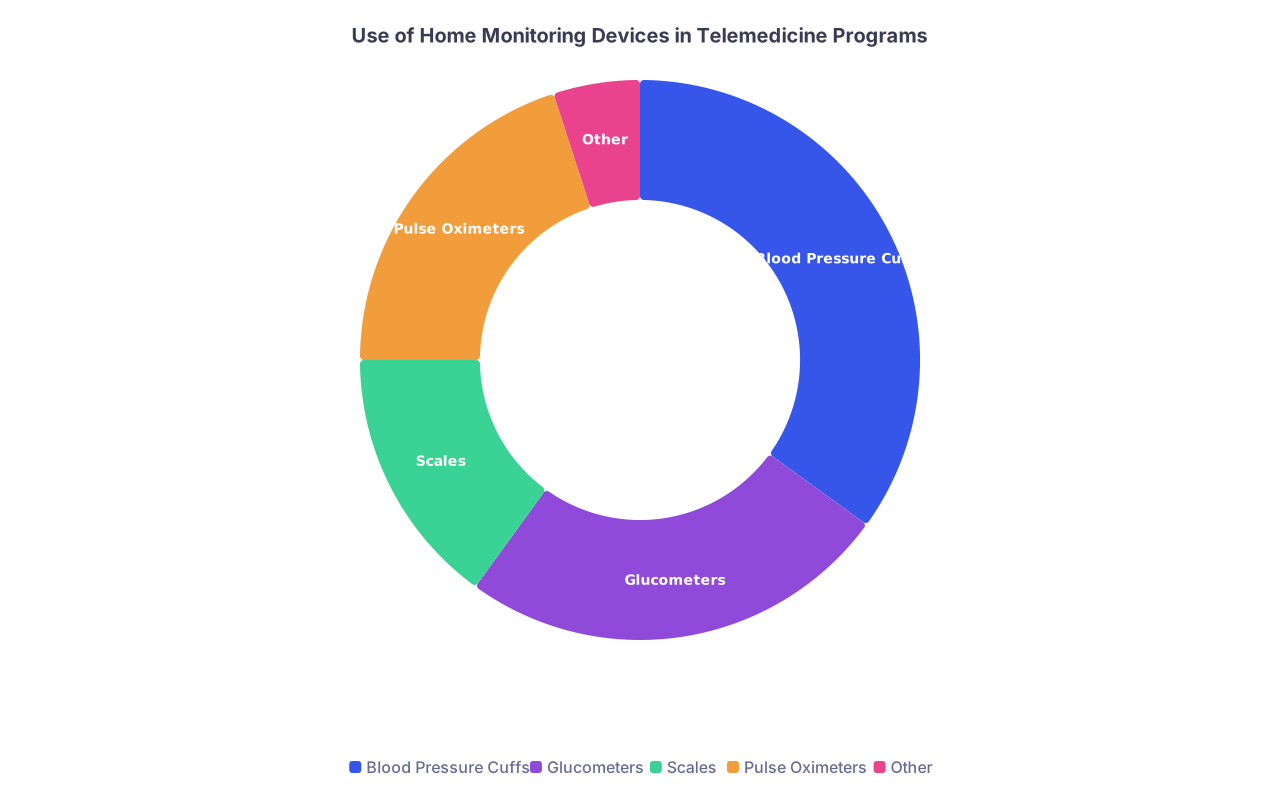
| Category | Value |
|---|---|
| Blood Pressure Cuffs | 35 |
| Glucometers | 25 |
| Scales | 15 |
| Pulse Oximeters | 20 |
| Other | 5 |
That chart isn’t theoretical. Programs like VA telehealth, major academic centers, and large HMOs have already rolled out device-supported telemedicine at scale, and they’re not reporting mass exam-related disasters. Quite the opposite: better control, fewer admissions.
The Real Risk: Bad Incentives, Not Bad Technology
If telemedicine undermines the physical exam in the next decade, it will not be because “the screen is evil.” It will be because:
- Reimbursement structures reward short, high-volume video visits that subtly punish sending patients in for proper exams.
- Health systems treat telemedicine as a cheap revenue engine, not as part of a thoughtful hybrid care model.
- Training programs fail to teach virtual exam skills, so new clinicians either over-trust or underuse telemedicine without nuance.
Those are fixable. They’re policy and culture issues, not technological destiny.
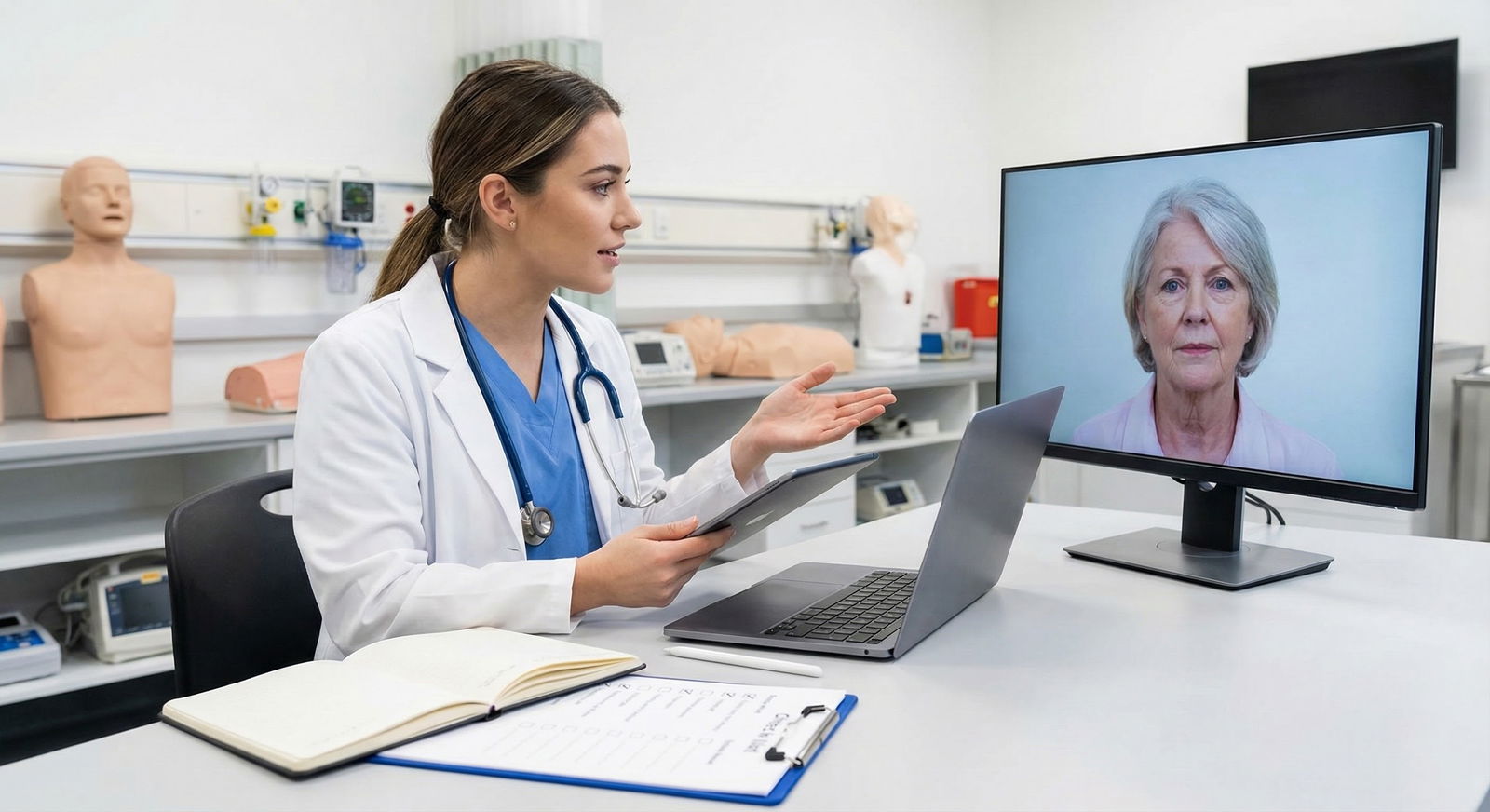
Some residency programs are finally catching up: formal curricula on virtual exams, case-based teaching on when to convert to in-person, scoring residents on how they use the virtual exam plus history to make safe decisions. That’s how you prevent telemedicine from becoming a shortcut for lazy medicine.
Because here’s the punchline: a bad telemedicine visit and a bad in-person visit look almost identical on paper. Skimpy history, templated exam, reflexive imaging or antibiotics. Telemedicine doesn’t create that clinician. It just exposes them faster.
So, Is Telemedicine Killing the Physical Exam?
No. That’s the wrong diagnosis.
Telemedicine is:
- Forcing a long-overdue reckoning with which parts of the physical exam actually change management.
- Pushing us toward hybrid models where fewer but higher-yield in‑person exams happen for the right patients.
- Expanding the definition of “exam” to include home-generated data, patient-assisted maneuvers, and remote specialist input.
The physical exam was already in decline because we devalued it in training and in workflow. Telemedicine did not swing the axe. At worst, it held up a mirror.
The question isn’t “How do we stop telemedicine from killing the exam?” It’s:
How do we use telemedicine to save what is valuable about the physical exam—and finally retire the parts that were always more ritual than science?
If you remember nothing else, remember this:
- The evidence does not show worse outcomes from appropriate telemedicine use in primary care; exam-related catastrophes are not materializing at scale.
- Hybrid care models and home monitoring can strengthen the meaningful parts of the physical exam by freeing time and adding longitudinal data.
- The real threat is misuse driven by bad incentives and poor training, not the technology itself. Fix those, and telemedicine becomes an ally of good clinical examination, not its executioner.