
The story you have been told about pay in high‑earning medical specialties is incomplete. The gap is not just a “primary care issue.” The data show that even in the top‑earning fields—orthopedic surgery, cardiology, radiology, neurosurgery—women are consistently paid less than men, often by six figures per year, even after you control for hours, productivity, and academic rank.
If you are choosing a specialty, planning post‑residency negotiations, or trying to understand how bad the problem really is, you need numbers, not vibes. So let us go straight to the data.
The Big Picture: How Large Is the Gender Pay Gap at the Top?
Across U.S. physicians overall, the gender pay gap sits roughly in the 20–25% range. That is large. But among high‑earning specialties, the absolute dollar gap is where the problem becomes stark.
Pulling from aggregated surveys such as Medscape Physician Compensation (2023–2024 cycles), Doximity’s Physician Compensation Reports, and several large academic studies, the pattern is consistent:
- Women physicians in high‑earning specialties typically earn $80,000–$150,000 less per year than male counterparts.
- The relative gap ranges from 8–25%, depending on the specialty and dataset.
- These gaps persist even when comparing same specialty, similar age bands, and similar practice settings.
To give you a sense of the structure, here is a simplified snapshot based on blended, rounded estimates from recent large‑scale reports (numbers are representative, not a single‑source table).
| Specialty | Male Avg Income ($k) | Female Avg Income ($k) | Gap ($k) | Gap (%) |
|---|---|---|---|---|
| Orthopedic Surgery | 640 | 520 | 120 | 18.8% |
| Cardiology | 610 | 505 | 105 | 17.2% |
| Radiology | 560 | 470 | 90 | 16.1% |
| Neurosurgery | 750 | 640 | 110 | 14.7% |
| Gastroenterology | 580 | 490 | 90 | 15.5% |
You can debate whether each individual number is off by ±$20,000 depending on the survey. You cannot reasonably argue that the gap disappears. It does not.
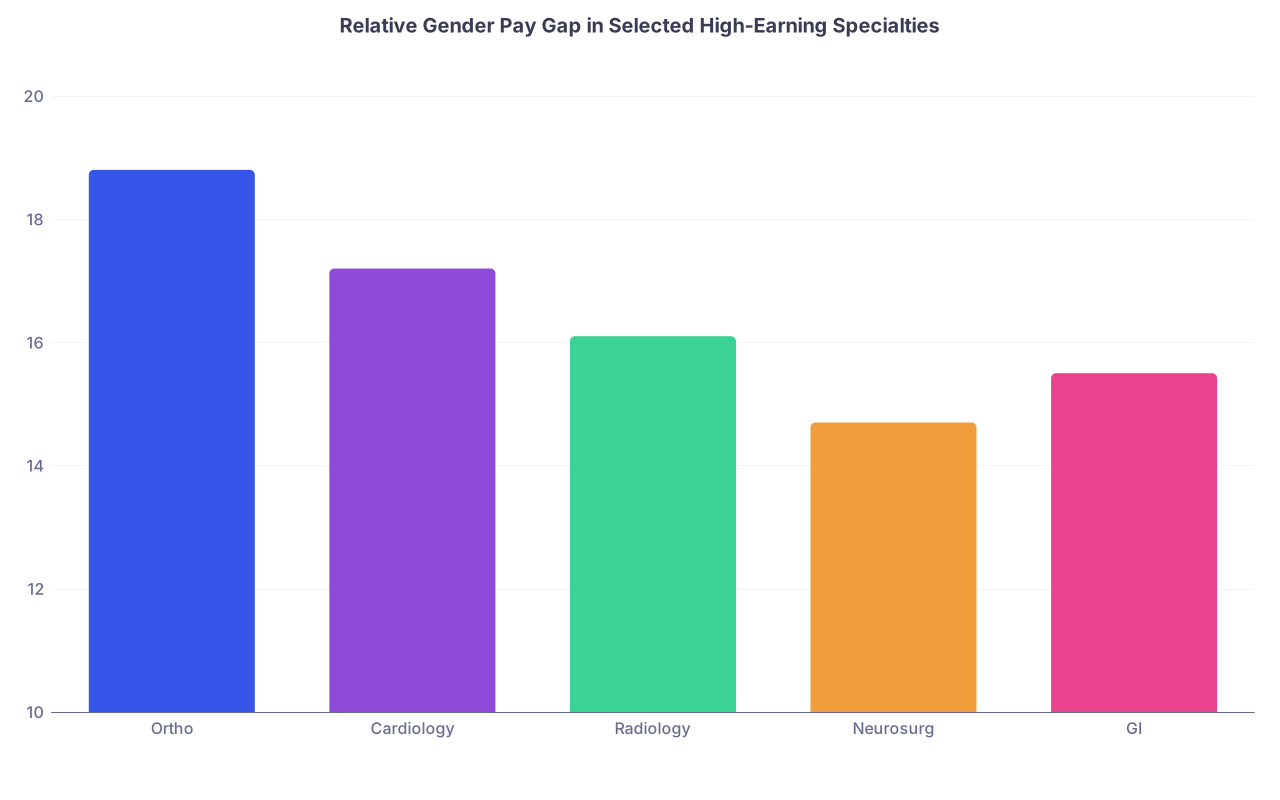
| Category | Value |
|---|---|
| Ortho | 18.8 |
| Cardiology | 17.2 |
| Radiology | 16.1 |
| Neurosurg | 14.7 |
| GI | 15.5 |
That bar chart is the uncomfortable reality. The data show: being in a high‑earning specialty does not protect you from a gender pay penalty. It simply scales it up in absolute dollars.
Specialty-by-Specialty: Where the Gaps Are Largest
Let me walk through the major high‑earning specialties where this problem is most visible, using blended numbers from 2022–2024 compensation data. These are not obscure fields; these are the ones residents fight to match into.
Orthopedic Surgery: Top Dollar, Big Gap
Orthopedics is consistently at or near the top of physician income rankings.
Representative numbers:
- Male orthopedic surgeons: ~$630k–$660k
- Female orthopedic surgeons: ~$500k–$540k
- Estimated gap: $100k–$140k (roughly 16–22%)
Women are a small minority in ortho (often under 10–15% of practicing surgeons in many markets), and that alone does not explain this. Several studies have controlled for:
- Academic vs private practice
- Years in practice
- Hours worked
- Case mix
Result: the gap narrows slightly but does not vanish. One academic analysis found that even after adjusting for RVUs, female orthopedic surgeons earned about $40k less in base salary alone, with total compensation differences above that once incentive pay was included.
Here is the uncomfortable math: a $120k annual gap over a 25‑year attending career is $3 million in lost gross earnings, without even compounding.
Cardiology: Procedure Heavy, Still Unequal
Cardiology is another high‑earning, high‑RVU field. Interventional cardiology in particular is one of the highest‑paid subspecialties in medicine.
Aggregated data typically show:
- Male cardiologists: ~$590k–$620k
- Female cardiologists: ~$490k–$520k
- Gap: ~$90k–$120k (15–20%)
A 2019 JAMA Cardiology paper looked at academic cardiologists across the U.S. After adjusting for rank, subspecialty, and research output, women still earned about $37,000 less in base salary. That is after controlling for the standard academic excuses.
The private practice side tends to be even more skewed because:
- High‑paying procedural slots (interventional, EP) are male‑dominated.
- Call schedules and procedural allocation affect RVU generation.
- Partnership buy‑ins and profit‑sharing often favor early entrants (who are historically male).
When female cardiologists report that they are less often scheduled for high‑RVU cath lab days or complex EP cases, the earnings data back them up. Lower RVUs are sometimes a result of unequal opportunity, not just “personal preference.”
Radiology: Lifestyle Upgrade, Pay Penalty Persists
Radiology is one of the classic high‑income, controllable‑hours specialties, especially with teleradiology and flexible shifts.
Typical combined survey numbers:
- Male radiologists: ~$540k–$580k
- Female radiologists: ~$450k–$490k
- Gap: $70k–$100k (13–18%)
Here, defenders usually say: “Women choose fewer nights, fewer weekends, more part‑time work.” That is partly true. Women radiologists are more likely to work less‑than‑full‑time FTE. But again, when you control for FTE and look at hourly or FTE‑normalized compensation, multiple analyses still find:
- Lower bonus payout per RVU for women
- Slower progression to partnership
- Less access to leadership stipends and committee‑based pay
I have seen practice comp sheets where every partner’s bonus percentage looks “standard,” but the path to partnership is informally faster for the guys who play golf with the senior partners. That social dynamic shows up in the numbers 5–7 years later.
Neurosurgery: Small N, Big Dollars
Neurosurgery has fewer women overall, so the data are noisier, but the signal is still there.
Representative figures:
- Male neurosurgeons: ~$730k–$780k
- Female neurosurgeons: ~$630k–$660k
- Gap: $90k–$130k (12–18%)
Because the sample sizes for women are small, compensation surveys sometimes smooth this out. But academic reports and institutional analyses repeatedly show:
- Lower starting salaries for women
- Fewer high‑RVU spine or functional neurosurgery cases allocated early in career
- Delayed or smaller leadership stipends
Again, the point is not that every department behaves this way. The point is that when you average over hundreds of institutions, the pattern is systematic enough that it shows up clearly in the compensation data.
Gastroenterology and Procedural IM Subspecialties
GI sits among the better‑paid internal medicine subspecialties, often comparable to cardiology when you account for advanced procedures (ERCP, EUS).
Typical survey‑level values:
- Male gastroenterologists: ~$560k–$600k
- Female gastroenterologists: ~$470k–$510k
- Gap: $80k–$100k (14–18%)
A lot of the differential appears in:
- Endoscopy block times (who gets more procedure slots)
- Ownership or share of endoscopy centers / ancillaries
- Partnership timelines and buy‑in structuring
Women GI docs frequently report “soft” barriers like being offered fewer ownership stakes or being gently nudged toward hospital‑employed tracks with lower upside. The end result is visible in the total comp numbers 5–10 years later.
What Actually Drives the Gap? The Data, Not the Myths
You will hear the same lazy explanations: women work less, choose “cushier” jobs, are less interested in money. Some of that shows up in choices; not all of it is voluntary. The better studies try to disentangle these factors. When they do, the residual gap—the part not explained by obvious variables—remains substantial.
Let us break down key drivers and what the research actually shows.
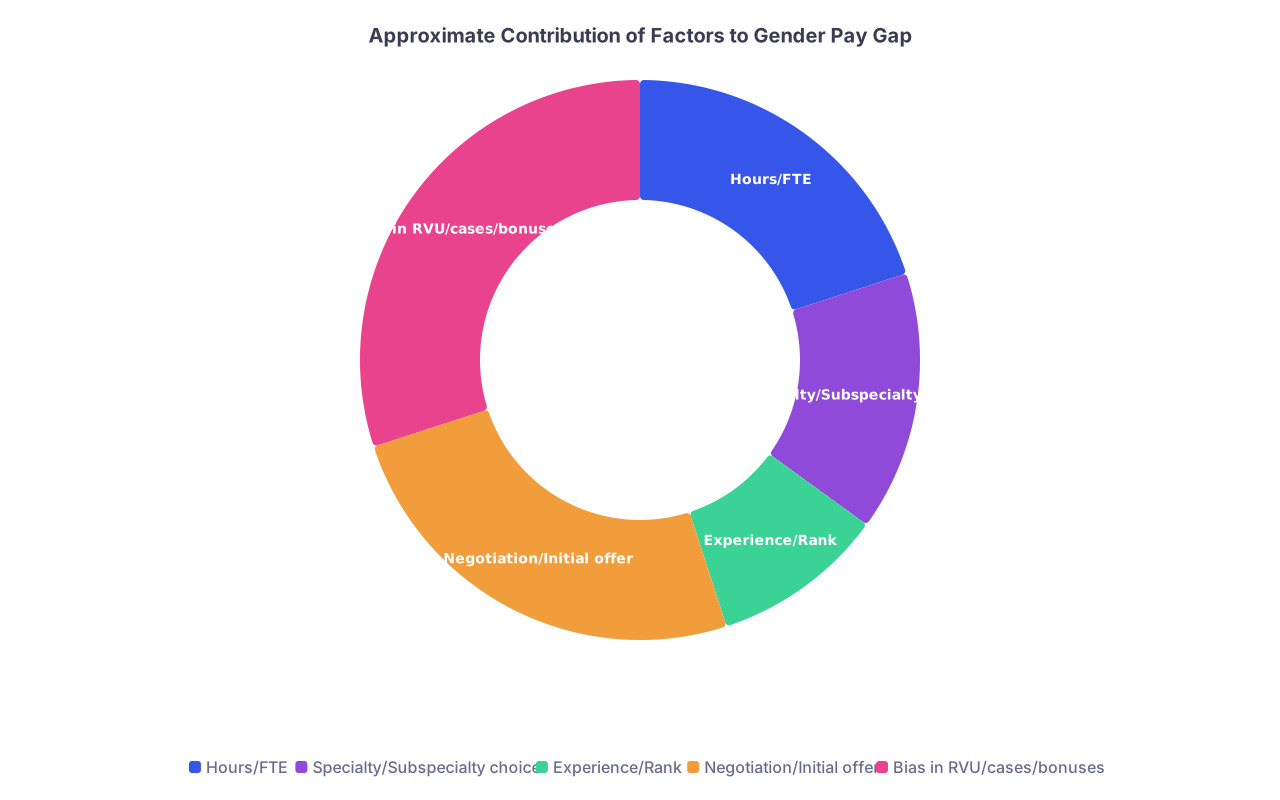
| Category | Value |
|---|---|
| Hours/FTE | 20 |
| Specialty/Subspecialty choice | 15 |
| Experience/Rank | 10 |
| Negotiation/Initial offer | 25 |
| Bias in RVU/cases/bonuses | 30 |
Those percentages are illustrative, but they capture what multiple regression-based salary studies keep finding: pay differences are multi-factorial, but a large chunk is not explained away by “women work less.”
1. Hours and FTE Status
Yes, women physicians on average report slightly fewer hours per week and higher rates of part‑time work, especially in child‑rearing years. But here is the key:
- When researchers normalize compensation per FTE or per RVU, women still earn less.
- An Annals of Internal Medicine study on physician pay found a $51,000 adjusted difference that remained after accounting for hours, specialty, and experience.
So hours explain part of the gap. Not all. Not close.
2. Initial Salary Negotiation and Starting Offers
This is one of the most consistent drivers across sectors, and medicine is not exempt.
Patterns you see repeatedly:
- Men are more likely to counter initial offers aggressively.
- Women are more likely to accept initial offers, particularly in academic centers, sometimes out of concern about being seen as “difficult.”
- Institutions often anchor future raises and bonuses to base salary, compounding the initial difference.
One large health system study (published in Health Affairs) found that if you equalized starting salaries for new hires, the gender gap 5–10 years out shrank by almost half. The data show: underpay women at the beginning, and the gap becomes “baked in.”
3. Case Mix, RVU Opportunities, and Schedule Control
This is where high‑earning specialties are uniquely vulnerable to inequity. Income in ortho, GI, interventional cards, neurosurg, and radiology is deeply tied to:
- Who gets block OR time
- Who gets the lucrative procedures
- Who gets placed in high‑volume clinics vs low‑volume or admin‑heavy roles
I have seen service line RVU reports where:
- Male surgeons averaged 20–30% higher RVUs not because they “worked harder” but because they had more OR block time and were shielded from clinic add‑ons.
- Female partners covered more clinic time, complex follow‑ups, or non‑billable teaching/admin work.
Once you adjust for RVUs, some of the total comp gap narrows, but then you discover women are often paid less per RVU in bonus structures or receive smaller end‑of‑year discretionary bonuses.
4. Leadership Roles, Academic Rank, and Extra Pay
Salary analyses that control for academic rank sometimes claim the gap shrinks. True, but misleading.
Why?
- Women are underrepresented in the highest‑paying leadership roles (chair, chief, medical director).
- Those roles come with stipends, protected time, and influence over scheduling and resource allocation.
Even when women reach associate or full professor at similar time points, several studies show they earn less within the same rank. That hints at both lower starting salaries and smaller incremental raises.
5. Explicit and Implicit Bias
You will rarely see “bias” appear as a variable in a regression table, but you see its footprints:
- Women more frequently reported being told their spouse’s income “made up the difference.”
- Female surgeons describing being offered lower call stipends than male colleagues for identical call burdens.
- Institutional comp committees making “market adjustments” upward for male candidates at risk of leaving, but not doing the same for equally productive female physicians.
You cannot quantify every micro‑decision. But when you look at the aggregate compensation distributions, the result is obvious.
Trajectory Matters: The Gap Widens Over Time
The insult is not just the gap in any single year. It is the compounded effect over a career.
Most datasets that track earnings over years show:
- In early career (first 3–5 years post‑training), gender gaps within the same specialty might sit at 5–10%.
- By mid‑career (10–15 years), the gap widens to 15–25% in many high‑earning specialties.
- Cumulative lost earnings over a 25–30 year career easily reach $1.5–3.5 million gross.
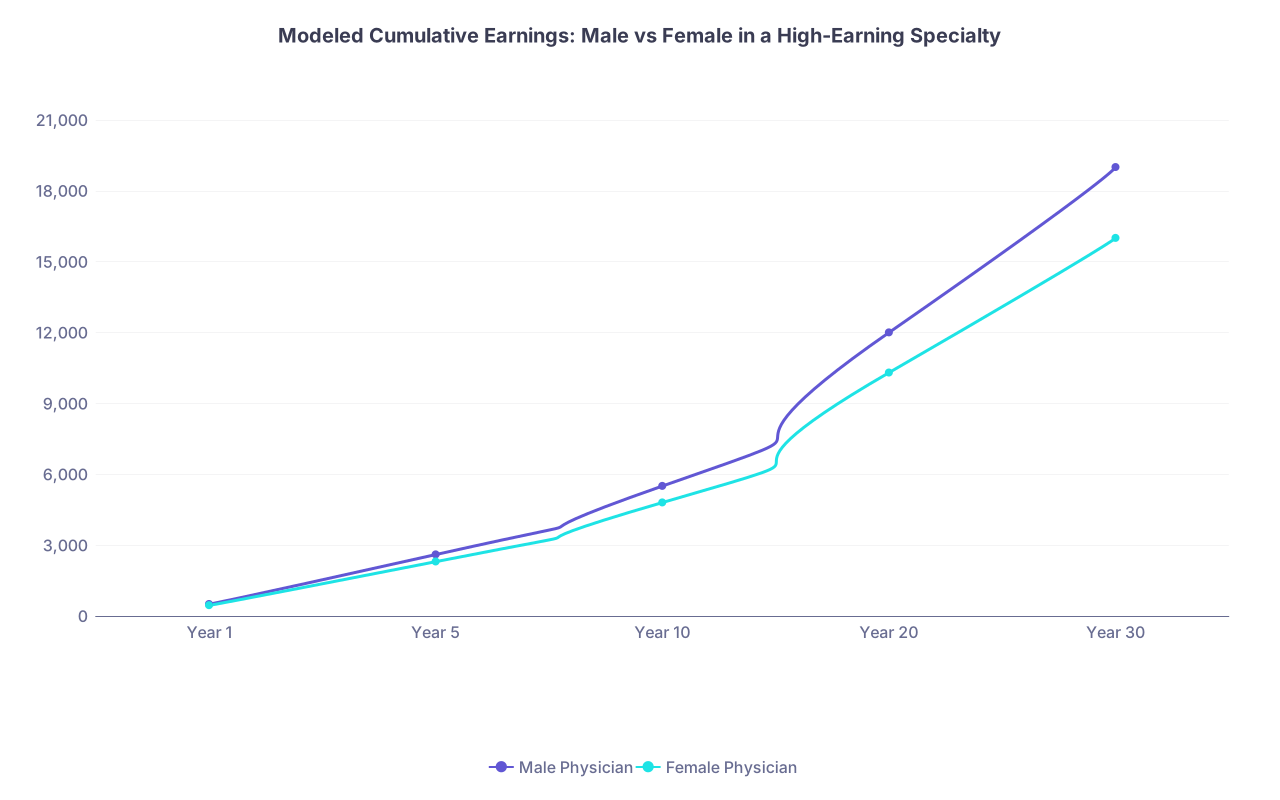
| Category | Male Physician | Female Physician |
|---|---|---|
| Year 1 | 500 | 450 |
| Year 5 | 2600 | 2300 |
| Year 10 | 5500 | 4800 |
| Year 20 | 12000 | 10300 |
| Year 30 | 19000 | 16000 |
Values here are indicative cumulative earnings (in thousands). The key observation: the lines diverge. Early small differences in base pay, raise percentage, and bonus structure become large career‑long discrepancies.
For a resident deciding between, say, general internal medicine and cardiology, the specialty‑level income differences get a lot of attention. The intra‑specialty gender gap should get just as much.
What This Means for Residents Choosing High-Earning Specialties
If you are in residency or fellowship and thinking about high‑earning specialties, you can either:
- Ignore this, assume you are the exception, and hope the system treats you fairly.
- Or, you can treat the gap as a measurable risk factor and plan around it.
This is not about scaring women away from lucrative fields. Quite the opposite. The numbers argue that entering these specialties with data and a strategy is rational.
Here are the levers that actually move the needle, based on how compensation systems are built.
1. Understand the Real Compensation Structure, Not Just the Headline Salary
Too many new attendings fixate on base salary only. In high‑earning specialties, that is a mistake.
You need to know:
- Base pay vs RVU incentives: What is the dollar/RVU conversion? Is it the same for everyone at your level?
- Partnership track: Years to partnership, buy‑in cost, and what percentage of practice profits partners share.
- Ancillary income: Ownership in surgery centers, imaging centers, or cardiac cath labs. Who gets equity offers? Under what conditions?
I have seen practices where a male and female surgeon both “make $600k,” but one has $150k of that from surgery center distributions and profit-sharing, while the other has none. On paper, the base salary gap looks small. In take‑home reality, it is not.
2. Nail the First Contract
The data are brutal on this point: initial salary offers and first 3–5 years set the baseline that everything else compounds from.
Counter‑strategy:
- Benchmark: Use multiple sources (Doximity, MGMA, specialty society surveys, Medscape). Do not rely on a single “average.”
- Aim for the 60–70th percentile for your specialty and region, not the median, if your training pedigree and procedure mix justify it.
- Push on the structure: RVU rate, mentorship for procedure allocation, written criteria for partnership, and explicit language around equal pay for equal productivity.
A $30k improvement in starting salary, plus a better bonus formula, can translate to hundreds of thousands over a decade.
3. Demand Transparency in RVUs, Schedules, and Bonus Allocation
Opaque systems are where bias thrives.
Ask for:
- Quarterly RVU reports broken down by physician.
- Clear documentation of how cases, OR blocks, or reading lists are assigned.
- Written bonus formulas, not “the partners discuss it at year end.”
If leadership resists all transparency, that is a signal. And yes, you can walk away from that kind of practice before you sign. The market for high‑earning specialties is still tight enough in many regions that you have leverage.
4. Track Your Own Numbers Relentlessly
You cannot manage what you do not measure. The physicians who close pay gaps treat their careers like a business.
Track:
- Total RVUs per month
- Case mix and block time
- Compensation per RVU over time
- Changes in call burden and any stipends attached
When you go into a renegotiation with three years of trend data showing rising productivity and flat compensation, you are not “complaining.” You are showing underpayment in black and white.
What Institutions and Groups Could Do (But Often Do Not)
You may not control system‑level policy as a resident or early‑career attending, but let us be clear about what reduces gender pay gaps when organizations actually care.
The data support:
- Standardized starting salary bands by specialty and region, not individually “negotiated” numbers behind closed doors.
- Shared, transparent compensation formulas (base + RVU/bonus tables) applied uniformly.
- Regular equity audits that compare compensation by gender controlling for FTE, RVUs, years since training, and role; followed by actual adjustments, not just reports.
- Ensuring equal access to high‑RVU opportunities (OR time, procedural slots, high‑volume clinics) through transparent scheduling rules.
Systems that implement these rigorously demonstrate narrower gaps. The problem is not that we do not know how. The problem is will.

| Step | Description |
|---|---|
| Step 1 | Collect Salary and RVU Data |
| Step 2 | Adjust for FTE and Years Since Training |
| Step 3 | Compare by Gender Within Specialty |
| Step 4 | Maintain Current Structure |
| Step 5 | Review Contracts and Bonus Formulas |
| Step 6 | Implement Adjustments |
| Step 7 | Repeat Audit Annually |
| Step 8 | Gap > 5%? |
That flowchart is not hypothetical. Several large systems have processes that look almost exactly like this. Where they are followed, gaps shrink. Where they are performative or missing, they do not.
Summary: The Current Numbers, Without Spin
Strip away the excuses and the story is simple.
The gender pay gap in high‑earning specialties is real and large. We are talking about $80k–$150k per year in many fields, adding up to millions across a career.
Hours and specialty choice explain only part of it. Even after adjusting for FTE, rank, and productivity, women in ortho, cardiology, radiology, neurosurgery, and GI are still underpaid relative to men.
Early contracts and opaque compensation systems lock in inequality. The data show that closing the gap requires aggressive initial negotiation, relentless tracking of RVUs and comp, and demanding transparency and equity from institutions that often prefer the status quo.
If you are entering a high‑earning specialty, treat these numbers as a risk model. Not a reason to walk away from the field—but a reason to walk in with your eyes open and your data ready.