

Locums is the most underused weapon in an early-career physician’s financial arsenal. Used right, it can move you six figures ahead of your peers in the first 3–5 years.
Used wrong, it burns you out, wrecks your reputation, and traps you in junk assignments that look good only on a spreadsheet.
Let me show you how to do it right.
1. The Core Strategy: What Locums Is Actually Good For
Locums is not just “extra shifts” or “temporary work.” It is a leverage tool. You use it to:
- Jump-start wealth right after residency/fellowship
- Buy time and optionality while you figure out your long-term job
- Test-drive markets, practice models, and hospital systems
- Negotiate better in your permanent offers (“I am already making X doing locums”)
If you treat locums like a side hustle with no strategy, you will:
- Work random shifts at mediocre rates
- Spend half your time onboarding to new EMR systems
- Lose control over your schedule
- Pay more tax than you should
The strategic play is very different. You define exactly:
- Why you are doing locums
- How much you need to make
- How long you will do it
- What you will not accept (location, call, procedures, support)
Then you only take assignments that move those goals forward.
Who benefits most early-career?
Highest-paid and in-demand specialties see the biggest upside:
- Anesthesiology
- Radiology
- Emergency medicine
- Hospitalist / critical care
- Orthopedics
- GI
- Cardiology (especially interventional)
- ENT, urology in certain markets
If you are in family med, psych, or pediatrics, locums still works. But the percentage boost over a “standard” job is smaller, so you need to be even more disciplined.
| Specialty | New Employed (Base + bonus) | Locums Annualized (Aggressive) |
|---|---|---|
| Anesthesiology | $400–500k | $550–750k |
| Emergency Med | $300–400k | $450–600k |
| Hospitalist | $250–325k | $350–450k |
| Radiology | $450–550k | $600–800k |
| Ortho (general) | $500–650k | $700k+ with mix of locums/PP |
Numbers will vary by region, call, and shift type, but the pattern holds: locums lets you front-load income.
2. Decide Your Locums “Use Case” Before You Sign Anything
You do not start with a recruiter. You start with a use case.
There are four main strategic plays. You pick one (maybe two), then build around it.
Use Case 1: The Gap Year Power Play (0–2 years after training)
Goal: Maximize savings and optionality before committing to a permanent job.
This is for you if:
- You are finishing residency/fellowship and not thrilled with your offers
- You want to pay off high-interest loans fast
- You are open to travel and non-glamorous locations for 12–24 months
Core moves:
- Take high-paying assignments in less desirable locales (Midwest, rural South, interior West)
- Cluster work (example: 7-on/7-off, but do locums on your “off” weeks in a nearby hospital)
- Drive income as high as you can tolerate without long-term burnout
Target metrics:
- Aim to bank at least 50–60% of gross after taxes in that period
- Build 6–12 months of expenses plus a solid emergency/opportunity fund
- Pay down the nastiest debt (credit cards, high-interest private loans)
Use Case 2: The Income Booster While Employed
Goal: Add $50–200k on top of a full-time job without imploding your life.
This is common in:
- EM (picking up shifts at other EDs)
- Anesthesia (weekend or vacation coverage)
- Hospitalist / nocturnist
- Radiology (telerad evenings/nights)
The key is to avoid dilution. One high-paying, well-structured locums gig beats three mediocre ones.
Rules:
- Limit to 3–6 extra shifts per month for sustainability
- Avoid assignments with long unpaid orientation/onboarding
- Only take gigs that are easy to reach (driveable or direct short flight)
Use Case 3: The Try-Before-You-Buy Market Test
Goal: Sample different practice environments before signing a multi-year contract.
You use locums to answer real questions:
- Do I actually like this hospital system?
- How painful is the call schedule in reality?
- Is the OR or ED staff competent or a constant fire drill?
- Does admin back physicians up on safety and quality issues?
You work 2–3 different sites over 6–18 months and then pick where you plant roots.
Use Case 4: The Off-Ramp or Pivot
Goal: You want out of your current job or specialty niche but need income while you pivot.
Example:
- EM physician leaving a toxic CMG but not ready to go part-time/urgent care only
- Radiologist exploring more telerad and less IR call
- Hospitalist shifting toward telehospitalist or utilization review work
Locums becomes your bridge:
- Drops you into different models (community vs academic, big vs small)
- Gives you negotiating power so you do not jump from one bad deal into another
3. How to Actually Find and Negotiate High-Yield Assignments
You need a process. Not “I clicked on a recruiter email at midnight after a rough shift.”
Step 1: Build Your Filter First
Write this down. Literally.
- States you will work in
- Minimum hourly/day rate
- Maximum volume (patients per shift, cases per day, RVUs)
- Call expectations you will accept
- EMR systems you tolerate (or hate)
- Absolute deal breakers (solo call, no night backup, unsafe volume, etc.)
Without this, recruiters will drag you into whatever fills their quota.
Step 2: Use Multiple Recruiters, But Control the Process
Do not marry the first recruiter who calls you. They work for the client, not for you.
What you do:
- Register with 2–4 reputable locums agencies (CompHealth, Weatherby, VISTA, LocumTenens.com, etc.)
- Give each the same filter and priorities
- Explicitly tell them which facilities they may present you to
- Keep a simple log of where your CV has been sent (spreadsheet or notes app)
If two agencies submit you to the same site, the facility gets annoyed and can drop you. I have seen this happen within a week of graduation. Totally avoidable.
Step 3: Granular Rate Expectations – Not “Whatever You Can Get”
You must know what “good” looks like in your specialty.
For many high-paid specialties, a solid early-career locums target is:
- EM: $250–350/hour depending on site and acuity
- Anesthesia: $275–400/hour or $2,400–3,500/day
- Radiology: $300–450/hour or RVU-based with strong floor
- Hospitalist: $1,800–2,800 per 12-hour shift depending on census and nocturnist role
- Ortho/Procedural: Complex, often a mix of daily guarantee + collections
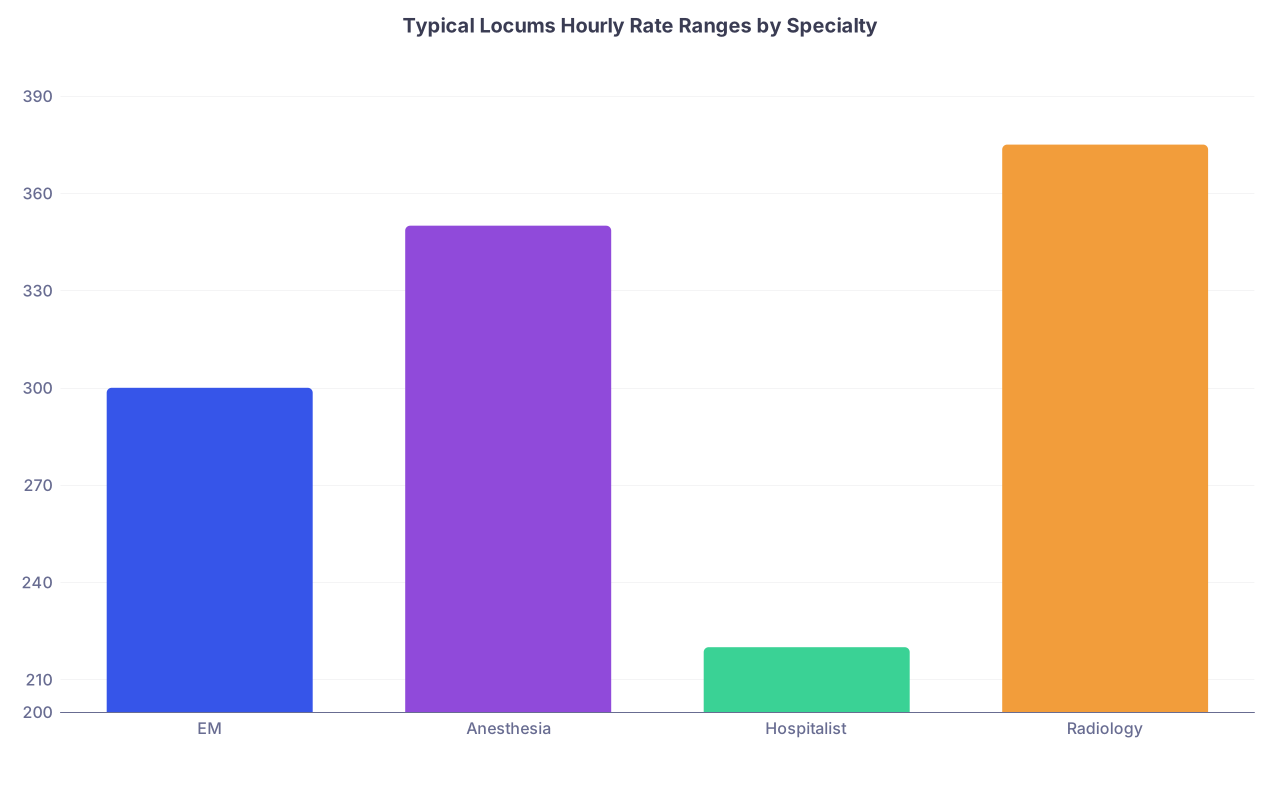
| Category | Value |
|---|---|
| EM | 300 |
| Anesthesia | 350 |
| Hospitalist | 220 |
| Radiology | 375 |
These are ballpark midpoints. Top-paying, hard-to-staff sites will exceed them. Academic or “nice location” sites often pay less.
Your script with recruiters:
- “My floor is $X/hour for days, $Y/hour for nights. I will not entertain offers below that.”
- “I will trade a bit of rate for reasonable volume, strong support, and no unsafe call expectations.”
Then you stick to it.
Step 4: Negotiate Beyond the Rate
Base pay is half the story. The rest of the money is in the details.
You push on:
- Travel and housing
- Full reimbursement, not “stipend that almost covers it”
- Avoid long commutes from provided housing if possible
- Orientation
- Paid, not “one unpaid day to get credentialed” (this adds up fast)
- Cancellation terms
- What if they cancel your shifts? You want guaranteed minimum notice or paid cancellation fees
- Call structure
- Standing in-house vs beeper call
- Explicit backup expectations and response times
You do not accept vague answers like “It is usually fine” or “Most people are comfortable with the volume.” You push for numbers.
4. Structuring Your Schedule for Maximum Income (Without Implosion)
You are not trying to prove you are the toughest resident again. You are trying to convert hours into dollars with the highest efficiency.
Two main levers:
- Shift density (how you cluster work)
- Recovery and life maintenance (so you do not hate everything by month four)
The Density Play: Work Like a Consultant, Not a Shift Worker
Mistake I see constantly: people scatter locums days randomly across the month. You end up with:
- More commuting
- Constant re-orientation to new systems
- No meaningful time “off” to handle life
Better pattern (for EM/hospitalist/anesthesia especially):
- Block 7–10 days on, 4–7 days truly off
- Or two long 4–5 day clusters per month instead of 8 random days
Example for an EM doc with a base job:
- Employed job: 12 shifts/month at your home ED
- Locums: 4–5 clustered shifts at a high-paying site every 4–6 weeks
- Travel in once, work hard, travel out, recover
For pure locums (gap year):
- 3 weeks on, 1 week off is common
- Or 2 weeks on at Hospital A, 1 week on at Hospital B, then 1 week off
You want:
- Fewer flights
- Fewer transitions between systems
- Larger chunks of time for actual rest or life projects (board prep, moving, etc.)
Know Your Actual Capacity
You are not in training anymore, but your body remembers those 80-hour weeks.
Early-career sustainable ranges (broad strokes):
- EM: 12–18 shifts/month if you choose sites well and protect sleep
- Hospitalist: 15–20 12-hour shifts/month if census is reasonable
- Anesthesia: 45–60+ hours/week for a stretch, but not every week of the year
- Radiology: Think RVUs, but visually/mentally fatiguing beyond 8–10 intense hours regularly
If you are stacking locums on top of a full-time job, start with half of what you think you can do and reassess after 2–3 months.
5. Taxes, Entity Setup, and Keeping More of What You Earn
This is where many locums docs quietly bleed away 5–15% of their income.
Step 1: Know Your Employment Type
There are three main setups:
- W-2 through the agency or hospital (rare in locums, but exists)
- 1099 as an independent contractor (most common)
- LLC/PLLC or S-corp structure receiving 1099 income (for tax and liability structuring)
If you are doing more than a tiny trickle of locums (say >$50k/year), you should have:
- A separate business bank account
- A simple entity (LLC/PLLC) in most cases
- A CPA who actually knows physician and 1099 work
Step 2: Plan for Taxes Before the IRS Does It for You
1099 means:
- No withholding
- You pay both sides of payroll tax
- Quarterly estimated taxes are mandatory if you do any real volume
Basic protocol:
- Skim 30–40% of every locums paycheck into a separate “tax” savings account
- Work with a CPA to set up quarterly estimates
- Track every business expense: travel, licensing, CME, some home office costs, technology, etc.
Do not let tax fear keep you from locums. But do not wing it either.
Step 3: Retirement and Benefits – You Can Beat W-2 Packages
The myth: “W-2 jobs are safer because they have benefits.”
Reality:
- With 1099 income, you can set up powerful retirement vehicles (solo 401(k), SEP-IRA)
- You can often contribute more pre-tax than with a standard employer 401(k)
- You control disability and life insurance policies (not tied to one employer)
Locums income + smart retirement planning can leave your W-2 peers behind very quickly.
6. Specialty-Specific Plays and Pitfalls
Locums is not the same game in every field. Here is where it helps and where it bites.
Emergency Medicine
Best use:
- Gap year income booster in high-acuity community sites
- Side shifts at rural or smaller EDs that pay well above your main job’s rate
Watch out for:
- Overstaffing with APPs where you are legally responsible but clinically stretched
- Unsafe boarding and hallway medicine situations
- Malpractice coverage – make sure tail is clearly defined and paid for
Script with recruiter:
- “What is the door-to-doc time?”
- “How many boarded patients per doc, on average?”
- “Is there in-house 24/7 surgery, anesthesia, OB, peds?” (or at least transfer protocols)
Anesthesiology
Best use:
- OR-heavy assignments with decent case mix clarity
- Sites with predictable call and backup
Watch out for:
- Solo coverage in sketchy facilities with weak surgeons
- CRNA supervision ratios that put your license at risk
- Long unpaid standby times
Negotiate:
- Minimum daily guarantee regardless of case volume
- Call pay and post-call expectations spelled out clearly
Radiology
Best use:
- Telerad locums – maximally flexible, minimal travel
- Short, intense blocks with clear RVU structures
Watch out for:
- Unrealistic RVU expectations without commensurate pay
- Poor tech quality or massive number of “redo” scans
- Crippling workflow (no voice recognition, no support)
Ask:
- “What did your last locums rads actually produce per shift?”
- “How many studies per shift, by modality?”
Hospitalist / Critical Care
Best use:
- 7-on/7-off schedule stacking – classic move
- High daily rates in tough-to-staff hospitals
Watch out for:
- Nocturnist roles that feel like permanent code response team
- Unsafe cross-cover loads
- Lack of ICU or specialist backup
Non-negotiables:
- Clear patient cap or average census
- Transparent admission expectations from ED
- Clarified role in rapid response and code leadership
7. Protecting Your Reputation and Long-Term Options
Money is not the only metric. You are building your early-career reputation at the same time.
Dumb ways to blow that:
- Bailing on confirmed shifts because a slightly better offer popped up
- Showing up unprepared for local protocols or EMR training
- Complaining constantly about volume or rate while on site
Better protocol:
- Treat every assignment like an extended interview. Because it is.
- Be the doctor who shows up on time, does the work, and is pleasant to staff
- Communicate issues (safety, systems) directly and professionally
You want:
- Direct offers from hospitals that bypass recruiters
- Medical directors texting you, “Can you come back next month?”
- The ability to turn a good locums site into a permanent or hybrid position if you ever choose
8. A Simple 6-Month Locums Implementation Plan
To make this concrete, here is a stripped-down blueprint.

| Step | Description |
|---|---|
| Step 1 | Month 0 - Define Goals |
| Step 2 | Month 1 - Set Up Entity and CPA |
| Step 3 | Month 1 - Contact 2 to 4 Agencies |
| Step 4 | Month 2 - First Assignment 3 to 7 Days |
| Step 5 | Month 3 to 4 - Evaluate and Adjust Filters |
| Step 6 | Month 4 to 6 - Scale Up or Lock Best Site |
| Step 7 | End of 6 Months - Review Income and Lifestyle |
Month 0–1
- Decide your use case: gap year, side income, or market test
- Build your non-negotiable filter list
- Set up LLC/PLLC and business bank account
- Hire a CPA who understands 1099 physicians
Month 1–2
- Register with 2–4 agencies
- Get your CV cleaned up and specialty-specific
- Clarify state licensing needs; start 1–2 new licenses if useful for pay-rich regions
- Take one short assignment (3–7 days) to shake out kinks
Month 3–4
- Analyze: real hourly rate after travel, downtime, and hassle
- Cut the worst sites and recruiters from your life
- Negotiate better conditions with the best sites
Month 4–6
- Increase density of good assignments
- Adjust your main job schedule if you are doing hybrid locums + employed
- Sit down with your CPA to optimize tax and retirement contributions
At the 6-month mark, you should know:
- Your sustainable monthly locums capacity
- Your realistic net hourly rate
- Which types of sites are worth your time
- Whether you want to ramp up, maintain, or taper
9. Avoiding Classic Early-Career Locums Traps
Let me be blunt about the usual mistakes:
Chasing shiny locations over pay and support
Working in a glamorous city hospital that pays 30% less and treats you like a fungible cog is not a win.Letting agencies spray your CV everywhere
This kills your negotiating power and can close doors entirely. You must control submissions.Ignoring the true hourly rate
If you are “making” $300/hour but losing 10 unpaid hours every trip on travel and onboarding, your real rate might be $180/hour.Underestimating burnout
The money looks incredible for 3 months, then you hit a wall. Plan recovery time in advance.Not aligning locums with long-term goals
If you want to be in a specific city or subspecialty, choose assignments that build toward that story, not random places you would never live.
Key Takeaways
- Locums is a leverage tool, not a random side gig. Decide your use case, build your filters, and only accept assignments that move your financial and career goals forward.
- The real money is in high-yield sites, smart scheduling, and proper tax/retirement setup. Rate alone does not determine your actual take-home.
- Protect your reputation and options. Treat every locums gig like an extended interview, and you can convert early-career locums into both higher income and better long-term job opportunities.


