It is 8:30 p.m. You just finished another call shift on your pediatrics rotation. You like kids, you like the medicine, but you keep hearing the same line from residents and attendings: “Pediatrics does not pay.” Then you see a salary survey that claims some pediatric subspecialists are pulling in numbers that look suspiciously similar to adult subspecialists—and in a few niches, higher.
So you start wondering: where is the money actually hiding in pediatrics?
Let me be very direct: most pediatric subspecialties are not financial home runs compared with adult medicine or surgical fields. But there are specific lanes inside pediatrics where the reimbursement structures, call patterns, procedural mix, and supply-demand mismatch push compensation much higher than the “peds is low-paying” stereotype.
We are going to walk through those lanes, and more importantly, why they pay what they pay.
The Big Picture: Why Some Pediatric Subspecialties Pay More
Before we dive into individual fields, look at the structural levers that move pediatric income.
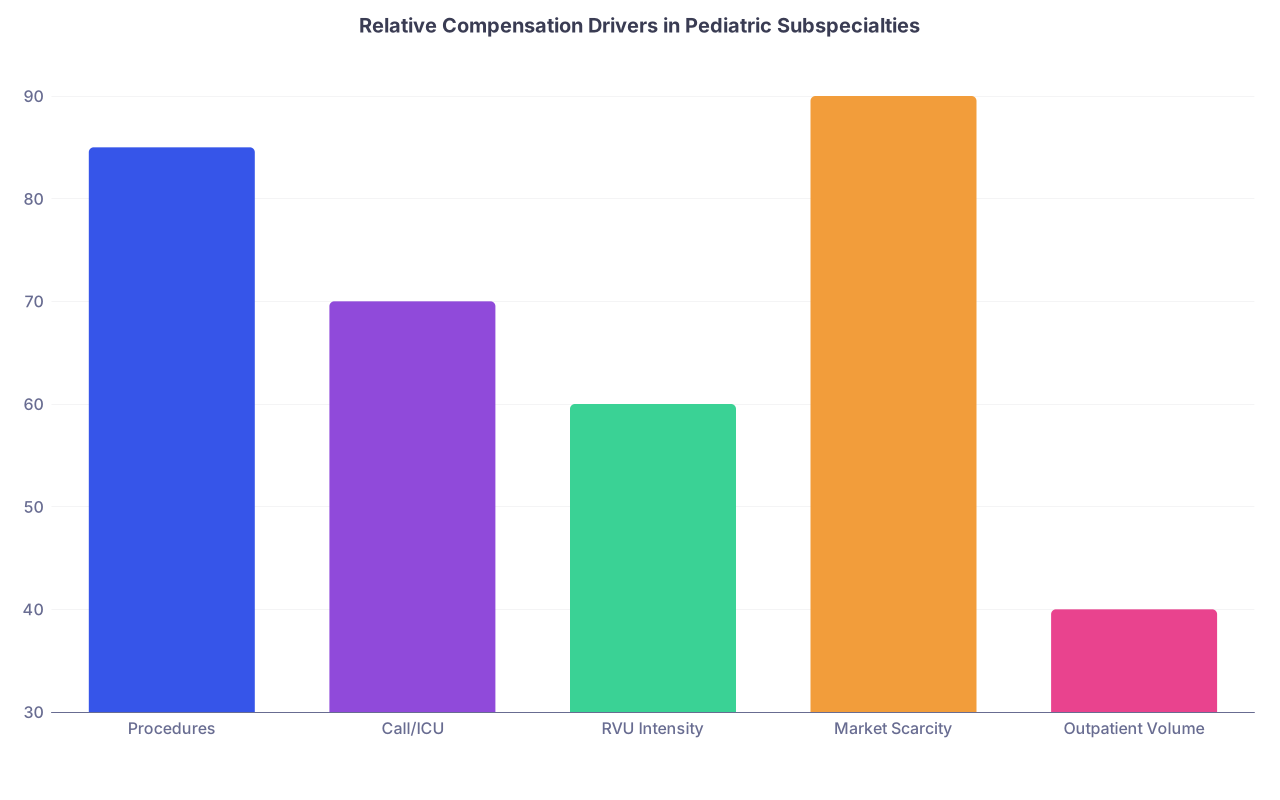
| Category | Value |
|---|---|
| Procedures | 85 |
| Call/ICU | 70 |
| RVU Intensity | 60 |
| Market Scarcity | 90 |
| Outpatient Volume | 40 |
High-earning pediatric subspecialties usually sit at the intersection of:
- Heavy or high-stakes call (NICU, PICU, transplant, cath lab coverage).
- Procedurally dense work (interventional, surgical, or cath-based).
- Severe national shortages (not enough fellows, small pipeline).
- High RVU generation per patient (complexity, length of stay, critical care codes).
- Institutions that must recruit them (children’s hospitals, transplant centers, large IDNs).
If a field hits three or more of those, compensation starts to climb—often into the $400K–600K+ attending range, sometimes more with leadership or private practice leverage.
Now, subspecialties.
1. Pediatric Critical Care (PICU) – Where Acuity Meets Leverage
You are in the PICU at 3 a.m. ECMO is running, a DKA kid is acidotic, and a trauma just rolled in from an outside ED. Everybody in that room knows one thing: there is no hospital without a functioning PICU.
That leverage matters.
Why PICU Pays Better Than You Think
Pediatric critical care is often one of the better-compensated cognitive pediatric fields (non-procedural, non-surgical). The drivers:
24/7 high-acuity coverage
Hospitals must staff intensivists around the clock. Nights, weekends, holidays. That comes with premiums—either in direct shift differentials or via higher base pay.Critical care billing
Critical care time (CPT 99291/99292) brings substantially higher RVUs than standard floor visits. One very sick child can generate the RVUs of several floor patients.Physician shortage
PICU fellowships are not overrun with applicants. Many regions, especially outside major coastal cities, struggle to recruit. That forces systems to boost comp.Tertiary-care dependence
Children’s hospitals use their PICU as a flagship service. No PICU, no complex surgery programs, no trauma designation. Leadership knows this.
| Practice Type | Typical Range (USD) | Notes |
|---|---|---|
| Academic children’s hospital | 280K–380K | Often shift-based, strong benefits |
| Non-academic children’s hospital | 350K–450K | Higher pay, more nights/weekends |
| Multi-hospital system PICU group | 400K–550K | Intense call, high volume |
Numbers vary by region, call model, and whether there is nocturnist coverage. But the pattern is stable: PICU sits near the top for non-procedural pediatric subspecialties.
What You Trade For That Income
You pay in lifestyle and emotional load:
- Nights and weekends are structural, not optional.
- High emotional burden (codes, deaths, distressed families).
- Limited longitudinal relationships; you see kids at their worst and rarely in recovery.
If you want high-acuity medicine and can tolerate nights plus some moral distress, PICU is one of the few “pure medicine” pediatric fields where the earnings are legitimately competitive.
2. Neonatology – High RVUs in a Box
Neonatology looks gentle from afar. Tiny babies, soft lighting, quiet units. The money is not soft at all.
Level III and IV NICUs are massive revenue engines for hospitals. Long lengths of stay, complex ventilated patients, multiple procedures, and a steady stream of deliveries that guarantee census.
Why Neonatology Compensation Can Be Very Strong
Here is the mix:
Constant volume from births
Every delivery is a potential NICU patient. Large centers with 5,000+ births a year generate stable, predictable NICU volumes. Stable volume means reliable RVUs.Long lengths of stay
4-week, 8-week, even 3-month admissions. Daily billing for high-complexity inpatient care adds up very quickly.Call + in-house night coverage
Many neonatologists cover nights in-house—paid shifts that increase total comp. Groups with 24/7 coverage and fewer docs have very high per-physician revenue.Private groups and national staffing companies
Neonatology is one of the few pediatric subspecialties with a significant “private group” footprint. That adds negotiation power and potential production-based bonuses.
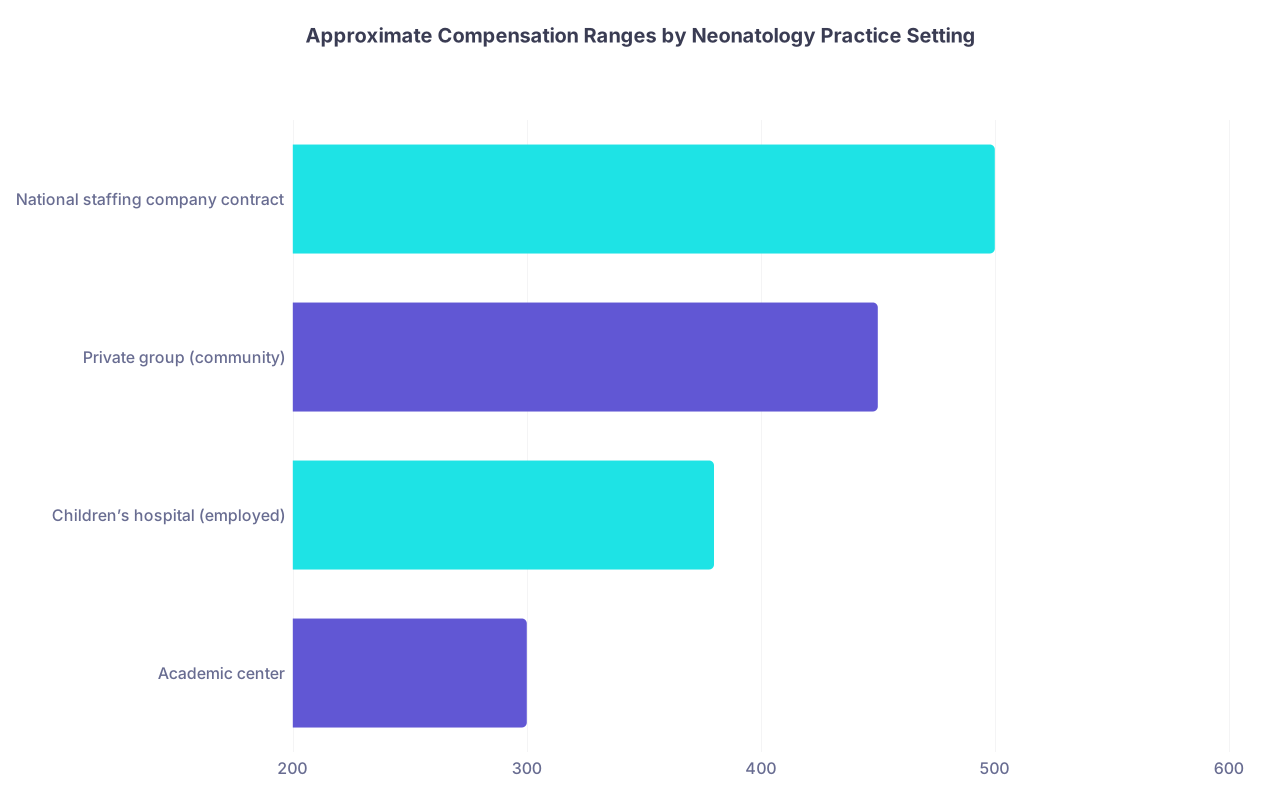
| Category | Value |
|---|---|
| Academic center | 300 |
| Children’s hospital (employed) | 380 |
| Private group (community) | 450 |
| National staffing company contract | 500 |
Values are rough midpoints in thousands (i.e., 300 = 300K). I have seen private neonatologists in high-demand areas push into the 550K–600K range with aggressive production models, although that usually comes with heavy call and limited time off.
Tradeoffs
- Long, exhausting calls—nights in the hospital, frequent weekends.
- Emotional exhaustion from high-stakes decisions, chronic prematurity, and bad outcomes.
- RVU pressure in private and staffing models. Nobody says it quietly; you will be told your targets.
But if you want high acuity, procedural work (lines, intubations, LPs), and the chance to earn near top-of-market pediatric income in a non-surgical field, neonatology consistently delivers.
3. Pediatric Cardiology – The Field With a Hidden Ceiling
Say “pediatric cardiology” to a random med student, and most think of outpatient echo clinics and murmurs. That exists. It is not where the real money is.
Peds cardiology is a pyramid. The base is general cardiology clinic. The peak is pediatric interventional cardiology and electrophysiology, plus some heart failure/transplant groups. The earnings gradient from bottom to top is steep.
Why General Pediatric Cardiology Can Already Pay Well
Even “straight” peds cards can do better than average peds subs:
- High-complexity outpatient visits (congenital anatomy, chronic follow-up).
- Echo reading and imaging revenue wrapped into visits.
- Tertiary-care dependence (you cannot run a congenital heart program without cardiology).
- Frequent call and hospital coverage, often for multiple sites.
In many hospital-employed roles, you will see 350K–450K as a realistic range after early-career ramp-up, higher in underserved markets.
Where Compensation Jumps: Interventional, EP, and Transplant
Procedures are where pediatric cardiology starts to look like adult subspecialty money.
Interventional cardiologists, electrophysiologists, and some transplant/advanced heart failure cardiologists often participate in:
- Cath lab revenue (device closure, balloon valvuloplasties, stents, etc.).
- Long, high-RVU procedures under anesthesia.
- Call coverage that hospitals must secure to maintain their congenital heart programs and surgical volumes.
| Role | Typical Range (USD) | Comments |
|---|---|---|
| General peds cardiology | 325K–450K | Mix of clinic, echo, some call |
| Advanced imaging focus | 350K–475K | MRI/CT niche adds leverage |
| Heart failure/transplant | 375K–500K | Heavy call, highly specialized |
| Interventional cardiology | 450K–650K+ | Cath lab time, big procedures |
| Electrophysiology (EP) | 450K–650K+ | Complex ablations, device work |
Those are not fantasy numbers. I have watched pediatric interventionalists with busy programs land comp packages that rival general adult cardiology and sometimes exceed it when the hospital is desperate to maintain a congenital heart surgery line.
What You Give Up
- Long training path: Peds residency → peds cards fellowship (3 yrs) → interventional/EP fellowship (1–2 yrs). You are deep into your 30s before attending pay.
- Very high stress in the lab; complications are devastating and memorable.
- Call is brutal in some programs—middle-of-the-night emergencies, unstable kids in rural transfers, balloon atrial septostomy at 2 a.m.
If you like physiology, anatomy, and advanced procedures, peds cardiology (especially the procedural niches) is one of the clearest “unexpectedly high earnings” choices in pediatrics.
4. Pediatric Gastroenterology – Boring on Paper, Lucrative in Practice
Pediatric gastroenterology does not sound particularly glamorous. It is constipation and belly pain, right? Except that is not what drives the economics.
Two words: scopes and demand.
Why Peds GI Quietly Earns Good Money
Endoscopy and procedures
Upper endoscopy, colonoscopy, PEG placement, PH probes, dilations. These are well-compensated procedures with good RVU yield per hour.Chronic disease with frequent follow-up
IBD, celiac disease, eosinophilic esophagitis, liver disease. These kids come back. Many on biologics with infusion visits. Very “sticky” patient panels that sustain volume.National shortage
There are simply not enough pediatric gastroenterologists. Wait times of 4–6 months for new visits are common in many states. That shortage raises your value.Ambulatory procedure centers
In some settings, peds GI physicians can perform scopes in joint-venture endoscopy centers or hospital-owned ASCs, giving them a slice of facility or ancillaries—depends on local laws and contracts, but it is a major income driver where allowed.
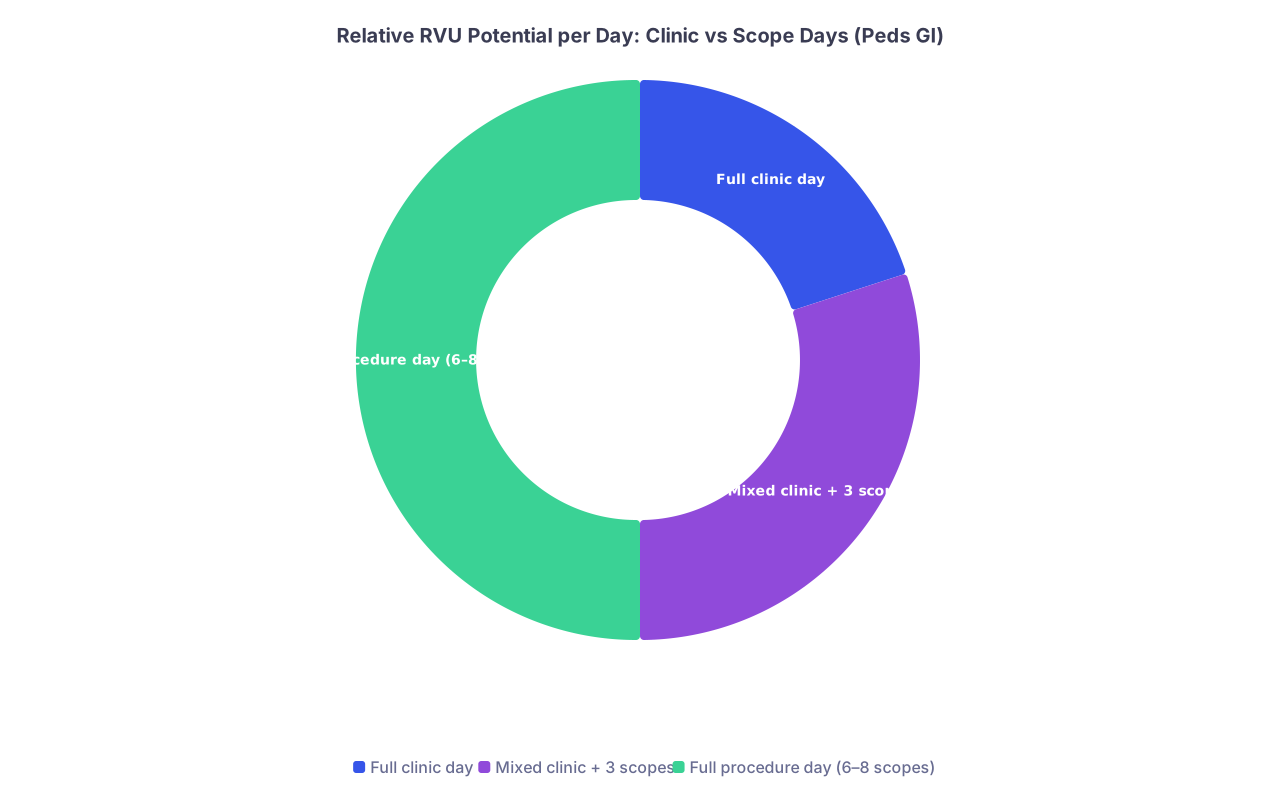
| Category | Value |
|---|---|
| Full clinic day | 1 |
| Mixed clinic + 3 scopes | 1.5 |
| Full procedure day (6–8 scopes) | 2.5 |
Think of the values as a relative multiplier. A full procedure day can generate 2–3 times the RVUs of a pure clinic day.
Typical Compensation Bands
Again, wide variation, but realistic ballparks:
- Academic peds GI: 260K–340K (sometimes less early-on, with strong benefits).
- Non-academic children’s hospital: 325K–425K.
- High-volume GI with aggressive procedural focus: 400K–500K+, occasionally more in underserved markets.
I have watched GI programs double compensation offers over 3–4 years because they simply could not recruit anybody, while community pediatricians were begging for GI access.
Tradeoffs
- Lots of time negotiating with payers about biologics, specialty pharmacies, prior auths.
- Scope days can be physically demanding and tiring; not everybody enjoys spending multiple days a week in the endo suite.
- Call is generally lighter than PICU/neonatology but still involves some nights and weekends, especially ER GI bleeds or foreign body emergencies.
If you want outpatient-heavy practice with real procedural income and strong job security, pediatric GI is one of the more quietly lucrative peds subspecialties.
5. Pediatric Emergency Medicine – Shift-Based Cash, For a Price
You walk into a children’s ED at midnight: RSV kids in every room, lacerations, fevers, the usual. It feels chaotic, but economically, children’s emergency departments are high-throughput, high-RVU machines.
Pediatric EM (PEM) straddles pediatrics and EM, and compensation is very model-dependent. But at high-volume centers, especially with staffing pressures, PEM salaries have crept up substantially.
Why PEM Can Be High-Earning
Shift-based pay with premiums
Nights, weekends, holidays all pay more. Multiply that over a year, and total compensation grows quickly.Procedures and critical care codes
Sedations, laceration repairs, reductions, LPs, occasionally intubations and resuscitations. These pack in RVUs over short time frames.Chronic staffing shortages
Many children’s hospitals cannot staff their EDs purely with PEM fellowship-trained physicians. They rely on general peds plus PEM, or EM plus PEM. That gives PEM docs decent leverage in negotiation.Productivity and group structures
In democratic EM groups or hospital-based EM contracts, PEM doctors often share in profit distribution similarly to adult EM, especially if they cover both peds and mixed EDs.
| Setting | Typical Annual Pay (USD) | Notes |
|---|---|---|
| Academic children’s ED | 280K–360K | More teaching, some research |
| Children’s hospital, employed (busy) | 325K–450K | Heavy nights/weekends |
| EM group covering peds + adult | 350K–500K+ | Depends on RVUs & partnership |
Key rules:
- Shift-based fields (PEM, PICU, neonatology): More nights/weekends = more money. You can literally “buy” income with sleep and quality of life.
- Productivity-based packages (GI, cards, some neonatology): Procedure-heavy days and high patient throughput directly translate into income.
- Academic roles: More stable, more protected time, but lower ceiling, often by $50K–150K versus non-academic peers.
When you compare specialties, you cannot just look at MGMA medians. You need to ask:
- How many nights per month?
- How many weekends per year?
- Is the call in-house or from home?
- Is there an RVU bonus, and what is the threshold?
That is where you see why some people in the same subspecialty are making 280K and others are making 520K.
9. Choosing Strategically Without Selling Your Soul
If you are even reading an article like this, you are doing what many med students avoid: confronting the financial reality early.
Here is the blunt truth: If maximizing income is your top goal, you probably do not choose pediatrics at all. You choose orthopedic surgery, derm, radiology, anesthesia, or adult cardiology.
But if you genuinely like caring for children and still want to avoid being chronically underpaid, you steer toward pediatric subspecialties that:
- Involve procedures or critical care,
- Are in clear national shortage, and
- Allow either shift-based or RVU-enhanced pay.
In practice, the “unexpectedly high earnings” pediatric subspecialties tend to be:
- Neonatology
- Pediatric critical care (PICU)
- Pediatric cardiology (especially interventional/EP)
- Pediatric gastroenterology
- Pediatric emergency medicine
- Pediatric anesthesia / cardiac anesthesia (via anesthesia route)

If you subspecialize in endocrine, rheum, nephrology, or ID, you typically accept lower income for the specific intellectual or lifestyle benefits. That is not a mistake, as long as you are honest with yourself about what you are trading.
10. How to Use This Information During Training
Let me be even more specific. If you are a pediatrics resident or med student eyeing pediatrics and want to keep doors open:
Do rotations in the high-leverage fields
PICU, NICU, cardiology, GI, PEM. See the lifestyle up close. Watch who looks burned out and who seems decently balanced.Ask attendings real numbers
Not “are you comfortable,” but, “What is a realistic compensation range in this field at your stage, and what does your call schedule look like?” You will get more honest answers than you expect.Pay attention to fellowship match data
Fields that go unfilled or barely filled (e.g., certain GI, PICU, neonatology programs) often have more negotiating power later, especially in community or non-coastal markets.Consider geography seriously
A pediatric cardiologist in Manhattan will not be paid like one in a mid-size Southern city where the hospital is desperate to keep a congenital program alive. Cost of living can blunt this, but the leverage difference is real.

- Watch how people age in the job
Some 60-year-old neonatologists are thriving. Some 45-year-old PEM physicians look exhausted. Burnout risk varies dramatically field to field.
11. The Reality Check on “Unexpectedly High”
Let me close the loop on expectations, so you are not chasing ghosts.
“Unexpectedly high earnings” in pediatrics means:
- Topping out in the 400K–600K+ range in the best-paying roles within certain subspecialties.
- Frequently landing in the 300K–450K range in strong but not extreme positions.
- Doing noticeably better than the 220K–260K general pediatrics or 230K–280K lower-end subspecialty norms.
What it does not mean:
- Matching the top adult procedural or surgical specialties (ortho, neurosurg, interventional cards) where 700K–1M+ is absolutely real.
- Making that money without heavy call, procedures, or high acuity. The pediatric fields that pay up make you earn it with nights, weekends, or emotional strain.

If you love pediatrics and want to be as financially secure as possible within that universe, you stack the deck: you go where the acuity, procedures, and scarcity are.
Key Takeaways
- The best-compensated pediatric subspecialties are those with high acuity, procedures, and workforce shortages—especially neonatology, PICU, pediatric cardiology (interventional/EP), pediatric GI, PEM, and pediatric anesthesia.
- Within a given field, the details of call, RVU/production models, and geographic scarcity often matter more to your actual income than the “median salary” you see in surveys.
- If you are serious about both pediatrics and a strong financial footing, spend real time in the high-leverage subspecialties during training, and ask attendings direct, numbers-based questions about what their jobs cost and what they pay.