
58% of cardiology fellows underestimate the lifetime pay gap between electrophysiology, interventional, and structural cardiology when they choose their subspecialty.
They think, “It’s all procedural cardiology, pay will be roughly the same.”
They are wrong. By a lot.
Let me walk you through how the money really breaks down, where the RVUs come from, and what actually happens once you are out of fellowship and sitting in a chair negotiating your first contract.
The Three Procedural Lanes: What You Are Actually Signing Up For
Before talking numbers, you need clear mental models of the work patterns. Because the pay differentials are mostly a reflection of:
- Case complexity
- Case length
- Call burden
- Payer mix
- How many billable touches you can pack into a week
Interventional Cardiology (IC)
Bread and butter: coronary work.
Think:
- STEMIs and NSTEMIs
- Diagnostic coronary angiography
- PCI (stents, complex lesions, bifurcations, CTOs in some practices)
- Simple hemodynamics (LVEDP checks, right heart caths)
Lifestyle pattern I see over and over:
- High call burden, especially STEMI call
- Shorter cases than EP or structural (typical diagnostic cath 30–45 minutes, PCI 60–90 minutes)
- More cases per day, more throughput, more RVUs from sheer volume
- Often the “workhorse” of a cardiology group’s procedural revenue
There is a reason private groups fight over interventional volume. It prints RVUs if the lab is busy and the hospital is not failing.
Electrophysiology (EP)
Niche, high-complexity, longer cases.
Bread and butter:
- Atrial fibrillation ablations
- SVT, VT ablations
- Device implants and generator changes (PPMs, ICDs, CRT)
- Device checks, clinic follow-up, remote monitoring oversight
Reality:
- Fewer cases per day but higher RVUs per case
- Mix of very short (ICD generator change) and very long (afib or VT ablation)
- Call is more device consults and urgent arrhythmia management, often less brutal than STEMI call, but depends heavily on local culture
- Growing procedural complexity and reimbursement for advanced mapping / new tech (sometimes offset by hospital cost-sensitivity)
EP is often the most “surgical” of cardiology in terms of case length and planning, but does not always get the same raw cash advantage people assume.
Structural Heart (SH)
Still relatively young as a discrete pathway. Usually built on top of interventional training.
Core work:
- TAVR (transcatheter aortic valve replacement)
- MitraClip / TEER
- Left atrial appendage closure (Watchman etc.)
- PFO/ASD closures, paravalvular leak closures
- Occasionally involvement in complex hemodynamic assessments for advanced HF
Pattern:
- Extremely high-value cases (huge hospital margins)
- Very long, resource-intensive cases
- Typically lower case volume per day, but each case is big-ticket from a hospital perspective
- Your individual pay boost depends on how your group and hospital share that structural pie
Most structural cardiologists are still “interventional + structural”, not purely structural. And their comp reflects a blended profile.
Training Pathways and How They Set Up Your Pay
This is not just academic. How you train determines what levers you can pull when you need more income or more lifestyle later.

| Step | Description |
|---|---|
| Step 1 | IM Residency 3y |
| Step 2 | General Cards 3y |
| Step 3 | Interventional 1y |
| Step 4 | EP 2y |
| Step 5 | Structural 1y |
Most common sequences:
- Interventional: IM (3) → Cards (3) → IC (1)
- EP: IM (3) → Cards (3) → EP (2)
- Structural: IM (3) → Cards (3) → IC (1) → Structural (0.5–1)
So by the time you are a fully trained structural cardiologist you have usually burned 8+ post-MD years. That matters when comparing to a hospitalist who has been earning since year 4.
The additional training does translate into more earning power, but the marginal gain is not equal across EP vs IC vs SH.
The Money: EP vs Interventional vs Structural
Let me be blunt: publicly reported numbers always underestimate what the top quartile earns and overestimate what the bottom quartile can realistically expect.
Here is a realistic, midpoint view for full-time attendings 3–5 years out, in non-academic, reasonably busy markets, before partnership buy-ins.
| Subspecialty | Typical Median Total Comp (USD) |
|---|---|
| General Cardiology | $550,000 |
| Electrophysiology | $700,000 |
| Interventional Only | $750,000 |
| Interventional + SH | $800,000–$900,000 |
| Top 10% Procedural | $1,000,000+ |
These are not fantasy numbers. I have seen multiple contracts in that range over the last few cycles, especially in:
- Southeast
- Midwest
- Non-coastal large systems hungry to keep procedural volume in-house
Now, the interesting part is how those dollars are built.
How RVUs Actually Flow in Each Pathway
You will get more clarity from work RVUs than from listed salaries. Because a $750k job in rural Alabama and a $750k job in Boston are not the same number once you factor cost of living and expectations.
Interventional: Volume Engine
Common pattern I see:
- Base salary: $500–650k
- wRVU target: 12,000–16,000 per year
- RVU rate: $50–70 per wRVU (group-dependent)
So an interventionalist doing 14,000 wRVU at $60/wRVU:
- 14,000 × 60 = $840,000 potential RVU-based pay
- If base covers first 10,000 RVUs, extra 4,000 wRVUs × $60 = $240k bonus
Where do those RVUs come from?
- Diagnostic cath: ~5–7 wRVUs
- PCI: ~10–15 wRVUs (more for complex, multi-vessel work)
- RHC/LHC combos, graft studies, etc. add layers
You can get 20–30 wRVUs from a half-day if you are in a high-volume lab with streamlined turnover.
EP: High-Complexity, Fewer Slots
EP compensation structure:
- Base: $550–700k
- wRVU target: 11,000–14,000
- RVU rate: $55–75 per wRVU in many private or hospital-employed setups
RVU examples (ballpark):
- Atrial fibrillation ablation: 20–25+ wRVUs depending on coding details
- VT ablation: similar or higher
- Device implant (ICD, CRT): 10–20 wRVUs
- Generator change: 6–8 wRVUs
- Office visits, device interrogations: 0.5–2 wRVUs each
Typical EP lab: 2–3 cases per day, many of them half-day ablations.
So you are not going to match the raw case count of a high-speed interventionalist. Your advantage is higher RVU per case and more outpatient recurring revenue from device clinics and follow-up.
Structural: Fewer Cases, Enormous Value Per Case
Here is where the nuance matters. From the hospital’s perspective, a TAVR is a gold mine. From yours, the wRVU assignment may not look as spectacular compared to how insane the case feels.
Comp models I have actually seen:
- Base: $700–900k (often as "interventional + structural" blended role)
- wRVU target: 14,000–18,000 in some aggressive systems
- RVU rate: often similar to interventional, $55–70/wRVU
But the structural cases:
- TAVR: 20–30+ wRVUs
- MitraClip/TEER: 25–30+ wRVUs
- Watchman: ~20 wRVUs
Plus your bread-and-butter interventional:
- Coronary work still contributes 50–70% of your RVUs in many mixed practices
So the “structural premium” usually comes from:
- A slightly higher base or partnership draw
- Extra incentives tied to program building or co-director roles
- Soft power: you become hard to replace, which helps in renegotiations
You will not get a 2x salary bump purely because you do TAVRs. The hospital makes that margin, not you.
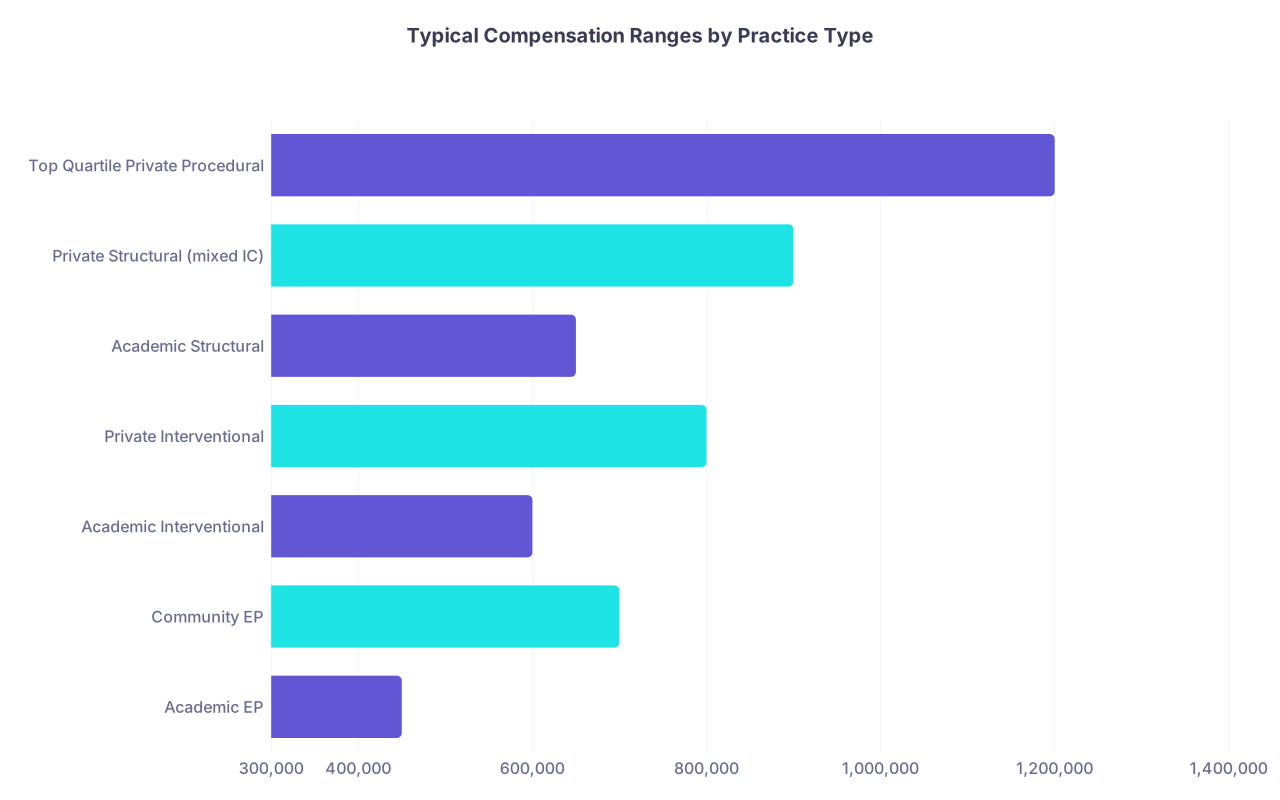
Realistic Ranges: Where EP, IC, and Structural Land
Let us map what people actually take home across different practice settings.
| Category | Value |
|---|---|
| Academic EP | 450000 |
| Community EP | 700000 |
| Academic Interventional | 600000 |
| Private Interventional | 800000 |
| Academic Structural | 650000 |
| Private Structural (mixed IC) | 900000 |
| Top Quartile Private Procedural | 1200000 |
Academic Centers
- EP: $350–550k
- Interventional: $450–650k
- Structural: $550–750k (including some admin stipend, program leadership)
You trade a lot of RVU potential for teaching/research prestige, advanced cases, and name recognition. You also get constant fellows, which changes the stress profile a bit.
Large Community / Hospital-Employed
- EP: $600–800k common, $850k+ with aggressive RVU bonuses
- IC: $650–900k, more in high-call setups
- IC + Structural: $750k–1.1M, especially if you are the main program builder
These are the contracts that shock residents when they see them. They are very real. And usually come with brutal call, high expectations, and negotiating leverage for the hospital.
Private Groups / Partnership Track
On partner side (post buy-in):
- EP partners: often $800k–1.2M depending on market and procedural share
- IC partners: $900k–1.3M+ in some high-volume markets
- Structural-heavy IC partners: I have seen $1.4M–1.6M in rare, very high-volume groups with dominant regional footprint
But—big but—partners also eat overhead, bad payer mix, and business risk. In some older groups, junior partners carry disproportionate hospital work without equal pay. Do not romanticize partnership until you see the books.
Call, Lifestyle, and How They Quietly Rewrite “Pay”
Headline numbers lie if you ignore call.
Interventional: The STEMI Tax
The unstated rule:
Higher interventional pay = higher call load + worse hours.
Setups I see a lot:
- 1:3 or 1:4 STEMI call in small/medium hospitals
- 1:6 or better in large groups, but you often still cover multiple hospitals
Middle-of-the-night STEMI volume is not trivial. Even “light call” still carries the psychological cost of the pager. Over a decade, that is not free.
The salary “premium” relative to EP often exists largely to compensate for:
- Overnight cases
- Weekend call
- ED and ICU consult urgencies
EP: Better Days, Different Stress
EP call is about:
- VT storms
- Pacemaker dependence issues
- New-onset AF with RVR in unstable patients
- Device malfunctions or complications
Significant but generally fewer “sprint to the cath lab in 10 minutes” episodes than STEMI. Many EPs feel the day-to-day is more controlled, but the cases themselves can be exhausting—long afib ablations, complex redo VT ablations, etc.
For some, that trade is absolutely worth a modest pay difference vs interventional.
Structural: Intensity Crammed Into Fewer Blocks
Structural cardiologists usually have:
- Scheduled, high-stakes, long cases
- Multidisciplinary TAVR/MitraClip days that wipe you out
- Less middle-of-the-night chaos, more prep and clinic discussions
The burnout pattern is different. Fewer middle-of-the-night scrambles, more “all-day, back-to-back complex cases with zero margin for error” fatigue.
From a pure pay-per-unit-stress standpoint, structural often lands in a reasonable place if the comp is 10–20% above standard interventional. If it is not, you are subsidizing the hospital.
Market Variability: Geography and Payer Mix
Two interventional cardiologists with “$800k jobs” may have totally different real lives.
Geography
Coastal academic center:
- IC: $500–700k with high cost of living
- EP: $450–650k, similar issues
- Structural: $600–800k, but still expensive city, unionized nursing, high burnout
Versus midwestern non-academic:
- IC: $800–1.1M with a 4-bedroom house at $500k
- EP: $700–900k
- Structural: $900k–1.3M
The adjusted, post-tax, post-housing difference is staggering.
Payer Mix
If >40–50% of your volume is Medicaid/uninsured, candidly, your group’s ceiling goes down.
Commercial-heavy suburbs and well-insured retiree populations (think large Medicare Advantage presence) are ideal, especially for structural. TAVR on a well-insured 78-year-old with few social issues? Program directors drool over that.
Non-Clinical Income: Where Some Proceduralists Quietly Win
A thing not discussed enough: procedural cardiologists, especially EP and structural, are uniquely positioned for ancillary income.
Common side plays:
- Device trials, mapping system research support
- Speaking / proctoring for new ablation or TAVR technologies
- Medical directorship stipends (EP lab, structural heart program)
- Ownership in imaging centers or ASC-like joint ventures (in states where legal)
EPs involved in early adoption of new mapping systems or pulse-field ablation, and structural cardiologists in TAVR/TEER/LAAC rollouts, often have side revenue streams that stack another $50–150k on top of clinical income.
These are not guaranteed. They require reputation, hustle, and often being early in a market.
Who Actually Ends Up Highest Paid: EP vs IC vs Structural
Strip away the marketing and training brochures. Look at end-stage realities.
Pure Income Standings (Typical)
- Interventional + Structural combo, in high-volume private or non-academic setting
- High-volume interventionalist without structural, strong call differential
- EP in solid community/hospital-employed or private practice
- Structural-only (rare) usually paid similarly to IC at same site, sometimes slightly more
- Academic variants of all above, generally lower but with non-monetary perks
So if you asked me:
“On average, who makes the most across the U.S. today?”
The answer is: interventional cardiologists with substantial structural work, especially as partners.
Not EP.
EP does very well, and in some markets individual EPs out-earn individual interventionalists. But across the board, when you factor total wRVUs and call premia, IC + SH generally edges EP out.
Decision Framework: How To Think About Your Own Path
This is the part no one tells you bluntly enough.
If Your Goal Is Maximal Income
Then the hierarchy is pretty simple, assuming you are not limited by geography:
- Aim for interventional in a high-volume, non-academic practice.
- Layer structural on top if possible and negotiate appropriately for the program-building value.
- Be willing to work 1:3–1:4 call early in your career.
- Strongly consider partnership track in stable, data-transparent groups.
You will sacrifice sleep and time, especially in the first decade. That is the real cost.
If Your Goal Is High Income With Less Chaotic Call
EP is often the better play.
- You can still clear $700–900k in many markets.
- Calls are intense but less “get in your car now” than STEMI.
- There is a bit more control over your schedule once the lab is mature and well-run.
The trade: longer training (2 years EP vs 1 year IC) and some days of 6–8 hour ablation marathons.
If You Want to Be at the Cutting Edge of Tech and Programs
Structural scratches that itch.
But go in with open eyes:
- Do not expect a massive salary jump solely because you do TAVR and MitraClip.
- Ensure the contract reflects your co-director or builder role. Administrative stipends should not be trivial.
- Confirm case volume projections are realistic. A “structural program” doing 20 TAVRs per year will not enrich anyone.
I have seen structural-trained cardiologists stuck doing mostly regular PCI with a token TAVR day per month. That is not what they signed up for, but the market did not support their enthusiasm.
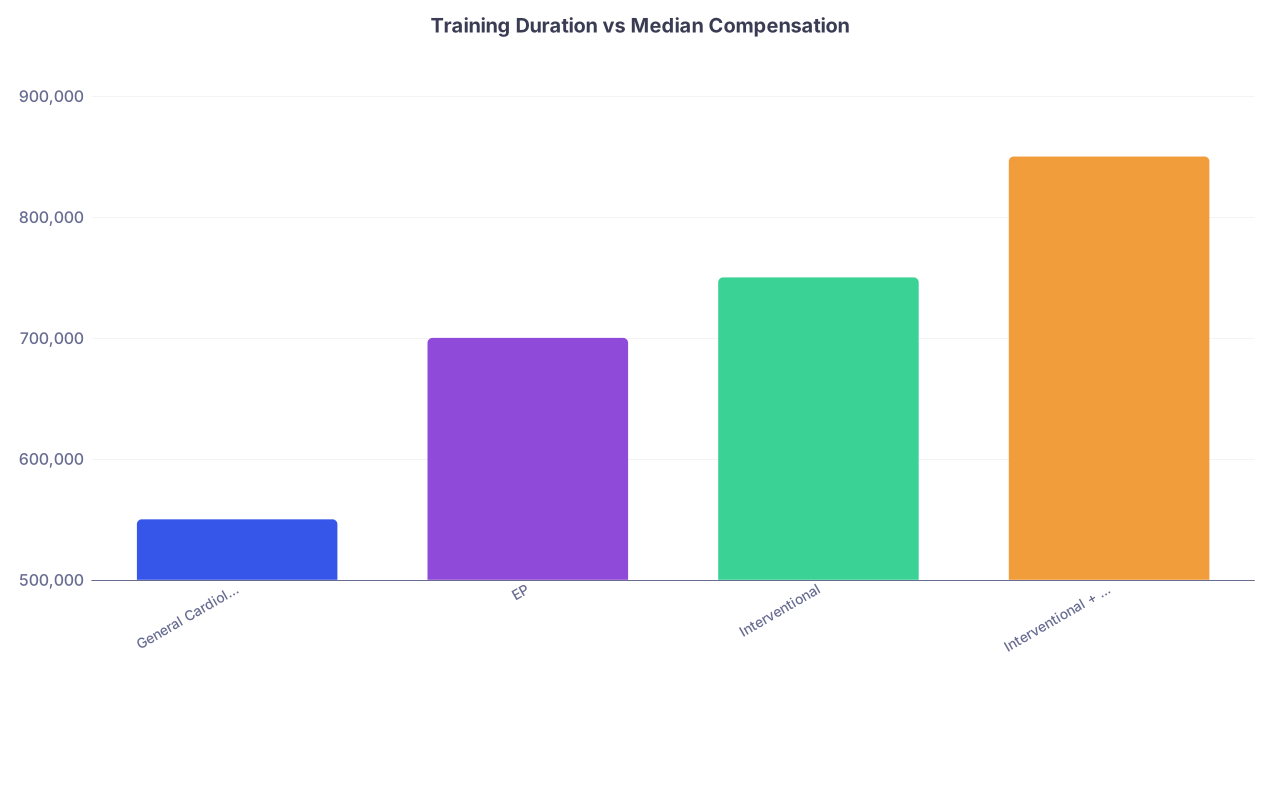
A Quick Visual: Training Length vs Typical Pay
You are trading years of your life for these different peaks. Put them next to each other.
| Category | Value |
|---|---|
| General Cardiology | 550000 |
| EP | 700000 |
| Interventional | 750000 |
| Interventional + Structural | 850000 |
Approximate training:
- General: 6 years post-IM
- EP: 8 years post-IM
- IC: 7 years post-IM
- IC + Structural: 7.5–8 years post-IM
The marginal extra training year for EP or structural does give you a bump. Just not a transformational one compared with plain interventional in many markets.
Red Flags in Contracts for Procedural Cardiologists
Since you are reading this at the “I care about compensation” level, some landmines to avoid:
- RVU targets that assume unrealistic lab throughput – If they need 20,000 wRVUs to hit “median pay,” run.
- No separate credit or stipend for structural program leadership – That work has value.
- Non-competes that cover an entire metro area for 2–3 years – Dangerous in competitive cardiology markets.
- Blurry call language – “Reasonable STEMI call” is not a term. You want explicit numbers: 1:x, in writing.
- Opaque partnership formulas – “We will explain the numbers after you join” is code for “you will not like the numbers.”
Procedural fields magnify these mistakes because your value is enormous and groups know it. You need better information than they expect you to have.
One More Angle: Burnout and Exit Options
Money matters. Long-term survivability matters more.
- EP exit options: pivot toward device-heavy outpatient practice, cut case load, maintain above-average income.
- Interventional exit: shift toward more general cardiology, advanced imaging, or administrative roles. Income may fall but still decent.
- Structural exit: tricky. If your identity is purely structural and TAVR volume collapses or program politics change, your fallback is still interventional. Keep those skills current.
Do not choose a path where, if you burn out of the most intense pieces, you drop off a cliff financially or professionally.
Final Takeaways
- Interventional plus structural, in the right non-academic environment, typically tops the income ladder for procedural cardiology. EP usually follows closely, with slightly better call at slightly lower average pay.
- Structural cardiology generates huge hospital revenue, but only modestly higher physician compensation unless you negotiate leadership and program-building value into your contract.
- Training length, call burden, geography, and practice structure change the effective value of every dollar. If you ignore those, you will misread the EP vs interventional vs structural pay landscape completely.