
67% of students doing away rotations still apply to more than 40 residency programs.
So much for the “away rotations let you safely apply to fewer programs” myth.
If you hang around MS4s during application season, you hear the same line on repeat:
“I’m doing two aways in ortho, so I don’t need to apply as broadly.”
“If I crush my away in EM, that’s my in.”
“My home program + my away = I’m basically safe.”
I’ve watched this movie for years. The ending is usually the same: people still panic-apply in ERAS, still overpay, and a depressing number still under-match or don’t match at all—even with “great” away evaluations.
Let’s walk through what away rotations actually do for you, what they do not do, and why they usually should not dramatically shrink the number of programs you apply to.
What Away Rotations Actually Change (And What They Don’t)
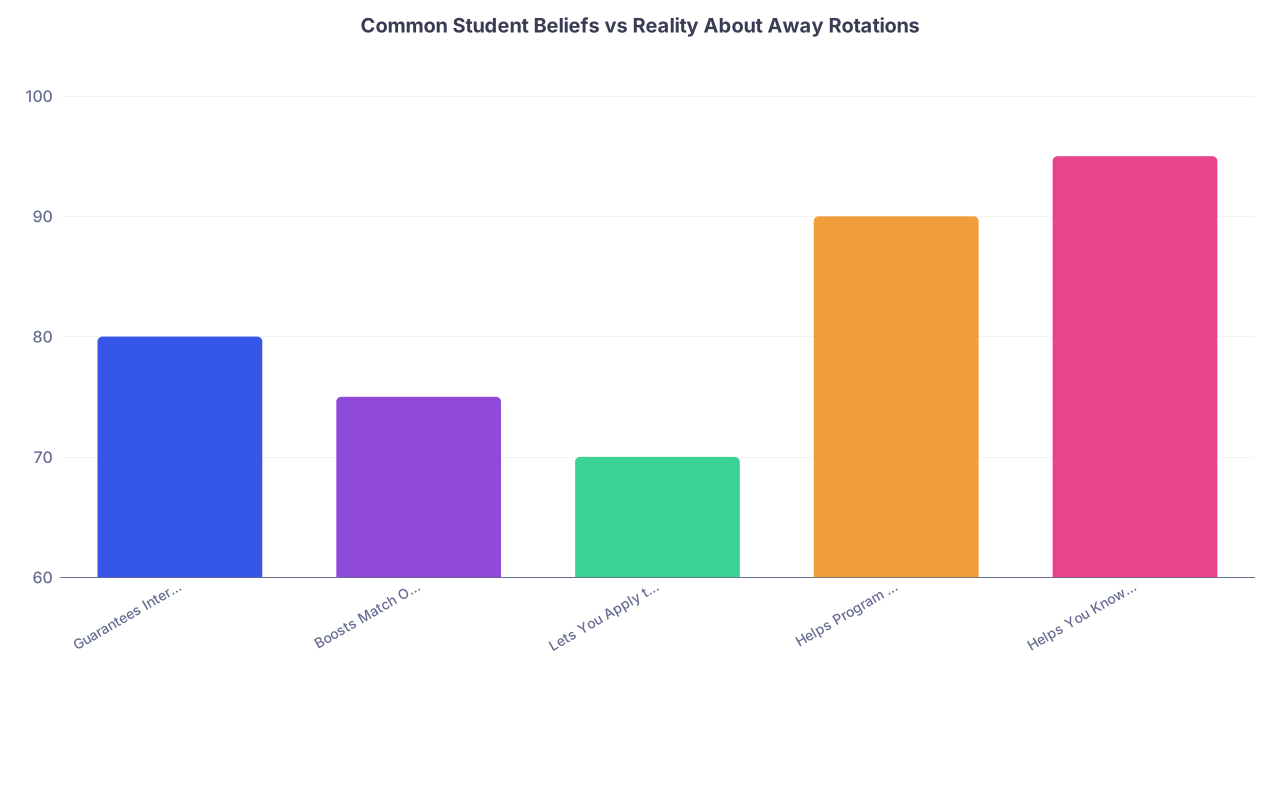
| Category | Value |
|---|---|
| Guarantees Interview | 80 |
| Boosts Match Odds Majorly | 75 |
| Lets You Apply to Fewer Programs | 70 |
| Helps Program Know You | 90 |
| Helps You Know Program | 95 |
Here’s the honest version.
Away rotations do:
- Turn you from an anonymous PDF into a known quantity at that single program
- Give you a shot at a strong specialty-specific letter from people in that department
- Help you understand the culture and workload of that one place
- Occasionally flip a borderline candidate into an interview or rankable candidate at that program (and maybe a couple similar ones via letters)
Away rotations do not reliably:
- Guarantee you an interview, even at the site where you rotated
- Compensate for a weak Step 2 score or low class rank across the board
- Make you “special” to every other program on your list
- Justify cutting your application list in half “because I did an away”
The fantasy is: “Away rotation = golden ticket at that program + spillover love from others → I can safely apply to way fewer spots.”
Reality is closer to: “Away rotation = maybe a small advantage at one or two programs + a better letter → I still need a broad and realistic school list.”
In other words, aways shift probabilities locally, not globally.
The Data: Aways Help, But Not The Way You Think
Let’s anchor this in what we actually know from NRMP, specialty organizations, and institutional data.
Several competitive fields (ortho, ENT, neurosurgery, derm, EM) have published data on away rotations. The pattern is consistent:
- Doing an away is associated with higher odds of matching at that specific program compared with applicants who did not rotate there.
- It does not magically boost your odds everywhere else in the country.
- It does not eliminate the need to apply broadly, especially in competitive specialties.
Programs are also getting choosier about turning away rotations into interviews. I’ve seen departments explicitly say during student orientation:
“Doing a rotation here does not guarantee you an interview.”
And then proceed to invite maybe 50–70% of their rotators. The rest? Nice eval, strong handshake…no interview.
Here’s a simplified way to think about it.
| Scenario | Chance at That Specific Program | Chance Across All Programs |
|---|---|---|
| No away rotation | Baseline | Baseline |
| Away rotation, average performance | Slightly higher | About the same |
| Away rotation, standout performance | Noticeably higher | Slightly higher (via letter) |
Notice what’s missing: any scenario where “away rotation → cut your applications by 40–50%.”
That fantasy is not supported by the patterns we actually see.
The Psychology Trap: Why Students Drastically Overestimate Aways
This isn’t just data; it’s cognitive bias.
1. The “I Showed My Face, So I’m In” Fallacy
You spend 4 weeks working hard somewhere. You scrub cases, stay late, memorize everyone’s name, bring donuts on Friday. By the end, you feel like part of the team.
Here’s what your brain quietly says:
“I’m basically one of them now. They wouldn’t leave me out.”
But from the program’s side?
They have:
- 30+ rotators across the year
- 60–100 total interview slots
- Pressure to interview their own home students first
- Obligations to diversity, couples match, internal candidates, etc.
You are not competing with “random applicants.” You are competing with all their rotators, plus the strongest PDFs from everywhere else.
So yes, they know you better. That helps. But being known is not the same thing as being indispensable.
2. Survivorship Bias: You Only Hear the Success Stories
On Reddit and from upperclassmen, you mostly hear:
“I did an away at X and matched there!”
“I honored my away and that’s where I ended up.”
What you do not hear as loudly:
- The student who honored their away, got along with everyone, and still didn’t even get an interview there
- The person who did two aways, under-applied “because my aways went great,” and went unmatched
Those people are less vocal. Or they disappear into prelim years and SOAP chaos.
Your perspective is skewed because you only see the winners holding their envelopes on Match Day, not the people quietly scrambling.
When Can Away Rotations Reasonably Reduce Applications?
Now, I’m not saying aways are useless. They’re not. I’m saying the bar for letting them cut your list should be high and specific.
There are a few narrow circumstances where it’s rational to trim your application numbers a bit because of away rotations.
Scenario 1: Already-Strong Applicant, Aways at Realistic Targets
You:
- Have solid board scores for your specialty (not barely hanging on, actually solid or above average)
- Come from a known med school with good home specialty support
- Have no major red flags
- Do aways at mid-to-upper-tier but realistic programs that see your numbers and say, “Yep, you’re in our usual range”
In that scenario, if you originally planned to apply to 80 programs, maybe you can drop to 60–65 without being reckless.
Note what I did not say: I did not say “drop from 40 to 20.”
Scenario 2: Geographic Targeting With Strong Fit
You want to stay in one region for family reasons. You do:
- A home rotation at a major regional program
- An away at another anchor program in the same metro or state
- Possibly a second away nearby if your specialty is cutthroat (ortho, derm, ENT, etc.)
Now your aways might justify trimming some faraway programs you realistically would not attend anyway. You replace “spray and pray” with deeper targeting of one region.
You are not applying to fewer total realistic programs; you’re just biasing heavily toward one area.
Scenario 3: Very Niche Goals With Backup Plan
You’re gunning for a hyper-specific niche (say, academic neurosurgery at a research-focused program) and set up aways at two realistic—not fantasy—targets.
If you also:
- Apply broadly within that niche tier
- Have a clear backup specialty or safety tier in mind
- Are okay with outcomes that don’t match the dream
Then yes, those aways may give you enough signal to avoid applying to the entire universe. You’re playing a focused game with eyes open.
When Away Rotations Absolutely Should Not Shrink Your List
Let me be blunt. If any of these describe you, your away rotations are a reason to apply smarter, not narrower.
1. Scores or Class Rank Below Specialty Averages
If your Step 2 or COMLEX scores are below the mean for matched applicants in your specialty, an away rotation is not a cheat code.
Programs see your score first. The away might bump you from “auto-reject” to “maybe” at one or two places if you blew them away in person. That’s about it.
You do not have the leverage to also apply to half as many places and still call that a strategy. That’s denial.
2. You’re Switching Specialties Late
Plenty of people pivot from surgery to anesthesia, from peds to EM, etc. Doing an away in your new field helps.
But you’re competing against people with:
- Multiple home rotations in that specialty
- Specialty-specific research
- Early letters and mentorship
One away doesn’t magically erase your “late to the party” status nationwide. You still need to apply broadly until you’ve built a track record.
3. You’re in a Hyper-Competitive Specialty Without A-Plus Metrics
For derm, ortho, ENT, plastics, neurosurgery, integrated IR, etc.:
If your app is not obviously top-decile (scores, research, letters, home program pedigree), then away rotations are table stakes, not force multipliers.
They’re you saying, “Please take me seriously,” not, “I’m so strong I can cut my list in half.”
4. You’re From a Lesser-Known or Newer School With Limited Home Support
If programs do not regularly see graduates from your med school, or your home program in that specialty is weak or nonexistent, aways help—that part is true.
But again, that’s mainly at the places you rotate. Elsewhere, you’re another application with an unknown institutional brand.
This is not the profile of someone who should be trimming their list aggressively.
The Money Myth: “I’m Doing Aways So I Don’t Have To Spend On ERAS”
This one’s almost darkly funny.
Students drop:
- $1,500+ on housing, travel, and food for each away
- Lost income opportunities if they could have worked or tutored that month
- Emotional energy and time that could have gone into research, Step 2 studying, or bolstering other parts of their app
Then say:
“At least this means I don’t have to apply to so many places, so I’ll save on ERAS fees.”
No. You just replaced some ERAS costs with away rotation costs and then assumed—without evidence—that those aways buy down your risk enough to justify fewer applications.
If you’re going to spend the money on aways, use them to:
- Get the strongest possible letters
- Get a brutally honest read from attendings on your competitiveness
- Refine your target list based on real feedback, not vibes
What you should not do is pre-commit to “fewer applications” just because you wrote your name on a whiteboard in another hospital.
How Aways Should Actually Influence Your Application Strategy
Here’s the grown-up way to use aways.
Start with your numbers and specialty data.
Look at NRMP Charting Outcomes, your school’s match list, and your advisor’s experience. Build a conservative estimate of how many programs people like you typically need to apply to.Plan aways at realistic fits, not fantasy reach only.
One reach is fine. Two reaches and no realistic away targets? That’s not strategy; that’s ego.After each away, ask for explicit feedback.
“If I applied here, based on what you’ve seen, do you think I’d be competitive for an interview?”
Not everyone will answer directly. But some will, if you ask the right person.Adjust your list slightly at the margins.
If feedback is glowing and your generic competitiveness is strong, maybe you trim 10–20% of your original number, not 50%.
If feedback is lukewarm or noncommittal, you don’t shrink at all. You may even expand slightly.Remember your away is one data point, not a new identity.
You’re still the same applicant on paper to the other 50 programs that never met you.
Rough Application Numbers: Aways Are a Modifier, Not a Reset Button
Very rough, deliberately conservative ranges (for total applications), assuming US MD with average-ish stats for the specialty:
| Specialty Competitiveness | Without Aways | With 1–2 Aways (Realistic Use) |
|---|---|---|
| Less competitive (FM, IM, Psych in many regions) | 15–25 | 15–25 |
| Moderate (Anesthesia, OB/GYN, Peds, EM in most regions) | 30–50 | 25–45 |
| Competitive (Rad Onc, Radiology, EM in hot regions) | 40–70 | 35–60 |
| Hyper-competitive (Derm, Ortho, ENT, Plastics, NSG) | 60–90+ | 55–85+ |
Notice something: aways shift the edges, not the whole scale. You’re not dropping from 70 to 25 because you did a month at Hospital X.
Final Reality Check
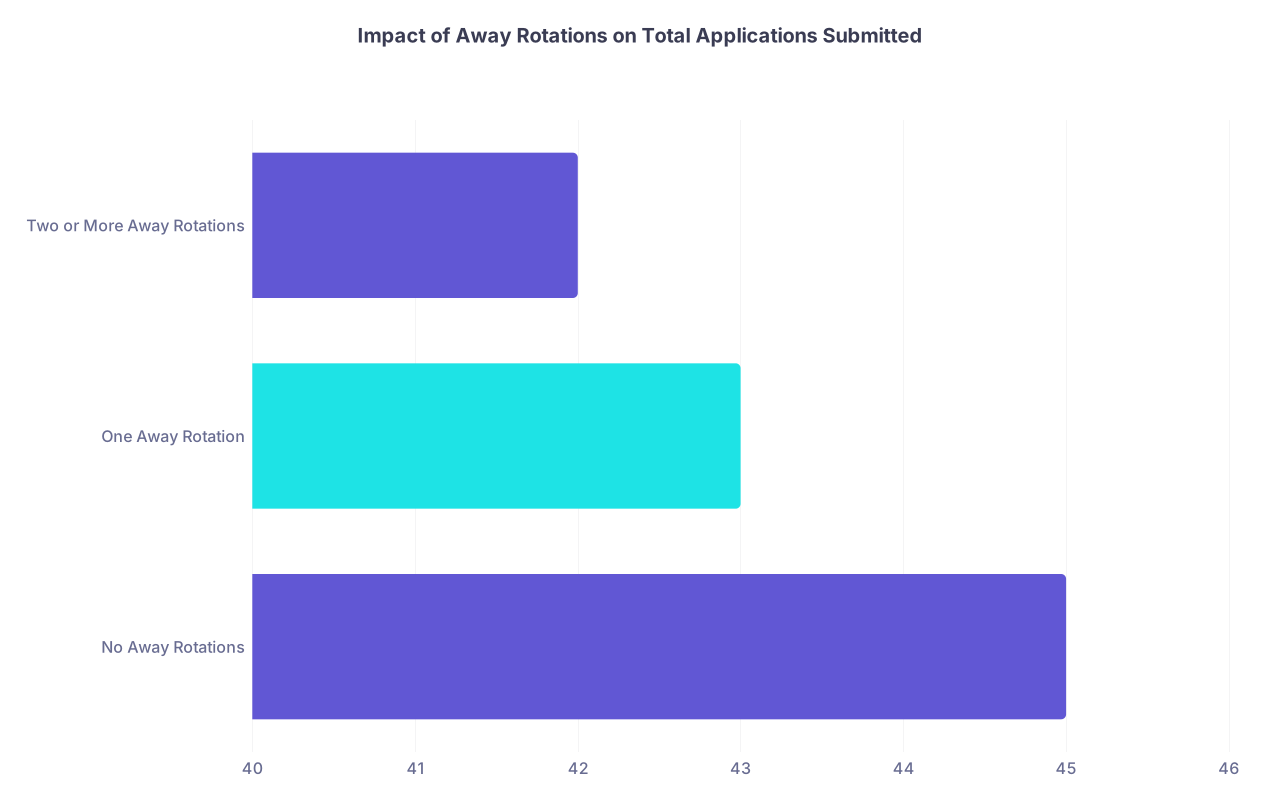
| Category | Value |
|---|---|
| No Away Rotations | 45 |
| One Away Rotation | 43 |
| Two or More Away Rotations | 42 |
The pattern year after year: even students who do multiple away rotations still end up applying broadly. Because once ERAS opens, reality hits: there are no guarantees.
Away rotations are useful. I’d argue in some specialties they’re almost essential.
But they are not:
- A magic pass to rank security at one program
- A universal attractiveness booster everywhere else
- A rational justification to aggressively slash the number of programs you apply to
They’re one lever in a much larger system.
Key points to walk away with:
- Away rotations increase your odds locally at specific programs, not globally across the match.
- For most applicants, aways should tweak your application numbers at the margins, not slash them in half.
- Use aways to gather honest feedback and strengthen your letters—not as an excuse to under-apply and hope the month you spent somewhere buys you certainty it simply does not.