

The number of programs you applied to is not the problem. The signal you’re getting back is.
You applied to 80 programs and got 2 interviews. That ratio is screaming something. And I know exactly what your brain is doing with it:
“I’m doomed.” “I must have some fatal red flag.” “Everyone else is swimming in invites and I’m just… not.”
Let’s slow this down and actually decode what 2/80 means, because it does mean something — but it’s probably not what your 2 a.m. catastrophizing is telling you.
Step One: What 2 Invites Out of 80 Actually Suggests
Let me be blunt: 2 interviews out of 80 is low, no matter the specialty.
It doesn’t mean “you’ll never match,” but it does usually mean at least one of these is true:
- Your application signal is off (scores, grades, red flags, lack of letters, weak personal statement).
- Your school list was misaligned (too many reaches, too few safer programs, wrong geographic focus).
- You applied late or incomplete (late Step 2, late LORs, personal statement rushed).
- Your specialty is more competitive than people admit publicly.
Here’s the annoying part: you don’t know which combination is hitting you hardest. But programs aren’t rolling dice. The ratio is data.
| Scenario | How 2/80 Often Interprets |
|---|---|
| Less competitive specialty, US MD | Something is off in the file |
| Less competitive specialty, US DO/IMG | Application is borderline but not dead |
| Competitive specialty (Derm, Ortho, ENT, etc.) | This may be standard for low-middle applicants |
| Late application (Sept/Oct complete) | Timing + marginal stats combined |
And here’s the kicker: 2 interviews is not zero. Zero is a very different conversation. Two means someone looked at your mess of an ERAS PDF and said, “Yeah, I’d meet this person.”
That matters.
Step Two: Is 80 Programs “Enough” or “Too Many”?
Everyone always asks, “How many programs should I apply to?” like there’s a magic safety number. There isn’t. But I get why you’re hung up on it, especially if you stretched your bank account hitting 80.
Let me be real: 80 is a lot. For most specialties, it’s more than enough if your application is reasonably aligned.
Where it can still not be enough:
- Very competitive specialties (Derm, Ortho, ENT, Plastics, Neurosurg).
- Borderline or concerning stats in moderately competitive specialties (EM, Anesthesia, Radiology).
- Being an IMG/DO targeting academic-heavy or coastal programs without strong anchors (US clinical experience, research, home connections).
But even then, if the quality of your list is off, 80 becomes an expensive way to hear “no” more times.
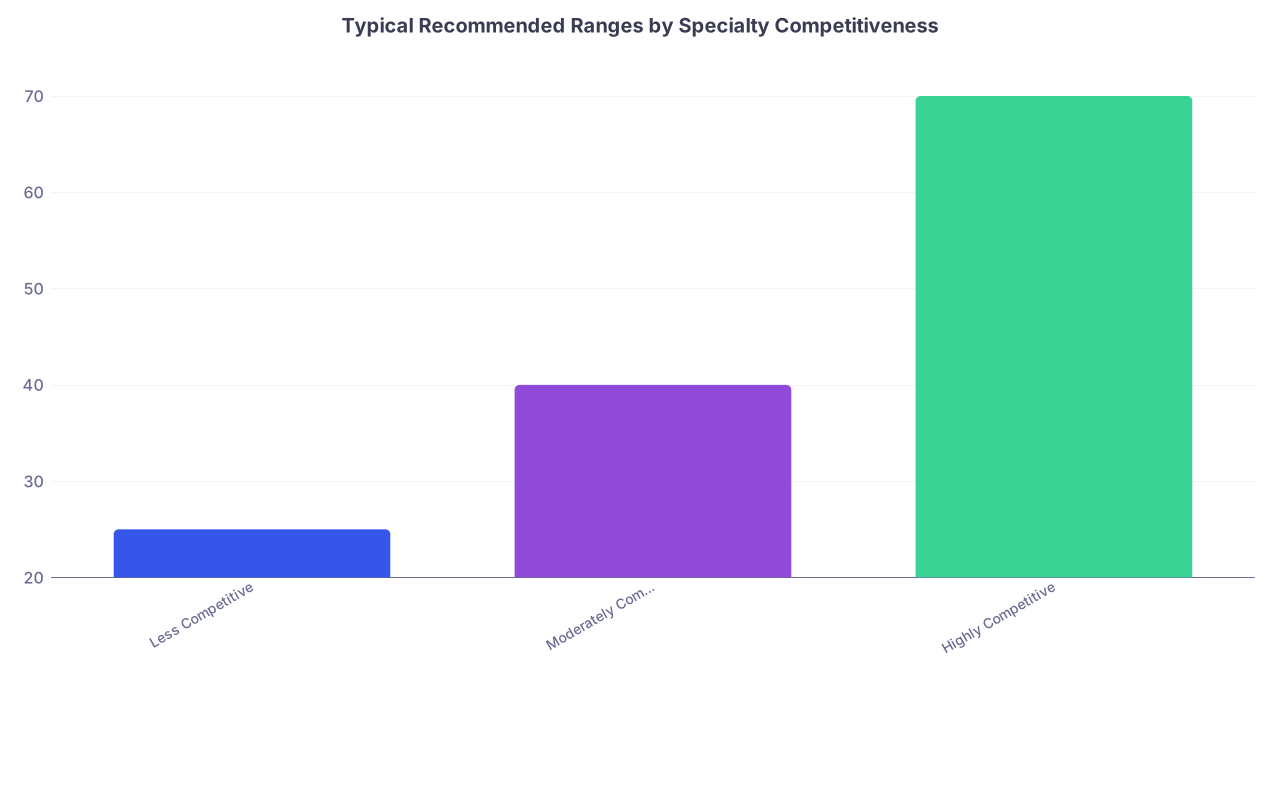
| Category | Value |
|---|---|
| Less Competitive | 25 |
| Moderately Competitive | 40 |
| Highly Competitive | 70 |
So if you’re asking, “Did I just not apply to enough places?” — that’s probably not the main problem. Going from 80 to 100 doesn’t magically turn 2 interviews into 12. People love to say “just apply more broadly” because it’s easy advice that doesn’t require them to look at the deeper issues.
But the hard truth? If you shotgunned 80 and landed 2, your bottleneck is rarely “quantity.” It’s signaling and fit.
Step Three: The Ugly Questions You’re Probably Afraid to Ask
You’re probably already spinning on these, so let’s drag them out into the light.
1. Does this mean I won’t match?
No. It means your odds might be lower than you’d like, depending on the specialty.
Reality check, without sugarcoating:
- For many core specialties, people commonly say 8–12 interviews gives you a strong chance to match.
- 5–7 is more “coin-flip but okay.”
- 1–3 is “technically possible, emotionally brutal.”
With 2 interviews:
- You can match if: your specialty is less competitive, those 2 programs rank you decently, and you interview well.
- You’re at risk if: your specialty is even moderately competitive, or those 2 programs are high reach.
Is it scary? Yes. Is it automatic disaster? No. But it does mean you need to treat every single interview like it’s your Super Bowl.
2. Does this mean there’s something terribly wrong with me?
With you as a human? No.
With your file? Probably something is hurting you.
Usual suspects:
- Step 1/2 scores below program filters.
- One or more failed attempts on Step exams or COMLEX.
- Low class rank / failed clerkship / remediation.
- Weak, generic, or late letters.
- No home program / weak institutional support.
- Really rough personal statement (rambling, cliché, unclear path).
- IMG or DO status with no strong US anchors (research, sub-internships, connections).
If nobody at your school has sat down and ripped apart your ERAS with you line by line, that’s step one. Because 2/80 is often the result of something systemic in how you’re presenting yourself, not bad luck.
Step Four: Retrospective Reality Check – Was Your List Doomed?
This is where things get nasty in your brain: “Did I waste my chance this year?”
I’m not going to spin it. Sometimes, yes, the way you constructed your list almost guaranteed a low hit rate.
Patterns I see all the time:
- 60–70% of programs in top cities: New York, Boston, SF, LA, Chicago, Seattle. Everybody wants to live there. Programs know it.
- Way too many “dream” places and big-name academics, not enough true safeties.
- You ignored community-heavy or mid-tier programs because you “don’t want to end up there.”
- No state connection to most places you applied.
You know how you can tell your list might’ve been over-optimistic? If you can answer “yes” to these:
- “I applied mostly where I want to live rather than where I’m realistically competitive.”
- “I avoided many programs in smaller towns, Midwest/South, or less glamorous locations.”
- “I leaned heavily academic/university and barely touched community programs.”
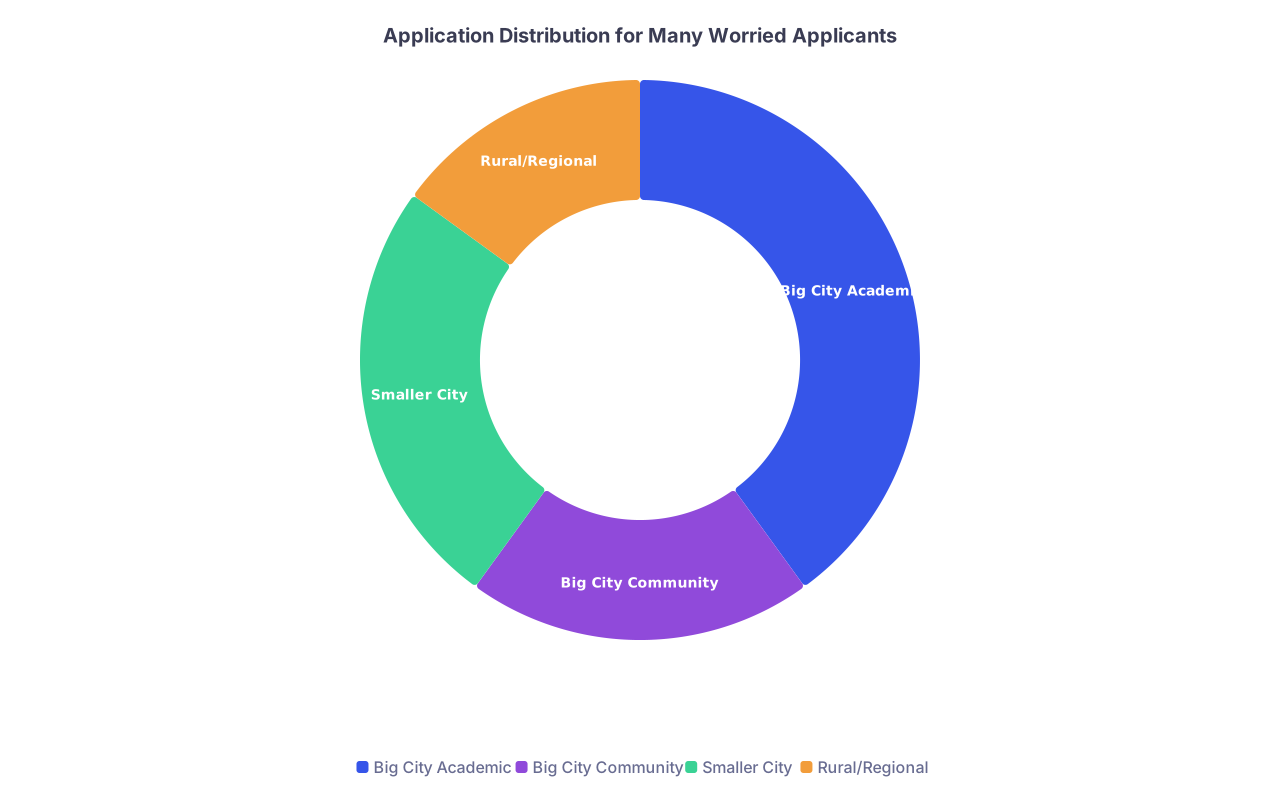
| Category | Value |
|---|---|
| Big City Academic | 40 |
| Big City Community | 20 |
| Smaller City | 25 |
| Rural/Regional | 15 |
This doesn’t mean you’re arrogant. It just means you built a list based on hope instead of probability. I’ve watched a lot of people do the same thing. Usually because nobody ever sat them down and said, “You’re not a Harvard/Beth Israel/USC candidate this cycle. You need more Program You’ve Never Heard Of in City You’ve Never Visited.”
Step Five: What You Can Still Do This Cycle
Okay, you’ve got 2 invites. Panic is high. You feel stuck.
You’re not as stuck as your brain says.
Here’s where you still have some control:
Crush those 2 interviews.
Not “do fine.” Be memorable, grounded, self-aware.- Practice your “tell me about yourself” until it actually sounds like a human story, not a LinkedIn summary.
- Have a clear, specific “Why this program?” for each place.
- Know your own red flags and how to talk about them without sounding defensive or rehearsed.
Communicate interest (without being weird).
- If one of those two is your clear top, a well-written, honest “this is my first choice if I match here” email closer to ranking time can help.
- Post-interview thank-you notes that are specific (not copy-paste) show maturity and interest. Not magic. But not useless.
Ask your school or advisor for brutal feedback.
“My ratio is 2 interviews from 80 programs. I need you to be extremely direct. What about my application is hurting me?”
If they say, “It’s just a competitive year,” push back. “Other people from our school with similar stats have 8–10. Something is off here.”Stop obsessively refreshing your email every 30 seconds.
Interview season has waves. Late invites still happen. I’ve seen applicants get an invite in January and match there. Is it common? No. Impossible? Also no.
Step Six: If You Don’t Match — What This 2/80 Data Tells You for Next Time
I know you don’t want to think about this. Your body kind of contracts just reading the words “if you don’t match.”
But thinking about it now, rationally, is better than spiraling later.
If this cycle doesn’t work out, your 2/80 pattern has already given you some clues:
You can’t just “apply to more.”
Next time, you need:- A surgically built list (more true safeties, more geographic spread, more honest tiers).
- Someone experienced (advisor, PD, faculty mentor) to look at your list before you hit submit.
You probably need to change something real, not cosmetic.
Examples:- Improve Step 2 or relevant exam scores if possible.
- Add strong US clinical experience (esp. IMG/DO).
- Get better, more detailed letters from people who truly know your work.
- Do a research year or prelim year that actually shifts your competitiveness, not just fills time.
You need a story that acknowledges this cycle without sounding broken.
“I applied to 80 and got 2 interviews; I then spent the year doing X, Y, Z to improve A, B, C” sounds very different from “I just reapplied and hoped it went better.”
Step Seven: The Emotional Side Nobody Talks About
Let’s not pretend you’re just “processing data.” You’re grieving a fantasy.
You imagined:
- 6–10 interviews.
- Group chats with friends complaining about too many invites.
- Complaining about Zoom fatigue.
- That one program you fell in love with on interview day.
Instead:
- You’re counting your interviews on one hand and still have fingers left.
- You’re silently comparing yourself to classmates without telling anyone you’re doing it.
- Every acceptance post on social media feels like a punch.
Here’s the part people gloss over: 2/80 hurts. It’s not just numbers. It feels like 78 programs looked at you and said, “No thanks.”
But here’s what you’re forgetting: you don’t need 78 yeses. You need one program to decide you’re their person.
I’ve seen:
- People with 2 interviews match happily and never think about numbers again once they’re signing contracts as attendings.
- People with 15 interviews still go unmatched because their list and rank order were chaos and they interviewed poorly.
- DOs and IMGs who got 1–3 U.S. interviews, matched, and now are solid, confident senior residents teaching others.
Your 2 interviews are not pity invites. Someone on those committees argued for you. Remember that.
FAQ (Exactly 4 Questions)
1. Should I try to send update letters or emails to other programs to get more interviews?
You can send brief, professional updates if something meaningful has changed (new Step 2 score, accepted publication, significant rotation with a strong letter coming). But mass-emailing 60 programs saying “I’m still very interested” won’t magically turn into invites. Use your energy where it counts: perfecting interviews, strengthening relationships with your home institution, and planning a realistic backup strategy.
2. Did I apply to the wrong number of programs if I only got 2 interviews out of 80?
The number isn’t the core issue. For most specialties, 80 is plenty. The low yield almost always reflects either: misaligned list (too many reaches, wrong geography), application weaknesses (scores, letters, personal statement, red flags), or timing (late completion). If you reapply, obsess less about “should I do 80 or 100?” and more about “are these 80 the right 80 for my profile?”
3. Does being an IMG or DO explain 2 interviews from 80 applications?
It might explain some of it, but not all. Many IMGs/DOs match every year; some get 8–12+ interviews with carefully built lists, strong US clinical experience, and realistic expectations. If you’re an IMG/DO with 2 interviews, you likely need to adjust not just your list, but also your anchors: more US rotations, stronger US letters, maybe a research or preliminary year that gives real credibility.
4. How many interviews do I “need” to feel safe about matching?
There’s no magic line, but here’s the rough reality most people quietly acknowledge: 10–12+ interviews in a non-ultra-competitive specialty usually feels reasonably safe. 6–9 feels anxious but okay. 3–5 is edge-of-your-seat. 1–2 is “possible but fragile.” You’re in that last category. It’s scary, yes, but not hopeless. Focus on controlling the part you can: being the best version of yourself at those 2 programs, and having a concrete plan if this cycle doesn’t go your way.
Key points to hang onto:
- 2/80 is a signal about your application and list, not a verdict on your worth.
- Matching with 1–2 interviews is possible, but you have to treat those programs like gold.
- If you have to reapply, you cannot just “apply to more” — you need to fix the underlying issues the 2/80 ratio is hinting at.


