
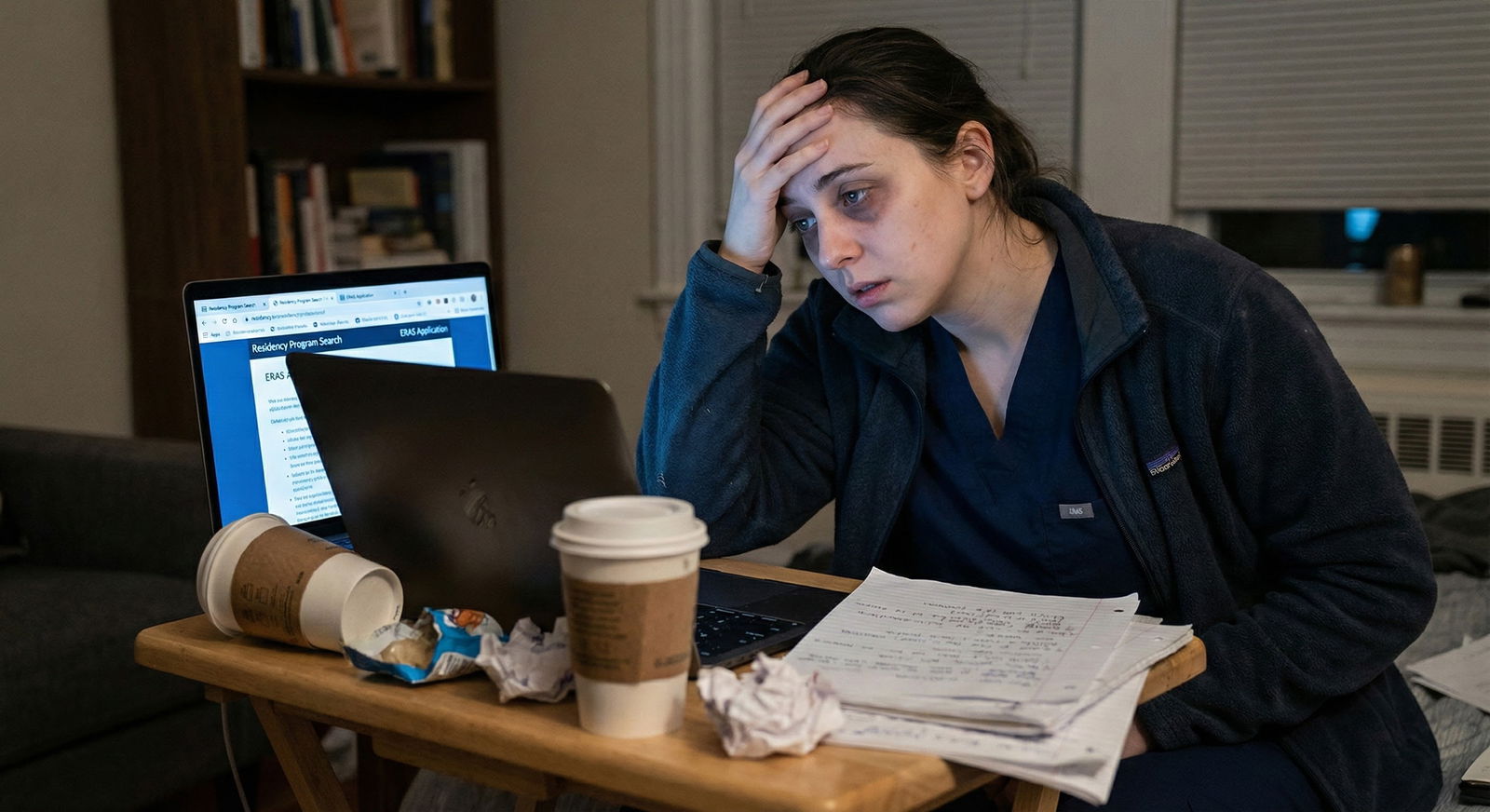
Last week I was sitting in the library when an M4 I barely know just blurted out, “I don’t have a home program… so I’m applying to eighty. I can’t risk not matching.”
Everyone at the table went quiet. Because that’s the fear, right? No home program = no safety net = you need to carpet‑bomb ERAS or you’re dead in the water.
If you’re reading this, you probably have that same knot in your stomach: no home program, no built‑in chair to call a friend, no “our students always match here” story to lean on. And now you’re wondering if that means you have to apply to double the usual number of programs just to have a shot.
Let’s walk through this like two people who haven’t slept in a week and can’t afford to kid themselves.
What “no home program” actually changes (and what it doesn’t)
First, reality check. Having no home program does matter. Anyone who tells you it’s irrelevant is either lucky or not paying attention.
You’re missing:
- A guaranteed audition site where people already know you
- An obvious “home” letter from the PD or department chair
- A built‑in pipeline where past grads pave the way
So yeah, that’s a disadvantage.
But here’s what you’re not missing just because you don’t have a home program:
- Your board scores
- Your clinical grades
- Your letters from away rotations or other institutions
- Your personal statement, CV, and life story
- Your ability to perform well on rotations and in interviews
Programs don’t reject you because “no home program” is in a little red banner at the top of your app. It’s not like ERAS auto‑filters you into the trash.
Where it hurts is more subtle: fewer “easy” interviews, less institutional advocacy, and less default credibility. Which means, yes, you probably need to cast a wider net than a comparable applicant with a strong home program.
But doubling mindlessly? That’s usually panic, not strategy.
The numbers: how many do people actually need?
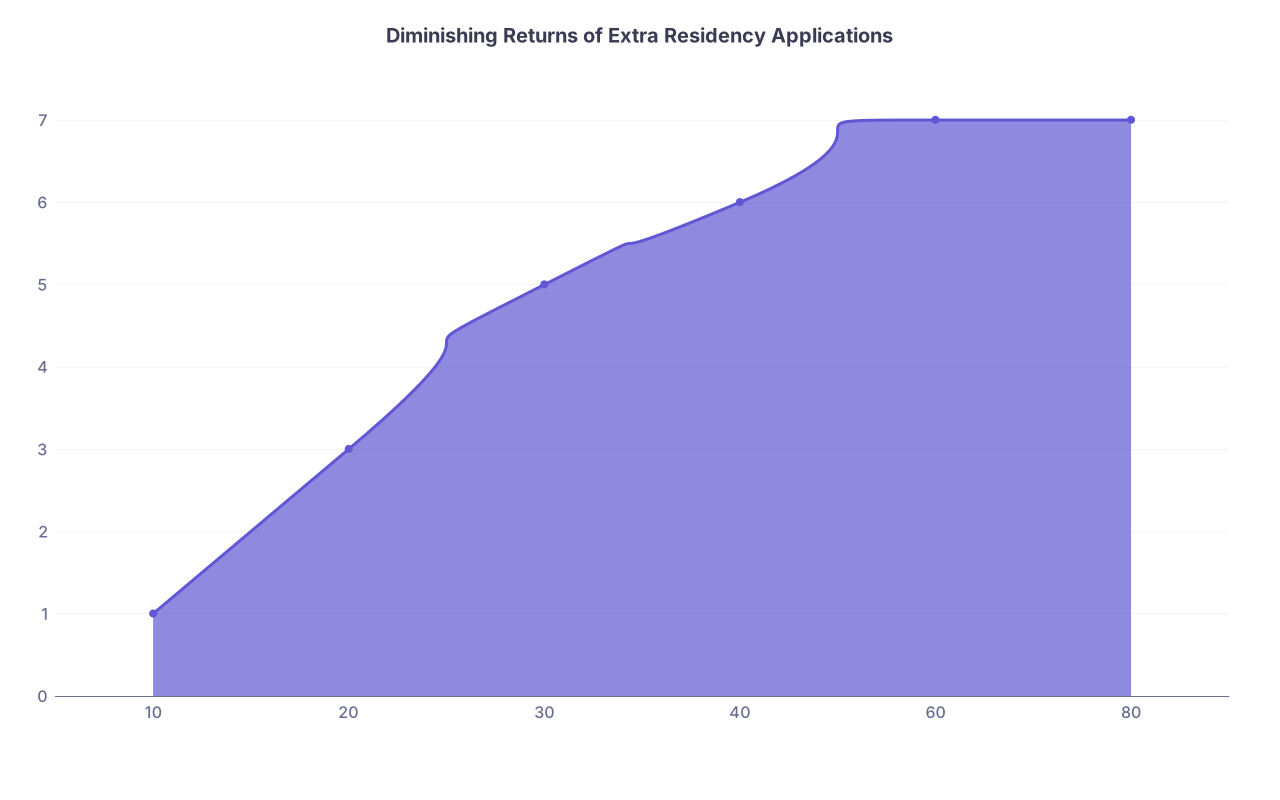
Here’s the part that everyone sort of knows but nobody wants to believe: there is a point where more applications stop helping much.
| Category | Value |
|---|---|
| 10 | 1 |
| 20 | 3 |
| 30 | 5 |
| 40 | 6 |
| 60 | 7 |
| 80 | 7 |
That’s the basic curve people see in NRMP Charting Outcomes data and specialty advising slides: interviews go up sharply at first, then flatten. Past a certain number, every extra 10 applications might get you maybe one more interview. Or none.
But that “sweet spot” is different for each specialty and each applicant type.
Here’s a rough, brutally honest snapshot that I’ve seen advisors quietly use when they’re not talking in public soundbites. This is for average-ish US MD/DO applicants in relatively competitive vs non‑competitive fields:
| Specialty Type | With Home Program | No Home Program |
|---|---|---|
| Less competitive (FM, IM community, Peds) | 15–25 | 25–35 |
| Mid (Neurology, Psych, OB/GYN, Anesthesia) | 30–45 | 45–60 |
| Competitive (Derm, Ortho, ENT, Plastics, NSG) | 50–70 | 60–80+ |
Notice what’s not happening here: nobody is saying “just double.” A psych applicant with a home program applying to 35 doesn’t suddenly need 70 because their school doesn’t have psych. A mid‑tier OB/GYN applicant doesn’t automatically jump from 40 to 80.
The bump is usually more like 30–50% more programs, not 100% more.
The only people creeping toward truly outrageous numbers (80–100+):
- Red flag applicants (failures, big gaps, visa issues)
- People applying to ultra‑competitive specialties with weak stats
- People who are panicking and hitting “submit all” at 2 a.m.
So where does no home program put you? In the “be a little more generous” zone. Not the “burn $3,000 out of terror” zone.
How having no home program really affects your strategy
Here’s the uncomfortable truth: the biggest risk for a no‑home‑program applicant isn’t applying to too few programs. It’s applying to the wrong distribution of programs and assuming prestige will save you.
I’ve watched this happen:
- Student: no home derm program, decent Step 2, solid but not insane research. Applies to 65 derm programs.
- Reality: 50 of those are hyper‑academic, high‑power places that favor Harvard/Stanford/UCSF pipelines.
- Result: 2–3 interviews, endless despair, near miss on Match.
They thought the issue was “not enough programs.” It wasn’t. It was the mix.
You don’t have a home program. So you need to replace that “likely interview” with:
- A few strategically chosen regional programs where you have ties
- A higher proportion of community or less‑academic programs (even in competitive fields, they exist)
- Places where your application profile actually fits — not just “name brands you’ve heard of”
Think of it this way: your lack of home program means you probably won’t have that one “automatic” interview. So instead of doubling your applications, you need to create 5–10 extra realistic options.
A lot of people don’t like this answer because it’s not as emotionally satisfying as “just apply to 90 and you’ll be safe.”
But this is what actually moves the needle.
Red flags vs “just no home program”
Here’s the other thing your brain is probably doing: lumping “no home program” into the same category as “failed Step” and “took 3 years off to deal with disciplinary issues.”
They are not the same.
Programs absolutely differentiate between:
- Applicant A: no home program, average stats, normal timeline, decent letters from aways
- Applicant B: multiple exam failures, professionalism concerns, inconsistent story
If you’re Applicant A, you’re disadvantaged but not doomed. You’re not a “high‑risk” gamble. Programs just have to work a little harder to vet you because they can’t call your PD and ask, “So, how are they really?”
If you’re Applicant B and you have no home program? Then yeah, your application numbers probably do need to creep up into uncomfortable territory, and you need a backup specialty conversation, yesterday.
But most people reading this aren’t Applicant B. They’re just catastrophizing everything into worst‑case scenario because that’s what this process does to your brain.
So ask yourself honestly:
- Do I have passing scores (or at least strong pass on Step 2)?
- Are my clinical evals generally good?
- Do I have at least one or two attendings who can genuinely vouch for me?
- Have I done or planned away rotations in this field?
If those are “yes,” then no home program is a hurdle, not a death sentence. That means: increase applications moderately, not exponentially.
Away rotations, letters, and how you “fake” a home program
This is the part people underestimate.
If you have no home program, your away rotation(s) become your de‑facto home.
When a PD sees:
- A strong letter from an away site in their field
- A comment like “one of the best students I’ve worked with in several years”
- Evidence you functioned in their specialty at a real program
…that carries a lot more weight than “this student had a home program but no one wrote them a strong letter.”
I’ve seen applicants with no home program but killer away letters outperform classmates with home programs and lukewarm support.
So while your brain is screaming about doubling applications, your time is usually better spent:
- Making sure at least one away rotation is solidly in your specialty
- Getting a very specific, detailed letter (not “good student, showed up”)
- Staying in touch with those attendings and letting them know where you’re applying
- Asking if they’d be comfortable advocating directly for you at selected programs
No home program means you have to manufacture that sense of “home support” through aways and mentors. It’s more work. It’s unfair. But it’s also absolutely doable.
Money, burnout, and the myth of safety via giant application lists
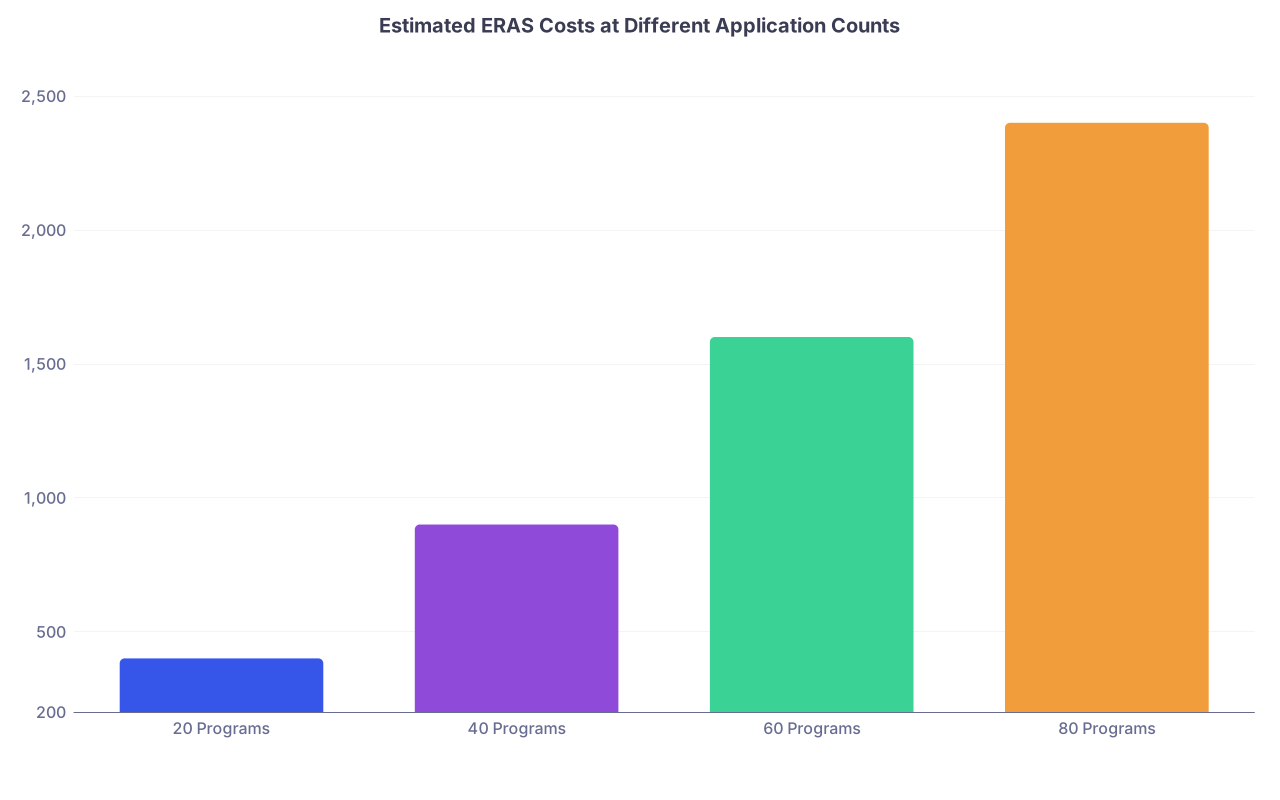
Here’s the part people avoid talking about because it feels grossly practical when you’re panicking: money and time.
| Category | Value |
|---|---|
| 20 Programs | 400 |
| 40 Programs | 900 |
| 60 Programs | 1600 |
| 80 Programs | 2400 |
(These are ballpark and depend on specialty and year, but you get the point: the curve is not friendly.)
And that’s just ERAS fees. Add in interview travel if in‑person, or at least time off, wardrobe, etc. Doubling your list because you’re scared can easily cost you over a thousand extra dollars. For maybe one extra interview. Maybe.
On top of that, 70–80 applications sounds fine in July. It doesn’t sound fine when you’re drowning in 50 secondaries, trying to tailor “Why this program?” at 1 a.m. while you’re still on an acting internship.
When your list gets absurdly long, your actual effort per program drops. Your letters to programs sound generic. Your essays blur together. You don’t research places well for interviews. And programs can tell.
So no, doubling your applications is not free insurance. You pay in:
- Money
- Time
- Quality of your materials
- Sanity
Is it ever worth it? Sure. For certain high‑risk profiles, or people aiming for very competitive fields with multiple red flags, or those applying to two specialties as an explicit backup.
But for the average “no home program” applicant, the feeling you’re buying is illusion of control, not actual safety.
How to pick a number that isn’t just pure fear
Let me be concrete.
Let’s say you’re:
- US MD or DO
- No home program in your chosen field
- No exam failures, normal timeline
- Applying to a mid‑competitive specialty (psych, neuro, OB/GYN, anesthesia, EM in some regions, etc.)
A typical advised range with a home program might be, say, 30–40. Without a home program, I’d be looking at:
- 40–55 if you’re roughly average for the field
- 50–65 if you’re below average (lower scores, weaker clinicals, late decision, etc.)
Not 80. Not 100 “just in case.” That’s your anxiety talking, not data.
For less competitive fields (FM, community IM, peds), maybe it’s:
- 20–25 with a home program
- 25–35 without one, emphasizing regions where you’re genuinely likely to go and programs that have taken people like you before
For the super competitive stuff (derm, ortho, ENT, etc.) — the answer is less about “double or not” and more “are you realistically competitive at all?” If yes, your numbers are going to be high regardless, and no home program might add 10–20 more. If no… you need a serious talk with an advisor about backup pathways, not just more fees.
Some schools and specialties publish recommended ranges. Use those as the baseline for “with home program,” then adjust up by maybe 30–50%, not 100%. And be brutally honest about which bucket you’re in: above average, average, or below.
One more thing: you’re not invisible
This might be the most annoying part: you will probably feel more anonymous than classmates with home programs.
They have dinners with faculty. Their PD tells them, “We’ll take care of you.” They hear, “We always try to keep a few of our own.”
You have… your laptop. VSLO. And a list of places you found on FREIDA at 3 a.m.
But here’s what’s also true: every year, programs fill their classes with people from places that don’t have that specialty. Community schools. Newer schools. Schools that send out one or two people in that field every few years.
They don’t broadcast those names. They don’t put “no home program” success stories on banners. But those residents are there.
You’re not asking programs to do something weird or unprecedented by interviewing you. You’re asking them to do what they already quietly do, every single cycle: take a chance on someone whose school couldn’t give them a perfect runway.
Quick recap before your brain spirals again
Let me boil this down, because you’re probably about to open ERAS and either delete half your list or add 40 more:
- No home program does mean you should apply to more programs than a similar applicant with one — but usually 30–50% more, not literally double.
- Your mix of programs (academic vs community, reach vs realistic) and the strength of your away letters matter far more than raw application count beyond a certain point.
- Giant application numbers give diminishing returns, eat your money and bandwidth, and don’t magically fix underlying weaknesses — they just let your anxiety spend more.
You’re allowed to be scared. Everyone is. Just don’t let fear write a $2,000 ERAS bill for you without asking whether any of it actually improves your odds.


