

What if you already screwed up your Match before interview season even starts… just by picking the wrong number of programs?
Welcome to the post‑ERAS panic spiral. You submit. You pay the ridiculous fees. You exhale for maybe 12 hours. And then your brain whispers: “I didn’t apply to enough programs. I tanked my chances. It’s over.”
Or the opposite: “I applied to way too many. I look desperate. I wasted thousands of dollars. Programs are going to see I applied 80 deep and think I’m unfocused.”
Let’s walk straight into that anxiety instead of pretending it’s not there.
Because once ERAS is in, the question isn’t “Did I do it perfectly?”
It’s: “Given what I already did… now what?”
First: Are You Actually in Trouble, or Just Spiraling?
Most of us go straight to catastrophizing: “I’ll never match, I’ll have to reapply, my life is over.” Before you torch your sanity, you need a rough reality check.
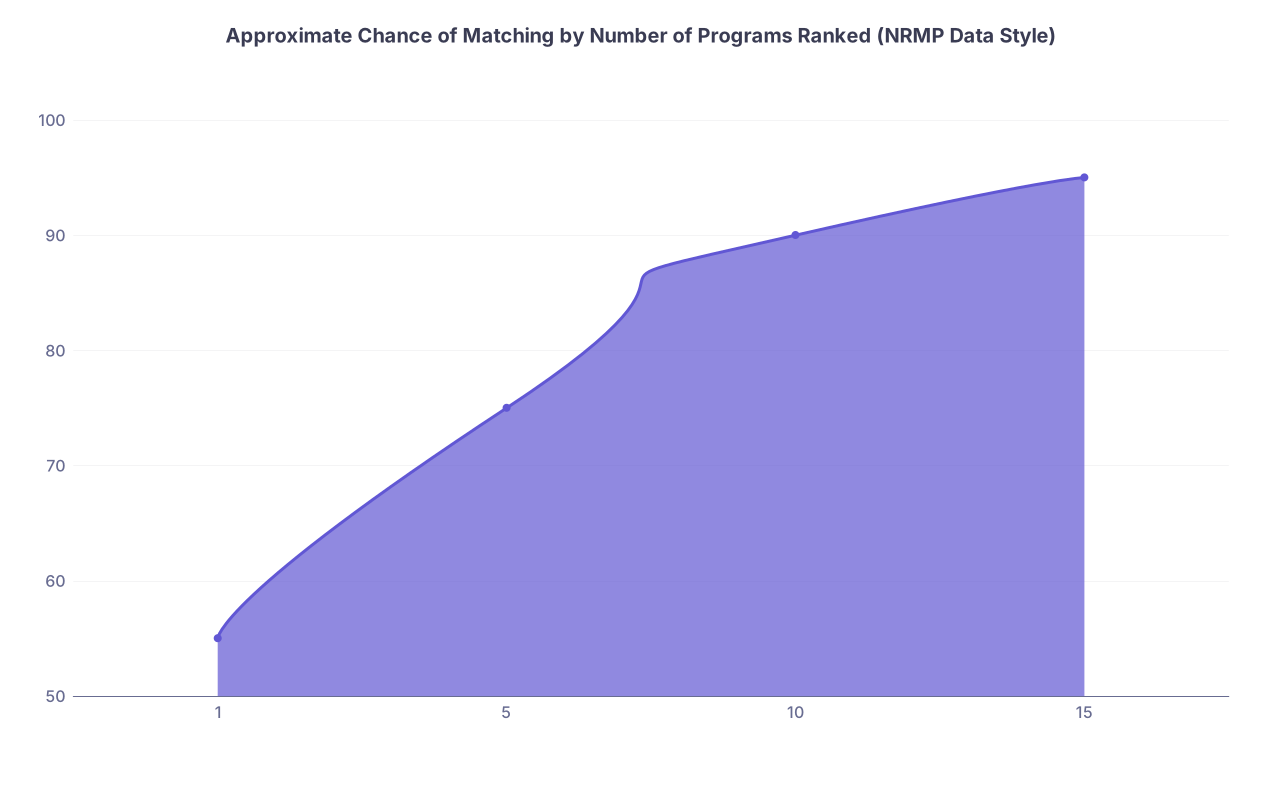
| Category | Value |
|---|---|
| 1 | 55 |
| 5 | 75 |
| 10 | 90 |
| 15 | 95 |
That chart is ranked programs, not applied, but it gives you the vibe: your chances climb as numbers increase, but they’re not binary “all or nothing.”
The real question: did you wildly under‑ or over‑shoot for your specific situation?
Let me be blunt. If you’re:
A US MD, no major red flags, average stats for your specialty
and you applied to roughly the recommended range… you’re probably fine. Your anxiety just doesn’t know that.An IMG, low Step 2, applying to a competitive specialty, and you sent like 15 apps… yeah, that might be a problem.
A mid‑tier applicant applying to a hyper‑competitive field with 20–25 programs… also concerning.
The problem: you can’t unsubmit. But you can still influence how this cycle goes way more than your brain is letting you believe.
The Ugly Truth: What You Can and Can’t Fix After ERAS
Here’s the part everyone hates: the number of programs you applied to is mostly locked.
Let’s sort this into three buckets: totally fixed, somewhat adjustable, and still very much in your control.
| Category | Changeable? |
|---|---|
| Number of programs | Mostly No |
| Program list content | Limited (add only) |
| Application quality | Yes (updates, LoRs) |
| Interview performance | Completely Yes |
| Post‑interview strategy | Completely Yes |
Fixed (or basically fixed)
You cannot:
- Un‑apply to programs to look “less desperate”
- Get a refund
- Re‑order what they see in ERAS (they don’t get a “program count” number anyway; they only see if you applied to them)
Programs do not see a list of everywhere else you applied. They’re not sitting there with a dashboard: “Ah yes, this applicant applied to 120 places—clingy.”
That’s one anxiety you can throw in the trash.
Somewhat adjustable
You can:
- Add more programs until their individual deadlines (if you’re early enough in the cycle)
- Send targeted updates (new scores, publications, significant achievements)
- Fix tiny errors in stuff like personal statements by uploading new versions and assigning them to new programs (old ones won’t be updated)
But no, you can’t redo your whole app.
Completely in your control (even now)
This is the part your anxious brain keeps undervaluing:
- How strategically you add programs (if needed)
- How well you prep for interviews
- How intelligently you build your rank list
- How you handle setbacks, like a bad interview or fewer invites than expected
It’s not “I messed up my program count so the cycle is over.” The game is just shifting to a different phase.
Scenario 1: “I Applied to Way Too Few Programs”
This is the panic I see the most. Someone submits to 25 IM programs, sees a classmate apply to 80, and implodes.
Let’s break it down.
Step 1: Compare your numbers to reality, not your classmates
Here’s a rough feel (not gospel) for US MD applicants in moderately competitive specialties:
| Specialty Type | Typical US MD Range |
|---|---|
| Very competitive (Derm, Ortho, ENT, Plastics) | 60–100+ |
| Mid‑competitive (IM, EM, Gen Surg, OB/Gyn) | 30–60 |
| Less competitive (FM, Psych, Peds) | 20–40 |
If you’re:
- A solid IM applicant with, say, 245+ Step 2, decent research, no red flags, and you applied to 30–40 programs? That’s not reckless. That’s pretty standard.
- An IMG or lower stats applicant with just 15–20 in a competitive field? That’s where I’d be more nervous.
Step 2: Time‑sensitive fix — can you still add programs?
If it’s still early (September, sometimes early October depending on specialty), you can often still add programs. This is the only real lever you have to partially fix an under‑application.
You want to:
- Add a mix of mid‑tier and safer programs
- Stay realistic geographically (some regions are killer competitive)
- Avoid wasting money on unrealistically reach‑only programs
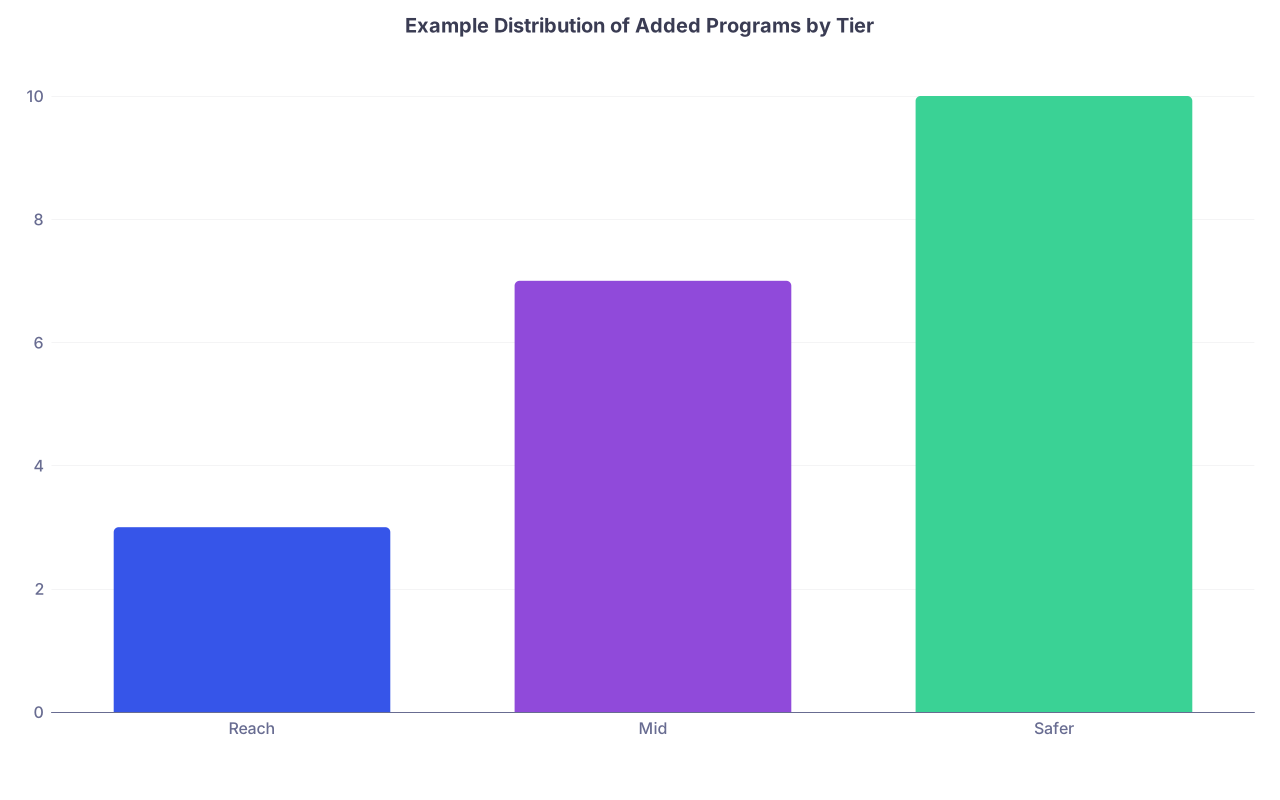
| Category | Value |
|---|---|
| Reach | 3 |
| Mid | 7 |
| Safer | 10 |
If you can’t afford to go wild, prioritize:
- Community and university‑affiliated community programs
- Programs with historically more IMGs (if you’re IMG)
- Places in less “sexy” locations (Midwest, smaller cities, etc.)
Step 3: If the add‑window is closed
This is where the stomach drop happens: “It’s November. I’m stuck.”
You’re not completely doomed. But you are now relying heavily on:
- Getting the most out of every single interview you do get
- Not self‑rejecting (“only 3 invites, it’s over, why even try”)
- Being aggressive with signals if your specialty uses them (too late to change them now, but you can still lean into those relationships)
Also: watch your email like a hawk. I’ve seen people lose interviews because they missed a 20‑minute acceptance window from an auto‑scheduler. When your program count is low, every invite is gold.
Scenario 2: “I Applied to Way Too Many Programs”
Different flavor of panic. The “I clicked every box and now I’m broke and embarrassed” vibe.
I’ve seen people apply to:
- 120+ IM programs
- 150+ FM programs
- 80+ EM or psych even with solid numbers
The truth: over‑applying is common now. You’re not some bizarre outlier.
Reality check: Programs can’t see your total program count
They only know:
- You applied to them
- What you sent them
They cannot:
- See how many other programs you applied to
- Judge you for applying “too broadly”
So no, you don’t look desperate. You just look like an applicant. That’s it.
The actual downside
The real damage is to:
- Your bank account
- Your burnout, trying to respond to secondaries, emails, interview invites
- Your ability to actually manage your interviews
Because if you miraculously get, say, 25–30 interviews, you will not attend them all. You’ll have to cancel some. That’s fine. Programs expect that.
Your job now is not to beat yourself up for spending too much, but to:
- Say “okay, I bought insurance”
- Use that insurance wisely and not torch your energy on programs you don’t care about at all
What If I Start Getting Fewer Invites Than Everyone Else?
This is where the spiral gets loud. Group chats start filling with “Got my 10th invite!” while you’re sitting at 1 or 2.
You will immediately blame your program count.
Sometimes that’s fair. Often it isn’t.
Some honestly brutal truths:
- A lot of people lie or selectively post their best stats and results
- Invite waves come in batches — you might just be late in their batch
- Some specialties are an absolute bloodbath every year (EM, gen surg, some IM subspecialties), and “average” now feels like “not enough”
Here’s what you actually can do mid‑season:
1. Do a pattern check
Look at:
- Which programs are inviting you (geography, tier, community vs university)
- Whether there’s a clear signal (e.g., mostly your home region, or mostly community)
That pattern is your new reality. Lean into it.
If you’re getting:
- 0–1 interviews across the board by late October / early November (for most specialties), that’s concerning.
- 3–5 as a US MD in something like IM by mid‑November? Not ideal, but not automatically fatal.
- 3–4 as an IMG in IM or FM? That may be more realistic, and honestly can still match if you rank them all.
How to Squeeze Every Drop Out of the Programs You Did Apply To
You can’t change your original list much, but you can change how sticky you are to the programs actually looking at you.
Here’s where you put your anxiety to work.
1. Be absurdly responsive
Programs hate:
- Delayed email replies
- Applicants who no‑show or cancel last minute
- People who respond late to scheduling links
If you only applied to 30 programs and get 4 interviews, that’s your entire season riding on 4 days. Treat them like finals.
2. Research each program like you meant to apply there
Yes, even the “backup” places. Once you’ve applied and they invite you, they’re no longer a backup. They’re your potential future life.
Show up knowing:
- Their key hospitals
- Any specific tracks (rural, research, global health)
- The vibe of their city (even if you think you don’t want to live there—don’t say that out loud)

3. Don’t half‑ass interviews at “lower tier” places
You will be tempted to think: “I only applied here as a safety, I don’t really want to go.” That’s how people end up unmatched.
You have no clue how the rest of your season will go. Treat every invite like the only one you’ll get. You can always rank them lower later. You can’t go back and fix a bad interview.
What If I Actually Don’t Match Because I Under‑Applied?
Let’s go maximum worst‑case, because I know your brain already has.
Yes, if you deeply under‑applied for your profile and specialty, it can hurt your chance of matching.
But if that happens, the story people tell themselves is: “I failed because I’m not good enough.” Sometimes the real story is: “I played the numbers game badly.”
Those are not the same thing.
The terrifying but honest reality:
You can fix strategy on a re‑application. You can’t fix the specialty’s competitiveness or your basic stats overnight, but you can absolutely fix your program count and mix.
If you do end up SOAPing or reapplying:
- The next year, you apply wider and smarter
- You use your experience to actually choose programs tiered to your specific profile
- You don’t repeat the same hyper‑narrow list
I’ve seen applicants go unmatched in EM with 25 applications… then match the next year in IM or FM with 80+ programs and a more realistic approach. Same person. Different numbers.
Does it suck? Completely.
Is it recoverable? Yes.
How to Talk Yourself Off the Ledge Right Now
You can’t white‑knuckle an entire application season in a chronic panic. You will melt.
Here’s the mental framework I wish more people had:
Your program count is not a moral judgment. You didn’t “fail” by picking 30 instead of 50. You made a decision with limited info, like everyone else.
You’re allowed to make mid‑course corrections. Add programs if you can. Double‑down on interview prep. Ask mentors for brutal honesty. Don’t sit frozen.
There’s always a next step, even in worst‑case scenarios. SOAP, reapply, different specialty, research year. It may not be your dream path, but it’s still a path.

| Step | Description |
|---|---|
| Step 1 | ERAS Submitted |
| Step 2 | Focus on Interview Prep |
| Step 3 | Add Programs If Possible |
| Step 4 | Maximize Each Interview |
| Step 5 | Start Residency |
| Step 6 | SOAP or Reapply Plan |
| Step 7 | Enough Interviews? |
| Step 8 | Still Few Invites? |
| Step 9 | Match? |
Your brain wants a guarantee: “Tell me for sure that I’ll match.” Nobody can. Anyone who pretends they can is lying.
What you can have is this:
“I didn’t make a perfect decision, but I’m not helpless. I’m going to squeeze every ounce of opportunity out of what I’ve already done, and then deal with the next step when it comes.”
Not comforting in the Instagram‑quote way. But real.
FAQ (Anxious Edition)
1. Can programs see how many total places I applied to on ERAS?
No. They only see that you applied to them. They don’t get a master list of your other applications, and they can’t see your total program count. There’s no “this applicant spammed 120 programs” badge. That fear is pure imagination.
2. Is there any point adding programs after the “big” ERAS release date?
Sometimes yes. Some programs review later. Some don’t fill all their interview slots early. The earlier you add, the better—but even adding into October can help, especially for less competitive programs or specialties. It’s not magic, but if you clearly under‑applied and can afford it, it’s often worth doing.
3. I only have a few interviews. Do I still have a real shot at matching?
Yes, depending on your specialty. For many fields, 3–5 interviews can still yield a match if you rank all programs and interview decently. It’s obviously better to have more, but “only a few” does not mean “zero chance.” The key is not to blow off any interview as unimportant.
4. I regret not applying to a different specialty entirely. Is it too late?
For this cycle, mostly yes. Switching specialties mid‑cycle is rarely effective unless they share ERAS applications and you still have time and money to add a small, tight list. More realistically, you finish this cycle as best you can, then if you go unmatched or are miserable with your options, you plan a deliberate switch for next year with a properly built list.
Key takeaways:
You can’t unsubmit or magically fix your program count, but you can still adjust: add realistically, attack every interview like it’s your only one, and stop assuming the worst before data even comes in. And if this cycle doesn’t go perfectly, it’s not the end of your career; it’s data for a smarter, more strategic next move.


