
The belief that simply being older kills an IMG’s chances in the Match is wrong. Age by itself is not what hurts you; unexplained gaps, stale knowledge, visa hassles, and weaker recent performance are what program directors actually care about.
Let me walk through what PDs report (not what people repeat on WhatsApp chats) and where older IMGs really get burned.
What the Data Actually Shows About Age and IMGs
First, the uncomfortable truth: NRMP does not publish a neat “age vs match rate” table. If anyone is waving around “exact” age cutoffs, they’re guessing or cherry‑picking anecdotes.
But we do have three solid proxies:
- Time since graduation (YOG)
- Gaps in clinical activity
- Program director (PD) surveys about what they rank as important
Time since graduation is where older applicants get lumped together. It’s not perfect—someone who finished at 28 and someone who finished at 38 can both be “10 years since graduation”—but it’s what PDs actually see in ERAS.
From NRMP Charting Outcomes for IMGs (the recent cycles all tell the same story): match rates drop as years since graduation increase, but it’s a slope, not a cliff.
| Years Since Grad | Relative Odds vs Fresh Grad | PD Comfort Level |
|---|---|---|
| 0–2 years | Baseline (1.0x) | High |
| 3–5 years | ~0.7–0.8x | Moderate |
| 6–10 years | ~0.4–0.5x | Selective |
| >10 years | ~0.2–0.3x | Rare but possible |
Do not overinterpret those numbers; they’re directional, not exact. The important pattern: it’s “how long you’ve been out” that correlates with lower match probability, not the birthday on your passport.
Now layer PD attitudes on top of this.
Every few years, the NRMP’s “Program Director Survey” asks PDs which factors matter for offering interviews and ranking applicants. Age is not on that list. Time since graduation is. US clinical experience is. Step scores are. Visa status is. Gaps are.
In other words: the system is built to dislike staleness and uncertainty, not “35-year-olds”.
What PDs Actually Worry About With Older IMGs
I’ve watched PDs flip through ERAS applications. The conversation is almost always the same. They do not say, “Too old.” They say things like:
“Graduated 2012, what have they been doing?”
“Have they actually practiced recently?”
“Any US clinical exposure?”
“Do they need a visa?”
Those questions translate into four big concerns that correlate with age, but are not age itself.
1. Stale Knowledge and Skills
Medicine changes quickly. A 42‑year‑old who finished med school 18 years ago and has not been in consistent clinical practice is a nightmare risk for a PD.
They’re thinking:
- Will this person be safe on day 1 of intern year?
- Am I going to have to reteach physiology and pharmacology from scratch?
- Are they going to struggle with EMR, guidelines, current standards?
Notice the key phrase: “has not been in consistent clinical practice”. If you’ve been an internist or surgeon overseas seeing 20–30 patients a day, that’s a different story. Your knowledge is not stale; it’s just not U.S.-formatted yet.
2. Adaptability and Trainability
There’s a stereotype—sometimes fair, often lazy—that older trainees are harder to retrain.
The PD fear here is not “this person is 40”; it’s “this person has practiced independently for 10 years and will not like being told what to do by a 30‑year‑old attending or a 3rd-year resident.”
I’ve heard the exact line in a selection meeting:
“He’s been an attending in his country for 12 years. Is he actually going to listen when a PGY-3 tells him to change his plan?”
If your application screams “I was the boss for a decade” and your personal statement screams “I already know how to do this,” PDs will expect friction. That has nothing to do with your birth year and everything to do with your perceived ego and flexibility.
3. Visa and Long-Term Commitment Risk
Older IMGs more often come with families, financial pressures, and sometimes more complicated visa histories. PDs are not anti-family; they are anti‑instability.
The unspoken questions:
- Are they going to leave mid-residency if something goes wrong with immigration?
- Are they using this program as a stepping stone to move somewhere else immediately?
- Will financial or family crises pull them away constantly?
Again, this is correlation, not cause. A 28‑year‑old on a shaky visa looks worse than a 40‑year‑old with a clean, clearly documented immigration path and a plan to stay.
4. Perceived Energy and Workload Tolerance
Residency is brutal. Nights, 28‑hour calls, codes at 3 a.m., emotional exhaustion. Some PDs—especially in surgical and very busy internal medicine programs—will straight up admit they worry that someone in their late 30s or 40s will not keep up physically.
Is that always fair? No. I’ve seen 45-year-old interns who could run circles around 26-year-olds who lived on energy drinks and DoorDash. But fairness isn’t the point; it’s about what PDs believe.
Your job as an older IMG is to make that specific stereotype look ridiculous in your case. Recent demanding clinical work. Strong letters describing your stamina and work ethic. Not vague fluff.
What the Surveys and Numbers Say About “Older” IMGs
Let’s separate myth from the small amount of data we actually have.
There’s no official “50-year-old vs 30-year-old match rate” table. But you can triangulate using time since graduation and PD survey answers.
In most NRMP PD surveys over the last decade:
- A clear majority of programs say they prefer applicants within 5 years of graduation.
- A smaller subset openly state they have cutoffs (often “5 years” or “7 years since graduation”).
- But there are always programs that report matching people 10+ years out. Every cycle.
Cutoffs are often lazy heuristics. PDs swipe left on “>7 years” because it’s an easy way to thin a massive stack of applications. They’re not sitting there verifying ages and drawing a line at 35.
To make that visual:
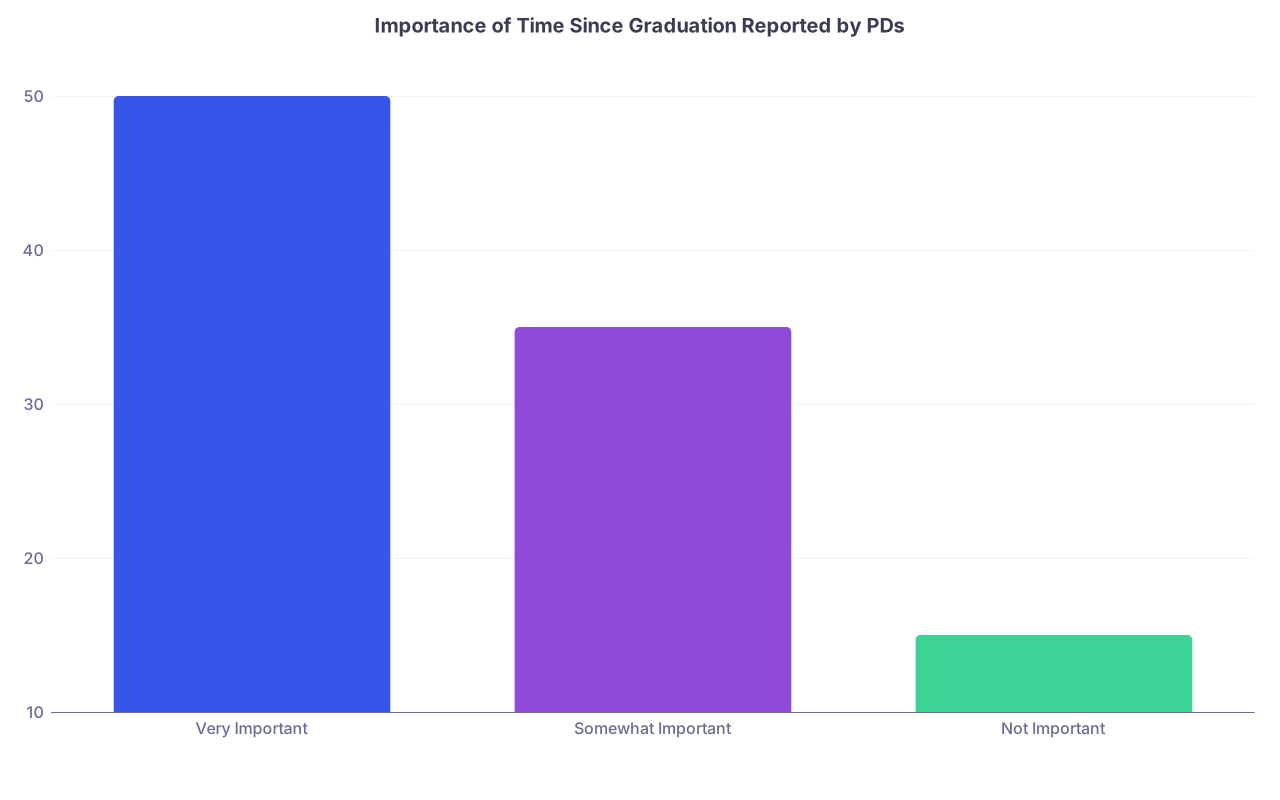
| Category | Value |
|---|---|
| Very Important | 50 |
| Somewhat Important | 35 |
| Not Important | 15 |
Those numbers are approximate, but that’s the usual pattern: about half of PDs say time since graduation is “very important,” a third “somewhat,” and a minority say they don’t care.
But interviews I’ve seen go like this:
- “She’s 11 years out, but she’s been a hospitalist the entire time, with two US observerships in the last year and strong letters from U.S. attendings.” → interview.
- “He’s 3 years out but with no clear clinical work, just ‘preparing for exams’ and ‘family responsibilities’.” → no interview.
So yes, being more than 5–7 years out hurts. But being older with strong, recent, well-documented clinical work hurts a lot less than being “young with gaps and nothing to show”.
Where Being Older Helps You (And PDs Know It)
Here’s the part almost nobody tells you: a lot of PDs like mature residents. They just do not want rigid mature residents.
Older IMGs often bring things that younger grads simply do not have:
- Real-world clinical judgment from years of seeing patients.
- Emotional maturity: fewer temper tantrums, better with difficult families, less drama.
- Leadership: having supervised nurses, juniors, or run clinics.
In community internal medicine and family medicine especially, I’ve heard PDs say, “I like having one or two older residents in each class. They stabilize the group.”
So why does this not obviously show up as an advantage? Because many older IMGs never package these strengths properly. They submit the same cookie-cutter personal statements as 24-year-olds, obsess over scores, and never clearly explain:
- What they’ve actually been doing clinically.
- How that experience translates into being a better intern.
- That they understand and accept going back to being a trainee.
If you’re older and you present as “just another Step score plus a vague ‘passion for medicine’ paragraph,” you’re throwing away your one real differentiator.
How Older IMGs Can Actually Compete (Based on What PDs Report)
Let me be blunt: if you’re 35+ or >7 years since graduation and you apply like a typical 26-year-old, you probably lose.
You do not get to mail in a generic application. You need to overcompensate on the specific things PDs worry about.
Make “Recent and Real” Your Theme
Every piece of your application should scream: “I am clinically current and have been tested recently.”
That means:
- Recent US clinical experience (hands-on when possible, not just shadowing). Last 1–2 years, not 7 years ago.
- If you’ve practiced abroad, spell out your role: volume, responsibilities, call, procedures. Many IMGs undersell this.
- Strong, detailed letters that say:
- You can handle workload.
- You learn quickly.
- You take feedback without ego.

| Step | Description |
|---|---|
| Step 1 | Older IMG |
| Step 2 | Prioritize recent clinical work |
| Step 3 | Standard applicant strategy |
| Step 4 | US clinical experience |
| Step 5 | Strong recent letters |
| Step 6 | Target programs open to older grads |
| Step 7 | >5 years since grad |
Treat Step Scores as Proof, Not Just a Number
For older IMGs, a solid Step 2 score (and sometimes Step 3) isn’t just a checkbox; it’s evidence you can still learn at a high level.
A 245 from someone 12 years out of school is much more impressive than a 245 from someone who graduated last summer. PDs notice that.
I’ve literally heard: “For someone 10 years out to get that score, they must have put in serious work. That’s a good sign.”
If your Step scores are borderline and you’re older? You’ve made PDs’ hardest fear—stale knowledge—much easier to believe. That’s harsh, but true.
Own Your Story, Don’t Apologize for It
The worst thing older IMGs do is write apologetic, defensive personal statements where they kind of mumble about “life circumstances” and “delays.”
If you have gaps, explain them clearly and confidently:
- “From 2015–2018 I paused clinical work to care for a critically ill family member. In 2019 I returned to full-time practice and have maintained an active clinical schedule since.”
- “After practicing as a general practitioner for 8 years, I realized I wanted the structure and academic environment of U.S. internal medicine training. In the last two years, I completed three U.S. clinical rotations and passed Step 2 and Step 3 on the first attempt.”
You’re not begging for forgiveness. You’re showing you made adult decisions and then did the work to get current again.
Target the Right Programs (Some Really Don’t Mind Older IMGs)
This is where most IMGs, especially older ones, sabotage themselves. They spray applications at brand-name university programs that quietly have a 0–5 year YOG bias, then conclude “my age killed me.”
Plenty of community and hybrid programs have a history of taking people >7 years out. You find them not by mythology, but by actually looking through current resident lists and bios.
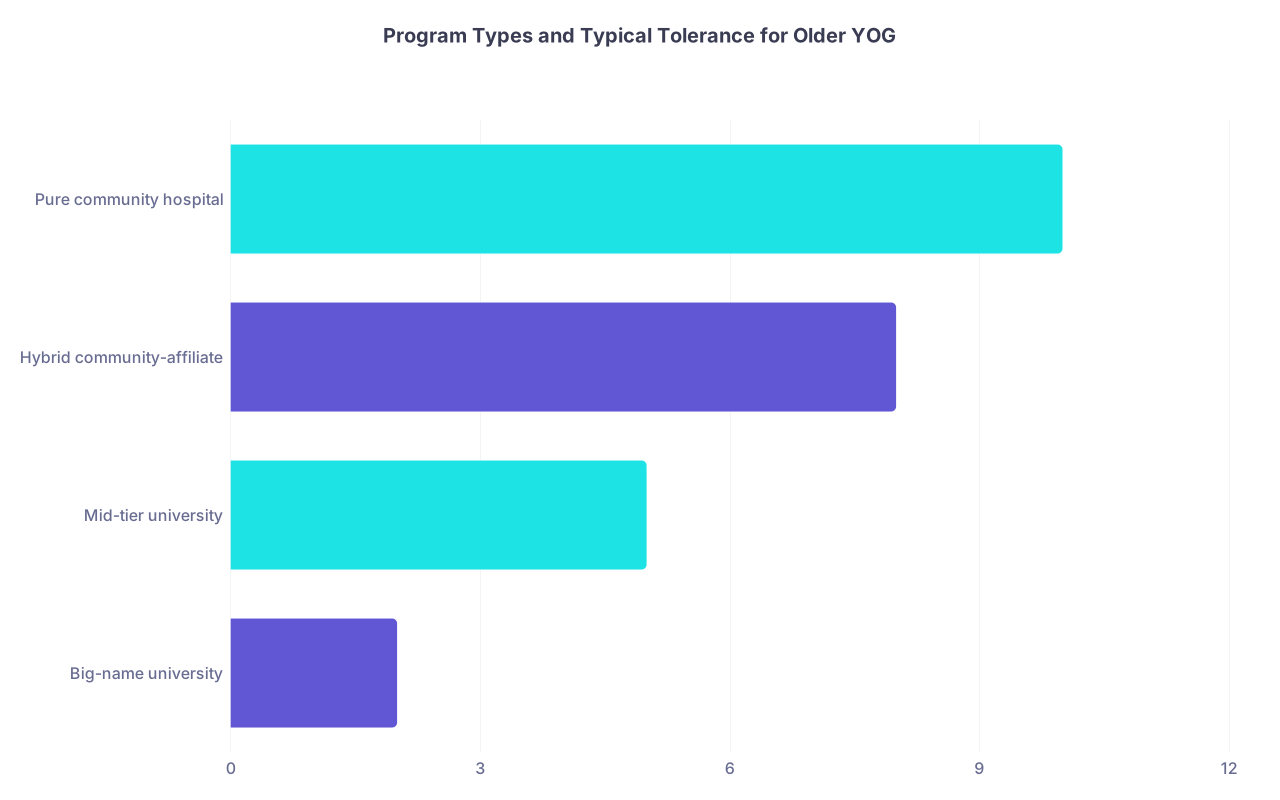
| Category | Value |
|---|---|
| Big-name university | 2 |
| Mid-tier university | 5 |
| Hybrid community-affiliate | 8 |
| Pure community hospital | 10 |
Values = rough “max years since grad” you commonly see, not strict rules.
Stop pretending every program is equally likely to take you. If you’re 10+ years out and applying to 40 places with 35 of them being top academic centers, that’s not ambition. That’s self-sabotage.
The Bottom Line: Is Being Older a Death Sentence for IMGs?
No. But it is a multiplier. It multiplies everything else in your file.
- Strong recent performance + clear story + right program list + older age → competitive.
- Weak or no recent clinical work + vague gaps + borderline scores + older age → nearly hopeless.
One last visual to drive this home:
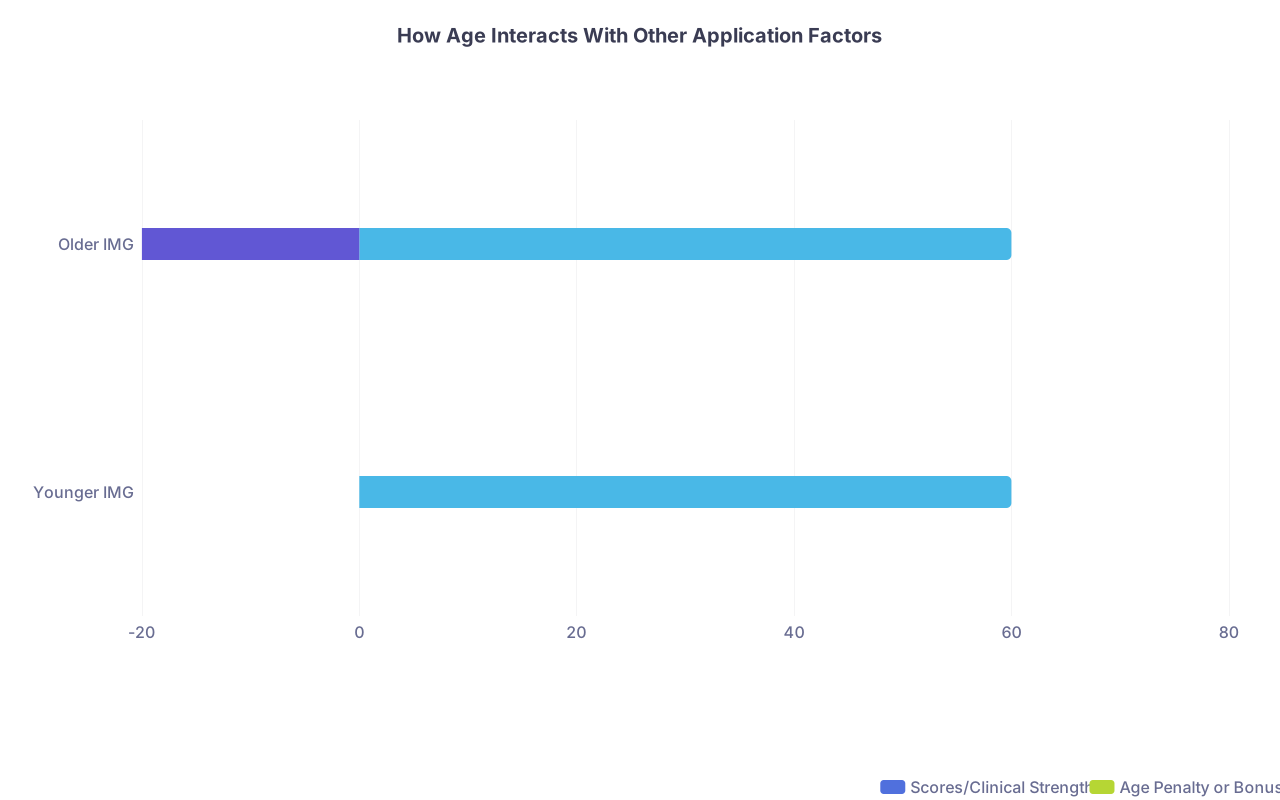
| Category | Scores/Clinical Strength | Age Penalty or Bonus |
|---|---|---|
| Younger IMG | 60 | 0 |
| Older IMG | 60 | -20 |
If your “base strength” is low, older age pushes you further down. If your base is high, older age might knock you slightly—but you’re still viable.
Key Takeaways
- PDs do not reject you because you’re 35 or 40; they reject you because of what your years since graduation suggest: possible stale knowledge, gaps, or inflexibility.
- For older IMGs, recent, robust clinical work (ideally including U.S. exposure) and strong Step performance matter more, not less. They’re your proof you’re still sharp.
- You must target programs that have actually taken older grads before and package your experience as an advantage, not a shameful secret. Age is a challenge, not a verdict.