
The biggest lie late IMGs hear is this: “After five years, you’re basically done.”
Wrong. After five years, you’re just out of excuses to be disorganized.
If you’re 5+ years post‑graduation and want a US residency, you do not need motivation speeches. You need a brutally clear, time‑stamped plan: month by month, what you do, what you stop doing, and when you cut your losses and pivot.
This is that plan.
Step 0: Reality Check Week (Right Now)
Before you touch UWorld or email a program, you do one thing: assess where you actually stand.
This week you should:
Pull every document you own
- Medical school diploma and transcript
- Internship/house job certificates
- Any previous USMLE scores (even failed attempts)
- Old CV, research, observership letters
- English tests (IELTS/TOEFL) if you have them
Identify your three biggest liabilities Almost every late IMG has some combo of:
5 years since graduation
- Gaps with non‑clinical work or “family reasons”
- Weak/old USMLE scores or no scores
- No US clinical experience (USCE)
- No research, no recent letters, no US mentors
Choose your “anchor” specialty You do not get to be vague. At this point you should pick one (maybe two max) realistic targets:
- Internal Medicine
- Family Medicine
- Pediatrics
- Psychiatry
- Pathology (if you love labs and have some background)
Neurosurgery or Derm as a late IMG? Stop. Pick a door that isn’t bolted shut.
Define your runway Decide: Are you planning a 2‑year comeback or 3‑year comeback?
Under 1 year is fantasy for most 5+ year graduates unless they already have:- Passing Step 1 and Step 2
- Active USCE
- No big gaps
Now we build the timeline. I’ll give you a 24‑month structure (you can compress to 18 or stretch to 30 depending on where you are).
Year 1: Rebuild and Relevance
Months 1–3: Clean Up, Commit, and Start Step Prep
At this point you should stop “thinking about it” and start behaving like an applicant.
Month 1: Administrative and strategic setup
- Confirm eligibility and constraints
- Check ECFMG rules, attempt limits, and score history
- List visa type you’ll need (J‑1 most common; H‑1B only for programs that sponsor and usually require Step 3)
- Make a rough 2‑year Gantt in your calendar
- Target Match year (e.g., Match 2028)
- Count backward:
- ERAS opens: June
- Application submission: mid‑September
- Latest Step 2 CK result: by August of application year
- Step 1 latest: 6–9 months before that
- Financial check
- Estimate costs (exams, resources, ERAS, travel)
| Item | Estimated Range |
|---|---|
| Step exams + fees | $2,000–$3,500 |
| Study resources | $500–$1,000 |
| USCE (observerships etc.) | $1,000–$5,000 |
| ERAS + NRMP fees | $2,000–$4,000 |
| Interview travel (varies) | $1,000–$5,000 |
Month 2: Start Step 1 (or Step 2) planning
If you have:
- No exams yet → Start with Step 1 content but plan an integrated Step 1 → Step 2 route.
- Old Step 1 passed → Go directly to Step 2 CK, no nostalgia about “reviewing everything slowly.”
You should:
- Set a weekly schedule with non‑negotiable time blocks (e.g., 20–30 hrs/week if working, 40+ if free).
- Choose primary resources:
- Step 1: UWorld, anki, First Aid, Pathoma/Boards & Beyond (pick, don’t hoard).
- Step 2: UWorld Step 2, NBME practice tests, Online MedEd or similar.
Month 3: Start hitting questions, not just watching videos
This month:
- You should be doing at least 20–40 questions/day on weekdays.
- Start a mistake log with:
- Weak topics
- Repeated errors
- Timing issues
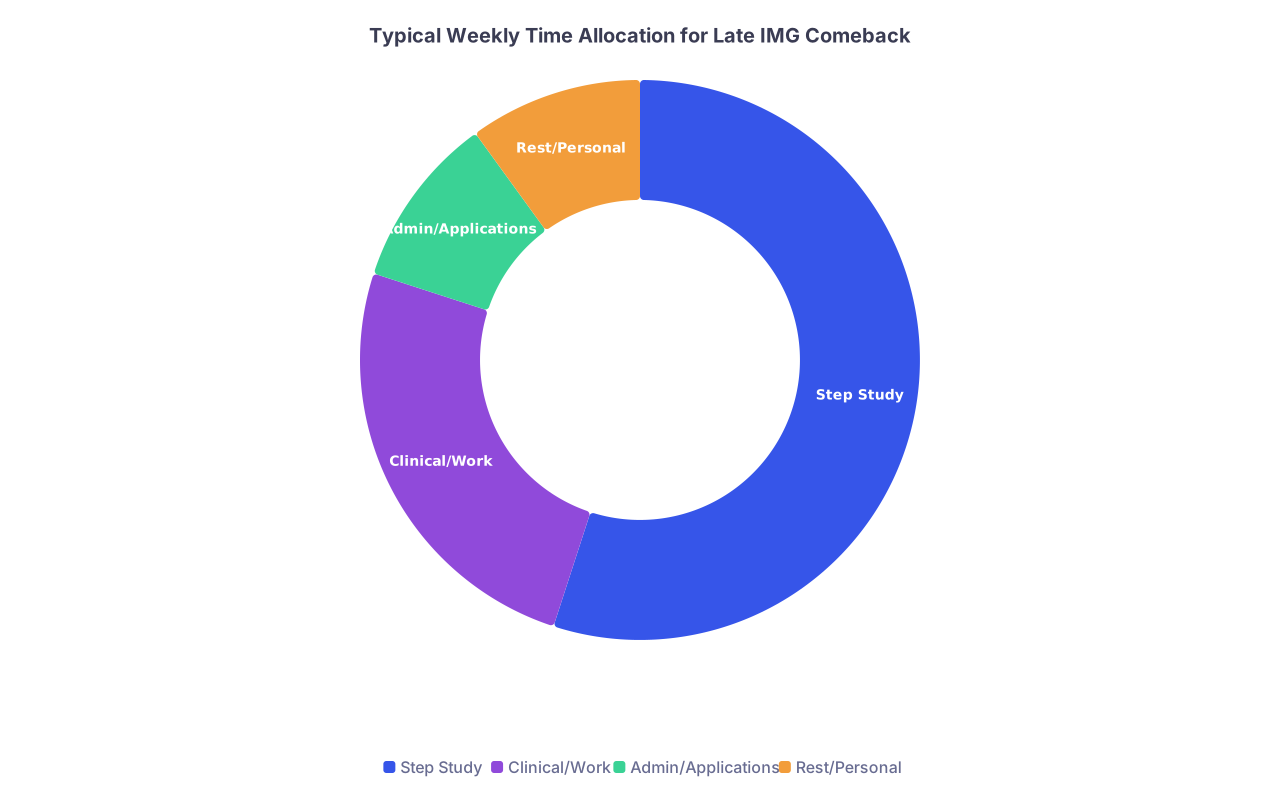
| Category | Value |
|---|---|
| Step Study | 55 |
| Clinical/Work | 25 |
| Admin/Applications | 10 |
| Rest/Personal | 10 |
If you’re still “collecting resources” at the end of Month 3, you’re procrastinating, not preparing.
Months 4–6: Exam Focus + Start “Fresh Experience”
At this point you should treat time since graduation as an active fire. Every month without current clinical or academic activity hurts you.
Clinically, you should:
- Get involved in something health‑related:
- Local clinic volunteering
- Telehealth scribe (US‑based if possible)
- Part‑time clinical role in your country (documentable)
Label it clearly on your future CV as:
- “Clinical experience – [Country], [Department], [Dates]”
Academically, you should:
- Reach out for research or QI involvement:
- Cold email: community programs, academic hospitals, faculty on PubMed whose work overlaps your interests.
Your email should be:
- Short
- Specific
- Showing you’ve read their work
- Offering concrete help (data collection, chart review, literature searches)
While all that is running, your primary job these months:
- Month 4–5: Deep content + questions for your first exam (likely Step 1 or Step 2 CK).
- Month 6: First NBME/assessment to see if a real test date 2–3 months away is realistic.
Year 1 Midpoint: Decide Your Exam Sequence
Months 7–9: First Big Exam and USCE Hunt
At this point you should commit to actual exam dates. Vague goals are how late IMGs become never‑IMGs.
Month 7: Book the test
- If your NBME/assessment is:
- Within 10–15 points of your target → Book the exam for Month 8 or 9.
- >20 points away → You’re either:
- Studying wrong (low question volume, passive learning)
- Overestimating your available hours
Fix that first, then book for Month 9–10.
Month 8–9: Sit for the exam
For 5+ years post‑grad, the priority is passing quickly with a respectable performance, not chasing sky‑high scores for ultra‑competitive fields. A late but strong Step 2 can partly offset graduation year.
In parallel, the USCE grind starts.
You should:
- Apply for observerships/externships:
- University‑affiliated programs with formal observerships
- Community hospitals that accept IMGs via paid programs
- Private practice observerships (less ideal but still better than nothing)
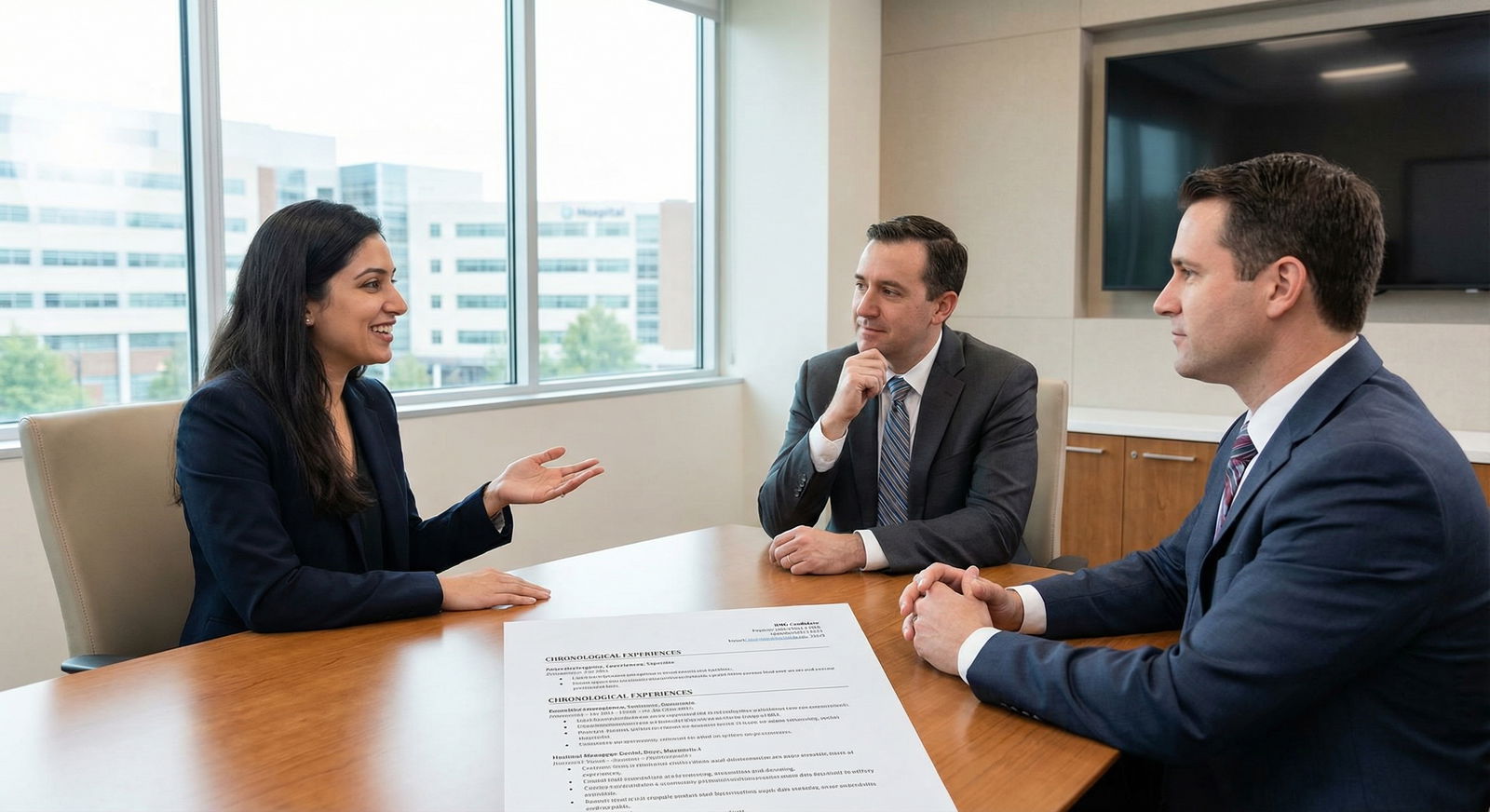
Aim to lock in USCE 6–12 months before the Match year you’re targeting. That means:
- If targeting Match 2028 → You want USCE between mid‑2026 and late‑2027.
Do not wait until your scores are back to start looking for USCE. Observership slots book out months in advance.
Months 10–12: Second Exam Planning + First Real USCE
Assuming you took your first big exam around Month 8–9:
Month 10: Regroup week
You should:
- Analyze your performance:
- What systems or topics were consistently weak?
- Were time pressures an issue?
- Update timeline:
- If Step 1 done → Plan Step 2 CK next year, ideally completed 6–9 months before ERAS submission.
- If Step 2 CK done first (it happens) → Decide if Step 1 is still required by your target states/programs and what advantage it gives you.
Months 11–12: Start or finalize USCE plans
By now you should:
- Have at least 1–2 confirmed blocks (4–12 weeks total) of:
- Inpatient or outpatient internal medicine / FM / peds / psych, depending on target specialty
- With some chance of getting US letters of recommendation from attendings
During this phase:
- Continue prep for your next exam (Step 1 or Step 2, whichever is pending).
- If possible, line up research or quality‑improvement involvement where you’ll do USCE.
Year 2: Build a Match‑Ready Profile
Now you’re inside the real application clock. I’ll assume you’re targeting the next Match after finishing 1–2 exams and securing some USCE.
Months 13–15: Intensive Step 2 CK + Start Research CV Padding
If Step 2 CK is not done yet, it becomes the center of your universe.
At this point you should:
- Aim for Step 2 CK by Month 18 latest if you want scores in time for ERAS in Month 21.
- Increase question volume:
- 40–60 Q/day in timed mixed blocks
- One NBME or UWSA every 3–4 weeks
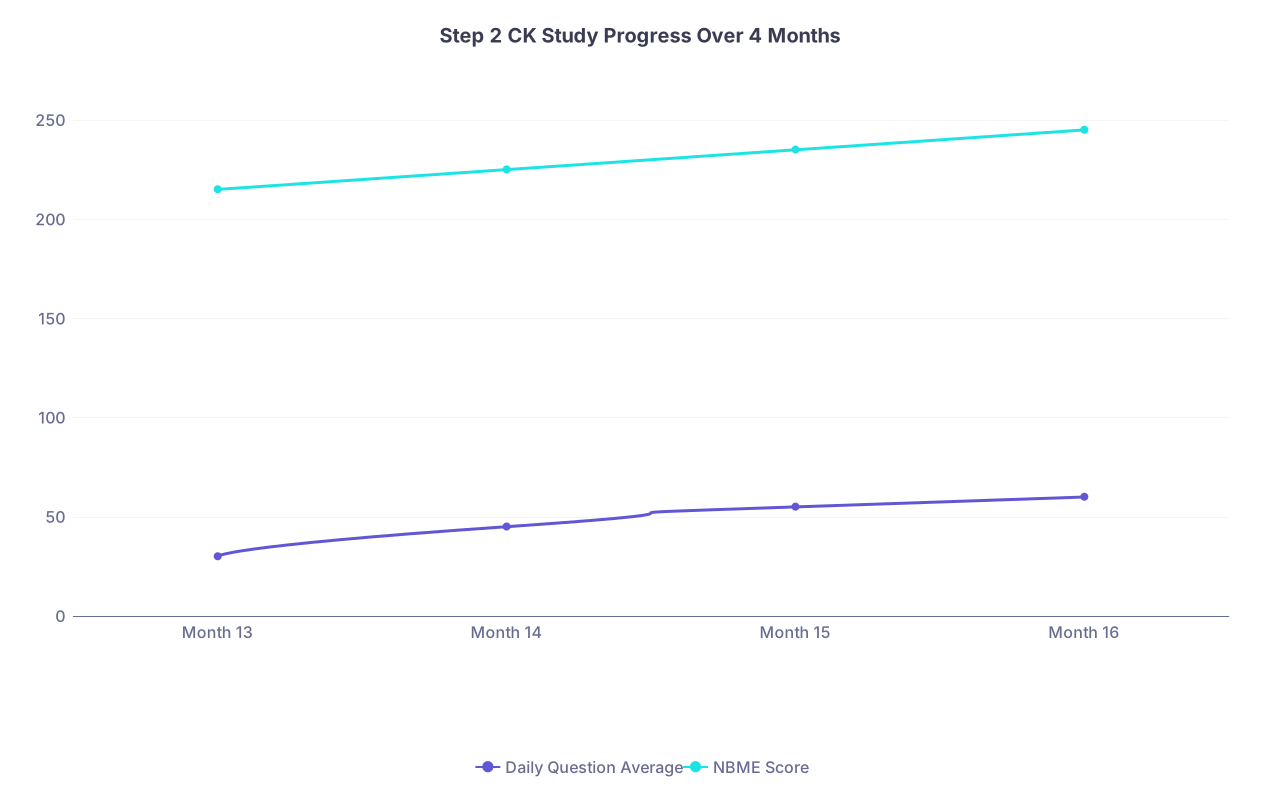
| Category | Daily Question Average | NBME Score |
|---|---|---|
| Month 13 | 30 | 215 |
| Month 14 | 45 | 225 |
| Month 15 | 55 | 235 |
| Month 16 | 60 | 245 |
Parallel track: Research and networking
You should:
- Attach yourself to at least one:
- Case report
- Retrospective chart review
- QI project
- Target: 1–3 abstracts/posters or manuscript submissions over 12–18 months. Not all must be accepted; effort and involvement matter.
If your graduation is 7–10+ years behind you, this “academic relevance” becomes more important. Programs want proof you are not clinically or intellectually dormant.
Months 16–18: Finish Exams, Execute USCE, Start Story‑Building
This is where late IMGs differentiate themselves or quietly disappear.
Month 16–17: Sit Step 2 CK
By now you should:
- Have at least two strong practice scores comfortably above passing.
- Accept that perfectionism delays you more than it helps. If you’re stuck at 225–235 but consistent and safe, take the exam. A 255 that never happens is worth zero.
Month 17–18: USCE in full gear
During USCE, you should:
- Show up early, leave late. Every day is a job interview.
- Ask for specific tasks:
- Presenting patients
- Writing sample notes (even if not placed in chart)
- Doing literature reviews for attendings
- Identify 2–3 potential letter writers:
- Who see you working closely for at least 4 weeks
- Who are willing to comment on your clinical reasoning, reliability, communication, and adaptability in a US setting
Your request for letters should be:
- Early (week 3–4 of a 4‑week rotation)
- Respectful but direct: “Would you feel comfortable writing a strong letter of recommendation for my internal medicine residency applications?”
Final 6–9 Months Before ERAS: The Comeback Execution
Now we’re at the real “late IMG comeback” window. You’ve either put the pieces together or you haven’t. Time to stop imagining and ship the application.
Months 19–21: CV Lockdown, Personal Statement, Program List
Month 19: Assemble the full application skeleton
At this point you should have:
- Exams:
- Step 1: passed (if taken/required)
- Step 2 CK: passed, score in hand (or at least scheduled with realistic confidence)
- Step 3: optional but can help for:
- Older graduates
- Those needing H‑1B visa
- Experience:
- Recent clinical activity (home country or US) within last 1–2 years
- USCE: at least 4–12 weeks, ideally in your target specialty
- Academics:
- Some research / case reports / conference activity
Now:
- Draft your personal statement built around:
- Why this specialty
- How your “gap years” actually matured or redirected you
- What you did to stay clinically and academically alive
- Update your CV into ERAS format categories:
- Education
- Experience (clinical and non‑clinical)
- Publications / Presentations
- Volunteerism
- Certifications
Month 20: Build a brutally honest program list
Use:
- Program websites
- FREIDA
- Spreadsheet of:
- IMG‑friendliness
- Visa support
- Minimum score cutoffs
- Graduation year limits
| Filter | Target Range/Flag |
|---|---|
| Graduation year limit | Accepts ≥ 5 years out |
| IMG percentage | ≥ 20–30% IMGs |
| Visa sponsorship | J-1 (required), H-1B (bonus) |
| Minimum Step 2 CK | Below your score + 5 |
| USCE requirement | Prefers, not strictly requires |
Target:
- 80–120 programs for IM/FM as a late IMG is common, depending on:
- Scores
- Gaps
- Visa status
Month 21: Letters and ERAS polishing
You should:
- Lock in at least 3–4 strong LoRs, ideally:
- 2–3 US clinical letters in your chosen specialty
- 1 from home country if particularly strong or long‑term
- Finalize:
- Personal statement (customize slightly by specialty, not by every program)
- Experience descriptions (concise, impact‑focused)
This is also when you:
- Practice interview answers:
- “Why are you 7 years after graduation?”
- “What did you do during your gap?”
- “Why this specialty now?”
No rambling, no guilt‑trips, no self‑pity. Clear story, tight arc:
- “I graduated in 2018. Initial path in [X country / field]. Realized I wanted US training because [reasons]. Over the last 2 years I’ve done [Step exams, USCE, research] to align with that decision.”
Months 22–24: ERAS Submission, Interviews, and Backup Planning
Month 22: Submit ERAS early
At this point you should:
- Submit your application in the first week ERAS opens for submissions (not the last night).
- Have USMLE transcript released.
- Have all LoRs uploaded and assigned.
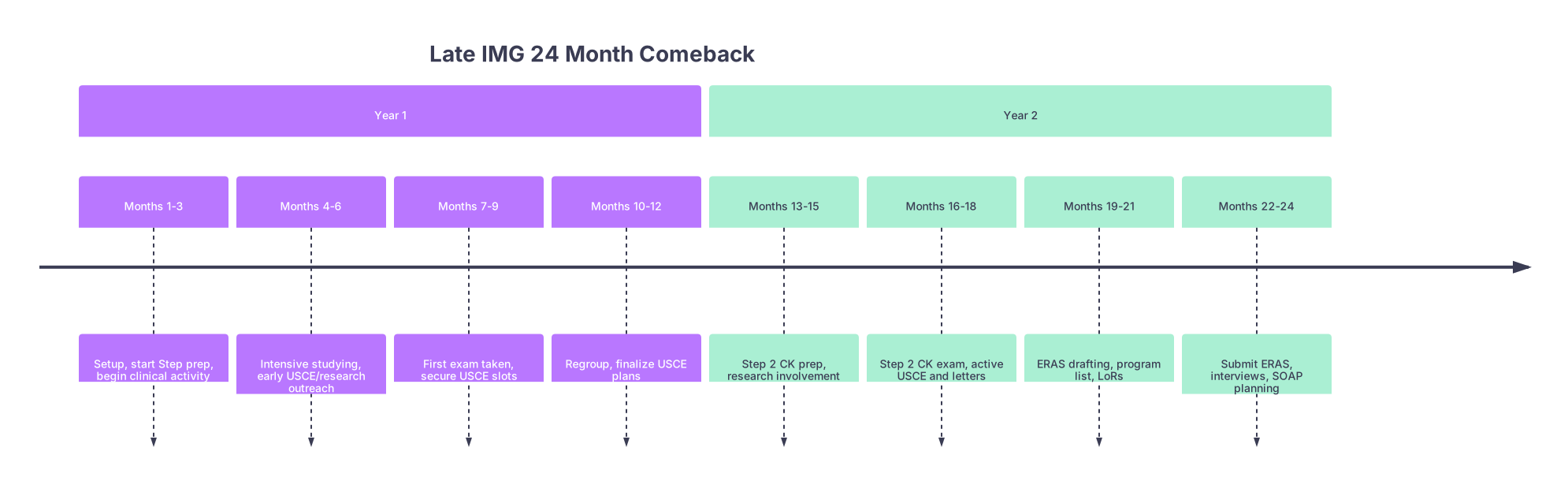
| Period | Event |
|---|---|
| Year 1 - Months 1-3 | Setup, start Step prep, begin clinical activity |
| Year 1 - Months 4-6 | Intensive studying, early USCE/research outreach |
| Year 1 - Months 7-9 | First exam taken, secure USCE slots |
| Year 1 - Months 10-12 | Regroup, finalize USCE plans |
| Year 2 - Months 13-15 | Step 2 CK prep, research involvement |
| Year 2 - Months 16-18 | Step 2 CK exam, active USCE and letters |
| Year 2 - Months 19-21 | ERAS drafting, program list, LoRs |
| Year 2 - Months 22-24 | Submit ERAS, interviews, SOAP planning |
Month 23: Interviews + realistic backup
You will not get 30+ interviews. As a 5+ year out IMG, that era is gone unless your profile is exceptional.
At this point you should:
- Track invites, rejections, and silence.
- Prepare for:
- Virtual interviews (most)
- Possibly a few in‑person (budget accordingly)
Simultaneously, build a Plan B / Plan C:
- Research positions
- Non‑ACGME fellowships
- Extended USCE or junior clinical roles
- Home country clinical job that you can describe as “current practice” next cycle
Month 24: Rank list and cold‑eyed review
Before rank list certification, ask yourself:
- Did I:
- Show recent clinical work?
- Explain my years since graduation clearly and confidently?
- Demonstrate persistence and growth, not excuses?
If you match: great, the comeback worked.
If you don’t: the next 2–3 weeks are SOAP and then an immediate re‑alignment of your timeline for the next cycle. Not emotional collapse.
Common Late‑IMG Timeline Traps (And When to Abort a Plan)
Sprinkled throughout those 24 months are landmines. I see the same ones every year.
1. Endless “content review” without questions
If by Month 4 you’re not doing consistent questions, you’re stalling.
2. Waiting for exams to finish before seeking USCE
Wrong order. You do both, staggered, even if uncomfortable.
3. Over‑aiming specialty choice
If you’re 8 years out, with 220‑ish Step 2, no USCE, and want radiology or ortho? That’s not ambition. That’s denial.
4. Ignoring finances and visas until the end
Visa‑needing late IMGs must target programs known to sponsor. You do not “see what happens” later.
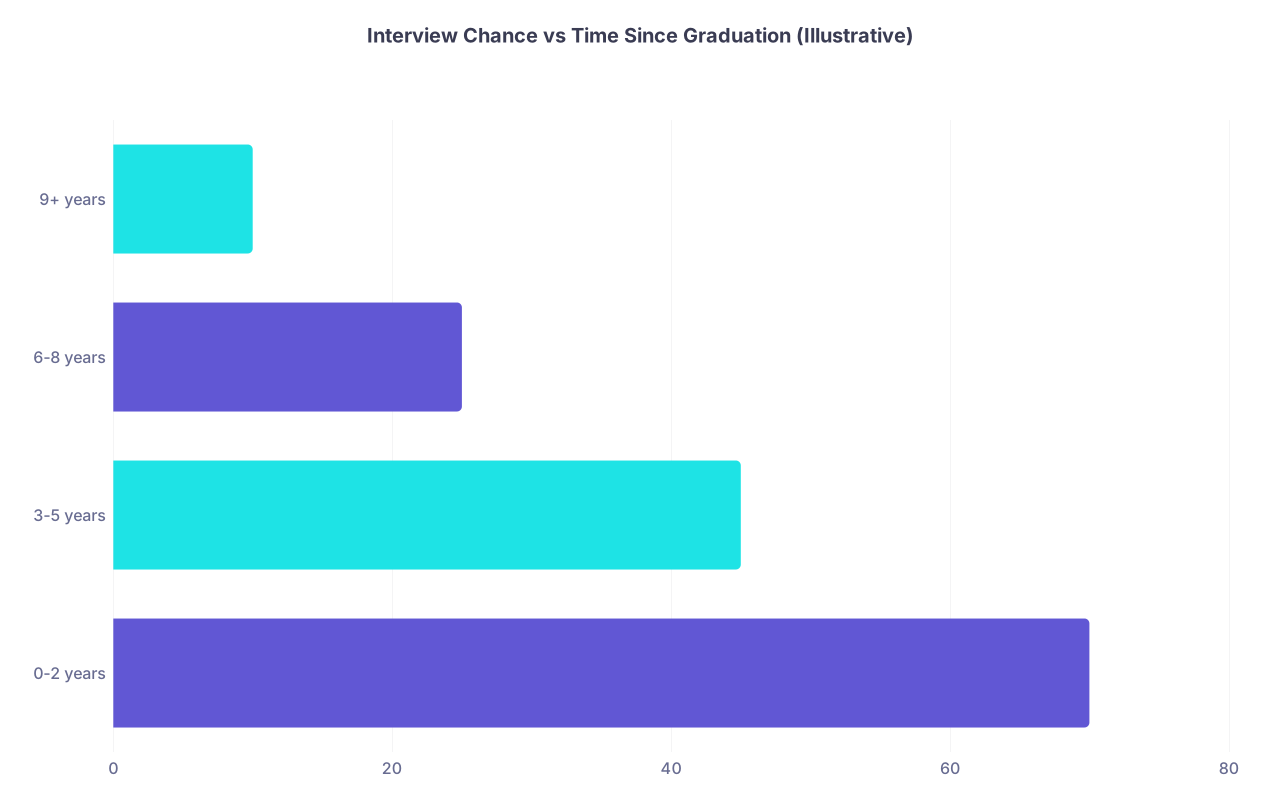
| Category | Value |
|---|---|
| 0-2 years | 70 |
| 3-5 years | 45 |
| 6-8 years | 25 |
| 9+ years | 10 |
What You Should Do Today
Do not “bookmark this for later.” That’s how people end up 10 years out, still talking about “planning a comeback.”
Today, before you sleep:
- Open a blank document titled: “[Your Name] – US Residency Comeback Plan”
- Create three sections:
- Next 7 Days
- Next 3 Months
- Next 12 Months
- Under “Next 7 Days,” write exactly:
- Which exam you’re targeting first
- How many hours you’ll study this week
- Which one person or program you’ll email for USCE or research
Then do at least one of them now. Not tomorrow. Now.