The worst mistake IMGs make after not matching is drifting through the next year with no real plan. You are not “waiting to re‑apply.” You are in a 12‑month sprint. Every month you either get closer to a stronger application—or you quietly repeat the same outcome.
Here is a strict, chronological 12‑month countdown for IMG graduates preparing to re‑apply. Follow it like a project plan, not a suggestion list.
Month 12: Post‑Match Reality Check (Immediately After You Don’t Match)
At this point you should stop guessing and get hard data on why you failed.
Week 1–2: Autopsy the last cycle
Sit down with your full file in front of you:
- USMLE/COMLEX scores and attempts
- CV (graduation year, gaps, experiences)
- Letters of recommendation
- Personal statement
- Programs you applied to (specialty list, number of programs, geographic spread)
- Interview invites vs applications
Now classify your prior application honestly.
| Component | Competitive | Borderline | Concerning |
|---|---|---|---|
| Step 1 (pass/fail) | Pass on first try | Pass with long gap | Fail or multiple attempts |
| Step 2 CK | ≥ 240 | 225–239 | < 225 or multiple attempts |
| YOG (years out) | ≤ 2 years | 3–5 years | > 5 years |
| USCE | ≥ 3 rotations | 1–2 rotations | None |
| LORs | 3+ strong US | Mix of US and home | Mostly non‑US / generic |
Be brutal with yourself. If you got:
- 0–2 interviews → it’s not “bad luck.” Something structural is broken.
- 3–7 interviews, no match → your interview skills, rank strategy, or program fit are suspect.
- 8+ interviews, no match → there’s likely a big red flag (communication, professionalism, attitude, or vague “fit” issues).
Week 3–4: Get outside opinions
At this point you should stop relying on your own bias.
- Book a 30–60 min session with:
- A US faculty mentor (ideally in your desired specialty)
- A program director or associate PD if you can get access
- At least one recent IMG who matched in your specialty
- Ask them specifically:
- “If you saw this file, would you interview this applicant?”
- “What would make this application a clear ‘yes’ 12 months from now?”
- “Would you tell this candidate to switch specialties?”
Write down the answers. Do not argue. Listen.
Decision by end of Month 12
By the last day of this month you must decide:
- Same specialty vs change specialty
- Research year vs paid clinical work vs home-country practice
- Step 3 in the next 12 months: yes or no
Do not roll these decisions forward. Indecision is how you end up with nothing meaningful to show on next year’s CV.
Month 11: Strategic Rebuild Plan
Now you turn regret into a concrete 12‑month plan.
Week 1: Set your measurable targets
At this point you should define success like a project manager, not a dreamer:
- Step 2 CK (if planning a retake or if weak): target score range
- Step 3: exam date window and target pass
- Number of USCE months you will complete (and before which date)
- Research output targets:
- X abstracts
- Y posters
- Z manuscripts submitted (not just “working on”)
- Letters:
- 3–4 new US letters from the upcoming year
- Application scope for re‑apply:
- Exact number of programs per specialty
- Geographic focus (community vs academic, specific states)
Week 2–3: Lock in your main year activity
You need one primary identity for this gap year:
- Research scholar / research fellow
- Full‑time observer/extern
- Home‑country physician with continued US ties (tele‑research, remote QI)
- Transitional or prelim resident (if you matched prelim only)
Start applications now:
- Email research coordinators and PIs at community and mid‑tier university programs in your specialty.
- Apply to formal IMG research positions where available.
- Reach out to US attendings you’ve rotated with. Ask directly: “Do you know any research or clinical opportunities for this year?”
Week 4: Build your 12‑month Gantt chart
Yes, literally. Use a spreadsheet or paper. Map month by month:
- When you’ll be:
- Studying for exams
- Doing research
- On clinical observerships/externships
- When your CV milestones should hit: abstracts submitted, Step 3 done, etc.
This prevents the classic IMG trap: “I planned to do a lot… and suddenly it was July.”
Month 10: Fix Core Weaknesses (Scores / Gaps / Specialty Choice)
By now you should know the main holes. This month is about plugging them deliberately.
Exam planning (Step 2 CK or Step 3)
If:
- Your Step 2 CK < 225 or feels like a liability → you should seriously consider Step 3 to show upward trajectory.
- Your Step 2 CK is decent but you’re a few years out of graduation → Step 3 becomes even more valuable.
At this point you should:
- Register and schedule Step 3 for between Month 7–5.
- Build a 12–16 week study plan that fits around your clinical/research work.
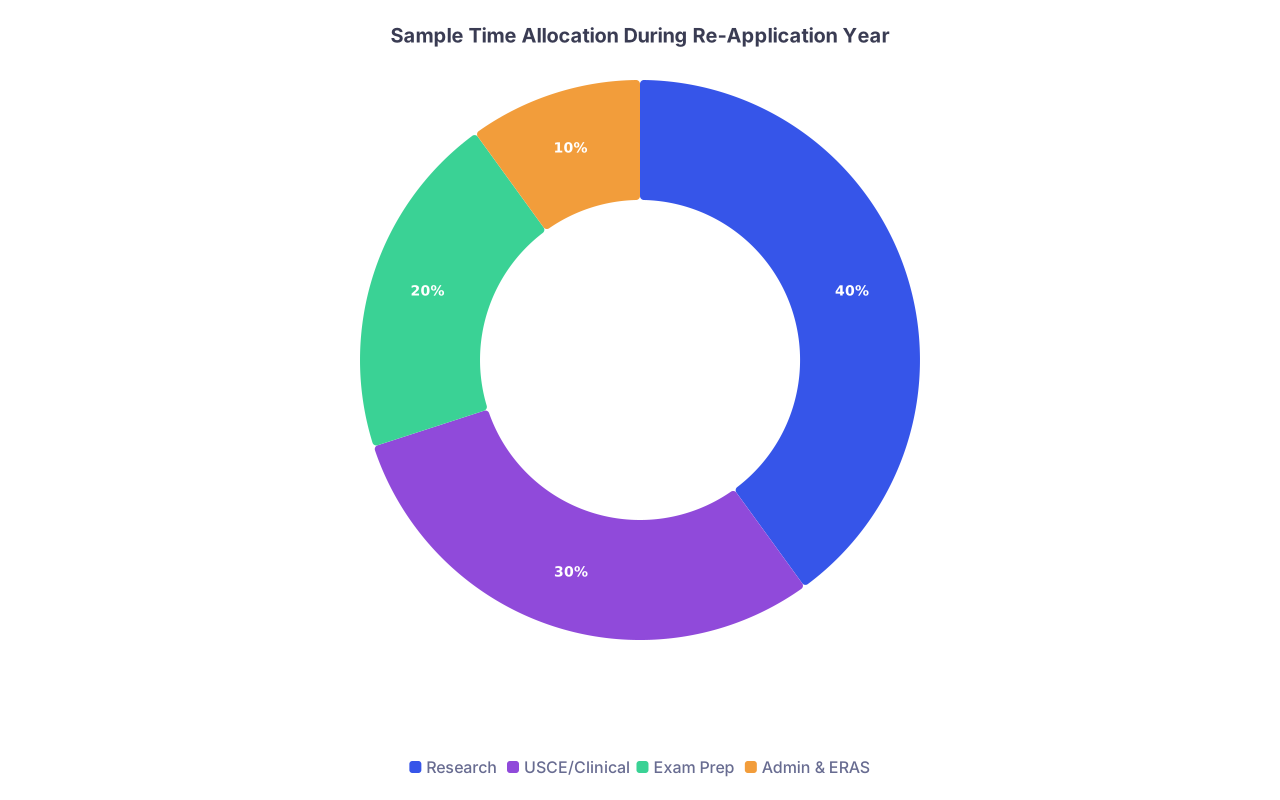
| Category | Value |
|---|---|
| Research | 40 |
| USCE/Clinical | 30 |
| Exam Prep | 20 |
| Admin & ERAS | 10 |
Specialty choice confirmation
If at least two experienced people told you your chosen specialty is unrealistic with your metrics, you need to choose:
- Stay and accept a higher risk of never matching
- Pivot to a less competitive specialty (FM, IM, psych, peds in some regions)
Lock this decision by the end of this month. Programs smell indecision. Your year’s narrative must be coherent: every activity points to one clear specialty.
Month 9: Secure USCE and Letters
If you are not increasing your US clinical experience in this year, you’re wasting a huge opportunity.
At this point you should:
- Have at least 2–3 months of USCE arranged over the upcoming year:
- Observerships
- Externships
- Hands‑on electives (where allowed)
- Prioritize:
- Community programs that actually take IMGs
- Sites with a track record of granting interviews to observers
During rotations:
- Be the early, reliable, non‑complaining person.
- Ask the attending in week 3 or 4:
- “Doctor, I’m planning to re‑apply this coming match. If I continue working hard, would you feel comfortable supporting me with a strong letter?”
Make it easy for them with:
- Updated CV
- Personal statement draft
- Short bullet list of cases and projects you worked on with them
You’re planting your LOR seeds now; you harvest them around Month 5–4.
Month 8: Launch Research / QI Productivity
At this point you should already be embedded in some sort of academic or clinical project. If not, this is your last call.
Week 1–2: Define portable, realistic projects
Focus on things that can be completed within 6–8 months:
- Retrospective chart reviews
- Case reports or small case series
- QI projects (clinic process improvements, guideline compliance)
- Review articles where someone else is senior author
Avoid giant, multi‑year RCT dreams. You don’t have that kind of time.
Week 3–4: Clarify authorship and deadlines
Sit down with your mentor:
- Clarify your role: data collection, analysis, writing
- Agree on:
- Abstract submission deadlines
- Manuscript target journals
- Who is first/second/third author
If this conversation feels awkward, have it anyway. Better now than in Month 2 when ERAS is already open and nothing is finished.
Month 7: Start Test Prep & Skill Rebuild (Interview + Communication)
By Month 7, your basic year structure is set. Now you sharpen your tools.
Exam prep ramp‑up
If Step 3 (or a late Step 2 CK) is on your schedule:
- Begin serious question‑bank work now (UWorld, AMBOSS, etc.).
- Set weekly question targets and track percentages.
- Aim to finish Q‑bank at least 3–4 weeks before your test date to allow full‑length practice and weak‑area review.
Communication and interview skills
The unspoken killer for many IMGs: how you sound.
At this point you should:
- Record yourself answering 5 common interview questions:
- “Tell me about yourself.”
- “Why this specialty?”
- “Explain this gap/failed exam.”
- “Describe a conflict with a colleague.”
- “Why this program/region?”
- Watch them. Fix:
- Overly long answers
- Flat affect
- Confusing explanations of red flags
If your spoken English or clarity is an issue, invest in:
- Toastmasters
- Online 1:1 communication coaching
- Practicing with US‑trained friends or colleagues
You want to feel noticeably smoother by the time summer interviews or info sessions start.
Month 6: Mid‑Year Checkpoint and Course Correction
Month 6 is your halftime review. You either adjust now, or you drag weaknesses straight into ERAS.
Mid‑year audit checklist
At this point you should have:
- At least 1–2 strong US letters in progress
- Clear documentation of:
- Research involvement
- Clinical exposure
- Exam:
- Step 3 scheduled with a reasonable prep runway
- CV additions:
- At least one abstract, poster, or manuscript in process (not just an idea)
If you’re far behind on any of these, you have to compress:
- Add weekend or evening work on data extraction/writing
- Shorten social/nonessential commitments
- Consider pushing Step 3 earlier or later if you truly can’t be ready—rushed failures are worse than a later pass.
Month 5: ERAS Narrative and Paper Trail
Now you move from “doing things” to “packaging them.”
Personal statement drafting
At this point you should:
- Draft two versions:
- Specialty‑specific core statement
- A variant for community vs academic flavor if necessary
- Integrate:
- What you learned from not matching
- How this re‑application year changed you (specific examples, not vague “growth”)
- Clear, grounded reasons for your specialty choice
Avoid:
- Long explanations of unfairness, blame, or system complaints
- Over‑explaining every detail of every failure
You get 1–2 sentences on major red flags, then back to what you’ve done to address them.
Letters of recommendation finalization
By the end of Month 5 you should:
- Politely remind attendings/mentors about your upcoming ERAS cycle
- Provide:
- ERAS letter request forms
- Your CV + PS
- Aim for:
- 3–4 US‑based letters from the last 12–18 months
- At least 1 from someone who has seen you directly with patients if possible
Month 4: ERAS Application Skeleton & Program List
At this point you should treat ERAS like an exam you’re already studying for.
Build your ERAS skeleton
- Fill out:
- All biographic info
- Education and training
- Experiences section with strong bullet descriptions, not just titles
- Start drafting:
- Experience impact descriptions (what you actually did and learned)
- Awards, leadership, volunteering sections
Do not wait for the portal to open to start this. Use last year’s application as a template if needed, but do not copy‑paste weak content.
Program list strategy
You need a realistic, data‑driven list tailored to IMGs.
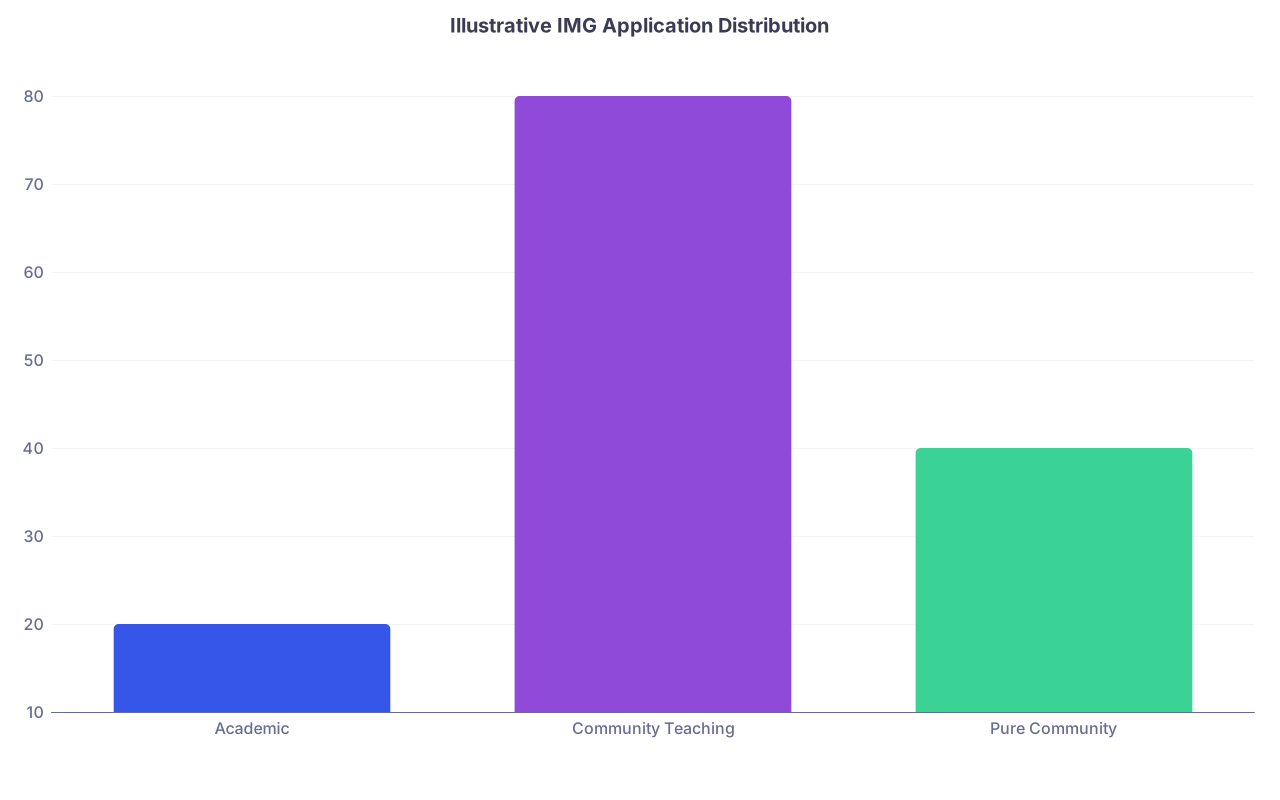
| Category | Value |
|---|---|
| Academic | 20 |
| Community Teaching | 80 |
| Pure Community | 40 |
For a typical re‑applicant IMG in IM/FM/Psych you should be thinking:
- 80–120 programs total (sometimes more, depending on metrics)
- Heavy focus on:
- Community and community‑teaching hospitals
- States and programs with a known IMG presence
Use:
- Program websites: check “IMG friendly,” Step cutoffs, visa policies
- NRMP Charting Outcomes and program lists from IMG forums (with skepticism but some utility)
By end of Month 4, you want:
- Rough list of target programs
- Clear labels:
- Green (realistic)
- Yellow (reach)
- Red (extreme reach, very few)
Month 3: Final Exam Push and Application Polishing
This is where many IMGs start to panic. Stay systematic.
Exams
If Step 3 is still ahead:
- Last 4–6 weeks → intensive Q‑bank + CCS (if applicable)
- Simulate exam conditions at least twice (full test days)
- Do not move the exam into ERAS season unless absolutely necessary—ERAS + exam panic is a terrible combo.
ERAS content refinement
At this point you should have:
- Final or near‑final personal statement
- Completed experiences with strong, outcome‑focused bullets
- Referees confirmed and letter submissions in progress or done
Now you:
- Have 1–2 trusted people critically review your whole application:
- PD, APD, chief resident, matched IMG, or mentor
- Ask them:
- “If you were a PD, what part of this would worry you?”
- “Where does this application feel generic or weak?”
Fix those areas now.
Month 2: ERAS Season Launch Preparation
This month is about readiness. No chaos.
ERAS account and document upload
At this point you should:
- Create/activate ERAS account as soon as it opens
- Upload:
- Final personal statement(s)
- CV/experiences (already drafted in Month 4)
- Photo (professional, neutral background, business attire)
- Confirm:
- USMLE transcript authorization
- ECFMG status and certification processes are on track
Final program list lock‑in
By the end of this month:
- Finalize the exact list of programs you’ll apply to
- Organize them in a spreadsheet with:
- Program name
- Specialty and track (categorical, prelim, transitional)
- IMG friendliness notes
- Visa policy
- Whether you have any connection (USCE, research, geographic ties)
This prep lets you send targeted, not random, signals later (emails, PS customization, etc.).
Month 1: ERAS Submission and Interview‑Readiness
This month everything goes live.
ERAS submission window
At this point you should:
- Submit your ERAS as early as realistically possible once the system allows program viewing and applications:
- Aim for day 1–3 of applications being accepted, not week 3–4.
- Double‑check:
- Program list accuracy
- Personal statement assignment (correct PS to correct specialty)
- Letters assigned properly
Do not get cute with late “improvements.” A slightly imperfect but early file beats a “perfect” file that hits PD desks when their interview slots are mostly full.
Interview prep intensifies
While applications are out, you start rehearsing:
- Set up mock interviews with:
- Friends, residents, faculty, or paid coaching if accessible
- Focus especially on:
- Explaining your re‑application story:
- Why you didn’t match
- What you did in the interim
- Why you’re a better candidate now
- Explaining:
- Gaps
- Exam failures or low scores
- Long YOG
- Explaining your re‑application story:
Keep every explanation:
- Brief (30–60 seconds)
- Calm, accountable, no drama
- Followed immediately by concrete steps you took to improve
Final 2–4 Weeks Before Interviews: Polish and Contingency Planning
If you’re already getting interview invitations, good. If not yet, don’t spiral. This period is still under your control.
Last‑minute strengthening
At this point you should:
- Update your CV/ERAS with:
- Any new publications/accepted abstracts
- Completed Step 3 results (if they came back strong)
- Consider targeted, concise emails to:
- Programs where you have:
- USCE experience
- Research collaboration
- Geographic ties
- Programs where you have:
Email template core:
- 3–4 sentences
- Who you are, your connection, why their program genuinely fits you, and a brief note that your updated CV/ERAS is available (no begging, no attachments unless allowed).
Mental and logistical prep
- Ensure:
- Reliable internet and quiet space for virtual interviews
- Professional attire ready
- Time off cleared from clinical or research duties on interview days
You don’t want to be the candidate interviewing from a noisy call room with dropped Wi‑Fi.
Core Takeaways
- A re‑application year is not “dead time”; it’s a 12‑month rebuilding project. Treat it like one—with milestones every single month.
- You must aggressively address your true weaknesses (scores, USCE, research, communication) instead of hoping the same application magically works next year.
- By the time ERAS opens again, your story should be simple: “I didn’t match. I figured out why. I spent the year fixing it, and here’s the proof.”