
The idea that IMGs should “pick a state and go all‑in” is usually bad strategy.
For most IMGs, applying nationwide is clearly better—if you can afford it and do it intelligently. Focusing on one state makes sense only in very specific situations. Let me walk you through exactly which side you fall on and how to decide without guessing.
The Core Answer: Who Should Apply Nationwide vs State‑Focused
Let me be blunt.
If you are an IMG with:
- no U.S. citizenship/green card,
- average scores,
- and no strong regional ties,
then restricting yourself to one state is almost always shooting yourself in the foot. Your main problem isn’t “too many applications,” it’s “not enough interviews.”
On the other hand, if you:
- are married with a spouse locked to one city for work or visa,
- have strong state ties (US medical experience, family, long‑term living there), or
- are targeting a state with many IMG‑friendly programs in your chosen specialty,
then a state‑anchored strategy (one region or a few states) can be smart.
Here’s the decision rule I use when advising IMGs:
| Profile Type | Recommended Scope |
|---|---|
| Strong IMG (high scores, USCE, visa-free) | Broad nationwide |
| Average IMG, no ties, needs visa | Broad nationwide |
| Weak IMG, needs every chance | Broad nationwide (targeted) |
| Spouse/job/visa fixed in one city | State/region-focused |
| Strong long-term ties to 1–2 states | Region-focused with national backup |
| Trying to save money | Hybrid: national but filtered list |
So the default is: go broad. Then narrow intelligently.
The Math: Why Nationwide Usually Wins for IMGs
Residency interviews are a numbers game, especially for IMGs.
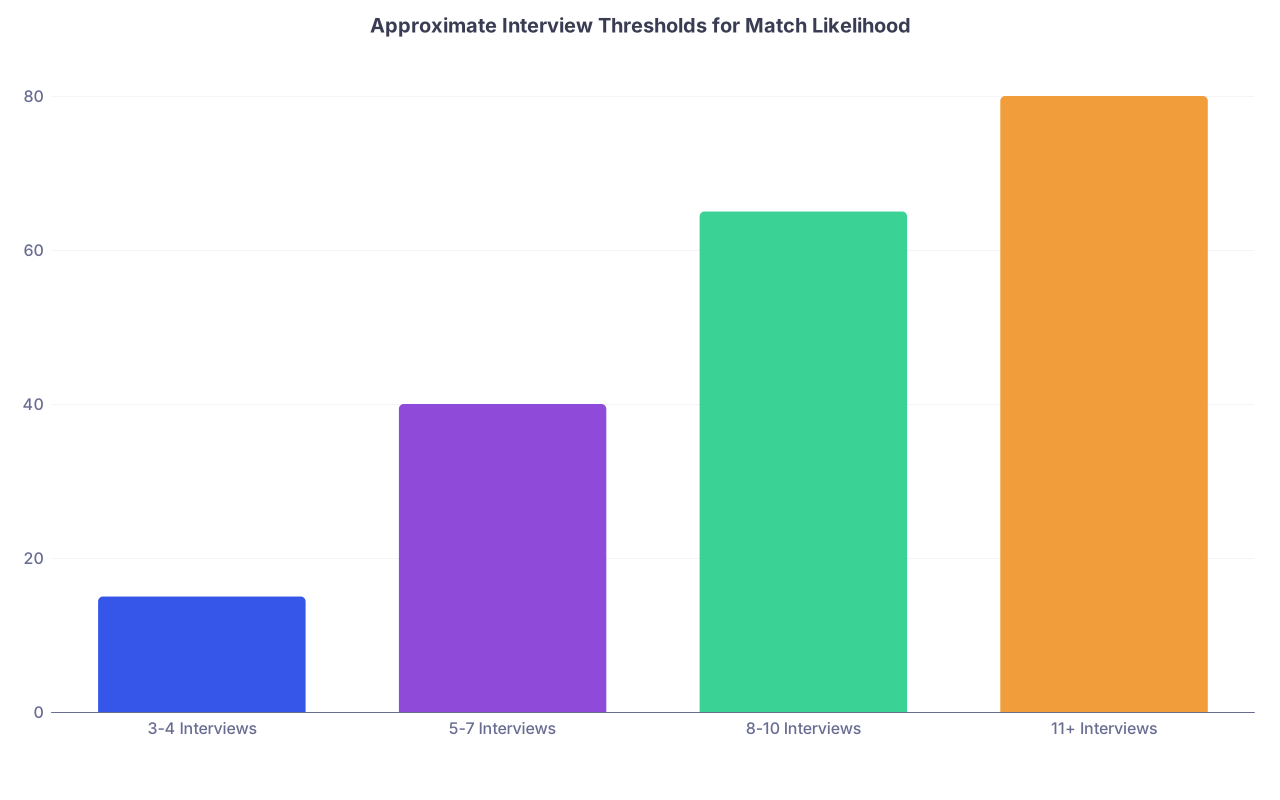
| Category | Value |
|---|---|
| 3-4 Interviews | 15 |
| 5-7 Interviews | 40 |
| 8-10 Interviews | 65 |
| 11+ Interviews | 80 |
Rough reality (yes, simplified, but directionally right):
- 3–4 interviews → you might match, but it’s risky
- 5–7 interviews → decent chance
- 8–10+ interviews → much better odds
If narrowing to one state drops your interviews from 8 to 3, it’s not “saving money.” It’s gambling the whole match on convenience.
Problem 1: State Supply is Not in Your Control
Most IMGs underestimate how uneven the map actually is.
Some states are relatively “open” to IMGs (especially in internal medicine, family medicine, pediatrics, psych). Others are brutal.
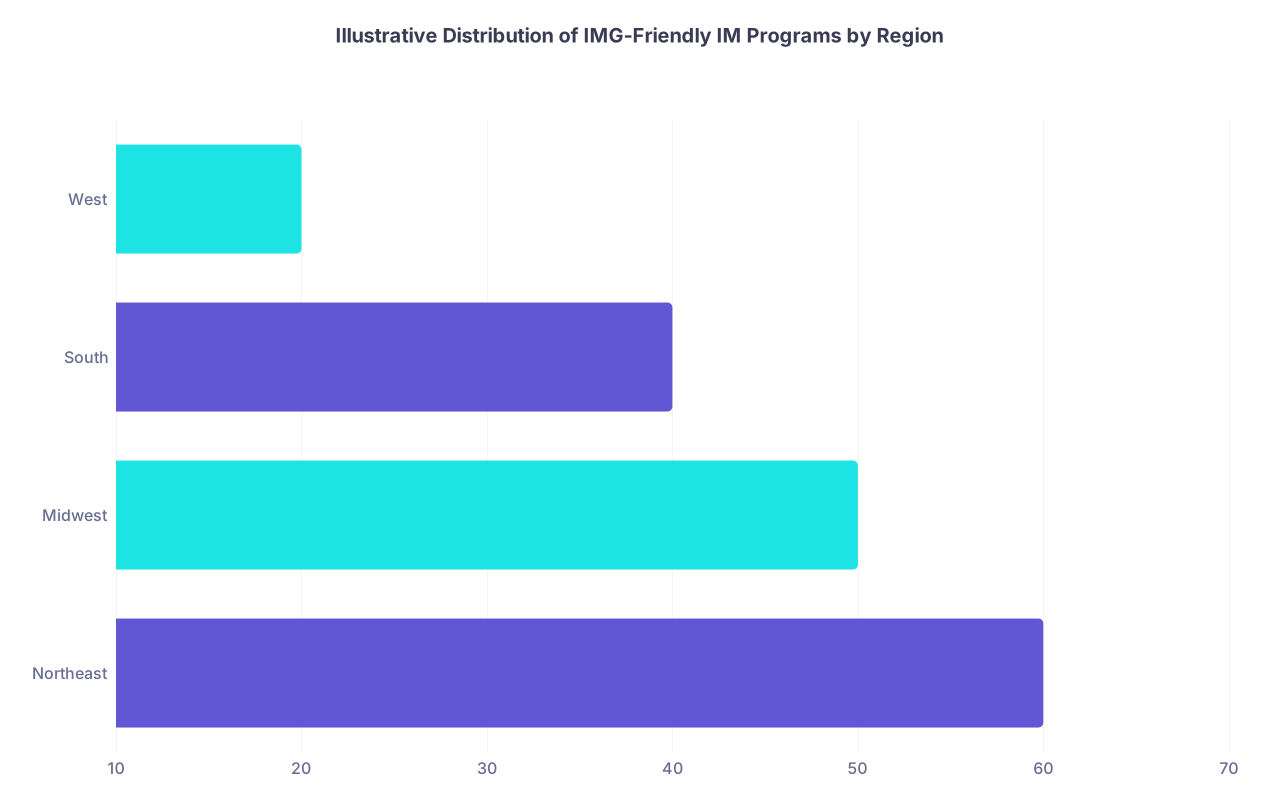
| Category | Value |
|---|---|
| Northeast | 60 |
| Midwest | 50 |
| South | 40 |
| West | 20 |
If you commit to, say, California or New York only because you’ve heard of them, you’re ignoring:
- smaller but IMG‑friendly states (Ohio, Michigan, Pennsylvania, New Jersey, Texas, etc.)
- community programs in less “popular” regions that actually sponsor visas and interview IMGs
Bottom line: you don’t control where the IMG‑friendly interview offers are. The market does. Broad applications respect that reality; state‑only applications pretend it doesn’t exist.
Problem 2: Visa + State Requirements Restrict You More Than You Think
States have licensing and exam rules that can quietly sabotage a “single‑state” strategy.
Common pitfalls:
- States that require all USMLE Steps passed by a certain deadline.
- States that don’t accept older graduation years (common for older IMGs).
- Visa‑hostile regions where most programs are “no visa” or J‑1 only.
If your only target state has:
- few visa‑sponsoring programs, or
- strict year‑of‑graduation cutoffs,
you’re dead on arrival and you won’t know until too late, because programs rarely announce “we basically don’t rank IMGs.”
When Focusing on One State (or Region) Does Make Sense
Now, not everyone can or should hop anywhere in the country. A narrow focus can be rational. But it must be earned, not assumed.
1. Your Life is Locked to One Place
If your spouse’s job, kids’ school, or your own visa situation locks you to one metro area or state, that’s real. Some examples I’ve seen:
- H‑4 EAD spouse who can’t relocate easily
- J‑2 with school‑age kids in one district
- Partner in a non‑portable job (e.g., local small business, government job)
In that case:
- Start with every IMG‑friendly program in your state/region.
- Expand to adjacent states within realistic commute or flight distance.
- Still apply nationally to a smaller number of “long‑shot but possible” programs as backup.
Don’t confuse “I prefer this city” with “I absolutely cannot leave this city.” Those are different. Be honest with yourself.
2. You Have Deep, Documentable Ties to a State
Programs do like people with local ties because they’re more likely to stay. Good examples:
- You went to undergrad or grad school in that state.
- You’ve worked clinically or done research for >1 year there.
- You have spouse/children/parents living long‑term there.
If that’s you, you can:
- Emphasize that state more heavily (more applications there, tailored personal statements).
- Still keep a national strategy, just weighted toward “home” programs.
The mistake is going from “tied to one state” → “I will apply only there.” Use your advantage, don’t trap yourself with it.
3. You Are Extremely Strong and Very Selective
This is rare for IMGs, but it exists.
If you’re an IMG with:
- 250+ on all Steps,
- strong U.S. clinical experience,
- publications,
- green card/US citizen,
- and a clear geographic focus (e.g., spouse in Boston, long‑term plan there),
then you might get away with heavy state bias or region bias. Even then, I still advise applying to at least a few programs outside your main state since residency selection is not fully rational and weird things happen.
The Hybrid Strategy: How Most IMGs Should Apply
What I recommend to most IMGs is not “all 50 states blindly” vs “only one state.” It’s a tiered, hybrid strategy.
Here’s how to think about it.

| Step | Description |
|---|---|
| Step 1 | Start Planning |
| Step 2 | State/Region Heavy |
| Step 3 | Nationwide Core List |
| Step 4 | Add Nearby States |
| Step 5 | Filter By IMG-Friendliness |
| Step 6 | Selective National Backup |
| Step 7 | Finalize Program List |
| Step 8 | Tied to 1 City/State? |
Step 1: Define Your “Core” Region
- This might be one state or a cluster: e.g., NY/NJ/PA or TX/OK/LA.
- Include everywhere you have real ties, not wishful thinking.
Apply more heavily there:
- Tailor personal statement regionally.
- Mention local ties in ERAS.
- Ask letter writers in that region to name-drop local programs where appropriate.
Step 2: Build a Nationwide, Filtered List
Then go national—but smart:
- Filter by IMG‑friendliness (use FREIDA, program websites, past match data, Reddit/SDN/Telegram groups with caution but some value).
- Remove historically IMG‑hostile programs, especially those with:
- almost no IMGs in current residents
- no visa sponsorship
- Drop super competitive locations unless your profile matches (NYC big academic, SF, LA, etc., especially in competitive specialties).
This gives you a nationwide list that still respects reality and your chances.
Step 3: Adjust Count Based on Your Profile
Rough, very general ranges for IMGs in internal medicine/family medicine/psychiatry:
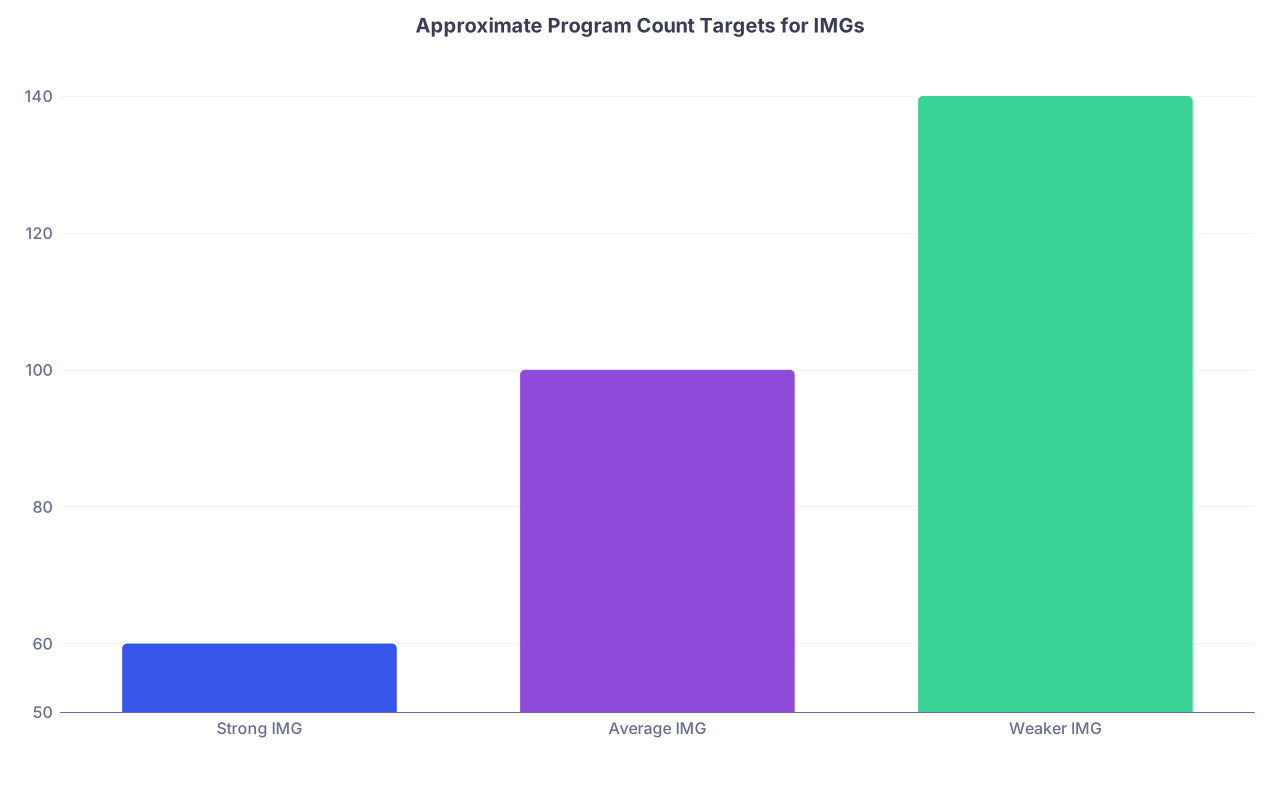
| Category | Value |
|---|---|
| Strong IMG | 60 |
| Average IMG | 100 |
| Weaker IMG | 140 |
- Strong IMG: 50–80 programs
- Average IMG: 80–120 programs
- Weaker IMG or outside 5–10 years since graduation: 100–150+ programs
These are not magic numbers, but they reflect reality: IMGs often need volume plus fit.
State vs Nationwide: How It Affects Cost, Fatigue, and Match Odds
People push single‑state strategies because they sound cheaper and less stressful. Some truth there—but let’s be specific.
Cost
Yes, ERAS fees escalate quickly. But focusing only on one state often saves… maybe $300–700. And risks losing a whole additional year of your life (and another application cycle fee) if you don’t match.
For most IMGs, the better question is:
“How many extra programs can I realistically afford before the cost becomes impossible?”
Then apply to that number—but nationwide, not randomly packed into one or two famous states.
Application Fatigue
More programs means more:
- emails,
- tracking,
- occasional program‑specific questions,
- potential interviews.
You can manage this with a simple spreadsheet: state, program, visa type, status (applied/interview/rejected). That’s it. I’ve watched IMGs handle 120+ programs reliably using a single Google Sheet and a dedicated email label.
Match Odds
This is the big one. Restricting yourself geographically almost never increases your odds as an IMG unless your ties are so strong that the programs basically see you as local.
For everyone else, more geographic diversity:
- Exposes you to communities actively seeking IMGs.
- Gives you backup options in places you’ve never heard of but that end up interviewing and ranking you decently.
I’ve seen more IMGs match in “never thought of living here” states than in their dream coastal city.
Specialty-Specific Notes for IMGs
Not all specialties behave the same way.
Internal Medicine / Family Medicine / Pediatrics / Psychiatry
Broad, nationwide is king. These specialties have IMG‑friendly pockets all over the map.Neurology / Pathology / PM&R
Still relatively receptive to IMGs but with fewer total positions. You can’t afford to ignore half the country.Competitive specialties (Derm, Ortho, Plastics, ENT, Ophtho)
If you’re an IMG here, geography is the least of your issues. Research output, US connections, and home program ties matter more. But yes, you still go nationwide.Surgical fields (Gen Surg, etc.)
IMGs do match, but in very specific programs and states. Applying to just one “popular” state is almost always a bad move unless you’re exceptionally strong and very well‑connected.
Practical Framework: How To Decide Your Scope in 20 Minutes
Do this on paper (or spreadsheet), not in your head:
List your non‑negotiables
- Visa type, family constraints, absolute no‑go regions (weather, cost of living, safety).
List your ties
- States where you have lived, studied, worked, or have immediate family.
Check your profile strength
- USMLE scores, YOG (year of graduation), USCE, visa status.
Decide your total application count
- Based on budget and specialty competitiveness.
Allocate:
- 30–40% of applications to your tied/priority region(s).
- 60–70% to other IMG‑friendly states across the country.
That’s it. You now have a rational, not emotional, scope plan.

Common Mistakes IMGs Make With Geographic Strategy
I see the same errors again and again.
“California or nothing”
California is notoriously IMG‑unfriendly in several specialties and oversubscribed. If your whole list is there, expect pain.Thinking family = must stay
Having cousins or friends in a state is not a good enough reason to risk your entire career there. Parents/spouse/kids can be stronger reasons, but still weigh them against match probability.Copying a friend’s strategy
Your friend with a 255 and U.S. citizen status is not you with a 225 and needing H1‑B. Different physics.Equating famous cities with better training
A solid community program in Ohio can train you far better (and treat you better) than a “name” program that doesn’t even look at IMGs.

Quick Reality Check: Ask Yourself These 5 Questions
If you’re leaning toward “one state only,” answer honestly:
- Would I rather not match at all than leave this state?
- Do my scores and CV realistically give me leverage over geography?
- Does this state have many IMG‑friendly, visa‑sponsoring programs in my specialty?
- Have I checked the state’s licensing rules for IMGs and YOG?
- Am I choosing this state for rational reasons, or just because it’s famous or my friends are there?
If you can’t clearly justify “yes” to most of these, you’re better off widening your map.

FAQs: IMGs, States, and Nationwide Applications
1. I’m an IMG with low scores. Should I still apply nationwide or save money and focus on one state?
Apply nationwide—but targeted. With low scores, you need more shots, not fewer. Filter for IMG‑friendly, less competitive locations and avoid wasting money on programs that haven’t taken IMGs in years. A one‑state strategy with low scores usually means zero interviews.
2. I have family only in one state. Will programs there favor me if I apply just to them?
Family helps only if they’re close family and you clearly explain your ties, but it doesn’t magically override competition. Programs don’t reward you for ignoring the rest of the country. Use your family ties to strengthen applications there, but still apply to other states where you’re competitive.
3. How do I find IMG‑friendly states and programs?
Start with FREIDA and program websites. Look at current residents’ medical schools—if you see many IMGs, good sign. Ask recent IMGs from your school or hospital where they interviewed. Use social media and forums cautiously to cross‑check, not as your only source of truth.
4. Does applying to more states hurt my chances in my preferred state?
No. Programs don’t see your entire list. They only see that you applied to them. There is zero penalty for applying to multiple states. The only “downside” is cost and your own time managing invitations and emails.
5. I need a visa. Should I prioritize states known to sponsor visas or just apply everywhere?
Prioritize states and programs with a clear history of sponsoring J‑1 or H1‑B for IMGs. Do not apply to programs that explicitly say “no visas.” You can still apply nationwide, but filtered to visa‑friendly options. Visa need is a major argument against a single‑state strategy unless that state is very visa‑friendly in your specialty.
6. Can a very strong personal statement about one state compensate for limited applications elsewhere?
No. A strong, state‑focused personal statement can help you stand out within that state’s programs, but it doesn’t increase your overall interview volume if you’re only applying to 10–20 programs. Powerful story, wrong audience size.
7. I’m couples matching as an IMG. Should we narrow to one state to align interviews?
You should narrow to regions, not a single state. Couples match is already hard for IMGs; limiting to one state makes it even harder. Choose 2–4 anchor regions with a decent density of programs for both of you, then apply broadly within and slightly beyond those regions to create overlapping possibilities.
Key Takeaways:
Most IMGs should apply nationwide, not state‑only, using a filtered, IMG‑friendly list. Single‑state focus makes sense only when your life circumstances or deep local ties truly demand it, and even then, you should usually keep some national backup. Do not let geography, ego, or famous cities quietly sabotage the one thing that actually matters: getting enough interviews to match.