
58% of matched IMGs end up in just 10 states.
That single number tells you most of what you need to know about “where the opportunities are.” The U.S. residency landscape is not evenly distributed. If you apply blindly across the map, you are burning money and time.
Let me walk you through where the data says IMG‑friendly programs actually cluster, region by region and state by state.
1. How I’m Defining “IMG‑Friendly” (And What The Data Really Shows)
Before we talk regions, we need a clear metric. “IMG‑friendly” gets abused a lot on forums. I am using a straightforward, quantitative definition:
- For a given state or program:
- IMG‑friendly score = percentage of residents in that state/program who are IMGs (US‑IMG + non‑US‑IMG), measured across major core specialties (IM, FM, peds, psych, gen surg, neurology etc.), using recent match and program roster data.
Two important consequences of this:
- A huge state with many programs but a low IMG proportion might still be less useful to you than a smaller state with a high proportion.
- A “top” academic state can look terrible for IMGs because its big-name university programs rarely take them, even if there are a few community programs that do.
To anchor the discussion, here is a stylized but directionally accurate snapshot of how IMGs distribute across a few well‑known states by share of IMG residents:
| State | Approx. IMG Share of Residents* |
|---|---|
| New York | 40–45% |
| Florida | 35–40% |
| New Jersey | 40–50% |
| Texas | 25–30% |
| California | 15–20% |
| Massachusetts | 10–15% |
*Across core specialties, recent years, mixed US‑IMG and non‑US‑IMG. Rounded bands, not exact.
The pattern is already obvious: Northeast + parts of the South soak up a disproportionate share of IMGs.
2. Regional Overview: Where IMGs Actually Match
There are many ways to chop up the U.S., but for IMG purposes, four regions give you clear strategic signals:
- Northeast
- South
- Midwest
- West
Across recent cycles, the bulk of IMGs cluster in the Northeast and South. The Midwest is mixed but has strong pockets. The West is the most limited, with some notable exceptions.
Let me put some approximate regional shares against the total IMG match (again, directional, not precise to the decimal):
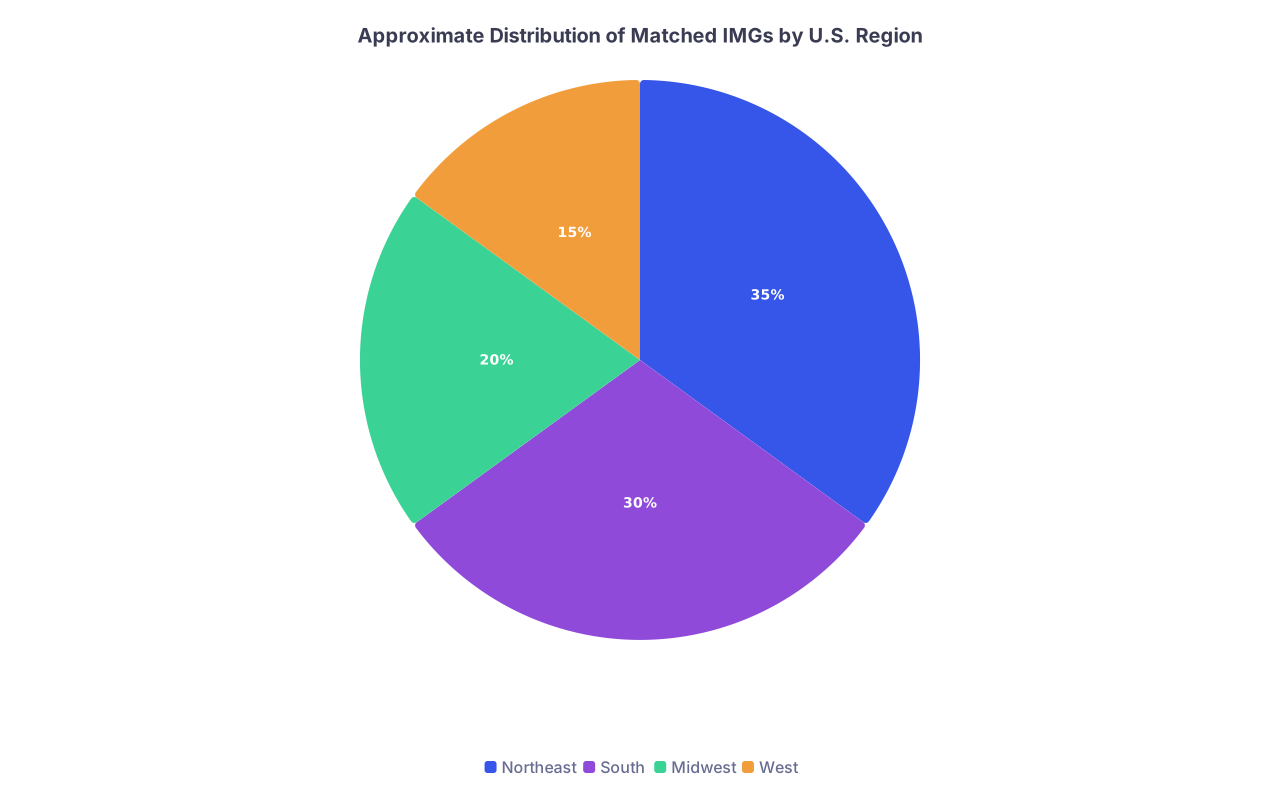
| Category | Value |
|---|---|
| Northeast | 35 |
| South | 30 |
| Midwest | 20 |
| West | 15 |
So if you are thinking “I want to be in California, Washington, and Colorado only,” you are competing for a slice of roughly 15% of IMG positions, much of which is already constrained to a few specialties and programs.
Now let us go state‑by‑state where it matters.
3. Northeast: The Core IMG Hub
The data is blunt here: the Northeast carries a disproportionate share of IMG‑heavy programs. High population density, older physician workforce, large Medicaid populations, and many community hospitals all push in your favor.
3.1 New York: The De Facto Capital for IMGs
New York is the single most important state for IMGs. Every match cycle, it shows:
- One of the highest absolute numbers of IMGs matched.
- One of the highest percentages of IMG residents, especially in internal medicine and family medicine.
What drives this?
- Huge number of community and county programs in NYC boroughs and upstate (Bronx, Brooklyn, Queens, Staten Island, Buffalo, Syracuse, Rochester).
- Many programs historically built around IMG recruitment, especially in internal medicine, family medicine, and psychiatry.
- Some programs with >60% of residents as IMGs year after year.
If you are an IMG targeting IM, psych, or FM and you do not have at least 10–20 New York programs on your list (assuming average stats), you are ignoring the clearest data signal in the country.
3.2 New Jersey: Small State, Huge IMG Density
New Jersey is another compact but high‑yield state:
- Several community IM and FM programs with very high IMG percentages.
- Proximity to New York and Philadelphia but often slightly less competitive.
- Many US‑IMGs (Caribbean) cluster here, which tends to signal IMG‑friendly culture and selection practices.
I see this pattern every cycle: borderline applicants who overshot with big coastal academic centers but included a good set of NJ community programs often match there.
3.3 Pennsylvania, Connecticut, and Others
Pennsylvania is a split state:
- Philly and Pittsburgh have big academic centers that are more US‑MD biased.
- However, numerous community internal medicine and FM programs across the state (Scranton, Reading, York, etc.) have meaningful IMG intake.
Connecticut, Rhode Island, and upstate New England are more constrained. They do have IMG‑friendly pockets, but low program counts mean limited capacity. You cannot rely on them as core destinations unless your profile is unusually strong.
4. The South: High Volume, High Need, Often Very IMG‑Friendly
From a pure numbers and needs perspective, the South is very favorable for IMGs, particularly in:
- Florida
- Texas
- Some Gulf / Deep South states (e.g., Louisiana, Mississippi, Alabama)
4.1 Florida: Second Only to New York for Many IMGs
Florida has:
- A large and aging population.
- Very high demand for internal medicine, family medicine, and psychiatry.
- Many community programs with a long history of recruiting IMGs.
In internal medicine especially, it is common to find programs where 40–60% of residents are IMGs. Psychiatry and family medicine show similar patterns, though with fewer total positions.
The caveat: Florida is well known among Caribbean schools, so a lot of US‑IMGs target it aggressively. You are in heavy company. But the absolute number of spots is large.
4.2 Texas: Large Market, Moderate to Good IMG Access
Texas is interesting analytically:
- Large GME capacity statewide.
- Some urban centers with IMG‑friendly community programs (Houston, Dallas, San Antonio).
- But also a robust in‑state MD/DO pipeline and some relatively protectionist behavior.
Result: You see many programs with 20–30% IMG residents—not as high as New York or New Jersey, but still significant.
If your USMLE scores and CV are decent, Texas can be a good region to target, particularly in:
- Internal medicine (community and university‑affiliated community programs)
- Family medicine
- Pediatrics and psychiatry in certain cities
But if your profile is on the weaker side (borderline scores, attempts, long gaps), Texas is less forgiving than New York or Florida.
4.3 Deep South & Gulf States: Low Competition, Narrower Options
States like:
- Alabama
- Mississippi
- Louisiana
- Arkansas
- Oklahoma
Often have:
- Few total programs.
- But a relatively high proportion of IMGs in internal medicine and family medicine.
These can be strategic “safety” additions, especially if you are willing to live in smaller cities. Programs here may be more open to applicants with non‑traditional backgrounds, attempts, or older graduation years if there’s clear clinical currency and solid letters.
However, do not overestimate them. Each state might only have a handful of programs. They are good supplements, not cores.
5. Midwest: Mixed Terrain with Some Excellent IMG Pockets
The Midwest is not monolithic. You have:
- Large states with many programs and moderate IMG uptake (Illinois, Ohio).
- Smaller or more rural states with few programs, but often quite IMG‑friendly in primary care.
5.1 Illinois: Chicago vs. The Rest
Illinois is a classic split:
- Chicago has a dense program ecosystem. Many community internal medicine and FM programs with substantial IMG representation.
- Some university programs there are also moderately open to strong IMGs, especially in medicine and pediatrics.
- Outside Chicago, smaller cities with community hospitals can be very receptive to IMGs.
Overall, Illinois generally falls into the 25–35% IMG share band in many core specialties, with some programs well above that.
5.2 Ohio, Michigan: Reasonable but Competitive
Ohio and Michigan show a pattern similar to Texas, but with fewer total positions:
- Big academic centers that are mostly US‑MD/DO heavy.
- Community programs that are clearly IMG‑friendly, often in internal medicine, family medicine, and pediatrics.
You can think of these as “mid‑tier” states for IMG friendliness: better than coastal West and much of New England, weaker than New York / New Jersey / Florida. Worth including, but you will not rely on them alone.
5.3 Smaller Midwest States: Low Noise, High Signal
States such as:
- Kansas
- Nebraska
- Iowa
- North Dakota
- South Dakota
Tend to have very few programs. However, internal medicine and family medicine programs in these states often have a high proportion of IMGs because:
- They struggle to attract enough US grads.
- They actively recruit IMGs with an interest in rural or underserved medicine.
If you are flexible on geography, adding 3–5 of these “small‑state” programs can materially increase your match probability.
6. West: Attractive States, Limited Spots, Tougher Environment
The data here is harsh for IMGs who dream of coastal living.
6.1 California: Many Programs, But Not Very IMG‑Friendly
California has:
- A large number of residency programs.
- High competition, strong in‑state MD/DO pipeline.
- Immense location desirability.
Those three combine to depress IMG representation.
In internal medicine, you will find a few community programs in places like the Central Valley with moderate IMG intake. But many of the large academic and coastal programs are heavily US‑MD and DO focused.
In many core specialties, the IMG share in California is typically closer to 10–20%, and a big chunk of that is US‑IMGs who have California ties.
If you are an average IMG statistically (mid‑220s Step scores, 1–2 publications, few U.S. hands‑on rotations), a California‑heavy application is usually a strategic mistake.
6.2 Pacific Northwest and Mountain States: Beautiful, But Sparse
States like:
- Washington
- Oregon
- Colorado
- Utah
Have:
- Relatively few programs.
- High desirability for lifestyle.
- Strong local MD/DO pipelines.
Result: low IMG proportions, often in the single digits or low teens.
There are exceptions—individual internal medicine or FM programs that like IMGs—but as a region, this is one of the least friendly for a broad IMG strategy.
6.3 Western Outliers: Nevada, Arizona, New Mexico
These can be more promising:
- Arizona and Nevada have been building up GME capacity and have underserved populations.
- New Mexico has a mission‑driven structure and may consider strong IMGs, especially in primary care and psychiatry.
Still, absolute numbers are limited. You add these as smart extras, not primary targets.
7. Comparing Key IMG States: Where the Density Really Is
To keep this concrete, here is a comparative snapshot focusing on states that repeatedly show high IMG density. Again: approximate ranges, but directionally correct.
| State | Relative GME Size | Typical IMG Share | Best IMG Specialties |
|---|---|---|---|
| New York | Very High | 40–45% | IM, FM, Psych, Neuro |
| Florida | High | 35–40% | IM, FM, Psych |
| New Jersey | Moderate | 40–50% | IM, FM |
| Illinois | High | 25–35% | IM, FM, Peds |
| Texas | Very High | 25–30% | IM, FM, Peds, Psych |
If you are building a list of, say, 120 internal medicine applications as a non‑US IMG, and you are not heavily weighted into these five states, you are ignoring where the match data clusters.
8. How to Use This State‑Level Data to Build a Rational Application List
Knowing “New York good, California hard” is not enough. You need to convert this into a weighted strategy.
8.1 Weighting Your Application List by Region
As a rough rule of thumb for a typical non‑US IMG targeting internal medicine or family medicine:
- 40–50% of applications: High‑density IMG states
New York, Florida, New Jersey, Illinois, Texas (plus a few others like Pennsylvania). - 30–40%: Moderate‑density, mixed states
Ohio, Michigan, Georgia, North Carolina, Virginia, some Midwest and South. - 10–20%: Low‑density, high‑desirability states
California, Washington, Colorado, Massachusetts, etc.
Obviously you adjust this if you have strong regional ties, visas, or unusual strengths. But the basic math is: load your list where programs historically say “yes” to IMGs.
8.2 State vs. Program‑Level Analysis
State‑level analysis is a blunt instrument. It gets you into the right neighborhoods. But the real signal comes at the program level:
- Look at current resident rosters (PGY‑1 to PGY‑3).
- Count how many are IMGs, and of those, how many are non‑US IMGs vs US‑IMGs.
- Note your similarity: medical school region, visas, gaps.
When I do this for applicants, the patterns are glaring. You see programs where >70% of residents are IMGs from South Asia, the Middle East, Eastern Europe. These are your highest‑yield targets. You also see states where an IMG‑friendly reputation is really just three programs out of twenty.
State‑level numbers guide you where to search. Program‑level rosters tell you where to actually fire.
9. Visualizing a Sample IMG‑Focused Application Strategy
To tie this together, here is a hypothetical allocation for a non‑US IMG targeting internal medicine with average‑good stats (Step 1 pass, Step 2 CK 232, recent grad, 2 US observerships):
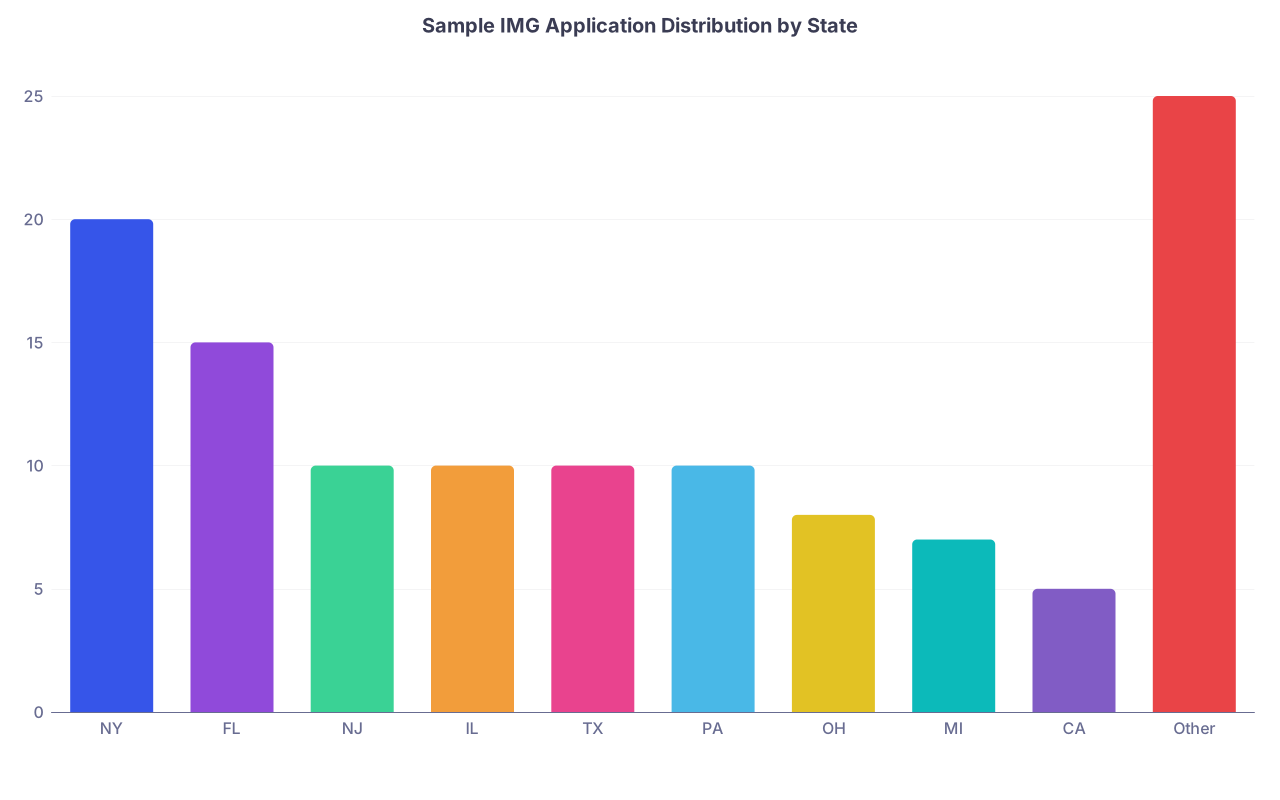
| Category | Value |
|---|---|
| NY | 20 |
| FL | 15 |
| NJ | 10 |
| IL | 10 |
| TX | 10 |
| PA | 10 |
| OH | 8 |
| MI | 7 |
| CA | 5 |
| Other | 25 |
This is the kind of distribution I see in applicants who end up with multiple interviews and at least one match in a high‑density IMG state.
They do not bet the farm on a single region. But they clearly overload onto the states where the historical data shows strong IMG intake.
10. Common Strategic Mistakes IMGs Make With Regions and States
I am going to be blunt, because I see the same errors every cycle.
Over‑applying to California, Massachusetts, and the Pacific Northwest
The data is against you unless you have top‑tier scores, research, and strong ties. Yet many IMGs sink 30–40% of applications into these locations.Under‑applying to New York and New Jersey
Some applicants say “I do not like NY” and apply to 3–4 programs there. Then they end up unmatched. The numbers are not sentimental. You go where the positions and historical IMG uptake are.Ignoring small or rural states
Places like Kansas, North Dakota, or Mississippi often rescue borderline profiles. People simply don’t apply there in sufficient numbers.Not differentiating between US‑IMG‑friendly and non‑US‑IMG‑friendly
Some states (and many programs) take many Caribbean grads but almost no non‑US IMGs. If you are a non‑US IMG, you must check who is actually being taken.Matching your application map to your lifestyle preferences instead of the data
Applying heavily in “cool” cities with poor IMG stats is a common way to buy yourself a second gap year.
11. Putting It All Together
If you strip away the noise and forum myths, the residency match for IMGs is very geographic.
- Most IMGs cluster into a relatively small set of states—especially New York, Florida, New Jersey, Illinois, and Texas—because these states have both high GME capacity and a track record of recruiting IMGs into core specialties.
- The Northeast and South are the main IMG regions, with the Midwest offering valuable pockets and the West being relatively sparse and competitive for IMGs, despite its lifestyle attraction.
- A rational IMG application strategy weights heavily toward high‑density IMG states, uses moderate‑density states as diversification, and only lightly samples low‑density, high‑prestige or high‑desirability states, unless your profile is exceptional or you have strong local ties.
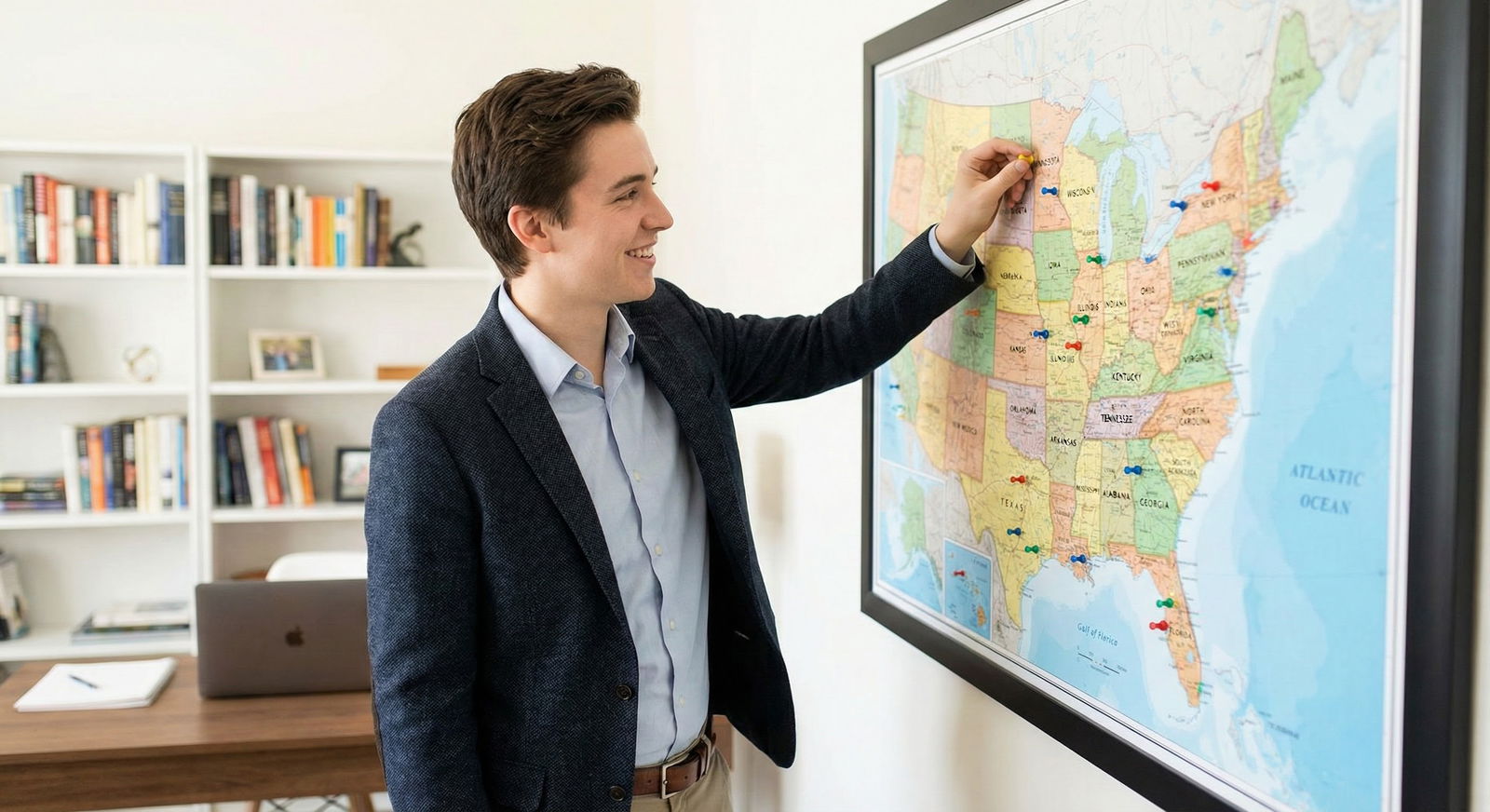
If you remember nothing else: follow the data, not the fantasy map in your head.