

The way most interns “adjust” from August to October is a mess. You don’t have to do it that way.
You’re three-ish months into intern year. The adrenaline of July has worn off. The expectations have not. At this point, you’re either building systems…or you’re getting buried by everyone else’s.
This guide walks you month by month, then week by week, then day by day from “I’m drowning” to “I can actually run a list.” I’m going to be blunt about what you should be able to do at each point and how to get there.
Big Picture: Your August–October Arc
By the end of October, you should:
- Move from reactive to proactive on the wards.
- Cut your pre-rounding time nearly in half.
- Handle cross-cover calls without panic.
- Have a repeatable daily workflow that survives bad days.
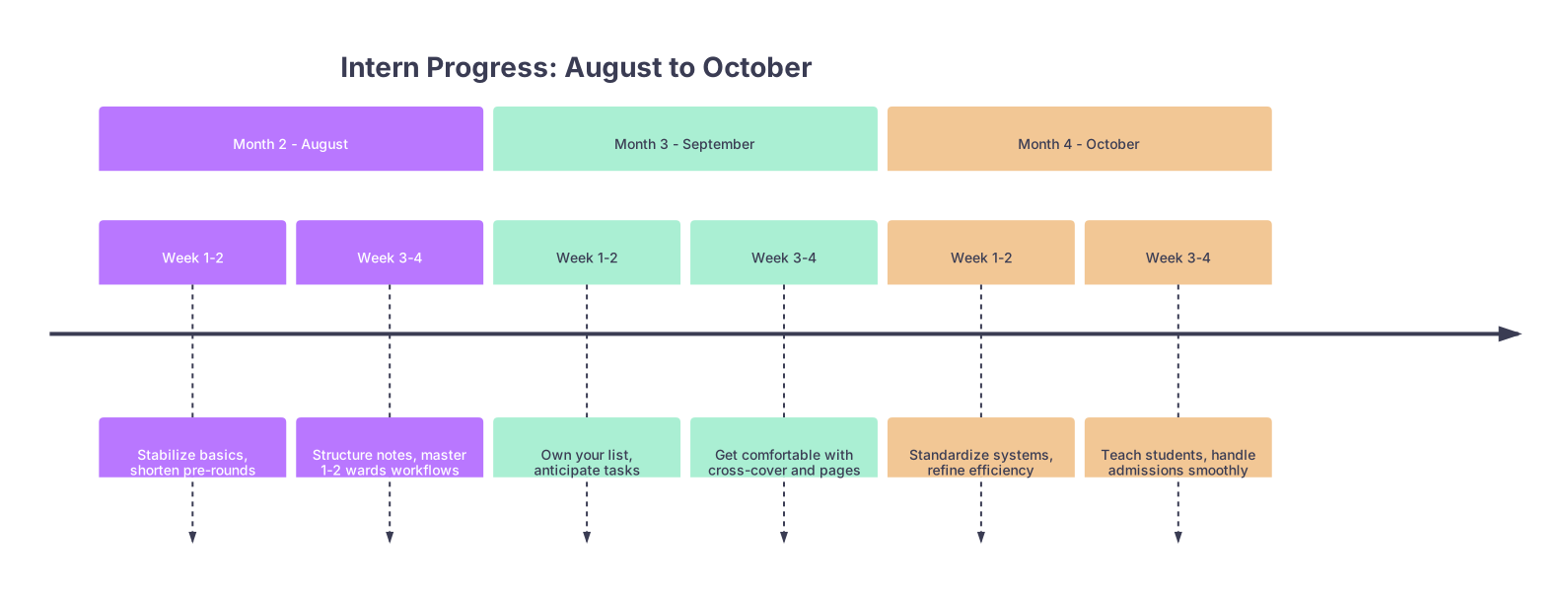
Here’s the overall three‑month arc.
| Period | Event |
|---|---|
| title Intern Progress | August to October |
| Month 2 - August - Week 1-2 | Stabilize basics, shorten pre-rounds |
| Month 2 - August - Week 3-4 | Structure notes, master 1-2 wards workflows |
| Month 3 - September - Week 1-2 | Own your list, anticipate tasks |
| Month 3 - September - Week 3-4 | Get comfortable with cross-cover and pages |
| Month 4 - October - Week 1-2 | Standardize systems, refine efficiency |
| Month 4 - October - Week 3-4 | Teach students, handle admissions smoothly |
At each point, you’ll shift focus:
- August: Fix the chaos. Build personal systems.
- September: Expand competence. Anticipate, not just respond.
- October: Refine and teach. You’re still new, but you’re no longer “brand new.”
August: From Chaos to Contained
In August, your main job is to stop hemorrhaging time and attention. You don’t need to be slick. You just need to be predictable.
First Half of August: Stabilize the Morning
At this point you should:
- Know how to log into everything (EMR, paging system, dictation) without thinking.
- Have a fixed pre-rounding routine you run the same way every day.
- Stop rewriting your “to do” list from scratch five times a day.
Week 1–2 checklist
Morning (pre-rounds):
- Arrive 15–20 minutes earlier than you think you need. If you’re late, everything downstream is worse.
- For each patient, do the same sequence every time:
- Vitals & overnight events (nurse notes, cross-cover notes, new results).
- Briefly eyeball the patient: are they breathing, in pain, delirious?
- Key labs/imaging only (no scrolling aimlessly).
- Jot 3 bullets: problems, questions for senior, anticipated orders.
Stop walking into attending rounds “discovering” you missed a fever at 3 a.m. That’s how you lose trust.
Daytime:
- Create one central “brain” (clipboard, folded paper, or tablet) and stick with it. The problem isn’t the template; it’s changing every 3 days.
- For each patient, you should have:
- Room, name, code status.
- Hospital day / key diagnosis.
- 3–5 active problems.
- One checkbox section: labs, imaging, consults, discharges.

Evening:
- Before sign-out, spend 5 minutes editing your list for tomorrow:
- Cross off completed items.
- Pre-add “AM labs” or “f/u culture” tasks.
- Circle sick/unstable patients to see first.
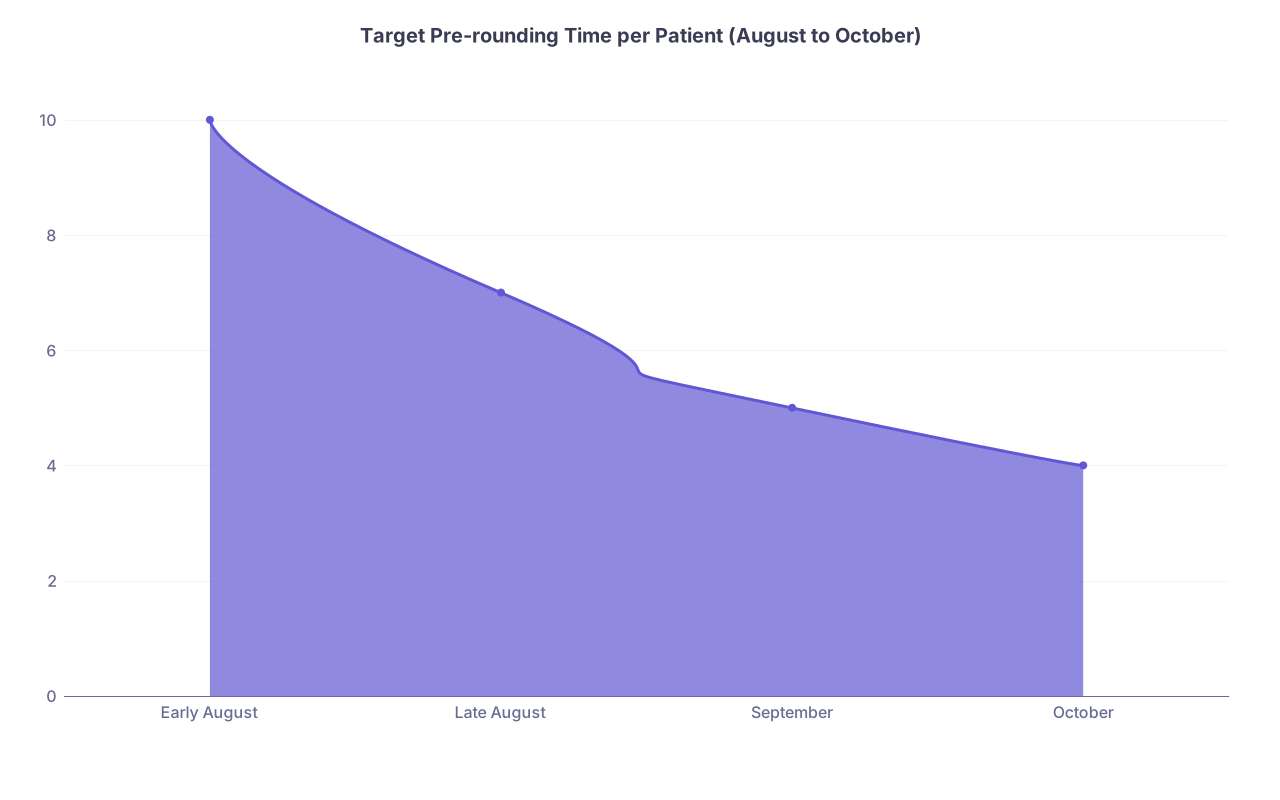
If you’re still spending 90–120 minutes pre-rounding on 6–8 patients by mid-August, that’s a red flag. Aim for 45–60 minutes for 10 patients by the end of the month.
| Category | Value |
|---|---|
| Early August | 10 |
| Late August | 7 |
| September | 5 |
| October | 4 |
Second Half of August: Clean Up Your Notes and Orders
By late August, your notes and orders should not cause work for other people.
At this point you should:
- Have 1–2 note templates that you consistently use and adjust.
- Place common order sets quickly without hunting around.
- Stop writing novels in the assessment/plan.
Weeks 3–4: tighten documentation and orders
Notes:
Build or steal one solid template for:
- Progress notes.
- Admission H&P.
- Discharge summary (you’ll be doing a lot of these).
For progress notes, force yourself into this structure:
- 1–2 sentence “story of today.”
- Problem-based A/P with numbered problems.
- Each problem gets:
- Current status.
- Today’s concrete plan (med changes, tests, consults, disposition).
If your attending keeps saying “this is all copy-forward,” they’re right. Rewrite at least the first two lines of each major problem daily.
Orders:
You should aim to place the following in under 60 seconds each:
- Standard admission orders (tele vs floor, DVT ppx, diet, activity).
- Common labs: CBC, BMP, Mg/Phos, LFTs, troponins.
- PRN meds: pain, nausea, bowel regimen, sliding scale insulin.
If it takes you 5 minutes to find the right telemetry order, build a personal “favorites” folder now. Do it once, save yourself hundreds of clicks later.
September: From Contained to Competent
September is where you move from “surviving the day” to actually running your list like you know what you’re doing.
Your main transitions this month:
- Owning your patients’ problems from morning to night.
- Anticipating cross-cover issues and pages.
- Communicating clearly with nurses, consults, and families.
Early September: Own the List
At this point you should:
- Present clean, problem-based plans on rounds without your senior rescuing every sentence.
- Know which 2–3 patients are most likely to crash today.
- Start proactively lining up discharges 24–48 hours ahead.
Week 1–2 focus: anticipate and prioritize
Morning:
- Before rounds, mark each patient:
- [S] Sick / unstable.
- [Q] Questionable / watch closely.
- [Sx] Stable / discharge planning.
You see the pattern. Your first visits: S → Q → Sx. Not just “first room I walk past.”
- For each “S” patient:
- Write down: worst case for this shift? (PE? Sepsis worsening? GI bleed?)
- What would I need if that happens? (type & screen, CT, ICU eval, ABX change).
This mindset is how you move from reactive intern to someone your senior actually trusts.
Daytime:
- Start clustering orders and tasks:
- When entering labs, do them for all patients at once.
- When calling consultants, write down questions for 2–3 patients and batch the page.
- When updating families, plan 1–2 blocks of time to do several calls, not random interruptions.
Cross-cover prep:
- For any patient likely to be an overnight headache:
- Pre-emptively write a brief cross-cover note or sign-out line:
- “Frequent desats to 88% on 2L, if worsens: increase O2, get CXR, page night float if needing >4L.”
- Pre-emptively write a brief cross-cover note or sign-out line:
That 1–2 line anticipatory guidance saves the night intern and keeps your patient safer.
Late September: Get Comfortable With Pages and Cross-cover
By the end of September, you should be functional on nights and cross-cover. Not perfect. Functional.
At this point you should:
- Handle common pages quickly and calmly.
- Know when to walk to the bedside vs managing from the computer.
- Use a simple framework to decide “sick vs not sick.”
Weeks 3–4: the page playbook
Create a mini script for when your pager explodes:
Stop and categorize the page (in your head or on paper):
- Symptom (chest pain, SOB, agitation).
- Vital sign abnormality.
- Lab result.
- “FYI” or non-urgent request.
For any symptom or vital sign issue: you go see the patient. Full stop. Don’t be the intern who “manages” chest pain from the nurses station.
Use a tiny, repeatable bedside routine:
- Airway, breathing, circulation, mental status.
- Is this new or worse than baseline?
- What monitoring do I need now? (tele, frequent vitals).
- What immediate orders? (EKG, bolus, labs, stat imaging).
You are not expected to know everything. You are expected to:
- Go see the patient quickly.
- Call for help early if they look bad.
- Have basic data ready when you call (vitals, exam, EKG, quick story).

October: From Competent to Efficient
October is when you stop burning extra energy on repetitive nonsense. Same job. Less cognitive load.
Your goals this month:
- Standardize your systems so bad days don’t shatter you.
- Get faster without getting sloppier.
- Start teaching students and juniors the basics.
Early October: Lock In Your Systems
At this point you should:
- Have a fixed daily timeline that mostly works on wards, regardless of team.
- Keep your physical/EMR workspace consistent.
- Have personal “defaults” for common problems.
Weeks 1–2: build and refine routines
Create a rough daily schedule and stick close to it:
- 5:45–6:30 – Pre-rounds (time shifts by program).
- 6:30–7:00 – Tighten plans, talk to nurses, prep notes.
- 7:00–10:00 – Rounds.
- 10:00–12:00 – Orders, calls, discharges, admissions.
- 12:00–13:00 – Lunch (yes, schedule it or it disappears).
- 13:00–16:00 – Follow-ups, procedures, late admits.
- 16:00–17:00 – Clean up notes, finalize orders.
- 17:00–18:00 – Sign-out, quick prep for next day.
No day will fit this exactly. That’s fine. The point is you know what “normal” looks like, so you can tell when you’re behind and adjust early.
Workspace:
- Same EMR tabs, same order every day:
- Patient list → flowsheet → results → notes.
- Same pocket items:
- Pen, small notebook, sign-out sheet, maybe a quick-reference card.
- Same digital habits:
- Use a single to-do list (in the EMR task field or on paper). Stop scattering tasks in Outlook, sticky notes, your glove box.
Defaults for common problems
By now, you should have go‑to starting plans for:
- Hyperkalemia, mild/moderate.
- New mild O2 requirement in known COPD/CHF.
- Delirium in elderly admitted with infection.
- Post-op pain not controlled on current regimen.
You don’t need the final answer immediately. But you should not be “starting from zero” every single time.
Late October: Start Teaching and Smoothing Edges
By end of October, you’re still an intern, but you’re finally not the newest one in the building. This is where you shift from “barely holding it together” to “someone others can lean on a little.”
At this point you should:
- Be able to give a med student or rotator a clear, concrete task list.
- Present admissions smoothly without your senior rewriting the entire story.
- Handle a full call shift without exploding your senior’s pager.
Weeks 3–4: refine admissions and teaching
Admissions:
Adopt a simple, repeatable intake routine:
Skim triage note and last 24–48 hours of ED events.
See the patient with a focused H&P.
While walking back, outline:
- 1 line: why admitted now.
- 3–5 bullet differential.
- 3–5 bullet initial plan and disposition.
Put in the core orders before you get lost in ACP or social details.
The admission is not efficient if the patient waits 2 hours for their meds because you were writing the perfect HPI.
Students/rotators:
When a student asks “what can I do?”, you should have quick answers:
- “Grab the story and ROS on Bed 3, I’ll join you for the exam.”
- “Can you check on 4A’s urine output and update the I/O? Ask the nurse about Foley issues.”
- “Work on a draft note for Patient X, focus on problem-based A/P.”
You’re not attending-level. But you’re 3–4 months ahead of them. Use it. Teaching forces you to clarify your own workflow.
Week-by-Week: What Should Be True by When
Here’s a compressed view of what should be mostly true as you move from overwhelmed to efficient.
| Time Point | Pre-rounding Time (per pt) | Cross-cover Comfort | Notes & Orders Quality |
|---|---|---|---|
| Early August | 8–12 minutes | Anxious, slow | Disorganized, verbose |
| Late August | 6–8 minutes | Can handle basics | Structured, fewer errors |
| Mid September | 5–7 minutes | Functional nights | Problem-based, clearer plans |
| Early October | 4–6 minutes | Anticipatory notes | Efficient, consistent templates |
| Late October | 3–5 minutes | Mostly confident | Teaching-level clarity |
This is not “idealized fantasy.” I’ve watched interns hit these numbers every year. The difference is they take their systems seriously instead of improvising forever.
Day-by-Day Micro-Habits That Make You Efficient
None of this works if your days are chaos. Here’s how a single day should look when you’re on the efficient trajectory.
Start of Shift: 15-Minute Control Grab
Every day, before you touch the computer for deep work:
- Update your list (new admits, transfers, discharges).
- Mark S/Q/Sx on each patient.
- Write 1–2 “non-negotiable” tasks for the day (e.g., “discharge Bed 12,” “talk to family of Bed 7”).
These 10–15 minutes pay off all day.
Midday: 10-Minute Reset
Somewhere between 11:30–13:30:
- Open your list.
- Cross off completed tasks, rewrite any messy arrows or side notes.
- Renegotiate your expectations for the afternoon:
- Who absolutely must be dispo’d?
- Which consults actually matter today?
- What can safely slide to tomorrow?
You’re not a machine. You will fall behind. The efficient interns are just honest about it early and adjust.
End of Shift: Future-Proofing
Last 15–20 minutes before sign-out:
- Tighten your cross-cover note for each active patient:
- “If X, then Y” instructions for predictable issues.
- Pre-load morning tasks for yourself into your list.
- Do one quick mental scan: if someone gets worse tonight, did I miss anything obvious? (ABX, fluids, labs, imaging).
| Category | Value |
|---|---|
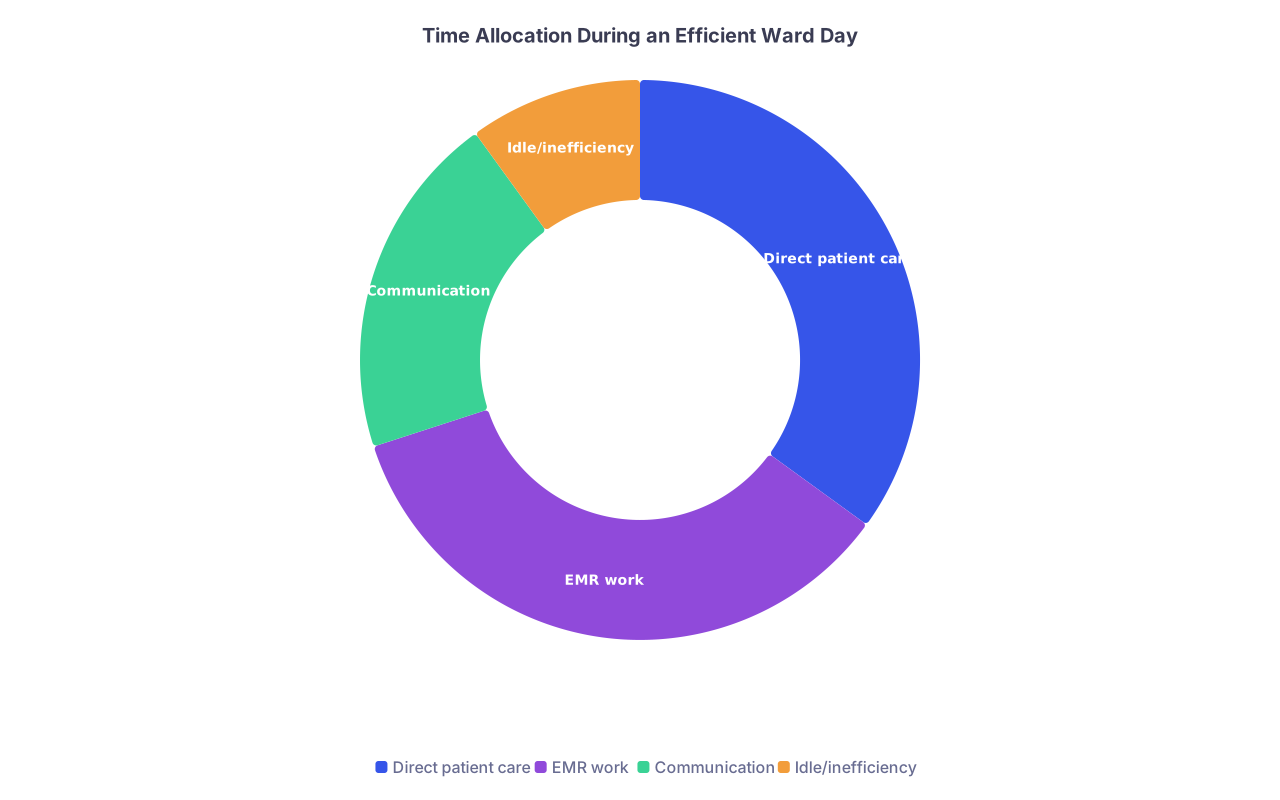
| Direct patient care | 35 |
| EMR work | 35 |
| Communication | 20 |
| Idle/inefficiency | 10 |
Your goal by October is to shrink the “idle/inefficiency” slice, not to crush yourself doing more heroic tasks.
How to Know You’re Actually Improving
You’re tired and biased. Your perception of “I’m terrible” is not reliable. Use objective markers.
Track for 2–3 weeks at a time:
- Time you arrive vs time you’re actually ready for rounds.
- Average pre-rounding minutes per patient.
- Number of times your senior/attending calls you out for:
- Missed overnight events.
- Sloppy or incomplete plans.
- Dangerous delays in responding to pages.
If those trend down from August to October, you’re on track, even if you still feel lost half the time.

Final Thoughts: What Actually Matters by October
Strip away the noise. By the end of October, three things matter:
- You have stable, repeatable systems for your day. You’re not reinventing your workflow every week.
- You anticipate rather than react. Your patients and your night team feel that difference even if they never say it.
- You’re just a bit more useful than you were in July. Not perfect. Just obviously better.
If you hit those, you’ve made the transition from overwhelmed to efficient intern. The feeling of “I’m behind” won’t vanish. But it’ll finally be running behind on purpose, not because your whole system is on fire.


