
It’s 7:45 am. You’re walking out of the hospital after yet another night shift. Your scrubs smell like chlorhexidine and stale coffee. Your eyes feel sandy. The sky is painfully bright. And you’re doing the math in your head:
“I finish this block in 4 days, then I have 2 days off, then I start nights again. How the hell am I supposed to reset and not feel like a zombie for a month?”
You’re not asking abstract questions about “sleep hygiene.” You’re asking:
- Do I stay on a night schedule in between blocks or flip back to days?
- When do I work out? Or do I just accept I’m a blob for 4 weeks?
- What do I do with my days off so they actually help and not make me feel worse?
- How do I keep from snapping at my co-residents, partner, or random nurse who asks me for the fifth time if I ordered the CT?
You are on back-to-back night blocks as a first-year intern. That’s a very specific kind of tired. So let’s treat it like a specific situation and not some vague “burnout” topic.
Here’s a direct reset and recovery plan that actually matches what your schedule looks like.
Step 1: Decide Your Strategy – Stay On Nights vs Flip Back
First decision: what is your overall approach for the gap between your night blocks?
You have three realistic strategies. Pick one like an attending making a plan on rounds, not like a med student trying to please everyone.
| Strategy | Best When | Main Tradeoff |
|---|---|---|
| Stay on nights | Gap is 1–3 days | Social life tanks, body more stable |
| Partial flip | Gap is 4–7 days | Some social life, some jet lag |
| Full flip | Gap is 7+ days | Body feels “normal,” harder next flip |
Strategy 1: Stay on a Night Schedule (or close to it)
Use this if:
- You have 1–2 days off between night blocks
- You know flipping fully to days will wreck you more than the social isolation will
What this looks like in real life:
- You treat the days off like “light nights”
- Sleep from roughly 4 am–noon or 5 am–1 pm
- Keep the same wake window (afternoon + evening), just no work
This is brutally antisocial but physiologically easier. I’ve seen interns do this during ICU + wards night combos and they actually looked less wrecked than the ones trying to see daylight humans in between.
Strategy 2: Partial Flip (the compromise most interns actually use)
Use this if:
- You have 3–5 days between blocks
- You need to see your partner/friends in actual sunlight at least once
- You’re willing to accept being mildly jet-lagged the entire time
What this looks like:
- You move your sleep earlier gradually, not by 8 hours in one day
- You accept weird hybrid wake times: 10 pm–4 am awake, nap 7 am–11 am, etc.
- You plan one social thing in actual daytime and don’t try to live a full normal life
Strategy 3: Full Flip (rarely smart with back-to-back nights)
Use this if:
- The gap is at least a full week
- Or your second night block is way less intense and you’re willing to suffer the first few nights of it
What this looks like:
- You flip to a normal diurnal schedule and basically treat your next night block as another jet lag event
If your reality is “4 nights on, 2 off, 4 nights on,” don’t do a full flip. You’ll feel awful the entire time.
Step 2: Build a Concrete Sleep Schedule Template
Vague promise: “I’m going to prioritize sleep.”
Real plan: “Here’s when I’m sleeping and what I’m doing when I get home.”
Let’s map a real pattern. Assume a standard 7 pm–7 am night shift.
While You’re Actively On Night Shift
Your absolute anchor: protect one main sleep block. Everything else is optional.
Baseline template:
- 7:30–8:00 am: Home, light snack, floor routine
- 8:30 am–2:00 pm: Main sleep block (dark, cold, quiet)
- 2:00–3:00 pm: “Groggy zone” – accept that you’re slower
- 3:00–5:30 pm: Life admin / light exercise / food
- 5:30–6:30 pm: Commute + pre-shift routine
- 7:00 pm–7:00 am: Shift
- Optional: 30–60 min nap on shift if culture/workload allows
If your hospital lets you nap 20–30 minutes around 3–4 am safely, do it. People who refuse to nap out of pride look tough and function worse.
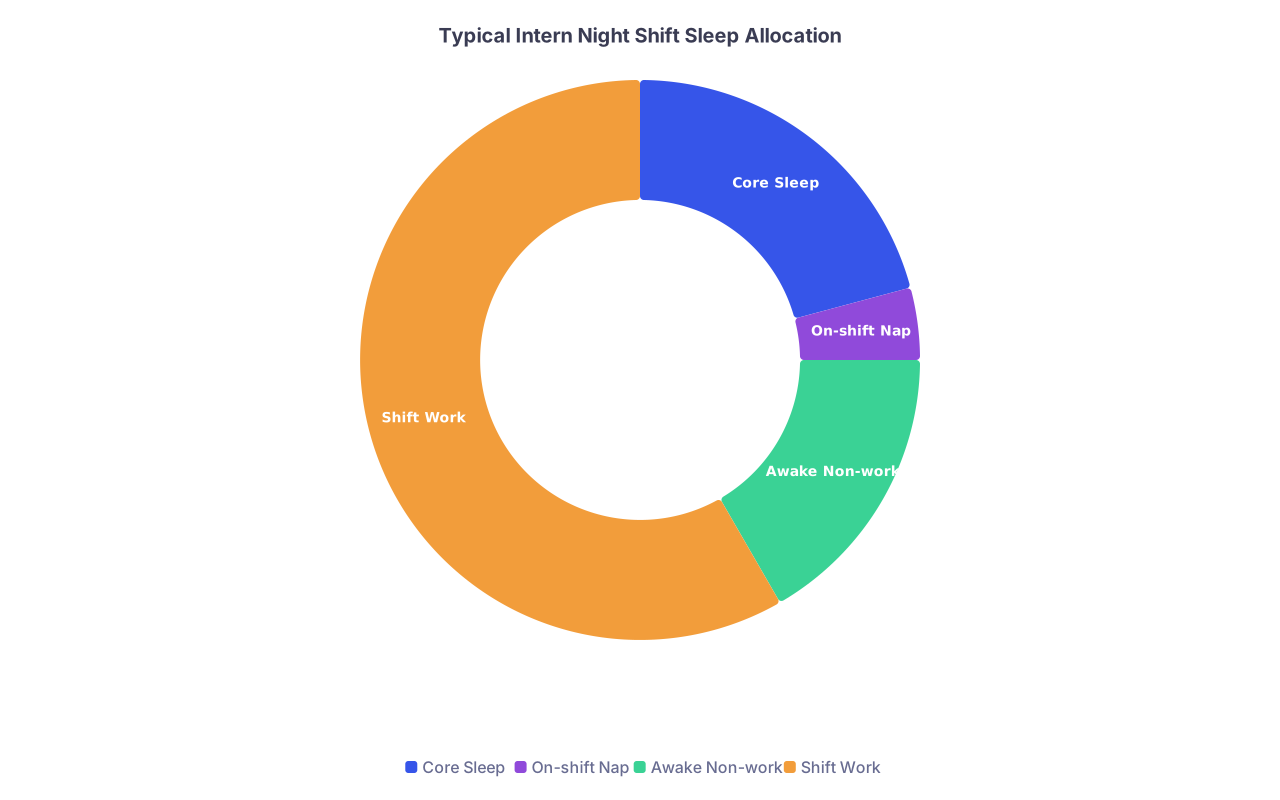
| Category | Value |
|---|---|
| Core Sleep | 5 |
| On-shift Nap | 1 |
| Awake Non-work | 4 |
| Shift Work | 14 |
Key concrete moves:
- Blackout curtains or trash bags + painter’s tape + cheap sleep mask
- Phone on “Do Not Disturb” with a favorites-only bypass for true emergencies
- Fan or white noise app to drown out daytime noise
- No scrolling in bed. That’s how a 5-hour block becomes 3.5 hours of fragmented nonsense.
On Days Off Between Night Blocks
You don’t stop being a night person instantly when the block ends. Treat the first post-night day as a recovery day, not a real day off.
End of last night shift:
- Get home 8 am
- Eat something small and carb-heavy with some protein (oatmeal + peanut butter, toast + eggs)
- Shower, in bed by 9 am
- Sleep until 1–2 pm
- That’s not optional. That’s your safety and sanity.
After you wake up:
- Don’t schedule anything that demands emotional energy
- Short walk outside (20–30 minutes) with sunglasses
- Light errands only (groceries, laundry)
- Bed again around 11 pm–1 am depending on your flip strategy
If you’re staying on a night schedule:
- Nap 9 am–1 pm post-call
- Stay awake until 3–4 am
- Sleep 4 am–noon the next day
You’ve basically turned it into a softer version of your night schedule.
If you’re partially flipping:
- Day 1 post-block: sleep 9 am–1 pm
- Bed 11 pm–noon (so 11 pm–7 am) the next night – you’ll probably wake earlier
- Day 2: push wake-up a bit later (7–8 am), no naps late in day
Step 3: Protect Your Brain: Caffeine, Food, and “Stupid Mistake” Prevention
You’re not just tired. You’re cognitively impaired. You will forget key things unless you build guardrails.
Caffeine Rules That Actually Work
What doesn’t work: 4 Monsters and 3 coffees randomly across the night.
Use this pattern instead:
- 6–7 pm: 1–2 shots espresso or small coffee with your first meal
- 11 pm–1 am: 1 moderate caffeine dose (coffee/tea) if you’re dragging
- Hard stop for caffeine after 2–3 am
If you’re still drinking caffeine at 4–5 am “to get through sign-out,” you’re buying yourself trash sleep and a worse next shift.
Eating on Nights Without Destroying Your Gut
Common disaster pattern: huge fast food meal at 1 am → reflux, crash, nausea at 4 am.
Better pattern:
- “Dinner” before shift (5–6 pm): A real meal with protein, complex carbs, and some fat
- Small snack #1 (10–11 pm): Greek yogurt, nuts, granola bar, fruit
- Small snack #2 (2–3 am): Half sandwich, hummus + crackers, leftovers in a modest portion
- Light “breakfast” at 7–8 am: Something gentle – toast, oatmeal, smoothie
Treat 1–4 am as a low-demand digestion window. Your body doesn’t want a burger then, even if your cravings lie.
Guardrails for Dumb but Dangerous Errors
You will make more mistakes at 5 am than 5 pm. Accept that and build systems.
Concrete things that save you:
- Always write or type cross-cover tasks immediately, not “I’ll remember.” You won’t.
- Use checklists for admissions: vitals, allergies, home meds, code status, DVT ppx, diet.
- Read back verbal orders at that hour. “So I’m ordering 2 units PRBC now and repeating H/H in 4 hours, correct?”
- Ask the nurse to repeat any high-risk plan (pressors, insulin drips, blood products) out loud with you.
This isn’t you being weak. This is you acknowledging human physiology.
Step 4: Mental Health and Relationships When You’re Basically a Ghost
Back-to-back night blocks can wreck your relationships if you do nothing intentional. People read absence as disinterest.
You don’t need long heartfelt talks. You need small, reliable signals.
With a Partner or Family
Minimal-but-effective actions:
- Text before your shift starts: “Heading in, off at 7. Thinking of you.”
- One check-in voice message per day off. You don’t need live conversation every time.
- Plan one non-negotiable shared block during the entire double-night stretch (brunch, walk, TV episode together). Put it in your calendar like a consult.
If you’re too tired for deep conversation, say that plainly:
“I want to catch up but I’m too fried to do it well right now. Can we just sit and watch something together?”
Most reasonable humans will accept that. Resentment builds when you ghost without explanation.
With Co-residents
Night crews bond fast. And they can also spiral into toxic venting.
Set yourself a rule:
- You’re allowed 10–15 minutes of complaining per shift.
- After that, you pivot to problem-solving or change the subject.
Also, openly say when you’re at capacity:
“Hey, I’m not ignoring you, but I’m on night 9 of 10. I don’t have brain cells left to take on new gossip or drama.”
With Yourself (because yes, you count)
You will feel off. Emotionally blunted. Irritated.
Two things to track:
- Are you having persistent thoughts like “What’s the point?” or “I don’t care if I wake up”?
- Are you starting to fantasize about using substances (benzos, alcohol, extra stimulants) to “get through this”?
If yes to either, that’s not just “being tired.” That’s a red flag. Use the resources that exist:
- Confidential resident mental health services (almost every program has one now)
- A senior you trust who’s not directly evaluating you
- Your chief residents – half their job is quietly putting out fires like this
You’re not the first intern to lose the plot halfway through a night-heavy month.
Step 5: Micro-Rest and Recovery Tactics That Actually Fit a Night Schedule
You’re not getting a spa day mid-rotation. But you can build tiny recovery slots that add up.

On Shift: 5–10 Minute Reset Moves
When you feel yourself getting foggy:
- Go to a stairwell, walk 2–3 flights, slow, for 3–5 minutes
- Drink cold water, not another coffee
- 5 slow breaths – 4 seconds in, 6 seconds out – and then back to work
You don’t need “mindfulness practice.” You need your heart rate and adrenaline to stop yo-yoing.
Post-Shift: The “Don’t Make This Worse” Routine
If you stumble home and go straight to bed angry, wired, and full of caffeine, your sleep will be trash.
Minimum reset routine (15–25 minutes max):
- Shower (warm, not blazing hot)
- Change into specific “sleep clothes” for days (train your brain: this = sleep time)
- No talking about work right before trying to sleep
- Put your phone out of reach or at least face down, DND on
It’s boring. It works.
On Days Off: Active vs Passive Recovery
You need both.
Active recovery:
- 20–30 minutes of movement: walk, light jog, yoga, stretching
- One social contact that doesn’t demand emotional labor (co-resident coffee, FaceTime with a sibling, etc.)
Passive recovery:
- Guilt-free nap if you’ve been awake more than 12–14 hours straight
- One “stupid simple” pleasure: trash TV, video games, reading a non-medical book
The trick: don’t stack your days off with errands like you’re on vacation. Two big tasks per day off, max. Example:
- Day off 1: Groceries + call parents
- Day off 2: Laundry + bill paying
Not: oil change + Costco + deep clean apartment + brunch + 3 hours of notes you didn’t finish.
Step 6: Transitioning Between the Two Night Blocks
This is where people mess up. They treat the gap as a single monolith instead of separate phases.
Let’s set up a typical scenario:
Block 1: 6 nights on, 1 day off, 4 nights on
2 days off
Block 2: 7 nights on
Last Night of Block 1 → Day 1 Off
- Leave on time. Stop volunteering for extra “help” when you’re post-call at the end of a stretch.
- Sleep 9 am–1 pm minimum.
- Light movement late afternoon. 20–30 minutes walk, no heroics.
- Social interaction: extremely low-key. Think “hang out on couch” not “big dinner group.”
Bedtime:
- If staying mostly on nights: 3–4 am
- If partial flip: 11 pm–1 am
Day 2 Off (Middle Day)
This is your only real “choice” day.
Good template:
- Wake 9–11 am
- Get outside midday for sunlight
- Do 1–2 life tasks you care about (brunch + laundry, or gym + meal prep)
- No late-day nap after 4–5 pm
Bedtime:
- 1–3 am if you want to preserve some night orientation
- You don’t need to be up until 5 am, but you don’t want a 9 pm bedtime either
Day 3 = Pre-Block 2 Evening
If you start nights again this day:
- Sleep in as late as you can without forcing it (10–11 am)
- 60–90 minute nap 3–5 pm if you can swing it
- Standard pre-shift routine
If your second block is ICU or admits-heavy, this nap becomes non-negotiable.
Step 7: Protecting Your Reputation and Evaluations While Exhausted
You’re scared of looking lazy or incompetent. Reasonable. But chronic overextension at 3 am is how interns earn the “scattered” or “unsafe” label fast.
What attendings and seniors actually care about on nights:
- You call when you’re unsure about sick patients
- Orders and notes are complete and legible
- You don’t disappear for long chunks with no communication
- You own your mistakes and fix them
What they don’t care about:
- That you didn’t pick up an extra admission for “experience” on night 10 of 12
- That you sat for 5 minutes to eat something at 2:30 am
- That you closed your eyes in the call room for 20 minutes when it was quiet
If your second night block is with a different team, tell the senior on day 1: “I’m coming off another night block, so I’ve got the night flow down, but I also know I’m a little beat. I’ll over-communicate and I’d appreciate feedback if you see me missing details.”
That’s mature, not weak.
Visual: A Sample Two-Block Night Plan

| Step | Description |
|---|---|
| Step 1 | End Block 1 Last Night Shift |
| Step 2 | Post shift sleep 9-13 |
| Step 3 | Light activity afternoon |
| Step 4 | Stay mostly on night schedule |
| Step 5 | Partial flip to later mornings |
| Step 6 | Limit tasks per day off |
| Step 7 | Pre Block 2 nap 15-17 |
| Step 8 | Start Block 2 Nights |
| Step 9 | Gap length 1-3 days |
Quick Reality Check: What’s Normal vs Concerning
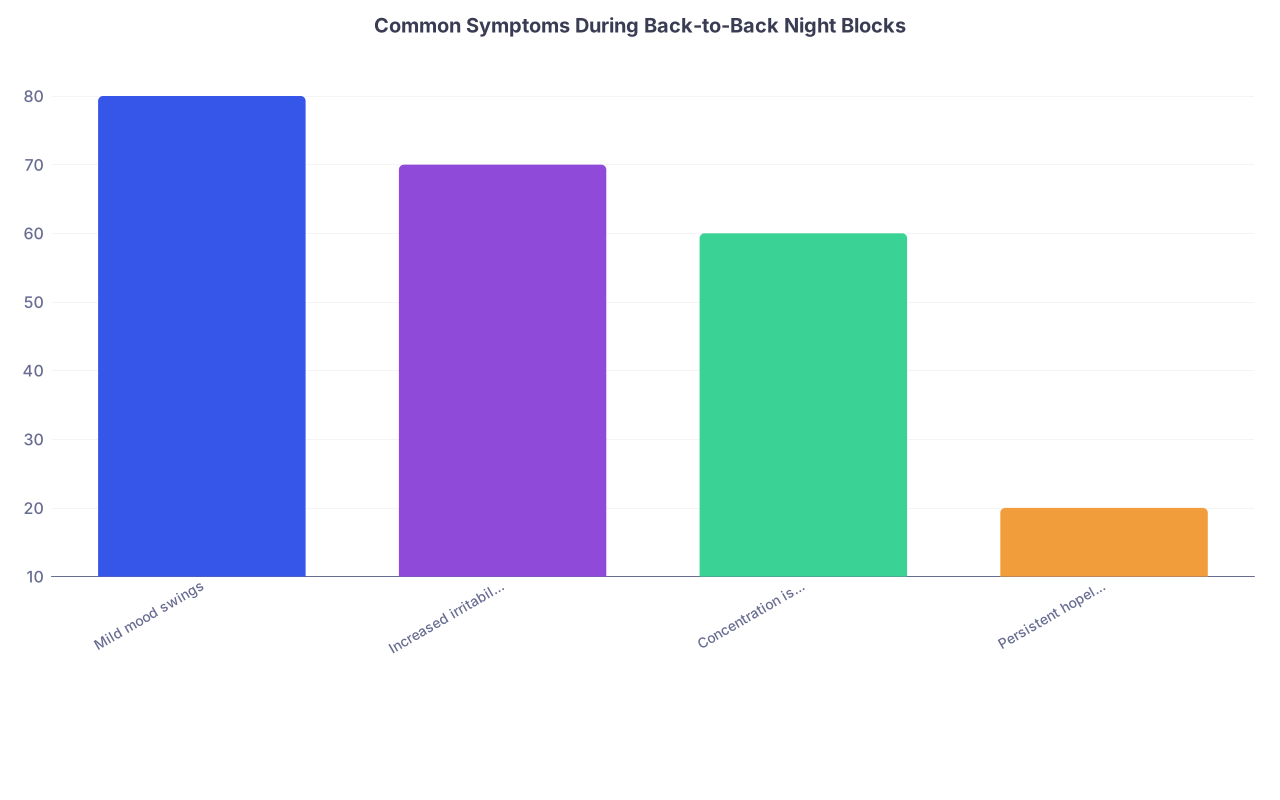
| Category | Value |
|---|---|
| Mild mood swings | 80 |
| Increased irritability | 70 |
| Concentration issues | 60 |
| Persistent hopelessness | 20 |
Normal (annoying but expected):
- Feeling emotionally flat or mildly snappy
- Needing more time to think through orders at 4 am
- Forgetting small personal tasks (leaving laundry in washer, paying a bill late)
- Preferring isolation on your days off
Concerning (act on this, not just observe it):
- You’re thinking about quitting medicine every single day
- You’re drinking or using meds to force sleep every single off day
- You’re having repeated near-errors with patient care because you’re too out of it
- Passive thoughts about death that feel sticky (“wouldn’t care if I didn’t wake up”)
You do not get extra points for white-knuckling through that. That’s not grit. That’s risk.
FAQ (Exactly 3 Questions)
1. Should I take melatonin or sleep meds on my night blocks?
Short answer: low-dose melatonin (0.5–3 mg) right before your main sleep block can help some people, especially with day-sleep onset. Anything stronger (prescription sleep meds, benzos, heavy antihistamines) is a last resort and should be supervised by a physician who understands your schedule. Do not start popping leftover Ambien from a family member. If you need meds consistently just to sleep a basic amount, talk to occupational health or your PCP. You’re not weak, you’re doing a night shift marathon.
2. How do I handle workouts during back-to-back night blocks?
Scale way down. The goal is not “get fitter.” The goal is “don’t break your body.” Good rule: 20–30 minutes, 3–4 times a week max, of low-to-moderate intensity. Walks, light cycling, yoga, easy strength circuits. No PRs, no long runs after shift, no heavy leg day right before a brutal night. And never choose a workout over sleep when you’re in a deficit. You’re not training for a race; you’re surviving one.
3. What do I tell my friends/family who don’t get why I’m MIA for weeks?
Spell it out in simple, concrete language: “I’m on overnight shifts for the next three weeks. I sleep during the day and work all night, so I’m basically on the opposite schedule from you. I’m not ignoring you; I’m just trying to not be a danger to my patients. Let’s pick one day after this is over to really catch up.” Then put it on the calendar. It feels awkward, but it beats vanishing and letting people assume you just stopped caring.
Today, do one very specific thing:
Open your calendar and mark the days of your two night blocks and the gap in between. For each gap day, write down exactly three things: your planned sleep window, one task, and one tiny recovery activity. That’s your skeleton. Everything else is optional.