
The internet makes every overseas safety concern look like a war zone.
If you scroll long enough, any country looks terrifying. And if your parents are already nervous about you going to medical school abroad? It turns into this constant low-level panic humming in the background: crime, kidnappings, political unrest, bad hospitals, “what if you get stuck there and can’t come home.”
I’m going to be blunt: a lot of what people say about “safety overseas” is vague, fear-based, and lazy. But. There are real risks… and pretending everything is fine doesn’t help either. You need a way to separate “headline panic” from “actual risk that should change my decision.”
Let’s walk through that, like two people lying awake at 1am spiraling—and then forcing ourselves to get rational.
Step 1: Admit the Real Fears (Yours and Theirs)
You can’t evaluate risk if you won’t say out loud what you’re actually scared of.
Most parents won’t say “I’m afraid you’ll be murdered,” so it comes out as, “We just don’t feel safe about this.” Super vague. But underneath, there are usually a few specific nightmares:
- Violent crime (robbery, assault, kidnapping)
- Political instability (protests, coups, unrest)
- Natural disasters (hurricanes, earthquakes)
- Terrible healthcare if you get sick or injured
- Being exploited as a foreigner (scams, corruption)
- Being “trapped” far from home with no support
- The school itself being sketchy or dishonest about safety
You probably have your own spin on it:
- “What if I get stuck in some unsafe housing because it’s all I can afford?”
- “What if I freeze and don’t know what to do in an emergency?”
- “What if I’m the only one who doesn’t feel safe and everyone else is fine and I feel weak?”
Name those. Write them down. Not because they’re all going to happen, but because you can’t assess what you refuse to look at directly.
Step 2: Stop Treating “Overseas” as One Giant Blob
This is what drives me crazy. People talk like “international med schools” are all on one mysterious island labeled RISK.
They’re not.
There’s a massive difference between:
- A Caribbean school on a relatively calm island with lots of American and Canadian students
- A school in a big Latin American city with normal urban crime but stable politics
- A school in a country with recent unrest, corruption, or travel advisories
So first, you narrow it down: country, region, city, neighborhood, and specific campus. Safety isn’t a yes/no. It’s very local.
Then you look up your actual places, not the vague “abroad.”
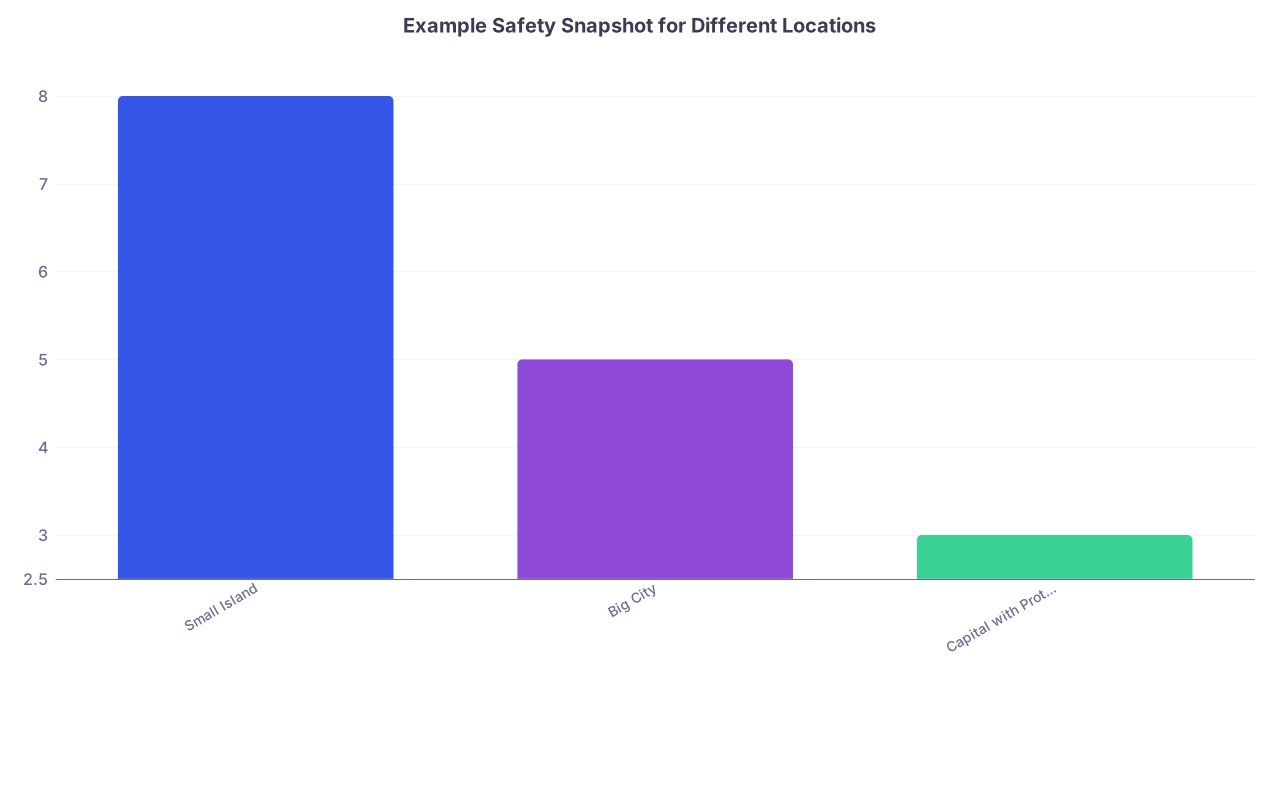
| Category | Value |
|---|---|
| Small Island | 8 |
| Big City | 5 |
| Capital with Protests | 3 |
(Think of 10 as “feels like quiet suburb,” 1 as “absolutely not.” This is just to remind you: locations differ. A lot.)
Step 3: Use Real Sources, Not Reddit Panic Threads
You need data that isn’t just one terrified person’s story. Here’s what I’d actually pull up when evaluating risk:
| Source Type | What You’re Looking For |
|---|---|
| [US/Canadian/UK Gov Travel Advisories](https://residencyadvisor.com/resources/international-med-schools/did-i-pick-the-wrong-country-for-med-school-signs-to-reassess-early) | Overall risk level, crime, unrest, health alerts |
| Local News (English-language) | Frequency of violent events, political tension |
| WHO / CDC | Infectious disease, vaccine needs, outbreaks |
| School’s Own Safety Info | Campus security, housing, transport |
| Current Students/Alumni | What *day-to-day* life actually feels like |
You’re not trying to find a place with zero risk. That doesn’t exist. You’re trying to find out:
- Is there targeted violence against foreigners or students?
- Are kidnappings/extortion actually a thing there—or just a movie scenario?
- Are crimes mostly opportunistic (pickpocketing, bag snatching) or violent?
- How often do protests turn violent, and how close are they to where students live?
- What does the embassy say about safety?
Level 4 “Do Not Travel” warning? Hard pass.
Level 3 “Reconsider travel”? That’s a big yellow flag—probably not where you want to spend 4–6 years.
Level 2 “Exercise increased caution”? That’s half the world, including some big US cities.
Step 4: Separate “Scary Story” From “Pattern”
This is where the anxiety spirals.
You hear:
- One story of a student getting robbed.
- One anecdote of a corrupt cop demanding a bribe.
- One post about a scary protest near campus.
And your brain says, “This will happen to me. Repeatedly. Definitely.”
You have to ask:
- Was this a one-off or common?
- Was the student ignoring basic safety guidelines (walking alone at 1am, flashing money, etc.)?
- Did the school or local services respond well?
- Are students generally saying, “You just have to be smart, like in any big city,” or, “Honestly, I don’t walk outside alone. Ever.”
If you talk to 10 current students and most of them say:
- “I feel safe walking during the day, I use Ubers at night, I don’t carry expensive stuff. It’s fine.”
…that feels like normal, manageable urban risk.
If 10 students say:
- “We don’t leave campus on weekends much. Everyone’s been hassled or threatened at some point. The school tells us not to go out after dark.”
…that’s not just “city life.” That’s a pattern.
Step 5: Look Hard at the School’s Safety Infrastructure
Here’s where I get picky. If a school wants foreign tuition dollars but won’t invest in basic safety for you? That’s a red flag the size of a hospital.
You want specifics from them, not “We take safety seriously” fluff. Ask very direct questions:
- Is there 24/7 campus security? Armed? Unarmed?
- Are there secured campus entrances and ID checks?
- Is there school-arranged housing with controlled access? Or are you on your own to find apartments?
- Do they have an emergency notification system (texts/email alerts) for crime, weather, unrest?
- Do they run an orientation on local safety, including where not to go?
- Can they name hospitals/clinics they actually send students to?
If they dodge these or give vague answers like “You’ll be fine, we’ve never had a problem,” I don’t care how good their match list is—that’s not a serious operation.
Step 6: Ask Students the Questions You’re Afraid to Say Out Loud
This is where your worst-case-scenario brain is actually useful. Because you’re going to ask the dark questions others are too polite to ask.
Find 3–6 current students (ideally from your home country). Message them something like:
“I’m really interested in the program, but my parents are very concerned about safety, and honestly so am I. Can I ask you some super direct questions about what it’s actually like there?”
Then ask:
- Have you ever personally felt unsafe? What happened?
- How common are robberies/muggings where students live?
- Do you walk alone at night? If not, why?
- Do women/LGBTQ+ students feel safe there? (Even if you’re not, this matters for overall environment.)
- How does the school respond when something safety-related happens?
- Is there any area everyone avoids?
- If a sibling asked you if they should come here, what would you say about safety?
Pay attention not just to content but tone. There’s a big difference between:
- “Use common sense, don’t be stupid, and you’ll be fine.”
and
- “Honestly, I’ve just adjusted to being a bit on edge all the time.”
If you pick up that “constant low-level fear” vibe from multiple people? I’d think hard about committing to 4+ years of that.
Step 7: Compare to Reality at Home (Not to Fantasy)
Here’s the part nobody wants to admit: some US and Canadian cities have crime rates that would terrify your parents if they actually looked them up.
There’s this illusion that “home = safe, abroad = dangerous.” Not true.
So when you’re evaluating overseas, don’t compare it to a perfect fictional suburb where nothing bad happens. Compare it to the reality of where you’d go to school domestically:
- Would you live off-campus in a big American city as a med student?
- Would you walk around alone at night in those neighborhoods?
- Do med schools at home send campus safety alerts about robberies, assaults, etc.? (They do.)
You’re not choosing between “no risk” and “risk.” You’re choosing between types and levels of risk.
There are places I’d tell you flat out: don’t go. High violent crime, political instability, anti-foreigner sentiment, weak school infrastructure.
There are also places where your parent’s fear is 80% optics, 20% reality.
Step 8: Build a Concrete Safety Plan (So You’re Not Just Hoping)
Here’s how you calm your own anxiety and your parents’ nerves: you don’t just say, “I’ll be careful.” You show them a plan.
Stuff like:
- I’ll live in school-affiliated housing my first year, with security and other med students.
- I’ll use ride apps at night instead of public transport alone.
- I’ll have local emergency numbers saved and printed.
- I’ll register with my home country’s embassy in that country.
- I’ll keep copies of my passport and documents in a safe place.
- I’ll have a local SIM or eSIM so I’m never without data.
- I’ll attend all school safety briefings and follow their guidance.
This doesn’t remove risk, but it does turn you from “random target” into “someone who’s not worth the trouble.”
And for your parents, showing them you’ve thought through concrete steps changes the conversation from “it’s dangerous” to “here’s how I’ll handle the risks.”
Step 9: Red Flags That Should Make You Walk Away
Let me just list the stuff where my personal answer would be: Nope, not worth it.
- Country has Level 3 or 4 travel advisory due to violent crime or political instability
- Recent history of targeted violence against foreigners or students
- Multiple current students say they don’t feel safe walking even during the day in common areas
- School won’t give clear answers on crime incidents involving students
- No campus security, no safety training, no emergency alerts
- School blames victims: “If they hadn’t been out late…” instead of owning responsibility
- You never stop feeling uneasy even after research and talking to people; your gut keeps screaming
You’re going to be exhausted, stressed, leaving lecture after dark, sometimes walking home half-zombie. If the baseline environment is too sketchy, you’ll never really relax enough to actually learn medicine.
Step 10: Talking to Your Parents Without It Turning Into a Fight
They’re scared. You’re scared. Everyone’s pretending not to be.
Here’s a better script than “I’ll be fine, don’t worry”:
Validate their fear.
“Honestly, I’m worried about safety too. Not just blowing it off.”Show them your research.
Pull up the government advisories, student messages (screenshots with names blurred if needed), school safety policies.Explain your comparison.
“This area is rated similar to X US city. There is crime, but mostly opportunistic. Here’s what students actually say.”Present your safety plan.
Where you’ll live, how you’ll get around, what you’ll do in an emergency.Give them a veto line.
“If we found out there were kidnappings targeting students or ongoing violent unrest, I wouldn’t go. I’m not trying to be a hero.”
They may still be uneasy. That’s fine. You’re not trying to bring anxiety down to zero. You’re trying to show you’re treating risk like an adult, not a reckless “it’ll be fine” 19-year-old.

| Step | Description |
|---|---|
| Step 1 | Choose Country & City |
| Step 2 | Check Travel Advisories |
| Step 3 | Do Not Apply |
| Step 4 | Review Local News & Crime |
| Step 5 | Ask School for Safety Details |
| Step 6 | Talk to Current Students |
| Step 7 | Compare to Home City Risk |
| Step 8 | Build Personal Safety Plan |
| Step 9 | Discuss with Parents & Decide |
| Step 10 | Level 1-2? |
| Step 11 | Still Feels Manageable? |

Quick Reality Check: What “Safe Enough” Actually Looks Like
Let me ground this, because the brain wants a perfect answer.
“Safe enough” doesn’t mean:
- No crime
- No scary stories
- No government warnings
- No protests ever
“Safe enough” usually looks like:
- General government advisory at level 1–2
- Crime mostly opportunistic, not systematic violence against foreigners
- A campus and housing setup that feels controlled and supported
- Students say, “You have to be smart, but I feel okay here”
- A safety plan that doesn’t require you to live like a prisoner
If you feel like you’d have to white-knuckle your way through every grocery trip? That’s too high a baseline.
If your anxiety is loud but the evidence says: “This is like living in a mid-tier US city with some rough areas you avoid,” that’s probably anxiety talking more than reality.
| Category | Value |
|---|---|
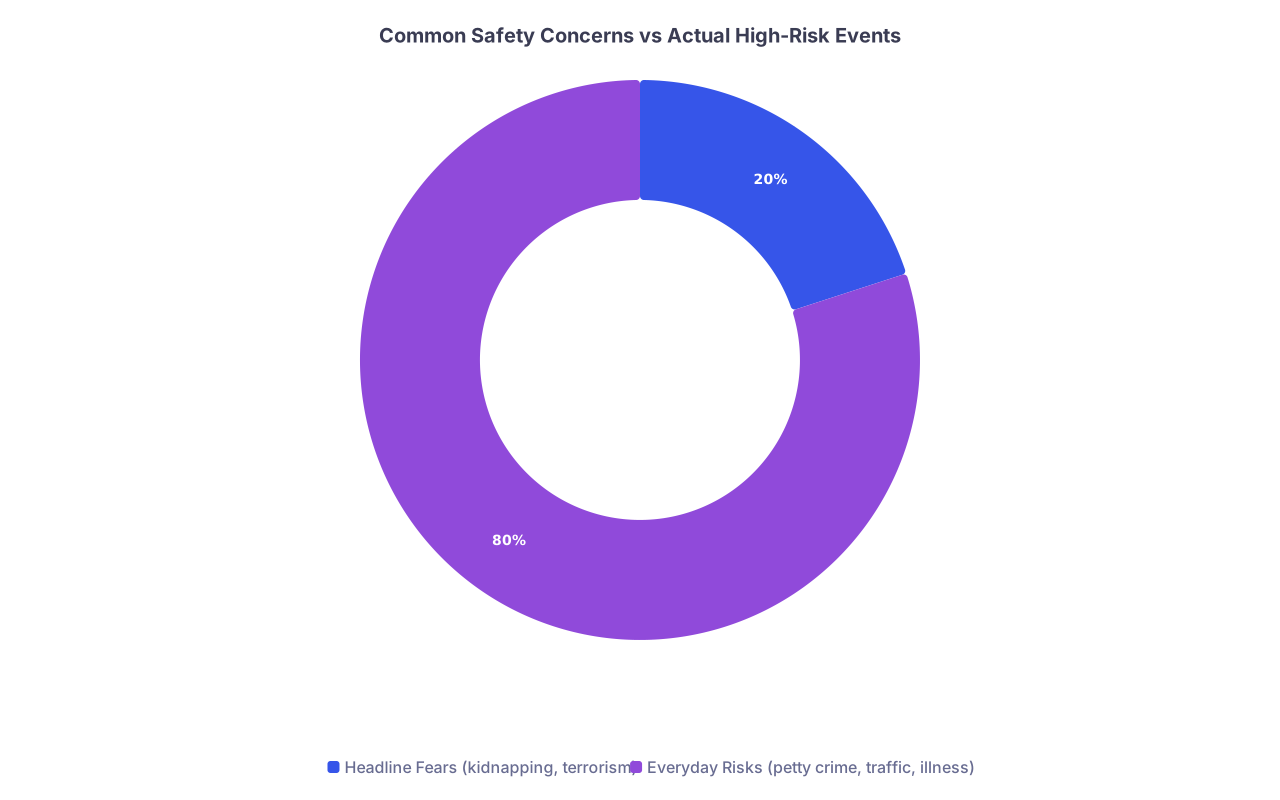
| Headline Fears (kidnapping, terrorism) | 20 |
| Everyday Risks (petty crime, traffic, illness) | 80 |
Most of what actually gets students is boring stuff: traffic accidents, scooters, dehydration, bad street food, muggings where someone gives up their bag and walks away shaken but physically fine. Not Hollywood-level danger.
So you plan for that. The dull, very real stuff.

FAQs
1. “My parents say, ‘If you go overseas, we won’t support you.’ What do I do?”
This hurts. And it’s almost never purely about safety—it’s also about control, fear of the unknown, status, and sometimes outdated assumptions about international schools. You have three options, none of them painless:
- Work to educate and negotiate: show them data, student testimonials, safety plans, and maybe involve a trusted third party (doctor, advisor, family friend) who understands international schools.
- Delay or change path: apply domestically again, improve your application, and keep the relationship intact.
- Go anyway, financially and emotionally independent, knowing it may damage the relationship for a while.
I’d push options 1 and 2 hard before 3. Not because 3 is “wrong,” but because being in a foreign country, in med school, without emotional support from home? That’s brutal. If overseas is your only viable path and you’re sure about it, at least give yourself a year to build savings, resilience, and support systems before you go.
2. “Is the Caribbean actually safe for med students, or is that just marketing?”
Depends heavily on the island and the specific school. Some islands are relatively quiet, tourism-heavy with predictable issues: petty crime, the occasional robbery, traffic accidents. Others have more serious crime or political issues. Don’t treat “Caribbean” as one unit.
What I’ve seen: most of the big-name Caribbean schools know their students are nervous and have decent campus security and housing setups. But the surrounding towns can be rough in places. So you’ll hear stuff like: “Campus feels safe, but I wouldn’t wander off drunk at night.” That’s manageable if you’re realistic and cautious. It’s not “danger-free paradise,” but it’s also not constant danger if you’re smart.
3. “What about being a woman or visibly LGBTQ+ overseas—does that change safety risk?”
Yes, it can. And ignoring that would be dishonest. You need to look at:
- Local laws (is homosexuality criminalized? how strictly?)
- Cultural attitudes (harassment, catcalling, gender norms)
- What women/LGBTQ+ students actually say about living there
Ask very direct questions to current students who share your identity if you can. Sometimes the academic environment is relatively progressive even in conservative countries; sometimes it’s not. You’re not just evaluating “Will I be attacked?” but also “Will I constantly feel on guard, disrespected, or unsafe in subtle ways?” Emotional safety matters too. If multiple students like you say, “I wouldn’t come here again if I had the choice,” listen to that.
4. “What if my anxiety is so bad that even a ‘safe’ place feels dangerous?”
Then the problem isn’t the country, it’s how your brain processes risk. That’s not a character flaw, but it is something to address head-on. If you move abroad with untreated, severe anxiety, every siren, raised voice, or news alert will wreck you.
Before you commit, I’d seriously:
- Talk to a therapist or counselor about your anxiety and get specific coping tools.
- Be honest with yourself: did you feel relatively safe in your own city? Or are you always hypervigilant?
- Consider starting med school somewhere closer to home first, if that’s an option, and reassess later.
You deserve a training environment where you’re challenged by medicine, not constantly hijacked by fear. If your nervous system is already on fire 24/7, adding “foreign country” stress on top may be too much right now. That’s not weakness—that’s just respecting your limits.
Bottom line?
- Don’t treat “overseas” as one big danger zone—evaluate specific countries, cities, and schools with real data.
- Trust patterns and infrastructure more than one-off horror stories—what students consistently report and how the school handles safety matter more than headlines.
- If even after deep research and a concrete safety plan you still feel physically unsafe just imagining living there, listen to that. No med school is worth four years of feeling like you’re in a war zone.


