

You close the FaceTime window and the room goes quiet again. Your friends are talking about moving to Boston or Chicago, and you’re googling bus routes in a city you can’t even pronounce yet. The idea hits you like a brick: what if I’m thousands of miles away, and I have nobody?
Let me just say it plainly: you’re not the only one lying awake at 2 a.m. thinking, “What if I end up completely isolated as an IMG?” I’ve heard some version of that from almost every student considering going abroad. The fear is loud. And honestly? Some of the worst-case scenarios you’re imagining aren’t totally insane. But they are manageable—if you plan for them now, not after you land.
The Real Fear: “What If I Have No One?”
Here’s what I suspect is actually looping in your brain:
- I leave my family, my support system, everything familiar.
- I arrive in a new country where I don’t know anyone.
- My classmates already have their own groups. I’m the weird outsider.
- Time zones suck. I can’t even reliably talk to my people back home.
- Med school is brutal. What if I burn out and there’s literally no one to notice?
You’re not being dramatic. That’s a rational fear, because isolation does happen to some IMGs. I’ve seen students crash hard second year—grades tanking, anxiety through the roof—because they assumed “I’ll make friends when I get there” would just magically happen.
But here’s what they had in common: they treated social support like a bonus instead of a non-negotiable part of their plan.
You’re already ahead of that, because you’re worrying now. Annoying, sure. But also useful. Anxiety can be a horrible roommate, but a surprisingly good project manager.
So let’s treat this like what it is: a planning problem, not a personality flaw.
Before You Go: Building a Safety Net on Purpose
If you just “show up and see what happens,” yeah, worst case, you could feel pretty alone. But there are specific things you can put in place before you get on the plane so you’re not starting from zero.
1. Stalk the school’s community (in a smart way)
Not creepy-stalk. Strategic-stalk.
You want hard intel on: Are there already people like you there? How connected are they? Do they actually talk to each other?
Places to check:
- Official school site: look for “Student Life,” “International Students,” “Clubs & Societies.”
- Instagram: search the school name + “med,” “class of,” “international students,” “USMLE,” etc.
- Facebook: “[School Name] incoming [Year] medicine,” “[School Name] MBBS class of 20XX.”
- Reddit: r/medicalschool, r/premed, country-specific subs (e.g., r/ukmedicalschool, r/CanadianIMG).
You’re hunting for evidence that students organize, talk, and support each other—especially IMGs.
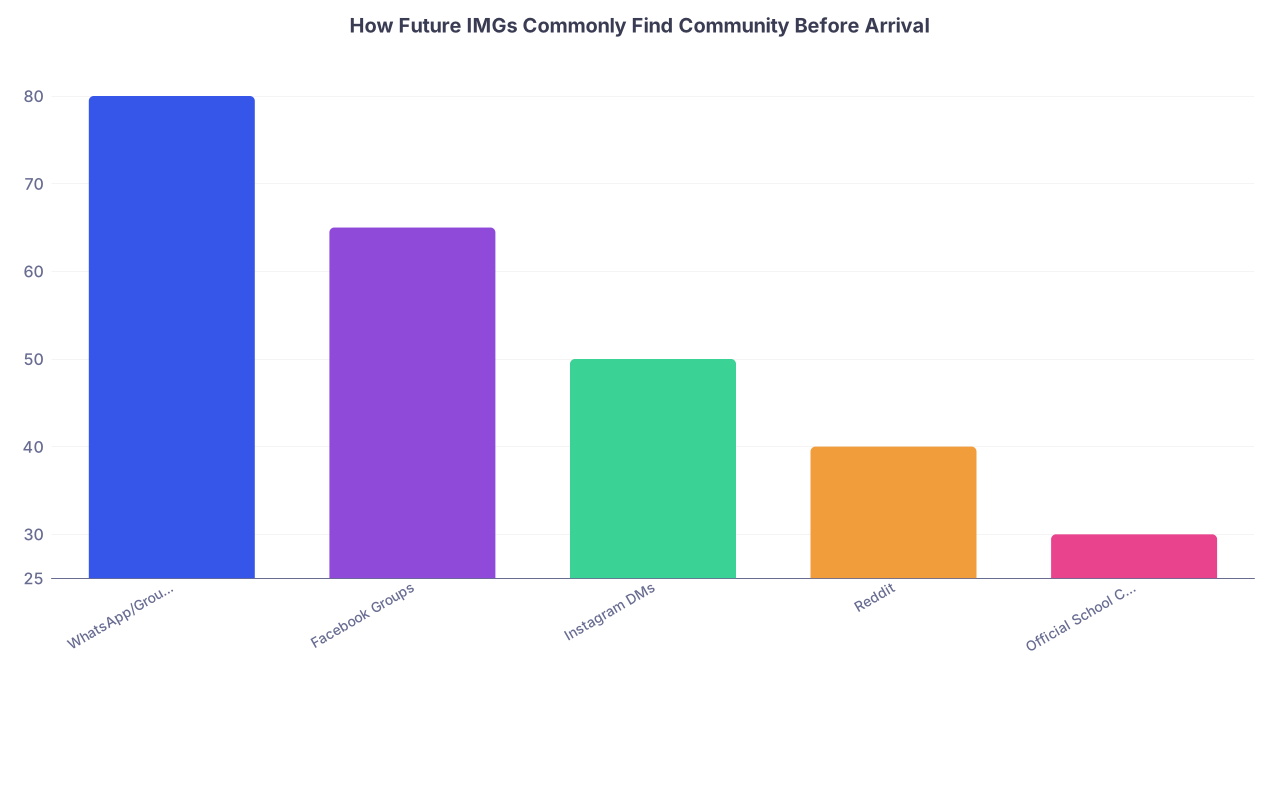
| Category | Value |
|---|---|
| WhatsApp/Group Chats | 80 |
| Facebook Groups | 65 |
| Instagram DMs | 50 |
| 40 | |
| Official School Channels | 30 |
2. Join all the incoming student chats (yes, even the awkward ones)
Most international med schools have:
- Year-group WhatsApp/Telegram chats
- Country-specific chats (e.g., “North American students at [School]”)
- Accommodation/housing chats
Don’t wait until you’ve “officially” committed. You can be upfront: “Hi, I’ve been accepted and I’m strongly considering coming. Mind if I stay in here while I decide?”
Then do the uncomfortable thing: actually talk.
- Ask who else is arriving early.
- Ask if others are worried about support / mental health / being far from home. (You’d be shocked how many say “same.”)
- Ask if anyone wants to be accountability buddies for studying, gym, or just weekly check-ins.
You’re not trying to find your future soulmate best friend on day one. You’re just increasing the number of threads that could turn into real support once you’re there.
3. Pre-build a “home base” support circle
The people you’re close to now? You need to turn them into something structured, not just “we’ll talk when we can.”
Set up:
- A weekly or biweekly standing video call with 1–2 close friends or family members.
- A group chat named something like “Emotional ER” that you’re allowed to text when things suck.
- Agreement with at least one person: “If I go quiet for a while, please check in on me, even if I seem busy.”
Is it awkward to ask? Yeah. Do it anyway. Say, “Hey, moving abroad kind of scares me. Can we set up a regular check-in so I don’t go totally off the grid when things get rough?”
That one conversation can literally be the difference between spiraling alone and catching problems early.
Once You Arrive: How to Not Get Stuck on the Outside
Here’s the nightmare scenario in your head: everyone already has their little cliques and you’re that hoverer who doesn’t quite fit in. I’ve watched students let that fear paralyze them for weeks. That’s how isolation happens.
So, you give yourself a rule: for the first 4–6 weeks, social effort is part of your job, not optional.
1. Treat “day 1 awkwardness” as mandatory training
Orientation week is basically forced socialization. Use it aggressively.
- Sit next to different people in each session.
- Ask simple openers: “Where are you from?” “Do you live nearby or in student housing?” “Have you figured out where the cafeteria is?”
- When someone seems chill, say, “Hey, want to grab lunch after this?” Yes, out loud. No, it’s not too forward.
You’re not auditioning to be liked. You’re casting for “can I stand sitting next to you in lecture for the next 3 years?”
2. Find other IMGs early—especially from your target residency country
If you’re aiming for US/Canada/UK residency, your best emotional + practical support is often other people with the same endgame.
Look for:
- “USMLE prep” or “Residency pathway” groups at your school.
- North American/UK societies or interest groups.
- Older-year IMGs who already matched or are applying.
These people will understand both the cultural and logistical stress you’re dealing with. They’re the ones who’ll know what it feels like to watch everyone else plan for local training while you’re trying to figure ECFMG, Step, visas, all of it.
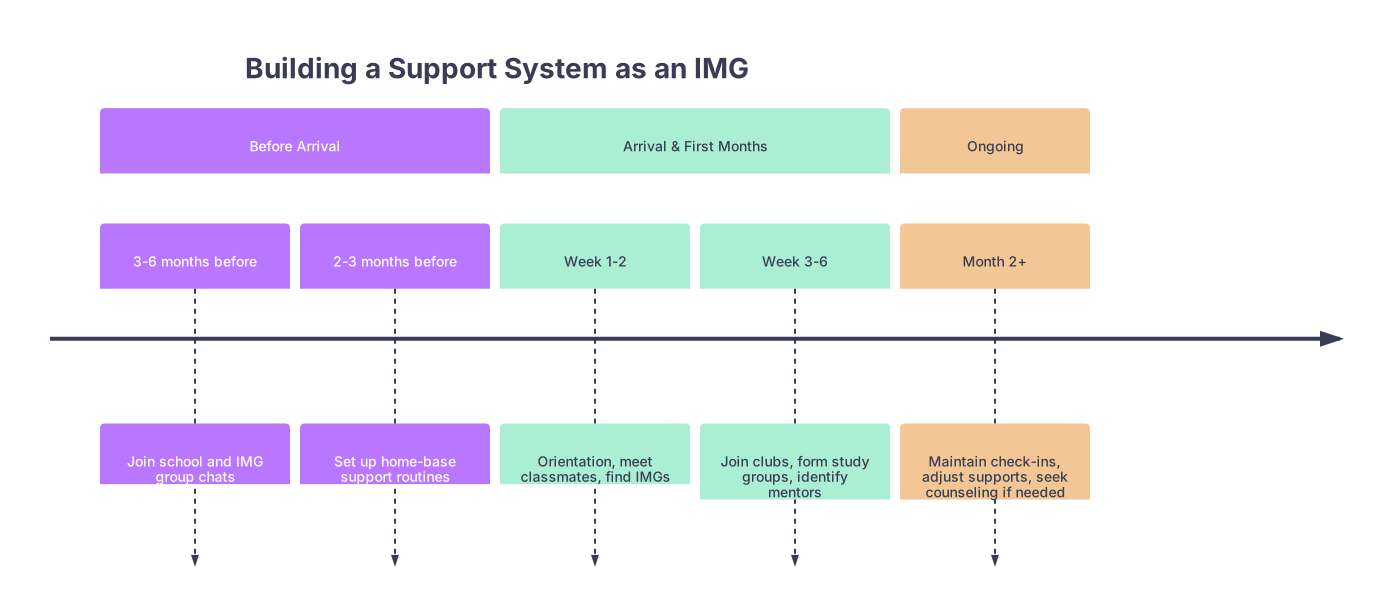
| Period | Event |
|---|---|
| Before Arrival - 3-6 months before | Join school and IMG group chats |
| Before Arrival - 2-3 months before | Set up home-base support routines |
| Arrival & First Months - Week 1-2 | Orientation, meet classmates, find IMGs |
| Arrival & First Months - Week 3-6 | Join clubs, form study groups, identify mentors |
| Ongoing - Month 2+ | Maintain check-ins, adjust supports, seek counseling if needed |
Types of Support You Actually Need (Not Just “Friends”)
Support isn’t one thing. If you expect one person (or group) to be everything—study partner, therapist, family, resident guide—you’re basically setting yourself up to feel let down.
It helps to think in categories.
| Support Type | Main Role |
|---|---|
| Emotional | Venting, comfort |
| Academic | Studying, accountability |
| Practical/Logistic | Housing, banking, city |
| Career/Residency | Exams, applications, CV |
| Wellness/Mental | Coping, burnout prevention |
Emotional support: the “I feel like I’m drowning” people
These are usually:
- Close friends from home
- A couple of classmates you actually trust
- Maybe family, if talking honestly with them is possible
You need at least 2–3 people you can message, “Today sucked. I feel like an idiot,” and not get toxic positivity back. You want people who can say, “Ok, tell me what happened,” not “But you’re so smart, you’ll be fine!!”
Academic support: the “we’re in this together” crew
You want at least one study group or partner who:
- Shows up consistently
- Isn’t trying to flex on everyone 24/7
- Actually shares resources and tips
You’re not looking for the smartest person in class. You’re looking for reliable and not-toxic. Big difference.
Career/Residency support: the IMGs above you
This one’s critical and hugely underrated. You need at least one person 1–3 years ahead who:
- Has taken Step/UKMLA/MCCQE/whatever you’re taking
- Understands your target country’s match system
- Is willing to answer very specific, sometimes “stupid-feeling” questions
These are usually older-year students, not faculty. Faculty are useful but often don’t fully grasp the day-to-day complexity IMGs face.
What If I’m Shy / Introverted / Socially Rusty?
You’re not broken if you hate small talk or feel like everyone else is magically charismatic. A lot of med students are weird introverts faking normal interaction.
But here’s the thing: you don’t need to become the most outgoing person in your cohort. You just need a few scripts and a few non-negotiables.
Try this: make yourself a deal that for the first month you will:
- Say yes to at least 50% of social invites that don’t feel unsafe.
- Initiate one small social thing per week: “Want to grab coffee after class?” “Anyone want to check out that grocery store after anatomy?”
- Ask one person per week for something small: lecture notes, where they bought their lab coat, if they’ve found a good place to study.
Is it going to feel uncomfortable? Yep. Do it anyway. Being slightly awkward for 30 seconds is better than feeling isolated for 3 semesters.
If you tend to freeze, literally write phrases in your Notes app you can use. I’m serious. Things like:
- “Hey, I’m [name], where are you from?”
- “Have you figured out a good place to study yet?”
- “Do you know if most people are living on campus or off?”
Use them like a script until you don’t need them.
Worst-Case Scenario: What If I Still End Up Isolated?
Let’s walk straight into the fear.
You arrive. You try. People are…fine, but no one really feels like “your people.” Everyone seems busy, already close to others, you’re homesick, you’re tired, your brain keeps saying, “See? You don’t fit.”
This happens. I’m not going to lie and say it never does.
Here’s what not to do: withdraw completely and tell yourself, “I’ll just focus on studying.” That’s how people quietly slide into depression and burnout.
Instead, you treat it like any other med-school problem: not a moral failure. A situation that needs more resources.
Concrete things you can do:
- Use the school counseling/mental health service, even if it feels like “too much.” It’s not.
- Tell one person the truth: “I’m actually struggling to feel connected here. Can we hang out sometime this week?” It feels desperate; it’s actually brave as hell.
- Look for off-campus communities: religious groups, expat communities, sports, interest clubs. Sometimes your real support ends up being at a local church, a pickup soccer group, or a language class, not your med cohort.
And if a school or environment is truly toxic and isolating despite real effort? Then you can start exploring bigger decisions like transferring, taking a leave, or changing plans. But you do that after trying concrete steps, not as a first reflex when anxiety screams “abort mission.”
Protecting Yourself from Time-Zone Loneliness
The time zone thing is real. You cry after a horrible exam and everyone you love is asleep. That hurts in a very visceral, physical way.
You can’t fix time zones. But you can blunt the impact:
- Schedule specific “anchor” calls each week with people back home.
- Find at least one friend whose time zone overlaps decently with yours (another IMG from your region, or someone online in a similar program).
- Have a list of “lonely hour” activities that don’t require anyone else: going for a walk, journaling, pre-watching lectures at 1.5x, cooking something familiar from home, streaming a show you and a friend both watch and text about later.
Lonely moments are inevitable. Staying lonely long-term is what we’re working to prevent.
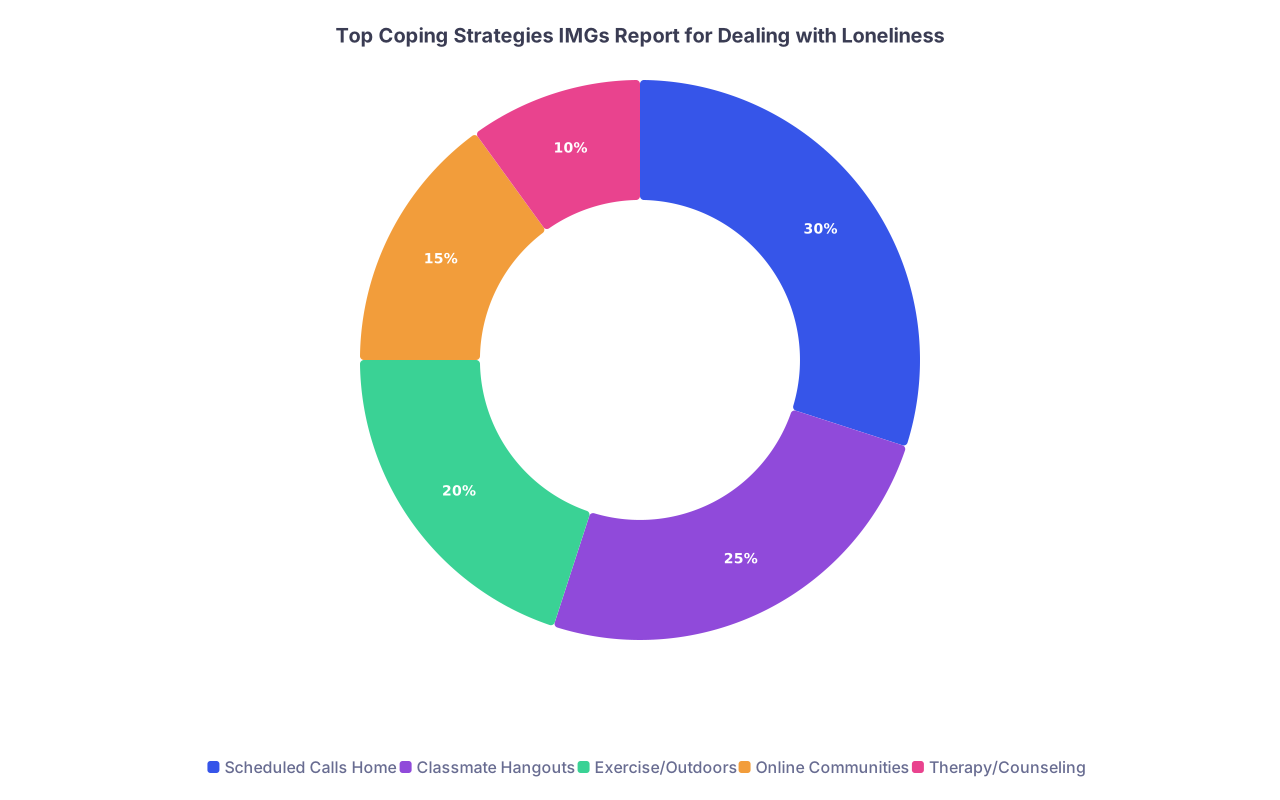
| Category | Value |
|---|---|
| Scheduled Calls Home | 30 |
| Classmate Hangouts | 25 |
| Exercise/Outdoors | 20 |
| Online Communities | 15 |
| Therapy/Counseling | 10 |
The Quiet Truth: Almost Everyone Is Scared of This
Here’s something people don’t admit out loud: a shocking number of your future classmates are terrified of the same thing. They’re just better at hiding it. Or they don’t say it because they think they’re the only one.
You’re not weird for worrying you’ll be isolated. You’re responsible for thinking about it now.
And no, you can’t guarantee you’ll show up and instantly find “your people.” That’s not how life works, abroad or at home. But you can guarantee this: you won’t be going in blind, hoping friendship and support fall out of the sky.
You’ll be building a system—messy, imperfect, but real.


