
The worst financial decisions doctors make happen in the first attending year.
Not because you are stupid. Because you are exhausted, overconfident, and finally have money. That is a dangerous mix.
This is the month‑by‑month plan I wish every new attending had taped above their desk. Follow it and you will be financially ten years ahead of most of your colleagues by the time you hit year three.
Ground Rules Before Month 1
Before we start the timeline, you need three rules that do not change:
No major lifestyle upgrades for 6 months.
No house. No new luxury car. No private school deposits. Survive. Observe. Plan.Every new dollar gets a job.
Salary hits? It splits automatically into taxes, fixed bills, investing, debt payoff, and truly guilt‑free spending. No “leftover” model. That always fails.Automation beats motivation.
If you have to “remember” to invest or pay debt, you will not. Set it and get out of your own way.
Now we go month by month.
Month 1: The Reality Check and Setup
At this point you should not be picking mutual funds. You should be figuring out where your money is actually going and what legal/benefits environment you are in.
Week 1–2: Clean Data, Not Vibes
You:
- Pull your:
- Contract
- Paystub(s)
- Benefits packet
- Resident loan summary (NSLDS, servicer accounts)
- Last 3 months of bank and credit card statements
- Build a simple monthly snapshot:
- Net take‑home pay (per paycheck and monthly)
- Required fixed expenses: rent, utilities, minimum loan payments, insurance, subscriptions
- Discretionary: food, gas, random Amazon, DoorDash, travel
No budgeting app will rescue you if the raw data is nonsense. Start simple: spreadsheet or legal pad.
Week 3: Employer Plan and Legal Skeleton
You sit down (30–60 minutes) with HR / benefits rep. Do not let them rush you.
You want answers to:
- What retirement plans are available?
- 401(k), 403(b), 457(b)?
- Roth option?
- Match formula and vesting schedule?
- Are you eligible for:
- HSA (high‑deductible health plan)?
- Employee stock purchase plan (ESPP)?
- Malpractice details:
- Claims‑made vs occurrence
- Who pays for tail?
- Contract questions:
- Non‑compete radius and duration
- Call pay rules
- RVU thresholds (if productivity based)
Parallel track: you book a contract / asset‑protection review with a lawyer who actually works with physicians. Not your uncle who does real estate closings.
Week 4: First Automation Pass
By the end of Month 1 you should:
- Open:
- A high‑yield savings account (online bank) – label it “Emergency / Taxes”
- A separate checking for “bills + investing” if your primary account is chaos
- Set up:
- Auto‑transfer from checking to savings every payday (even $500 to start)
- Direct deposit splits if employer allows (some will send X% to savings)
- Decide temporary targets:
- Minimum 5–10% of gross income earmarked for wealth building (investing + extra debt) starting Month 2
You will ramp this up steadily.
- Minimum 5–10% of gross income earmarked for wealth building (investing + extra debt) starting Month 2
No investments yet. You are building pipes first.
Month 2: Cash Buffer and Debt Reality
Now that you see your numbers, you stop winging it.
Week 1: Emergency Fund Target
At this point you should:
- Set a clear emergency fund target:
- Minimum: 3 months of bare‑bones expenses
- Better: 4–6 months if you are in a volatile specialty or private practice
- Decide pace:
- Aggressive: fully funded in 6–9 months
- Moderate: 12 months
Then increase that auto‑transfer from Month 1 to hit the target on schedule.
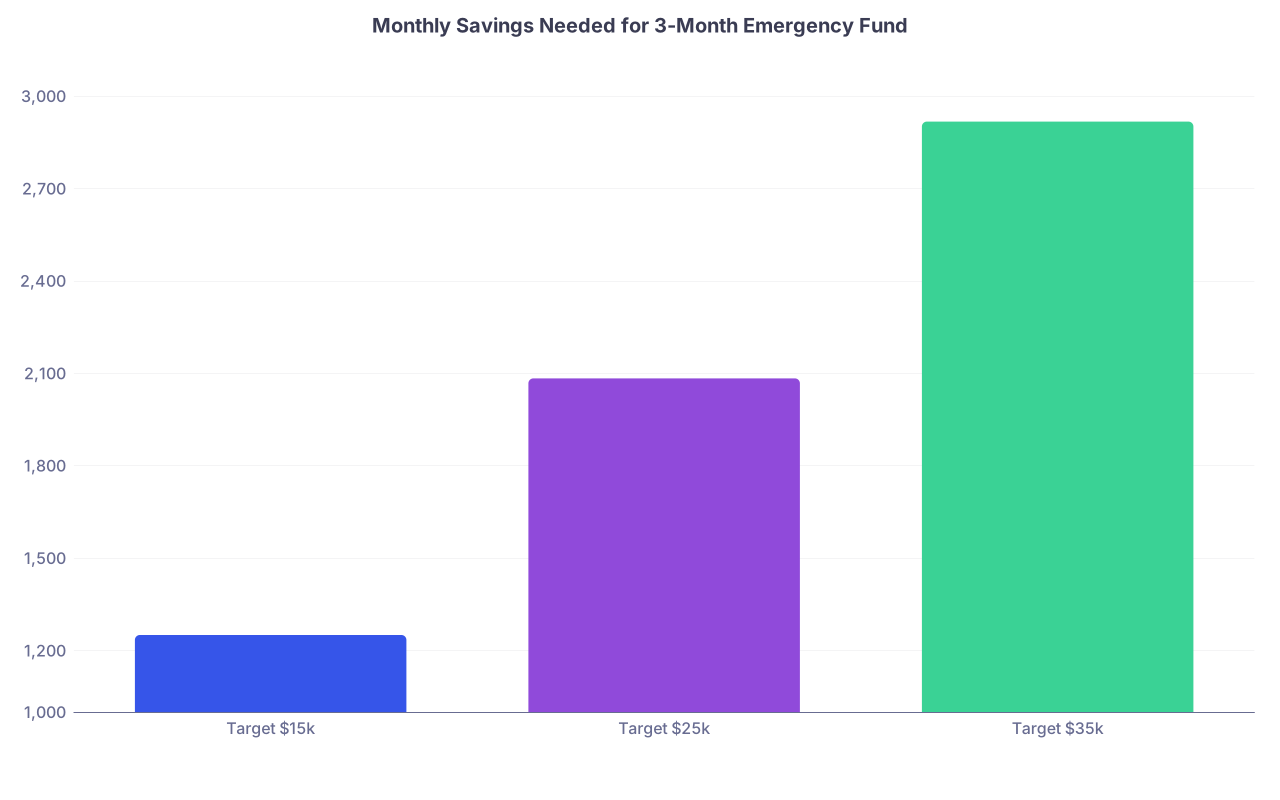
| Category | Value |
|---|---|
| Target $15k | 1250 |
| Target $25k | 2083 |
| Target $35k | 2917 |
That is what it actually takes per month to get there in 12 months. You want it faster? Raise the number.
Week 2–3: Student Loan Strategy – One Decision, Not Ten
You gather:
- Federal loans: types, interest rates, current servicer, total
- Private loans: lender, rate, term, any refi offers
Then you make one core decision: Are you a forgiveness candidate or not?
- If you are at a 501(c)(3) hospital and may stay 10 years → likely PSLF track
- If private practice / for‑profit group and no plan to go academic → payoff track
| Scenario | Likely Path |
|---|---|
| 501(c)(3) hospital, hospitalist | PSLF |
| Academic surgery, teaching role | PSLF |
| Private anesthesia group | Payoff |
| Locums mix, no 501(c)(3) | Payoff |
| Rural hospital (nonprofit) | PSLF |
PSLF track (federal loans):
- Consolidate wisely if needed (do not reset qualifying payments without understanding cost)
- File income‑driven repayment (SAVE / PAYE legacy etc.)
- Certify employment
- Do not refinance to private
Payoff track:
- Rank loans by rate
- Refinance highest‑rate private loans once you have:
- Job stable for 3–6 months
- At least 1–2 months emergency fund already in place
- Set a target payoff window:
- Very aggressive: 3–5 years
- Reasonable: 5–7 years
Week 4: Set Monthly “Wealth Rate”
By end of Month 2 you should know:
- How much per month you will:
- Invest in retirement accounts
- Put toward extra loan principal
- Save in emergency fund
Total of those three = your wealth rate.
Target: 30–40% of gross income within 12–18 months.
You will not hit that today, but you must know the direction.
Month 3: Retirement Accounts – Turn Them On
Now we finally invest. But only after your pipes, cash, and loan plan exist.
Week 1: Turn on Employer Retirement
At this point you should:
- Contribute at least enough to get the full match. That is mandatory. Free money.
- If you can push further, set contribution to:
- 10–15% of gross income as a starting goal
- Automatic increase by 1–2% per year if plan allows
If there is a Roth option:
- Early attending, not ultra‑high bracket yet → Roth is usually favorable
- If you are already deep in the top bracket → split between traditional and Roth is reasonable
Week 2–3: Core Investment Choices – Keep It Boring
You log into your 401(k)/403(b). You will see 25+ funds. You need 2–3:
- A broad US stock fund (e.g., “Vanguard Institutional Index,” “Total Stock Market”)
- An international stock fund (optional but preferred)
- A bond fund (for stability if you do not sleep well with 100% stocks)
For most young attendings:
- 80–100% stocks is appropriate
- You can use a Target Date fund (e.g., “2055 Retirement Fund”) if the fees are low (ER ≤ 0.15–0.20%)
Do not chase last year’s winner. Ignore the “hot” sector funds. Nobody at work remembers the guy who picked the biotech fund.
Week 4: HSA / ESPP (If Available)
If you have a high‑deductible health plan:
- Open and fund your HSA:
- Aim to max it by year‑end if cash flow allows
- Invest the HSA balance once above the cash minimum your provider requires
Treat it as a stealth retirement account, not a checking account.
If you have an ESPP:
- Only join if:
- There is a meaningful discount (e.g., 10–15%)
- You understand the holding rules and tax treatment
- Cap exposure: do not let employer stock exceed 5–10% of your net worth
Month 4: Legal and Protection Layers
Most doctors procrastinate here until someone gets sued or hurt. Do not copy them.
Week 1–2: Insurance Check – Cover the Catastrophes
By now:
- You confirm malpractice coverage type (claims‑made vs occurrence)
- If claims‑made and you might move → you plan for tail coverage cost mentally and financially
Then you secure:
- Own‑occupation disability insurance:
- Individual policy, not just employer
- True own‑occ language
- Benefit targeting ~60–70% of your gross income
- Term life insurance (if anyone depends on your income):
- 20–30 year level term
- At least 7–10x your annual income, often more if high debt and kids
Do not buy whole life or permanent insurance masquerading as an “investment.” That pitch nails new attendings every year.
Week 3: Basic Asset Protection and Accounts
You set:
- Titling on personal accounts (individual vs joint)
- Primary and contingent beneficiaries on:
- Retirement accounts
- Life insurance
- Consider umbrella liability policy:
- $1–3M coverage is standard
- Cheap relative to risk transfer
Week 4: Simple Estate Documents
You are busy. I know. Do the minimum adult package:
- Will
- Healthcare proxy / medical power of attorney
- Durable power of attorney
- Guardianship provisions if you have kids
Many physicians put this off until something bad happens in their department. That is backwards.
Month 5: Taming Lifestyle Creep – On Purpose
At this point the attending salary “feels normal.” This is when mistakes explode.
Week 1: Concrete Spending Limits
You set hard caps:
- Housing (rent or mortgage + taxes + insurance + HOA if any):
≤ 20–25% of gross income - Car payments (if any):
≤ 10% of take‑home pay, total car value ≤ 0.5x annual income - Recurring subscriptions and memberships: clean them up
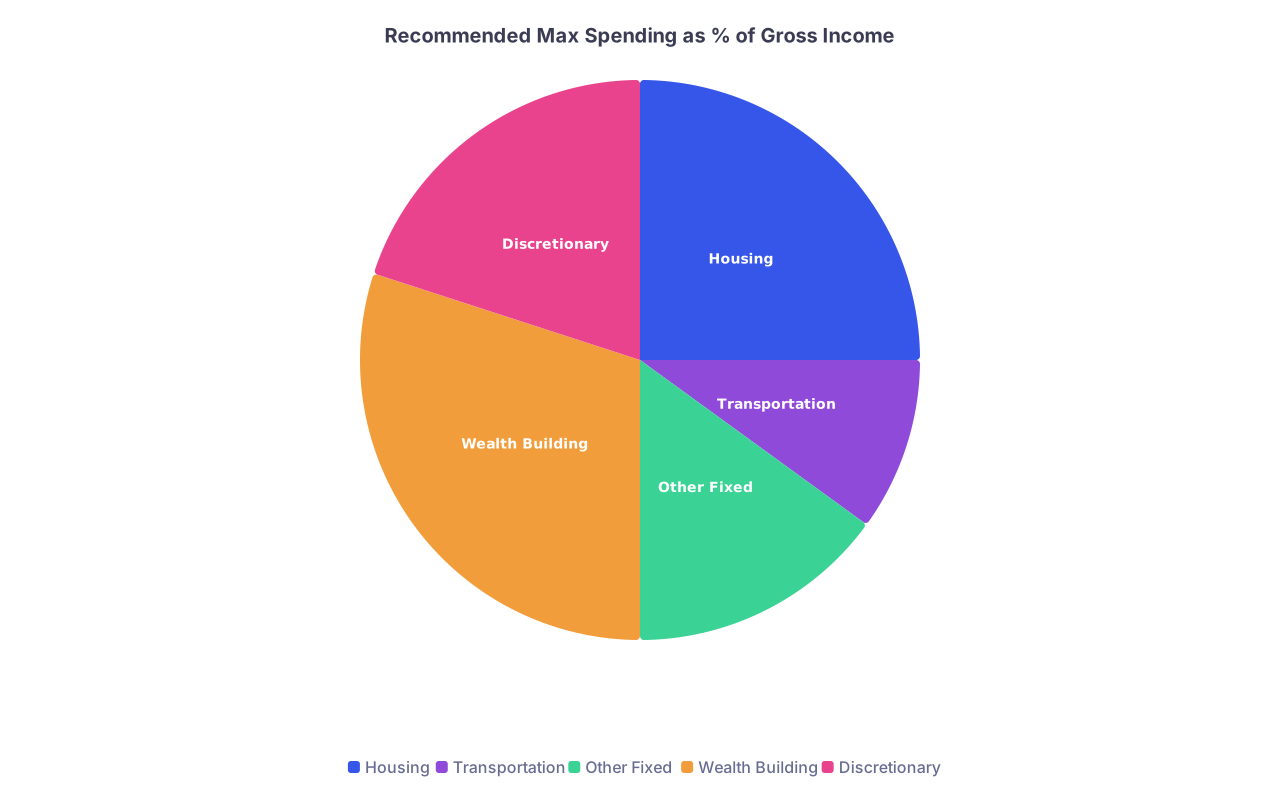
| Category | Value |
|---|---|
| Housing | 25 |
| Transportation | 10 |
| Other Fixed | 15 |
| Wealth Building | 30 |
| Discretionary | 20 |
Those are targets. If you live in a HCOL area, housing may creep higher, but then you cut elsewhere.
Week 2–3: Permissioned Upgrades
You can upgrade some things. Just not everything.
Decide one meaningful lifestyle upgrade for this year:
- Slightly better apartment closer to hospital
- Reasonable car replacing the beater
- One big trip
Then lock out the rest. The rule:
Only increase lifestyle when you hit a new savings/investing milestone, not when you feel like it.
Examples:
- When net worth hits $0 (from negative) → you can raise discretionary spending by $200/month.
- When student loans drop below 1x salary → consider a modest housing upgrade.
Week 4: Review Wealth Rate
By the end of Month 5, you should:
- Recalculate your effective wealth rate:
- (Retirement contributions + extra loan payments + emergency fund + HSA investments) / gross income
- See if you can bump by 2–5% starting Month 6 by:
- Refinancing loans
- Cutting wasteful recurring expenses
- Taking optional extra shifts deliberately earmarked for debt or investing
Month 6: Non‑Retirement Investing and IPS
Now you build the structure that will guide the next 20 years.
Week 1–2: Written Investment Policy Statement (IPS)
You write a one‑page IPS. Not a novel. It answers:
- Target stock/bond mix (e.g., 80/20)
- Main vehicles:
- 401(k)/403(b)
- Roth IRA / Backdoor Roth IRA
- HSA
- Taxable brokerage account
- Annual savings target (percentage and dollar amount)
- Rebalancing rule:
- Once per year OR
- When allocation drifts by >5%
That document keeps you from rewriting your strategy every time the market wobbles.
Week 3: Roth IRA / Backdoor Roth
If you are under direct Roth income limits, just open and fund a Roth IRA. If over:
- Do a Backdoor Roth IRA:
- Contribute to a non‑deductible traditional IRA
- Quickly convert to Roth IRA
- Avoid pre‑tax IRA balances that complicate pro‑rata rules if possible
Invest the Roth the same way as your 401(k): broad index funds. No need for cute tilts.
Week 4: Taxable Brokerage – The Flexible Bucket
If:
- You are meeting:
- Employer match
- HSA (if available)
- Roth IRA / Backdoor Roth
- And you still have extra to invest each month
Then open a taxable brokerage account:
- Use broad low‑cost funds or ETFs
- Keep it simple: Total US Stock + Total International
This account becomes your future down payment fund, “optional” retirement age fund, or early semi‑retirement fuel.
Months 7–9: Ramping, Rebalancing, and Refining
Now we pull the camera back and plan quarter by quarter rather than week by week.
Month 7: Mid‑Year Financial Review
At this point you should schedule a 60–90 minute block with yourself (and partner if applicable):
- Update:
- Net worth (assets – debts)
- Loan balances
- Emergency fund progress
- Adjust:
- Retirement contributions (bump if below track)
- Extra loan payments
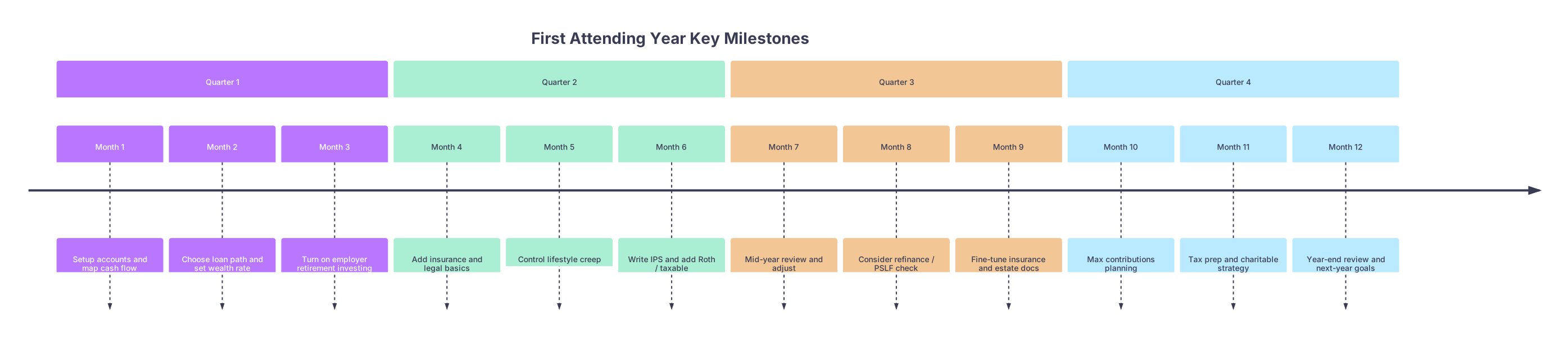
| Period | Event |
|---|---|
| Quarter 1 - Month 1 | Setup accounts and map cash flow |
| Quarter 1 - Month 2 | Choose loan path and set wealth rate |
| Quarter 1 - Month 3 | Turn on employer retirement investing |
| Quarter 2 - Month 4 | Add insurance and legal basics |
| Quarter 2 - Month 5 | Control lifestyle creep |
| Quarter 2 - Month 6 | Write IPS and add Roth / taxable |
| Quarter 3 - Month 7 | Mid-year review and adjust |
| Quarter 3 - Month 8 | Consider refinance / PSLF check |
| Quarter 3 - Month 9 | Fine-tune insurance and estate docs |
| Quarter 4 - Month 10 | Max contributions planning |
| Quarter 4 - Month 11 | Tax prep and charitable strategy |
| Quarter 4 - Month 12 | Year-end review and next-year goals |
Month 8: Loans – Second Look
You reassess:
- If on PSLF track:
- Confirm qualifying payments
- Submit employer certification
- Avoid overpaying; stick with IDR minimums
- If payoff track:
- Shop refi rates again
- Consider shorter terms if cash flow strong
- Decide: extra principal vs investing more
Early attendings overweight debt payoff emotionally. Balance is fine, but do not ignore compounding.
Month 9: Insurance / Estate Fine‑Tuning
By now:
- Adjust disability benefit if your income rose or coverage seems thin
- Confirm beneficiaries once more (people get engaged, married, divorced)
- Review umbrella policy limits vs your net worth and income risk
This is maintenance, not overhaul.
Months 10–12: Year‑End Optimization
Now you stop thinking like “new attending” and more like “CEO of a small financial enterprise.”
Month 10: Contribution Maxing Strategy
You calculate:
- How much you have contributed YTD to:
- 401(k)/403(b)
- 457(b) (if available)
- HSA
- Roth IRA / backdoor Roth
- What it takes per paycheck to:
- Hit the max for retirement plans by December 31 if realistic
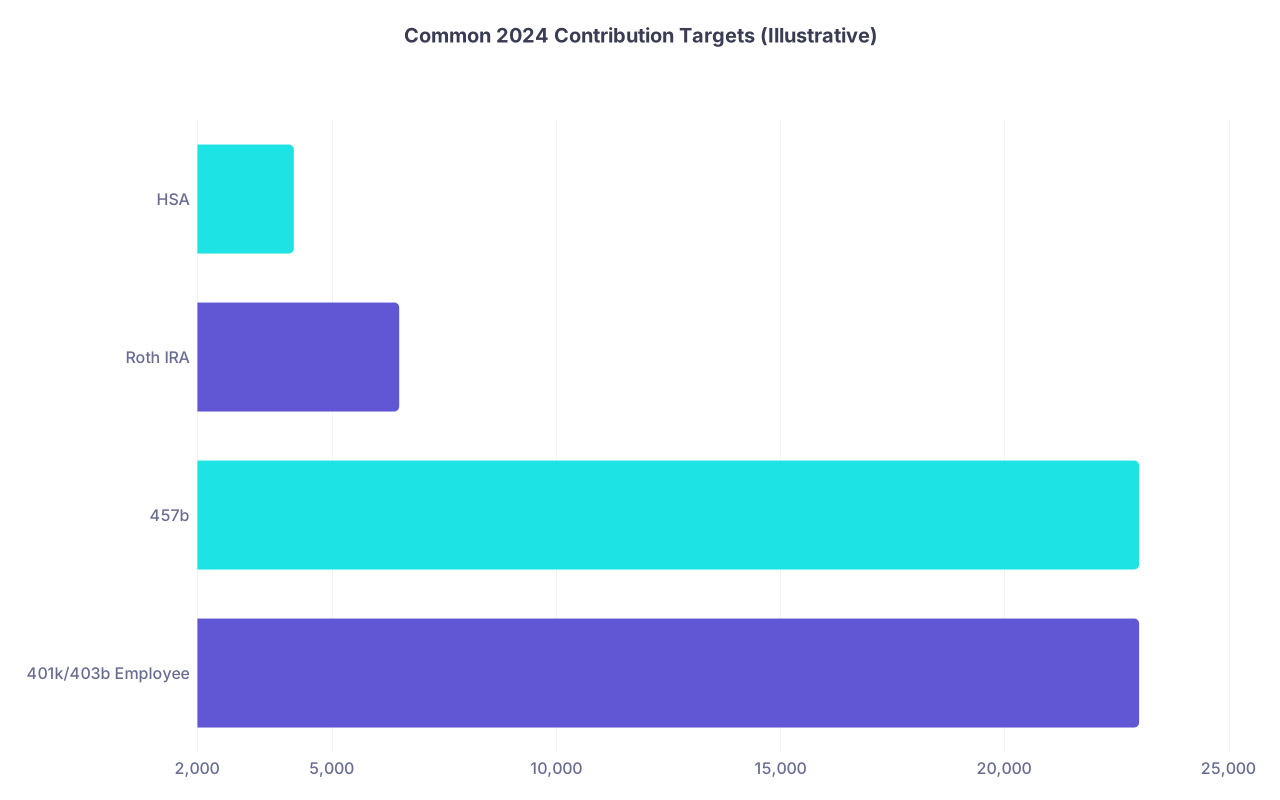
| Category | Value |
|---|---|
| 401k/403b Employee | 23000 |
| 457b | 23000 |
| Roth IRA | 6500 |
| HSA | 4150 |
(Use actual current year limits; numbers above are examples.)
If you cannot max everything:
- Priority list is usually:
- 401(k)/403(b) to match
- HSA (if available)
- Roth IRA / Backdoor Roth
- 401(k)/403(b) beyond match
- Taxable brokerage
Month 11: Tax Planning and Charitable Giving
By Month 11 you should:
- Estimate your tax situation:
- Check if you are under‑withheld
- Plan for any owed amounts in April
- Decide charitable strategy:
- Simple: direct cash donations
- More advanced: donor‑advised fund if you have a high‑income year and want to bunch deductions
This is where a CPA familiar with physicians can earn their fee. Especially if you have side gigs, 1099 income, or complex benefits.
Month 12: Year‑End Review and Next‑Year Targets
You close the loop:
- Recalculate:
- Net worth
- Wealth rate
- Loan payoff date projection
- Compare to start of Year 1:
- How much did your net worth change?
- How much did your behavior change?
Then you set Year 2 goals:
- Wealth rate target (e.g., raise from 25% to 32%)
- Specific milestones:
- Loans under X
- Net worth to $0, then +$50k, +$100k
- Any planned lifestyle changes (house, kids, move) – and the savings strategy for them

Common Detours to Avoid (All Year)
You will get pitched on:
- Whole life / universal life insurance as an “investment”
- “Exclusive doctor only” private real estate funds you do not understand
- Complex tax shelters you cannot clearly explain back in one paragraph
Your rule:
If you cannot explain the strategy to a co‑resident in plain language without notes, you do not buy it.
Stick to:
- Employer retirement plans
- Roth IRA / backdoor Roth
- HSA
- Low‑cost taxable investing
- Loan management
- Protection and legal basics
That is enough to make you very wealthy over time.

Final Snapshot: What “On Track” Looks Like After Year 1
By the end of your first attending year, if you follow this timeline, you should roughly have:
- A clear loan path (PSLF vs payoff) and autopayments aligned with that
- At least 1–3 months of emergency funds on the way to your full target
- Active contributions to:
- At least one employer retirement plan
- Roth IRA or backdoor Roth
- HSA (if eligible)
- Core legal and protection pieces:
- Own‑occ disability, term life (if needed), umbrella
- Basic estate docs
- Lifestyle that fits inside:
- ≤ 25% gross on housing
- A rising wealth rate heading toward 30–40%
You will not feel “done.” You are not supposed to. But you will be out of the danger zone that swallows too many first‑year attendings.
Remember these three points:
- The first attending year sets your default. Make that default aggressive saving, simple investing, and slow lifestyle growth.
- Automation wins. Decisions you make once and let run will outperform your best “trying really hard” month.
- Boring beats brilliant. Straightforward index investing and steady debt payoff will outrun almost every clever scheme your colleagues brag about in the physician lounge.