
The biggest lie about “easier” specialties is that you can coast into them with a weak application and a vague plan. You cannot. The bar is lower, not absent—and a sloppy gap year will lock you into the bottom of an already soft pile.
You want to use a gap year to actively strengthen your application for less competitive fields—think Family Medicine, Psychiatry, Pediatrics, Internal Medicine (community-focused), PM&R at solid but not elite programs. Fine. Then you treat this year like a one-year, self-directed fellowship in “Become a Very Obvious Accept.”
Here’s how to do that, month by month, week by week.
0–2 Weeks Before the Gap Year Starts: Hard Reset and Target Selection
At this point you should stop pretending you are “keeping options open.” Pick a direction.
Step 1: Define your target specialty tier (be honest).
You’re aiming at the least competitive end of the spectrum. Examples:
- Family Medicine (community, mid-tier academic)
- Psychiatry (non-elite, many state programs)
- Pediatrics (mostly community or mid-tier)
- Internal Medicine (non-university or lower-tier university)
- PM&R (not top 10, but solid regional programs)
- Neurology (many programs, moderate bar)
| Specialty | Typical Step 2 (safe zone) | What Programs Really Want |
|---|---|---|
| Family Med | 220–230+ | Commitment, primary care XP |
| Psychiatry | 220–230+ | Psych exposure, some research |
| Pediatrics | 220–230+ | Kids-focused XP, advocacy |
| Community IM | 220–230+ | Reliability, patient volume XP |
| PM&R | 225–235+ | Rehab exposure, letter from PM&R |
If you’re below those numbers or have red flags, gap year is damage control + value-add.
Step 2: Run a brutal self-audit in one sitting.
List these on one sheet:
- USMLE/COMLEX scores (and fails / retakes)
- Clerkship grades (especially in your target field)
- Research: papers, posters, literally anything
- Clinical exposure in that specialty
- Leadership / teaching / service
- Red flags: leaves, professionalism issues, marginal deans letter
Then mark each as:
- Green – acceptable
- Yellow – weak
- Red – problem
Your gap year has one job: turn yellows into greens and hide reds behind consistent, recent excellence.
Step 3: Decide the primary role of your gap year.
Pick ONE as your main focus:
- Clinical experience and letters
- Research and academic credibility
- Scores/knowledge repair (dedicated study + exam retake or Step 2 CK push)
You can stack secondary goals, but you cannot major in everything.
Month 1: Locking in the Structure (Jobs, Research, Location)
At this point you should be building the skeleton of your year: where you’ll be, what your title is, and who can write letters.
Week 1–2: Secure your main anchor position
You need an “anchor” that looks good on ERAS:
- Research assistant / research fellow
- Clinical research coordinator
- Full-time clinical job (scribe, resident assistant, psych tech, clinic “junior physician” abroad if appropriate and ethical)
- Funded fellowship year (less common but ideal)
Priority by specialty:
- Family Med / Pediatrics / IM: Outpatient clinic work, community health centers, primary care research, QI projects.
- Psych: Inpatient psych units, outpatient clinics, research groups, crisis centers.
- PM&R: Rehab hospitals, spine/pain centers, sports medicine clinics, PM&R department research.
Email strategy (Week 1–2):
- 15–20 targeted emails to faculty/programs in your chosen region.
- Subject line: “Recent grad seeking full-time research/clinical role in [Specialty].”
- Attach:
- 1-page CV
- 1-paragraph explanation of gap year goal and desired start date
You should be on at least 3–4 phone/Zoom calls by the end of Week 2.
Week 3–4: Decide location and commit
By end of Month 1:
- You have 1 main job offer / commitment
- The role has:
- Direct supervision by someone who can write a strong letter
- Contact with residents and program directors
- Simple, understandable title on ERAS
Do not chase prestige. For “easier” fields, consistency and clear alignment matter more.
Months 2–3: Establish Competence and Build Letter-Writers
At this point you should be moving from “new person in the office” to “reliable junior colleague.”
Weekly rhythm (Months 2–3)
Aim for a basic weekly template:
- 40–50 hrs/week: Main job (clinical or research)
- 3–5 hrs/week: Dedicated reading/study tied to your specialty
- 1–2 hrs/week: Tracking accomplishments and polishing CV
Make it concrete:
Family Med / Peds:
- Read 3–5 UptoDate topics/week on common outpatient problems.
- Track every mini-QI or process improvement you touch (e.g., vaccine outreach, diabetes follow-up).
Psych:
- Read 1 guideline or major review per week (schizophrenia, mood disorders, substance use).
- Document involvement in group therapy, safety planning, discharge planning.
IM:
- Follow 1–2 NEJM or JAMA articles/month in core IM topics.
- Join any QI projects (readmission reduction, anticoag stewardship).
PM&R:
- Learn basic neuro exam, MSK exam, gait assessment.
- Get involved with outcomes tracking—functional scores, pain scores.
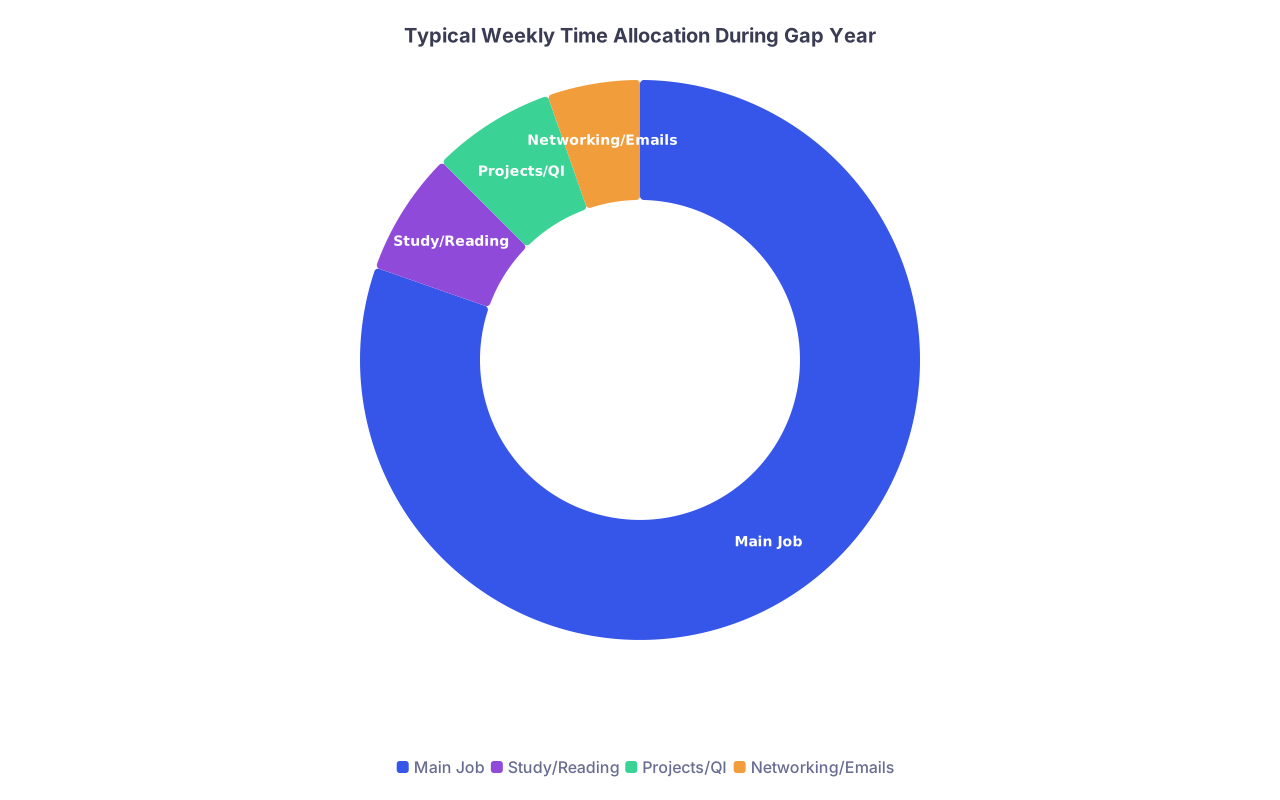
| Category | Value |
|---|---|
| Main Job | 45 |
| Study/Reading | 4 |
| Projects/QI | 4 |
| Networking/Emails | 3 |
Month 2 Milestones
By the end of Month 2, you should:
- Have at least 1 supervisor who:
- Knows your name
- Has seen your work routinely
- Has heard you say you’re applying to [Specialty]
Start the “future letter” seed early:
- Week 6–8: Say directly,
- “I’m planning to apply to [Specialty] this coming cycle. I’d really like to grow in [X and Y areas]. If you see gaps, I’d appreciate any feedback.”
This isn’t fishing for compliments. It’s giving them permission to pay attention.
Month 3 Milestones
Now you solidify your “story” for that specialty.
You should have:
1–2 concrete projects or responsibilities you can describe on ERAS:
- “Led chart review project on uncontrolled hypertension in community clinic”
- “Coordinated weekly interdisciplinary psych rounds and compiled outcome summaries”
- “Collected and analyzed rehab functional outcome data on stroke patients”
1 short “why this specialty” paragraph draft based on actual experience, not clichés. Keep it on your phone; refine it with what you see.
Months 4–6: Projects, Productivity, and Fixing Weaknesses
At this point you should move from worker bee to someone with at least one tangible output.
Month 4: Choose 1–2 realistic projects
Choose based on your actual setting:
- Research-heavy job:
- Aim for 1 poster + 1 manuscript (case report or small retrospective) at minimum.
- Clinical-heavy job (busy clinic, hospital):
- Aim for 1 QI project + 1 conference poster or local presentation.
- Score-repair year (Step 2 retake / CK focus):
- Primary goal: strong extra exam or score improvement + 1 small, doable project.
Do not pick anything that requires more data than you can reasonably collect in 3–4 months.
Month 5–6: Execute and document
Weekly checklist:
- Touch your main project at least 2 days/week:
- Data collection, analysis, writing draft sections, making figures.
- Meet your mentor at least monthly:
- “Here’s what I’ve done.”
- “Here’s what’s stuck.”
- “Here’s what I need to finish by [date].”
For you, in a less competitive specialty, the existence of functioning projects matters more than the impact factor.
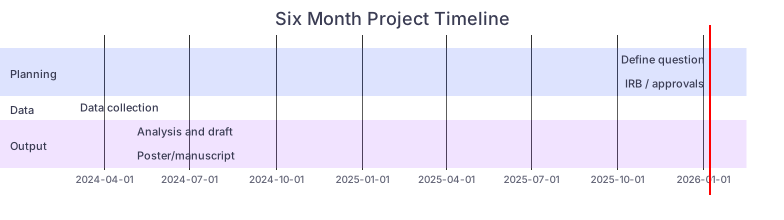
| Task | Details |
|---|---|
| Planning: Define question | a1, 2024-01, 1m |
| Planning: IRB / approvals | a2, after a1, 1m |
| Data: Data collection | a3, 2024-03, 2m |
| Output: Analysis and draft | a4, 2024-05, 1m |
| Output: Poster/manuscript | a5, after a4, 1m |
If IRB will kill your timeline, pivot to:
- Case reports
- Educational projects
- Chart reviews with existing approvals
Remediation Track: Step or Clerkship Weakness
If you have:
- Step 1 fail
- Step 2 CK < 220
- Multiple low clerkship grades
Then Months 4–6 must include explicit repair:
- 8–10 hrs/week: Step 2 CK or shelf-style prep (UWorld, NBME practice exams).
- Target: Score showing upward trend or at least “not a liability” range.
Your line in interviews needs to be:
- “I had [X challenge]. I addressed it by [Y specific strategy]. My recent performance — including [exam, clinical job, project] — reflects that change.”
Months 7–9: Application Build-Out (Personal Statement, Program List, Letters)
At this point you should pivot from “grow skills” to “package everything.” This is where a lot of people waste their advantage.
Month 7: Commit to specialty and program type
No more hedging.
Decide:
- Main specialty: e.g., Psychiatry
- Backup specialty (if any): e.g., Family Medicine
Then choose your program flavor:
- Region (Northeast vs Midwest vs South)
- Community vs academic vs mix
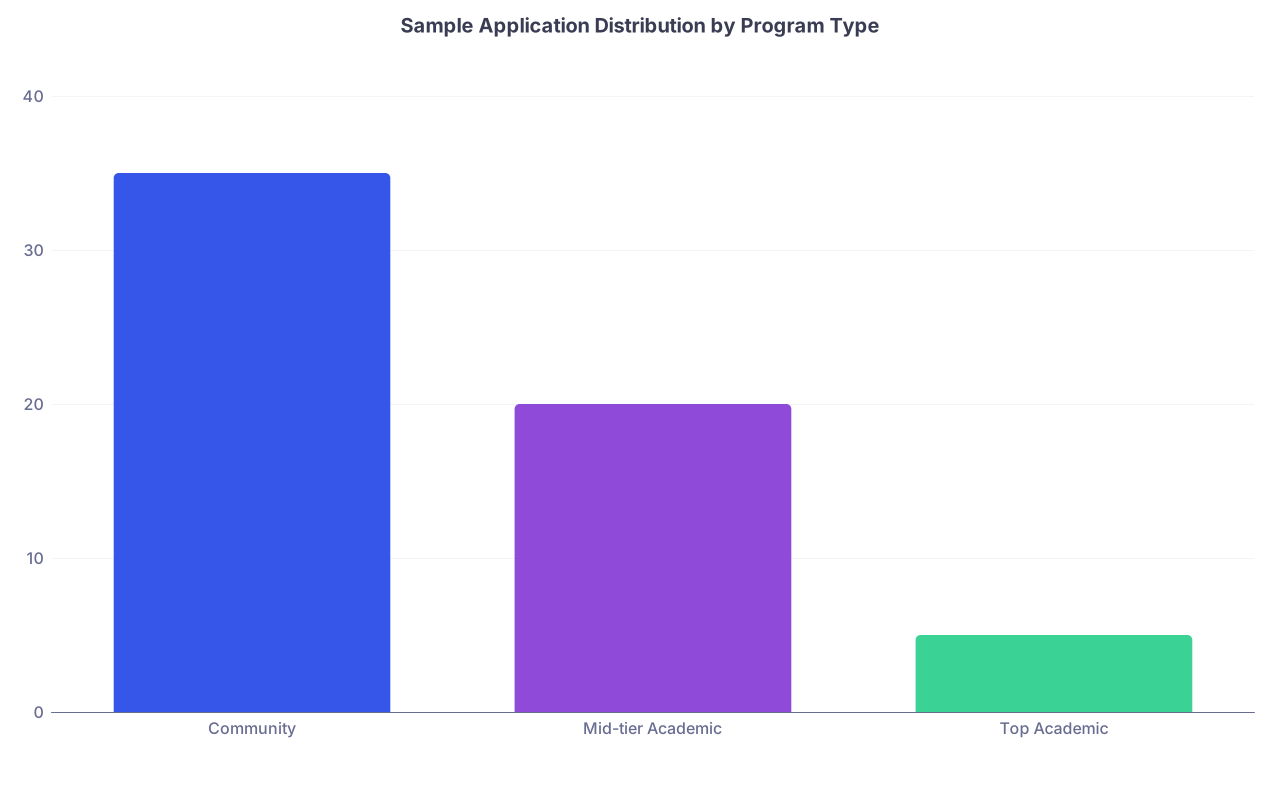
| Category | Value |
|---|---|
| Community | 35 |
| Mid-tier Academic | 20 |
| Top Academic | 5 |
For easier fields, I like something like:
- 50–60 programs total if you have any red flags
- 30–40 if you’re clean but average
Weighted to community and mid-tier.
Month 7–8: Lock in letters of recommendation
At this point you should start turning those “future letter” seeds into commitments.
Ideal letter set for a less competitive specialty:
- 2 strong specialty-specific letters (e.g., 2 Psych attendings, 2 FM docs)
- 1 strong general clinical letter (IM, Peds, or Surgery)
- Optional: 1 research letter if the writer knows you well
Timeline:
- Week 28–32: Ask specifically, in person if possible:
- “Would you feel comfortable writing a strong letter of recommendation for my application to [Specialty]?”
If they hesitate, don’t push. Move on.
Provide:
- Updated CV
- 1-page “brag sheet”:
- Projects you did with them
- Cases you managed
- Personal strengths you hope they can speak to
- Draft of your personal statement if available
Month 8–9: Personal statement and ERAS experiences
You should write your personal statement from the year you just lived, not from med school clichés.
Structure (target specialty: Family Medicine, as example):
- One specific, recent clinical story from your gap year
- What that taught you about the specialty
- How your gap year roles built skills for residency
- What kind of resident you’ll be / what you want in a program
Week-by-week:
- Week 30–32: Ugly draft. Don’t worry about length.
- Week 33–34: Two rounds of edits with someone in the field or a resident.
- Week 35: Finalize.
ERAS experiences:
- Highlight this year as 2–3 separate entries:
- Main job (with detailed bullets)
- Main project/QI/research
- Any leadership/teaching you picked up
Use strong action verbs and specific outcomes (numbers if possible: number of patients, percent improvement, volume).
Months 10–12: Submit Strong, Then Prepare for Interviews
At this point you should be more valuable and more credible than you were when you graduated. Now you prove it in how you apply and how you talk.
Month 10: Application submission window
Aim to submit early in the application opening window for your cycle. For easier specialties, “early” still matters.
Pre-submission checklist (Week 38–40):
- All letters uploaded (or at least 3 solid ones)
- Personal statement polished
- Program list finalized and categorized:
- 60–70% community / lower-tier academic
- 20–30% mid-tier academic
- 10% reach (if you want)
| Category | Number of Programs | Notes |
|---|---|---|
| Community | 30 | Focus of list |
| Mid-tier Academic | 15 | Regional interest |
| Higher-tier Academic | 5 | Optional, realistic stretch |
Week 40: Submit. Do not play the “I’ll just fine-tune for 3 more weeks” game.
Month 11: Interview prep integrated with your job
At this point you continue your work but shift mental bandwidth to interviews.
Weekly:
- 1–2 hours: Mock interview practice (faculty, resident, or structured with peers)
- 1 hour: Reviewing your own ERAS and gap year talking points
- Keep a small log of interesting cases/experiences from work each week to reference during interviews.
You must have clean, confident answers for:
- Why this specialty?
- Why now (after a gap year)?
- What did you do during your gap year?
- What did you learn from [red flag]?
And specifically for easier specialties, program directors want:
- Reliability
- Maturity
- Ability to handle volume / complexity appropriate to their patient population
You show that by: consistent full-time work, specific projects, examples of handling responsibility.
Month 12: Interviews and closing the loop at work
- Give your current team clear notice of interview days. Reliability still counts.
- Ask your letter-writers and mentors if they’re comfortable with occasional informal check-ins about programs (they often know reputations and backchannels).
This last month, your job is to maintain:
- Professionalism where you work (your mentors will still be asked about you)
- Cohesion in your narrative: the same story in your PS, your ERAS, and your mouth.
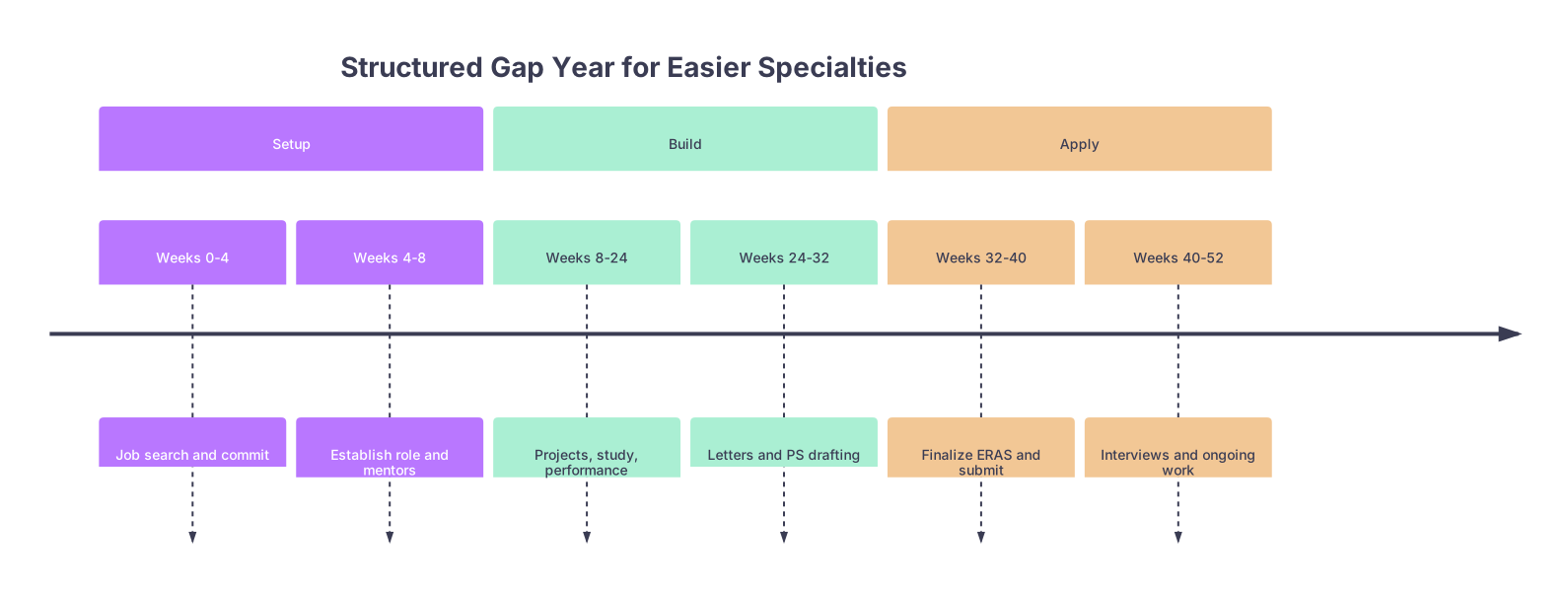
| Period | Event |
|---|---|
| Setup - Weeks 0-4 | Job search and commit |
| Setup - Weeks 4-8 | Establish role and mentors |
| Build - Weeks 8-24 | Projects, study, performance |
| Build - Weeks 24-32 | Letters and PS drafting |
| Apply - Weeks 32-40 | Finalize ERAS and submit |
| Apply - Weeks 40-52 | Interviews and ongoing work |
Specialty-Specific Tweaks (Because Details Matter)

Family Medicine / Pediatrics
By the time you apply, you should:
- Have real outpatient continuity exposure: chronic disease follow-up, preventive care, vaccines.
- Show interest in underserved or community work if possible.
Best gap-year roles:
- Community clinic assistant/physician extender
- Research in primary care outcomes, prevention, or health disparities
- QI on chronic disease management or vaccination
Psychiatry
You need to look like you understand mental health at the ground level, not just fascinated by “the mind.”
Ideal roles:
- Psych research assistant (mood disorders, psychosis, addiction)
- Inpatient psych unit staff / psych tech / scribe
- Outpatient psych clinic support, group therapy coordination
Must-haves:
- Direct psych clinical exposure
- At least 1 psych attending letter
- Ability to talk about safety, boundaries, and team-based care
Community Internal Medicine
You’re selling reliability + breadth.
Good roles:
- Hospitalist research / QI assistant
- Outpatient IM clinic staff
- Transitions-of-care projects, readmission projects
Show:
- Comfort managing common IM problems
- Respect for community-based practice, not just tertiary buzzwords
PM&R
Most applicants here are semi-confused or lightly injured athletes. You can beat them by clarity.
Strong roles:
- Rehab hospital work (stroke, spinal cord injury, TBI)
- Sports medicine or pain clinic support
- PM&R research (functional outcomes, MSK, neurorehab)
You need:
- 1–2 PM&R attendings who know you well
- Ability to talk about function, not just disease
Daily and Weekly Micro-Habits That Compound
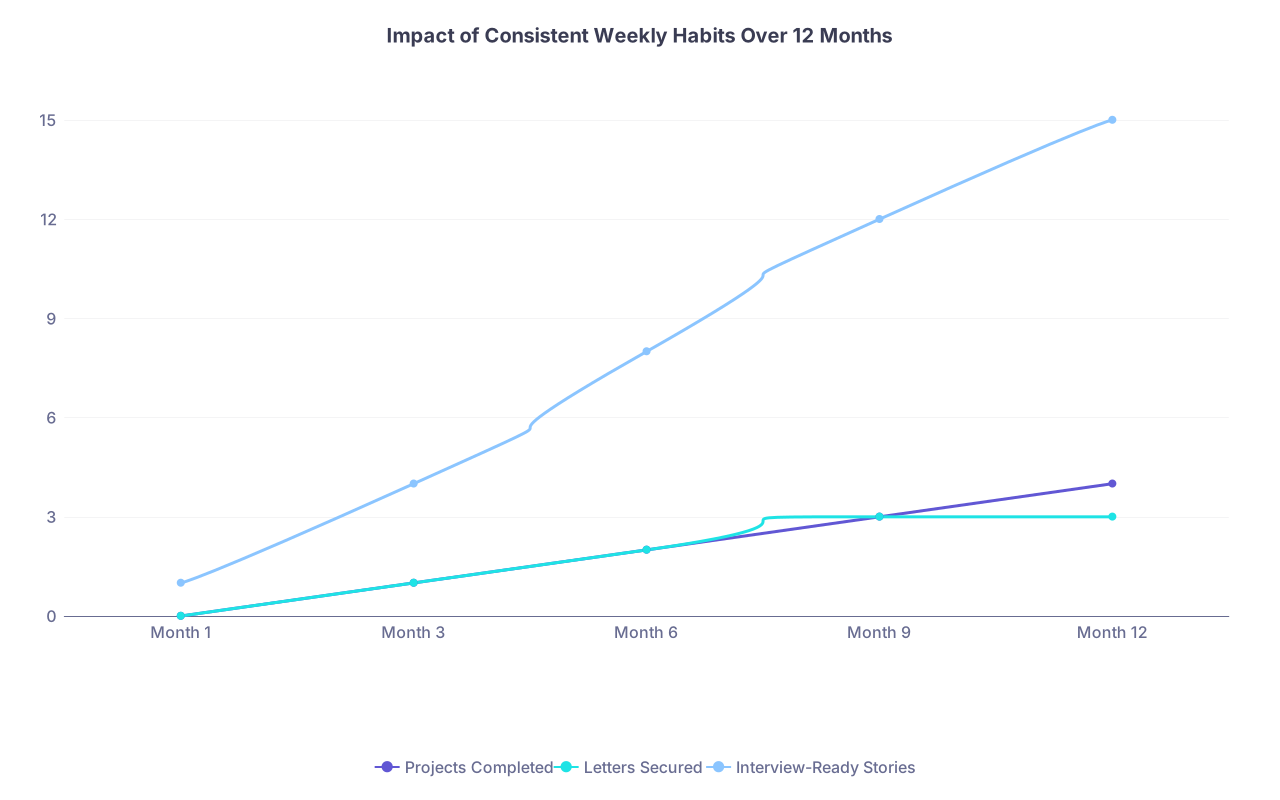
| Category | Projects Completed | Letters Secured | Interview-Ready Stories |
|---|---|---|---|
| Month 1 | 0 | 0 | 1 |
| Month 3 | 1 | 1 | 4 |
| Month 6 | 2 | 2 | 8 |
| Month 9 | 3 | 3 | 12 |
| Month 12 | 4 | 3 | 15 |
At this point you should stop overcomplicating the day-to-day. Do this instead:
Daily (work days):
- Show up on time, every time.
- Write down 1 interesting patient, project, or situation each day. One sentence.
- Ask 1 micro-question to a resident or attending that shows engagement.
Weekly:
- 2–3 hours: Reading / studying in your specialty
- 2–4 hours: Project progress
- 15 minutes: Update a running “accomplishments” document
That “accomplishments” doc becomes:
- ERAS entries
- PS details
- Interview stories
Most applicants rely on memory and end up sounding generic. You will not.
Final Reality Check
You do not need a perfect year. You need a coherent one.
By the end of this gap year, for a less competitive field, you should be able to say, without blinking:
- “I spent the last year working full-time in [X setting], where I [Y concrete responsibilities].”
- “I completed [1–3 projects] that led to [posters/QI changes/abstracts] and showed me [Z about the specialty].”
- “My mentors in [Specialty] know my work and have written letters that reflect who I am now, not who I was when I struggled.”
If you can honestly say those three sentences, you’ve just turned a gap year into a weapon instead of a pause. That’s how you walk into an “easier” specialty and still look like an obvious choice.