
The fantasy that a perfect letter of intent can magically fix a flat interview is dangerous.
But the idea that a flat interview automatically killed you is also wrong.
Both extremes are lies students tell themselves when the anxiety gets loud. So let’s walk straight into the uncomfortable middle: your interview felt mediocre, you’re spiraling, and you’re wondering if a strong letter of intent (LOI) can actually rescue you—or if you’re just rearranging deck chairs on the Titanic.
First: Your Interview Felt Flat… But Did It Really?
Let me be blunt: applicants are absolutely terrible at judging how their interviews went.
I’ve watched this play out over and over:
- The “I bombed it” applicant who ends up matching at that exact program.
- The “I crushed it, they LOVED me” applicant who never even gets ranked high enough to match.
- The “eh, it was ok I guess” applicant who winds up ranked in the top 5.
You’re not in the room when they compare notes. You don’t see the faculty filling out their scoring forms. You don’t hear the PD say, “She was a little quiet at first, but I really liked how thoughtful she was about X.”
In your head, it’s: “I didn’t make them laugh. I stumbled on one answer. I didn’t have some dramatic story. So I’m doomed.”
From their side, it might be: “Solid candidate, no red flags, good fit, might be a bit reserved but seems reliable.”
Totally different story.
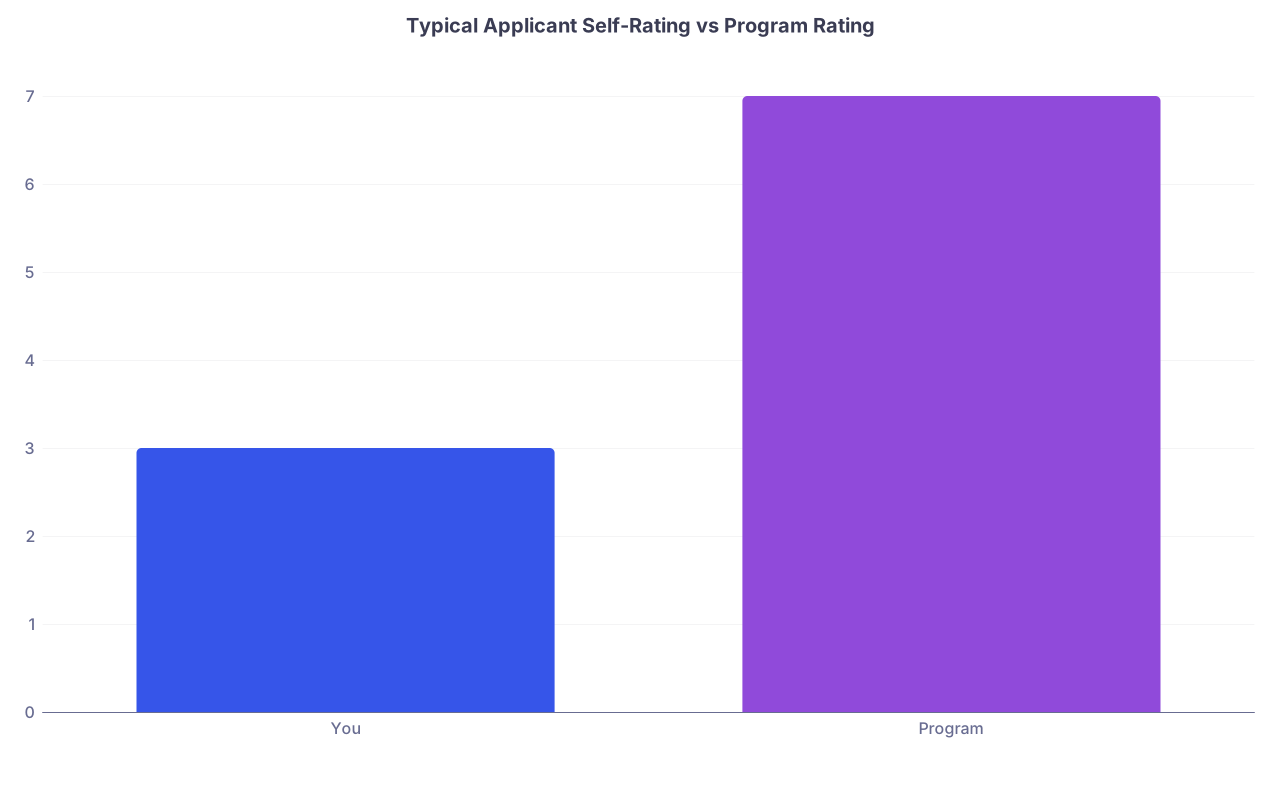
| Category | Value |
|---|---|
| You | 3 |
| Program | 7 |
Look at it this way: your internal score right now is probably like a 3/10 (“flat, awkward, I think they hated me”). Their actual score might be 6–8/10 (“good, not the absolute standout of the season, but solid”). And guess what? People match from the “solid” pile every single year.
So no, your interview feeling flat does not equal “I’m dead in the water.” But also, yes, a smart LOI can help—within limits.
What a Letter of Intent Can and Can’t Do
Let’s tear off the Band-Aid.
A letter of intent cannot:
- Turn a clear disaster into a guaranteed rank bump
- Overcome major red flags (unprofessional behavior, massively weird answers, obvious disinterest)
- Magically place you above their internal “cutoff” if you truly weren’t a fit or were scored very low
But a letter of intent absolutely can:
- Nudge you up within a cluster of similar applicants
- Remind them you exist in a sea of “fine” interviews
- Reinforce genuine fit and alignment with their values
- Correct one or two impressions that might’ve been off (subtly—not with a defensive essay)
- Show maturity, thoughtfulness, and commitment
Programs don’t sit around saying, “We hated this person, but gosh, what a letter—put them at #2!” That’s fantasy.
What they do say is more like:
- “We have 15 people in this middle group; who are we actually excited about?”
- “Who seems most likely to come here if we rank them?”
- “Who clearly understands and values what we are?”
A strong LOI can help you be one of those names they’re actually talking about, not just a line in a spreadsheet.
The Quiet Truth About “Flat” Interviews
Here’s the thing nobody tells you before interview season: a lot of interviews are just… fine.
Not amazing. Not catastrophic. Just fine.
You’re watching social media and group chats where everyone is posting:
- “We vibed SO HARD”
- “They said I’d be a great fit!!”
- “The PD remembered my research!!”
You’re sitting there replaying the 3 seconds where you said “um” too many times and thinking, “Well. That’s it. I’m done.”
Reality: programs interview way more people than they can rank in the top tier. They expect many interviews to be neutral. That’s normal.
Where your LOI comes in is here:
- Neutral interview + strong file + genuine interest + clear LOI
often beats - Slightly more charming interview + vague interest + no communication.
Not always. But often enough that it matters.
Should You Even Send an LOI After a Flat Interview?
You’re probably stuck in this loop:
“If I send an LOI, I’ll seem desperate.”
“If I don’t send an LOI, they’ll think I don’t care.”
“If I’m not their #1 anyway, what’s the point?”
“What if I say they’re #1 and don’t match—was it a lie?”
Here’s my blunt take.
Send a letter of intent if:
- This program is genuinely one of your top choices (ideally #1, or at least clear top 3)
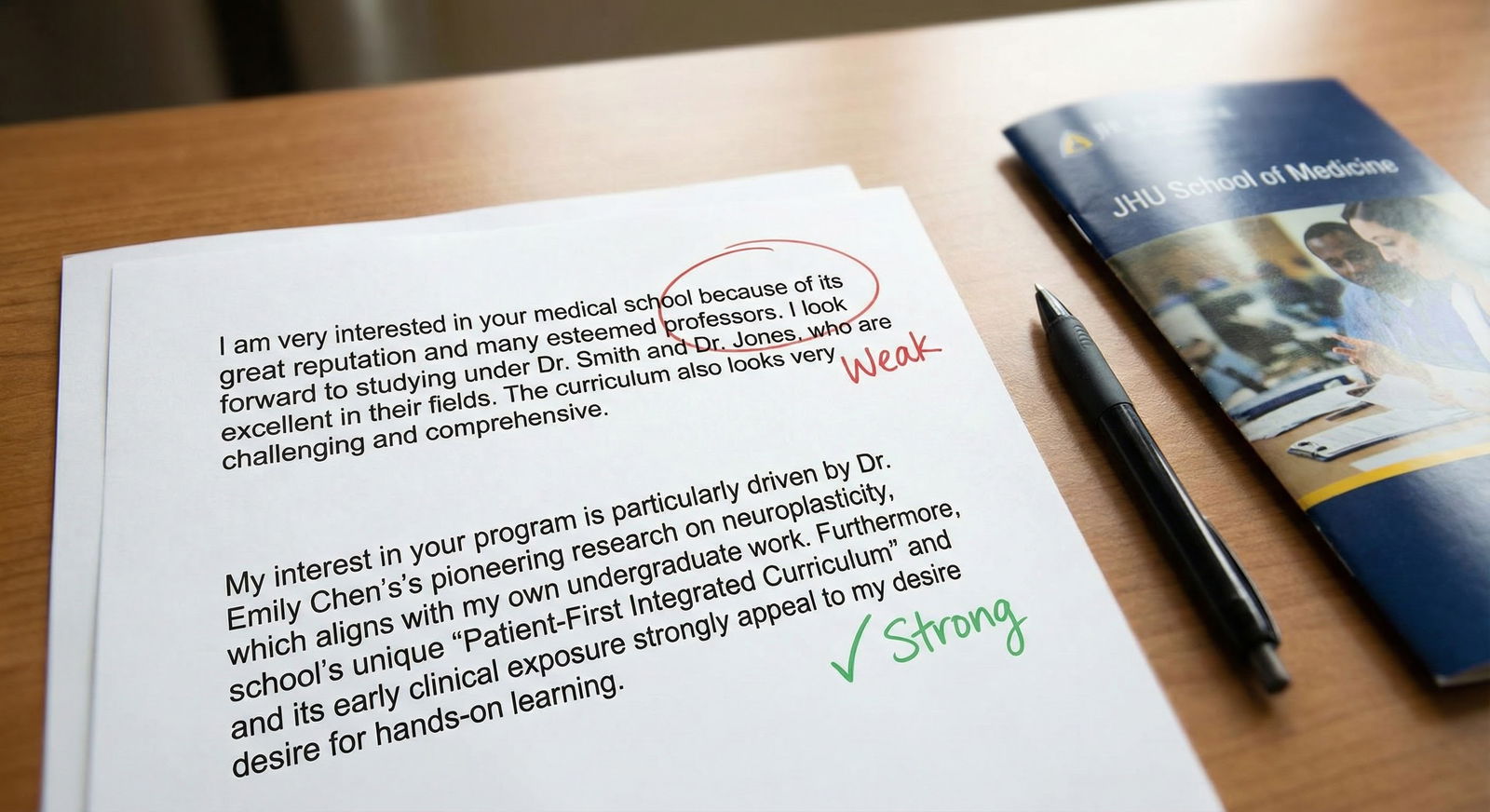
- You can clearly articulate why it’s a great fit beyond “great training and supportive environment”
- You’re willing to back it up by ranking them very highly
Don’t send an LOI if:
- You don’t actually see yourself there unless you “have to”
- You’re just panicking and blasting LOIs to every place
- You’d be lying about them being your #1 (if you use that language)
There’s also the in-between option: a letter of strong interest (no “#1” promise) that still shows meaningful enthusiasm and specifics. That’s totally legitimate and less ethically fraught.
| Type | When to Use | Commitment Level |
|---|---|---|
| True LOI (#1 program) | Clear top choice only | Very High |
| Strong interest letter | Top tier but not #1 | Medium |
| Generic thank-you email | Any program you liked | Low |
How to Write an LOI That Actually Helps (Not Hurts)
You’re terrified you’ll send the wrong thing and annoy them. Reasonable fear. Programs do get annoyed by:
- Obvious copy-paste generic letters
- Overly long essays that read like a second personal statement
- Desperate or clingy tone (“I’ll do anything to be there”)
- Multiple conflicting LOIs (“You’re my #1”… sent to 4 places. And yes, sometimes they find out.)
Here’s what a strong, post-flat-interview LOI should do:
- Reaffirm interest clearly and briefly
- Show you understood their program
- Connect your actual experiences to their actual features
- Gently “reactivate” the memory of your interview
Rough structure:
Direct opening
- “Thank you again for the opportunity to interview with [Program]. After our conversations and time with the residents, [Program] has become my top choice / one of my top choices for residency.”
Specific program fit
- Mention 2–3 concrete things you learned or saw: rotation structure, patient population, teaching style, niche tracks, wellness that actually isn’t fake, etc.
You + them connection
- Tie those specifics to experience you already have: “My work with [X] made [Y aspect of your program] especially appealing…”
Gentle callback to interview
- A brief reference: “I appreciated discussing [topic] with Dr. [Name] and reflecting more on that conversation has reinforced my interest…”
Clear closing commitment
- For true LOI: “If given the opportunity, I would be honored to train at [Program] and plan to rank it first on my list.”
- For strong interest: “I would be honored to train at [Program] and it will be ranked very highly on my list.”
Keep it to around 300–500 words. This is not your magnum opus. It’s a nudge, not a manifesto.

| Step | Description |
|---|---|
| Step 1 | Interview feels flat |
| Step 2 | Draft focused LOI |
| Step 3 | Draft strong interest letter |
| Step 4 | Send brief thank you only |
| Step 5 | Highlight specific program fit |
| Step 6 | Send within 1-2 weeks of interview |
| Step 7 | Program top choice? |
“But What If I Sound Fake or Try-Hard?”
Honestly? The bar is lower than you think.
Programs know you’re trying to make a good impression. They know you’re anxious. They read hundreds of these. The ones that stand out negatively are:
- Wildly overdramatic (“Matching here has been my life’s dream since childhood”)
- Super vague (“I really appreciate your commitment to excellence”)
- Clearly copy-pasted with the wrong program name (it happens more than you think… and yes, they remember)
The ones that help are:
- Specific but not flowery
- Confident but not arrogant
- Grateful but not groveling
You’re afraid any assertive statement of interest will seem desperate. It won’t. Saying, “Your program is my top choice” is not desperate. Saying, “I will be devastated if I don’t match at your program and don’t know what I’ll do” is.
Big difference.

Let’s Talk About the Worst-Case Scenario You’re Secretly Obsessed With
You’re here because the intrusive thoughts are already going:
“What if that was my only realistic shot and I blew it?”
“What if the LOI annoys them and they drop me?”
“What if I don’t match anywhere?”
“What if my flat interview proves I’m just not the kind of person who does well in medicine?”
Here’s the reality you don’t want but need:
If that interview truly wrecked your chances, an LOI won’t fix it—but it also won’t meaningfully hurt you. Programs rarely go, “We liked them, but wow, that thank-you letter? Drop them 20 spots.”
If you’re in that huge middle blob of “fine, not a superstar, but solid,” then this is exactly where a clear, sincere LOI can help separate you a bit.
Your brain is treating this as a referendum on your entire future. Programs are treating it as one of many data points in a giant, messy, human process where they’re also stressed and guessing.
You’re catastrophizing based on a feeling about a single day. They’re ranking based on:
- Application
- Letters
- Scores (when applicable)
- Interview impressions
- Fit with their priorities
- Institutional needs you will never hear about
Your LOI is just one more small data point. Not the hero. Not the villain. A tool.
Timing: When to Send It So It Actually Matters
You’re probably wondering if you already “missed the window” or if sending it too early looks creepy.
General rule of thumb:
- Thank-you email: within 24–72 hours after interview
- LOI / strong interest letter: usually 1–3 weeks after interview, and definitely before their rank list meeting
If you’re later in the season and you know they’re finalizing their list soon, send it now. Today. Not after three more days of editing a comma.
If it’s been a while (like over a month), you still can send something, especially if you have:
- A new update (publication, award, project milestone)
- Added clarity that they are your top choice after finishing all interviews
It’s not an exact science, and programs vary. But the worst thing is doing nothing purely out of fear you’ll “bother” them. A concise, respectful email isn’t bothering them.
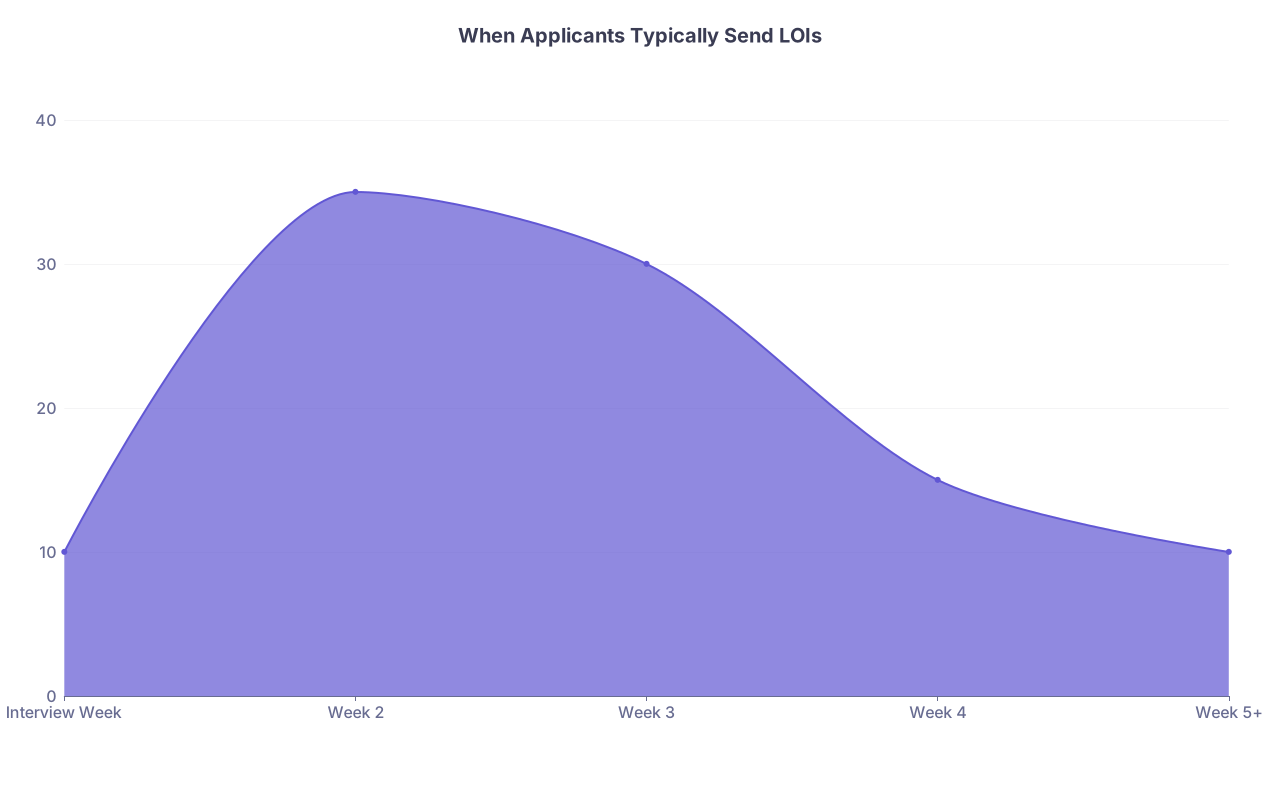
| Category | Value |
|---|---|
| Interview Week | 10 |
| Week 2 | 35 |
| Week 3 | 30 |
| Week 4 | 15 |
| Week 5+ | 10 |
The Quiet Upside You’re Ignoring
You’re so locked into the “rescue me or I’m doomed” frame that you’re missing the other benefit: writing an LOI can actually help you.
It forces you to:
- Clarify what you actually want in a program
- Articulate why this place makes sense for you
- Move from vague panic to specific reasons and plans
Even if it doesn’t change your rank position at that program, it sharpens your thinking for:
- Other communications
- Rank list decisions
- Future interviews (if you’re still in the season)
And psychologically, it moves you out of learned helplessness (“it’s all out of my hands”) into intentional action (“I did what I reasonably could”).
That doesn’t fix all the anxiety. But it quiets a certain kind—the regret kind.
You want to look back and say, “I did everything reasonable,” not, “I was so scared of annoying them that I ghosted the entire process.”

FAQ (Exactly 4 Questions)
1. Can a strong LOI move me from “probably not ranked” to “ranked”?
Sometimes, but not always. If you were already on the bubble—like “we liked them but not sure where they fit”—an LOI can push you into the ranked group. If you had a truly poor interview or big red flags, an LOI usually isn’t enough to drag you from “no” to “yes.” Think of it as a tiebreaker and reminder, not a miracle worker.
2. Is it unethical to tell more than one program they’re my #1 choice?
Yes. Don’t do that. Programs talk sometimes. But even if they didn’t—you’re the one who has to live with that. If you can’t honestly call it your #1, use “ranked very highly” or “top choice” language without promising they’re first. You don’t need to game the wording; just don’t lie.
3. What if the program says they don’t consider post-interview communication?
Still send a brief, sincere thank-you at minimum. Some programs officially say they don’t factor it in for fairness reasons, and they may genuinely try not to. But human beings read your emails. A thoughtful, concise LOI or strong interest note can still shape how they remember you, even if they won’t say, “We moved them up three spots because of this.”
4. My interview felt flat because I was anxious and quiet—should I explain that in my LOI?
Very carefully, if at all. A long apology for being anxious just spotlights it. At most, you can say something like, “I tend to be more reflective in new settings, but my time with your residents reinforced how much I’d value training in a community like yours.” Then focus 90% of the letter on fit, interest, and specifics about the program. Don’t turn it into a self-critique.
Open your email drafts today and start a specific LOI to the one program that genuinely sits at or near the top of your list—then write 3 bullet points on why it’s a real fit for you, not just a panic choice.