
Last December, an applicant sent a beautifully written, heartfelt letter of intent to a mid-tier IM program. The coordinator opened it, glanced for three seconds, muttered “no subject line, of course,” flagged it as “misc,” and moved on to answering credentialing emails. That student genuinely loved the program. Nobody who mattered ever actually read the full email.
Let me walk you through what really happens when your letter of intent hits a residency program’s inbox—specifically, what the coordinator sees first and decides in those first 5–10 seconds.
The Unromantic Truth: Your Email Arrives in a War Zone
Here’s the mental picture you need.
Coordinators in January–February aren’t sitting around thoughtfully opening each email with tea and soft music. They’re working in a digital war zone. Hundreds of emails. IRB reminders, schedule changes, sick calls, angry applicants, GME deadlines, ERAS updates, faculty who “can’t log in again,” chief residents pinging them every 10 minutes.
Into that chaos lands your “very important” letter of intent.
And here’s the part applicants do not understand: for most programs, the coordinator is the first, and sometimes only, person who will see your message. If you do not pass the coordinator filter—organized, relevant, easy to triage—your beautifully crafted letter never gets in front of the PD or APD in any meaningful way.
So what do coordinators actually notice first?
Not your feelings. Not your detailed explanation of why you loved the noon conference. They notice structure, signals, and work for them vs. work against them.
Let’s go in order of what appears on their screen.
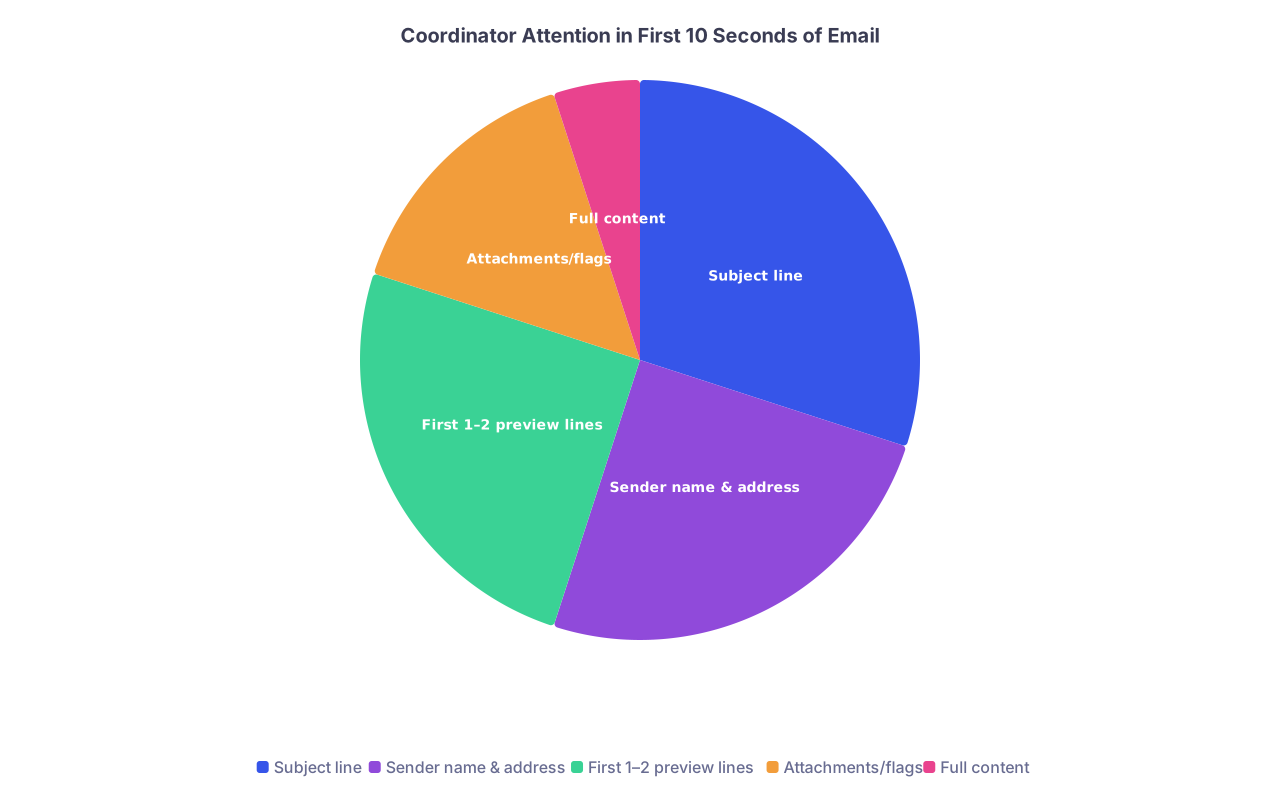
| Category | Value |
|---|---|
| Subject line | 30 |
| Sender name & address | 25 |
| First 1–2 preview lines | 25 |
| Attachments/flags | 15 |
| Full content | 5 |
1. The Subject Line: Your First Gatekeeper
Most coordinators live in Outlook or something similar with the preview pane open and dozens of unread messages. They’re scanning subject lines at high speed.
They’re not reading. They’re pattern-matching.
Here are the subject line patterns that immediately register as “relevant” to a coordinator during rank season:
- “Letter of Intent – [Your Name] – [Specialty] Applicant”
- “Update and Letter of Intent – [Your Name], [AAMC ID]”
- “[Program Name] – Letter of Intent from [Your Name]”
Short, labeled, and clearly about the match. That’s what makes them pause and click.
What do they notice first when the subject line is bad?
Vague: “Thank you” / “Follow up” / “Question”
Translation in coordinator brain: Could be anything. Low priority.Emotional or salesy: “My strong interest in your amazing program!”
Comes off unprofessional and high-maintenance before they even open it.Desperate: “Please read – important for my future”
This signals drama. Nobody wants drama in February.Empty: “(no subject)”
This screams disorganization. You lose professionalism points instantly.
You want the coordinator’s brain to do this:
“Okay, letter of intent, this is about the match, I know which folder or PD to send this to.”
Not:
“What is this? Do I open it now or later? Who is this person? Why is this my life?”
2. Your Name and Email Address: Are You a Real Adult?
Next scan: “From” line.
Coordinators absolutely notice your display name and email address. I’ve heard this exact phrase more than once:
“I’m not forwarding anything to a ‘prettyboi89’ Gmail.”
They care less about the exact domain (Gmail vs school) and more about whether you look like a functioning adult human. Here’s what jumps out first:
Professional:
- “Alex Chen”
- “Alex Chen, MD Candidate”
- “Alex Chen – Med Student”
Neutral but fine:
Red flag or eye-roll:
- Nicknames: “Dr Alex FutureMD,” “ERDoc2Be,” “cardio_king”
- Joke handles: “thelegend27,” “soccerstar4ever”
- Couples/Shared accounts: “johnandkate123”
Does it get you automatically rejected? No. But it changes the tone. If you’re asking for a favor—a PD’s attention during rank list time—don’t make the coordinator feel like they’re dealing with a college freshman.
And yes, coordinators absolutely remember repeat offenders: “Is that the person who kept emailing from that weird address?” is a real sentence I’ve heard.
3. The Email Preview Line: Where You Lose or Keep Them
On most inbox views, coordinators see your subject line and the first 1–2 lines of your email body as a preview. Often before they even click.
Those first two lines are prime real estate. And you’re wasting it if you open with:
- “I hope this email finds you well.”
- “My name is [Name] and I am a fourth-year medical student applying to [specialty].”
- “First, I want to thank you again for the opportunity to interview…”
That entire paragraph is white noise to them. They already know you’re a fourth-year. They know you applied. They know you interviewed. They were the one scheduling your interview.
You want the preview to scream quickly:
Who you are + what this email is + which program.
Something like:
“Dear Dr [PD Last Name] and [Program Name] Team, I’m writing to state that [Program Name] is my first choice and I will rank it #1 on my list.”
Now look at that from an inbox preview perspective:
Subject: Letter of Intent – Alex Chen – IM Applicant
Preview: “Dear Dr Lopez and Valley IM team, I’m writing to state that Valley is my first choice and I will rank it #1…”
The coordinator sees that and immediately knows:
- This is a letter of intent (not some random question)
- Applicant is clearly stating #1 intent
- This belongs in PD’s “maybe-care” pile, not in “later/misc”
They will at least open it. That’s all you can ask for.
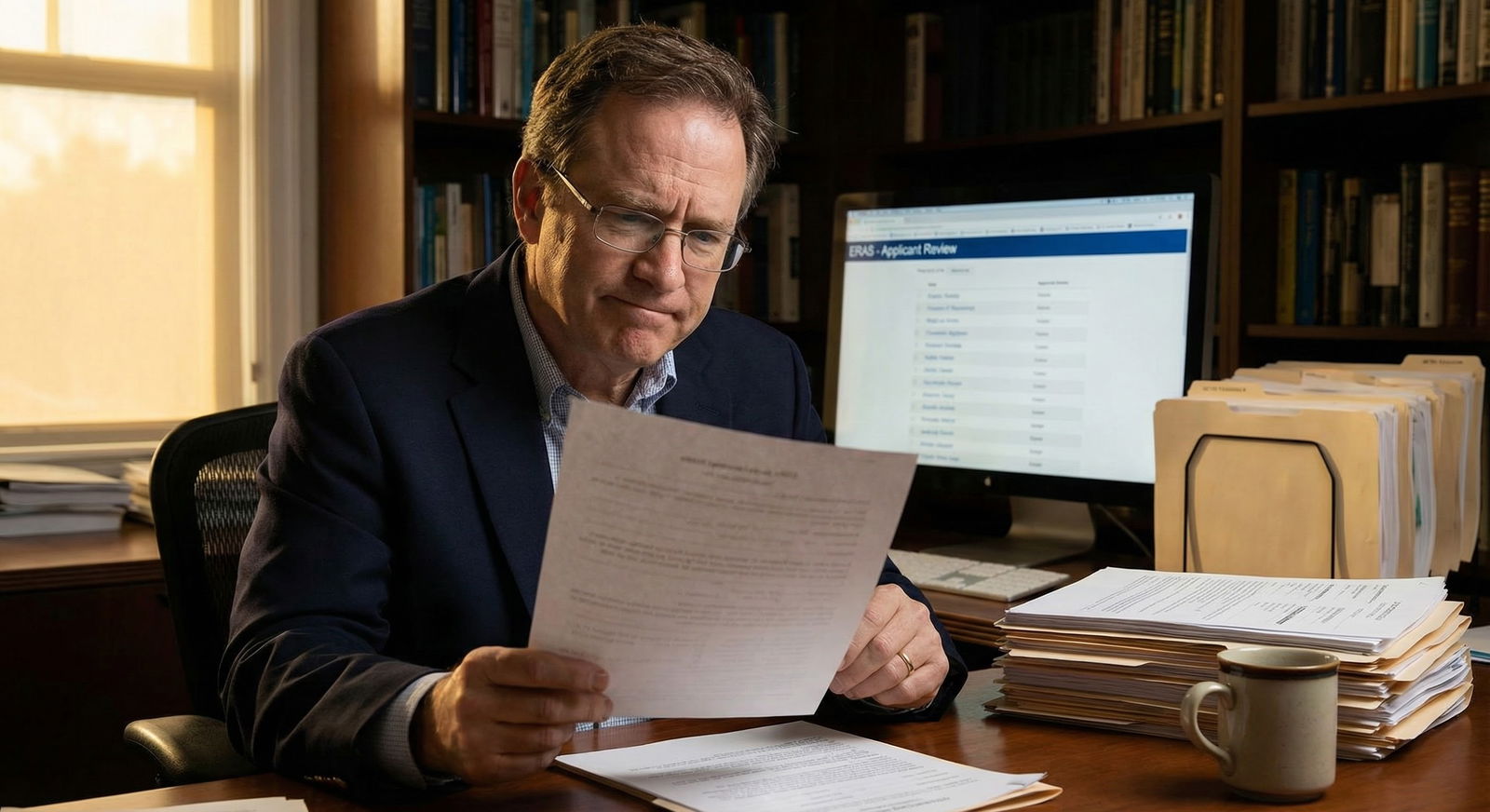
4. Formatting at First Glance: Does This Look Like Work?
Once the coordinator actually opens the email, their brain does a rapid-format scan before they truly read anything.
They’re subconsciously asking:
“How long is this?”
“Is this formatted?”
“Do I have to hunt for info?”
“Is this going to cause problems?”
There are a few instant visual cues that help or hurt you:
What helps you immediately
Short visible length. If they can see 80–90% of your email in one pane without scrolling, you get an unconscious bonus. It signals respect for their time.
Clear greeting and sign-off. “Dear Dr [PD Last Name] and [Program Name] Team,” followed by a clean closing with full name, AAMC ID, and contact info. This is triage gold for coordinators.
Normal font, no colors, no bold circus. Basic black 11–12 pt text. No weird signatures with inspirational quotes or gold cursive fonts.
Paragraphs, not one wall of text. 3–5 short paragraphs that visually break up the page.
What triggers an internal sigh
I’ve heard this one more times than you’d think: “If I have to scroll more than a screen and a half, I’m out.”
Giant blocks of text with no breaks. Their eyes glaze in one second.
Formatting disasters from copy-pasting a Word document. Strange fonts, random spacing, giant margins.
Attachments of “letter_of_intent.docx” when the email body already says the same thing. Now they have to open, download, save? Work.
Emojis, colored text, huge signature banners, photos or logos. This is not a marketing newsletter.
Honestly, coordinators aren’t grading you like an English teacher. They’re asking: “Is this clean, readable, quick to forward, and easy to reference later?”
If the answer is yes, you’re ahead of half your competition instantly.
5. Salutation and Who You Address: Signals of Effort and Respect
Here’s a detail applicants underestimate: who you address and how.
Coordinators notice if you bothered to learn the PD’s name and spell it correctly. It signals investment and basic diligence. They also notice when you hedged with “To Whom It May Concern” in February, after you’ve already interviewed.
Strong opening signal:
“Dear Dr Robinson, Dr Patel, and the [Program Name] Residency Team,”
or simply,
“Dear Dr Robinson and [Program Name] Internal Medicine Residency Team,”
This tells the coordinator:
- You know who runs the program.
- You treat the whole team (including them) as part of that entity.
- You’re not firing off a generic broadcast email.
Weak or lazy opening:
- “To Whom It May Concern,”
- “Dear Program Director,”
- “Dear Sir/Madam,”
- Or worse, the wrong PD name from a different program because you copied and pasted.
I’ve seen coordinators forward those with a comment: “Wrong PD. Again.”
You get labeled as careless. That label sticks.
Also: including the coordinator’s name in the greeting (“…and Ms Jones”) doesn’t necessarily help as much as you think. Most coordinators appreciate being respected, but forced flattery is unnecessary. Just address the PD and “team” or “residency program.” That’s enough.
6. The First Sentence: Are You Clear or Are You Performing?
Once they’ve decided this email is legitimate and opened it, the coordinator is looking for your first real sentence to tell them what category this goes into.
They are mentally sorting you into buckets:
- Letter of intent (true #1)
- Strong interest but not explicit #1
- Update only
- Problem/drama
- Generic thank-you
If your first sentence is a paragraph of emotional backstory, they’re stuck. They don’t know what this is yet. So they skim or postpone.
You want your first line to answer, immediately:
Are you declaring this program #1 on your rank list? Yes or no.
Strong examples:
“I’m writing to state clearly that [Program Name] is my top choice and I will be ranking it #1 on my list.”
or
“I remain extremely interested in [Program Name] and want to reaffirm that it is my first choice for residency training.”
This gives the coordinator a quick classification: “True LOI, #1.”
They know which PD folder or category this belongs in. And yes, many programs have some version of this. Outlook rules, PD folders, or mental categories where intent emails get stored.
Weak first lines that slow them down:
“Thank you again for the opportunity to interview at your esteemed institution. I was honored to meet your wonderful residents and faculty…”
It reads nice. It does not help the coordinator do their job.
What they notice first is: “I have to read a whole paragraph before I know what this is.”
They do not have that kind of time in rank week.

| Step | Description |
|---|---|
| Step 1 | Email Arrives |
| Step 2 | Open Email |
| Step 3 | Low priority or ignore |
| Step 4 | Skim or delay |
| Step 5 | Forward to PD as LOI |
| Step 6 | Forward or file as interest |
| Step 7 | Subject clear? |
| Step 8 | Short and formatted? |
| Step 9 | States #1 clearly? |
7. Coordinator Mental Notes: The Stuff They’ll Never Say Out Loud
Coordinators don’t write “professionalism scores” on you, but they absolutely form impressions that they occasionally share with PDs and APDs. Usually informally. Hallway comments. Quick side notes.
Things they notice and occasionally mention:
You send five follow-up emails over two weeks “just to check you received my letter.” That reads as anxious and high-maintenance. Coordinators remember that.
You email from three different accounts with three differently formatted signatures. Disorganized.
You spell the PD’s name wrong multiple times or use the wrong program name (“I would be honored to train at Mercy” when you interviewed at Methodist). Sloppy.
You send your LOI to BCC: multiple programs with obvious copy-paste language. One coordinator actually held up her screen and said to me: “Why do they think we don’t talk to other programs?”
Do PDs always care? Depends on the PD. Some ignore all of it. Some absolutely ask their coordinator, “Anything weird from this applicant?” when they’re splitting hairs on the rank list.
The coordinator is your first character reference. Treat them that way, even if you never meet them.
8. What Actually Gets Forwarded vs. Quietly Buried
Here’s the uncomfortable truth: not every letter of intent gets handed to the PD in a meaningful way.
Patterns I’ve seen consistently get elevated:
- Clear subject line + explicit #1 declaration in the first two lines
- Concise email (3–6 short paragraphs, no fluff)
- Clean formatting with AAMC ID and full name at the bottom
- You interviewed there and were at least decent on interview day
Emails that get “read but not really moved up the chain”:
- “I loved your program, you’re in my top three” vague intent emails
- Multi-page life story letters
- LOIs sent to prelim programs that don’t change how they rank
- Mass-blast “I’m very interested” messages sent obviously to multiple places
And then there’s the worst category: emails coordinators immediately classify as noise:
- Generic thank-you notes in February with no actual message
- Very long, emotionally heavy emails with personal crises and guilt trips
- Pressure (“I need to know if you’ll rank me highly so I can decide where to rank you”)
- Daily check-ins, calls, or attempts to leverage internal faculty to harass the program
I’ve watched coordinators quietly decide: “This one is going to be trouble.”
That’s not a list you want to be on.
| Element | Fast Positive Signal | Fast Negative Signal |
|---|---|---|
| Subject line | Clearly labeled “Letter of Intent – Name” | Vague, emotional, or missing subject |
| From line | Professional name and email | Immature or joke address |
| Preview text | States #1 intent early | Generic thanks / “hope you are well” |
| Length/format | Short, clean, readable in one screen | Wall of text, odd fonts, attachments |
| First sentence | Clear purpose (#1 rank or strong intent) | Long narrative, no clear ask |
9. The Future Angle: Why This Will Matter Even More
You asked about “miscellaneous and future of medicine,” so let me zoom out a bit.
Programs are drowning. Every year more emails, more applicants, more noise. PDs increasingly rely on filters—human and digital. Coordinators, screening rules, templates.
As more programs lean into holistic review and try to humanize the process, the paradox is this: they depend on coordinators even more to pre-sort the flood of communication.
That means:
- Clear, structured, easy-to-triage emails will get more weight.
- Sloppy, confusing, long-winded emails will be penalized harder because no one has time to rescue your content from your formatting.
I’m already seeing some programs move toward semi-structured processes:
- Auto-replies with instructions: “If you’re sending a letter of intent, please use subject line format X and include your AAMC ID.”
- Internal spreadsheets where coordinators log “LOI received from [Name], #1” and PDs glance at that instead of opening everything.
- PDs explicitly telling coordinators: “Flag anyone who clearly states we’re their #1 and interviewed well; ignore the generic ‘very interested’ ones.”
So the first impression your email makes on a coordinator isn’t a side detail anymore. It’s becoming the gating factor for whether your message counts at all.
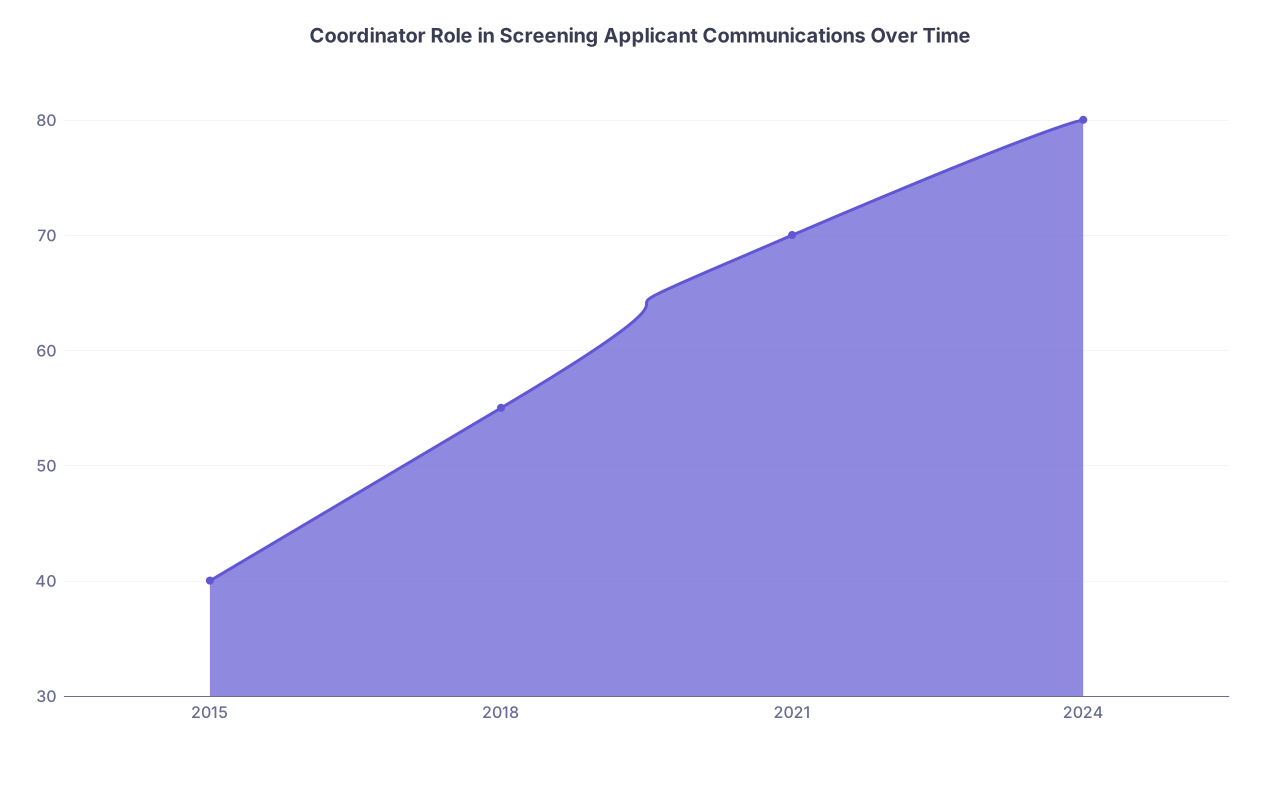
| Category | Value |
|---|---|
| 2015 | 40 |
| 2018 | 55 |
| 2021 | 70 |
| 2024 | 80 |
That “future of medicine” everyone writes essays about? It includes tired coordinators guarding the inbox and silently determining which applicants get seen as serious professionals.
Quick, No-Nonsense Blueprint
If you want your letter of intent email to survive the coordinator gauntlet, build it to hit their first impressions cleanly:
Subject:
“Letter of Intent – [Your Name] – [Specialty] Applicant”
First line:
“Dear Dr [PD], I’m writing to state that [Program Name] is my first choice and I will be ranking it #1 on my list.”
Body:
2–3 short paragraphs: specific reasons (fit, values, features you actually observed), one sentence on what you bring, one sentence reaffirming your #1 status.
Closing:
“Thank you for your time and consideration.”
Your full name, medical school, AAMC ID, phone, email.
No attachments. No drama. No begging. No life story.
Let the coordinator look at it and think:
“Clear, professional, easy to forward.”
That’s the silent compliment you’re aiming for.