
The most damaging letters of intent are not the ones with bad wording. They are the ones sent at the wrong time.
You can write a beautifully crafted, heartfelt letter. If you send it at the wrong moment in the cycle, to the wrong program, under the wrong circumstances, it does not just get ignored. It can actively hurt you. I have watched applicants tank their chances at their top programs because they were impatient, misread timelines, or tried to “game” the system with premature or dishonest letters.
This is avoidable. If you understand the timing traps.
The Core Problem: You Think a Letter of Intent Is a Magic Fix
Here is the first mistake: believing that a letter of intent (LOI) is a lever you can pull whenever you feel anxious.
That is how you end up with:
- LOIs sent before interview season is even half over
- LOIs blasted to multiple programs at once
- LOIs sent so late they cannot possibly affect rank lists
- LOIs used as emotional reassurance rather than strategic communication
A letter of intent is not therapy. It is not a “last-ditch booster.” It is a narrow tool with an even narrower window where it can actually matter.
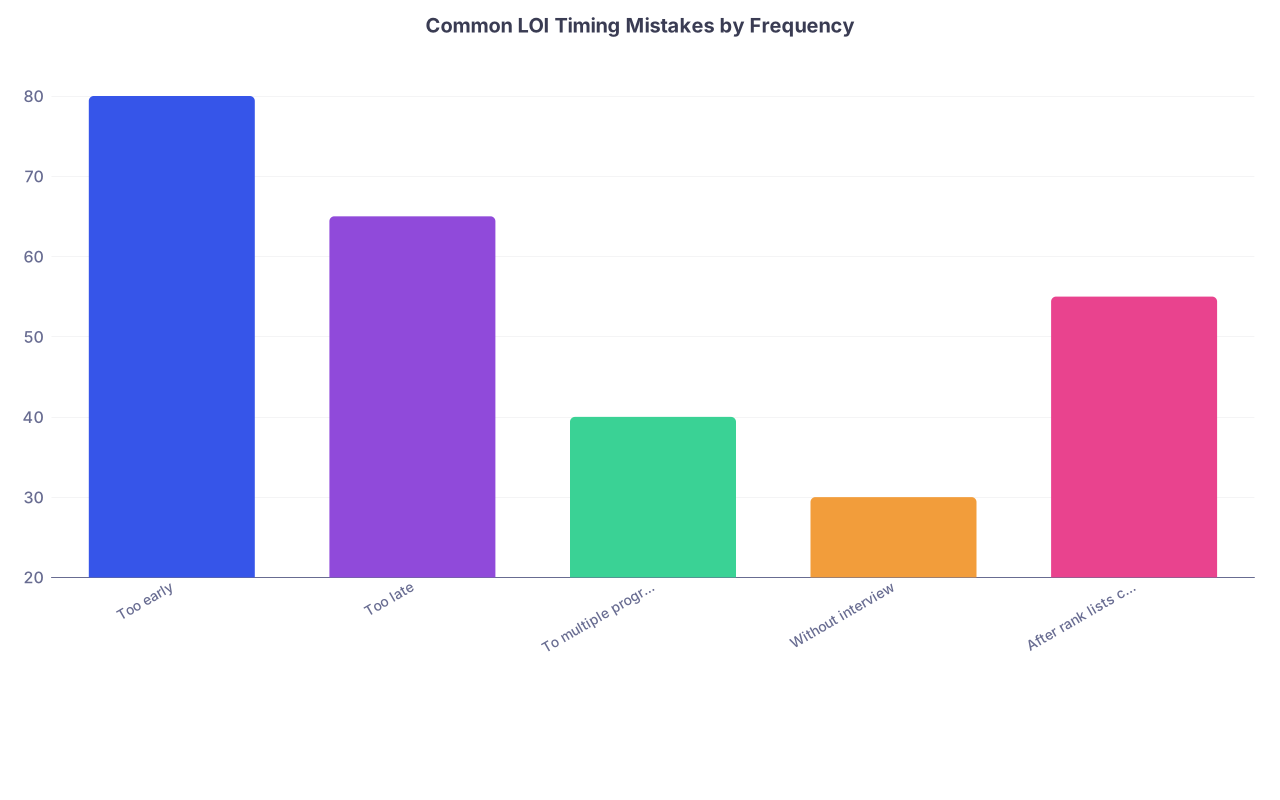
| Category | Value |
|---|---|
| Too early | 80 |
| Too late | 65 |
| To multiple programs | 40 |
| Without interview | 30 |
| After rank lists certify | 55 |
If you do not anchor yourself to the actual residency timeline and decision-making process, your timing will be wrong. And wrong timing turns “demonstrated interest” into “red flag.”
Mistake #1: Sending a Letter of Intent Before You Have Enough Data
Early January panic is real. You have a handful of interviews, a few you liked, and everyone online is screaming about “showing interest.” So you fire off a letter of intent to the program you think is your top choice.
Bad move.
Why early LOIs are risky
Before mid to late January:
- You often have not completed all your interviews.
- Your perception of programs is skewed by recency and fatigue.
- You have not had time to compare culture, training, geography, or personal factors.
- Program rank meetings are just starting or have not meaningfully begun in many places.
What happens when you send an LOI too early?
You lock yourself into a “top choice” before you really know.
Then a better-fit program surprises you in a later interview. Now you are either:- Dishonest to one of them, or
- Stuck keeping your original promise and regretting it.
Programs smell desperation.
An LOI that comes the day after your interview, especially if filled with generic praise, can read as:- Emotion-driven
- Poorly considered
- Copy-pasted
You blow your credibility window.
A program director is more likely to remember and respect an LOI that comes:- After you have clearly had time to think
- Within a plausible comparison window
Sending one too early tells them you are reacting, not deciding.
Safer timing principle
Do not send a genuine, program-specific LOI until:
- You have completed all, or almost all, of your interviews, and
- You have honestly ranked programs in your internal list, and this one truly sits at #1.
For most people, that means late January to early February, not early January.
Mistake #2: Firing Off a Letter of Intent Without an Interview
This one should be obvious, but it keeps happening every year.
Applicants send “letters of intent” to programs that never offered them interviews, often around:
- Late December, when interview invitations slow down
- January, when they realize some dream programs went silent
This almost never helps. It can absolutely hurt.
Why pre-interview LOIs are usually a mistake
From the program side:
- At many places, the interview list is essentially finalized by the time you panic.
- They have a surplus of competitive candidates. Your letter does not change their applicant pool.
- If they did not interview you, the data they have (scores, experiences, MSPE, letters) did not justify a spot. A late LOI rarely overrides that.
Worse, your “letter of intent” arrives framed like this:
- “You are my top choice even though I have never seen your residents work, never met your faculty, and never stepped into your hospital.”
- That screams either:
- Naive
- Dishonest
- Or not serious about fit
If you want to express interest pre-interview, fine. But that is a letter of interest, not intent. Those are different tools, and conflating them looks unprofessional.
What to do instead
If you are trying to get off the “no invite” list:
- Send a brief, polite letter of interest, not an LOI.
- Focus on:
- New, significant updates (Step scores, recent publications, major awards)
- Specific, credible reasons you are a fit for their program
- Do not state they are your “top choice” when you have never rotated or interviewed there.
If you have not been interviewed, you do not send a letter of intent. Period.
Mistake #3: Missing the Real Decision Window
The opposite problem: sending your LOI too late.
Here is what applicants often misunderstand. Programs do not all rank on the same date, but they have internal timelines that often cluster. By the time you are writing your carefully revised LOI in mid- to late February, many programs:
- Have already had their major rank meetings
- Have informally solidified their list
- Are only making minor tweaks—if any
And you are sending a “this is my top choice” letter into a process that is basically over.
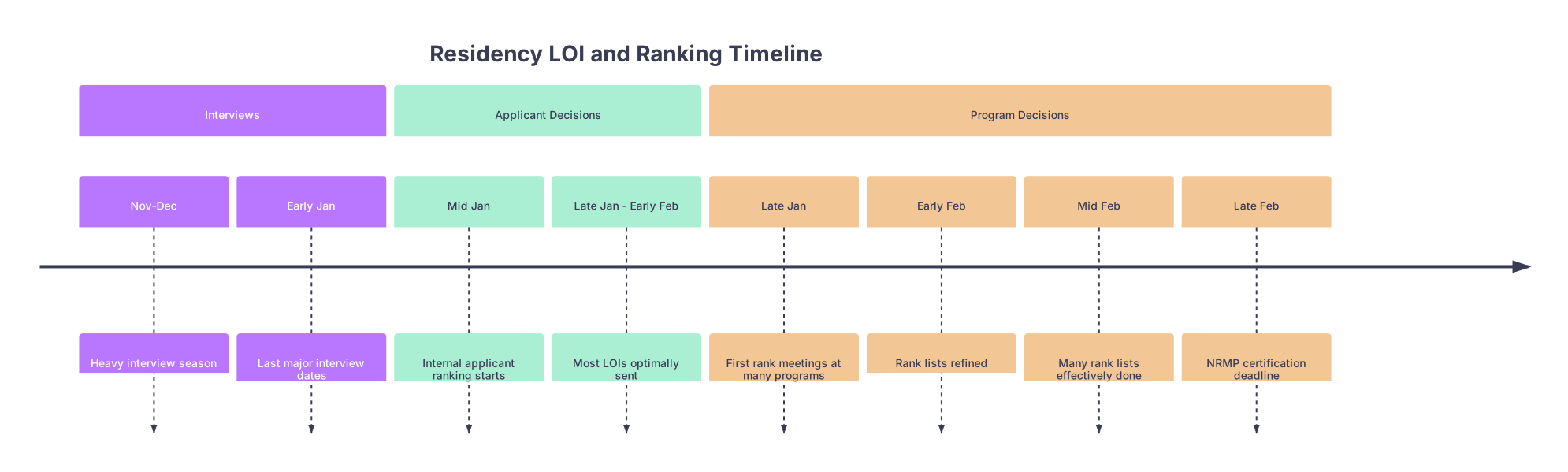
| Period | Event |
|---|---|
| Interviews - Nov-Dec | Heavy interview season |
| Interviews - Early Jan | Last major interview dates |
| Applicant Decisions - Mid Jan | Internal applicant ranking starts |
| Applicant Decisions - Late Jan - Early Feb | Most LOIs optimally sent |
| Program Decisions - Late Jan | First rank meetings at many programs |
| Program Decisions - Early Feb | Rank lists refined |
| Program Decisions - Mid Feb | Many rank lists effectively done |
| Program Decisions - Late Feb | NRMP certification deadline |
The “too late to matter” zone
Signs you are probably too late for your LOI to influence rank:
- The program has explicitly said rank meetings are complete.
- It is within a few days of the NRMP list certification deadline.
- Residents tell you, “Yeah, we finished ranking last week.”
Can some programs still tweak? Occasionally. But you are now betting on an exception, not a norm.
A late LOI is not evil. It is just wasted emotional energy. And in an emotionally brutal process like the Match, you cannot afford to waste that.
Safer timing guideline
For most programs:
- Optimal LOI window: About 2–3 weeks before NRMP rank list certification.
- Roughly: Late January through first half of February, depending on the year and specialty.
You do not need to send at the last possible moment to be “fresh in their mind.” You need to land before their major ranking decisions harden.
Mistake #4: Sending Multiple Letters of Intent and Getting Caught
If you want one sure way to raise red flags with program leadership, do this:
Tell two programs they are each your “unequivocal #1.”
People talk. Coordinators, APDs, PDs, residents. Programs within the same region, within the same specialty, within the same hospital system. I have heard the conversation more than once:
“Wait, I thought you said this applicant told us we’re their top choice?”
“Funny, they told us the exact same thing. Word for word, actually.”
And that applicant went straight down the rank list.
Why this is so destructive
- It destroys trust. If you are dishonest during the application process, what will you do with duty hours, documentation, or patient care?
- It makes you look transactional. “I just say whatever gives me an edge.” Programs do not want that energy in their resident clinics at 2 AM.
- It weaponizes your own words. The thing you tried to use to gain an advantage becomes the reason you are quietly downgraded.
| Letter Type | Target Programs | Acceptable Count |
|---|---|---|
| Letter of Intent | True #1 only | 1 |
| Strong Interest | Top 3–5 | 3–5 |
| Generic Thank You | Any interviewed | Many |
| Pre-interview Interest | Non-interviewed programs | Limited, selective |
You get one letter of intent. To one program. That is the definition of intent.
If you want to communicate strong interest to other places, use different language:
- “You are among my very top choices.”
- “I will rank your program highly.”
- “Your program will be near the top of my list.”
Those phrases are honest and non-deceptive. “You are my first choice” is not something you get to say twice.
Mistake #5: Using LOI Timing to Compensate for a Weak Application
I see this pattern every cycle:
- Weak Step scores
- Mediocre evaluations
- Limited home support
- And then a frantic late-season push of LOIs to “make up for it”
You cannot timing-hack your way out of an application that does not meet the bar for a program.
A perfectly timed LOI will not:
- Overturn a failed Step attempt for a hyper-competitive specialty
- Eclipse a poor MSPE full of professionalism concerns
- Magically erase the fact that your entire ERAS screams “this person does not actually care about our specialty”
Programs are not dumb. They see hundreds of applications. They rank dozens of students yearly. They have pattern recognition.
Where you can make a mistake, though, is letting your weak application create desperate timing:
- Sending LOIs way too early because you are terrified
- Spamming multiple programs with pseudo-LOIs
- Re-emailing or “following up” on an LOI in a pushy way
That will not fix your Step score. It may make them decide you are more trouble than you are worth.
Use LOIs to:
- Clarify genuine fit
- Communicate clear priorities
- Signal commitment when your app is already within range
Do not use them as panic tools.
Mistake #6: Ignoring Program Culture and Specialty-Specific Norms
Not all specialties treat LOIs the same way. Not all programs care about them to the same degree.
Some PDs:
- Barely read them
- Consider them background noise
- Care more about interview vibes and faculty feedback
Others:
- Actively track LOIs
- Bring them up explicitly in ranking meetings
- Factor them in when splitting hairs between similar candidates
If you time an LOI based solely on general internet advice and ignore what you have actually heard from that specific program, you will miss.
Specialty differences (general tendencies, not universal)
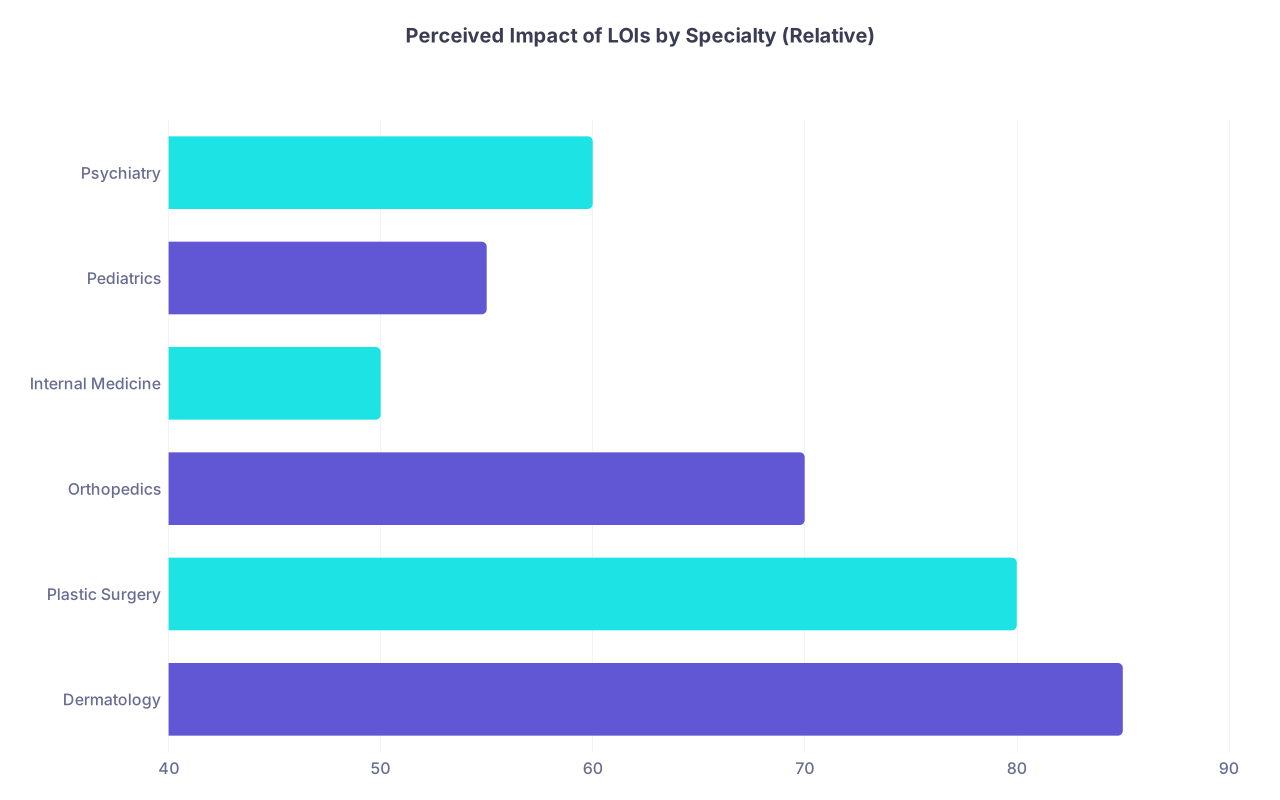
| Category | Value |
|---|---|
| Dermatology | 85 |
| Plastic Surgery | 80 |
| Orthopedics | 70 |
| Internal Medicine | 50 |
| Pediatrics | 55 |
| Psychiatry | 60 |
These are rough impressions from PD and resident conversations, not absolute truths. But the trend stands: some fields are more obsessed with signaling and “interest” than others.
The mistake is not just sending an LOI. It is sending one without listening to:
- What residents told you on interview day
- What the PD said about post-interview communication
- How formal or informal the program seems in general
If a PD literally says during the pre-interview talk, “We do not consider post-interview communication in our ranking,” then time your emotional energy, not your LOI. That letter is unlikely to move the needle.
Mistake #7: Letting Anxiety, Not Strategy, Drive Your Timing
Here is the uncomfortable truth: most LOI timing mistakes are anxiety with a subject line.
You feel:
- Behind
- Ignored
- Uncertain
- Afraid of not matching or not getting your dream city
So you do something. Anything. And because LOIs feel “professional,” you convince yourself it is strategy, not panic.
Patterns I have seen:
- Applicant sends an LOI every time they have a 48-hour anxiety spike.
- Applicant writes to a program, then two weeks later “updates” them with essentially nothing new because they are spiraling.
- Applicant sets arbitrary internal deadlines (“If I do not hear anything by Friday, I will send an LOI to X, Y, Z”) that do not line up with program timelines at all.
You cannot eliminate anxiety from this process. But you can refuse to let it control your timing.
Build a simple timing framework
Before you send anything, ask yourself three questions:
Where is this program likely to be in its process right now?
- Still interviewing? Early ranking? Finalizing? Already done?
Where am I in my process?
- Have I completed my interviews? Do I actually have a stable rank list in my head?
What is my actual goal with this communication?
- Reassure myself emotionally?
- Signal true #1 choice?
- Provide meaningful updates?
If the honest answer to #3 is “I am panicking,” do not send the LOI. Call a friend. Talk to a mentor. Go for a walk. Anything but blast an ill-timed promise to a program.
Practical Timing Recommendations (Without the Fluff)
Here is the stripped-down version, if you want it in one place.
Do this:
- Finish most or all of your interviews before picking a true #1.
- Aim to send a single letter of intent:
- Late January to early/mid February,
- About 2–3 weeks before the NRMP rank list deadline,
- Once you are absolutely certain this is your top choice.
- Use different, honest language to express “strong interest” to 2–4 other programs if you want.
Do not do this:
- Do not send an LOI to programs that never interviewed you.
- Do not tell more than one program they are your “unequivocal first choice.”
- Do not send an LOI in early January just because you feel behind.
- Do not assume a last-minute LOI will change a fully finalized rank list.
- Do not use LOIs as a primary tool to rescue a fundamentally weak application.
FAQ: Timing and Letters of Intent
1. When is the “earliest” I should even consider sending a true letter of intent?
Realistically, no earlier than late January. That gives you time to complete most interviews, cool down from the emotional highs and lows, and compare programs more rationally. Sending one in early January almost always reflects emotion, not clear decision-making.
2. What if my dream program’s residents told me they rank early—should I send my LOI sooner?
If you have solid information that their first major rank meeting is very early (for example, late January), then yes, you may need to move your timing up slightly. But only if:
- You have finished interviewing at other realistic top options, and
- You are truly comfortable calling them your #1.
Do not rush just because of a rumor. Confirm what you can.
3. Is it ever OK to send a “second” LOI if I change my mind about my top choice?
This is how you create a mess. If your first LOI clearly stated they are your top choice and you later send another program the same claim, you have a dishonesty problem. If you absolutely must change your mind, be transparent with a mentor and consider whether silence is better than compounding the issue. The real move is to wait until you are sure before sending any LOI.
4. How close to the NRMP rank deadline is too close for an LOI?
If you are in the last 3–5 days before the certification deadline, assume many programs already have effectively final lists. At that point, your LOI is unlikely to significantly change anything. It will not hurt you, but you should go into it with eyes open: you are doing this more for your peace of mind than for impact.
5. Can sending an LOI ever directly hurt my rank position?
Yes. Not usually because of the content, but because of:
- Proven dishonesty (multiple LOIs discovered)
- Extremely poor timing that looks manipulative or desperate
- Direct contradiction of something you said during your interview
A well-timed, honest LOI rarely drops you down a list. A dishonest or obviously panicked one can.
Remember:
- The wrong timing of a letter of intent can be more damaging than clumsy wording.
- You get exactly one true LOI—use it late enough to be informed and early enough to matter.
- If anxiety is driving your timing, stop. Step back. Think like the program does, not like someone refreshing their email at 2 AM.