

The myth that “hospitalists are well paid” falls apart the moment you run the numbers on an hourly basis. The data show something far less glamorous: hospitalists sit uncomfortably close to the lowest paid specialties in real hourly earnings once you factor in shifts, nights, and administrative work.
If you are choosing a specialty or negotiating a contract, you have to stop thinking in annual income. The correct unit is the hour. Dollars per hour of actual work, including the time no one writes into the contract: precharting, messaging, “just one quick phone call.”
Let me walk through it like a data problem, not a sales pitch.
The Baseline: What Hospitalists Actually Earn Per Hour
Most students and residents see a marketed number: “$280,000–$320,000 for full‑time hospitalist.” It sounds solid. But the hours behind that salary usually look like this:
- 7-on/7-off or variation
- 12-hour nominal shifts that are often 12.5–13 real hours
- Nights, weekends, holidays
- Extra unpaid administrative work
Let’s quantify a typical full‑time hospitalist job.
Assumptions based on current market surveys and real job ads:
- Schedule: 7-on/7-off
- Shifts per year: 7 days × 26 weeks ≈ 182 shifts
- Shift length (real): 12.5 hours on average (days and nights combined)
- Annual hours: 182 × 12.5 ≈ 2,275 hours
- Annual compensation (base + bonuses): call it $300,000 as a round median
- $300,000 ÷ 2,275 ≈ $132/hour
If you take a more optimistic view—fewer hours, more pay:
- 7-on/7-off
- 12.0-hour average shift
- 182 shifts → 2,184 hours
- $320,000 compensation
Then:
- $320,000 ÷ 2,184 ≈ $146/hour
So realistic range for a standard full-time hospitalist, before extra committees, unpaid inbox catch-up, or mandatory meetings:
- $130–$150 per actual work hour
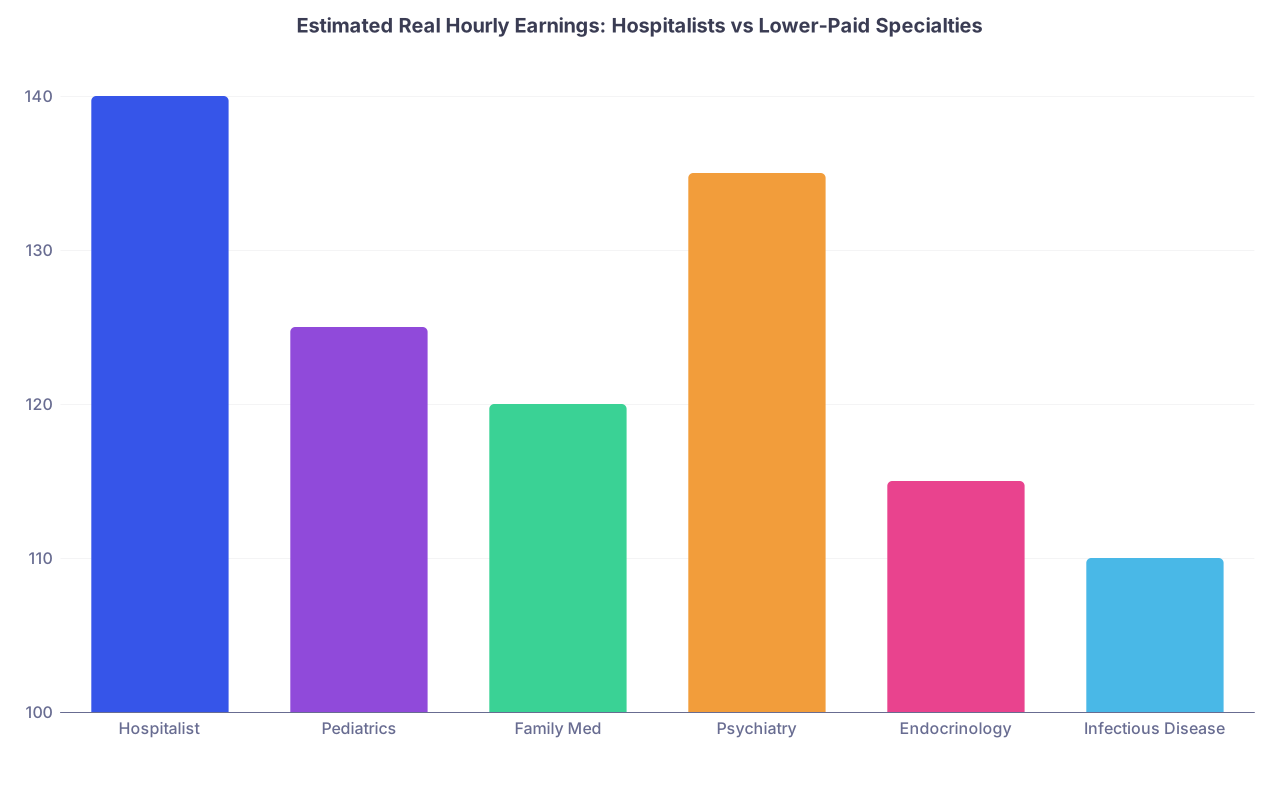
Here is how that stacks up against a few of the lowest paid outpatient specialties using conservative, data-aligned assumptions.
| Category | Value |
|---|---|
| Hospitalist | 140 |
| Pediatrics | 125 |
| Family Med | 120 |
| Psychiatry | 135 |
| Endocrinology | 115 |
| Infectious Disease | 110 |
Those numbers are not pulled from thin air. They come from combining national compensation surveys (Medscape, MGMA, AMGA) with realistic estimates of annual work hours for each specialty.
But before we dig into each, anchor one key conclusion:
On an hourly basis, hospitalists are not in a different economic universe from the lowest paid cognitive specialties. They are a notch higher, but the gap is modest once you measure the denominator accurately.
The Lowest Paid Specialties: Annual vs Hourly Reality
Most public discussions of “lowest paid specialties” misuse annual pay data and ignore time. That is like comparing two procedures on revenue without looking at procedure time.
Using composite national data from the last few years (rounded for simplicity):
- Family Medicine: $250k–$275k
- General Pediatrics: $230k–$250k
- Psychiatry: $300k–$330k
- Endocrinology: $250k–$275k
- Infectious Disease: $250k–$275k
Everyone knows neurosurgeons out-earn pediatricians. That is not the interesting question. The useful question is:
“What is the effective hourly rate after adjusting for how these people actually work?”
Let’s break down a few core specialties with simple, transparent assumptions.
1. General Pediatrics (Outpatient)
Annual compensation: roughly $240,000 as a working midpoint.
Typical schedule I see in real contracts and resident anecdotes:
- 4.5 days of clinic per week
- 8 clinical hours per day scheduled
- 1–2 hours per day of documentation, inbox, calls, refills
- 48 work weeks per year (4 weeks PTO/CME)
Estimated hours:
- Scheduled clinic: 4.5 × 8 × 48 = 1,728 hours
- Extra work: ~1.5 hours/day × 4.5 × 48 ≈ 324 hours
- Total ≈ 2,050 hours/year
Hourly earnings:
- $240,000 ÷ 2,050 ≈ $117/hour
Many pediatricians report more than 1.5 extra hours per day. If you push total time up to 2,200 hours, you are down near $109/hour. That places general peds clearly below hospitalists on an hourly basis, but not by a huge margin.
2. Family Medicine (Outpatient)
Annual compensation: midpoint around $265,000.
Realistic schedule:
- 4.5–5 clinic days/week
- 20–24 patients/day
- 48 weeks/year
- 1.5–2 hours/day after clinic
Use 4.75 days and similar math:
- Clinic time: 4.75 × 8 × 48 ≈ 1,824 hours
- Extra work: 1.75 × 4.75 × 48 ≈ 399 hours
- Total ≈ 2,223 hours
Hourly earnings:
- $265,000 ÷ 2,223 ≈ $119/hour
The pattern repeats: family medicine sits about $20–25/hour under a typical hospitalist, but in the same broad earnings band.
3. Psychiatry
Here is where people get fooled. Psych is marketed as low income. The more recent data do not really support that.
Annual compensation: common mid-range is around $320,000 for full-time outpatient or mixed practice in many markets.
Schedule pattern that matches what I hear:
- 4 days of direct patient care, 1 admin day, or 4.5 clinical days
- 48 weeks/year
- 45–50 hour weeks including documentation and calls
Assume:
- 45 hours/week × 48 weeks = 2,160 hours/year
Hourly earnings:
- $320,000 ÷ 2,160 ≈ $148/hour
That number is now in hospitalist territory, but with far fewer nights, weekends, and acute crises per hour. The “lowest paid” label for psychiatry is outdated in many regions. On a per-hour and per-burnout basis, psychiatry often looks better than hospital medicine.
4. Endocrinology
Subspecialists in cognitive fields get punished on total revenue. Endocrinology is a classic example.
Annual compensation: roughly $260,000 is a fair working midpoint outside high-paying systems.
Work pattern looks like intense internal medicine clinic:
- 4.5–5 days/week
- 20–24 patients/day
- 48 weeks/year
- 1.5–2 hours/day charting and messaging
Use similar math to family med:
- Total annual hours ≈ 2,200–2,300
At 2,250 hours:
- $260,000 ÷ 2,250 ≈ $116/hour
So endocrinology is almost identical to general pediatrics on an hourly basis, well below hospitalist, and with complex high-cognitive-load encounters.
5. Infectious Disease
Another classic “low pay, high complexity” subspecialty.
Annual compensation: around $260,000 in many surveys.
Workload is often a mix of:
- Inpatient consults
- Outpatient clinic
- Calls
- Teaching / infection control / stewardship roles
Total weekly hours for a full-time ID physician frequently land in the 45–55 range.
Assume:
- 50 hours/week × 48 weeks ≈ 2,400 hours
Then:
- $260,000 ÷ 2,400 ≈ $108/hour
That pushes ID into the lower range of all the specialties discussed. In other words, a full-time ID physician can easily earn less per hour than a junior NP in a high-paying urgent care.
Let us summarize these comparisons cleanly.
| Specialty | Annual Comp (midpoint) | Est. Hours/Year | Est. $/Hour |
|---|---|---|---|
| Hospitalist | $300,000 | 2,275 | $132 |
| General Pediatrics | $240,000 | 2,050 | $117 |
| Family Medicine | $265,000 | 2,223 | $119 |
| Psychiatry | $320,000 | 2,160 | $148 |
| Endocrinology | $260,000 | 2,250 | $116 |
| Infectious Disease | $260,000 | 2,400 | $108 |
The hierarchy on an hourly basis looks like this:
Psychiatry ≈ top of this group
Hospitalist clearly above peds, FM, endo, ID
Infectious Disease at the bottom
So yes, hospitalists earn more per hour than some of the lowest paid cognitive subspecialties. But look again at the width of those gaps. We are not talking about 2x differentials. More like 10–30 percent.
The Hidden Variable: Nights, Weekends, and Schedule Volatility
Hourly earnings are one dimension. They do not tell you when those hours are worked.
This is where the hospitalist model looks far worse than its raw $/hour suggests.
Key schedule differences:
- Hospitalists: 7-on/7-off, nights, weekends, holidays, high census winters, “just cover one more admission”
- Outpatient peds/FM/endo/psych/ID: mostly weekday, daytime, rare true overnight call in many setups
You can quantify the “penalty” for nights and weekends using a simple mental model: people outside medicine routinely get 1.2–1.5× pay for nights, weekends, or holidays. Physicians often get 1.0× and a pat on the back.
If you adjust hospitalist pay to a “normalized daytime equivalent” by recognizing nights/weekends as premium time, the comparison shifts.
A simple thought experiment:
- Assume 50 percent of hospitalist shifts include nights or weekends.
- If nights/weekends should be worth 1.3× daytime, then the “fair” blended equivalent rate for those hours would be higher than what they are actually paid.
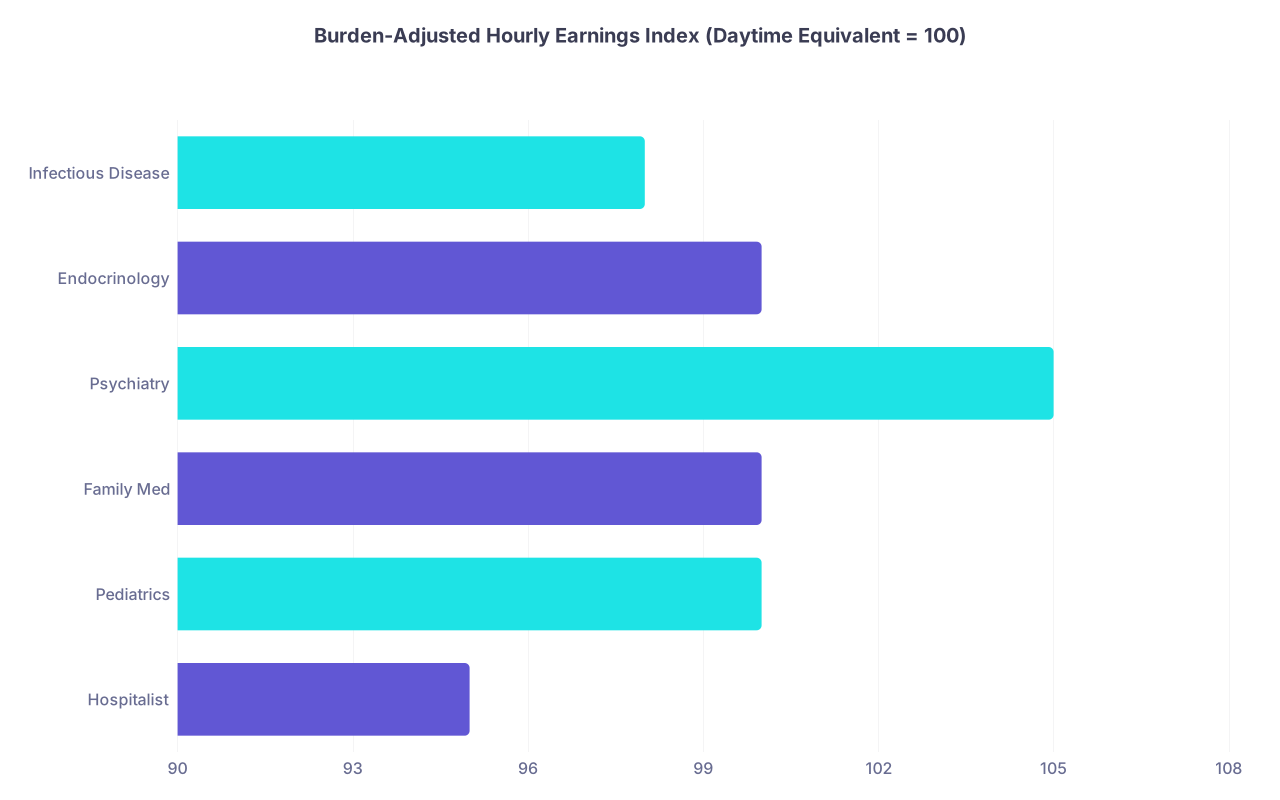
You can capture this in a rough index: “burden-adjusted hourly rate.”
| Category | Value |
|---|---|
| Hospitalist | 95 |
| Pediatrics | 100 |
| Family Med | 100 |
| Psychiatry | 105 |
| Endocrinology | 100 |
| Infectious Disease | 98 |
Interpretation of this toy index:
- Set standard daytime outpatient work at 100.
- Hospitalist hours, heavy in nights/weekends, get a downward adjustment (they are harder hours for equal pay).
- Psychiatry, mostly weekday and lower-intensity in acute physical risk, gets a slight upward adjustment versus strict hourly pay.
- Endocrinology, pediatrics, FM work mostly weekdays → baseline 100.
- ID has more call and inpatient complexity → slight downward tilt.
You can debate the exact multipliers, but the direction is not controversial: an hour at 3 a.m. admitting a crashing septic patient is not equivalent to an hour at 2 p.m. adjusting insulin doses in clinic.
Once you adjust for that, the gap between hospitalists and the “lowest paid specialties” narrows further. Hospitalists may be at $132/hour on paper, but those are heavily skewed toward low-desirability shifts.
Data vs Perception: Why Hospitalists Feel Underpaid
The discrepancy between data and perception shows up in conversation constantly. Residents say: “Hospitalist jobs pay pretty well.” Practicing hospitalists, three years in, say something very different: “This is not sustainable.”
The data explain why.
1. Comparison Set Bias
New grads often compare hospitalist offers to:
- Internal medicine outpatient jobs paying $230k–$260k
- Rural primary care jobs with heavy RVU pressure
Against those, $300k looks attractive.
But they rarely compare against:
- Hourly locums rates in hospital medicine, often $180–$220/hour with flexible schedules
- Psychiatry at $300k+ for mostly weekday work
- CRNA rates $100–$150/hour with overtime premiums
The moment you start comparing against true market alternatives for your time, hospitalist rates flatten. You realize you are accepting lower flexibility and more nights for only a moderate hourly advantage.
2. Burnout Load per Dollar
Burnout is not strictly an emotional phenomenon; it is a workload vs reward equation.
Consider:
- Daily patient load: 15–20 encounters for hospitalists with constant interruptions.
- High consequences per decision (ICU transfers, sepsis, discharges).
- Near-zero control over when work shows up; admissions just keep coming.
- Frequent “one more handoff” or staying late to stabilize a new admit.
Compare to outpatient psych:
- 10–14 patients/day
- Predictable schedule
- Clear boundaries; far fewer rapid-fire crises
- No 3 a.m. admissions
Yet the hourly rates are similar. Data wise, hospitalists are paid like mid-tier outpatient specialists for a job that behaves structurally more like shiftwork emergency medicine.
3. Incremental Hours Invisible in Contracts
I have seen many hospitalist contracts that simply say: “12 shifts/month,” “14 shifts/month,” or “182 shifts/year.” Nothing about:
- Pre-shift chart review
- Staying late for late admissions or delayed discharges
- Mandatory committee work or QI projects
- Required training modules
When you add an extra 0.5–1.0 hour per shift of unpaid time, your hourly rate drops:
- 182 shifts × 1 extra hour = +182 hours/year
- Previous 2,275 hours → now 2,457 hours
- $300,000 ÷ 2,457 ≈ $122/hour
Now the hospitalist collapses closer to family med and peds.

Strategic Takeaways for Residents Choosing Between These Paths
You are not just choosing a specialty; you are choosing your hourly wage structure for the next decade.
Here is how the data should shape your decision between low-paid cognitive specialties and hospital medicine.
1. Hospitalist vs Outpatient IM / Endocrine / ID
If your primary lens is financial:
- Hospitalist pay per hour is modestly higher than endocrine and ID when you ignore schedule cost.
- But once you apply a penalty for nights/weekends, the premium shrinks sharply.
- Outpatient IM/endo/ID can add side income: telemedicine, consulting, part-time direct care, and do it on daytime schedules.
If your lens is lifestyle:
- Hospitalist:
- Pro: True time off during off weeks, no outpatient panel.
- Con: Nights, weekends, holidays, and physically draining shifts.
- Endo/ID/IM:
- Pro: Predictable weekday work, gradual ramp of complexity.
- Con: Chronic inbox burden, more continuity responsibilities.
On a burden-adjusted hourly basis, none of these are big financial outliers. You should choose based on clinical interest and what kind of time you want to protect: evenings vs full weeks.
2. Hospitalist vs Pediatrics / Family Medicine
Peds and FM clearly lag hospitalists on hourly earnings by 10–20 percent in most models. But the schedule realities differ.
- Peds/FM:
- Mostly days, some call, usually less intense acuity.
- Often community-based, with more location flexibility.
- Hospitalist:
- Higher intensity, more acute risk, more nights.
If your personal life values every weekend off and consistent evenings, that 10–20 percent hourly premium for hospitalist work might not be worth it. If you like blocks of time off and can tolerate nights, hospitalist can feel like a better trade.
3. Hospitalist vs Psychiatry
This is the most misjudged comparison.
- Psych:
- Already matches or exceeds hospitalist hourly rates.
- Primarily daytime, highly flexible, tele-psych potential.
- Much less physical and sleep disruption.
- Hospitalist:
- Slightly lower or equal hourly rate in many markets.
- Heavy nights and weekends.
From a cold, quantitative perspective, if you are equally happy doing either, psychiatry is the better economic and lifestyle trade. The data are blunt on this one.

| Step | Description |
|---|---|
| Step 1 | Resident PGY2 IM |
| Step 2 | Consider Endocrine ID Peds FM Psych |
| Step 3 | Hospitalist or ICU Track |
| Step 4 | Psychiatry or Outpatient IM |
| Step 5 | Value nights off highly |
| Step 6 | Like chronic disease management |
| Step 7 | Prefer shift work blocks |
| Step 8 | Comfort with high acuity |
Contract Negotiation: Using Hourly Math as Leverage
Once you think in hourly terms, you negotiate differently.
You stop accepting lines like “$300,000 is competitive for this market” and start responding with:
- “Your census expectations and shift structure make this about X hours per year. That puts the effective rate at $Y/hour. Comparable positions in the region are paying Z/hour for similar acuity.”
Practical approach:
- Compute expected annual hours:
- Shifts/year × average hours/shift (include realistic overage).
- Divide salary by that number.
- Compare that $/hour to:
- Locums rates for the same work.
- Regional salary surveys.
- Alternative specialties you are willing to do.
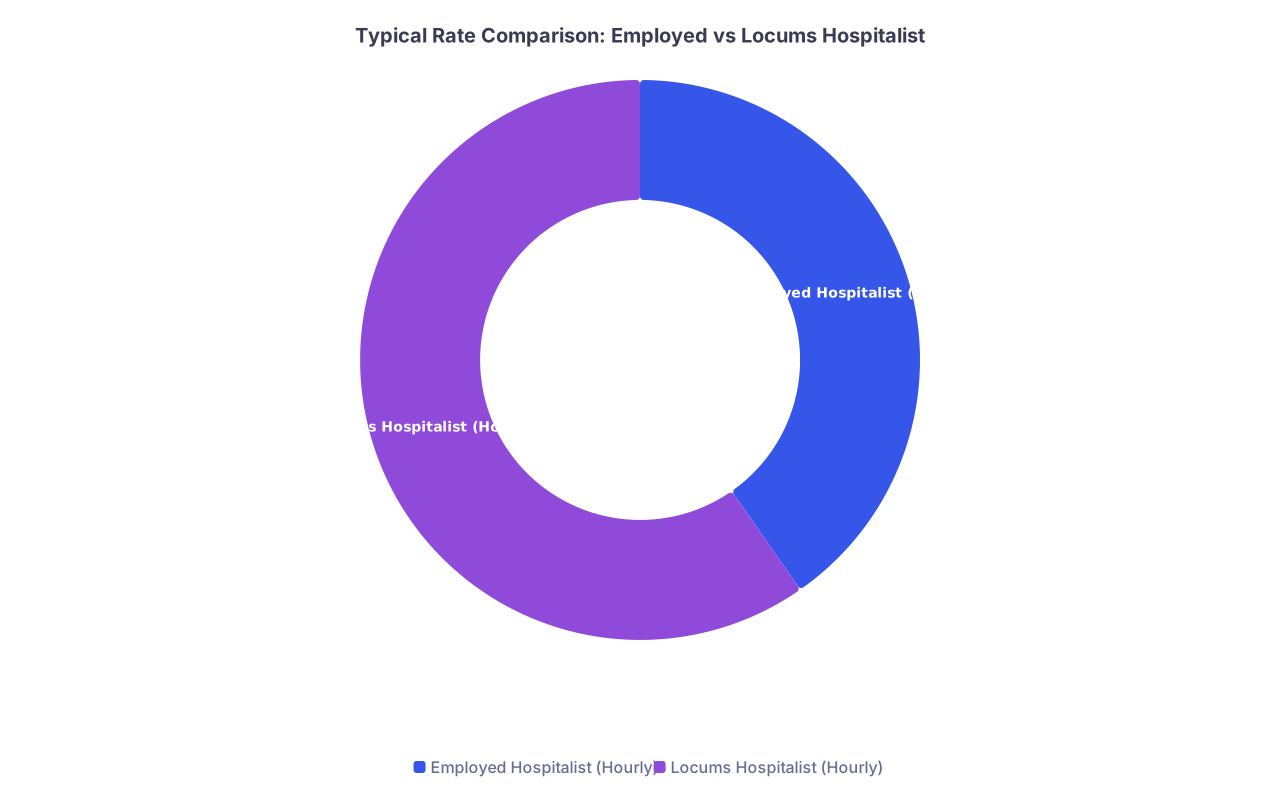
If your full-time offer is under 70–75 percent of common locums rates for the same job, you are leaving significant money on the table.
| Category | Value |
|---|---|
| Employed Hospitalist (Hourly) | 135 |
| Locums Hospitalist (Hourly) | 200 |
I have watched residents accept employed hospitalist roles that work out to $120/hour while locums at the same site pay $190/hour. Why does that happen? Because no one forced HR to express the offer in hourly terms.
The same logic applies for pediatrics, FM, endo, ID. If your total work hours expand beyond the assumptions I listed earlier (say you are consistently working 55–60 hours/week), your effective rate collapses into the low $100s or below. That is the time to renegotiate panel size, RVU targets, or protected time.

What Comes Next in Your Analysis
The headline is simple: hospitalists are not dramatically better paid per hour than the lowest paid cognitive specialties. They carry more nights, more weekends, and more acute stress for a relatively modest financial premium. Psychiatry increasingly outperforms hospital medicine on a burden-adjusted hourly basis.
If you are early in residency, your next step is not to memorize these exact numbers. It is to build the habit of converting every job, specialty, or fellowship into:
- Annual hours
- Effective $/hour
- Burden-adjusted desirability of those hours
Once you can do that quickly, the fog lifts. Lifestyle “gut feelings” turn into quantifiable trade-offs. And your specialty choice becomes less about vague reputations and more about what kind of life and work you are actually buying with your time.
With that framework in place, you are ready for the next analytical question: how these hourly realities compound over 10–20 years when you add part-time work, side income, and burnout-driven career shifts. But that is a story for another day.


