
The biggest malpractice mistake new private practice owners make is timing. Not coverage. Not carrier. Timing.
They start shopping for malpractice after the lease is signed, after staff are hired, sometimes a week before opening. By then, the good options are gone, carriers are slow, and you are signing whatever lands in your inbox. That is how you end up overpaying for the wrong policy and underinsuring the risk that actually kills practices: early, preventable claims with bad documentation and no tail coverage plan.
You are not doing that.
Here is your month‑by‑month, then week‑by‑week malpractice roadmap for the first 12 months of starting a private practice—financial and legal focused, not theoretical fluff.
Months 0–1 Before Opening: Foundation & Reality Check
At this point you should not be shopping for “cheap malpractice.” You should be mapping risk and cash flow.
Week 1–2: Define Your Risk Profile
Before any broker call, you need answers. Carriers will ask, and your premiums depend on it.
Write down:
- Specialty (and subspecialty)
- Procedures you will do in-office vs hospital
- Planned hours per week and start date
- States where you’ll practice (telemedicine counts)
- Prior claims history and board actions
- Ownership structure (solo, partnership, PLLC, PC)
Now, do a quick reality check with typical premium ranges.
| Specialty | Low-Risk Example | Typical Range (Year 1–3) |
|---|---|---|
| Internal Med | Office-based | $8,000–$15,000 |
| Pediatrics | Primary care | $7,000–$14,000 |
| Psychiatry | Outpatient | $5,000–$10,000 |
| OB/GYN | Full OB | $40,000–$90,000 |
| Gen Surgery | Bread & butter | $25,000–$60,000 |
If those numbers make your business plan implode, better to find out now than after you’ve signed a 5‑year lease.
Week 2–3: Decide Early on Claims‑Made vs Occurrence
Do not punt this decision.
Claims‑made
- Cheaper first few years, ramps up.
- Requires tail coverage when you leave or switch.
- Most common for physician practices.
Occurrence
- Higher annual premium, but no tail needed.
- Fewer carriers, not always available in high‑risk specialties.
At this point you should:
- Check what your hospital or employer coverage was (if any):
- Was it claims‑made? Who paid the tail?
- Are they providing tail when you leave?
- Decide your long‑term likely path:
- If you’ll probably sell the practice or change states in 5 years, you need a deliberate tail strategy.
- Write down your default plan:
“I will use X type of policy now, and my tail will be funded by Y (savings / sale proceeds / employer-arranged).”
If you cannot explain your tail plan in two sentences, you do not understand your malpractice risk yet.
Months 2–3 Before Opening: Quotes, Legal Structure, and Gaps
At this point you should be structuring the practice and getting real numbers, not estimates from random forums.
Month 2: Form Entity and Align Legal & Insurance
You need your legal structure before you bind coverage.
- Meet with a healthcare attorney and accountant (one meeting each is usually enough to start).
- Finalize:
- Entity type: PLLC, PC, or equivalent in your state
- Ownership shares if you have partners
- Whether the entity will employ other clinicians now or later
Your malpractice application will ask:
- Exact entity name
- EIN
- Practice address
- If you need entity coverage (not just individual)
Rule of thumb:
If the practice bills and holds assets, you want entity coverage, even as a solo.
Month 2–3: Start the Quote Process (Not Last Minute)
You want quotes in hand 6–8 weeks before opening. Carriers move slowly, especially with prior claims or higher‑risk specialties.
At this point you should:
- Choose one independent broker who works with multiple carriers, not a captive agent tied to one company.
- Give them:
- Full CV
- Loss runs (claims history) from prior carriers
- Procedure list with CPT ranges if you have it
- Planned start date and FTE status
- Request at least 3 quotes with:
- Same coverage limits (typically $1M/$3M or state standard)
- Same retroactive date (very important)
- Clear documentation of:
- Consent to settle clause
- Whether defense costs are inside or outside the limits
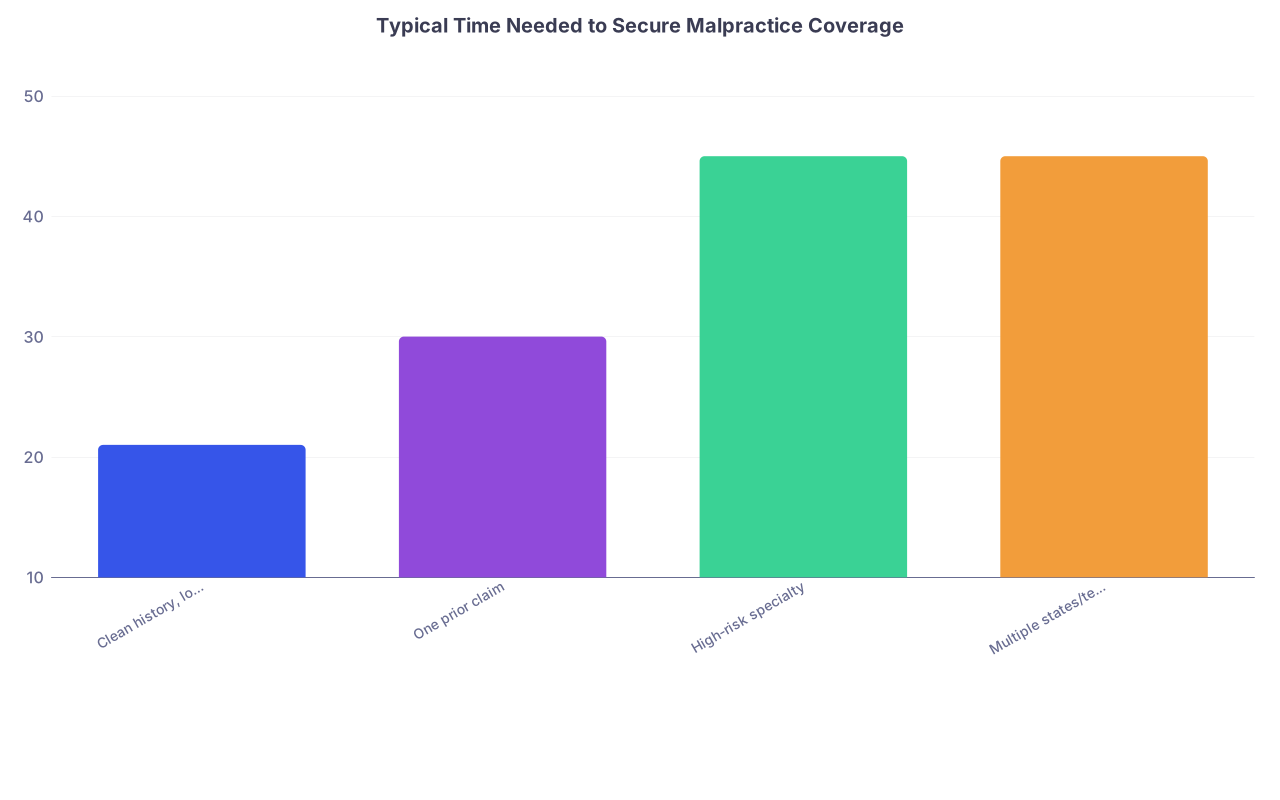
| Category | Value |
|---|---|
| Clean history, low risk | 21 |
| One prior claim | 30 |
| High-risk specialty | 45 |
| Multiple states/telemed | 45 |
Week‑by‑Week Checklist (2 Months Out)
8 weeks before opening:
- Submit full applications.
- Ask your broker for:
- Written confirmation of projected premium
- Sample policy forms (not just a summary sheet)
6 weeks before opening:
- Review quotes with your attorney or a colleague who has actually read their own policy.
- Decide:
- Claims‑made vs occurrence (if both offered)
- Limits (do not default to the lowest without understanding hospital/health plan contract requirements)
Month 1 Before Opening: Binding Coverage & Financial Setup
This is where people usually mess up the cash‑flow side. You will not.
4–5 Weeks Before Opening: Bind Coverage Intentionally
At this point you should:
- Choose your carrier and policy type.
- Confirm:
- Retroactive date matches your start date of private practice (or earlier if you’re carrying over coverage).
- First policy period: many carriers will do prorated short policy periods for new practices.
- Decide on payment plan:
- Annual in full (often with a discount)
- Quarterly or monthly (watch the financing fees)
Call your bank or lender and bake the malpractice premium into your startup budget. Do not pretend it’s a surprise.
2–3 Weeks Before Opening: Integrate Insurance With Contracts
You are about to sign things—leases, hospital privileges, payer contracts—that reference malpractice limits.
At this point you should:
- Compare:
- Your policy limits
- Each contract’s required malpractice limits
- Common issue: hospital requires $2M/$4M, you bought $1M/$3M. Fix this before credentialing stalls.
- If partnering, put in your operating agreement:
- Who pays premiums
- What happens to tail if a partner leaves
- Whether the practice can require higher limits in the future
This is also when you:
- Add your carrier contact and policy number to:
- Your credentialing packets
- Your internal “risk file” (keep it separate from general HR)
Month 0–3 After Opening: First Quarter Risk & Documentation
You are now open. This is when malpractice exposure starts quietly building while you are busy with scheduling and EHR nonsense.
Week 1–2 After Opening: Train Staff and Lock Down Processes
At this point you should stop thinking of malpractice as just a policy. It’s your entire process.
Do this in the first two weeks:
- Standardize informed consent:
- Written templates for recurring procedures
- Documentation of risks, benefits, alternatives, and questions answered
- Create a test results workflow:
- Who checks labs/imagings daily
- How abnormal results are flagged and followed
- How and when patients are notified, with documentation
I have seen more early‑practice claims around “failure to follow up labs” than around flashy procedures. The EHR audit trail will not save you if your workflow is sloppy.
Month 1–2 After Opening: Track Incident Reports (Quietly)
You are collecting risk signals now. Not every error is a claim, but patterns matter.
Create a simple internal log (not in the medical record) for:
- Near misses (wrong drug dose caught before administration)
- Delayed follow‑up you caught and corrected
- Angry patient interactions escalating beyond “normal frustration”
You are not documenting this to self‑incriminate. You are documenting trends so that by Month 6, you know where your real risk lies.
Month 3–6: Mid‑Year Financial Reality and Coverage Adjustments
By this point you should have enough revenue data to know if your initial malpractice budget was fantasy or accurate.
Month 3–4: Check Production vs Premium Burn
Sit down with your P&L and put malpractice in its proper place.
Calculate:
- Annual malpractice premium
- Monthly equivalent
- Percentage of total overhead
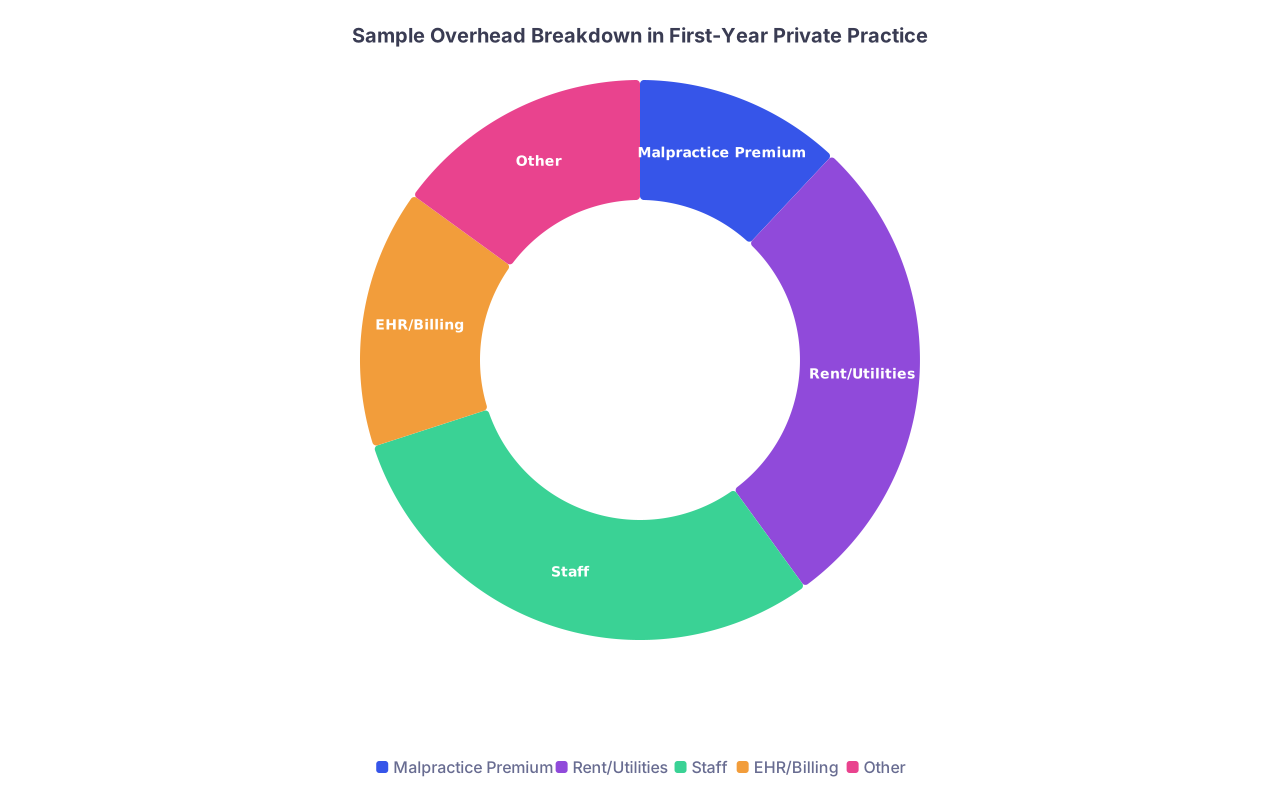
| Category | Value |
|---|---|
| Malpractice Premium | 12 |
| Rent/Utilities | 28 |
| Staff | 30 |
| EHR/Billing | 15 |
| Other | 15 |
If malpractice is:
- Under 10% of overhead in most non‑OB specialties: you are fine.
- Creeping over 20%: either your volume is low or your coverage is misaligned with reality.
At this point you should:
- If volume is way below projection:
- Ask your broker if your classification can be adjusted to part‑time or lower exposure.
- If you have added procedures:
- Confirm they’re included in your current rating classification and covered.
Month 4–5: Start Thinking About Tail (Yes, Already)
You are not buying tail yet, but you are planning for it.
At this point you should:
- Get a written estimate from your carrier:
- What would tail cost if you cancelled at the end of year 1? Year 3?
- Ask:
- Are there conditions for “free tail” (e.g., retirement at specific age, disability, death)?
- Put a line item in your long‑term financial plan:
- “Tail reserve: $X per year starting year 2 or 3”
Psychiatry, pediatrics, OB, surgery—any specialty with late‑appearing injuries—absolutely cannot wing this.
Month 6–9: Risk Management Tightening & Renewal Prep
You’re halfway through year 1. The novelty has worn off. This is where sloppiness creeps in and where you fix it before your first renewal.
Month 6: Conduct a Self‑Audit
Take one afternoon. Shut the door. Audit yourself like a plaintiff’s attorney would.
Pull 10 random charts and look for:
- Incomplete or copy‑pasted histories
- Vague plans (“will monitor” with no timeframe)
- Missing documentation of patient understanding for high‑risk decisions
- Poor documentation of telephone advice or portal messages
At this point you should:
- Choose one high‑risk area to fix:
- Refills for controlled substances
- Test result documentation
- After‑hours call documentation
Update templates or workflows accordingly. Do not “remind staff.” Change the system.

Month 7–8: Start Renewal Timeline
Renewal will not be a copy‑paste of year 1 if you do it right.
At this point you should:
90 days before renewal:
- Email your broker:
- Updated procedure list
- Any mid‑year changes (new provider, new location, telemedicine states added)
- Ask explicitly:
- “I want competitive quotes for renewal, not just an auto‑renew. Please market the policy.”
- Email your broker:
60 days before renewal:
- Review loss runs (hopefully empty in year 1)
- Confirm no surprise mid‑term endorsements that changed your coverage
Be aware: your claims‑made premium will likely increase in year 2 as you move toward mature rates. This is normal, but you should know roughly how much.
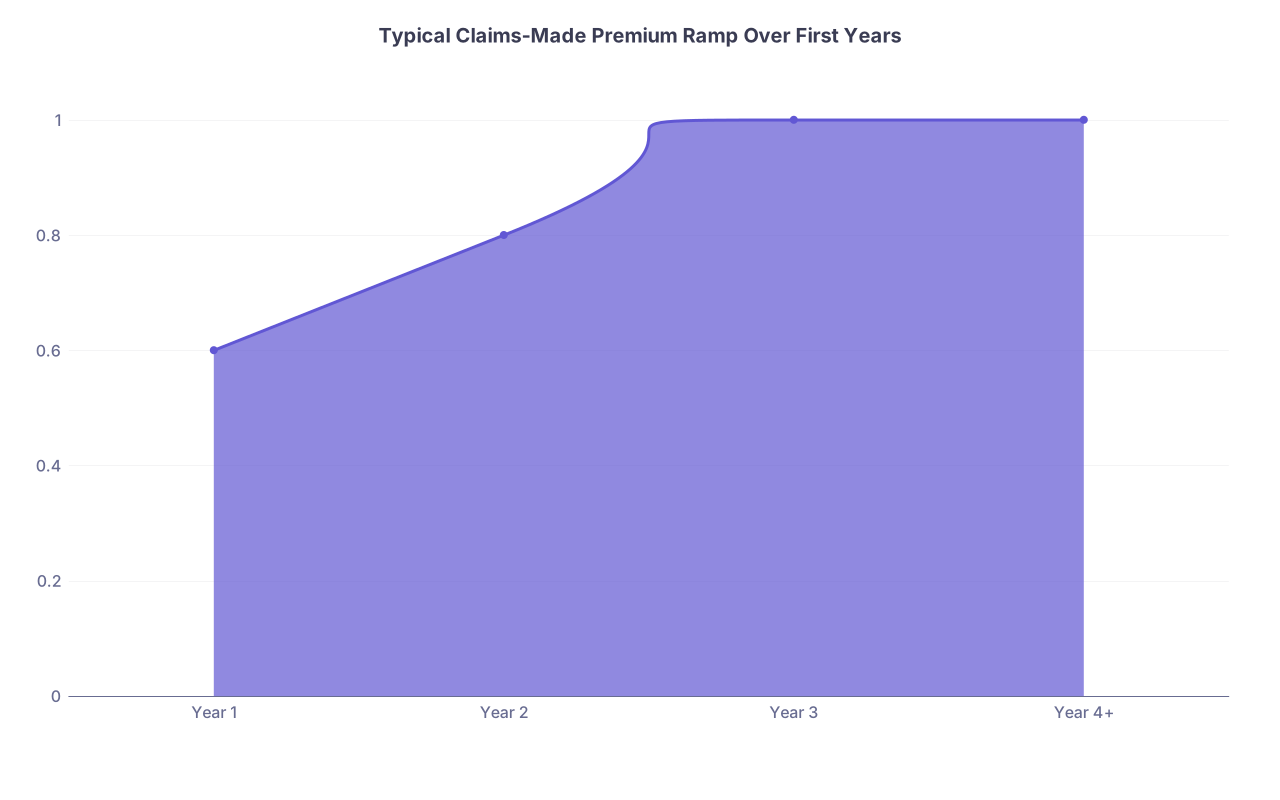
| Category | Value |
|---|---|
| Year 1 | 0.6 |
| Year 2 | 0.8 |
| Year 3 | 1 |
| Year 4+ | 1 |
(Values are multipliers of “mature” rate—exact numbers vary by carrier.)
Month 9–12: Year‑End Legal Alignment and Strategic Choices
Last quarter of your first year. This is where you turn a thrown‑together policy into a deliberate malpractice and legal strategy.
Month 9–10: Re‑Evaluate Entity and Contracts
You’ve learned a lot about how your practice actually runs vs how you imagined it.
At this point you should:
- Review with your attorney:
- Any new hospital or payer contracts you signed
- Whether your entity should:
- Add another physician or extender as an employee or contractor
- Adjust ownership or buy‑in structures
- Confirm:
- Malpractice limits still meet all contract requirements
- Any new mid‑level providers have appropriate coverage:
- Either under your entity policy
- Or via their own policy with you named as additional insured
This is also the right time to decide:
- Are you going to expand into:
- Telemedicine across state lines?
- Office‑based procedures with higher risk?
- On‑call coverage for a facility?
All of these have malpractice and legal implications. Do not bolt them on casually.
Month 11–12: Lock In Your 12‑Month Malpractice Milestones
By the end of your first 12 months in private practice, you should be able to say “yes” to the following:
| Milestone | Status (Yes/No) |
|---|---|
| Chosen claims-made vs occurrence plan | |
| Bound coverage before opening | |
| Entity coverage aligned with structure | |
| Test result and consent workflows set | |
| Tail coverage strategy documented | |
| Mid-year financial impact reviewed | |
| Renewal quotes compared competitively | |
| Contracts aligned with policy limits |
If any of those are “No,” that’s your Q4 project list.
Visual Timeline: Your First-Year Malpractice Roadmap
Here’s the bird’s‑eye view you can actually tape above your desk.
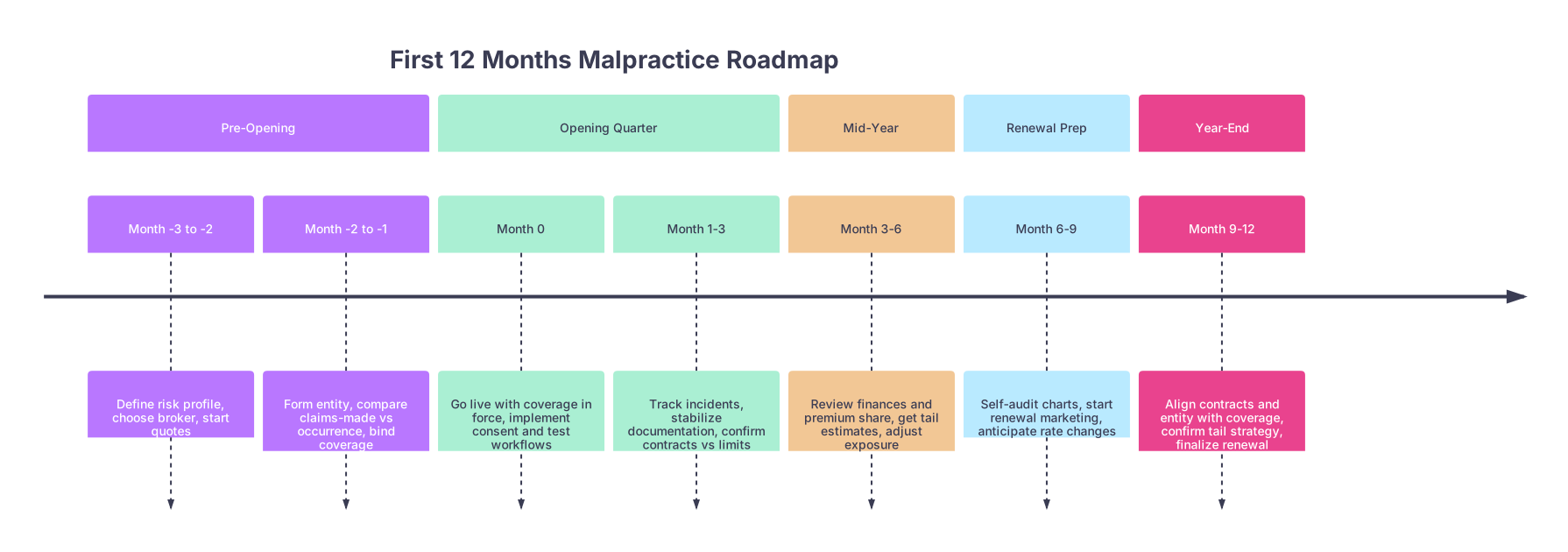
| Period | Event |
|---|---|
| Pre-Opening - Month -3 to -2 | Define risk profile, choose broker, start quotes |
| Pre-Opening - Month -2 to -1 | Form entity, compare claims-made vs occurrence, bind coverage |
| Opening Quarter - Month 0 | Go live with coverage in force, implement consent and test workflows |
| Opening Quarter - Month 1-3 | Track incidents, stabilize documentation, confirm contracts vs limits |
| Mid-Year - Month 3-6 | Review finances and premium share, get tail estimates, adjust exposure |
| Renewal Prep - Month 6-9 | Self-audit charts, start renewal marketing, anticipate rate changes |
| Year-End - Month 9-12 | Align contracts and entity with coverage, confirm tail strategy, finalize renewal |

Day‑By‑Day: What To Do This Week To Get On Track
You probably do not have a spare weekend to “research malpractice.” So here is a 7‑day micro‑timeline to kick this off, even if you are already somewhere in the first year.
Day 1:
- Write down:
- Your specialty, procedures, states, start date, and expected hours.
- Pull any old malpractice policies and loss runs.
Day 2:
- Email 2–3 colleagues with private practices:
- Ask which broker they use and if they’d recommend them.
- Contact one recommended independent broker.
Day 3:
- Send broker:
- CV
- Prior policy declarations
- Short procedure list
- Ask explicitly for:
- Both claims‑made and occurrence options (if available)
- Estimated tail cost scenarios
Day 4:
- Block 30 minutes to read at least one sample policy form.
- Find:
- Limits
- Consent to settle clause
- Tail provisions
- Find:
Day 5:
- Map your test result and consent workflows on one sheet of paper.
- Identify one high‑risk gap.
Day 6:
- Create a simple incident log template:
- Date, what happened, what prevented harm, what needs to change.
Day 7:
- Open your calendar and:
- Set reminders at 3, 6, 9, and 11 months post‑opening:
- “Malpractice financial check”
- “Tail estimate”
- “Renewal marketing”
- “Legal/contract alignment review”
- Set reminders at 3, 6, 9, and 11 months post‑opening:
You do not have to solve malpractice forever today. You just have to make one concrete move.
Today, pick up your most recent quote or policy and find the words “retroactive date” and “tail coverage.” If you cannot identify both and explain what they mean for you in one minute, email your broker right now and ask them to walk you through it this week.