
The belief that suing patients for unpaid medical bills is just “good business” is dangerous nonsense in 2026. It is one of the fastest ways to turn a low-risk encounter into a high-risk malpractice relationship.
Hospitals and large systems can (sometimes) get away with aggressive collections because they have brand buffers, PR teams, and lawyers on retainer. You, as an individual physician or small group, do not. When you drag a patient into court over money, you are lighting a match right next to your malpractice exposure.
Let me be direct: the empirical and real-world pattern is clear. Aggressive billing and collections raise complaint rates, board investigations, and malpractice risk—often for relatively trivial dollars.
The Myth: “Collections Are Financial, Malpractice Is Clinical. They’re Separate.”
This is the comfortable story I hear from physicians all the time:
“We only send to collections as a last resort. It’s not personal. It’s just policy. Malpractice risk comes from bad medicine, not unpaid copays.”
That story is reassuring. It is also wrong.
Here’s what actually happens in the real world. A patient who feels financially harmed or humiliated by your office is far more likely to:
- File a complaint with your state medical board
- Leave scathing public reviews
- Complain to their insurer
- Talk to a plaintiff’s attorney (often for the first time)
- Reinterpret every prior adverse outcome as negligence, not bad luck
Malpractice claims almost never start with, “I read the operative note and believe there was a breach of duty in step 3.” They start with, “They didn’t listen to me,” or, “They treated me like garbage,” or recently, “After everything I went through, they still sent me to collections.”
Billing and collections are not separate from malpractice climate. They’re a major part of it.
What the Data and Cases Actually Show
We do not have RCTs on “suing vs not suing” patients, obviously. But we do have converging evidence from:
- Malpractice carrier loss data
- Patient complaint studies
- High-profile media cases that started as billing disputes
- Known predictors of malpractice suits: communication breakdown, disrespect, perceived injustice
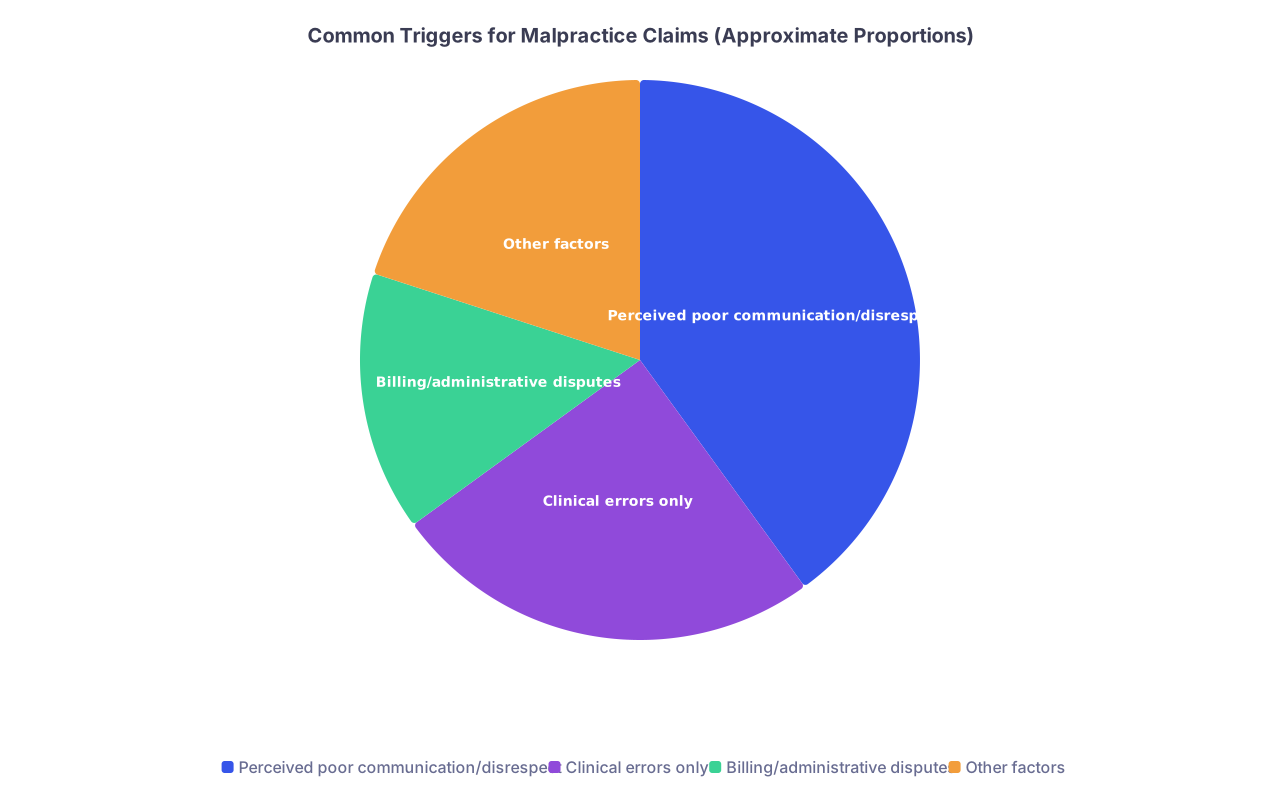
Let’s anchor this with some context.
| Category | Value |
|---|---|
| Perceived poor communication/disrespect | 40 |
| Clinical errors only | 25 |
| Billing/administrative disputes | 15 |
| Other factors | 20 |
Those numbers vary by dataset and specialty, but the pattern doesn’t: a substantial chunk of claims are rooted in anger that starts outside the OR or exam room—often in billing and administrative friction.
Carriers will tell you this bluntly behind closed doors. I’ve seen internal reviews where the care met standard, the documentation was fine, but the claim went nuclear because the patient was:
- Hit with a surprise out-of-network bill
- Sent to collections while disputing a charge
- Sued in small claims court over a few hundred dollars
The plaintiff’s lawyer didn’t go looking for that patient. The patient went looking for the lawyer—after feeling financially attacked.
And the media? They love this storyline.
Real-World Pattern: The Local News + Lawsuit Combo
If you think your medical reputation is insulated from your financial practices, look at what happens every time a hospital or group is exposed for suing patients:
- “Nonprofit hospital sues thousands of patients”
- “Cancer patient taken to court over bills”
- “ER visit leads to wage garnishment”
The news piece is about billing. The downstream culture shift is: “These people don’t care about us.” That erosion of trust spills over into the malpractice environment.
For individual physicians, you won’t make national headlines, but you can absolutely make the front page of your local paper or Facebook community group. Once your name is associated with “sued me over a bill,” your jury pool is prepped before you ever see a courthouse.
Why Suing Patients Supercharges Malpractice Risk
This is where the myth really breaks down. The assumption is: “If I sue them, that’s my offensive move; it doesn’t affect my defensive malpractice risk.” In reality, it does three nasty things.
1. It Converts Passive Dissatisfaction Into Active Retaliation
Most unhappy patients never file. They complain to family members, maybe write one scathing online review, then move on. There is friction and shame in becoming a “plaintiff.”
When you sue them, you remove that friction. You have already put them in a legal frame of mind. You’ve normalized lawyers and court documents. You’ve made escalation feel justified.
I’ve seen this twice in the same orthopedic group:
- A patient with a mediocre outcome and marginal documentation did nothing for 18 months. Unhappy, but quiet. Then the practice sued over an unpaid balance in small claims court. Within weeks, the patient spoke to a malpractice attorney. The attorney initially passed. After the collections judgment, the patient went back. This time, they filed.
- Another patient with a similar outcome but who was quietly put on a no-further-care list for nonpayment—but not sued or sent to aggressive collections—complained on Facebook and Yelp. Angry, yes. But no board complaint, no attorney.
Same clinical care. Same complication risk. Different billing aggression. Only one turned into an indemnity payment.
2. It Kills Any “Nice Doctor” Buffer
Juries are not clinical review panels. They are humans trying to answer, “Do I like and trust this doctor, or do I identify more with the patient?”
When your name is attached to “sued a struggling patient over a bill,” you lose the benefit of the doubt. Even if that lawsuit never comes into evidence in a particular case, the patient’s story to their lawyer, to the board, to the community, is marinated in that sense of injustice.
Plaintiff’s attorneys know this. I’ve heard some of them say almost verbatim: “If they’ve sued the patient, that is a client who will stay angry. That’s good for us.”
3. It Creates Paper Trails You Don’t Control
Collections and lawsuits generate documents:
- Demand letters
- Court filings
- Payment disputes
- Emails where staff say blunt things like “If they don’t pay, we will send them to collections immediately”
All of this can show up in discovery in a malpractice case. A clever plaintiff’s attorney can use that tone to support their central story:
“You weren’t just inattentive in follow-up—you run a practice that prioritizes getting paid over taking care of your patients.”
If your defense is “I always do the right thing for my patients,” and opposing counsel has three years of aggressive billing printouts, that defense looks thinner.
The Economics: Tiny Dollars, Huge Risk
The most perverse part: the math is terrible.
Look at what you typically collect in late-stage pursuit:
| Scenario | Typical Amount at Stake | Realistic Net Recovery | Relative Malpractice Impact |
|---|---|---|---|
| Early self-pay settlement | $100–$300 | $80–$250 | Low |
| Collections agency referral | $200–$1,000 | $40–$500 | Moderate |
| Suing in small claims court | $500–$3,000 | $200–$2,000 | High |
You are risking a six- or seven-figure malpractice claim to squeeze a few hundred or a couple thousand dollars out of the least happy, least financially stable segment of your patient base.
And your malpractice premiums? They will not care that “this was about money, not medicine.” If a billing battle turns into a claim or a board action, it’s all just risk.
What Malpractice Carriers Actually Prefer (But Rarely Say Publicly)
Most carriers are too diplomatic to write this in all caps, but their internal loss-control logic is obvious:
They would much rather you quietly write off or discount a fraction of your bad debt than manufacture a single additional high-severity claim.
Why? Because:
- One malpractice settlement can wipe out years of aggressive collections profits.
- Every claim—even if you win—can raise your premiums, trigger surcharges, or make you less attractive to future carriers.
- Board complaints, even closed with no action, take time and can attract parallel civil claims.
If you talk to risk management staff honestly, you’ll hear versions of:
“I’d rather see you develop hardship policies, payment plans, and early-dispute resolution than send people to court. The more friction, the more risk.”
They’re not sentimental. They’re just good at expected-value math.
Evidence From Patient Complaints and Trust Research
You do not need a dedicated “billing vs malpractice” cohort study to see the pattern. Look at:
- Studies on predictors of malpractice claims: perceived disrespect, lack of apology, feeling ignored, economic harm
- Research linking billing transparency to trust and adherence
- Complaint data where billing disputes are a top driver of formal grievances
One large health system review found that a notable share of serious grievances started with phrases like “then I got this bill” or “after I called billing three times.” These were not clinical misses. They were administrative wounds.
Once the patient anchors on “they hurt me financially,” every clinical misstep feels intentional, even if it was not. That’s how the brain works. We backfill stories to match our emotional state.
You cannot control all clinical outcomes. You can absolutely control how often you choose to escalate money disputes into legal fights.
Suing Patients vs Using Structured, Protective Alternatives
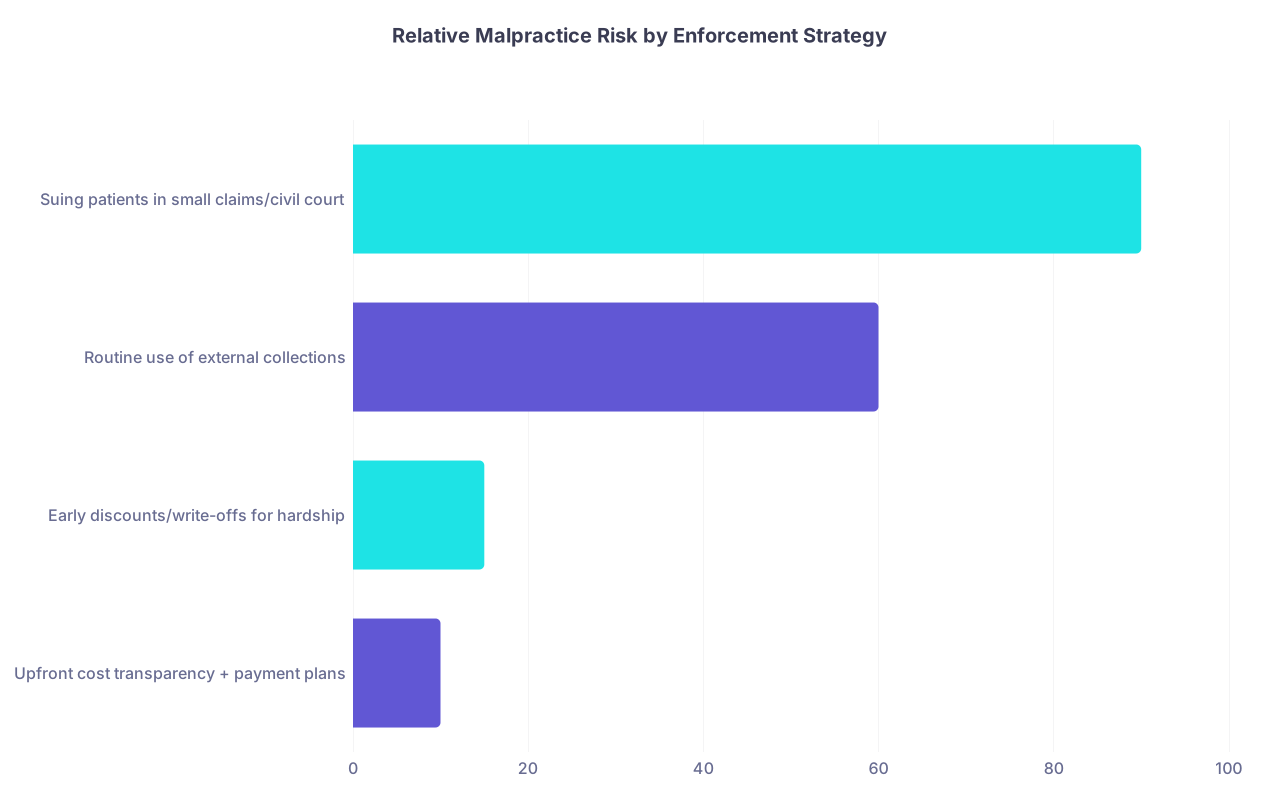
If all you take from this is “never enforce bills,” you’ve missed the point. You should absolutely have a rational financial policy. But there are smarter ways to enforce it that don’t pour gasoline on malpractice risk.
| Category | Value |
|---|---|
| Upfront cost transparency + payment plans | 10 |
| Early discounts/write-offs for hardship | 15 |
| Routine use of external collections | 60 |
| Suing patients in small claims/civil court | 90 |
Not scientific numbers, but an accurate hierarchy from a risk perspective.
If you insist on tightening your revenue cycle, do it in ways that blunt, not sharpen, conflict:
- Clear, documented hardship and discount policies that staff can explain without shame or judgment.
- Early, human conversations about confusing charges before any letter with “collections” ever leaves your office.
- “Soft” or limited collections arrangements that avoid lawsuits and wage garnishments.
- Explicit policies that clinically urgent follow-up is never conditioned on clearing an old balance.
I’ve sat in on risk-management reviews where a single phrase in the chart—“patient must pay balance before next visit”—became exhibit A in a delay-of-care allegation. That balance was under $200. The claim cost six figures.
How This Plays Out Across Practice Types
The backfire effect isn’t the same everywhere, but it’s never zero.
Solo and Small-Group Practices
Here, your name is the brand.
Aggressive lawsuits quickly become community gossip. I’ve seen PCPs whose reputations went from “caring old-school doc” to “the doctor who sues you” after a handful of cases. Did it help collections? Marginally. Did it help malpractice risk? Not remotely.
Your future jurors are your current neighbors. Keep that in mind before you drag Mrs. Jones to court over $600.
Hospital-Employed Physicians
You might think, “The hospital sues, not me.” Legally, yes. In the patient’s mind, not so much.
The same name on the bill is often on their discharge summary. If the system is aggressive, your patients associate you with the behavior. That increases the temperature of any later clinical complaint.
You do have some leverage: internal quality and risk committees. You can push for:
- More generous charity policies
- Less use of wage garnishment
- Better separation between clinical access decisions and old balances
You are not powerless just because you’re employed.
High-Risk Specialties (OB, Surgery, EM, Anesthesia)
You are already living in the high-claims neighborhood. You do not need more gasoline.
In these fields, the cases that go bad go very bad. Brain injuries, maternal deaths, major disability. Families in those situations are already financially stretched. Suing them for the unpaid tail of a catastrophic-care bill is clinically and reputationally suicidal.
I’ve watched OB groups quietly stop sending postpartum hemorrhage survivors to collections after seeing how those fights bled into claims. Good move.
The Bare Minimum Risk-Savvy Policy
If you want a simple malpractice-aware rule of thumb, it’s this:
- Do not sue patients for unpaid bills who have had:
- Any serious complication, even if handled correctly
- Any outcome you’d be nervous explaining to a jury
- Any already-documented dissatisfaction or complaint
And even for the rest, ask yourself:
“If this person filed a board complaint or malpractice claim next year, would I be glad I sued them for this amount?”
If the answer is anything less than a clear yes, you have your answer.
Where This Leaves You
You cannot fix the American billing system. But you can stop making your own life harder.
Three key points:
- Collections and malpractice are not separate domains. Aggressive billing—especially suing patients—directly increases the odds that an unhappy patient becomes a claimant.
- The financial upside of suing patients is tiny compared with the downside risk of claims, board actions, and reputational harm that juries actually care about.
- A malpractice-smart practice structure uses transparency, hardship policies, and soft enforcement—and treats lawsuits against patients as an extreme, rare last resort, not a routine tool.
If your accountant loves your collections numbers but your malpractice carrier is nervous, listen to the carrier. They’re the ones who see how this movie ends.