
The part nobody warns you about is that matching is the easy part. The real chaos starts when you’ve got four months to move yourself (and maybe a partner, kids, and a dog) across an ocean and be functional on Day 1 of residency.
If you matched into a program in another country—classic example: international grad moving to the U.S., or U.S. grad moving to Canada/UK/Australia—you’re not just relocating. You’re doing a compressed, high-stakes life rebuild under a hard deadline. There is no “sorry, I’ll start a month late” option.
This is how you handle it without blowing up your finances, your visa, or your sanity.
First Rule: Match Day Is Actually Visa Clock Day
You do not have time to “take a week to celebrate and process.” You can celebrate tonight. Tomorrow, you start paperwork.
Your entire timeline is dictated by three fixed points:
- Match Day (when you know where you’re going)
- Program start date (often July 1 for U.S., early July for Canada, varying by country)
- Visa / licensing processing times (which do not care about your feelings)
Here’s the mental shift: the day after you match, your main job isn’t “finishing med school.” It’s “making myself legally and physically able to show up where I matched.”
Step 1: Email the Right People Immediately
Within 48 hours of your result:
- Email GME / Program Coordinator
- Email HR or the person who sent you onboarding instructions (if already available)
- If you’re an international grad: confirm who handles your visa sponsorship and what category (J-1, H-1B, work permit, etc.)
Your email is simple:
- Confirm you matched and are excited
- Confirm your current location and citizenship
- Ask for:
- Exact start date
- Required arrival date for orientation
- Visa category + next steps
- Deadlines for paperwork
Do not wait for them to “get around” to you. Programs are often overwhelmed post-Match. The squeaky (polite) wheel gets answers sooner.
Get the Sequence Right: Paperwork Before Packing
People screw this up by fixating on apartments and flights before they’ve locked down legality. Backwards.
The correct order:
- Identity / Documents
- Licensing / Credentialing
- Visa / Work Authorization
- Then housing, flights, and stuff.
If you flip that, you risk paying deposits and ticket change fees when the embassy delays your visa or the medical board wants one more certified document.
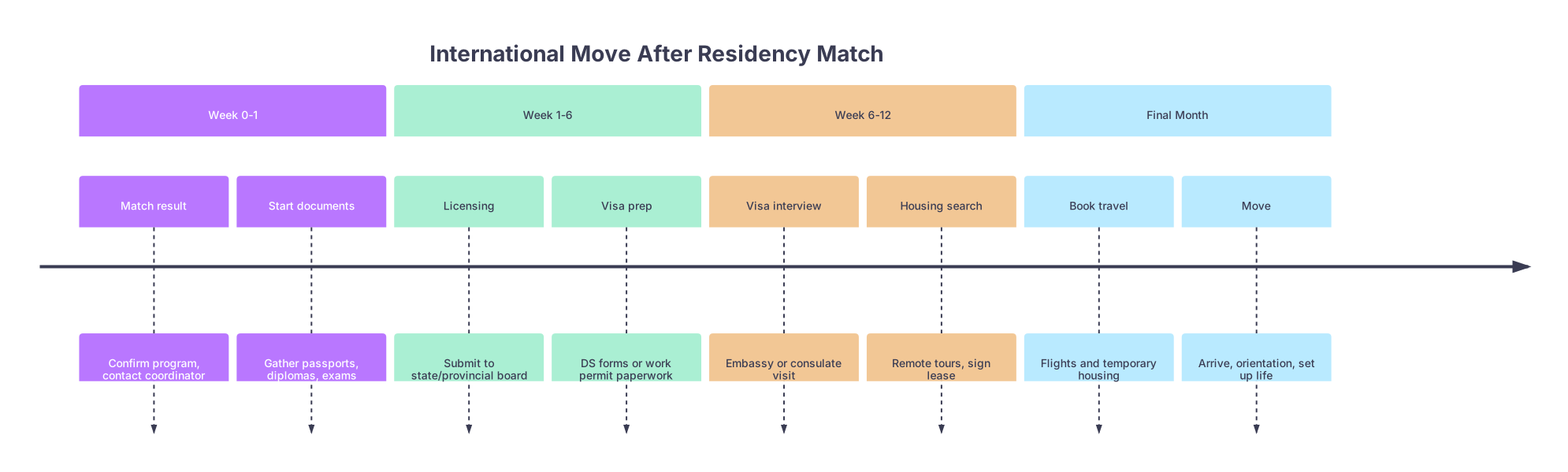
| Period | Event |
|---|---|
| Week 0-1 - Match result | Confirm program, contact coordinator |
| Week 0-1 - Start documents | Gather passports, diplomas, exams |
| Week 1-6 - Licensing | Submit to state/provincial board |
| Week 1-6 - Visa prep | DS forms or work permit paperwork |
| Week 6-12 - Visa interview | Embassy or consulate visit |
| Week 6-12 - Housing search | Remote tours, sign lease |
| Final Month - Book travel | Flights and temporary housing |
| Final Month - Move | Arrive, orientation, set up life |
Documents: Build the Binder (Physical + Digital)
You need a “residency move binder” like an adult version of your Step 1 binder.
You will use it constantly for: visa application, licensing, HR onboarding, housing applications, bank accounts, phone plans.
At minimum, collect (and scan to PDF, stored in cloud + USB):
- Passport (valid at least 6–12 months beyond start date; if not, renew immediately)
- Birth certificate
- Medical school diploma and transcript (original + certified translations if not in English)
- Residency Match / contract letter
- Exam scores (USMLE/COMLEX/MCCQE/PLAB etc.)
- Internship / prior training certificates if applicable
- Immunization records and TB/health clearance
- Marriage certificate / birth certificates for dependents, if any
- Police clearance / background checks if the destination country needs it
- CV and a basic “employment reference list”
International grads: if your med school is slow, start harassing them now. Getting sealed official transcripts or dean’s letters across borders can easily eat 4–6 weeks.
Licensing and Credentialing: Start This Before Visa If Possible
The medical board or licensing body is often painfully slow. And they love mailing things to each other like it’s 1995.
Your job in this phase:
- Ask your program: which license do I need for PGY-1?
- Training license? Educational registration? Full provisional license?
- Get the link to the exact application. Do not Google blindly—rules vary by state / province / country.
- Submit the application as soon as you physically can.
You’ll likely need:
- Med school primary-source verification (e.g., via EPIC/ECFMG or similar)
- Exam verifications sent directly from the body (USMLE, MCC, GMC, etc.)
- Dean’s letter / verification of education
- Proof of good standing if you’ve previously trained elsewhere
Do not assume the board or council will tell you a document is missing in a timely way. You need to log in weekly and check status, then nudge:
- Email politely
- Call during their local morning
- Ask your program coordinator to intervene if something agency-to-agency is stuck
If you’re moving to the U.S. as an IMG: ECFMG certification must be final. If it’s not, that becomes your absolute top priority.
Visa / Work Permit: Non-Negotiable Critical Path
This is where things truly break if you’re casual.
Your program often initiates the visa paperwork—but they can only move once you give them what they need. If they email requesting documents and you sit on it for a week, you just burned a week of processing time.
Typical patterns:
- U.S.-bound IMG: J-1 (through ECFMG) or H-1B (direct employer sponsorship)
- Canada-bound: work permit + possible provincial registration
- UK/Europe/Australia/NZ: work visa tied to NHS trust / hospital / health service
You must clarify:
- What visa category?
- What documents are required on your end? (degree, ECFMG cert, photos, police checks, financial proof, etc.)
- Who pays fees? (program vs you; often mixed)
- Rough processing time in your region
Then build your own internal deadlines. For example, for a U.S. J-1:
- DS-2019 issuance deadline
- Earliest visa appointment date at consulate
- Travel date window (you can usually enter up to 30 days before start)
Book the visa appointment the second you’re allowed to, even if you’re still waiting on one or two pieces. Rescheduling is easier than begging for an earlier slot when everything’s booked.
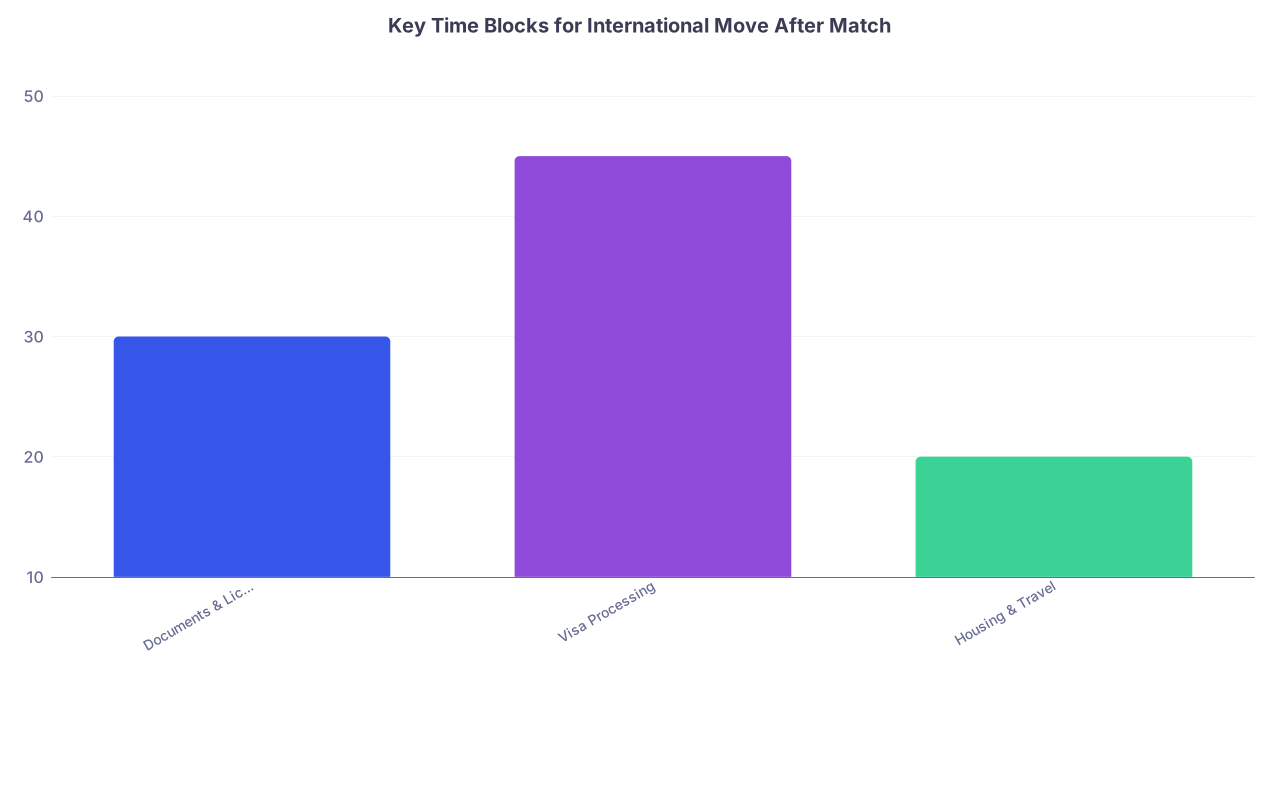
| Category | Value |
|---|---|
| Documents & Licensing | 30 |
| Visa Processing | 45 |
| Housing & Travel | 20 |
If your country has notoriously clogged U.S./UK/Canadian consulates, check appointment wait times online today. If they’re bad, you might need to:
- Look at alternate consulates within your country
- Consider visa appointments in a neighboring country (if allowed)
- Flag the issue early to your program so they know this isn’t you being disorganized
Money Reality: Build a Survival Budget Now
Residency pays, but it does not cover a transcontinental move smoothly if you’re careless.
You’ll likely need cash for:
- Visa + medical exam + document fees
- Flight(s) for you + dependents
- Initial housing deposit + first month’s rent (sometimes 2–3 months up front internationally)
- Temporary housing (Airbnb/hotel) if you arrive before a lease starts
- Furniture / basic setup (bed, linens, kitchen basics, work clothes)
- Transportation (public transit passes, used car + insurance, etc.)
Rough range for a solo international move to a major city: $4,000–$10,000 equivalent, depending on distance and cost of living. Add more if you’re moving a family.
If that number panics you, you have options:
- Ask family for short-term loan with a clear payback plan
- Research relocation assistance / stipends your program might offer (many residents never ask; sometimes there’s money sitting there)
- Use 0% APR credit card offers as a bridge—with a concrete exit plan once paychecks start
- Decide consciously to move light: arrive with 2 suitcases and buy used furniture, not ship a container
This isn’t about being fancy. It’s about making sure you can land, pay rent, and eat without spiraling into debt or panic.
Housing: You’re Not Buying Your Forever Home, You’re Buying Less Stress
Stop fantasizing about the perfect apartment. Your first year in a new country is not the time to chase real estate dreams. You need:
- Safe
- Commute you can handle while half-asleep
- Landlord who understands you’re new to the country and has seen resident contracts before
Common problems I’ve seen:
- Matching in March, refusing to look at housing until June “so listings are current.” By then, everything reasonably priced near the hospital is gone.
- Signing a 12-month lease sight unseen in a sketchy area because it “looked fine” on Google Maps at noon.
- Not realizing that in some cities (NYC, London, Toronto), landlords want:
- Proof of income
- A credit history in that country
- A guarantor or higher deposit if you don’t have those
Tactics that work:
- Ask your program for:
- List of neighborhoods residents actually live in
- PGY-2 or chief who is willing to give blunt area advice
- Join resident WhatsApp/Facebook/Slack groups:
- Sublet from outgoing PGY-3/4
- Take over a lease from someone leaving or moving in with a partner
- Short-term first: 1–3 months furnished room/short lease near hospital, then look for something longer once you’re on the ground
- If you absolutely must sign remotely, do live video tours, not just “here’s a video we took last year”
If you’re moving with kids, layer in schools/childcare early. Those waitlists don’t care you’re a doctor.
What to Move, What to Ditch
International shipping looks attractive until you see the bill and the customs delays. For most new residents, it’s a bad deal.
General rule:
- Move people, documents, and a few suitcases.
- Buy almost everything else there.
Bring:
- Professional clothes and comfortable shoes (for call, clinics, OR)
- 1–2 weeks of clothes you actually wear
- Compact personal items: laptop, small sentimental items, maybe a favorite few books
- Anything painful / expensive to replace in destination country (prescription glasses, specific medical equipment you truly use, etc.)
- Physical documents you can’t risk losing
Leave or sell:
- Bulky furniture
- Most kitchen gear (unless something very specialized or sentimental)
- Heavy books you can access digitally
- Appliances with wrong voltage/plug type for destination
Shipping a few boxes by international courier is sometimes worth it; shipping a whole apartment across the world usually isn’t for a resident salary lifestyle.
Partner, Kids, Pets: Complications You Must Front-Load
If you’re single, everything is simpler. If not, you have more variables and less slack.
Partner / Spouse
Key questions:
- Are they also getting a visa? Dependent vs their own work visa?
- Can they legally work in the destination country on your status?
- Will you arrive together or separately?
Often you’ll need:
- Marriage certificate, translated if needed
- Proof of relationship for some visa types
- Additional fees and medicals
If they want to work, they may need:
- Their own credential evaluation or licensing
- Time to job hunt post-arrival
Do not promise them “you’ll find something right away” until you’ve checked how friendly the local job market is to foreign degrees.
Kids
You’re juggling:
- Visas / dependent status
- School enrollment (with cutoffs and documentation)
- Childcare for early/late shifts
You want to land this before you start 6 a.m. rounds and 28-hour calls. That means:
- Email local school board / early childhood center as soon as you know your future address region
- Ask residents with kids where their children actually go, not just “what’s the best-rated school on Google”
Pets
Some countries treat pets like suspicious biological threats. Some airlines put insane restrictions on pet travel in summer/winter.
Check:
- Destination country import rules (vaccines, microchip, rabies titers, quarantine)
- Airline policies and seasonal embargoes
- Whether your housing allows pets (and corresponding fees)
Honestly: sometimes the kindest and most realistic choice is arranging temporary care for a pet in your home country until you’re settled and can reassess.
Health, Insurance, and Your Own Body
You’re about to start one of the most physically and mentally punishing jobs you’ll ever have. Do not show up already broken.
Before you move:
- Get dental check-ups and finish any major work
- Update glasses / contacts
- Refill essential prescriptions with enough to bridge the first 1–2 months
- Ask your program when your health insurance starts (Day 1? 30 days after start? Something else?)
- If there’s a gap, look at short-term coverage or travel insurance that includes health
And yes, vaccinations. Program requirements are often stricter than the country’s baseline. Make sure your titers and documentation are organized, not scattered across three clinics and your mom’s email.
Travel and Arrival: Land Like a Professional, Not a Tourist
When to arrive? Target:
- 7–14 days before orientation
- More if you’ve never lived in that culture and need time to set up basics and fight jet lag
Book:
- Flight with enough layover buffer that a single delay doesn’t destroy your visa-activation window
- Flexible ticket if possible (especially if your visa is still in “processing” and you’re gambling on timing)
- Temporary housing that’s:
- Commutable to the hospital
- Near basic stores / transit
On arrival, your to-do list in those first days:
- Local SIM or phone plan
- Local bank account (often requires passport + proof of address + sometimes your work contract)
- Transit pass or basic transportation
- Walk the route from home to hospital once in real life, not just on Google Maps

This is also when you want to find:
- Grocery store that’s open late
- Pharmacy
- A reasonably priced place to eat on post-call days when you cannot cook
You’re not “traveling.” You’re staging a controlled landing for a high-intensity job.
Communication With the Program: Manage Expectations Like a Colleague
Program directors and coordinators get nervous when they don’t know what’s happening with their international hires. Nervous people make conservative decisions.
So you:
- Reply to emails quickly (24–48 hours max when possible)
- Proactively update about:
- Visa status (“interview scheduled on X date”)
- Licensing milestone (“all documents sent, board says 4–6 weeks”)
- Ask clear questions when you’re stuck
If something looks like it may delay your start, you do not hide it. You flag it early so the program can help or at least plan; occasionally they can push licensing bodies or write support letters.
Mental Game: You’re Allowed to Feel Overwhelmed, You’re Not Allowed to Go Numb
International relocation + residency start is one of the highest-stress combos you’ll ever do.
Some ways people quietly sabotage themselves:
- Avoiding paperwork because it’s stressful, which then becomes an actual disaster
- Refusing to ask other residents “dumb questions” about housing, banking, etc.
- Pretending they’re okay while their sleep and mood are falling apart
You need one or two people you can be brutally honest with: “I’m scared I’m not going to get my visa in time,” “I have no idea how to choose a neighborhood,” etc. That might be:
- Senior resident from your country who matched there last year
- Med school friend who did this move earlier
- Online community of IMGs / international trainees in your destination country
This is not the hero phase of your life. This is the “use every available resource” phase.
Sample Priority Snapshot
If you want something you can literally copy into a note app, here’s a stripped-down version.
| Week | Main Focus | Non-Negotiable Tasks |
|---|---|---|
| 1 | Confirm basics | Contact program, confirm start date, gather documents, check passport validity |
| 2 | Licensing start | Submit medical board / council application, request transcripts and verifications |
| 3 | Visa prep | Send documents to sponsor, complete forms, book visa interview ASAP |
| 4 | Early housing research | Contact residents about neighborhoods, explore short-term housing, map out move budget |
You matched. The hard truth is that the system doesn’t give you much slack from here. But if you tackle this like another high-yield, time-limited exam—prioritize, front-load the critical path, ignore the noise—you can land in a new country and walk into orientation with your head above water.
You’ve just navigated the Match. The next challenge is surviving your first 90 days as an intern in a brand-new place. How to build a support system, avoid burning out by September, and actually learn something while you are still figuring out where the cafeteria is—that’s the next situation to handle.