
The Match does not care that you have kids. You have to make it care—on your terms.
If you’re a parent or caregiver heading into residency, you’re playing the game on hard mode. Not theoretically. Logistically, emotionally, financially. The system was built for people with no dependents and unlimited flexibility. That’s not you.
So the question is not “Can I be a good resident and a good parent/caregiver?” You can. The question is: “Given this chaotic system, how do I protect my family, my sanity, and my career at the same time?”
Let’s walk through it like I would with a resident who just found out: “We matched. We have a three-year-old. My partner works full-time. There’s no family nearby. Now what?”
Step 1: Before the Match – Set Hard Boundaries Into Your Rank List
If you’re still in the application/ranking phase, this is the one place you actually have leverage. Use it.
Forget the fantasy that you can “make anything work.” That’s how people end up divorced, burned out, or with CPS involved because childcare collapsed.
Here’s how you bake reality into your rank list.
Decide your non‑negotiables
You should have, in writing, a short list of hard no’s. Not preferences. Dealbreakers.
Examples of real non‑negotiables for parents/caregivers:
- No programs more than X miles from established childcare or your support network
- No programs with 24‑hour shifts past PGY-1 if you’re solo parenting
- No places where your partner’s job prospects are basically zero
- No programs with a reputation for retaliating when residents use parental leave
If you’re caring for an adult (parent, disabled relative), add:
- Must be within Y distance of their facility/home
- Must be in a city with relevant specialists for them
- Must have reliable access to home health services or adult day programs
You do not rank programs that violate your non‑negotiables. “We’ll figure it out” is not a plan. It’s a future crisis.
Ask brutally specific questions on interview day
You cannot rely on program websites or glossy recruiting language. You need concrete policy-level and culture-level information.
Do not ask, “Is your program family friendly?” Every program will say yes.
Instead ask:
- “How many residents in this program currently have children?”
- “What’s the actual parental leave that current residents have taken? Paid vs unpaid? How long?”
- “If a child is sick and daycare calls at 10 am, what happens in real life here?”
- “Who covers when someone has a family emergency? Is it formalized or ‘everyone just helps out’?”
- “Do you ever schedule residents on back-to-back 24s or 28s?”
When talking to residents, use this line: “If you had a toddler and no family in the area, would you come here again?” Then shut up and watch their face.
Step 2: When You Match – Treat the Results Like a Logistics Project
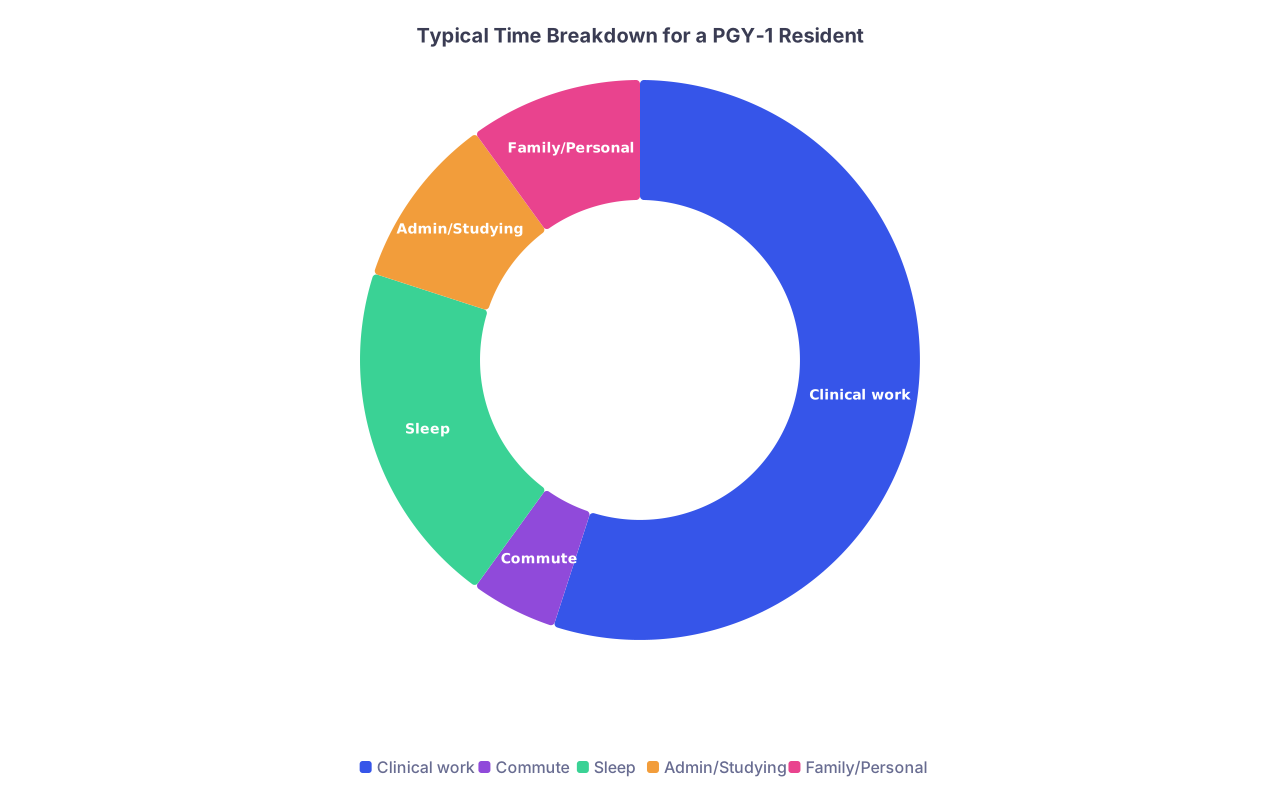
| Category | Value |
|---|---|
| Clinical work | 55 |
| Commute | 5 |
| Sleep | 20 |
| Admin/Studying | 10 |
| Family/Personal | 10 |
You get your Match result. People are crying, posting photos, celebrating. You’re doing math in your head about daycare pickup and night float.
You need a specific plan in the first 2–3 weeks after the Match.
1. Map your time reality, not your fantasy
Don’t wait for the final master schedule to drop. Use worst-case assumptions for intern year:
- Inpatient months: 70–80 hours/week
- Outpatient/clinic months: 45–55 hours/week
- Call/night float: weeks where you effectively don’t exist at home
Now sketch three sample weeks:
- “Heavy inpatient” week
- “Night float” week
- “Clinic” week
For each, write down:
- Likely time leaving home
- Likely time home
- Which days are totally unpredictable (weekends, call)
This tells you exactly where the failure points will land—school pickup, daycare closing times, evening meds for a family member, etc.
2. Build your “coverage grid”
You need a written grid: for every weekday and evening, who’s on point for:
- Morning routine + drop-off
- Pickup
- Backup pickup
- Bedtime
- Sick days
- School breaks
If you look at Wednesday and nobody can realistically cover pickup if your page goes off at 4:30 pm, you do not “hope it’ll be fine.” You fix the grid now—before residency starts.
Step 3: Childcare Options That Actually Work With Residency
Most standard childcare setups are designed for 9–5 jobs. Residency laughs at that.
You’re likely going to need layers. Not just “a daycare.”
| Option | Hours Fit Residency? | Cost Level | Reliability |
|---|---|---|---|
| Standard daycare center | Poor | Medium | High |
| In-home daycare | Fair | Low-Med | Variable |
| Nanny (full-time) | Good | High | Medium |
| Nanny share | Good | Med-High | Medium |
| Au pair | Very good | Med | High |
The layered approach that usually works
I’ve seen this combination work best for residents with young kids:
- Primary: daycare or preschool for daytime structure
- Secondary: part-time nanny/sitter for early mornings/evenings
- Backup: at least two backup adults (neighbors, friends, church/synagogue/mosque community) who can be called in a pinch
Sometimes the structure is flipped—nanny primary, daycare secondary. But the point is the same: no single point of failure.
Specific constraints to plan for
- Daycare closing at 6 pm when you routinely leave at 5:45 pm on a “good” day. That’s not viable without backup.
- Night float months: you will be non-functional during the day. You’re not watching a toddler after a 14-hour night. Stop pretending.
- Post-call days: even if you “get out at noon,” you’re basically hungover without the fun part. Built-in help that day.
Single parents: tighter, but not impossible
If you’re solo parenting, your redundancy has to be external:
- Full-time nanny or au pair is often not optional
- Strong written agreement with backup caregivers: they know your call schedule weeks in advance
- Some residents negotiate one fixed “hard stop” evening per week for parenting time—use this card carefully, but use it
And you need to be at a program that actually backs those boundaries. If you are past the Match and stuck in a rigid program, your strategy becomes different: documentation, communication, and knowing when to escalate.
Step 4: Caring for Adults While in Residency
Caregiving isn’t just diapers and preschool. Many residents are quietly the point-person for a parent with dementia, a sibling with disabilities, or a chronically ill partner.
This is harder to talk about openly, but the same rules apply: no magical thinking.
Be honest about your role
Write down exactly what you do now:
- Number of appointments per month you personally attend
- Number of hours per week spent on coordination, meds, dealing with insurance
- Tasks only you can do (decision-maker, legal POA) vs tasks others could do
Then imagine yourself gone from 5 am–7 pm, 5–6 days a week, plus some nights. Which of those tasks still land on your plate? Which can be reassigned or outsourced?
Build your “care circle”
You want at least:
- A local backup person who can physically show up in an emergency (friend, sibling, neighbor, paid caregiver)
- A clear document: medication list, baseline functional status, key contacts, DNR/DNI status if applicable
- A main medical home: one primary physician or specialist who knows the situation and who you can email/call
Talk to social work—either at your relative’s hospital or a local agency—before residency starts. They often know about:
- Adult day health programs
- Transportation services
- Home health aid resources
Don’t wait for a crisis when you’re on a 28-hour call and the nurse calls saying, “We can’t safely send your mom home.”
Step 5: Working With Your Program – What To Say, When To Say It

| Step | Description |
|---|---|
| Step 1 | Match Day |
| Step 2 | Review contract and policies |
| Step 3 | Identify needed accommodations |
| Step 4 | Schedule meeting with PD |
| Step 5 | Clarify expectations and follow up in email |
| Step 6 | Escalate to GME or HR |
| Step 7 | Supportive response |
You do not need to hand your entire personal life to your program director. But for parents and caregivers, some disclosure is strategic.
Timing
Best windows to talk:
- Between Match and orientation
- Early in PGY-1, before schedules are rigid
- Before pregnancy, adoption, or a major change in caregiving demands if possible
You want to give them a chance to help plan, not just react.
How to frame it
You’re not asking for pity. You’re communicating constraints and solutions.
Example script:
“I wanted to share something early so we can plan realistically. I have a 2-year-old and my partner works nights four days a week. We’ve arranged full-time daycare and an evening sitter for backup. The main constraint is that there is literally nobody who can pick up after 6 pm on Tuesdays. On all other days we have backup options.
I’m fully committed to the program and willing to be flexible in plenty of other ways—extra weekends, trading calls, whatever is fair. I just want to be transparent so we don’t build a schedule that’s doomed from the start.”
Notice: you bring a solution, show commitment, and clearly define the constraint as narrow and specific.
If you’re a caregiver for an adult:
“I’m the medical decision-maker for my mother with advanced heart failure, who lives 15 minutes away. Day to day she has home health and my sibling helps. 95% of the time this doesn’t affect work. Occasionally there are true emergencies where I have to speak to ER teams or step in briefly. If that happens on a rotation with less acute coverage, what’s the best way to handle that here? I want to understand expectations.”
Get things in writing
Any understanding reached in person should be summarized by you in a short email:
- Thank them for the conversation
- List key points (“We agreed that X,” “The expectation is Y”)
- Keep it factual, not emotional
This protects you if leadership changes or memories get selective later.
Step 6: Crisis Mode – When Childcare or Caregiving Blows Up Mid-Block
Things will fail. Nannies quit. School closes for COVID. Your dad gets hospitalized.
You need a crisis protocol before it happens.
1. Pre-define your “break glass” contacts
Write a literal list:
- Person A: can take kid if I’m at work
- Person B: can sit at hospital with mom for 2–3 hours while I drive over post-shift
- Person C: last-resort overnight kid coverage
If this list is empty right now, that’s your project for the next month. Sometimes this means intentionally investing in community—neighbors, religious group, co-residents with kids, local parent groups.
2. Know your program’s emergency call hierarchy
Find out, explicitly:
- Who you call first if you physically cannot come in (chief, senior, PD)?
- How many “can’t come in” days are acceptable before it becomes a formal issue?
- Can you use sick days for dependent illness? (This varies widely)
Do not guess. Ask your chiefs or a trusted senior.
3. Use your sick/emergency days smartly
You don’t blow three days for a kid’s runny nose. But you also don’t drag yourself in when your only caregiver tested positive for flu and there is literally nobody with your child.
When you do call out:
- Be direct and concise: “My childcare collapsed this morning, and there is no safe coverage for my 2-year-old. I am working on backup options for future, but I cannot safely come in today.”
- Offer a make-up: “I’m willing to add an extra weekend day to make up this shift if needed.”
You’re not bargaining away your rights. You’re signaling good faith.
Step 7: Mental Health and Guilt – The Weight Nobody Prepares You For

You will feel like you are failing someone. Your patient. Your kid. Your parent. Your partner. Yourself. Often all in the same 24 hours.
The problem is not your character. It is that residency is structured as if residents should have no other serious obligations.
You need a few anchors:
- One non-negotiable family ritual. Maybe it’s Saturday morning pancakes, or nightly 5-minute storytime, or Sunday afternoon FaceTime with your mom. Protect it with the same intensity you’d protect a noon conference.
- One non-medical adult who knows the full picture. Not to “fix” it. Just to say, “Yes, this is absurd, and no, you’re not imagining it.”
- Very low-bar mental health support. This might be therapy once a month, a support group for physician parents, or a short list of crisis lines you’d actually call if you hit a wall at 3 am.
If your mood is tanking, you’re crying on the drive home daily, you’re snapping at your kids or your partner constantly—do not write it off as “everyone is tired.” You’re not just a resident. You’re a resident with a double shift at home.
Example Scenarios and How to Handle Them

Scenario 1: You matched across the country from both sets of grandparents
You were hoping for local support. Didn’t happen.
What you do:
- Start interviewing full-time childcare options immediately—au pair or nanny share is often the most flexible for weird hours.
- Plan two “grandparent visit blocks” during lighter rotations to give you occasional coverage and your parents real time with the kids.
- Build local community on purpose: parent groups, neighbors, religious communities. You do not wait for this to happen organically.
Scenario 2: You’re PGY-2. Your parent is suddenly diagnosed with cancer in another state.
What you do:
- Meet with your PD quickly, not after you’ve already missed multiple days. Frame it as: “I am their main medical decision-maker and will need to be present for certain key appointments and surgeries.”
- Request clustering of vacation or elective time around expected major events (surgery, initial chemo admissions).
- Set firm boundaries with other family members: you cannot fly out every time someone is anxious. Your bandwidth is finite.
Scenario 3: Your partner’s job hours just changed; they’ll now work evenings.
Suddenly your 5 pm daycare pickup is on you, permanently.
What you do:
- Immediately secure an evening sitter for 3–4 weekdays as a baseline, not just “backup.”
- Tell chiefs: “My partner’s job schedule changed. I now have reliable childcare up to 9 pm on these days and only to 6 pm on these other days. I can flex and stay late on A/B days, but C/D days I have a hard stop unless there’s a true emergency.”
- Reactively adjust: volunteer for more weekend coverage if it buys you a predictable weekday evening off.
Tools and Quick References
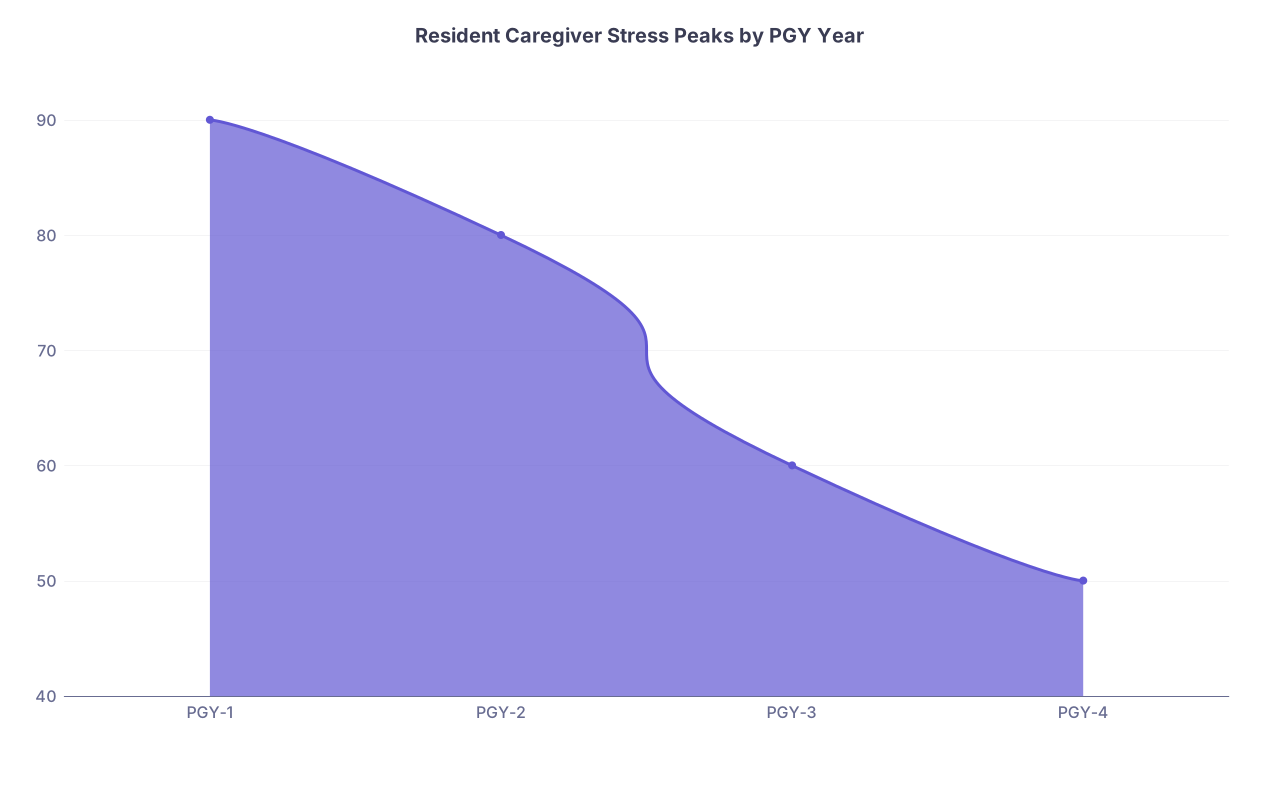
| Category | Value |
|---|---|
| PGY-1 | 90 |
| PGY-2 | 80 |
| PGY-3 | 60 |
| PGY-4 | 50 |
Short checklist for resident parents/caregivers
By July 1, you want:
- A written weekly childcare/caregiving coverage grid
- At least two backup people identified and informed
- A conversation with PD or chiefs if you have hard constraints
- A documented understanding of parental leave / FMLA / sick day policies
- One mental health resource you’re willing to actually use
FAQs
1. Should I tell programs during interviews that I have kids or caregiving responsibilities?
If you’re still in the application phase: you don’t owe them your entire story, but for many people, being open is a filter. Programs that get weird when you mention kids or caregiving? They’ve self-identified as bad fits. You can say, “I have a young family, so I’m particularly interested in how your residents with children manage schedules here.” Watch their reaction closely.
2. Can I change programs or transfer if my family situation becomes impossible?
Transfers are possible but not easy. They usually require: a compelling reason (spousal move, major family crisis), a PD willing to release you on good terms, and an open spot elsewhere. It’s more realistic to first explore: schedule adjustments, temporary leave, switching tracks (e.g., prelim to categorical elsewhere) rather than banking on a clean transfer.
3. How much should I involve my co-residents in my family situation?
Enough that people understand patterns, not so much that every day feels like a special request. For example: “Hey, I generally need to bolt right at 6 on Tuesdays for daycare, but I can cover late on Thursdays if you ever need it.” Reciprocity goes a long way. You want to be the person who sometimes says yes, not only the person asking for accommodations.
4. Is it realistic to start a family during residency if I’m also a caregiver for an adult?
It’s possible, but you need ruthless honesty. Dual caregiving (kids + adult) while in residency is like carrying two full backpacks uphill. You’ll want: a very supportive partner or family network, financial room to buy help, and a program that is at least moderately humane. If any two of those three are missing, I’d seriously consider delaying one major caregiving responsibility—often pregnancy/adoption—by a year or two if you have that option.
Key points: treat the Match like logistics, not vibes; build layered coverage with real backup, not wishful thinking; and communicate early, in writing, with concrete constraints and solutions. You cannot make residency easy, but you can make it survivable—for you and for the people depending on you.