

Match Day does not mean you are done. It simply changes the exam from multiple-choice to open-ended and real-world. The students who waste these final months “relaxing” pay for it hard in July.
Here is the disciplined, time-based way to handle your last stretch between Match Day and intern orientation.
Big Picture: Your Post-Match Timeline
Let me lay out the skeleton first. You will fill in details as we go.
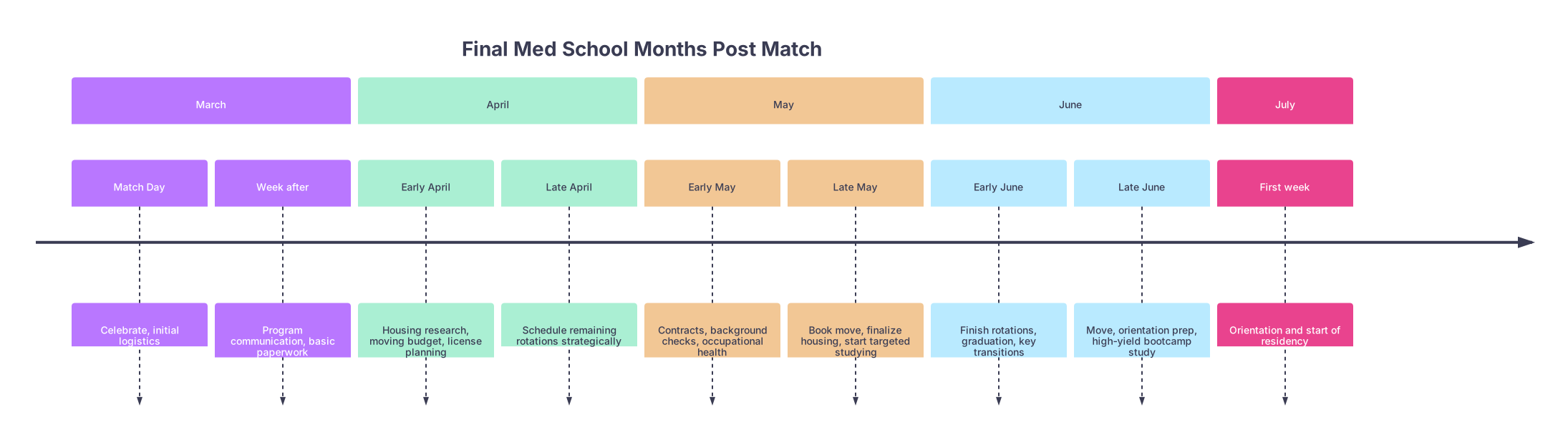
| Period | Event |
|---|---|
| March - Match Day | Celebrate, initial logistics |
| March - Week after | Program communication, basic paperwork |
| April - Early April | Housing research, moving budget, license planning |
| April - Late April | Schedule remaining rotations strategically |
| May - Early May | Contracts, background checks, occupational health |
| May - Late May | Book move, finalize housing, start targeted studying |
| June - Early June | Finish rotations, graduation, key transitions |
| June - Late June | Move, orientation prep, high-yield bootcamp study |
| July - First week | Orientation and start of residency |
At each point, you should know your main job. Celebrate is allowed. Drifting is not.
Match Week: Shock, Celebration, and First Contact (Mid‑March)
You opened the email. You know where you are going. At this point you should:
Within 24–72 hours
Respond to the program.
- Reply to their welcome email.
- Be concise and professional:
- Thank them.
- Confirm you are excited to join.
- Verify they have your best email and phone.
Stop “What if I had matched elsewhere” thinking.
That mental loop is poison. Your new job is to become the best intern on day one where you are actually going, not in some fantasy program.Get basic facts from the welcome packet (or website):
- Start date (exact day).
- Orientation dates.
- Location of primary hospital and main clinic.
- Rotation schedule pattern (night float vs 24s, q4 vs shift-based).
- Call rooms vs going home post-call.
Start a “Residency Logistics” document.
Google Doc, Notion, OneNote. I do not care. But one place only. Create sections:- Program info
- Housing options
- Licensing / HR / onboarding
- Financial planning
- Study / clinical prep
- Moving checklist
You will thank yourself in June when your life is chaos and this document is your brain backup.
Late March: Money and Moving Reality Check
At this point you should stop dreaming and run the numbers.
Week after Match Day
- Estimate your residency finances for Year 1.
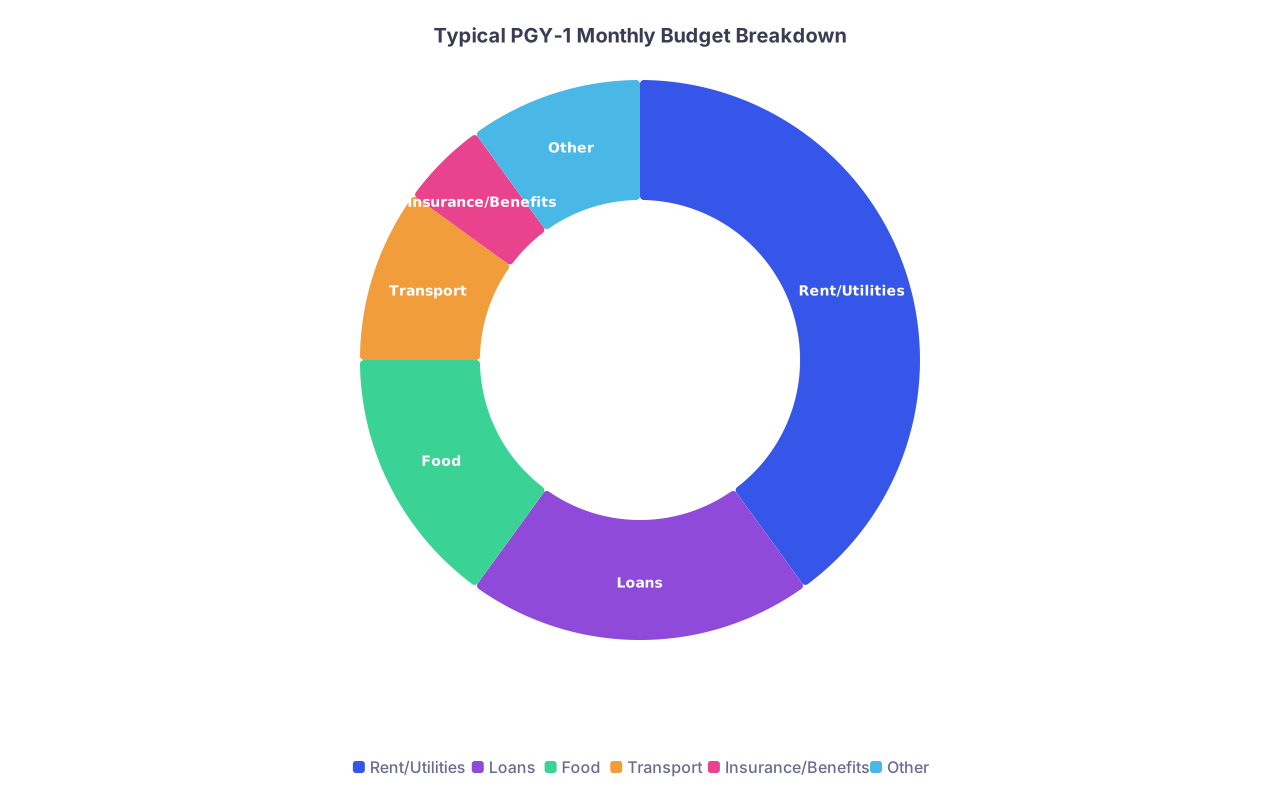
| Category | Value |
|---|---|
| Rent/Utilities | 40 |
| Loans | 20 |
| Food | 15 |
| Transport | 10 |
| Insurance/Benefits | 5 |
| Other | 10 |
Do a quick monthly breakdown:
- Expected PGY‑1 salary (from program website or FREIDA).
- Subtract:
- Estimated rent + utilities in that city.
- Minimum loan payments (or planned REPAYE/SAVE payment).
- Average food budget.
- Transportation (car payment, gas, parking, public transit).
- Phone + internet.
If the math looks tight or negative, good. Better to see that in March than in October at 2 a.m. on night float. Adjust:
- Plan roommate vs solo.
- Consider selling the car vs keeping it.
- Decide if you really need that new furniture (you do not).
Rough in your moving plan.
- Are you driving a car there? Shipping it? Selling it?
- Flying vs driving yourself.
- Time between graduation and orientation.
- Will you need storage for a few weeks?
Clarify your remaining med school schedule.
- Pull your fourth-year calendar.
- Identify:
- Required rotations left.
- “Vacations” / free electives.
- Board prep blocks (if any).
- Mark in your doc which blocks can be flipped to pure logistics / study time if needed.
Do not keep this vague. vague plans become last‑minute disasters.
Early April: Housing, Licensing, and Rotation Strategy
By early April, the initial high has faded. This is when disciplined people pull ahead.
Housing – At this point you should:
Define your housing constraints:
- Max rent (realistic, not fantasy).
- Commute time ceiling (I recommend 20–30 minutes door-to-door if possible).
- Parking needs (especially if nights and trauma call are frequent).
- Safety requirements (talk to current residents about neighborhoods, not just Reddit).
Reach out to current residents.
Send 2–3 short emails:- Ask where interns typically live.
- Ask which apartment complexes / areas to avoid.
- Ask about realistic commute times at 7 a.m. and 6 p.m.
Residents will tell you the building with thin walls, constant fire alarms, and the drunk neighbor. Program websites will not.
- Map commute scenarios.
Use Google Maps in “arrive by 7:00 a.m.” mode from candidate neighborhoods. Do this for:- Main hospital.
- Any satellite sites you rotate at early in PGY‑1.
Eliminate areas with nightmare traffic patterns. You will be driving these routes half-asleep post-call.
Licensing / Onboarding – At this point you should:
Read onboarding emails carefully.
They are long and boring. Read them anyway. Make a checklist:- State training license (or full license in some states).
- DEA (if program handles later, mark that).
- Background check / fingerprints.
- Immunization records, TB test, titers.
- Drug screen deadlines.
- BLS/ACLS/PALS requirements and expiration dates.
Start paperwork with long lead times (early April, not late May):
- State license application (often 4–8 weeks).
- Any documents that require notary or transcripts.
- Foreign grads: ECFMG or visa-related steps.
Create a simple deadline table.
| Item | Deadline | Status |
|---|---|---|
| State training license | May 15 | Not started |
| Background check | April 30 | In progress |
| Immunization upload | April 10 | Completed |
| BLS/ACLS renewal | May 25 | Scheduled |
| Drug screen | June 5 | Not started |
Update this weekly. Treat these like exam dates, not suggestions.
Rotation Strategy – What to do with the time you have left
Look at April–June blocks. At this point you should:
- Convert any unnecessary “research” or nonessential electives in June into:
- Light outpatient clinic.
- Reading elective.
- “Acting intern” in your matched field only if:
- It is at your home institution.
- It will specifically build skills you will use on day 1 (not vanity).
Avoid:
- Heavy ICU or night float in June unless your graduation requirements demand it.
- Long‑commute away rotations that eat your prep time.
Your goal is not to impress anyone anymore. It is to show up in July safe, functional, and not sleep-deprived from a brutal June rotation.
Late April to Early May: Commitments, Contracts, and Health
This is the boring but critical admin month.
By the end of April you should:
Have a short list of 3–5 serious housing options.
- You have contacted them.
- You know availability in June.
- You know deposit and parking costs.
Know your exact orientation date range.
- Block this off on all personal calendars.
- Tell family you are not planning trips in that window.
- Plan your move to arrive at least 3–5 days before orientation starts.
Clarify any program quirks:
- Night float start in July vs later.
- EM residents: ED shifts scheduling method.
- Surgical prelims: which services you will start on.
Early–Mid May: Contracts and Clearances
At this point you should be executing, not still collecting information.
Sign your contract and return it correctly.
- Verify salary, benefits, vacation days, and moonlighting policies (for later years).
- Confirm start date and PGY level.
- Keep a signed copy in your document folder and cloud.
Finish all occupational health tasks.
- Get titers or booster shots if required.
- Schedule TB test / Quantiferon.
- Upload proof to the correct portal.
- Do the drug screen within the time window given.
Do not push this into June. Lab delays and weird titer results happen.
Renew life support certifications.
- Schedule BLS/ACLS (and PALS if your field uses it: EM, peds, anesthesia in some programs).
- Ideally timed so they do not expire mid‑intern year.
Check your ID and document situation.
- Passport not expiring soon if you need it.
- Driver’s license valid in new state, or plan to update.
- Social Security card location known (some HR offices still ask).
Mid–Late May: Lock In Housing and Build Your Study Plan
Now things get more real.
Housing and Moving – At this point you should:
Pick your housing and sign the lease (or at least hold it).
- Move‑in date 5–7 days before orientation is ideal.
- Confirm:
- Parking availability day one.
- Key pick‑up process if you arrive after hours.
- Mailbox setup (you will get HR and license mail).
Book your move.
- If long-distance:
- Decide: movers vs truck rental vs shipping containers.
- Reserve dates now. Prices jump closer to June.
- If short-distance:
- Reserve elevator time if needed.
- Enlist friends or schedule local movers.
- If long-distance:
Start the “sell / donate / keep” process.
Do not wait until the week before moving. Each weekend:- Empty one closet or room.
- Decide what actually comes with you.
- List big items on Marketplace / Craigslist.
Academic and Clinical Prep – Start Light Studying
You are not cramming for Step 1 here. You are building muscle memory.
By late May, at this point you should:
Pick 1–2 core resources for your specialty.
Examples:- IM: MKSAP questions + “The Washington Manual” or “Pocket Medicine”.
- EM: Rosh Review + “EMRA Basics” or “Tintinalli” snippets.
- Surgery: “Surgical Recall” + selected ABSITE‑style questions.
- Peds: “Nelson Essentials” or “BRS Pediatrics” + basic question bank.
Set a modest weekly target.
- 50–100 questions per week.
- 1–2 chapters or topics per week.
- Focus on:
- Common admissions.
- Daily cross‑cover issues.
- Basic orders.
You are building a floor, not a ceiling.
- Review basic, cross‑specialty tasks:
- Writing admission H&Ps that are concise.
- Writing progress notes with a sharp assessment/plan.
- Interpreting:
- CBC, BMP, LFTs.
- Basic ABGs.
- Chest X‑ray baseline findings.
- Calling consults succinctly (using SBAR or similar).
Early June: Finish Strong, Not Fried
Graduation usually hits early–mid June. The temptation is to mentally check out. Mistake.
If you are still on rotations
At this point you should:
Protect your sleep consistency as much as possible.
- Do not pick up extra random night shifts “for cash” that destroy your rhythm.
- Gradually align your wake times closer to what residency will demand (5–6 a.m. for many fields).
Use the rotation to practice intern behaviors:
- Write full notes like an intern would.
- Pre‑round as if you are responsible for the list.
- Call nurses and consultants yourself instead of hiding behind seniors.
Better to make small mistakes now with safety nets than in July as the actual doctor.
After Graduation
Once you are officially “Dr. You”, at this point you should:
Do a systems reset week.
- 2–3 days of real rest.
- Finish decluttering and boxing.
- Say actual goodbyes. Closure matters more than people admit.
Run through your onboarding checklist line by line.
- Confirm nothing is outstanding.
- Follow up on any “pending” status items (license, ID badge scheduling, etc.).
Finalize your move logistics.
- Confirm movers / truck.
- Confirm travel dates.
- Pack an “intern survival” suitcase that does not get lost among boxes:
- 3–5 sets of work clothes.
- Comfortable shoes.
- White coat.
- Stethoscope.
- Basic toiletries.
- Laptop and chargers.
- One pocket reference.
If your moving truck arrives late, you still start residency functional.
Late June: Move, Settle, and Run a Personal Bootcamp
This is the most dangerous phase. People assume they have “time” and then blow it on Netflix and unstructured anxiety.
First 3–4 days after moving
At this point you should:
Physically orient yourself.
- Drive from your place to each main hospital at:
- 6:00 a.m.
- Evening rush.
- Find:
- Parking garage entrance.
- Employee lot if separate.
- Entrance you will actually use at 5:45 a.m.
- Walk to:
- GME office.
- Cafeteria.
- Call rooms (if accessible).
- Resident workroom area.
- Drive from your place to each main hospital at:
Set up your apartment for function, not aesthetics.
- One clear workspace with:
- Desk or table.
- Decent chair.
- Good lighting.
- Sleep-protecting:
- Blackout curtains or eye mask.
- White noise machine or app if you live near noise.
- Simple food plan:
- Nonperishable snacks.
- Breakfast you can eat in 5 minutes (oats, yogurt, whatever works).
- Coffee system if you use it.
- One clear workspace with:
You are building a launch pad, not an Instagram set.
Last 5–7 days before orientation: Personal “Intern Bootcamp”
This is where you flip into high-yield prep.
At this point you should:
Run daily focused blocks (2–4 hours max).
Example day:- 60–90 minutes: Question bank in your specialty.
- 30 minutes: Review common orders and admission sets.
- 30 minutes: Practice writing one sample H&P and one progress note.
- 30–45 minutes: Read about one core problem (e.g., sepsis, DKA, COPD exacerbation, ACS).
Practice your “intern scripts”: Out loud. Yes, actually.
- How you present a new patient to your senior.
- How you call a rapid response to the ICU fellow.
- How you talk to a nurse about a concerning vital sign.
- How you discuss a new diagnosis with a patient in plain language.
Create quick-reference tools:
- 1–2 pocket cards or short PDFs with:
- Common order sets (fluids, insulin, pain).
- Antibiotic go-tos by syndrome.
- Antihypertensive escalation.
- Anticoagulation basics (DVT, AFib).
- 1–2 pocket cards or short PDFs with:
Do not write a textbook. Write something you can glance at on a hectic call night.
- Rehearse the start of Day 1.
Night before:
- Lay out clothes, badge, keys.
- Pack bag.
- Set two alarms.
- Verify start time and location (do not guess).
Morning:
- Aim to arrive 20–30 minutes early.
- Know where you will park and enter.
You want your brain free for patient care, not wasted on “Where do I go?”
July: Orientation and First Weeks – How to Use What You Prepared
Orientation will be a blur of:
- EMR training.
- Payroll forms.
- Mandatory “don’t harass people and don’t break HIPAA” modules.
- Tours.
At this point you should:
Meet your co-interns intentionally.
- Learn names and backgrounds.
- Set up a group chat if one does not exist.
- Identify who will be on your first rotation with you.
Clarify expectations with your first senior. On day 1 of the rotation, ask:
- “How do you like to run rounds?”
- “How do you prefer to hear about overnight issues?”
- “What are your pet peeves so I can avoid them?”
Deploy your prep quietly. Do not brag that you studied more than others. Show it by:
- Writing clear notes.
- Anticipating next steps.
- Following up on labs/imaging without being told every time.
Adjust your personal systems weekly.
- If you are constantly late, adjust commute or wake time.
- If you are not eating, prep simpler meals.
- If your studying is zero, aim for 15 minutes a day rather than giving up.
What Not to Waste Time On Post‑Match
To keep you honest, here is the short list of things that look productive but are not:
- Reading three full textbooks cover to cover.
- Obsessively planning fellowship as a PGY‑1 before you have even placed your first order.
- Over‑designing study schedules you never follow.
- Taking on new research projects that will not meaningfully progress before July.
- Last-minute heroic new languages or skills that have no real impact on your PGY‑1 year.
You are building competence and stability, not auditioning for sainthood.
Do This Today
Open a blank document and title it “Residency Transition Master List.”
Create five headings: Housing, Licensing/Onboarding, Money, Rotations, Study Prep.
Under each, write 3 concrete tasks you must complete in the next 2 weeks post‑Match. That is your starting line.


